
Ordering cabinets without properly vetting your supplier is one of the fastest ways to blow a project timeline. Kitchen cabinet suppliers vary wildly in lead times, material quality, and how well they actually back up their products when something goes wrong. Batch inconsistencies from overseas manufacturers, sketchy certifications, and surprise shipping fees are real problems contractors deal with every week. After reviewing dozens of suppliers across the industry, this guide breaks down five options worth serious consideration before your next order.
The shortlist methodology
Each supplier on this list was evaluated through publicly available sources, including review platforms, official product pages, contractor feedback, and industry directories. Only suppliers with a documented track record in kitchen cabinetry made the cut.
→ See the full research breakdown
- Highland Cabinetry – Best for wholesale kitchen cabinets for contractors and builders
- ROC Cabinetry – Best for wholesale kitchen cabinet supply and design
- Kavalan Cabinetry – Best for wholesale cabinet supply for builders, contractors, and designers
- PA Kitchen – Best for custom cabinets for developers, contractors, builders, and homeowners
- Fabuwood – Best for semi-custom and custom kitchen cabinetry manufacturing
Table of contents
Why the right kitchen cabinet suppliers make a difference
Picking the wrong cabinet supplier doesn’t just cost money. It delays installs, frustrates homeowners, and can derail a contractor’s schedule for weeks.
Batch inconsistencies from overseas manufacturers are more common than most buyers expect. One order arrives perfect, the next has warped doors or mismatched finishes.
Lead times are another real pressure point. When a kitchen is gutted and the cabinets are three weeks late, everyone on the project feels it.
Suppliers who focus exclusively on cabinetry tend to carry deeper inventory, respond faster to damaged-cabinet claims, and actually know which products hold up under job site conditions. The right supplier shows up in measurable ways: better on-time delivery rates, lower defect and damage rates per shipment, and a cost per linear foot that holds steady across orders. That kind of reliability is what separates a supplier you call once from one you keep coming back to.
Top 5 kitchen cabinet suppliers: Specs at a glance
- Highland Cabinetry
- ROC Cabinetry
- Kavalan Cabinetry
- PA Kitchen
- Fabuwood
Highland Cabinetry – Best for Wholesale Kitchen Cabinets for Contractors and Builders
What Does Highland Cabinetry Do?
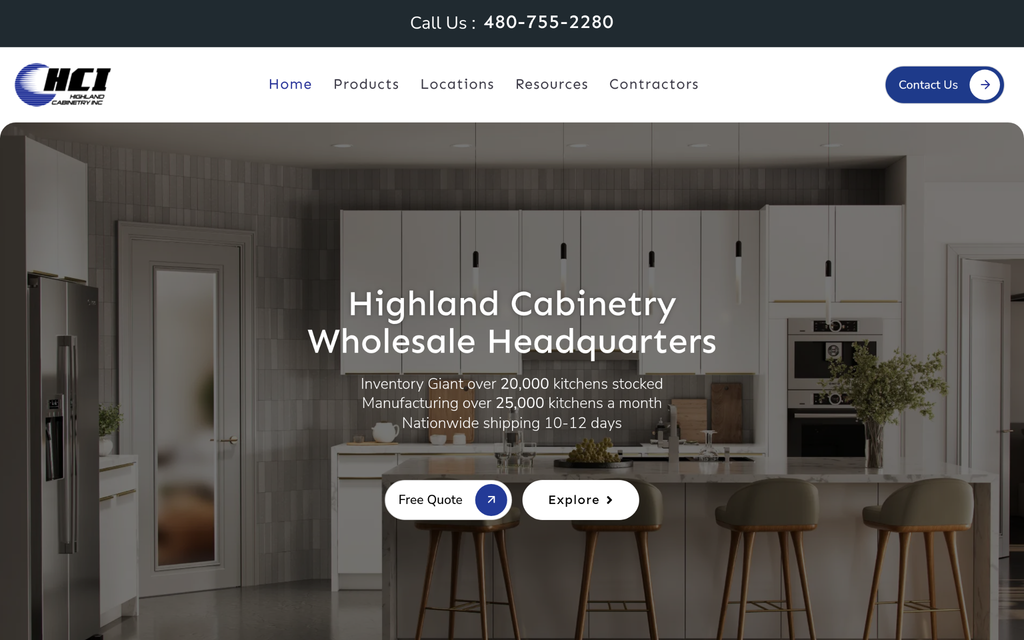
Highland Cabinetry is a wholesale cabinet provider built for contractors, builders, and suppliers who need volume, speed, and consistency. They manufacture in Vietnam and stock over 200,000 cabinets at any given time, with capacity to supply over 25,000 kitchens monthly. For contractors juggling multiple active projects, those numbers actually matter. If you work with Highland Cabinetry, kitchen cabinets for contractors, you’re looking at average freight delivery times of four days and a lifetime warranty on all-wood products across multiple styles and finishes.
What Makes Highland Cabinetry Stand Out for Kitchen Cabinet Suppliers?
Tight schedules are the norm on any job site, and a supplier that averages four-day delivery while holding 200,000 units in stock takes a real variable off the table. Their contractor-facing portal for order management, combined with financing partnerships through Blue Tree Financing, signals they’re set up for professional buyers rather than one-off homeowners.
The Verdict from Users:
The most consistent feedback centers on pricing and speed. Customers note that Highland Cabinetry delivers quality that feels closer to custom-grade at a price point well below most competitors. That combination is harder to find than it sounds.
- ROC Cabinetry – Best for Wholesale Kitchen Cabinet Supply and Design
What Does ROC Cabinetry Do?
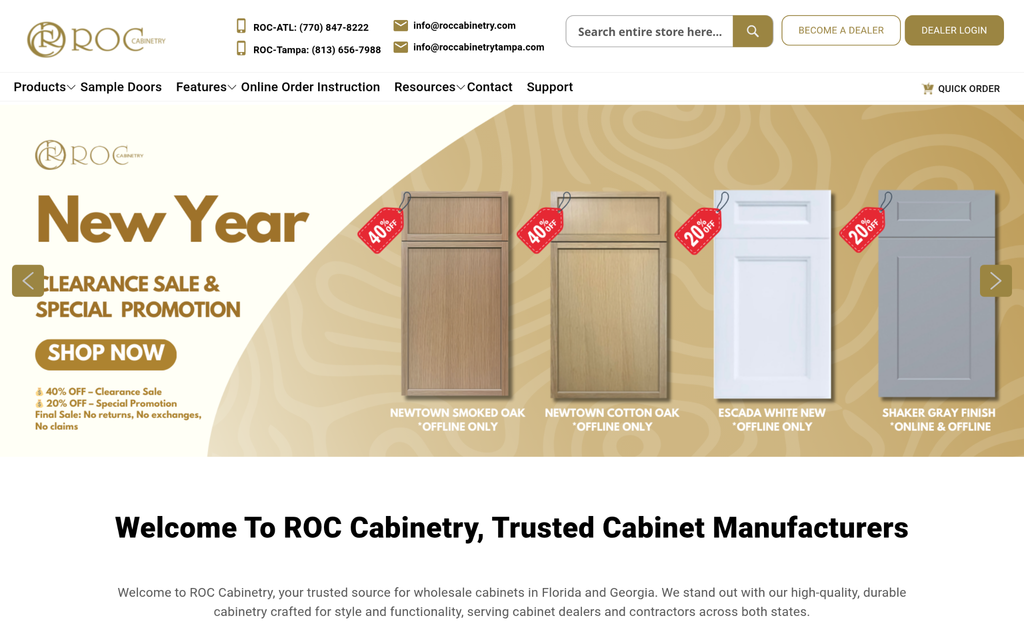
ROC Cabinetry has been operating since 2014 out of Norcross, Georgia, serving cabinet dealers, contractors, and property development groups across Florida and Georgia. They offer 27 distinct products spanning framed and frameless styles, including the Shaker, Inset, Escada, Newtown, Belmont, Classic, and Euro Deluxe series. Their RTA cabinet focus keeps things practical for contractors who need reliable assembly and fast turnaround. Multiple warehouse locations and live inventory syncing mean buyers get a more accurate picture of what’s actually available before committing to an order.
What Makes ROC Cabinetry Stand Out for Kitchen Cabinet Suppliers?
One real challenge in the cabinet industry is ordering product that’s shown as available, only to find it backordered for weeks. ROC’s live inventory syncing and multi-state warehouse setup directly address that problem. That kind of operational visibility builds trust with contractors who’ve been burned by inventory mismatches before.
The Verdict from Users:
ROC Cabinetry earns consistent praise for customer service and pricing that supports repeat business, especially from dealers and contractors running multiple projects. Buyers appreciate the personalized design support, which isn’t something every wholesale supplier makes available.
- Kavalan Cabinetry – Best for Wholesale Cabinet Supply for Builders, Contractors, and Designers
What Does Kavalan Cabinetry Do?
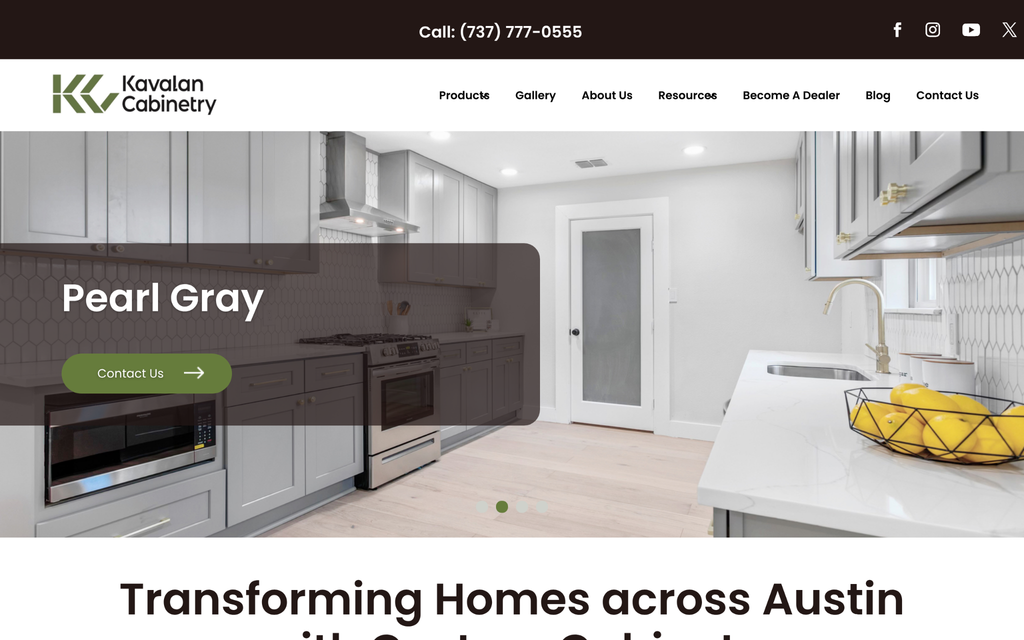
Kavalan Cabinetry is based in Austin and runs its own 65,000 square foot warehouse and showroom. Founded in 2018 and rebranded in 2024, they’ve grown into one of the more prominent cabinet suppliers in Texas. Their product line covers semi-custom and custom all-wood cabinets built from maple wood and plywood, with no particle board or compressed wood in the mix. Because they own their production facility, they cut out the middleman and pass the cost savings to buyers. CARB compliance certification adds another layer of confidence for projects with strict environmental requirements.
What Makes Kavalan Cabinetry Stand Out for Kitchen Cabinet Suppliers?
Controlling your own manufacturing is rare at this scale. Kavalan’s control over its own manufacturing means quality stays more consistent across orders than it does with suppliers relying on third-party factories. For Texas-based contractors and designers, having a local supplier with a functioning showroom makes the selection process considerably smoother.
The Verdict from Users:
Publicly available review data for Kavalan is limited, so it’s difficult to draw patterns from customer feedback the same way you can with larger national suppliers. What’s clear from their positioning and rapid Texas market growth is that they’ve built a following among professionals who value material transparency (no particle board, CARB certified) over the lowest possible price point.
- PA Kitchen – Best for Custom Cabinets for Developers, Contractors, Builders, and Homeowners
What Does PA Kitchen Do?
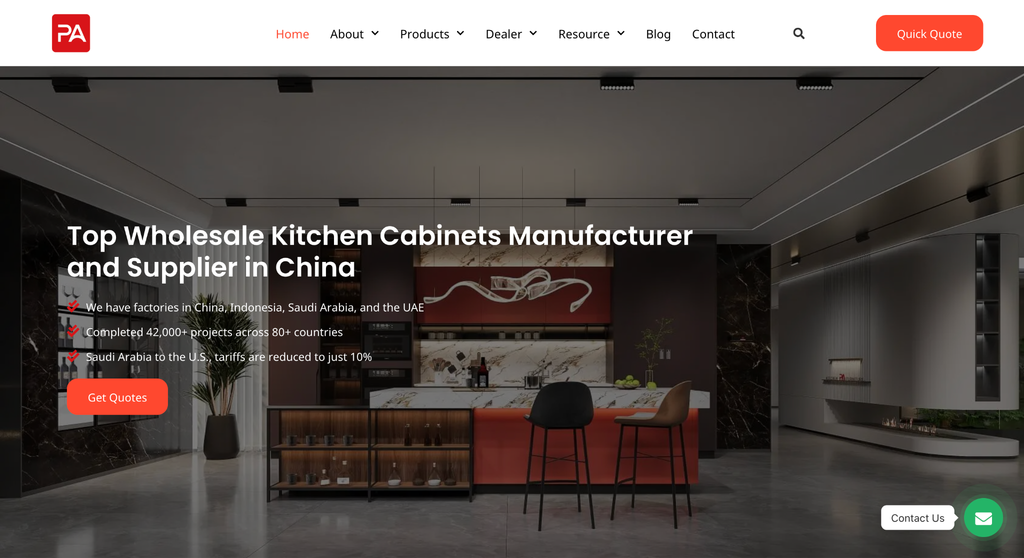
PA Kitchen, operating as PA Home, is a China-based manufacturer founded in 2009 and ranked among the top 10 custom cabinet makers in the country. They’ve completed over 42,000 global projects and serve more than 3,500 B2B clients worldwide. Production runs out of two facilities: 80,000 square meters in Zhaoqing and a 15,000 square meter base in Indonesia. Ten Industry 4.0 fully automated production lines give them an annual output capacity of 200,000 units. Their scope goes beyond cabinets too, covering doors, windows, wall panels, and bathroom systems for developers who want a single supplier across a full home build.
What Makes PA Kitchen Stand Out for Kitchen Cabinet Suppliers?
PA Kitchen reports a 0.1% production error rate through their IDPI intelligent systems, which is a meaningful number for contractors managing large-scale residential or commercial projects where defect claims create real delays. Partnerships with Blum and Hettich for hardware add credibility to their quality claims (not just a manufacturer saying the right things, but backing it up with supplier relationships that matter).
The Verdict from Users:
Publicly available customer reviews for PA Kitchen are limited on North American platforms, which makes independent verification difficult. For buyers considering overseas manufacturers, that’s worth factoring in alongside lead times, import restrictions, and tariff considerations on Chinese-manufactured cabinets. Their scale and project volume speak for themselves, but due diligence on certifications and shipping logistics is still necessary.
- Fabuwood – Best for Semi-Custom and Custom Kitchen Cabinetry Manufacturing
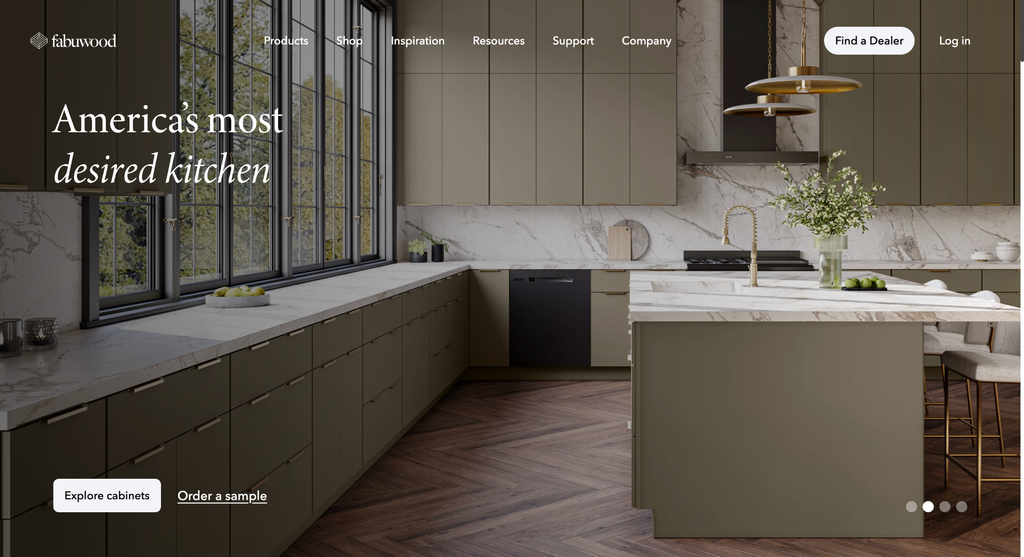
What Does Fabuwood Do?
Fabuwood operates out of Newark, New Jersey and has grown into America’s largest semi-custom kitchen cabinetry manufacturer since launching in 2009. Their main facility covers one million square feet, with additional locations across the Southeast and West Coast. A team of 1,200 people handles everything from manufacturing to dealer support. They sell through a nationwide dealer network and offer stock designs, semi-custom options, and DIY products. Semi-custom cabinet pricing sits in the $300 to $700 per unit range, which puts them at a competitive spot for contractors who need quality without full custom pricing.
What Makes Fabuwood Stand Out for Kitchen Cabinet Suppliers?
Scale at this level means they can absorb large orders without the lead time spikes that hit smaller suppliers during busy seasons (think spring and fall renovation rushes). Their 2018 acquisition of Plain & Fancy expanded their custom capabilities without sacrificing the semi-custom speed and pricing they built their reputation on.
The Verdict from Users:
Fabuwood earned the Best Large Booth award at the 2026 Kitchen & Bath Industry Show, and CEO Joel Epstein was named a 2025 Market Leader by Woodworking Network. Contractors and dealers consistently point to lead times and pricing consistency as the top reasons they keep placing orders.
The research behind these recommendations
The foundation: Starting with raw data
The research process began by building a longlist of cabinet suppliers active in the wholesale and semi-custom market. Sources included industry directories, contractor-facing review platforms, trade publications, and supplier websites. The goal at this stage was breadth: pulling in as many suppliers as possible before applying any filtering criteria. Companies with geographic coverage, documented product lines, and some form of publicly accessible buyer feedback were all included in the initial pool.
Screening tier one
From that longlist, suppliers without verifiable credentials or meaningful review patterns were removed early. This wasn’t just about star ratings. It involved looking at the texture of the reviews themselves: were buyers mentioning specific products? Were complaints resolved or ignored? Were there patterns in how damaged-cabinet claims and delivery issues were handled? Suppliers where the review record was thin, contradictory, or clearly incentivized got filtered out at this stage.
Testing accuracy of the recommendations
Each remaining supplier’s claims were cross-checked against what buyers actually reported. A supplier advertising four-day delivery gets scrutinized differently when contractor reviews mention two-week waits. Product quality claims were weighed against feedback on defect and damage rates per shipment, finish consistency across batches, and whether customer support actually resolved issues. Where a supplier’s self-reported strengths matched real-world results from buyers, that alignment carried weight.
Where each pick stands in the industry
Industry standing was evaluated through trade references, mentions in contractor and design publications, and any recognized awards or certifications from known industry bodies. Fabuwood’s recognition at the Kitchen & Bath Industry Show and Woodworking Network’s acknowledgment of their CEO are examples of the kind of signals that carry real weight in this evaluation. Suppliers with no industry presence beyond their own website were treated with more skepticism than those with verifiable third-party mentions.
Kitchen cabinet suppliers-Specific track record check
Each finalist was reviewed for their focus on the cabinet industry. That meant checking for dedicated wholesale or contractor-facing service pages, CARB Phase 2 emissions compliance documentation, ANSI/KCMA A161.1 performance standard references, and product line depth (door styles, finishes, and available sizes). Suppliers who serve multiple unrelated industries without a clear cabinet focus were ranked lower than those who have built their entire operation around the cabinet supply chain. Verified contractor partnerships, published case studies, and documented warranty processes all contributed to the final selection.
Buyer’s guide: Choosing the right kitchen cabinet suppliers
Selecting a cabinet supplier isn’t just a price comparison. The right fit depends on your project types, order volume, and how much supplier-side support you realistically need. Here are the factors that matter most:
- Industry/Domain Experience: Look for suppliers who have been operating in the cabinet industry, not generalists who added cabinets to a broader product lineup. Suppliers with years of contractor-focused experience understand job site timelines better.
- Features and Service: Consider whether the supplier offers an online order portal, dedicated contractor pricing, design support, and a clear damaged-goods claims process. These features determine how easy they are to work with at volume.
- Pricing Structure: Understand the full cost per linear foot, including shipping, hardware, and finishing accessories. Trade pricing vs. MSRP discount percentage varies significantly between suppliers, and hidden fees add up quickly.
- Results Measurement: Ask suppliers about their average lead time from order to delivery in days, their on-time delivery rate per order, and their defect and damage rate per shipment. Numbers you can verify matter more than marketing language.
- Industry Knowledge and Compliance: Confirm CARB Phase 2 emissions compliance and check for alignment with ANSI/KCMA A161.1 performance standards. For projects with specific HOA or building code finish requirements, those details are non-negotiable.
The summary
The cabinet supplier market has enough options that making a poor choice is genuinely easy. What separates the best picks from the rest comes down to delivery reliability, material quality, and how honestly a supplier represents their own product. For contractors running multiple projects, lead times and defect rates are the numbers that actually affect the bottom line. As demand for faster turnarounds keeps growing, suppliers with deep inventory and transparent processes will continue pulling ahead.










