
You spend half of every workday bracing for the next interruption. Someone swings by your desk to talk about their weekend, a meeting gets added that could have been an email, and by 3 p.m. you’ve used up every ounce of small talk you had in you. None of that means you’re bad at your job. It usually means your job was built for someone who recharges by talking to people, and you’re not that person.
Plenty of the best-paying work in the country barely asks for any small talk at all. A patent examiner spends the day reading applications and writing decisions with almost no client contact. A nuclear reactor operator spends a shift monitoring instruments, mostly alone, in a control room. These aren’t consolation-prize jobs for people who can’t handle an office. Several of them pay noticeably more than careers built entirely around being likeable.
Most require specific training, licensing, or a degree, and none of them are a shortcut. What they have in common is that the hard part is the skill itself, not performing friendliness while you use it.
Elevator and escalator installer and repairer

Most elevator and escalator mechanics spend their shift inside a machine room, a shaft, or an equipment closet, not behind a reception desk. The work is mechanical and electrical troubleshooting: tracing a wiring fault, swapping a worn cable, running diagnostics on a control panel. Building staff might ask how long a repair will take, but the actual job happens alone or with one other mechanic, and the conversation that does happen stays practical. Nationally, these mechanics bring home a median $52.84 an hour.
Getting in usually means a multi-year union apprenticeship rather than a four-year degree, with most of the training happening on the job rather than in a classroom. Elevators also fall under strict local and state safety codes, so mechanics typically need to pass licensing exams on top of their apprenticeship. It’s physically demanding work in tight, enclosed spaces, which keeps the field smaller than it would otherwise be, and that scarcity is a big part of why the pay holds up this well.
Nuclear power reactor operator

Nuclear power reactor operators monitor a control room, watching instruments and gauges through long, highly procedural shifts. The job is licensed and tightly regulated by the Nuclear Regulatory Commission, and most of a shift is spent alone or with a small, fixed crew rather than in front of the public. Nationally, reactor operators earn a median $59.08 an hour.
Getting licensed typically means years of plant-specific training and passing federal exams, often starting from a related technical role rather than a traditional degree path. Shifts run around the clock in rotating blocks, including nights and weekends, and new operators work under close supervision from senior licensed staff until they’ve logged enough hours to work independently. The job also comes with strict testing and ongoing retraining requirements, since a lapse in attention carries real consequences. It’s exacting, safety-critical work, and the isolation of the control room is treated as a feature of the job, not a flaw, since consistency matters more than charisma when you’re responsible for a reactor core.
Power plant distributor and dispatcher

Power distributors and dispatchers work from a control room, rerouting electricity across the grid and responding to outages or demand spikes in real time. Most of the job is monitoring systems and making fast technical calls, with coordination handled over radio or phone rather than face to face. Nationally, distributors and dispatchers earn a median $51.31 an hour.
Most employers hire for this role without requiring a four-year degree, relying instead on extensive on-the-job and simulator training before someone works a shift unsupervised. During a storm or equipment failure, a dispatcher might be rerouting power to tens of thousands of customers at once, making fast judgment calls under pressure with little time for anything beyond short, clipped updates to field crews. The role sits at the center of keeping the lights on for an entire region, but almost nobody outside the utility ever interacts with the person doing it. It involves more real-time coordination than some of the other control-room jobs on this list, but it’s still fundamentally a job built around monitoring a system rather than managing people.
Court reporter and realtime captioner

Courtroom and broadcast captioning work rewards accuracy over conversation. A realtime stenographer sits at a keyboard translating spoken words into text as fast as people can talk, which leaves essentially no room for chit-chat during the job itself. Outside of depositions or live broadcasts, plenty of freelance realtime reporters work independently, picking up assignments rather than reporting to an office every day. The national median for court reporters and captioners sits well under $50 an hour, but the best-paid realtime reporters and captioners nationally earn $60.79 an hour, and that top tier is where the specialized, certified realtime skill actually lives.
Getting there means finishing a stenography program and passing speed and accuracy certification exams, often at 225 words per minute or faster. It’s a demanding skill to build, which is exactly why so few people have it, and why the ones who do get paid well for sitting quietly and typing.
Patent examiner

Patent examiners read, not pitch. The job is deep solo research: reading a patent application, searching prior art, and determining whether an invention is truly new and non-obvious, all from a desk, often working from home for at least part of the week. Contact with the outside world happens mostly in writing, through formal office actions, with the occasional scheduled call or interview with an applicant’s attorney rather than open-ended conversation. Senior examiners in the Washington, D.C., pay zone start around $58 an hour under the federal government’s current pay tables, and the number climbs from there with further promotions.
Most examiners need a four-year degree in a technical or scientific field, since the job involves assessing the technical merits of an invention, but a law degree isn’t required at the entry level. The role also comes with production quotas rather than open-ended deadlines, so the work is self-paced within clear boundaries, which suits someone who’d rather manage their own time than sit through status meetings. It’s about as introvert-friendly as federal work gets: structured, deadline-driven, and almost entirely independent.
Orthotist and prosthetist

Fitting someone for a prosthetic limb or a custom brace is intimate, one-on-one work, but it isn’t chatty. Appointments are scheduled and focused on measurements, fit, and function, and a meaningful part of the job happens afterward in a workshop, fabricating and adjusting the device alone. Nationally, orthotists and prosthetists earn a median under $50 an hour, but experienced practitioners nationally earn $56.37 an hour and above.
The field requires a master’s degree in orthotics and prosthetics plus a residency and board certification, a longer runway than most of the jobs on this list. Follow-up visits happen on a schedule of weeks or months rather than daily, so the relationship with each patient builds slowly across a handful of focused appointments instead of constant contact, and much of the actual craftsmanship, carving a socket, adjusting alignment, testing load-bearing points, happens solo in the lab with no one else in the room. For someone who wants meaningful, skilled work without a packed schedule of small talk, it’s a strong trade-off: fewer, deeper appointments instead of a constant stream of short ones.
Landscape architect

A landscape architect’s best hours happen alone at a drafting table or in CAD software, working out drainage, plant placement, and how a space will actually be used once it’s built. Client meetings and site visits are part of the job, but they’re scheduled check-ins rather than constant interruptions, and a lot of the real work is independent design and technical drawing. Nationally, landscape architects earn a median under $50 an hour, but experienced architects nationally reach $60.38 an hour.
Licensure requires a professional degree in landscape architecture and passing a national exam, which takes several years to complete. Permitting and code research add another layer of solo deskwork, since much of the job involves making sure a design will actually satisfy a municipality’s stormwater and zoning rules before it ever gets built. It’s a creative field with a technical backbone, better suited to someone who wants to solve a problem quietly and present a finished plan than someone who wants to brainstorm out loud in a group all day.
Diagnostic medical sonographer

An ultrasound room is quiet by design, lights dimmed, most of the appointment spent watching a screen rather than talking. Sonographers position the probe, capture the images a radiologist needs to make a diagnosis, and give patients short, practical instructions along the way. It’s hands-on, technical work that rewards precision over chattiness. Nationally, sonographers earn a median $46.44 an hour, and experienced sonographers, especially those certified in a cardiac or vascular specialty, regularly cross into the $56 an hour range.
The standard path is an associate or bachelor’s degree in sonography followed by national certification. Appointments are typically 30 to 60 minutes apiece, which keeps the day structured around focused, one-task-at-a-time work rather than an open floor full of distractions. Most sonographers work a defined shift in a hospital imaging department or outpatient clinic, moving from one scheduled appointment to the next rather than fielding walk-ins or phone calls. The job also rewards people who like puzzles: reading subtle differences in grainy black-and-white images takes real pattern recognition, and that skill, not sociability, is what gets someone promoted or specialized.
Dental hygienist

Dental hygienists talk to patients who, for fairly obvious reasons, can’t talk back for most of the appointment. Cleanings follow a set routine of scaling, polishing, and checking for problems, and the conversation that does happen is short and professional rather than a running back-and-forth. Hygienists typically see a new patient every 45 minutes to an hour, which keeps the day structured and predictable rather than open-ended. Nationally, hygienists earn a median $47.16 an hour, and experienced hygienists in busy practices often earn closer to $57 an hour.
The path in is a two-year associate degree in dental hygiene plus a licensing exam, shorter and cheaper than most of the other careers on this list, which makes it one of the more accessible entries here. In several states, hygienists can now work with expanded authority, treating patients in community clinics or nursing homes with less direct dentist oversight, which only adds to the independence of the role.
Nuclear medicine technologist
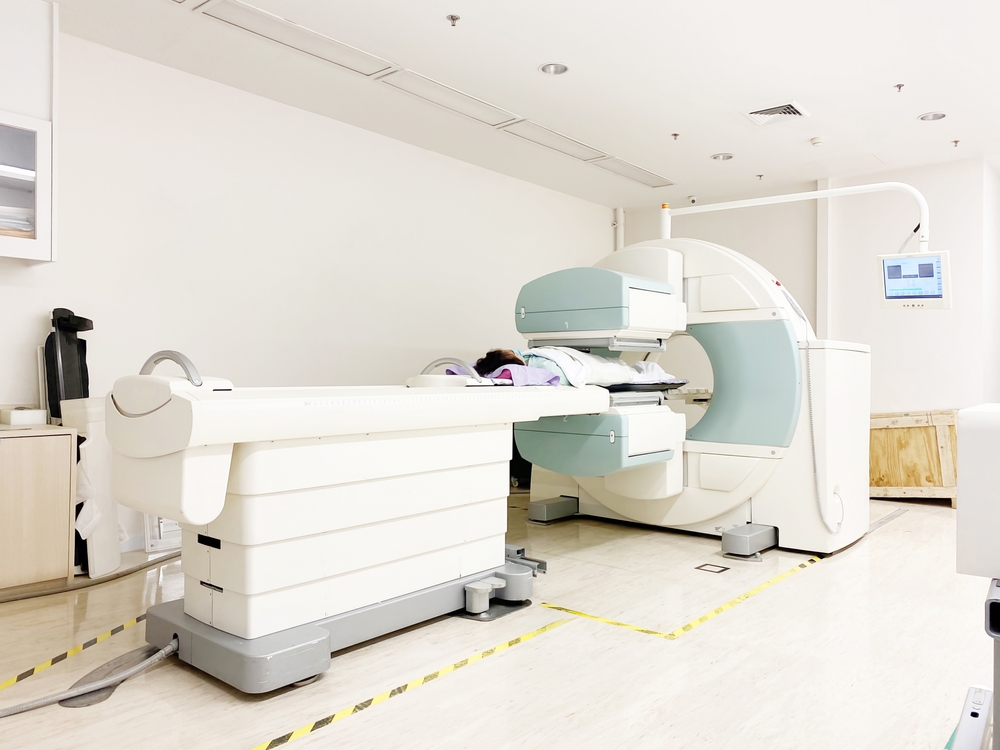
Nuclear medicine technologists spend most of a shift preparing radioactive tracers and running a scanner, not making conversation. A patient gets an injection, waits for the tracer to circulate, then holds still while the scanner does its work. The technologist is mostly occupied with equipment, dosing, and radiation safety protocols rather than chit-chat. Nationally, these technologists earn a median $48.74 an hour, and experienced technologists reach $59.57 an hour and above.
It typically takes a two-year associate degree plus certification to get licensed, and the radiation-safety training that comes with the job isn’t something most employers are willing to skip. Hospitals and imaging centers hire for this role with structured shift schedules, so the day rarely turns into an open-ended string of unplanned interactions the way some healthcare jobs do. Most of a technologist’s time is spent calibrating equipment, calculating doses, and documenting results, tasks that depend on precision and record-keeping rather than bedside manner.
MRI technologist

MRI technologists work from a control console, communicating with patients mostly through an intercom while they run the scan. The job is procedural rather than conversational: position the patient, start the sequence, watch the images come through, adjust, repeat. Nationally, MRI technologists earn a median $95,480 a year, and technologists with a few years of specialized MRI experience push into the $54 an hour range and above.
Most technologists start with an associate degree in radiologic technology, then add MRI-specific certification once they’re working, since MRI pays noticeably better than general X-ray work. Hospitals typically schedule MRI appointments in fixed blocks throughout the day, so technologists know their caseload before a shift even starts rather than reacting to a constant stream of walk-ins. Some move into research imaging or specialized functional MRI work later in their career, which comes with even less routine patient turnover and more protocol-driven, solitary work. It’s a good fit for someone who likes machines and protocols more than open-ended patient conversation.
Radiation therapist

A radiation therapist’s time with each patient is short by design: position them precisely on the treatment table, run the linear accelerator for a few minutes, check in, and move to the next appointment. The real skill is in the setup and the planning behind it, making sure the radiation hits the tumor and nothing else, not in extended conversation. Nationally, radiation therapists earn a median $50.63 an hour, clearing $50 without needing to cherry-pick the best-paid slice of the field.
The job usually requires an associate or bachelor’s degree in radiation therapy and a national certification exam. Much of the supporting work, calculating doses and mapping treatment plans, happens beforehand with a dosimetrist and radiation oncologist rather than the patient, so the treatment room itself stays focused and efficient rather than conversational. It’s emotionally heavier work than some of the other entries here, since most patients are undergoing cancer treatment, but the day-to-day interaction stays brief and procedural rather than open-ended.
Actuary

Actuaries get paid to sit with spreadsheets and worst-case scenarios: how likely is this event, what would it cost, how should a company price around that risk. Much of the job is independent modeling and report writing, with meetings scheduled rather than constant, and plenty of actuaries work in-house for an insurer or pension fund rather than consulting across a rotating cast of clients. Nationally, actuaries earn a median $62.50 an hour.
Breaking in means passing a series of professional exams, usually while already working entry-level, and most actuaries are still sitting for exams years into the job. A lot of actuarial work can also be done remotely or hybrid, since the output is a model, a report, or a set of assumptions rather than anything that requires being physically present with a team. It’s a slow, exam-heavy path that rewards people who’d rather study alone in the evening than go network at a happy hour, which is a big part of why it pays as well as it does.
Mathematician

Pure and applied mathematics is still, somehow, a paying job outside a university lecture hall. Mathematicians working for government agencies, research labs, and finance and tech firms spend their days on abstract problem-solving, building and testing models, largely without a client-facing component at all. Nationally, mathematicians earn a median $126,710 a year, which works out to a bit over $60 an hour across a standard work year.
Most roles require at least a master’s degree, and plenty require a PhD, so this isn’t a fast path in. Government research labs, universities, and tech companies doing cryptography or algorithm research are among the most common employers outside pure academia, and the work tends to be project-based and deeply individual: one person wrestling with one hard problem for weeks, checking in periodically rather than collaborating constantly. For someone who already loves the subject and dreads open-plan offices, it’s one of the purest desk jobs on this list.
Petroleum engineer

Petroleum engineers spend real time modeling how oil and gas move through underground reservoirs, running simulations to figure out where and how to drill most efficiently. Office-based reservoir and production engineers do plenty of that work from a desk, with site visits and field rotations layered in rather than constant, though the field does skew more collaborative than some of the other jobs here, with regular coordination across geology, drilling, and operations teams. Nationally, petroleum engineers earn a median $69.67 an hour, near the top of what’s realistic to expect from any job on this list.
A four-year engineering degree is the standard entry point, and starting pay in this field already runs well above most other engineering disciplines. Rotational field assignments are common early in a career, which can mean remote sites with small crews rather than a crowded corporate office, before engineers move into steadier desk-based reservoir or production roles. If constant client contact is the dealbreaker rather than teamwork itself, this is worth a look. If it’s coworkers in general, it probably isn’t the best fit here.
Nuclear engineer

Nuclear engineering runs on documentation, simulation, and double-checking, the kind of exacting technical work that doesn’t leave much room for improvisation or, frankly, small talk. Engineers in this field design and troubleshoot reactor systems, run safety analyses, and work through regulatory requirements that are about as unforgiving as paperwork gets. Nationally, nuclear engineers earn a median $64.41 an hour.
It takes a four-year engineering degree at minimum, often followed by additional certification depending on the employer, and the field is small enough that specialists are hard to replace. A lot of the job happens at national laboratories, utility companies, or federal agencies, running simulations and writing technical reports that go through multiple rounds of internal review before anything gets implemented, which adds structure and predictability to the week rather than requiring constant real-time collaboration. Teams tend to be tight-knit rather than sprawling, which suits someone who wants depth with a handful of people rather than breadth across a big department.
Biomedical engineer

Biomedical engineers design the devices that keep other people alive, usually from a lab bench or a CAD workstation rather than a sales floor. The work involves prototyping, testing, and documenting medical devices against strict regulatory standards, with plenty of solitary design and testing time between the meetings. Cross-functional check-ins with clinicians or regulatory staff happen, but they’re scheduled and purposeful rather than the constant drop-by interruptions common in a lot of office jobs. Nationally, biomedical engineers earn a median $52.58 an hour.
Most biomedical engineers come in with a four-year engineering degree, sometimes paired with a graduate degree for more specialized roles in areas like prosthetics or implantable devices. A single device can take months or years to move from prototype to approval, and most of that time is spent running tests, documenting results, and refining a design based on data rather than meeting with people. It’s one of the more stable, least client-facing engineering paths available, and it rewards patience with detail over comfort in a room full of strangers.
Materials scientist

Materials scientists spend their careers testing how things break: stress-testing metals, polymers, and composites to figure out why a part failed or how to make the next version hold up better. Most of that happens in a lab, running tests and analyzing results, with writeups going to an engineering team rather than a client. Nationally, materials scientists earn a median $117,790 a year, or a little over $56 an hour across a standard work year.
The role typically requires a bachelor’s degree in materials science, chemistry, or a related engineering field, with a master’s or PhD opening up more senior research positions. It’s methodical, repetitive-in-a-good-way work, better suited to someone who likes running the same test forty different ways than someone who needs constant variety in who they talk to.
None of these jobs ask you to fake enthusiasm for people you just met. They ask you to be very good at something specific, and the pay reflects that.











