
Skipping a four-year degree does not mean skipping training. In many well-paid careers, employers simply use a different filter.
That might be an associate degree and professional license, as it is for several medical-imaging jobs. It might be a paid apprenticeship followed by years of technical experience. In aviation and maritime work, formal credentials and logged experience matter more than a conventional college path. And in fields such as construction, warehousing, sterile processing, and aircraft maintenance, some of the highest-paying positions are reached by starting on the floor and moving into increasingly responsible roles.
Those routes can lead to surprisingly strong earnings. Radiation therapists, elevator mechanics, power-grid specialists, commercial pilots, ship engineers, healthcare technicians, and experienced operations managers can all reach roughly $45 an hour or considerably more without requiring a bachelor’s degree as the standard entry ticket.
There is usually a trade-off. Instead of four years in a lecture hall, you may face licensing exams, night shifts, physical work, several years as an apprentice, responsibility for expensive equipment, or a long climb through the ranks. But for people who would rather build a specialized skill than take the traditional university route, there are far more high-paying options than the usual handful of trades.
Table of contents
- Radiation therapist
- PET/CT technologist
- Registered cardiac sonographer
- Nuclear medicine technologist
- MRI technologist
- Dental hygienist
- Registered nurse
- Sterile processing manager
- Sleep lab manager
- Elevator and escalator installer and repairer
- Electrical power-line installer and repairer
- Powerhouse, substation, and relay repairer
- Construction superintendent
- Aircraft maintenance manager
- Commercial pilot
- Ship engineer
- Distribution center manager
- Police and detective supervisor
Radiation therapist

Radiation therapists work with cancer patients receiving carefully planned radiation treatments. You position patients, operate treatment equipment, confirm settings, monitor reactions, and work closely with oncologists and other clinical staff. Median pay comes to about $50.63 per hour. Most jobs are in hospitals, cancer centers, and outpatient treatment facilities.
You do not need a bachelor’s degree to qualify. An accredited associate-degree program can lead to this career, followed by certification and any licensing required where you work. The training is technical, and there is very little room for sloppy work. You are dealing with precise treatment plans and patients who may already be dealing with pain, exhaustion, and anxiety.
Employment is projected to remain steady over the coming decade. Cancer treatment continues to create a baseline need for trained therapists, especially as the population gets older. Newer equipment may make treatments more efficient, but somebody still has to position patients correctly, run the machinery, verify safety steps, and respond when something does not look right.
PET/CT technologist
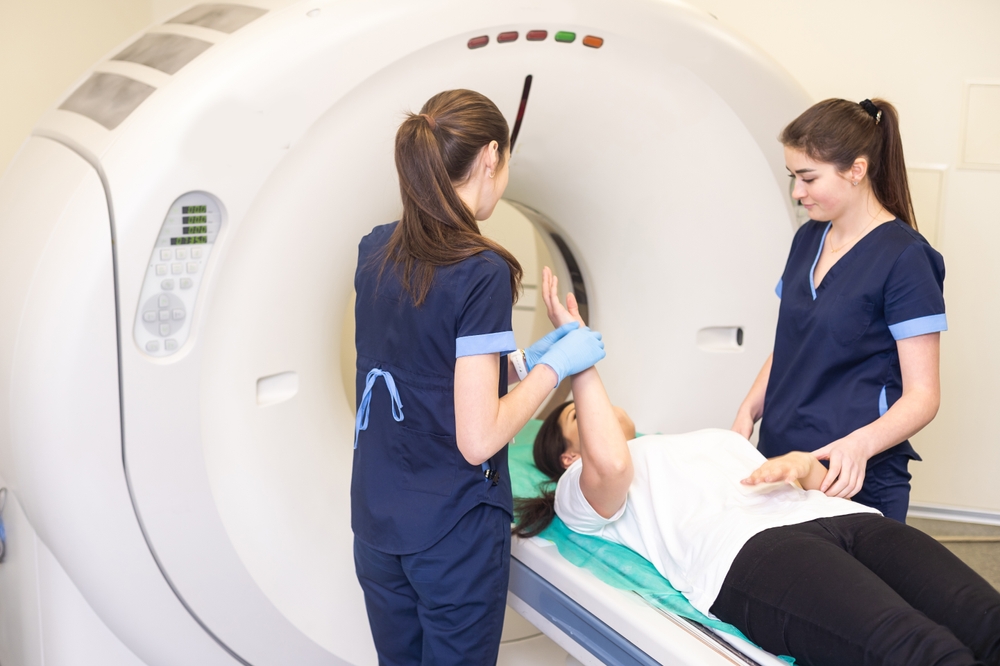
PET/CT technologists combine two types of medical imaging to help doctors spot cancer, heart problems, neurological conditions, and other diseases. You may prepare radioactive tracers, position patients, run scanners, check image quality, and follow strict radiation-safety procedures. Average pay is about $48 per hour.
This is usually a second-step healthcare career rather than something you enter directly from high school. A common route is earning an associate degree in radiologic technology or nuclear medicine technology, becoming properly credentialed, and then adding PET or CT qualifications. That makes it especially interesting if you already work in medical imaging and want a higher-paying specialty without going back for a bachelor’s degree.
The underlying imaging fields are expected to keep growing as doctors order more diagnostic testing for an aging population. PET/CT is also deeply hands-on. The machine may be sophisticated, but patients still need screening, positioning, monitoring, radiation precautions, and a trained person who knows when an image is usable and when something needs to be repeated.
Registered cardiac sonographer
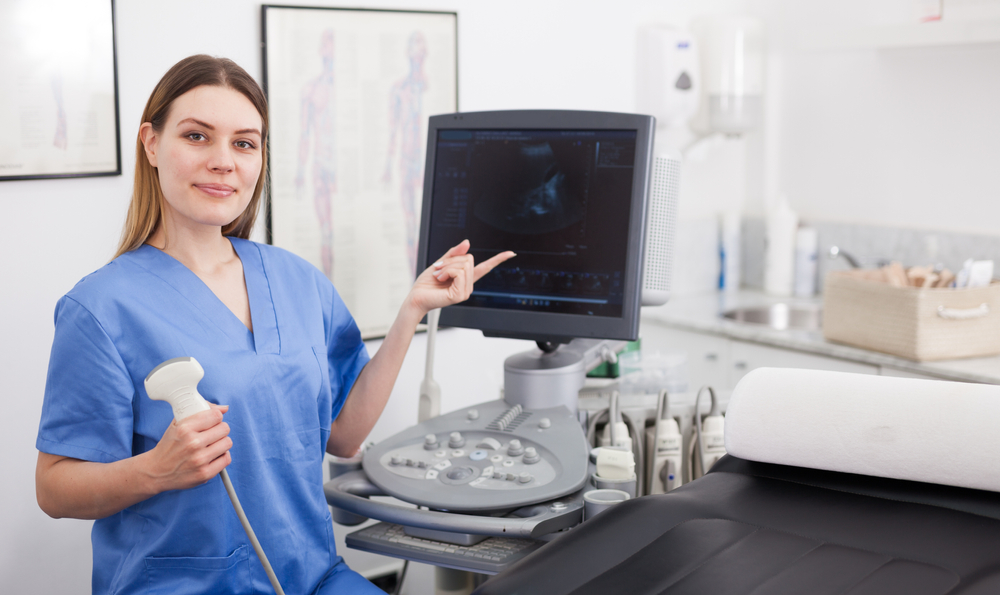
Registered cardiac sonographers use ultrasound equipment to produce detailed images of the heart. You may examine valves, chambers, blood flow, and heart function while adjusting the probe and machine settings in real time. Average pay for registered cardiac sonographers is around $48 per hour.
An associate degree or qualifying postsecondary sonography program can get you started. Employers commonly look for professional credentials as well, so passing the appropriate registry exam matters. You need more than the ability to push buttons. Getting a useful image can mean changing patient position, adjusting angles by tiny amounts, recognizing anatomy, and knowing when what you are seeing deserves immediate attention.
Sonography has one of the stronger growth outlooks among healthcare technical careers. Heart disease also remains a major reason people need diagnostic testing. Hospitals, cardiology practices, imaging centers, and outpatient facilities all use cardiac ultrasound. Because each scan depends heavily on the technologist’s hands, eyes, and judgment at the bedside, this specialty is difficult to turn into a purely automated process.
Nuclear medicine technologist
Nuclear medicine technologists prepare and administer radioactive drugs used to diagnose and sometimes treat disease. You may run gamma cameras or other imaging equipment, calculate doses, monitor patients, and carefully handle radioactive materials. Median pay is about $48.74 per hour.
An associate degree from an accredited nuclear medicine technology program is a standard route into the field. Certificate pathways also exist for people who already have qualifying healthcare training. Certification is common, and licensing may also be required. The job has a heavy safety component, so employers need people who understand radiation handling, patient preparation, equipment operation, and what to do when a procedure does not go as planned.
Employment is projected to grow at about the average rate over the coming decade, with replacement openings adding to demand. Nuclear imaging remains important in cancer care, cardiac testing, and other specialties. It is a smaller profession than nursing or general radiology, which also means hospitals cannot simply pull any available employee into the department when somebody leaves.
MRI technologist

MRI technologists operate powerful magnetic resonance scanners that create detailed images of the brain, spine, joints, organs, and other parts of the body. The work includes screening patients for implants or metal, selecting imaging protocols, positioning people correctly, and helping nervous or claustrophobic patients get through the exam. Median pay is around $45.90 per hour.
An associate degree is the usual starting point. Some MRI technologists first qualify in radiography and then add MRI training and certification, while other approved pathways lead more directly into MRI. Either way, a four-year degree is not required. Hospitals, outpatient imaging centers, and medical offices employ these workers.
MRI employment is projected to grow much faster than the overall job market over the next decade. More older adults means more cancer, neurological conditions, injuries, and joint problems that need imaging. Scanners can become faster and software can improve, but somebody still has to screen the patient, choose the correct setup, watch for safety problems, and get diagnostic-quality images from a person who may be scared, hurting, or unable to lie still.
Dental hygienist

Dental hygienists clean teeth, take dental X-rays, check for gum disease, apply preventive treatments, and teach patients how to care for their teeth between visits. Median pay is about $47.16 per hour. Many hygienists work part time, which can make this one of the more flexible high-paying clinical careers.
You generally need an accredited dental hygiene program, which typically leads to an associate degree and takes about three years including prerequisite coursework. You must also pass the required examinations and qualify for a license where you work. It is not a quick certificate, but it is still a much shorter and cheaper education path than earning a bachelor’s degree followed by professional school.
Employment is projected to grow considerably faster than average. People are keeping their natural teeth longer, which means more years of cleanings, periodontal care, X-rays, and preventive treatment. The work is also intensely physical and patient-facing. A hygienist spends the day examining individual mouths, handling instruments, noticing changes, and adjusting care to the person sitting in the chair.
Registered nurse

Registered nurses assess patients, administer medications, coordinate care, monitor changes, educate families, and respond when a patient’s condition suddenly gets worse. Median pay is roughly $46.90 per hour, although schedules and earnings vary widely depending on the type of facility and nursing specialty.
A bachelor’s degree is one route into nursing, but it is not the only one. You can qualify through an associate degree in nursing or an approved nursing diploma program, then pass the national licensing exam and meet local licensing requirements. Some large employers prefer bachelor’s-trained nurses for certain jobs, but associate-degree nurses continue to work throughout hospitals, clinics, long-term care, rehabilitation, home health, and other settings.
Nursing employment is projected to grow faster than average, with a huge number of openings each year from both expansion and workers leaving the profession. This is also one of those jobs where technology can change the paperwork without eliminating the core work. Sick people still need somebody to assess them, notice subtle changes, explain what is happening, administer treatment, and make judgment calls in real time.
Sterile processing manager

Sterile processing departments clean, inspect, assemble, sterilize, and track the instruments used in surgery and other medical procedures. The manager keeps that complicated system moving, supervises technicians, handles quality problems, manages inventory, and makes sure operating rooms receive safe instruments when they need them. Average pay is about $45 per hour.
This is a work-your-way-up career. Many people start as sterile processing technicians with a high school diploma, complete certification, and build experience before becoming leads, supervisors, and eventually managers. Some employers prefer college education for management jobs, but plenty of people in the field reach leadership positions through technical credentials and years of strong department experience.
The work is easy to overlook until a tray is missing or an instrument has not been sterilized correctly. Hospitals cannot run busy surgical schedules without reliable sterile processing. That makes experienced managers valuable. Software can track inventory and equipment, but infection-control decisions, staff coordination, damaged instruments, emergency cases, and constant changes in the operating-room schedule still require people who understand the department from the inside.
Sleep lab manager

Sleep lab managers oversee centers where patients are tested for problems such as sleep apnea, abnormal nighttime breathing, and other sleep disorders. They supervise technologists, maintain testing standards, handle equipment and scheduling problems, and make sure overnight studies are performed and documented correctly. Average pay is about $62 per hour.
This is another career where experience can matter more than a bachelor’s degree. A common path is becoming a sleep technologist, completing approved training and clinical hours, earning a registered sleep credential, and eventually moving into supervisory work. Some manager jobs do prefer college degrees, so you need to read requirements carefully, but degree-free pathways into the field and its leadership ranks exist.
Sleep medicine has a steady patient base because testing often involves real people spending the night connected to sensors while a technologist watches breathing, oxygen levels, heart activity, movement, and sleep stages. Managers also deal with staffing, equipment failures, clinical standards, patient issues, and physician needs. Those practical responsibilities make this a much more hands-on job than the title might suggest.
Elevator and escalator installer and repairer

Elevator mechanics install, maintain, test, and repair elevators, escalators, moving walkways, and similar equipment. You may troubleshoot electrical controls one day and work on motors, cables, brakes, hydraulics, or safety systems the next. Median pay is $52.84 per hour.
The normal entry requirement is a high school diploma followed by a paid apprenticeship. Apprentices learn electrical theory, mechanical systems, blueprint reading, troubleshooting, and safety while working under experienced mechanics. Licensing is required in many places. The apprenticeship takes several years, so this is not a quick retraining option, but you are earning while you develop the skills.
Employment is projected to grow faster than average. New buildings create installation work, while every existing elevator also needs inspection, preventive maintenance, modernization, and repair. The job is physical, technical, and sometimes uncomfortable. You may work in shafts, machine rooms, cramped spaces, or at height. When a lift stops working in a hospital, apartment building, or office tower, somebody with tools and real mechanical knowledge has to show up and fix it.
Electrical power-line installer and repairer

Power-line workers build and maintain the electrical lines that carry power through communities. They climb poles and towers, operate bucket trucks, install equipment, test lines, and restore service after damage. Median pay is about $45.83 per hour.
You generally need a high school diploma, technical instruction, and extensive on-the-job training. Apprenticeships are common, and some workers attend lineworker programs before applying to utilities or contractors. You need to be comfortable with heights, physical work, strict safety procedures, and schedules that can change quickly when an outage happens.
Employment is projected to grow much faster than average over the coming decade. The electrical grid is being expanded, repaired, hardened, and updated while electricity demand grows. Storms and equipment failures also create work that cannot be postponed until a convenient time. Modern monitoring systems can tell a utility that something has failed, but they cannot climb a damaged pole, replace hardware, reconnect conductors, and safely energize the line again.
Powerhouse, substation, and relay repairer

Relay technicians and related electrical repairers maintain the equipment that protects and controls the power grid. Instead of stringing cable from poles, you are more likely to be inside generating facilities and substations testing protective relays, breakers, transformers, controls, and electronic systems. Median pay comes to roughly $49.53 per hour.
A bachelor’s degree is not the usual entry ticket. Employers typically look for a high school diploma plus strong electrical or electronics training, and some workers begin as electricians before moving into utility relay work. Community-college electronics courses, technical programs, apprenticeships, and employer training can all be part of the route. Expect a serious learning curve because mistakes around high-voltage equipment can have major consequences.
This particular electrical specialty is projected to grow sharply as utilities deal with greater strain on the grid and more complicated equipment. The occupation is relatively small, which is one reason many people have never heard of it. Yet every modern power system depends on protective equipment that has to be tested, calibrated, repaired, and verified by trained workers.
Construction superintendent

A construction superintendent runs the daily work on a building site. You coordinate subcontractors, solve sequencing problems, check quality, enforce safety rules, handle schedule changes, and deal with the hundred small surprises that can derail a project. Average pay is around $56 per hour.
This is not usually a job you walk into after a short class. The no-degree route is experience. Many superintendents start as carpenters, electricians, equipment operators, or other tradespeople, then move into foreman and supervisory positions. A large share of people working under the superintendent title have a high school education rather than a bachelor’s degree. Bigger firms may still prefer college credentials, so experience and a strong project record matter.
Construction management employment is projected to grow much faster than average as infrastructure work, new buildings, renovations, and energy upgrades continue. Software can help with schedules and reports, but a superintendent spends the day dealing with physical work, people, weather, deliveries, inspections, mistakes, and problems that were not on yesterday’s spreadsheet.
Aircraft maintenance manager

Aircraft maintenance managers oversee the mechanics and technicians responsible for keeping aircraft safe and ready to fly. They coordinate inspections, scheduled maintenance, repairs, staffing, documentation, and compliance work. Average national pay is about $63 per hour.
You do not need to start with a four-year aviation-management degree. A practical route is becoming an aircraft mechanic, earning the required airframe and powerplant credentials, building several years of maintenance experience, and moving into lead and supervisory positions. Many current managers have high school or associate-level education. Employers care heavily about technical knowledge because the person running the shop needs to understand what the mechanics are actually doing.
Commercial aviation depends on mandatory inspection and maintenance schedules whether passenger demand is booming or merely steady. Aircraft are expensive assets, and safety rules do not disappear because a company wants to save money. Computers can track service intervals and maintenance records, but mechanics still have to inspect real aircraft, troubleshoot faults, replace parts, sign off work, and answer to managers who understand aviation maintenance.
Commercial pilot

Commercial pilots fly charter aircraft, helicopters, sightseeing flights, cargo runs, aerial survey missions, and other non-airline operations. They review weather, plan flights, inspect aircraft, communicate with controllers, manage passengers or cargo, and make the final call when conditions change. Median pay works out to about $59.24 per hour.
A bachelor’s degree is not typically required for commercial-pilot work. You do need flight training and the required pilot certificates, medical qualifications, ratings, and flight hours. Reaching the better-paying jobs usually takes time because pilots build experience through instruction, smaller aircraft, charter operations, or other flying work before moving into more desirable positions.
Commercial-pilot employment is projected to grow faster than the overall job market, helped by private charter demand and freight activity. Modern airplanes already automate large parts of routine flying, but pilots are still responsible for weather decisions, abnormal situations, equipment problems, changing flight plans, and the safety of everyone aboard. That responsibility is why training standards and licensing remain so strict.
Ship engineer

Ship engineers operate and maintain the machinery that keeps commercial vessels moving. They monitor engines, generators, pumps, electrical systems, fuel systems, and other mechanical equipment while troubleshooting problems far from an ordinary repair shop. Median pay is about $52.66 per hour.
You can enter maritime engineering without earning a bachelor’s degree at a maritime academy. The traditional work-your-way-up route starts in an engine department, where you build sea time, technical experience, and the credentials needed to advance into licensed engineering positions. It takes commitment and time, but it is a legitimate non-bachelor’s career path. Merchant mariners also need the required identification, medical clearances, and professional credentials.
Water-transportation employment is projected to remain stable, and ship engineer positions should continue to exist anywhere large vessels need complex machinery kept running. The lifestyle is not for everybody. You may spend long stretches away from home and work unusual schedules. In return, you are developing specialized mechanical skills in an environment where breakdowns cannot simply wait for a technician to arrive tomorrow morning.
Distribution center manager

Distribution center managers oversee large facilities where products arrive, get stored, and leave for stores, businesses, or customers. You are responsible for staffing, inventory flow, safety, shipping deadlines, equipment problems, and the constant reshuffling that happens when orders or deliveries do not go according to plan. Average pay is about $47 per hour.
This is another role where years on the job can replace a bachelor’s degree. People often move from warehouse or transportation work into team-lead and supervisor positions, then compete for management jobs. Some employers do prefer degrees, but high school and associate-level workers are well represented in the field. Knowing the operation from the floor up can be a real advantage when you are responsible for hundreds of moving pieces.
The broader transportation, storage, and distribution management field is projected to grow faster than average as companies handle more complicated inventories and delivery networks. Warehouses are becoming more automated, but that does not remove the need for managers. Automation creates its own equipment failures, bottlenecks, safety issues, staffing problems, and exceptions that somebody has to resolve while trucks keep arriving at the dock.
Police and detective supervisor

Police and detective supervisors coordinate the work of officers and investigators. Depending on the assignment, you may review cases, manage shifts, respond to major incidents, evaluate reports, assign personnel, handle disciplinary issues, and make decisions when situations become complicated quickly. Median pay comes to about $50.98 per hour.
This is a promotion path, not an entry-level job. The typical education level for the occupation is a high school diploma, followed by several years in law enforcement and additional supervisory training. Individual agencies may set higher education requirements, but a bachelor’s degree is not universal. You normally have to qualify as an officer first, complete academy training, gain experience, and compete for promotion.
Employment is projected to remain roughly in line with the overall job market. Public-safety staffing rises and falls with budgets, but departments still need experienced people to supervise officers, review investigative work, manage critical incidents, and take responsibility for decisions. Technology can help with records, video, and information searches. It cannot take command at an unpredictable scene, interview a frightened person, manage a team under pressure, or make judgment calls with immediate consequences.











