
Somewhere in a grandparent’s dresser drawer, there’s a small tin of old coins nobody has sorted through since the funeral. Buttons, a few silver dimes, maybe a war ration token, and a scatter of dark brown pennies with a woman in a feathered headdress on the front. Those are Indian Head cents, minted from 1859 to 1909, and most of them are worth exactly what you’d guess: a few dollars, if that. But a handful of dates, varieties, and condition outliers in that same pile can be worth hundreds or thousands of dollars, and the only way to know which is which is to actually look.
The Indian Head cent ran for fifty years under one basic design, but the mint changed the metal, the reverse, and the mintmarks along the way, and none of those changes happened evenly. Some years the mint struck tens of millions. In 1877, during a stubborn economic depression, it struck under a million. Those gaps in production are exactly why a coin that looks identical to the one sitting in a change jar can be worth forty times as much once you check the date.
Below are eleven Indian Head cents worth pulling out of any inherited coin collection, checking closely, and not tossing back into the junk drawer.
Table of contents
- 1. 1877 Indian Head cent
- 2. 1909-S Indian Head cent
- 3. 1888/7 overdate Indian Head cent
- 4. 1908-S Indian Head cent
- 5. 1873 doubled LIBERTY Indian Head cent
- 6. 1872 Indian Head cent
- 7. 1864 “L on Ribbon” bronze Indian Head cent
- 8. 1859 Indian Head cent
- 9. Proof Indian Head cents, such as an 1890
- 10. Common date Indian Head cent in full red Mint State, such as a 1905
- 11. Common date circulated Indian Head cent, such as a 1908
1. 1877 Indian Head cent
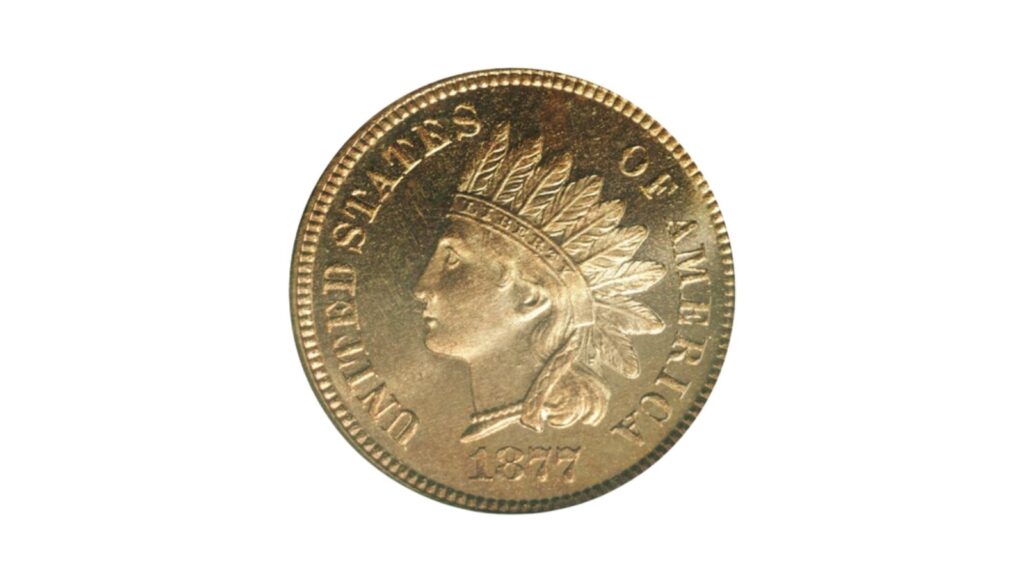
Every serious Indian Head cent collection has to reckon with the 1877 sooner or later, because it’s the one date every collector wants and the mint simply didn’t make many. Philadelphia struck 852,500 that year, the second-lowest mintage of the entire series, and unlike later scarce dates, nobody at the time thought to save examples in quality. That means even heavily worn coins carry real value today.
Even the least expensive circulated examples typically start around $500 in Good condition, and pieces in the Fine to Very Fine range cross into four figures, generally $900 to $1,250. Anything approaching Mint State jumps sharply, often into the $4,000 to $5,000 range and well beyond for coins with original red color. Given the prices involved, condition matters enormously: pitting, cleaning, or a repaired rim can cut the value substantially, and any coin priced like a genuine 1877 should be authenticated by PCGS or NGC before money changes hands. Because the date has no mintmark to check, the main risk is a common date with an altered final digit, which is another reason certification matters here more than almost anywhere else in the series.
2. 1909-S Indian Head cent
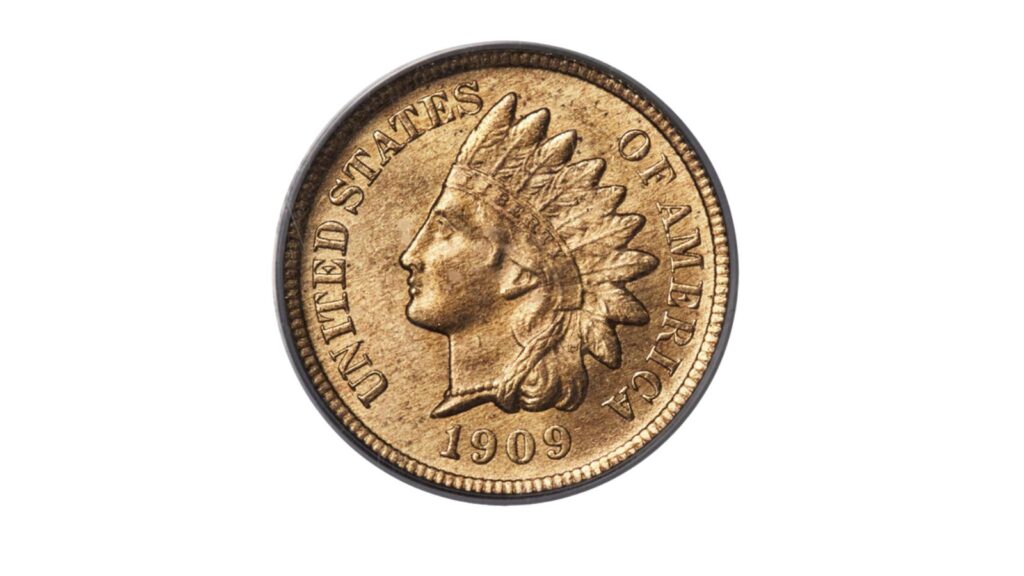
The final year of the series produced the lowest mintage of any Indian Head cent ever struck: just 309,000 coins from the San Francisco Mint before the Lincoln cent took over. Collectors began hoarding examples almost immediately because everyone knew the design was ending, which is part of why 1909-S cents survive in noticeably better shape than their mintage alone would suggest.
Worn examples in Good to Very Good condition typically bring $245 to $305, climbing to $345 to $460 in the Fine to Very Fine range and $470 to $695 as the coin approaches Uncirculated. Clean Mint State pieces reach $875 and up, with the finest red examples worth considerably more. The small “S” mintmark sits at the base of the wreath on the reverse, and because the difference between a common 1909 Philadelphia cent and a 1909-S is so large, added or altered mintmarks are a documented problem in this series. This is also a different coin entirely from the famous 1909-S VDB Lincoln cent, which shares a mintmark and a year but nothing else, so don’t confuse the two while sorting a coin jar.
3. 1888/7 overdate Indian Head cent
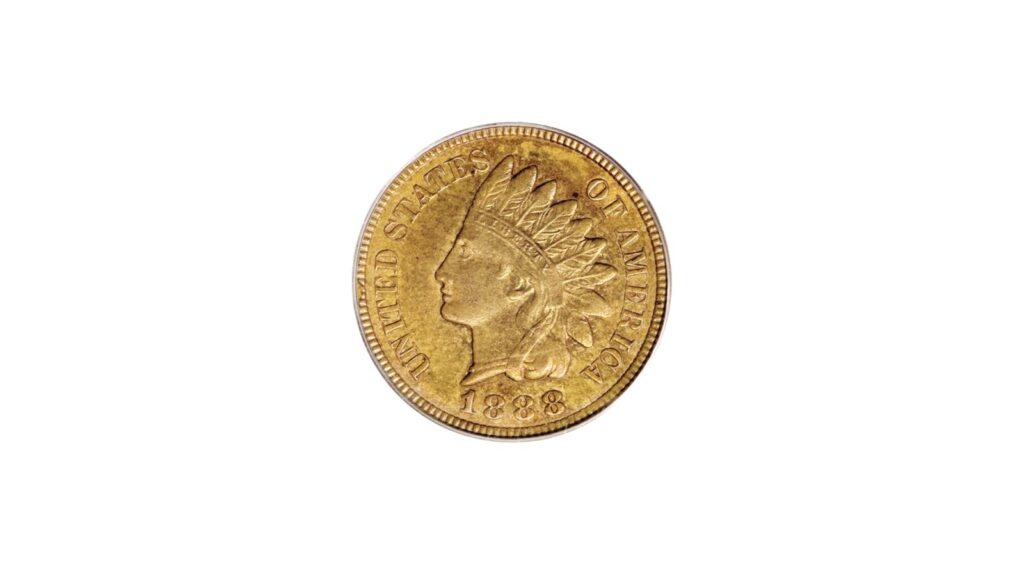
This is the grail-tier entry on this list, and it’s worth including specifically because it hides inside a completely ordinary-looking date. A small number of 1888 dies were actually made by re-punching the digit over a leftover 1887 die, leaving a faint trace of the “7” tucked beneath the final “8.” PCGS estimates only 500 to 600 examples survive across every grade, and most of those are heavily worn Good or Very Good pieces, since nobody in 1888 had any reason to set one aside.
That scarcity translates into real money. Well-worn survivors, the grade most people will actually encounter, typically bring several hundred to a couple thousand dollars, and presentable examples in higher circulated grades have carried values north of $26,000 at the upper end of the condition range. Mint State pieces are essentially uncollectible outside of a handful of known coins. The overdate is only visible under magnification, with the ghost of the “7” showing at the upper and lower left of the final 8, so any regular 1888 cent is worth a careful look with a loupe before it gets tossed back in a jar. Given the money involved, certification is non-negotiable here.
4. 1908-S Indian Head cent
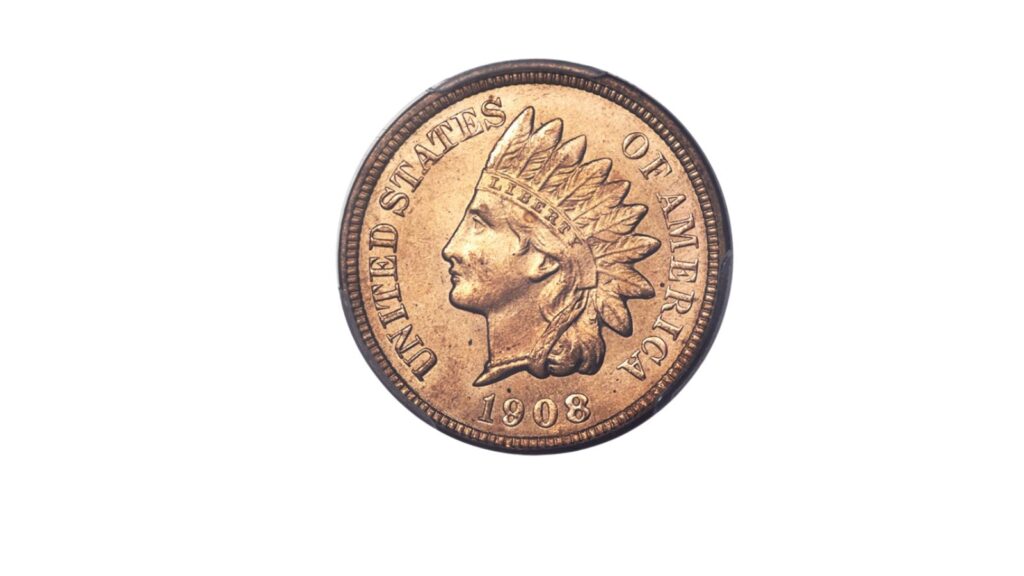
Before 1908, every Indian Head cent came from the Philadelphia Mint. That year, San Francisco struck its first cents ever, a modest run of 1,115,000 coins that became an instant favorite with collectors who recognized a genuine first. Because people saved examples from the start, the 1908-S survives in better average condition than plenty of older, higher-mintage dates.
Good to Very Good examples typically bring $80 to $99, moving up to $106 to $140 in Fine to Very Fine and $162 to $235 as wear disappears. Uncirculated coins run $245 and up, with choice examples reaching $475 to $500 or more. The tiny “S” sits below the wreath on the reverse, easy to miss on a worn coin, and the price gap between a common 1908 Philadelphia cent and a 1908-S is large enough that counterfeiters have specifically targeted this date. Genuine pieces show crisp, evenly struck lettering; fakes often show soft or pebbly details in the headdress and around the wreath, along with odd raised lumps in the fields. Anything priced like a real 1908-S deserves certification.
5. 1873 doubled LIBERTY Indian Head cent
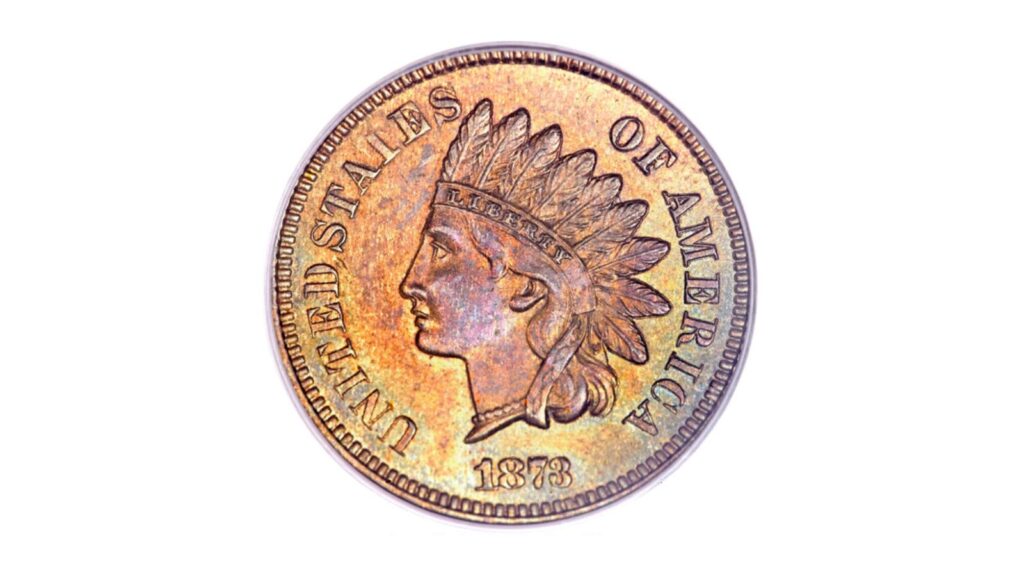
Doubled dies are permanent flaws baked into the die itself, which is why this one shows up as sharply doubled lettering across LIBERTY on Liberty’s headband, along with doubling in her eye and some of the feather tips. It’s widely considered the single most dramatic doubled die in the entire series, and it was recognized as a distinct variety decades ago, so it has a long collecting history and steady demand.
Well-worn examples that still show the doubling clearly typically run a few hundred dollars, and problem-free pieces in the tougher circulated grades climb well into four figures, with a Very Fine example carrying a value around $3,000 in recent market activity. Mint State coins, which are genuinely rare for this variety, are worth substantially more. The doubling is visible without magnification on decent examples, concentrated in the letters L, I, and B, which makes this one of the friendlier varieties to spot in a pile of ordinary 1873 cents. Confirm any high-value example with PCGS or NGC before buying, since a strong photo can be faked more easily than the coin itself.
6. 1872 Indian Head cent
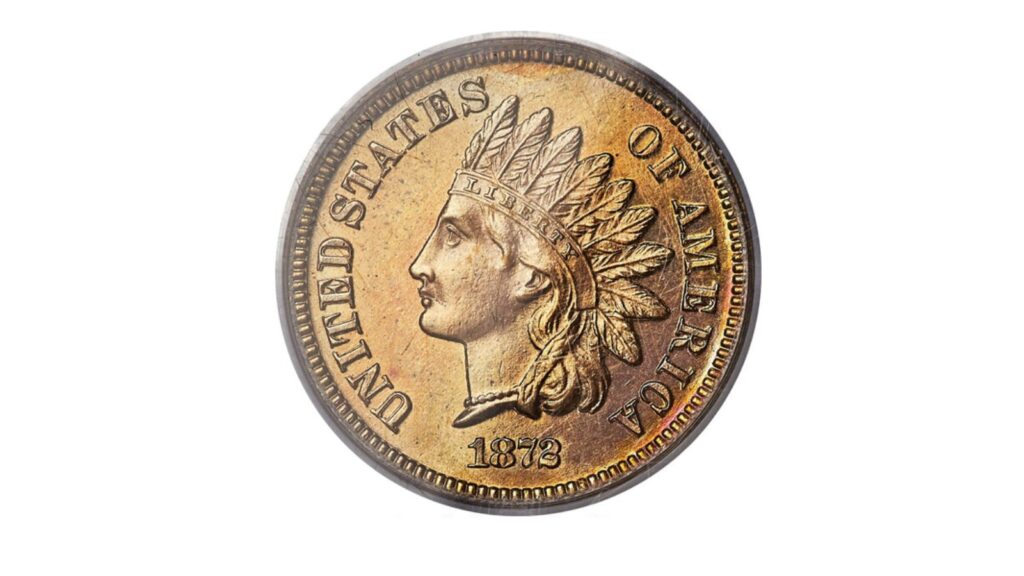
The early 1870s were rough years for small change. An economic downturn followed the Panic of 1873, and the mint’s cent production shrank accordingly. The 1872 sits right at the edge of that slowdown with a mintage of just over 4 million, one of the lower totals of the entire bronze era, and it’s scarcer in top grades than its raw mintage number suggests.
Circulated examples typically bring $105 to $122 in Good condition, climbing steadily through the grades to $255 to $295 in Fine, $470 to $540 in Extremely Fine, and $840 to $970 once a coin reaches Uncirculated. That’s a meaningful step up from the common dates just a few years later, and it’s exactly the kind of date that gets overlooked by people scanning a coin album for the famous key dates only. Look for even wear and original brown or reddish-brown surfaces; heavy cleaning or pitting knocks a coin down a full grade or more in practical terms. This is a genuinely findable semi-key rather than a museum piece, which makes it worth specifically hunting for in any inherited collection.
7. 1864 “L on Ribbon” bronze Indian Head cent
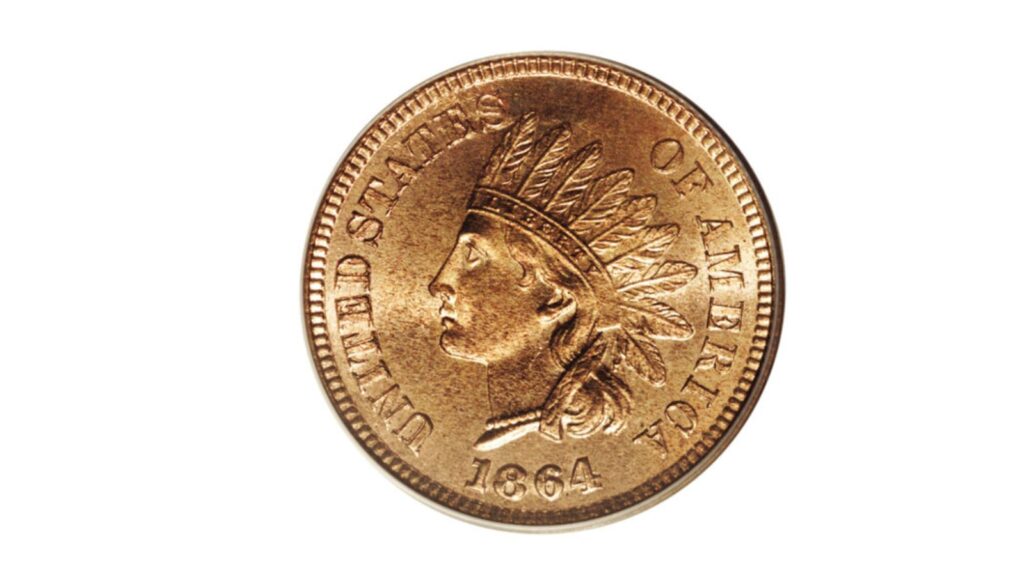
1864 was a pivotal year for this coin twice over. Midway through, the mint switched the metal from a hard copper-nickel alloy to bronze, giving the coin its familiar warm brown color for the rest of its run. Later that same year, designer James Longacre added his own initial, a small “L,” onto the ribbon behind Liberty’s neck, a detail that stayed on every Indian Head cent minted afterward.
Because the L was added only partway through bronze production, L-on-Ribbon cents are meaningfully scarcer than plain 1864 bronze cents without it, and they carry a real premium in every grade. Circulated examples run from around $60 in Good condition up to roughly $165 in Fine, with problem-free pieces in the Extremely Fine range worth around $310. The L itself is small and easy to miss on a worn coin, and certification services attribute it specifically because the price difference between an L and a no-L 1864 bronze cent is large enough to matter. A magnifying glass and good light on the ribbon behind the neck is the only reliable way to check.
8. 1859 Indian Head cent
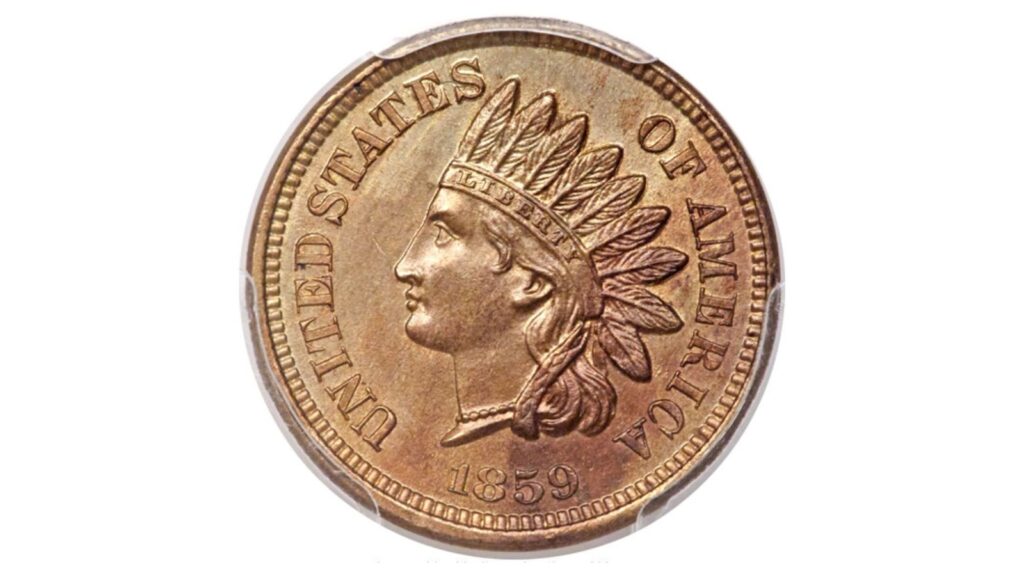
The very first year of the design is also a one-year type coin, which gives it a permanent seat on serious want lists regardless of price trends elsewhere. The reverse carries a simple laurel wreath that the mint replaced the following year with an oak wreath and shield, so an 1859 cent looks subtly different from every other date in the series, and that difference alone drives demand.
Mintage was enormous at over 36 million, so this is genuinely one of the more affordable dates to find in worn condition. Good examples typically bring $12.50 to $14.50, rising to $25 to $29 in Fine and $100 to $116 in Extremely Fine. Values climb sharply from there: About Uncirculated coins run into the low hundreds, and gem Mint State examples with original mint color have reached well into four figures. This is a coin that rewards patience rather than luck, since it isn’t rare, just distinctive, and a genuinely clean example in the higher grades is where the real money sits.
9. Proof Indian Head cents, such as an 1890
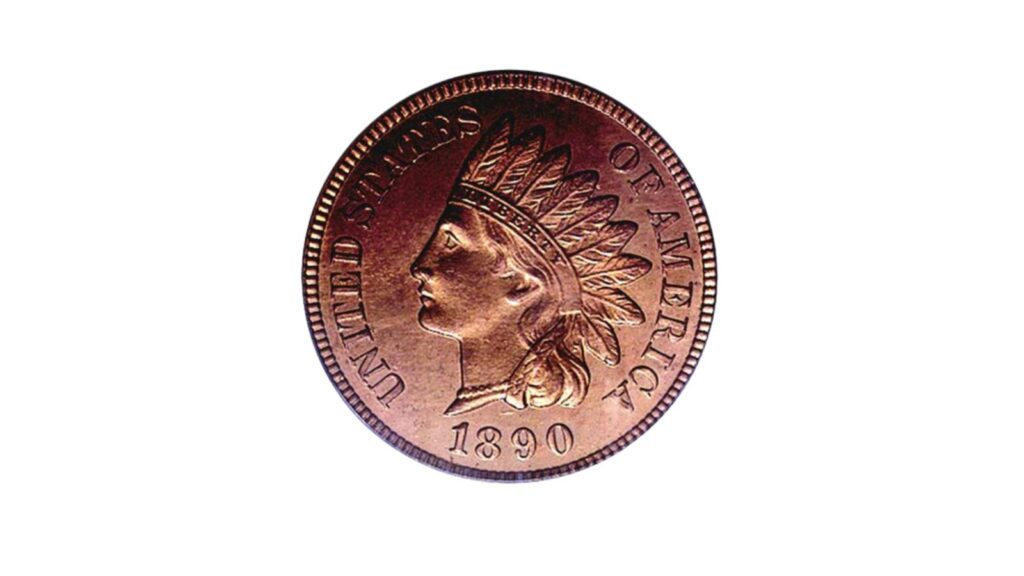
Alongside the cents that circulated in cash registers, the mint also struck a small batch of proof cents every year specifically for collectors, sold directly through the mint rather than released into commerce. Proofs have sharper strikes, mirror-like fields, and were handled carefully from day one, which is exactly the kind of coin that turns up in an old collector’s estate rather than a coffee can of pocket change.
An 1890 proof, a genuinely common date for the type, still typically brings $100 to $2,040 in brown color depending on grade and eye appeal, with red-brown examples reaching $160 to $2,640 and full red pieces worth $220 to $4,000 or more. Cameo-contrast proofs, where the design stands out sharply against the mirrored fields, bring a further premium on top of that. If a family collection includes a small run of Indian Head cents that all look unusually sharp and shiny compared to worn circulated coins nearby, it’s worth checking whether they’re proofs rather than assuming they’re simply well-preserved pocket change. Certification confirms the strike type and protects against cleaned circulation strikes being passed off as proofs.
10. Common date Indian Head cent in full red Mint State, such as a 1905
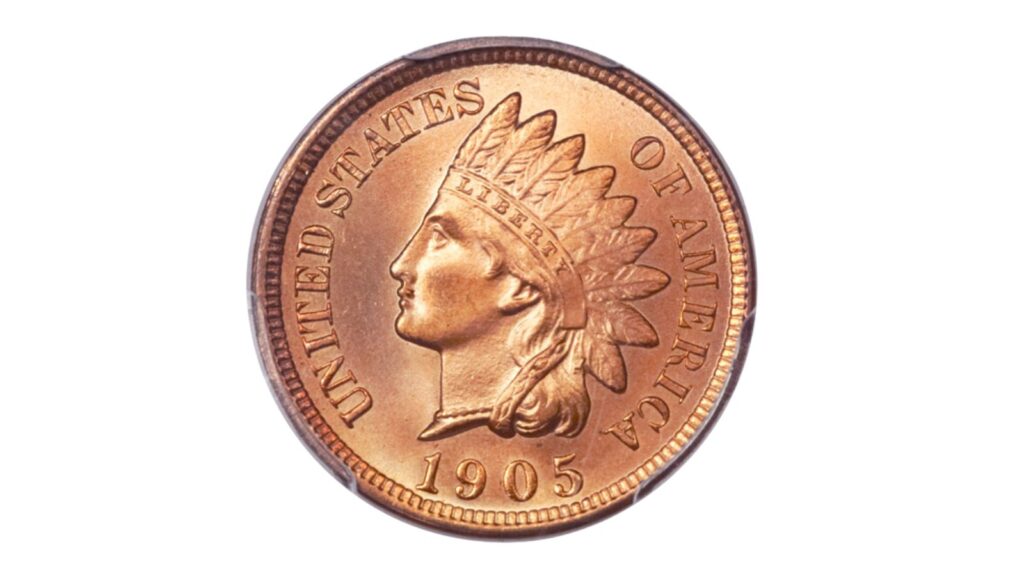
Most Indian Head cents from the 1880s through the 1900s were struck by the tens of millions and are genuinely common. But condition changes the math entirely, especially color. Copper darkens with age and handling, and a coin that still shows its original mint-fresh orange-red surface, rather than the brown that most survivors turned decades ago, is a different animal even when the date itself is unremarkable.
A common date like 1905, with a mintage over 80 million, typically brings well under $1 in worn circulated grades but climbs to roughly $400 to $700 once a coin grades Mint State with full red color, and $2,600 to $4,300 in the higher gem grades, with the finest known examples reaching well into five figures. The lesson generalizes across most common dates in this series: it’s not the date that makes a common-year cent valuable, it’s whether it somehow escaped a century of handling with its color intact. Any Indian Head cent that still looks freshly struck, rather than dark chocolate brown, is worth a second look regardless of what year is stamped on it.
11. Common date circulated Indian Head cent, such as a 1908
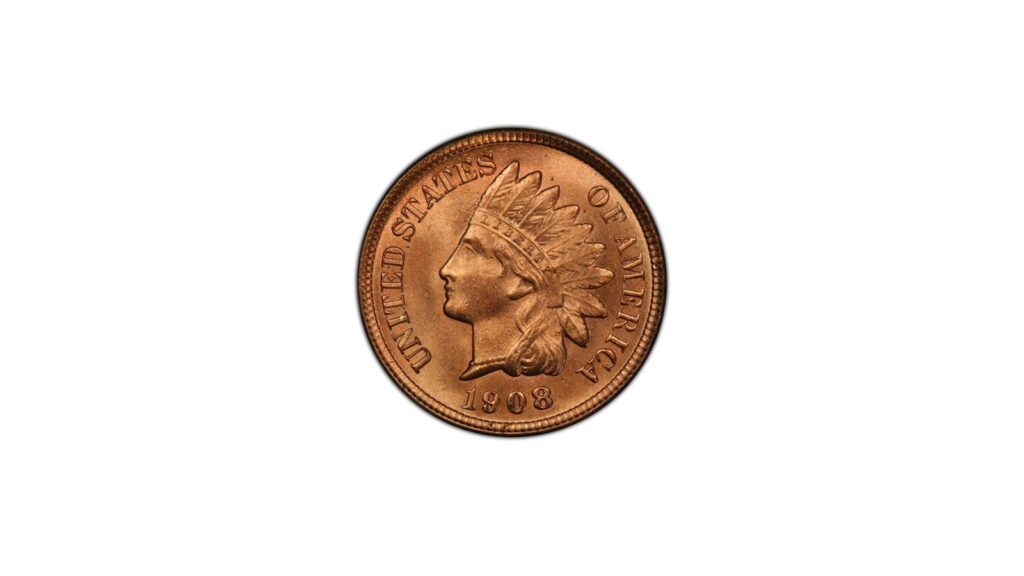
Most of what’s actually sitting in that dresser tin is this: an ordinary, well-worn Indian Head cent from somewhere in the 1880s to 1900s, showing real wear and no mintmark. It’s important to say plainly that these are not valuable coins. A common date 1908 Philadelphia cent, with a mintage over 32 million, typically runs $1.50 to $2 in Good condition and only reaches $16.50 to $19 even in About Uncirculated. Circulated common dates across the whole series land in roughly that same range.
The reason this entry belongs on the list isn’t the money, it’s the habit worth building. The exact same coin with an “S” mintmark from 1908 is worth forty times as much in the same grade, and a date like 1877 hiding in the same handful of pennies is worth hundreds of times more. Sorting by date and mintmark costs nothing and takes a few minutes, and it’s the only way to catch the handful of genuinely valuable coins that look, at a glance, identical to everything else in the pile. Treat every Indian Head cent as worth a ten-second check before it goes back in a jar or gets spent.
Most of what turns up in an old coin collection will land closer to pocket change than to a payday, and that’s fine. The point of checking is that the handful of exceptions, an 1877, a 1909-S, an overlooked overdate, are sitting in the exact same drawer as the ordinary ones, and nothing separates them but a date, a mintmark, and a closer look.











