
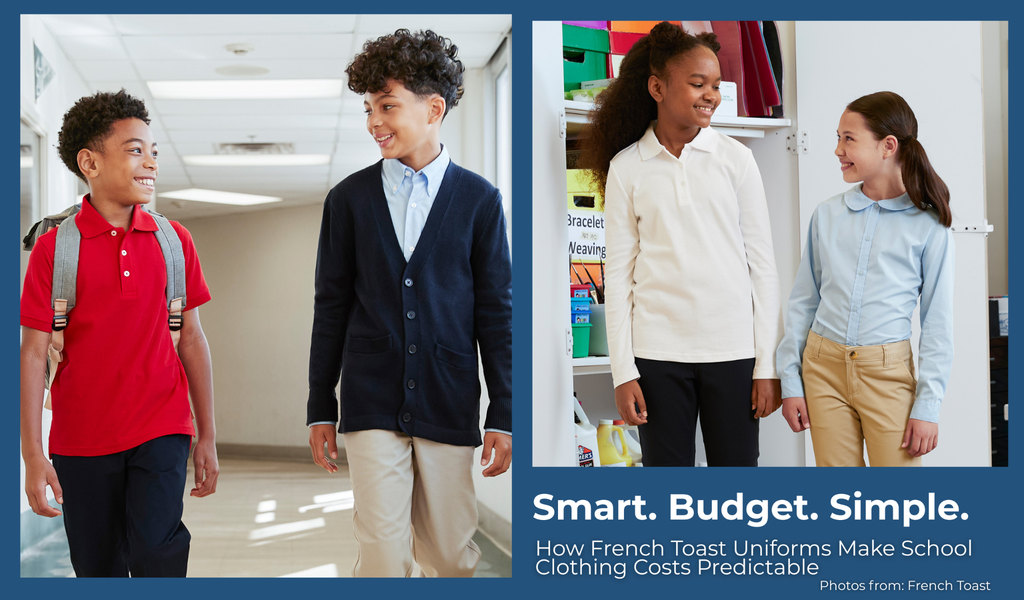
The back-to-school receipt is only the beginning. There is the sweatshirt your child wants in October, the pants that no longer fit in January, and the shirt bought on a rushed Tuesday because everything else is in the laundry.
When one income covers the household, those purchases need somewhere to land. A school clothing budget that stays open all year is hard to plan around, especially when a friend’s new outfit becomes tomorrow’s shopping request.
A small uniform wardrobe gives you a clearer starting point: decide what your child needs, buy the missing pieces, and put a limit on extras. French Toast can fit that plan when its styles meet your school’s rules. Treat the core wardrobe as a planned seasonal purchase, with a little room for replacements, and school shopping becomes a task you can finish.
Table of contents
Start with the clothes you already own
Before opening a shopping tab, pull out last year’s school clothes. Have your child sit, bend, and reach in them; pants that technically button can still be uncomfortable through a school day.
Separate what fits from what needs replacing. A loose button deserves a repair before it earns an entire replacement shirt, and a usable hand-me-down belongs in the rotation just as much as something new.
Next, read the current dress code. Check permitted colors, collar requirements, and any school-specific logos before building your list. A bargain that cannot be worn to school is another purchase waiting to happen.
Buy to fill a gap. Three to five new pieces can be a useful starting point if they complete an existing wardrobe. For example, three polos and two pairs of pants could refresh a child’s rotation without adding five complete outfits.
Starting from nothing requires a different calculation. Five total garments will usually mean washing during the week; three total pieces leave very little backup for spills or accidents.
Count the school days between realistic laundry loads, then allow for a spare. If laundry means a weekend trip to the laundromat, a larger rotation may make more sense than a smaller purchase that creates extra trips.
Choose tops and bottoms that work together within the school’s rules. Repeat colors freely. You are stocking a school drawer, and every piece should have a regular job.
Do the cost-per-wear math before chasing a discount
A low price feels good at checkout. The useful question is how often the clothing will actually get worn.
Calculate purchase cost per wear by dividing the amount paid by the number of wears. Consider this hypothetical comparison, using the prices and wear counts below as assumptions rather than French Toast prices or product test results:
| Example garment | Assumed purchase price | Assumed wears | Purchase cost per wear |
| Uniform shirt kept in regular rotation | $25 | 40 | About $0.63 |
| Trend-led shirt retired after three wears and washes because it shrank or faded | $15 | 3 | $5.00 |
Under those assumptions, the uniform shirt costs 87.5% less per wear. That is a substantial difference, but the wear count does the work: a $15 shirt worn 40 times costs about $0.38 per wear and beats both examples.
Price alone does not establish durability, and a trend-led shirt does not automatically fail after three washes. Use this calculation to think through likely use, then look at construction, care instructions, and fit before deciding what deserves your money.
Forty wears could mean wearing a shirt twice a week for 20 weeks, provided it stays wearable and still fits. A growth spurt can shorten that schedule, so avoid buying a large stack in one size solely because the projected math looks good.
Laundry and repair costs sit outside this simple calculation. Keep those costs in mind when comparing garments that need different care.
Choose French Toast pieces for the jobs they need to do
With your list and spending limit ready, compare school uniform essentials from French Toast against the gaps in your child’s drawer. Start with the items that will be worn most often and check the details for each style.
For example, French Toast describes its Short Sleeve Pique Pol as a machine-washable cotton-blend shirt with a straight fit and side vents. Those details give you a practical starting point for assessing everyday use and care.
For children who regularly wear through trouser knees, the brand lists reinforced, seam-to-seam Power Knees on its Girls’ Straight Fit Stretch Twill Pant. The listing specifies adjustable waists on youth and plus sizes; adult sizes lack both the adjustable waist and Power Knees.
An adjustable waist gives you some flexibility around the middle, although it cannot add length to a trouser leg. Check measurements and let your child test how the clothes feel before committing to duplicates.
Replace the shopping circuit with one planned order
Picture the familiar shopping circuit: one store for shirts, another for pants, and a return trip because the right size was missing. Add an after-school pickup deadline and even a small list can consume the afternoon.
A single-brand order can simplify that process when the required pieces are available. Keep the dress code and measurements beside you, then work through the list once:
- Select the required styles, sizes, and colors.
- Check the total with delivery, tax, and any required decoration.
- Review return conditions and allow time to check fit before school starts.
- Remove extras that have no place in the planned rotation.
Convenience still needs a spending limit. Adding an unnecessary item to reach a delivery threshold can erase the saving you were chasing.
If the full order does not fit this month’s budget, prioritize immediate gaps and schedule the rest. Buying everything at once is useful only when the payment works for your household.
Give midyear purchases a rule
Uniforms cannot stop children growing or wanting what their friends have. A clear purchasing rule can keep those two situations separate.
In a conversation with parenting coach Dana Hirt, Ron Lieber, author of The Opposite of Spoiled, discussed children’s requests for purchases: “When that happens, it’s an opening to both demonstrate parental spending limits and also to give them some agency.”
Give your child choices within the approved list, such as which permitted polo color to buy. Then explain that extra fashion purchases have a separate limit; they do not automatically reopen the school clothing budget.
Keep a short replacement list for clothes that are outgrown, lost, or beyond repair. Check it at a planned interval, such as the start of each month, and deal with urgent needs sooner.
The next sale email can wait. If the drawer has enough comfortable, school-approved clothes for the next laundry cycle, that part of the shopping is done.










