
The retirement paperwork arrives in a stack. A pension election form, a 401(k) rollover packet, and a Social Security application usually show up in the same week, often while you’re still packing up your desk. Most people sign all three the same afternoon, treating the Social Security form exactly like the other two: one more piece of paper to clear before the next chapter starts.
That habit is the first expensive one. Filing the day you’re eligible instead of waiting even a few years locks in a smaller check for the rest of your life, and there’s no later form that fixes it.
The first twelve months of retirement come loaded with decisions like that one: Medicare enrollment windows, a portfolio that still has to last thirty years, a budget built on guesses instead of a real paycheck. Get a handful of them wrong early and the cost compounds quietly for decades.
The exact size of that first cut is public information, calculated down to the month you file.
Table of contents
- Filing for Social Security the moment you’re eligible
- Assuming Medicare will cover more than it does
- Missing your window to sign up for Medicare
- Getting hit with a Medicare surcharge you didn’t see coming
- Blowing up your portfolio the first time the market drops
- Spending like the paycheck never stopped
- Pulling money from the wrong accounts first
Filing for Social Security the moment you’re eligible
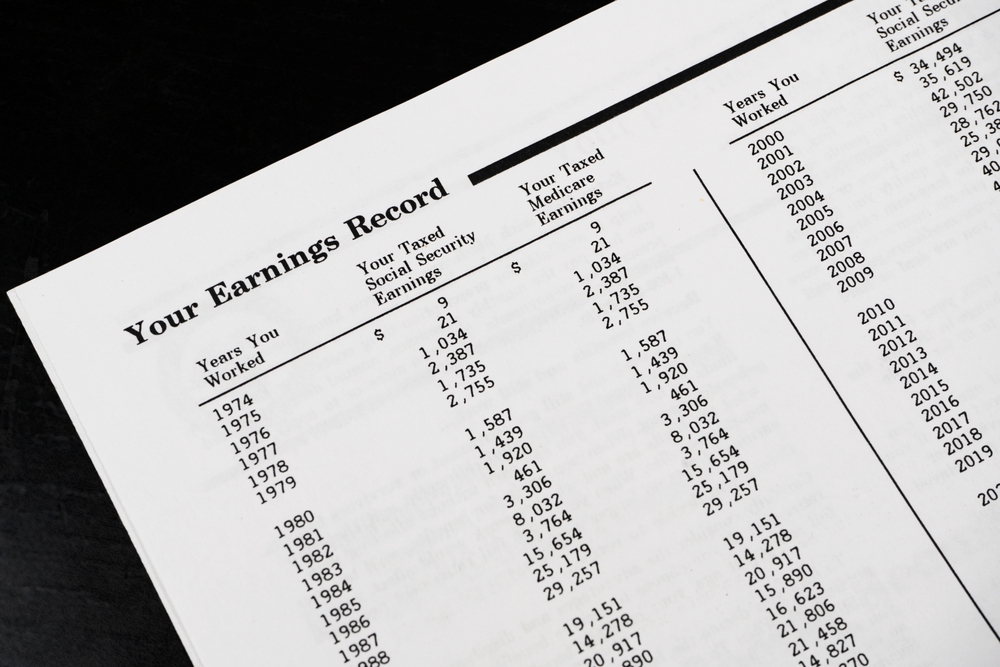
File at 62, the earliest age allowed, and your monthly benefit is reduced by as much as 30% compared with waiting for full retirement age, which is 67 for anyone born in 1960 or later. That reduction isn’t temporary. It’s built into every check for the rest of your life, and it carries over to what a surviving spouse collects after you’re gone.
Wait past full retirement age instead, and the benefit grows by 8% for every year you hold off, up to age 70. Someone whose full benefit would have been $2,000 a month gets roughly $2,480 by waiting the extra three years, and that increase is also permanent.
62 isn’t automatically the wrong call. Health, other income, and family longevity all factor in. But filing the week you retire, before running the numbers against your own expected lifespan and spending needs, is how people end up locked into a benefit that’s 30% smaller than it had to be, for decades they didn’t plan on living.
Assuming Medicare will cover more than it does

A 65-year-old retiring this year should expect to spend an average of $185,500 on healthcare and medical costs over the rest of retirement, and that figure is per person, not per household, and doesn’t include a cent of long-term care.
More than half of people approaching retirement believe Medicare will cover all of their healthcare costs, and it won’t. Original Medicare still comes with premiums for Part B and Part D, a deductible, 20% coinsurance on most outpatient care, and no cap on what you can pay out of pocket in a bad year. Dental, vision, hearing aids, and most long-term care aren’t covered at all.
A health savings account, if you had access to one while you were still working, is one of the few ways to get ahead of this. Money goes in before taxes, grows tax-free, and comes back out tax-free for qualified medical costs, including Medicare premiums once you’re enrolled. The account has to be built before retirement, though, since contributing to one stops the moment you sign up for Medicare. Budget for a real number either way, not just the premium, and build in room for a bad year.
Missing your window to sign up for Medicare

Medicare’s initial enrollment window runs seven months: three before the month you turn 65, that month, and three after. Wait two full years past that window without other qualifying coverage, and the Part B premium goes up by about $40 a month on top of the standard $202.90 2026 premium, a 20% late enrollment penalty that sticks around for as long as you have Part B.
The people who get caught out are usually still working past 65, assuming their job’s health plan keeps them covered. It does, but only if the employer has 20 or more employees. Retire from a smaller company, or retire at all, and that assumption can turn into years of penalty before anyone catches the mistake.
Mark the date your coverage actually changes, not the date you think you’ll decide, and sign up inside that seven-month window even if you’re unsure which parts you’ll use.
Getting hit with a Medicare surcharge you didn’t see coming

The standard Medicare Part B premium is $202.90 a month in 2026, but that’s only what you pay if your income falls below the first threshold. Cross it, and the premium climbs in tiers, up to $689.90 a month for the highest earners, an extra $487 every month for the same Part B coverage everyone else gets.
The surcharge is based on your tax return from two years earlier, which is exactly what makes it a first-year trap. Your final full-time salary, a lump-sum payout, or a large capital gain from the year before you retired can trigger a higher premium in the first year or two you’re actually living on a fixed income, with no job income left to show for it.
If a one-time event like a retirement payout or a home sale pushed your income up temporarily, you can ask Social Security to use a more current income estimate instead of waiting for the surcharge to catch up with your real situation.
Blowing up your portfolio the first time the market drops

About half of people who’ve retired in the last five years have already changed their retirement portfolio because of market swings, and nearly as many say volatility has changed how they’re managing withdrawals altogether. New retirees make these moves at roughly double the rate of people who’ve been retired longer.
The reason the first few years matter more than any other stretch of retirement is something planners call sequence of returns risk. A downturn hits hardest right when the portfolio is at its largest and the most withdrawal years still lie ahead, because every dollar sold at a loss during that stretch is a dollar that can’t recover when the market eventually turns around. The same drop ten years into retirement, after the portfolio has already funded a decade of spending, does far less damage.
Keeping one to two years of expenses in cash or short-term bonds before you retire means a bad first year doesn’t force you to sell anything at the bottom. Overreacting to a single rough quarter by moving everything to cash usually does more long-term damage than the downturn itself.
Spending like the paycheck never stopped

Only 40% of recent retirees say they’re actually on track with the budget they set before retiring, and about one in five have already had to cut spending below what they’d planned, usually within the first couple of years.
The overspending usually isn’t reckless. It’s a kitchen renovation that got put off for a decade, a long-promised trip, help for an adult kid. Each one seems like a single, isolated decision, but run the numbers on what a modest overspend actually costs: go 20% over a $4,000 monthly budget for two years, about $800 extra a month, and that’s close to $19,200 pulled out of a portfolio before it’s had a single year to grow back. Stacked together before there’s a real sense of what a sustainable number looks like, decisions like that can eat years off a retirement meant to last three decades.
Treat the first twelve months as a trial budget instead of a victory lap. Track actual spending against a real withdrawal rate before committing to a renovation or a second home, not after.
Pulling money from the wrong accounts first

The common advice is to spend taxable brokerage accounts first, then traditional 401(k)s and IRAs, and leave Roth accounts untouched until last. It’s a reasonable starting point, but following it without exception can mean years of unnecessarily high taxes once required minimum distributions kick in and force large withdrawals all at once.
Every dollar pulled from a traditional IRA counts as ordinary income, and that income can also make more of your Social Security benefit taxable, a cost that doesn’t show up on the account statement itself. Wait too long to touch traditional accounts at all, and the bill arrives all at once: required minimum distributions start at age 73, and missing one brings a 25% penalty on the amount that didn’t come out.
A blended approach, pulling a bit from each type of account every year instead of draining one bucket completely before touching the next, tends to keep you in a lower bracket for longer and leaves more flexibility for the years RMDs actually arrive.
Every mistake on this list is fixable with enough lead time, which is exactly why the first year matters more than any other. Get the timing right once, on Social Security, Medicare, and your own withdrawals, and it keeps paying off for the next thirty years.











