
You open the fridge on a Wednesday night, stare at a half-used head of cabbage, some leftover roasted chicken, and two sweet potatoes you bought with the best of intentions, and think: there has to be a better way to do this. There is. It just requires shifting a couple of hours of work from the weekday scramble to one focused session earlier in the week.
Batch cooking means cooking larger amounts of food at once, then storing it in ways that make the rest of the week dramatically easier. It is not about eating the same bowl of rice for five days straight. Done right, it means your weeknight dinners take 10 minutes instead of an hour, your grocery bill shrinks, and the produce drawer stops being where vegetables go to die.
The money case is real. A family of four throws away nearly $3,000 worth of food every year, and most of that waste happens because food gets forgotten, cooked poorly, or left without a plan. Batch cooking fixes all three problems at once.
These 15 tips cover the practical mechanics, the storage rules, the shopping strategy, and the small habits that separate people who actually stick with it from those who try it once and give up.
Table of contents
- Audit your fridge and pantry before you plan a single meal
- Plan meals around overlapping ingredients, not individual recipes
- Cook your proteins in big batches first
- Make a pot of grains every single week
- Roast a full sheet pan of vegetables
- Build a base soup or stew that can go multiple directions
- Use the freezer aggressively, not just as a backup
- Label everything with the date and a description
- Turn scraps and bones into stock
- Portion before you store, not after
- Schedule a weekly fridge sweep meal
- Buy bulk only on shelf-stable staples
- Embrace component cooking over full-meal prep
- Cook double and freeze half immediately
- Start with one dedicated session per week, not daily micro-sessions
Audit your fridge and pantry before you plan a single meal

The single most expensive grocery habit most people have is buying food they already own. Before you plan what to batch cook this week, spend five minutes actually looking at what you have. Pull things forward. Check the dates. Note the half-used cans of coconut milk and the bag of lentils that has been in the back of the cabinet since sometime last year.
This audit changes your shopping list from a wishlist into a gap-filling exercise. You are not building a week of meals from scratch. You are building around what is already there. That bag of lentils becomes lentil soup. The slightly soft bell peppers go into the sheet pan roast. The chicken thighs you bought two days ago get cooked today, not Friday when they are borderline.
People who batch cook successfully tend to shop less often, not more. Going to the store every day or every other day to “grab a few things” is one of the main drivers of food waste and overspending. Knowing what you have before you leave the house means you come back with things you will actually use, not duplicates of what is already in the fridge.
Plan meals around overlapping ingredients, not individual recipes

The smartest batch cooking sessions are not built around five separate recipes that each need their own unique set of ingredients. They are built around one or two key proteins and a set of versatile vegetables and grains that can appear across multiple meals in different forms. Buy a large pack of chicken thighs, and that protein can show up as a grain bowl on Monday, a taco filling on Tuesday, and a quick soup by Thursday.
This approach also drastically cuts prep time. If you are chopping onions for a soup, chop enough for the stir-fry, too. If you are mincing garlic, do the whole head. The efficiency is not just in the cooking, it is in the prep work, and it adds up quickly over the course of a week.
When you are planning, look for ingredients that cross categories. Cooked chickpeas work in salads, in curry, and smashed onto toast. Roasted sweet potato works as a side, in a burrito bowl, and blended into a soup. Eggs can go almost anywhere. The more flexible the ingredient, the more mileage you get from buying and cooking it in bulk.
Cook your proteins in big batches first

Protein is the most expensive item in most grocery carts and also the most labor-intensive to cook. It makes sense to tackle it in one big batch rather than repeating the effort three or four times throughout the week. Cook a whole roasted chicken, a sheet pan of chicken thighs, a large pot of beans, or a batch of ground meat all at once. Everything that follows becomes easier.
Roasting a whole chicken on Sunday takes about the same active effort as cooking two chicken breasts on a Tuesday evening, but you come out with three to four times the food. You can pull the meat off the carcass, use it across multiple meals, and then put the carcass to work making stock (more on that below). That is three meals and a pot of broth from one chicken.
For plant-based protein, dry beans cooked from scratch in a big pot cost a fraction of canned beans and taste noticeably better. A pound of dry chickpeas, soaked overnight and simmered for about an hour, gives you roughly three cans’ worth of cooked chickpeas for around a dollar. Cooked beans keep for 3 to 4 days in the fridge, or you can freeze them in cup-sized portions for months.
Make a pot of grains every single week
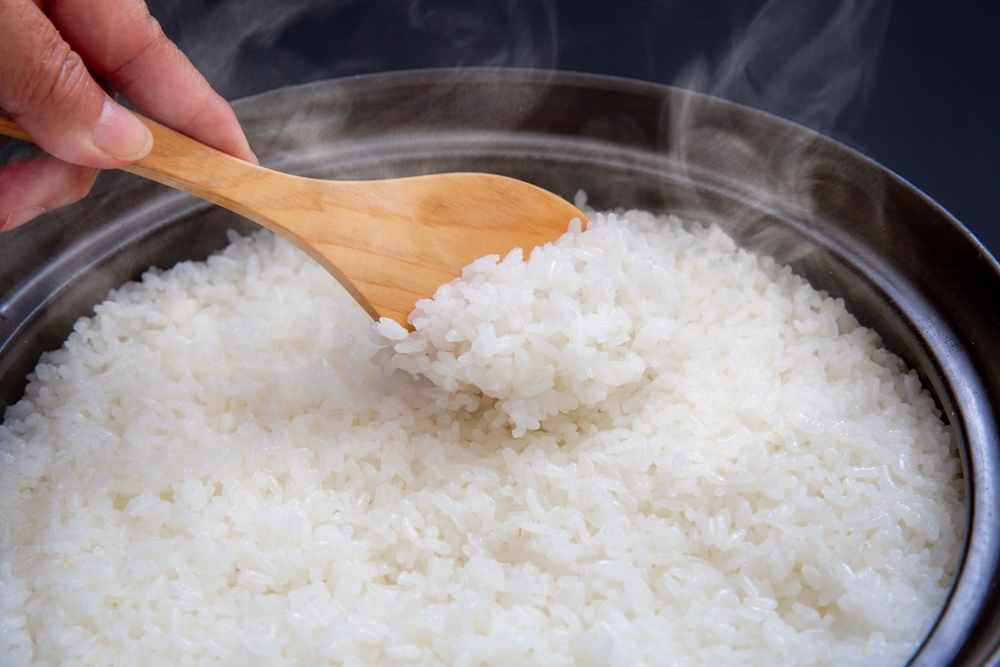
Cooked grains are the backbone of fast weeknight meals. A large pot of brown rice, farro, quinoa, or barley takes about 30 to 45 minutes of mostly unattended cooking, and it provides the base for at least four or five meals. Grain bowls, fried rice, stuffed peppers, soup add-ins, grain salads: all of these go from a 45-minute project to a 10-minute assembly job when the grain is already cooked and sitting in the fridge.
Brown rice and farro are particularly good batch candidates because they hold their texture well in the fridge and do not get mushy after reheating the way white rice sometimes does. Quinoa is faster to cook (about 15 minutes) and high in protein, which makes it a useful grain if your batch also needs to stretch as a protein source. Barley is underused, cheap, and holds up extremely well in soups and stews.
The other advantage of cooking grains in bulk is that they are almost impossible to ruin and do not require much attention while they cook. You put the pot on the stove, set a timer, and go do something else. When the batch session is already asking a lot of your attention, having one task that runs itself in the background is genuinely useful.
Roast a full sheet pan of vegetables
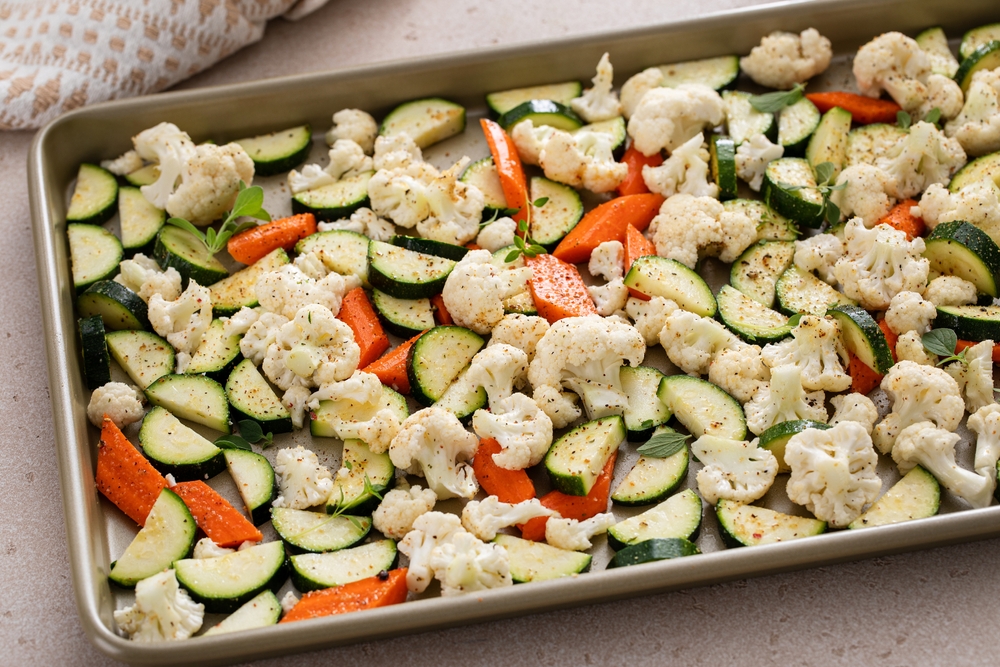
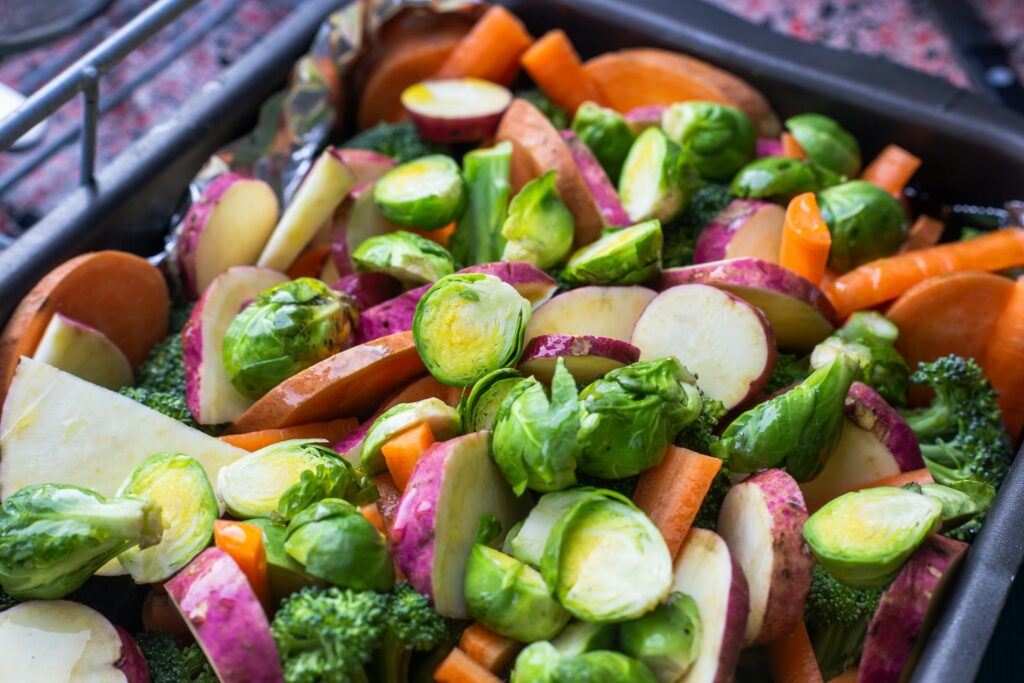
Roasting vegetables in a big batch transforms them from a perishable liability into a versatile, ready-to-go ingredient. A sheet pan of mixed root vegetables, or whatever is looking a little tired in the produce drawer, comes out of the oven as something that works as a side dish, a grain bowl topping, a quesadilla filling, or the base of a quick pureed soup. The key is high heat: 400 to 425 degrees Fahrenheit, cut to roughly equal sizes, spread out so nothing steams.
Anything dense, like sweet potato, beets, and carrots, works best for big batches because these vegetables hold their texture in the fridge without getting soggy. Zucchini, asparagus, and leafy greens are better cooked fresh. The general rule is the more water a vegetable contains, the worse it holds up after roasting and refrigeration. Aim for the hardier options when batch cooking.
One practical trick: roast them without much seasoning beyond oil and salt. Plain roasted vegetables are more flexible across multiple meals than vegetables that have been coated in a specific spice blend that clashes with whatever you are making on day three. You can always add the flavor when you reheat.
Build a base soup or stew that can go multiple directions
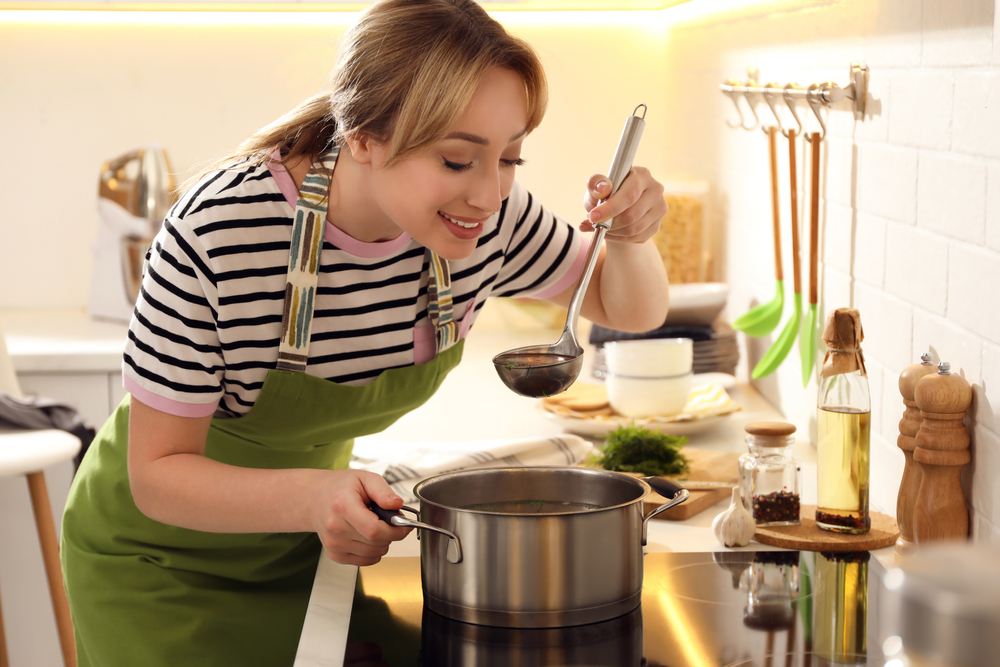
A big pot of soup or stew is one of the most efficient things you can make in a batch cooking session, because it scales up with almost no extra effort and keeps beautifully in both the fridge and freezer. It also handles food waste in real time: vegetables that are starting to go soft, a half-used can of tomatoes, the end of a box of pasta, odds and ends of cheese rinds that would otherwise get thrown out can all go in the pot.
The most flexible approach is to make a base that can be nudged in different directions. A vegetable or chicken broth with cooked beans and greens can become minestrone with the addition of pasta and tomatoes, or a white bean stew with some sausage stirred in, or a simple pureed soup if you blend half of it. Making a neutral base and finishing it differently for different meals is the way to avoid batch cooking feeling repetitive.
Soups and stews also freeze better than almost anything else. Most cooked leftovers keep for 3 to 4 months in the freezer before quality starts to decline, and a frozen container of soup is genuinely useful on a day when there is nothing easy in the fridge. Freeze in individual or family-portion containers so you are only thawing what you need.
Use the freezer aggressively, not just as a backup
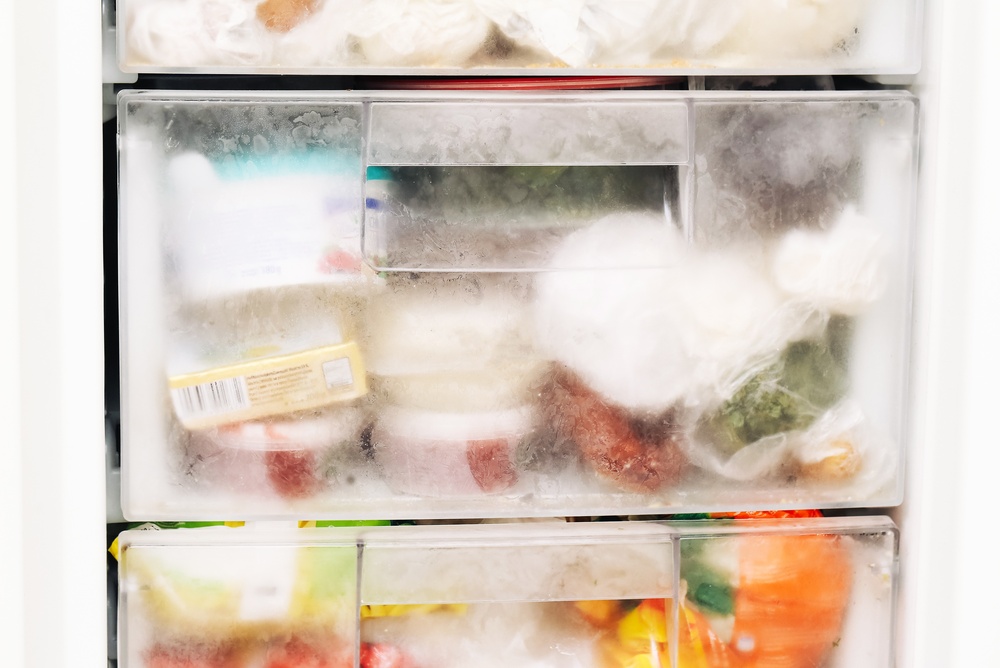
Most people use their freezer as a place where good intentions go to be forgotten. Batch cooking changes that relationship. The freezer is not where you put food because you cannot deal with it right now. It is where you put food because you are deliberately building a buffer against the nights when cooking is the last thing you want to do.
The practical shift is this: when you are cooking a soup, a stew, or a meat sauce, make more than you need and freeze the extra right away, before it becomes fridge leftovers. Do not wait until the container has been sitting in the fridge for three days and you are tired of it. Cook it fresh, cool it quickly, portion it, freeze it immediately. That container in the freezer is worth far more to you as an emergency dinner than a forgotten leftover.
A few things that freeze particularly well: cooked beans, soups and stews, cooked grains (freeze in flat bags to speed up thawing), ground meat with sauce, muffins and quick breads, and blanched vegetables. Things that do not freeze well: dressed salads, anything with heavy cream (it separates), cooked pasta on its own (it gets mushy), and boiled eggs. Food stored constantly at 0 degrees Fahrenheit stays safe indefinitely, though quality drops off over time, so aim to actually use what you freeze within two to three months.
Label everything with the date and a description
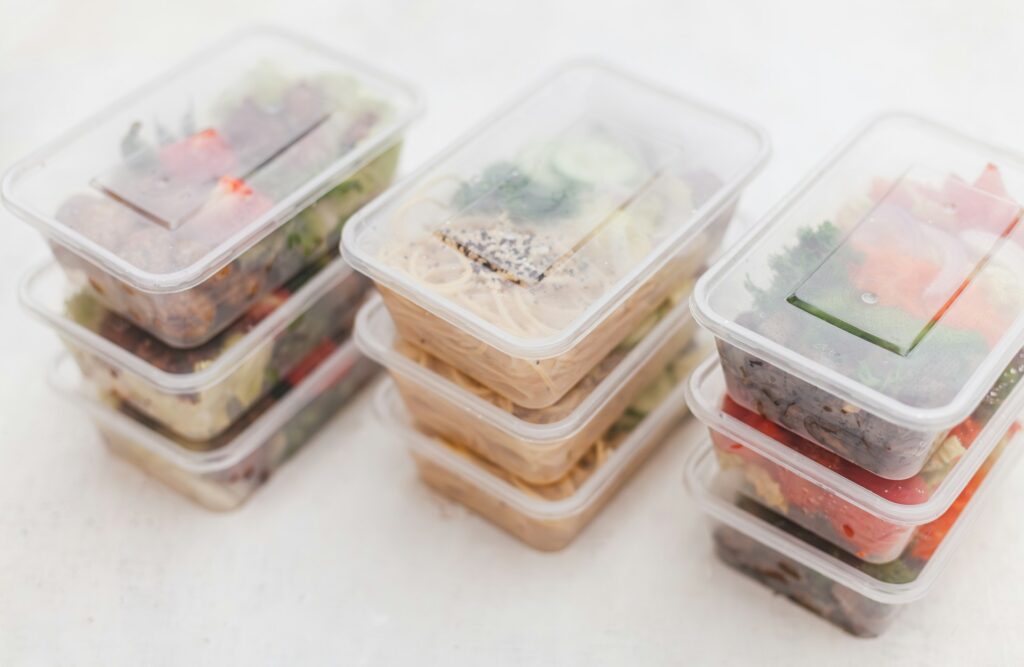
Unlabeled containers are where batch cooking goes wrong. You open the freezer, pull out an amber-colored frozen block, and realize you have absolutely no idea what it is, when you made it, or whether it is still worth eating. That container goes back in the freezer. Three weeks later it gets thrown out. All of that work is wasted.
A roll of masking tape and a permanent marker on the counter next to the stove is the whole system. It takes 10 seconds per container. Write the date, the contents, and any relevant notes (“needs rice,” “add cream when reheating”). You will thank yourself every time you open the fridge and can actually see what you have and when it needs to be used by.
The labeling habit also makes the first-in, first-out approach automatic. When everything has a date on it, you can see at a glance which container needs to be used this week and which can wait. That visibility is what prevents food from quietly aging out of usefulness behind newer things. It sounds minor. It is one of the highest-return habits in the whole batch cooking system.
Turn scraps and bones into stock
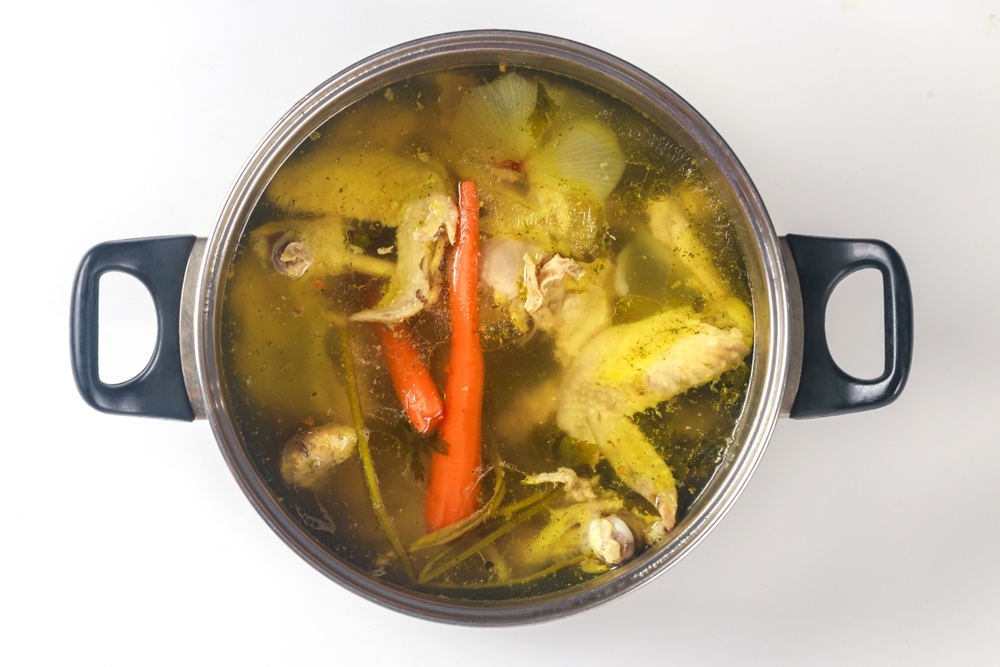
One of the more quietly powerful shifts that comes with batch cooking is developing a scrap habit. The onion skins, carrot tops, celery ends, herb stems, and corn cobs that would otherwise go straight into the trash or compost can be kept in a bag in the freezer and turned into stock every few weeks. It takes almost no active effort, and it produces something that would cost several dollars per quart at the grocery store.
Keep a zip-lock bag or container in the freezer and add to it as you cook. Onions, carrots, celery, leeks, parsley stems, mushroom trimmings, and any dried-out herbs all work well. Once the bag is full, dump it in a large pot, cover with cold water, add a bay leaf and a few peppercorns, and simmer for an hour. Strain, cool, and refrigerate or freeze. The resulting stock is better than anything in a carton and costs essentially nothing.
If you are roasting chicken regularly, save the carcasses too. Chicken bones make a much richer stock than vegetable scraps alone. Roast two chickens at once, strip the meat, and use both carcasses in one big pot of stock. You can freeze stock in ice cube trays and then bag the cubes for small-quantity use, or in quart containers for soups and stews.
Portion before you store, not after
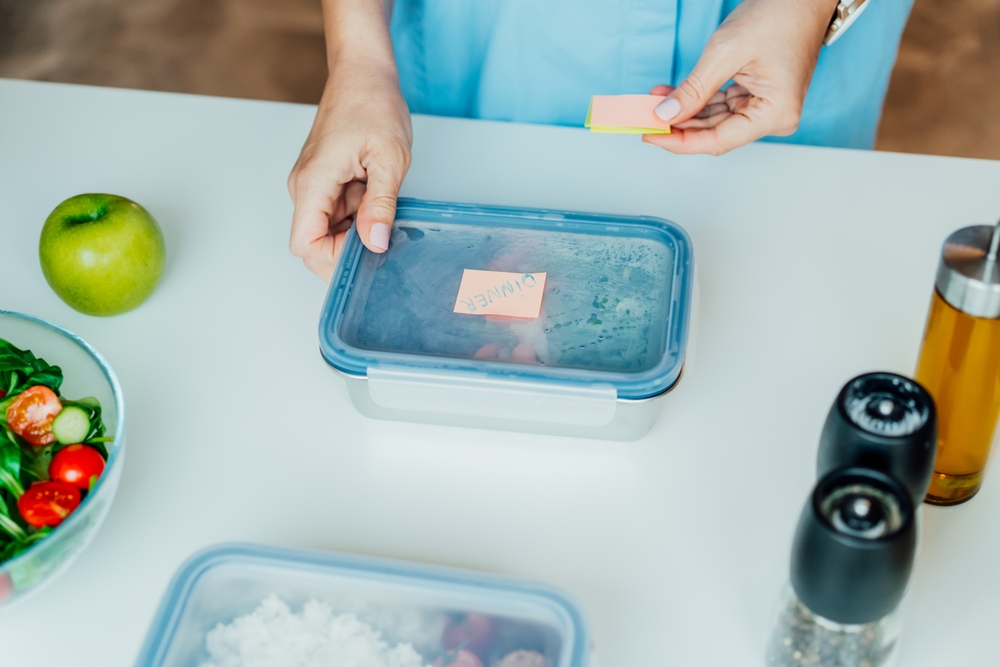
One habit that makes batch-cooked food dramatically more useful during the week is dividing it into portions at the time of storage, not when you go to eat it. If the soup goes into the fridge as one giant pot, you have to reheat the whole thing every time. If it goes into individual portions, you grab what you need and leave the rest undisturbed.
This matters most for lunch. The main reason people do not bring lunch from home is not that they do not want to. It is that pulling out a cutting board and portioning something at 7 a.m. is more than most people are willing to do. A container that is already portioned and ready to grab from the fridge removes the last remaining obstacle. It also means food gets used more evenly, rather than half a batch being eaten in the first two days and the other half expiring before anyone gets to it.
For freezer storage, portioning is even more important. Freezing in serving-sized portions means you can take out exactly what you need and thaw it overnight in the fridge, rather than defrosting a huge container and eating the same thing four days in a row. Silicone muffin tins are useful for freezing smaller portions of soups, sauces, and purees, then bagging the frozen discs once they are solid.
Schedule a weekly fridge sweep meal
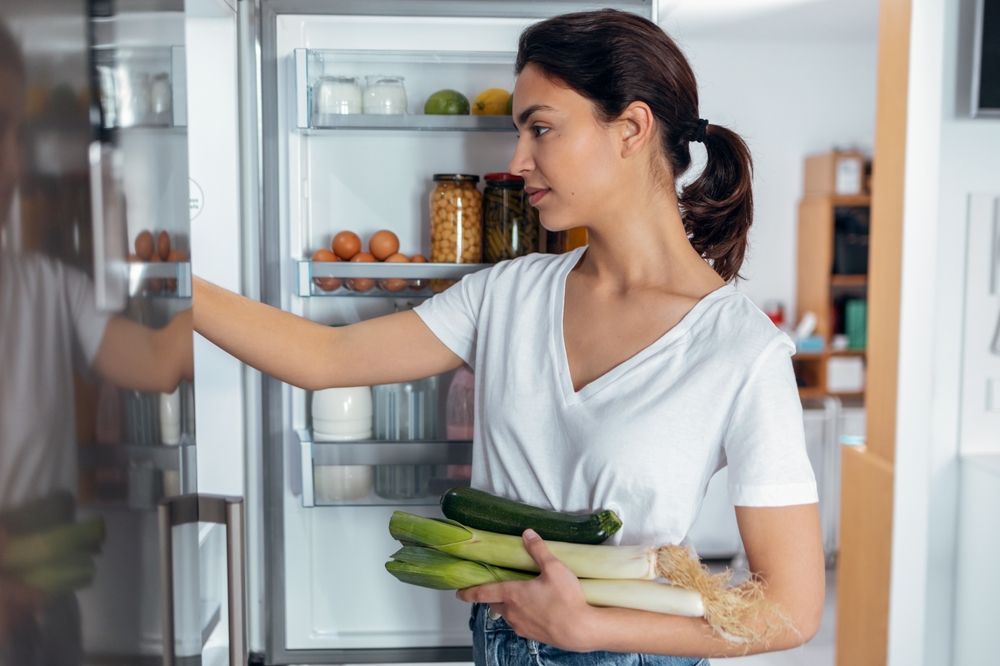
Every household needs one meal per week whose sole purpose is to use up what is about to expire. Some people call this a “fridge clean-out night,” some call it a “scramble dinner.” Whatever you call it, it is the most effective single habit for reducing food waste because it imposes a deadline on food that would otherwise drift toward the trash.
The usual format is flexible: fried rice made with whatever vegetables are left, a frittata or scrambled eggs that can incorporate almost anything, a grain bowl assembled from fridge odds and ends, or a soup that gets everything that is still good enough to eat. None of these requires a recipe. They require the habit of looking at what is there and making something from it rather than reaching for something new.
One practical way to set this up: when you batch cook at the start of the week, leave one night deliberately unplanned. That is your sweep night. Whatever has not been eaten by then goes into that meal. Over time, you develop a feel for which leftovers combine well and which do not, and the meals get better. The first fridge sweep dinner might be awkward. By the fifth or sixth, you will barely think about it.
Buy bulk only on shelf-stable staples

Buying in bulk sounds like a reliable way to save money on groceries, and it is, but only when you actually use what you buy. Buying in bulk saves shoppers around 27% on average, but that savings evaporates entirely if you throw out half of what you bought. The rule for batch cooking is to buy shelf-stable and freezable items in bulk, and be more disciplined about perishables.
Good bulk buys for batch cooking: dried beans and lentils, whole grains like farro and brown rice, oats, canned tomatoes, olive oil, soy sauce, and dried spices. These items have long shelf lives, cost significantly less per unit in larger quantities, and get used up in a steady batch cooking routine without any risk of spoilage.
Where bulk buying goes wrong is with fresh produce, dairy, and fresh proteins. Buying a five-pound bag of spinach when you live alone is not a bargain. The 27% unit savings means nothing if 60% of the bag goes into the trash by Thursday. Stick to small quantities of fresh perishables and let the bulk savings come from the pantry staples, where there is no downside risk.
Embrace component cooking over full-meal prep
Batch cooking does not have to mean cooking complete, plated meals and stacking them in labeled containers like a meal prep influencer. That approach works for some people and produces the flattest, most repetitive eating possible for others. A more sustainable system for most households is component cooking: preparing the building blocks rather than the finished dishes.
Cooked grains, roasted vegetables, a batch of protein, a sauce or dressing, and some washed and ready-to-use greens give you the components for dozens of different meals depending on how you combine them. Monday night’s grain bowl and Thursday night’s fried rice use the exact same batch of rice. The roasted vegetables that go on top of Tuesday’s soup also end up in Wednesday’s wrap. You are not eating the same meal repeatedly. You are assembling different meals from the same prepared components.
This approach is particularly good for households where different people want different things. A batch of cooked chicken, a pot of rice, and roasted vegetables can become a kid’s simple plate and an adult’s spiced grain bowl at the same time. Nobody is locked into eating whatever was fully assembled at the start of the week.
Cook double and freeze half immediately
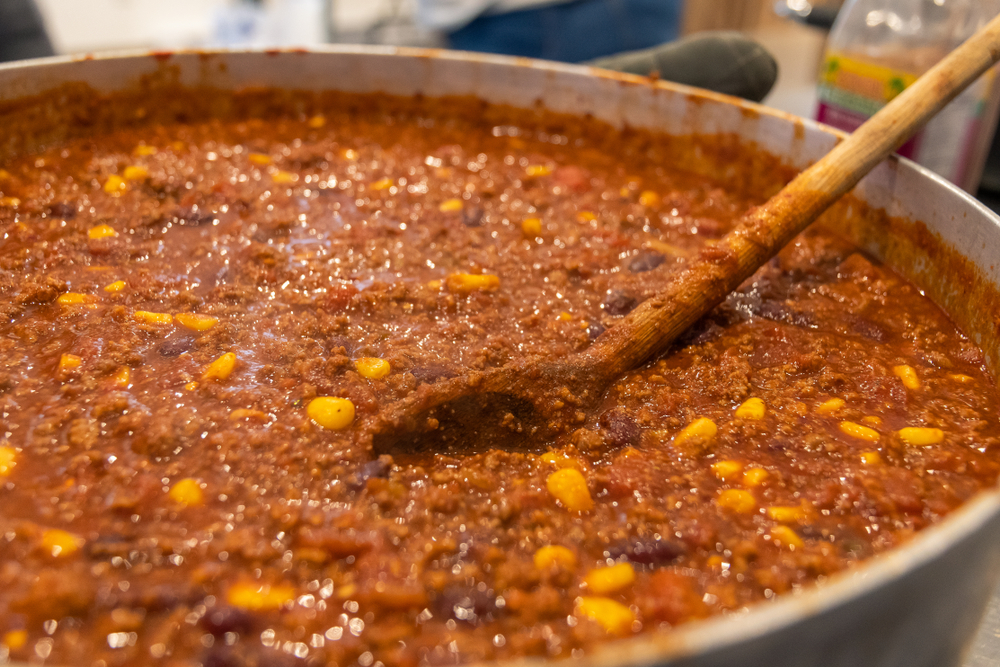
The easiest entry point into batch cooking is also the simplest: whatever you are making for dinner tonight, make twice as much and freeze half before it ever becomes a leftover. You are already doing the prep work, already making the mess, already heating the oven or the stove. Doubling the recipe adds almost nothing to the effort and produces a ready-made dinner that will bail you out in two or three weeks.
This works especially well for things like pasta sauce, chili, curries, casseroles, meatballs, and muffins. These are all foods that freeze well, reheat well, and are just as good the second time around. They are also foods that take enough time and effort to cook that having a frozen version genuinely feels like a gift when you get it back out of the freezer on a rough Tuesday.
The key is to freeze the second portion immediately, before you serve dinner. Once it is out on the table, the portion sizes shrink, the family picks at it, and suddenly there is not enough to constitute a meal. Cook it, plate what you need for tonight, package the rest, and put it in the freezer before you sit down. That habit alone, done consistently, builds a freezer buffer that reduces both food waste and the temptation to order takeout.
Start with one dedicated session per week, not daily micro-sessions
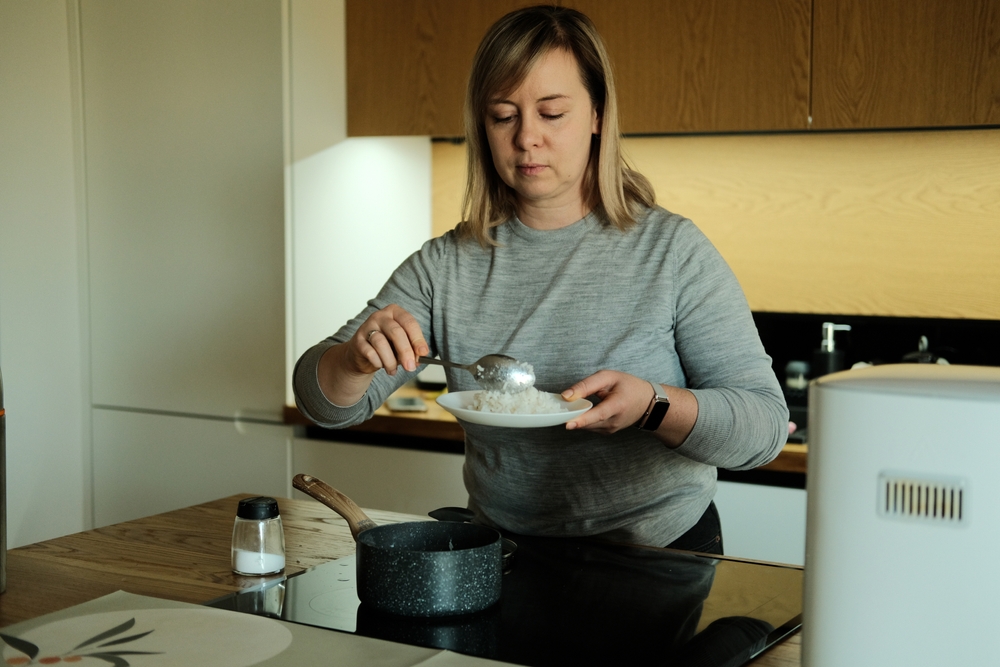
The most common reason batch cooking fails is that people try to do a little bit every day instead of one focused session once a week. Pulling out cutting boards and pots every evening adds friction to every single dinner rather than removing it. The whole value of batch cooking is the separation between the work and the eating: do the work once, then eat from it for several days.
One to two hours on a Sunday or Monday is enough to cook a pot of grains, a batch of protein, roast a pan of vegetables, and prep a soup or stew. That investment pays off every night from Tuesday through Friday. Some people find Saturday morning works better. Others prefer a Sunday evening wind-down. The specific day does not matter. The consistency does. One solid session per week, in the same slot, treated as a real commitment rather than something you will get to if you have time, is what builds the habit.
One thing to calibrate early: the batch size has to match your household. A solo cook typically does well with batches that produce four to six servings, not eight to ten. Two people can usually work with six to eight before variety fatigue sets in. If your routine consistently produces food that does not get eaten, cook less per session or freeze more aggressively. The goal is to reduce waste, not to trade a produce waste problem for a leftover waste problem. Once the system is dialed in, the session gets faster, the freezer stays useful, and the whole approach starts to feel natural rather than effortful.
Groceries are expensive, time is short, and throwing out food that you paid for feels genuinely bad in a way that is hard to shake. Batch cooking does not require a perfect kitchen, a lot of equipment, or hours of free time. It requires a plan, a few hours once a week, and the willingness to treat cooking as an investment rather than just a daily obligation.











