Borrowing to fix your car before payday can leave the loan payment competing directly with your rent. If you’re a single parent, that can mean choosing between keeping the car running and paying next month’s housing bill.
Yes, you can get a loan with bad credit as a single parent in Canada, but approval isn’t guaranteed. Lenders may look at your current income and banking activity alongside your credit history. Lenders decide how much you can borrow based on their criteria and what you can repay after essential expenses and existing debts.
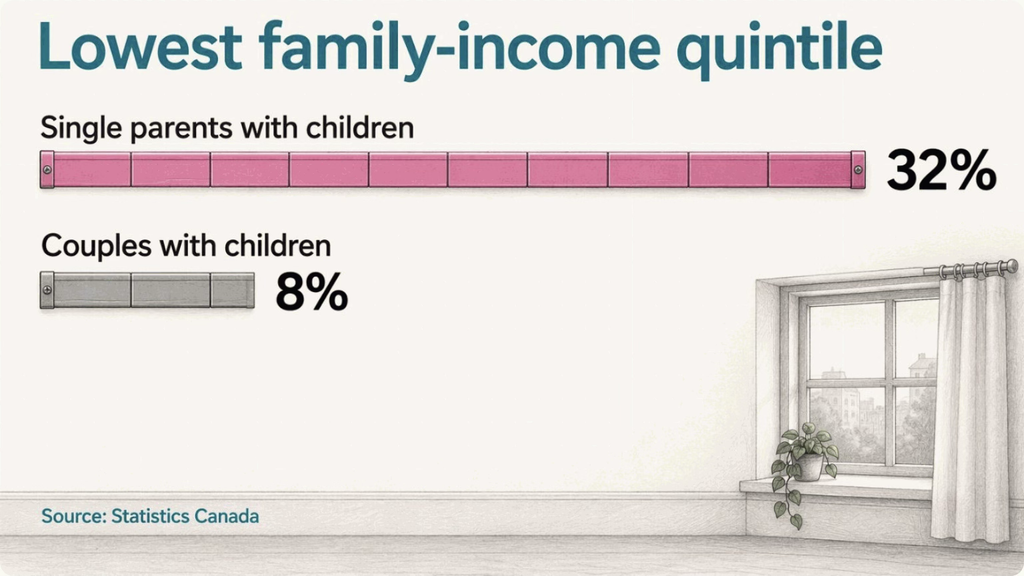
In 2019, approximately 32% of single parents with children lived in the lowest family-income quintile, compared with 8% of couples with children, according to Statistics Canada.
Table of contents
- What do lenders check for bad credit loans?
- Which credit scores count as poor?
- Why can a payday loan application be denied?
- How much can I borrow with bad credit?
- How can you improve your chances of getting a loan approved?
- Where can you borrow, and how do repayments differ?
- What makes a loan a payday loan?
- Can an online loan site guarantee instant access to money?
- Can you afford the full repayment before applying?
- What happens if I miss a payment on a bad credit loan?
- Which provincial rules and warning signs should you check?
- What could you try before applying?
- What should you do next?
What do lenders check for bad credit loans?
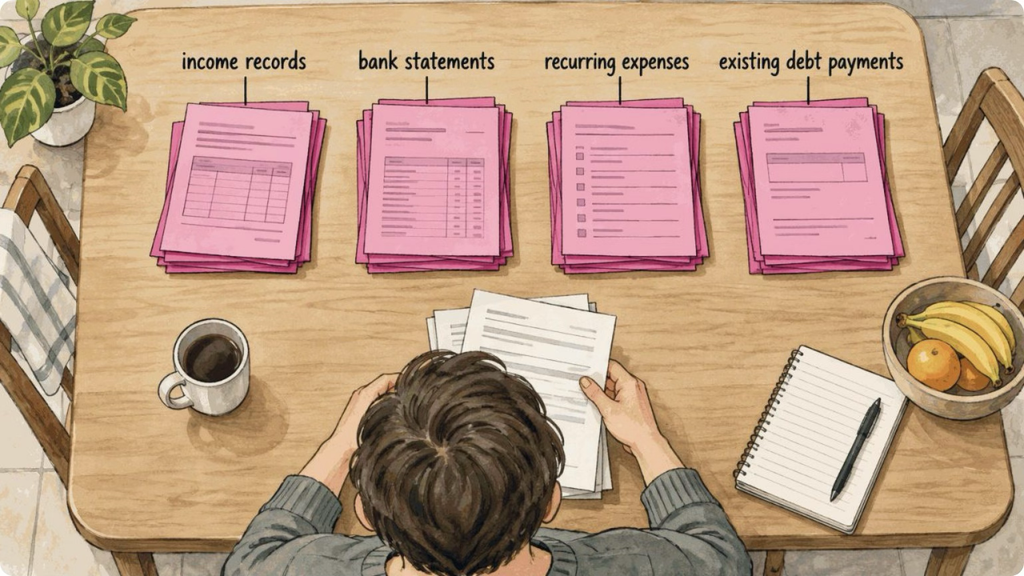
Lenders may check your current income and banking history alongside your household expenses and existing debt payments. They use those details to assess whether you can repay the amount you’ve asked for. You should expect to supply income records and bank statements showing your deposits and withdrawals.
Ask which sources of income the lender accepts, especially if you receive benefits or child support. Have records of recurring expenses ready, including child care and debts you’re still paying after a separation.
Which credit scores count as poor?
A score in the poor range on your credit report can signal bad credit, but lenders don’t all use the same approval cutoff. A score range or label doesn’t guarantee eligibility. Ask about the lender’s minimum score before you apply.
Why can a payday loan application be denied?
A lender may reject your payday or instalment loan application if it can’t verify your income or your existing commitments leave too little money to repay it. Details that don’t match across your application can also prevent approval. Check that the income you state matches the records you supply.
How much can I borrow with bad credit?
A single parent with damaged credit has no standard borrowing limit. Lenders base their offer on the product’s rules and their assessment. Limit your request to the smallest amount you need and can repay without missing essential bills. Ask for a written quote for that amount rather than the advertised maximum.
How can you improve your chances of getting a loan approved?
You can strengthen your application by correcting credit report errors and documenting your current income, though neither guarantees approval. Lower outstanding balances and steady payments can help you rebuild credit over time. Ask whether applying involves a credit inquiry before you send in several applications.
Where can you borrow, and how do repayments differ?
Specialized lenders may consider you even when you don’t meet a bank’s credit criteria, but availability depends on your province and the lender’s rules. Compare the actual contract terms, with particular attention to the payment schedule and the total amount you’ll owe.
What makes a loan a payday loan?
You usually repay a payday loan in full on your next payday. Other short-term loans can have different payment schedules. An instalment loan splits repayment into several scheduled payments rather than one lump sum.
| Loan type | Repayment timing | Payment structure | Total cost | Cash-flow risk |
| Payday loan | Usually your next payday | Principal and borrowing charge generally due together | Compare the borrowing charge and total amount due, not only the amount advanced. | One large withdrawal can leave too little for bills before your next deposit. |
| Instalment loan | Agreed dates over a longer term | Several scheduled payments | Add every payment and mandatory fee. A smaller payment over a longer term can mean a higher total cost. | Payments may overlap with rent and existing debts across many pay periods. |
Can an online loan site guarantee instant access to money?
You can’t rely on any website for guaranteed approval and instant access to funds. Finishing an application quickly doesn’t mean verification is complete. Document checks and bank processing may delay the deposit, so don’t commit that money to a bill until it arrives.
Can you afford the full repayment before applying?
Before getting a loan with bad credit, compare the full repayment obligation with your income schedule and essential household expenses. Include interest and every mandatory fee, then check how much money will come out of your account on each payment date.
Statistics Canada’s 2023 Survey of Financial Security reported a median net worth of $211,200 for one-parent Canadian families in 2023, compared with $645,900 for couples with children under 18.
Net worth isn’t the same as cash available for repayment: it can include a home or pension assets. Build your repayment plan around money actually available in your account, not the value of assets you can’t readily spend.
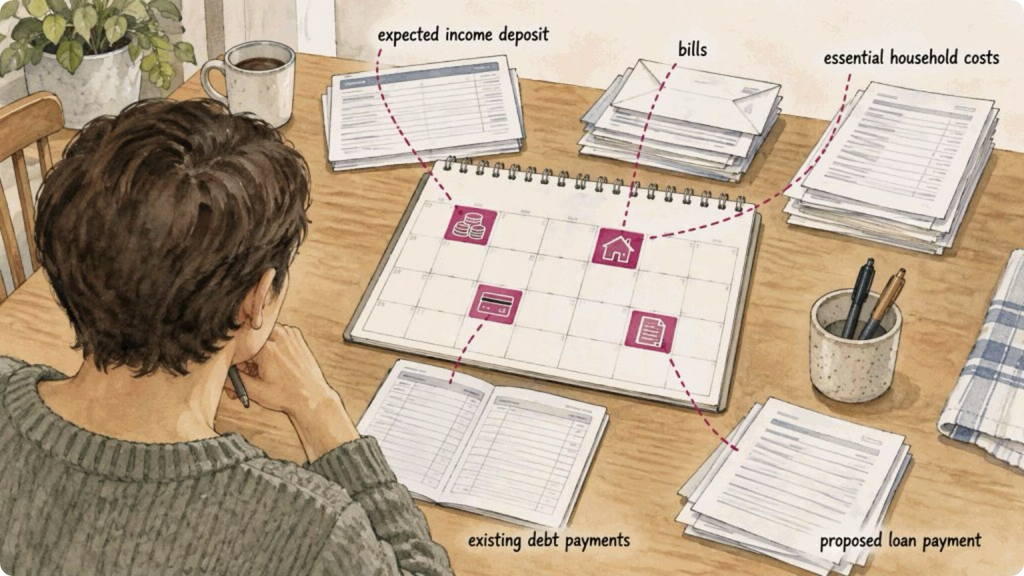
Put each expected income deposit on a calendar alongside your bills. Deduct essential household costs and existing debt payments before adding the proposed loan payment. Don’t count uncertain support payments as money already available or assume a monthly surplus will cover a debit scheduled before payday.
Test every scheduled payment against a difficult week, such as one with fewer paid work hours or an unexpected child-care bill. Check how much money you have left afterwards. A payment schedule that requires another loan or leaves rent unpaid doesn’t fit your current budget.
What happens if I miss a payment on a bad credit loan?
A missed payment can lead to contract charges and collection activity. It may also damage your credit if the lender reports it. Contact the lender before the due date to ask about a payment arrangement, and get any changed schedule in writing.
The National Post reported on November 4, 2026, that the share of instalment loans at least 90 days overdue had climbed to 2.95%, up from 0.95% in late 2015. That increase makes it important to stress-test every scheduled payment, including those that fall in a week with reduced work hours.
Taking another loan to repay the first shifts the shortfall into a later pay period and adds borrowing costs. A loan extension doesn’t erase what you owe. Ask for the revised total amount payable and every new due date before agreeing to an extension.
Which provincial rules and warning signs should you check?
Provincial rules govern lending permissions and consumer protections, but the rules differ from one product to another. Verify any required licence with your provincial or territorial consumer-protection office. You still need to check the rules where you live when applying online.
Get the total amount payable in writing before signing. Read the payment schedule and default terms, along with the annual percentage rate and mandatory fees. Ask the consumer-protection office about any charges you think exceed legal limits.
CityNews Montreal reported on August 17, 2026, that an Alberta investigation involved alleged unlicensed lending and illegal interest rates, as well as harassing collection tactics. Several people and companies pleaded guilty, and two companies were fined $25,000.
Threats and intimidating collection messages give you grounds to complain to the consumer-protection office. Save copies of your contract and payment records, along with any messages or call logs documenting the conduct.
What could you try before applying?
A payment arrangement with your creditor may help you cover the immediate bill without taking out a new loan. Ask about shifting the due date or splitting an overdue balance into manageable payments, and check for extra charges before you agree.
Help from family may be an option if you agree on repayment in writing. Delaying a non-urgent expense avoids adding a payment while your budget is tight. If the purchase can wait until after your next confirmed deposit, choose that date before you apply for credit.
What should you do next?
Keep housing, food, utilities, and child-related costs covered before you take on debt. Consistent payments and lower balances help rebuild your credit; borrowing money that takes another loan to repay works against that plan. Put every proposed repayment date on your household budget calendar, then check what remains for essentials before you apply.