
Your uncle was the world’s biggest baseball fan. Spent decades at games, card shows, and conventions, always getting things signed. Now you’re clearing out his house and there are two shoeboxes of memorabilia sitting on the kitchen table. Some of it probably isn’t worth much. A few pieces might be worth more than the car in his driveway.
The autograph market rewards exactly two things: who signed it, and whether you can prove it. The fake problem is severe. Experts estimate that somewhere between 70 and 80 percent of signed sports memorabilia on the secondary market is not authentic, and entertainment autographs aren’t much cleaner. The most famous names are always the most heavily forged because demand never stops. A paper certificate declaring authenticity means almost nothing on its own, because anyone with a printer can produce one. What actually counts is a numbered hologram from one of the three major authentication services: PSA/DNA, JSA (James Spence Authentication), or Beckett Authentication. Each maintains a searchable online database where a certificate number can be verified in seconds.
If you think you have something real, authentication typically runs $20 to $150 depending on the signer, and it can transform an unauthenticated piece worth very little into one worth several times that. The format matters too. The same person’s signature on a baseball, a photograph, a boxing glove, or a signed album cover represents four different items at four different prices, and knowing which format you have is the first step.
Table of contents
- Muhammad Ali signed 8×10 photograph
- Muhammad Ali signed boxing glove
- Elvis Presley signed publicity photograph
- Elvis Presley signed personal check
- Mickey Mantle single-signed baseball
- Joe DiMaggio single-signed baseball
- Willie Mays single-signed baseball
- Michael Jordan signed photograph
- Beatles all-four autographs on autograph book page or paper
- Beatles signed album cover
- Marilyn Monroe signed vintage photograph
- Marilyn Monroe signed document or contract
- Led Zeppelin all-four signed album cover
- Babe Ruth single-signed baseball
- James Dean signed photograph
Muhammad Ali signed 8×10 photograph
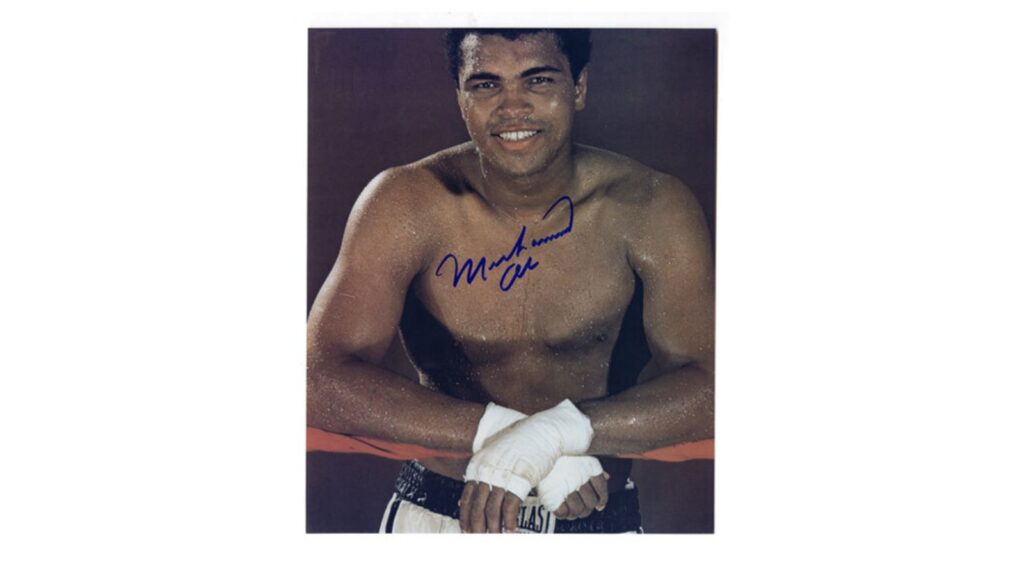
Ali signed generously through the 1970s and 1980s, attending events and meeting fans before Parkinson’s disease made it increasingly difficult. Authenticated 8×10 photographs with a PSA or JSA numbered hologram typically bring $500 to $1,500. Earlier signatures from before his Parkinson’s symptoms became pronounced around the mid-1980s are bolder, more legible, and worth more. Later signatures are shakier and carry a lower premium.
The fake problem with Ali is extraordinary in scale. Hundreds of thousands of fake Ali signatures are estimated to circulate, and even major authentication services have made documented errors with his autograph. A signed photograph with a compelling story and no verified hologram is essentially unsellable to collectors, because no serious buyer will take the risk on something this heavily forged.
Muhammad Ali signed boxing glove
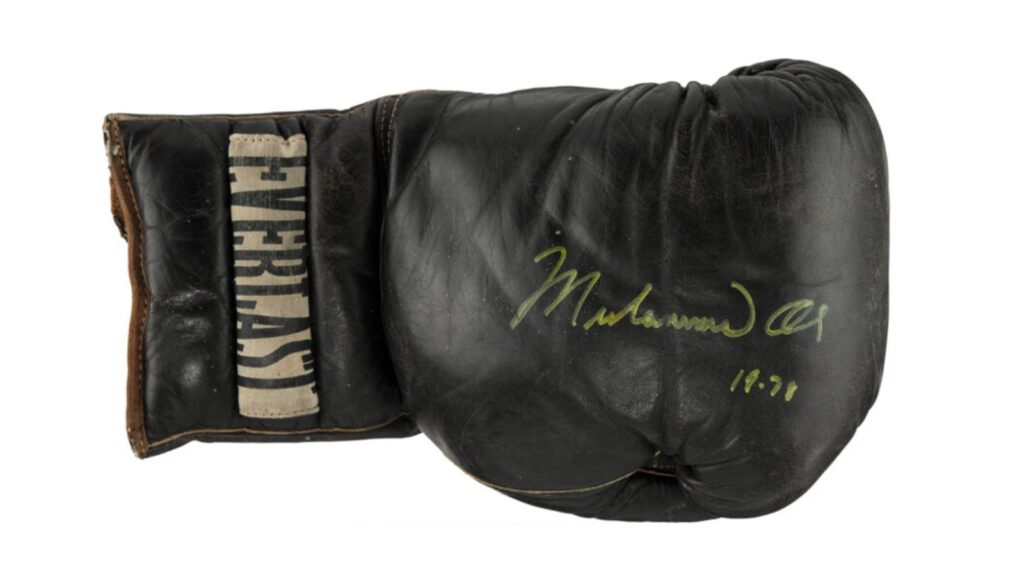
A signed boxing glove is the most visually iconic Ali collectible, tied to his image in a way no photograph is. With a PSA or JSA numbered hologram, standard examples signed on an Everlast glove in good condition bring $1,000 to $2,000. Gloves signed during his championship years carry more weight than later examples, and the “The Greatest” inscription adds value when confirmed authentic.
The visual impact of a signed glove is exactly what makes it attractive to forgers. The market is flooded with fake Ali gloves, many accompanied by convincing-looking paper certificates from companies that no longer exist. Without a current numbered hologram from a major service, a boxing glove has essentially no reliable resale value regardless of the story attached to it. If you have both an authenticated photograph and a glove, the glove is typically the stronger piece.
Elvis Presley signed publicity photograph
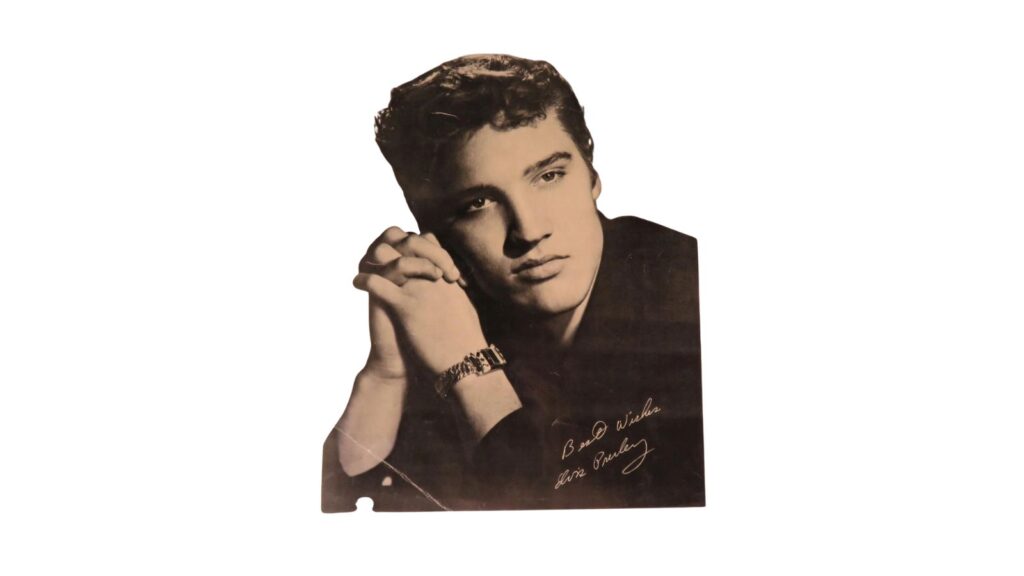
Elvis was genuinely accessible to fans during his early career, particularly between 1954 and the early 1960s, and he signed photographs at events and backstage after shows with real generosity. Authenticated examples from that period with clear, bold signatures and solid provenance bring $2,000 to $5,000, with particularly well-documented or sharp examples pushing higher.
Two specific problems make Elvis autographs unusually treacherous. His management routinely used autopen machines and secretarial signatures to handle the overwhelming volume of fan mail, and those are worth nothing to collectors. The forgery market for Elvis is also exceptionally active and has produced very convincing fakes over decades. Authentication from a specialist with specific Elvis expertise is essentially mandatory before you can establish any commercial value. If you have a photograph with a handwritten note, a documented occasion, or other supporting materials, preserve all of it carefully alongside any authentication work you do.
Elvis Presley signed personal check
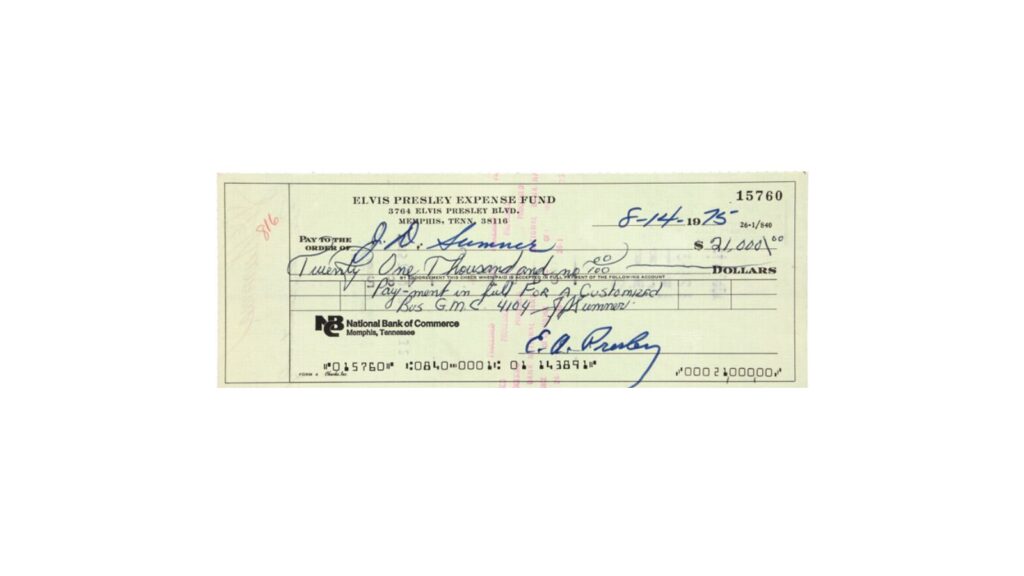
A signed Elvis check is one of the more reliable entry points in the Elvis market for a specific reason: checks are dated documents tied to a known bank account, which makes them significantly harder to convincingly forge than a bare photograph. Authenticated Elvis checks in good condition typically bring $3,000 to $5,000 depending on the date, condition, and who the check is made out to.
The “E.A. Presley” signature on his personal checks is a different format from the stylized fan autograph, giving authentication specialists more specific comparison material to work with. Checks from the 1960s are generally most desirable. They should still go through a specialist service before any sale attempt, but the format itself provides a layer of documentary protection that a photograph simply doesn’t carry. If you have an Elvis check and an Elvis photograph and can only afford to authenticate one, start with the check.
Mickey Mantle single-signed baseball
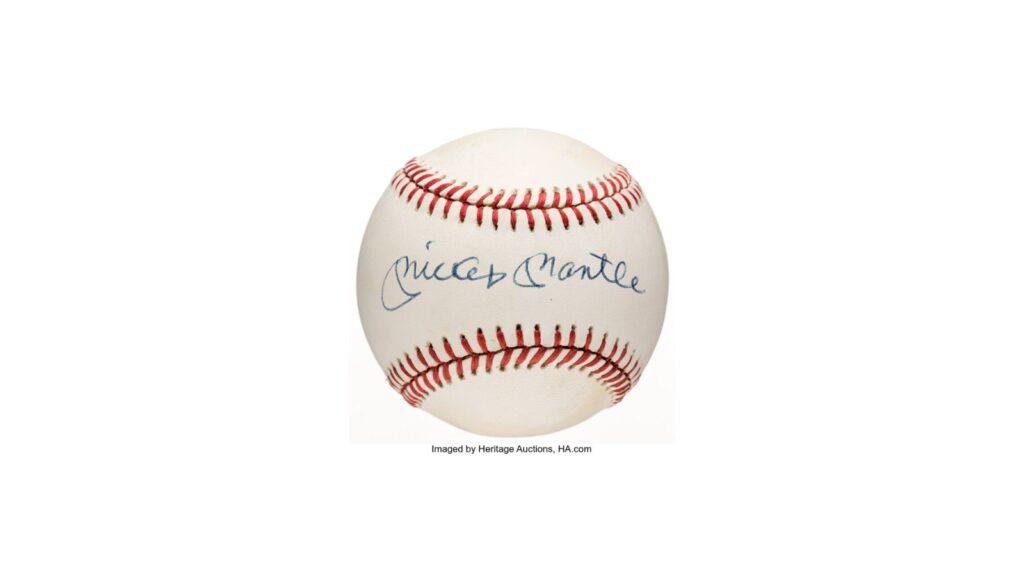
Mantle signed constantly at card shows and fan events from the mid-1970s until his death in 1995, and his signature appears on large numbers of baseballs as a result. A typical clean authenticated ball with a JSA or Beckett hologram brings $500 to $1,500 in decent condition. That range is wide because signature quality matters enormously: a bold, dark, centered signature on a clean white ball is worth several times what a faded or personalized example brings.
Mantle is one of the most forged names in baseball memorabilia. Mail responses during his playing years were often answered with stamps or secretarial signatures rather than genuine ones. Paper certificates from defunct companies from the 1980s and 1990s have no real resale value regardless of how official they look. Without a current numbered hologram from a major service, a Mantle ball is a very difficult sell, and the authentication requirement is non-negotiable if you want to realize meaningful money.
Joe DiMaggio single-signed baseball
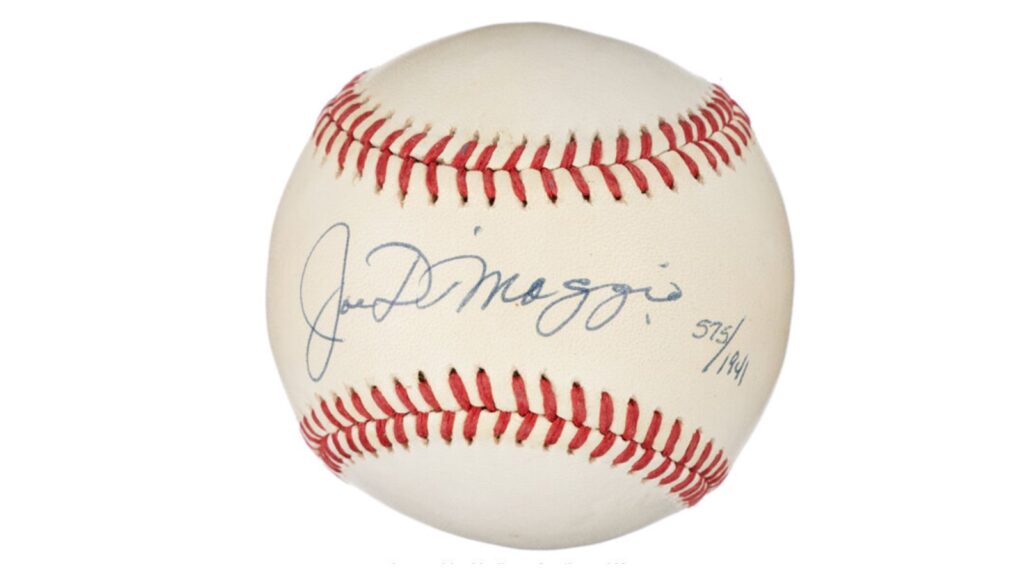
DiMaggio was famously selective about what he agreed to sign and had a difficult reputation about it in his later years, which kept supply from becoming overwhelming despite a long retirement. Authenticated DiMaggio baseballs with a clear, bold signature on the sweet spot typically bring $400 to $750 in solid condition. Faded or smeared examples bring less. An unauthenticated ball without a hologram sells for $175 to $200 at best.
His signature evolved across his lifetime. Earlier examples are more fully formed; the later card-show version was more abbreviated and quicker. If you have a ball with provenance documentation alongside it, a signed note from the person who obtained it or a photograph of the signing occasion, that context is worth preserving carefully alongside any authentication you pursue.
Willie Mays single-signed baseball
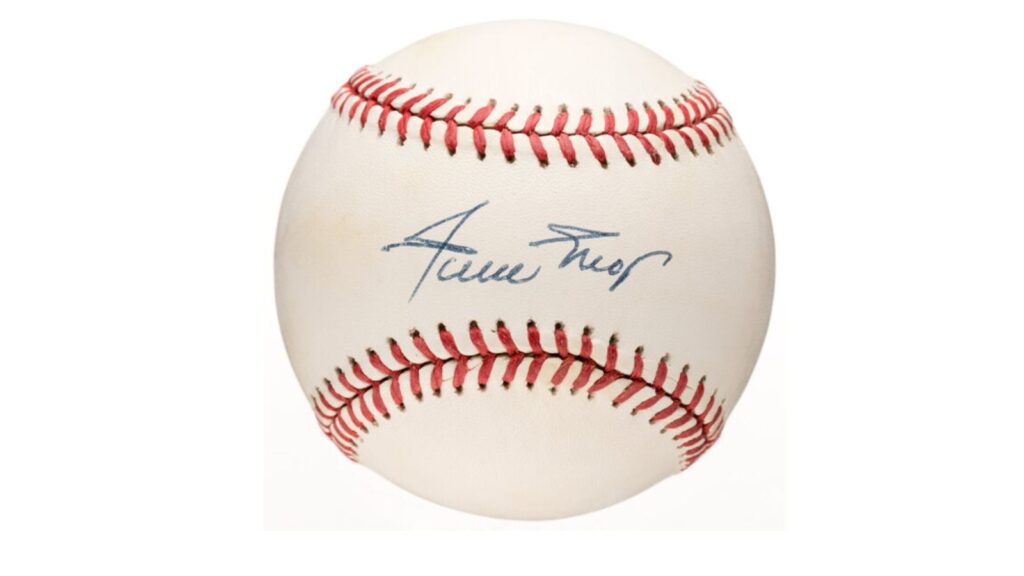
Mays attended card shows and fan events for decades and signed baseballs prolifically well into his eighties, which means authenticated examples still surface in estate sales with real regularity. A clean authenticated ball with a readable signature in strong ink typically brings $300 to $600, with cleaner examples and desirable inscriptions pushing toward the top of that range.
Mays passed away in May 2024, permanently closing the supply. Values have ticked upward since, as they typically do when a prolific signer is gone. Without a numbered hologram from a current major service, a Mays ball is nearly impossible to sell at a meaningful price. The “Say Hey Kid” inscription is commonly added to fakes because collectors associate it with higher-value examples, so if you have one with that inscription, authentication is especially important.
Michael Jordan signed photograph
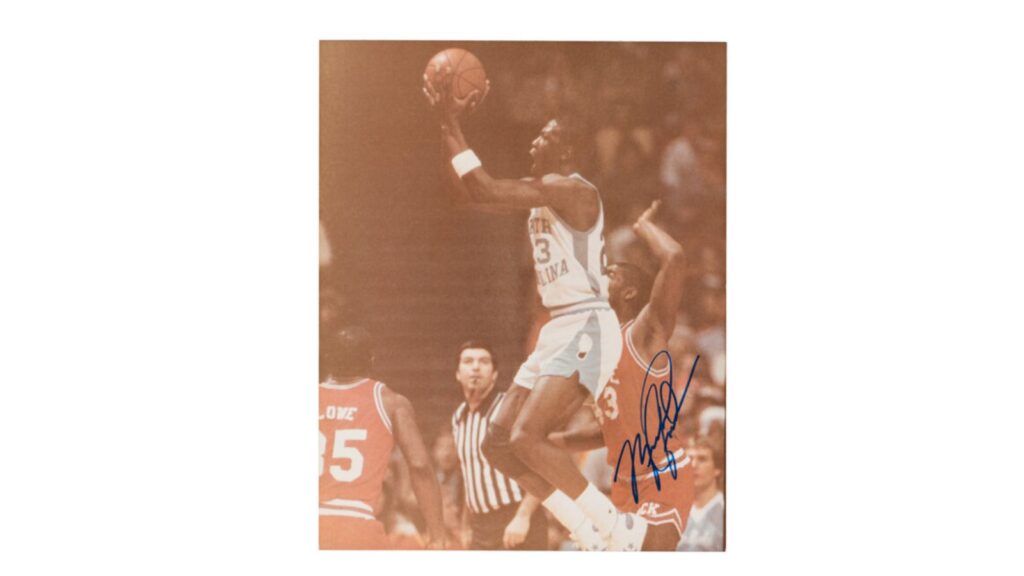
Jordan signs very rarely and commands astronomical prices for game-worn items and historic cards, but signed photographs from organized signing sessions are a different category and do still appear in family collections. An authenticated 8×10 with a numbered hologram typically brings $300 to $500, depending on the clarity of the signature and which service authenticated it.
Jordan’s autograph is faked constantly, and secretarial signatures exist from certain promotional periods. Without a numbered hologram from PSA/DNA, JSA, or Beckett that can be verified online, a Jordan photograph is very difficult to sell to any serious collector. A bold, dark signature on a clean 8×10 with a verified hologram is worth pursuing. A faded signature on a small card with a paper certificate from a company no one recognizes is worth essentially nothing commercially.
Beatles all-four autographs on autograph book page or paper
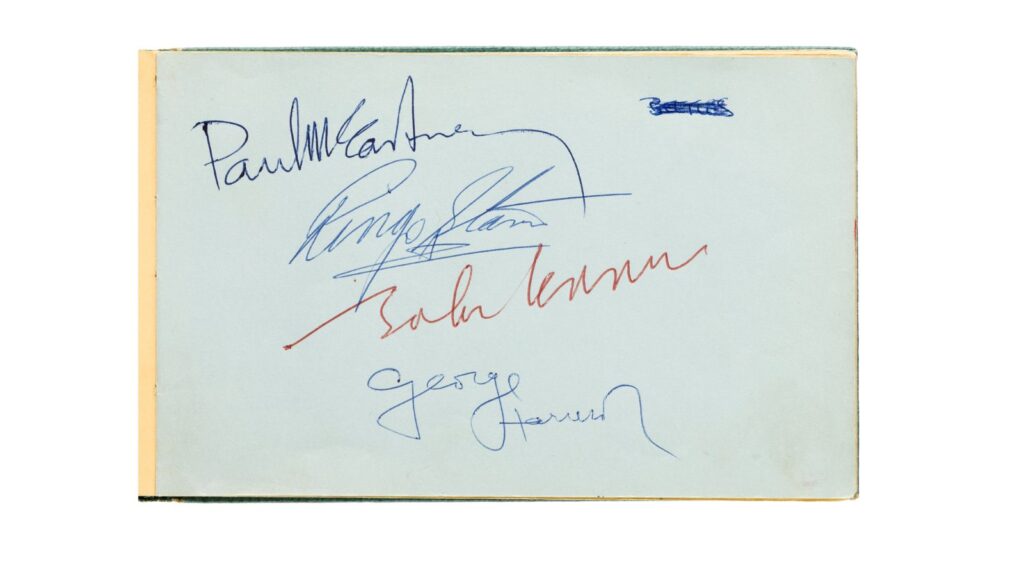
A genuine full set of Beatles signatures on a single page is exactly what a British or American fan might have obtained in person in 1963 or 1964, when the group was on tour and still accessible in ways they would never be again. A clean, clear 1963-65 set with all four signatures in good condition typically brings $5,000 to $8,000. Signatures obtained in 1967 or later, when the group stopped touring and became nearly impossible to approach as a unit, are rarer and worth considerably more.
The hard caveat: the vast majority of what circulates as authentic Beatles signatures is not. The combination of two deceased members and enormous global demand makes this one of the most heavily forged autograph sets in the world. Authentication requires specialist expertise rather than just a generic numbered hologram. If you think you have a genuine set, seek out someone with specific Beatles authentication experience rather than a general sports memorabilia service.
Beatles signed album cover
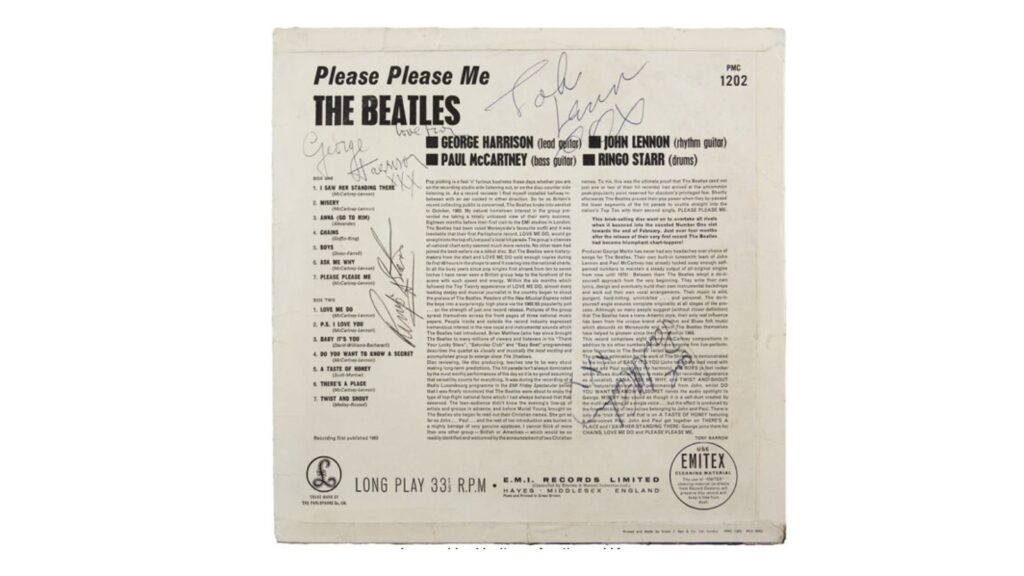
A signed album cover is a fundamentally different proposition from a signed page. Fans rarely had albums on them when they encountered the Beatles in person, which is exactly why signed copies are so much rarer than signed autograph book pages. Authenticated early album covers signed by all four members bring $12,000 to $25,000 depending on which album it is, the clarity of all four signatures, and how well documented the signing occasion is. Later albums, from 1967 onward, are rarer still and push well above that range on the occasions they surface.
Everything that applies to signed paper sets applies here, amplified. Any all-four set includes signatures from both Lennon and Harrison, who are deceased, which means every plausible-looking fake needs to include convincing versions of both. Specialist authentication with forensic comparison is not optional at these prices. The album itself also matters: the condition of the cover, the pressing, and whether there are inscriptions alongside the signatures all affect where on the range a specific example lands.
Marilyn Monroe signed vintage photograph
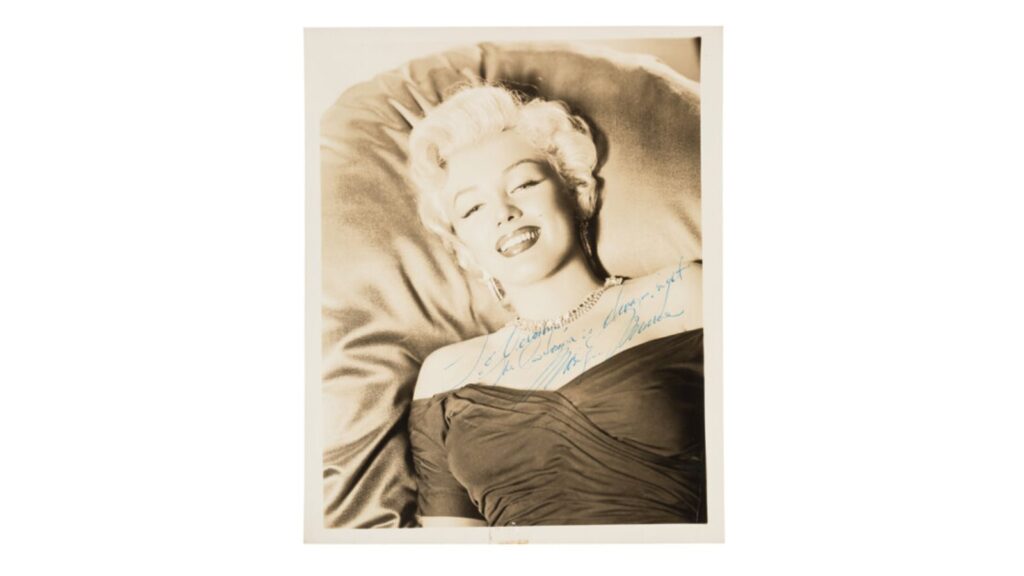
Monroe died in 1962 at 36, after a public career of about fifteen years. Genuine signed photographs from the 1950s are uncommon by any standard. Clean authenticated candid or promotional photographs from that decade with readable signatures bring $7,000 to $12,000, with particularly sharp or well-documented examples pushing well beyond that. Photographs connected to specific well-known images from her career carry a premium over generic portraits.
Monroe photographs are heavily faked and the forgeries can be convincing. The value range above assumes specialist authentication, not just a general collectibles service. A compelling family history about how a photograph was obtained is interesting context but offers no commercial protection on its own. Photographs acquired through the 1950s studio system sometimes have traceable documented histories, which provides a useful additional layer of supporting evidence if you have access to it.
Marilyn Monroe signed document or contract
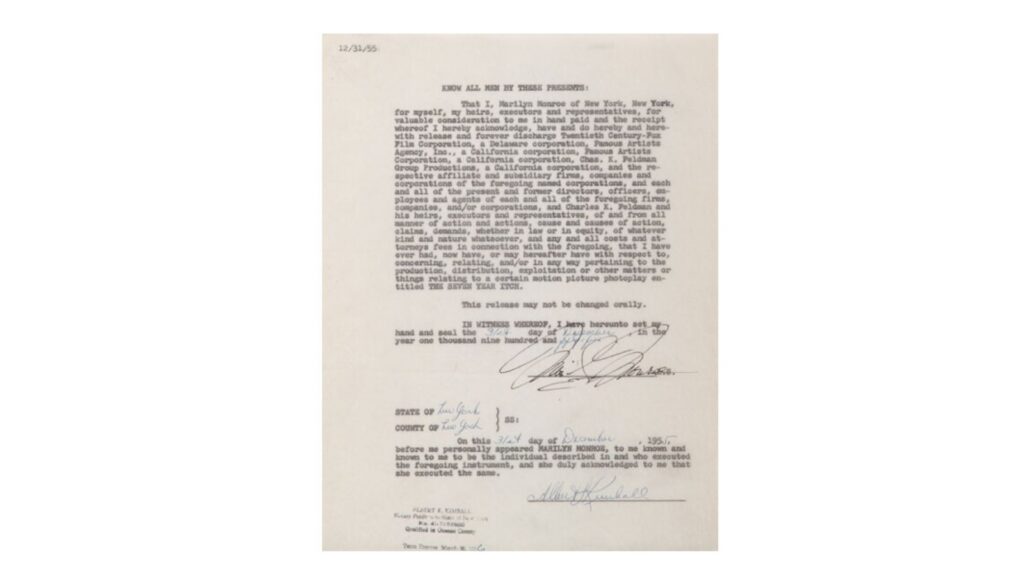
A Monroe document, a studio contract, a payment authorization, a personal letter, carries a specific advantage over a signed photograph: it’s harder to convincingly forge because the entire document needs to be period-appropriate, not just the signature. Authenticated Monroe documents in good condition bring $8,000 to $15,000 depending on the type of document, the date, and the clarity of the signature. Documents signed in her birth name, Norma Jeane, rather than as Marilyn Monroe, are rarer and attract their own following among specialist collectors.
The condition of the paper matters as much as the signature itself. Documents should be stored flat, kept out of light and away from moisture, and handled as little as possible until they can be professionally evaluated. If you have a Monroe document that came with a box of old papers from an estate, examine the paper itself: age-appropriate foxing, consistent yellowing, and period-correct typeface are basic authenticity indicators before the signature is even evaluated.
Led Zeppelin all-four signed album cover
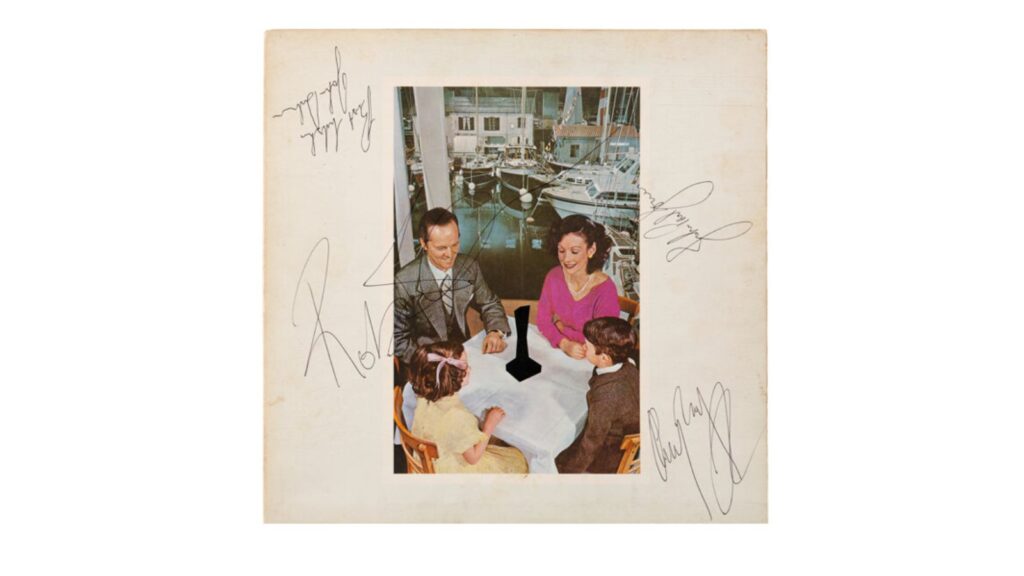
Getting all four original members of Led Zeppelin to sign a single album cover was nearly impossible even during their peak years, since the group famously disdained the fan-signing culture their contemporaries participated in. Authenticated all-four examples in good condition bring $10,000 to $22,000 depending on which album is signed, the quality and legibility of all four signatures, and the provenance.
John Bonham died in 1980, permanently closing the supply of complete sets. Any all-four cover therefore includes a signature from a deceased member, which is exactly the kind of finality that attracts forgers. A cover with three genuine signatures and a forged Bonham is a plausible-looking fake at first glance. Forensic specialist authentication is not optional at these prices.
Babe Ruth single-signed baseball
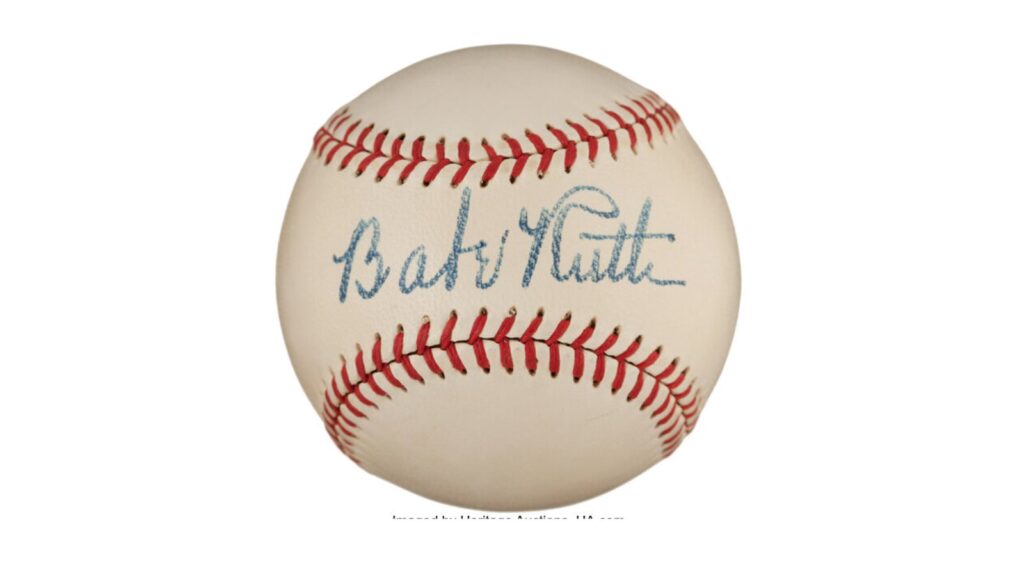
This is the grail category in American sports autographs. Ruth died in August 1948, and the pool of genuine authenticated examples is finite and always expensive. Most authenticated examples now bring $20,000 or more, with faded or heavily worn examples at the lower end and pristine playing-era balls well above six figures. A Ruth ball found in a family shoebox is almost certainly not authentic, but the real ones do turn up in exactly those circumstances on occasion.
The fake problem here is severe enough that even major authentication services have been criticized for errors with Ruth signatures over the years. The shellac-coating technique, where forgers apply a protective coat to make a ball look aged, is a known forgery method for Ruth items specifically. Any Ruth ball should go through a service with expertise in vintage baseball memorabilia, not just a general sports authenticator, and getting a second opinion is reasonable at these prices.
James Dean signed photograph
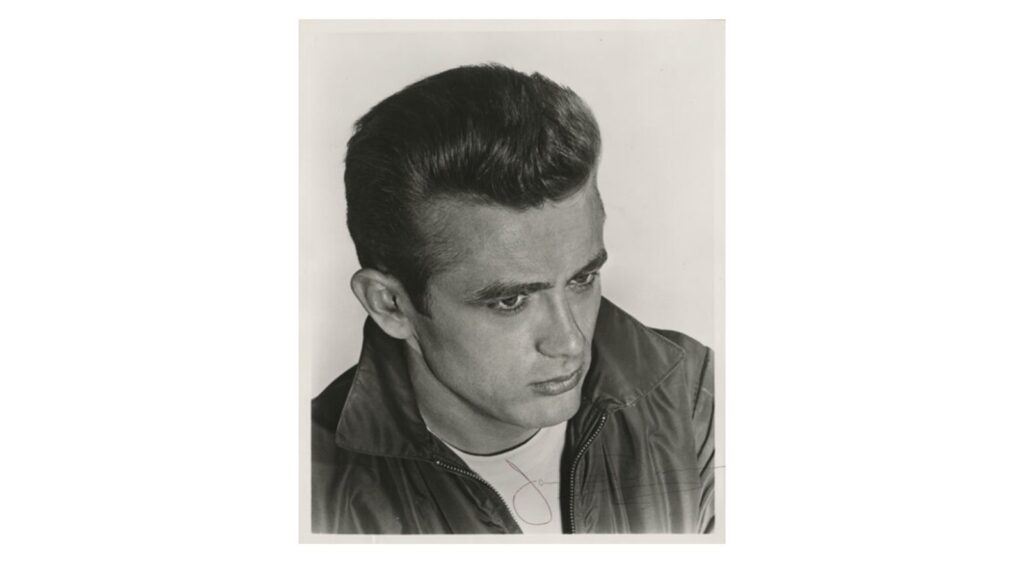
Dean died in September 1955 at 24, after completing exactly three films. His entire signing career was compressed into a very short window of public life, which means genuine signed photographs are genuinely rare. Authenticated examples from the East of Eden and Rebel Without a Cause era typically bring $10,000 to $15,000, with particularly strong or clearly documented examples pushing higher.
The combination of youth, early death, and enormous posthumous cultural status makes Dean one of the most commercially valuable entertainment autographs and one of the most faked. If you have a photograph you believe is genuine, the history of how it was obtained matters enormously. A black-and-white publicity still with a clear inscription and a provenance that can be traced to a specific 1950s occasion is worth pursuing through a specialist with vintage Hollywood memorabilia expertise. The number of surviving genuine Dean signatures is small enough that each one is worth taking seriously.
Most of what gets labeled a famous autograph isn’t. The authentication requirement isn’t a formality. It’s the whole thing.











