
The skateboard leaning against the back wall of the garage has been there since someone in your house turned sixteen, and nobody has touched it since. Before it goes to the curb or into a donation bag, flip it over and look at the bottom.
Most old skateboards are worth very little. A deck that was ridden hard, with a cracked nose and a graphic worn down to bare wood, is mostly firewood. But a surprising number of boards, wheels and trucks from the 1960s, 70s and 80s sell for real money, and the ones that turn up in garages, attics and estate sales are a group you can learn to spot.
Condition drives nearly everything. Check the brand and graphic name, look for plies splitting apart at the nose or tail, and see whether the original trucks and wheels are still attached. Reissues of the famous 80s decks are everywhere too, so a bright, flawless graphic on a board you think is old deserves a second look.
1. Powell Peralta Tony Hawk deck from the 1980s
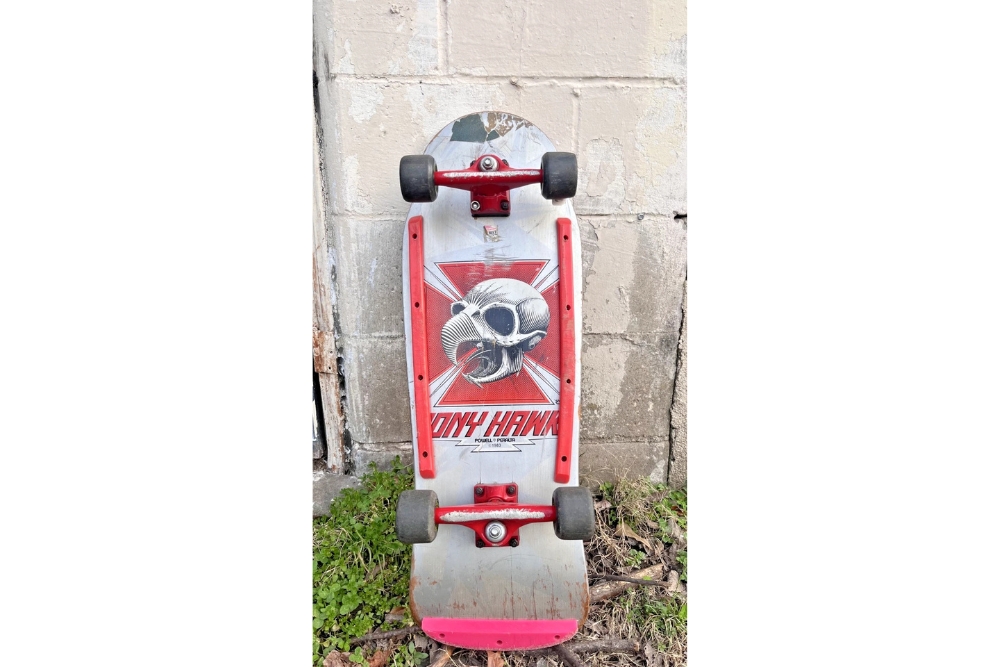
Tony Hawk’s early pro decks for Powell Peralta, with the Chicken Skull and Skull and Cross graphics, are the ones teenagers in the 80s actually owned. A mid-80s Chicken Skull in honest used condition brings around $555 to $585, and a clean pink full-size deck with the older solid cross graphic lands closer to $400 to $800 depending on how crisp the artwork is.
Unridden decks are the exception. A never-ridden mini from the late 80s has reached about $950, but that is the top of the market, not the middle of it.
Condition separates the money from the junk. Delamination, where the layers of wood peel apart, cracked tails, deep edge chips and holes drilled in the wrong places all pull the price down fast, and a deck with the graphic scraped off is worth a small fraction. Powell Peralta has re-released the Hawk graphics for years, and those reissues sell for far less than an original. A real 80s deck shows its age in yellowed varnish and honest wear. A deck that looks like it came out of the shop yesterday probably did.
2. Powell Peralta Steve Caballero Dragon deck
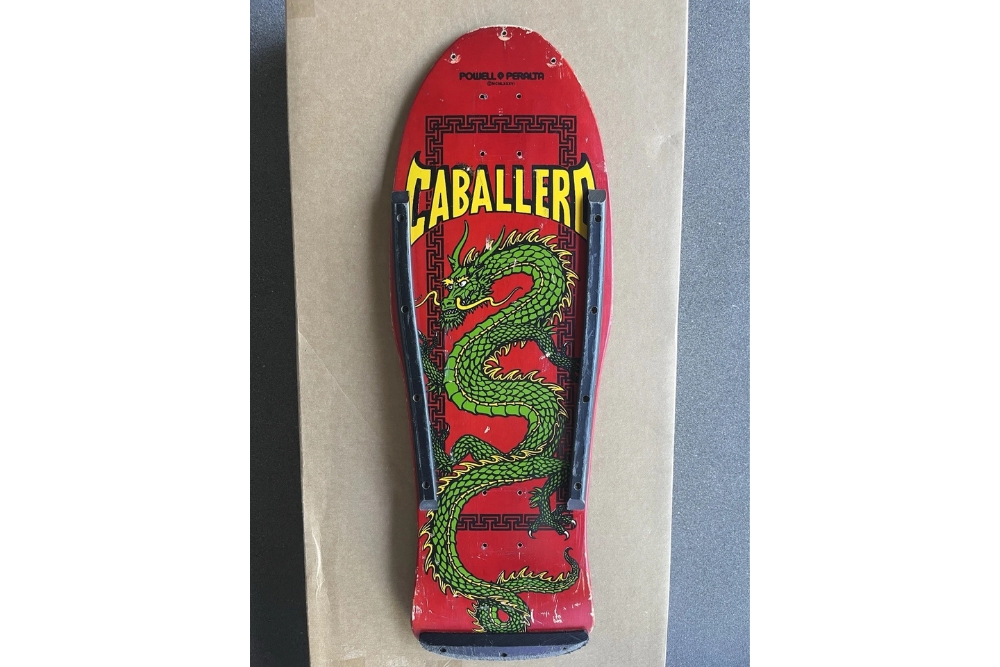
The Caballero Dragon debuted in December 1980 and the graphic was so popular it stayed in the lineup until 1986, which means plenty were made and plenty are still out there. Originals sell for anywhere from $200 to $850, with clean red decks at the top, while a used 1981 deck with obvious wear has gone for closer to $120.
Where your deck falls in that range depends on how it was treated. Bright color, a clean bottom graphic and an unridden tail sit at the top. A scuffed graphic, rounded nose and tail, and a board twisted from years of heat in a garage sit at the bottom. Repainted bottoms and filled-in holes also knock the price down, and a deck missing a chunk of its tail is worth very little.
Dragon reissues copy the shape, the hole pattern and the artwork closely, so the graphic alone proves nothing. Reissues sell for roughly $100 to $125. Look at the wood, the wear and the yellowing. If everything looks brand new, it is a reissue.
3. Powell Peralta Ripper deck
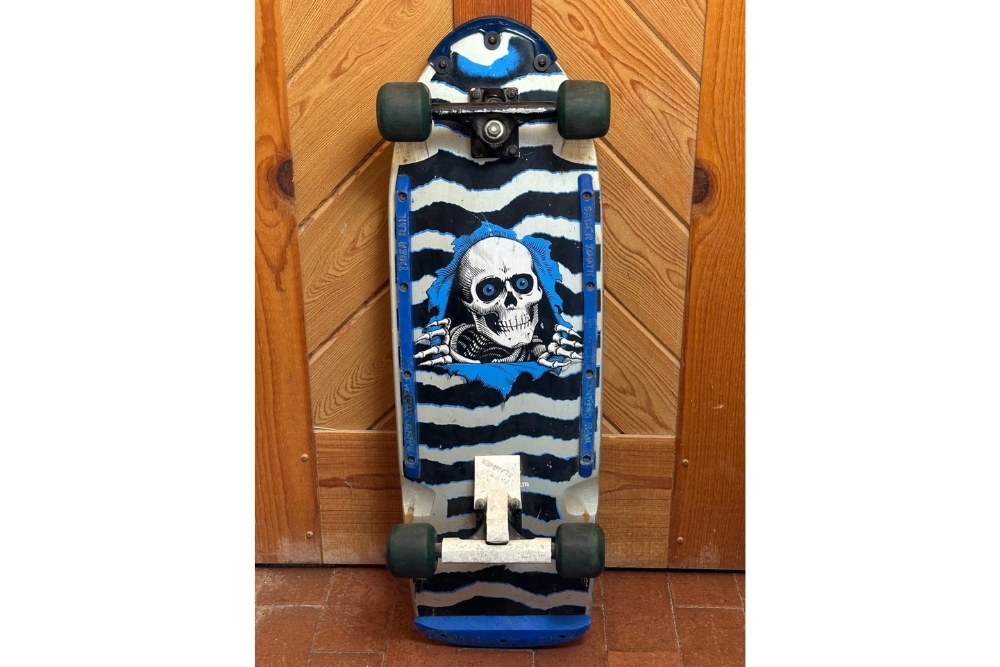
The Ripper began in 1983 as a dealer window sticker that said “Bones Sold Here.” Powell artist Vernon Courtlandt Johnson drew it, and the image later moved onto shirts and finally onto decks. It is one of the most recognizable graphics in skateboarding.
The price range is wide because condition matters so much. A beat-up deck sold as “firewood art” brings about $110, a worn but intact original sells for around $160, and a clean 1984 deck can reach $750 to $1,000.
That popularity cuts both ways. The graphic has been reissued so often that most Ripper decks you see today are new or nearly new, and those sell for far less than an original. To tell the difference, ignore the graphic and study the board. Real age means yellowed varnish, a worn tail, old grip residue and a slightly dated shape. Delamination, a warped deck and missing chunks of wood push the price toward the bottom, and an unscratched bottom pushes it toward the top. Never peel the grip tape off to look underneath.
4. Powell Peralta Mike McGill Skull and Snake deck
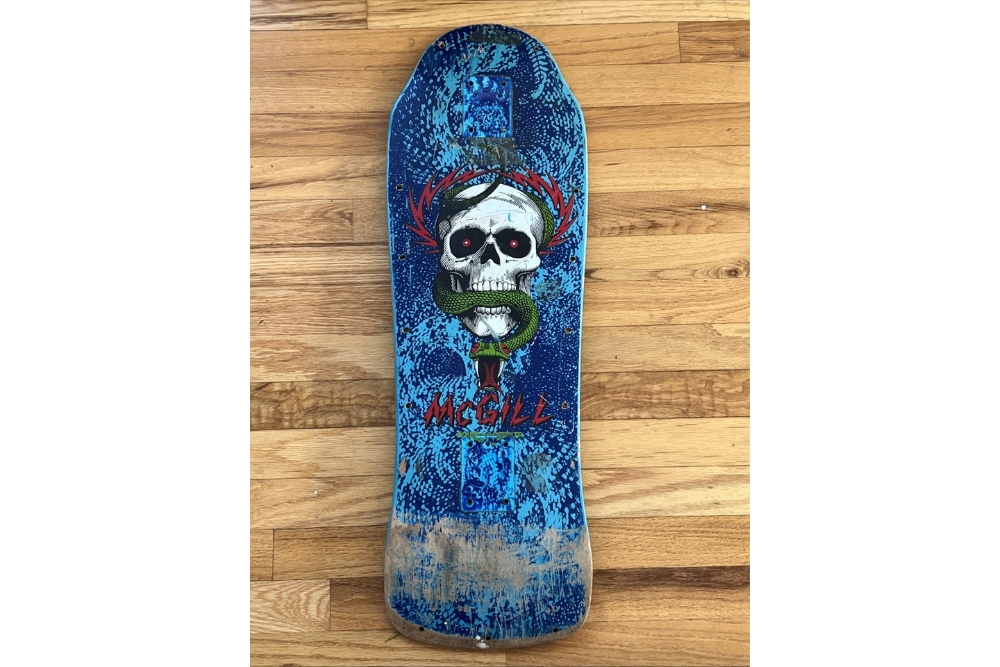
Mike McGill’s Skull and Snake arrived in 1984 with another Vernon Courtlandt Johnson graphic, and it became one of the signature images of the Bones Brigade era. Original decks in used condition are more affordable than people expect, with a 1984 original bringing about $300 and worn or lightly damaged boards selling for $120 to $230.
The problem with this deck is storage. Boards that sat in a hot attic or a damp garage for 30 years often come out twisted, with the bottom graphic curling at the edges or the layers starting to lift. A twisted deck is worth noticeably less, even when the graphic looks good in photos. Lay yours flat on a table and see whether it rocks.
Check completeness and age too. A deck with period trucks and wheels still attached is worth a little more, but only if those parts belong to the board. The Skull and Snake has been reissued many times, and the reissues look very close to the real thing, so age and wear matter more than the artwork. McGill decks from the 1990s also sell, but for noticeably less than the 1984 original.
5. Powell Peralta Lance Mountain Future Primitive deck
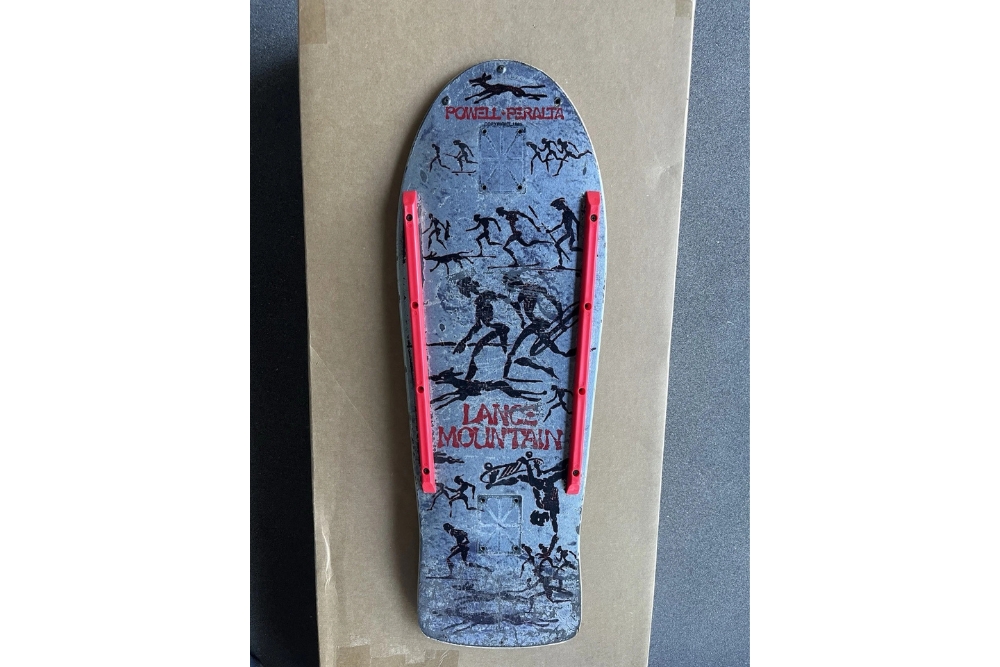
Lance Mountain’s Future Primitive is one of the less obvious Powell Peralta graphics, so it is easy to overlook. Original decks in ordinary condition sell for about $290 to $300, while a used and skated example brings closer to $120.
Later Lance Mountain boards from the late 80s and early 90s are worth looking for too. A 1990 mini in new old stock condition has sold for $550, and a 1988 crest deck has reached $500. That is a reminder that Powell Peralta made many pro models, and the less famous ones can sell for as much as the headline names.
Condition rules here as everywhere. Heavy tail wear, cracks and delamination keep a Mountain deck near $100, and a clean, unridden one sits near the top of the range. Powell Peralta has reissued the Future Primitive graphic, so check for fresh ink and a stiff, flat board that has never been ridden. If the deck still has its original grip tape and the truck holes are clean, leave it exactly as you found it.
6. Santa Cruz Rob Roskopp Face deck
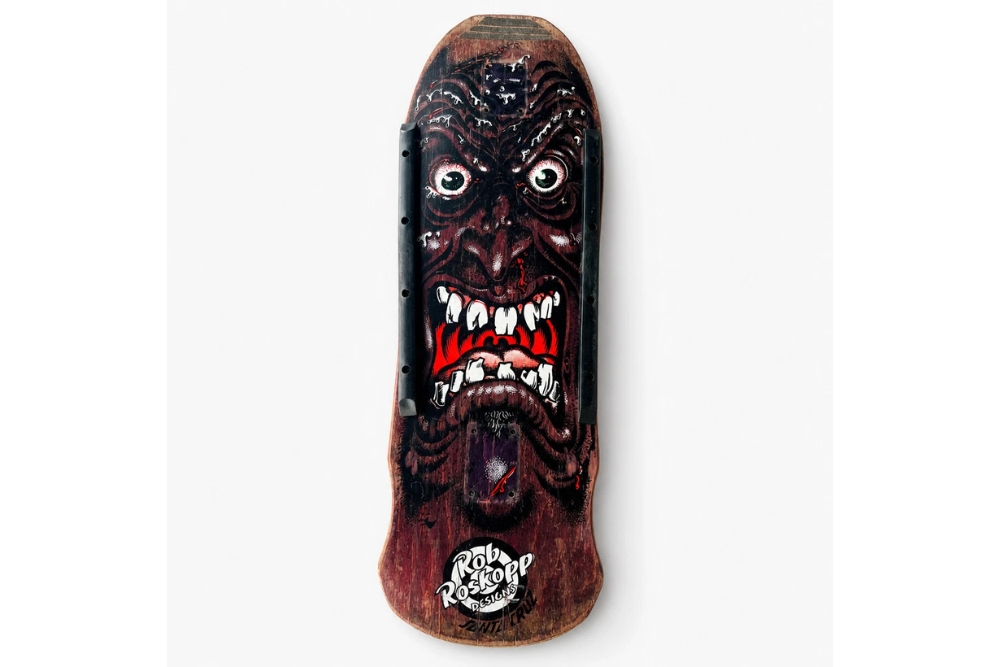
Jim Phillips drew the Roskopp Face for Santa Cruz in the 1980s, and it is one of the most iconic decks of the decade. Original used decks regularly sell for $469 to $490, and a complete original board with trucks and wheels has brought around $420.
The 80s Roskopp Target decks sell too, usually for $265 to $700 depending on the version and condition, so look for any Roskopp graphic before you decide a board is common.
Fakes and reissues are the main trap. Official reissues sell for roughly $110 to $170, which is the number to expect if your deck is bright, flat and unscuffed. Knockoffs exist too, and a deck sold as a 1980s knockoff has still brought $200, which tells you how close the copies can look. Compare the shape and the wear on the wood, not just the face. Deep scratches, a cracked tail and delamination all cut the price, and a deck repainted to cover damage is worth much less than an honest worn one.
7. Vision Mark Gonzales Gonz Face deck
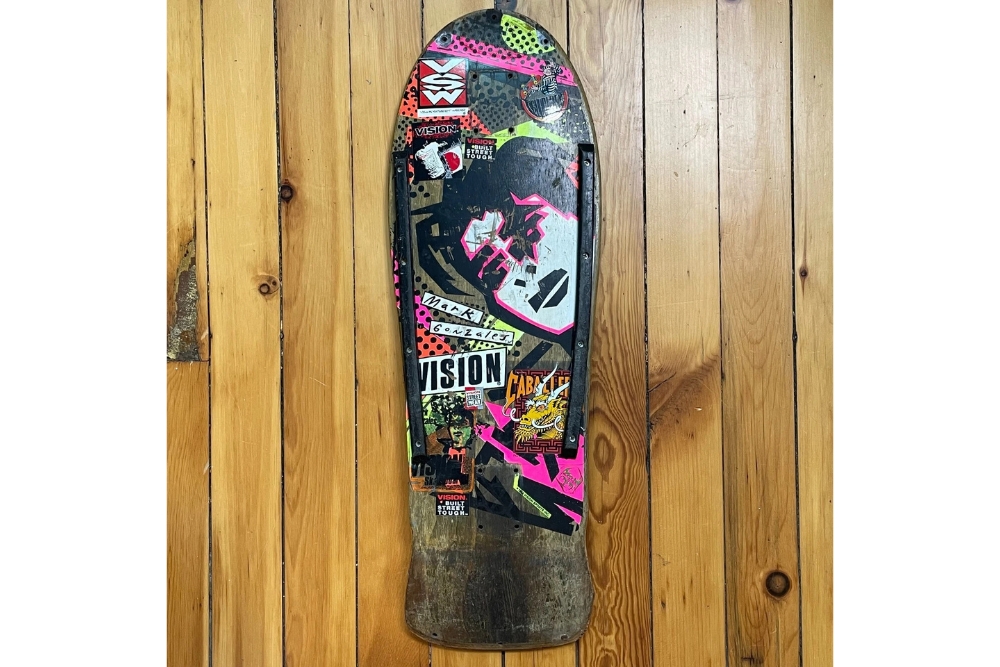
The Gonz Face is a Vision deck from the mid-80s that collectors chase because of the artwork and because Mark Gonzales is one of the most influential skaters of his era. An original 1986 Face deck has sold for about $495, and a clean Fat Face deck in new old stock condition has reached $850.
Vision made other Gonz graphics too. A Color Friends deck with extra holes drilled sold for $600, which shows how forgiving buyers can be when the artwork is strong, though those extra holes still cost the seller money compared with a clean deck.
Newly made decks with Gonz graphics sell for around $138, so the graphic alone doesn’t prove age. Look for yellowing, honest wear and an old-school shape. A deck with cracked plies, a snapped tail or a graphic scraped away by years of grinding will land well below those numbers. Check whether the deck is complete, too. Original trucks and wheels from the same era add a little, but mismatched parts take away from the price.
8. Vision Gator (Mark Rogowski) deck
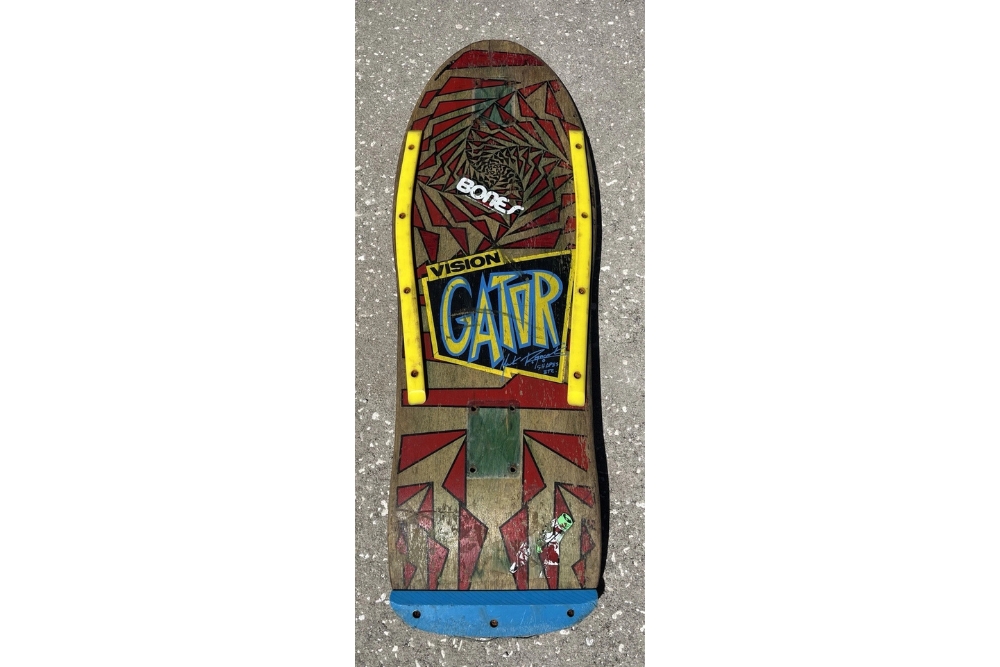
Mark “Gator” Rogowski’s Vision pro model is one of the easier 80s decks to sell, because collectors know the name and the colorways. Used original decks regularly sell for $300 to $395, with a rainbow-fade original at $395.
Complete boards are worth a look too. A 1988 Gator with its original trucks and wheels has sold for around $360, and one with Gullwing trucks and Rat Bones wheels brought $425. A complete with Tracker trucks in rougher shape sold for closer to $150, so condition and the quality of the parts make a real difference.
Check the color first. A deck with most of its graphic worn away is worth much less than one that kept its color. Cracks along the tail, chipped edges and delamination also pull the price down. Vision graphics have been reissued, so look for real age in the wood and varnish rather than a freshly printed look. A deck that was clearly repainted to hide damage is worth less than an honestly worn original.
9. Zorlac Metallica deck
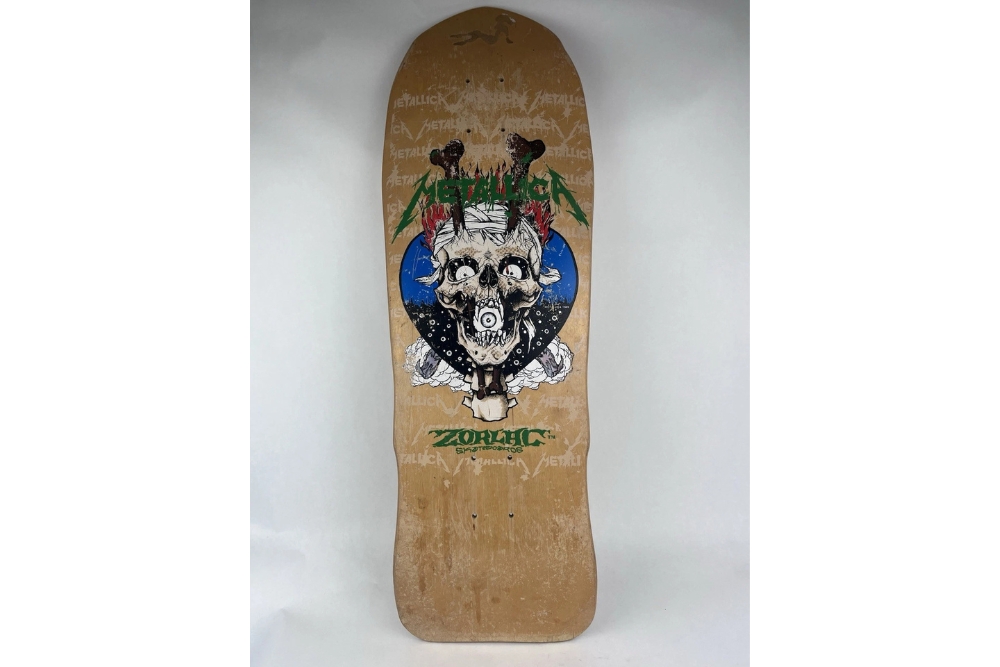
Zorlac decks carried art by Pushead, and the 1989 Metallica deck is one of the best-known. A clean 1989 original sells for about $600, while one with a damaged skull and bones graphic brought $300.
Zorlac made many Pushead-art decks, and several sell for more. A 1985 Shrunken Head deck in blue dip has reached $1,200, and an NOS 1988 Craig Johnson Torso deck has gone for $1,600, but those are for pristine, unridden decks and not the typical garage find. A 1989 Rob Mertz deck sold for $500.
Because the art is the draw, damage to the graphic matters more on a Zorlac than on most boards. Scratches through the Pushead artwork, a cracked tail or a warped deck can cut the price by half. Zorlac graphics have been reissued, so be careful with any deck that looks too new. Look for aged varnish and the wear you would expect from a board that is 35 years old or more.
10. Sims Kevin Staab Pirate deck
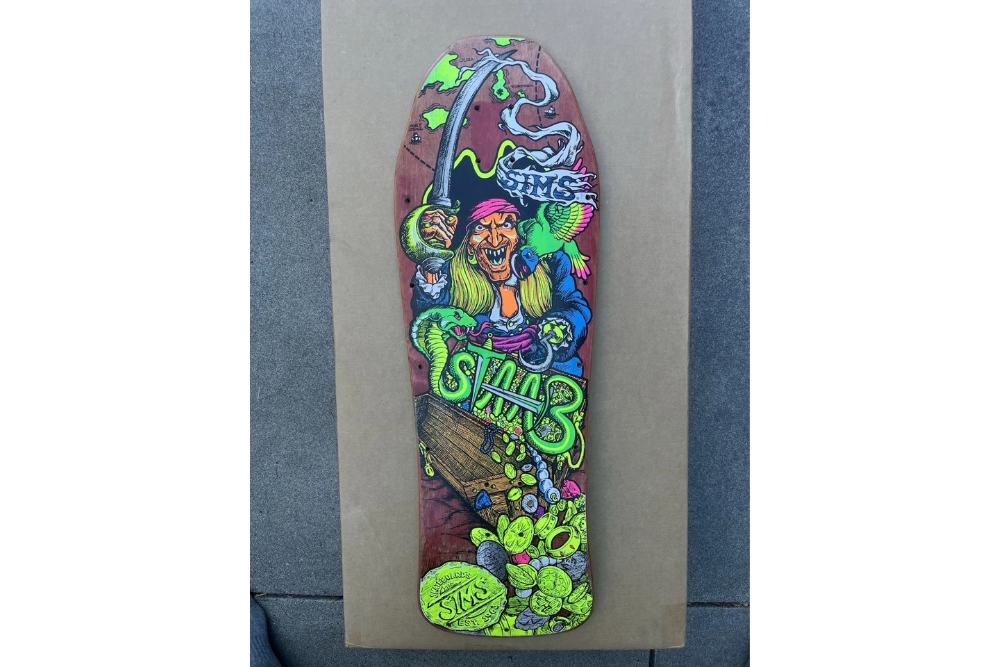
Kevin Staab’s Pirate is a Sims deck from the 80s that sits right in the middle of the market, with enough demand to hold its value and enough supply to turn up. A used Pirate deck sells for around $500, and a complete 1987 board with its original parts has reached $960 after heavy bidding.
Other Sims decks from the era sell for less. A Jeff Phillips model brought $235, which is a more typical figure for a Sims deck without a famous pro model attached. Look for the graphic name, not just the Sims logo, because that is what decides which end of the range you land on.
Completeness matters on these boards. A Pirate that still has its original trucks and wheels, and has never had parts swapped, can sell for nearly twice the price of a bare deck. Delamination, cracked tails and chipped edges reduce the value, and a repaint or touch-up on the graphic will cost you collectors’ interest. Reissues exist, so a bright deck with crisp, modern-looking ink deserves a closer look before you get excited.
11. Santa Monica Airlines Natas Kaupas Panther deck
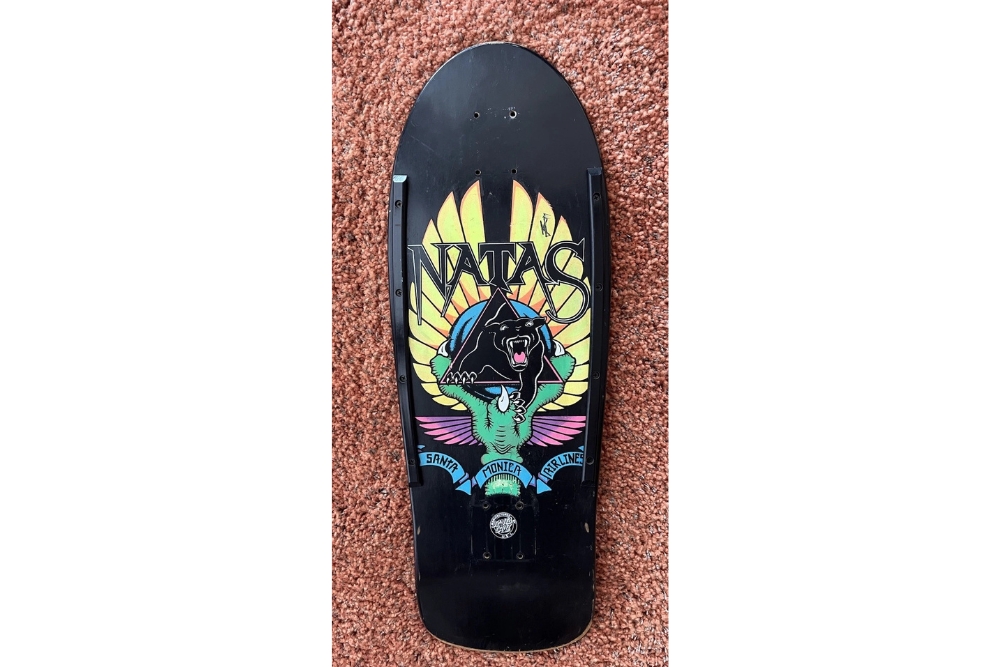
Natas Kaupas’s Panther for Santa Monica Airlines is one of the most recognizable graphics of the mid-80s, and the prices show it. Clean 1986 original decks sell for $800 to $1,000, a red panther has brought $600, and worn boards sell for $180 to $330.
Touch-ups are the thing to watch. A Natas Panther described as heavily touched up and repainted still sold for $450, but that is well below what a clean original brings. Collectors pay for an untouched graphic, so a deck where someone has colored in the scuffs with a marker or repainted the tail loses real money.
Later pressings of the Natas graphics also exist, including a 1989 or 1990 “Evil Cat” pressing that sold for $390, so check which version you have. Look for yellowed varnish and honest wear, check the shape for twisting, and look for cracked tails. A deck that has never been ridden, still in its original shape, is the one buyers chase. Natas decks have been reissued, so a pristine board that looks new probably is.
12. Gordon & Smith Fibreflex skateboard
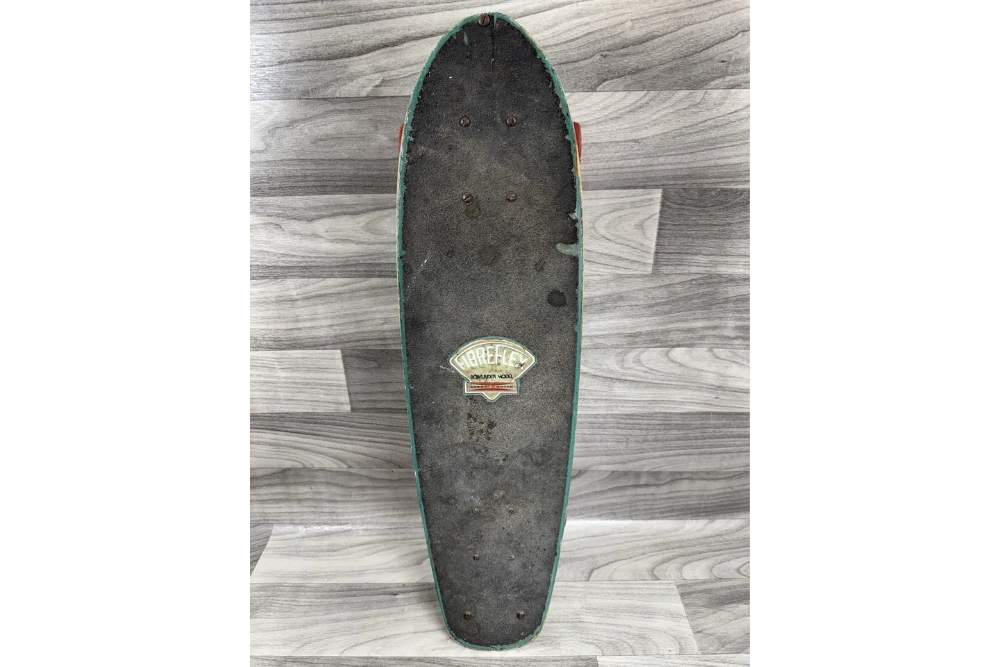
Gordon & Smith made its Fibreflex decks from Bo-Tuff, a fiberglass-reinforced epoxy laid over a maple core, and the flexible design made it a favorite in slalom racing. The company built the first versions in the 1960s and restarted production in 1974, with models like the Bowlrider in 1977 and the Teamrider in 1978.
Prices vary with condition and completeness. A bare 1970s deck often sells for $140, a 1976 slalom complete brought $195, and a yellow deck with a black bottom reached $358 after bidding. A board with period trucks and Kryptonics wheels has sold for $375. A beaten first-generation freestyle deck went for $43, so cracks and a dead flex really do cost you.
Be careful with age. G&S began making a longboard version of the Fibreflex in 1998, so a Fibreflex isn’t automatically vintage. Look for the decal style, period trucks and wheels, and signs of real age instead of a shiny finish. Cracks in the fiberglass and bad repairs lower the price, and boards with original parts bring the most.
13. Hobie Super Surfer skateboard from the 1960s
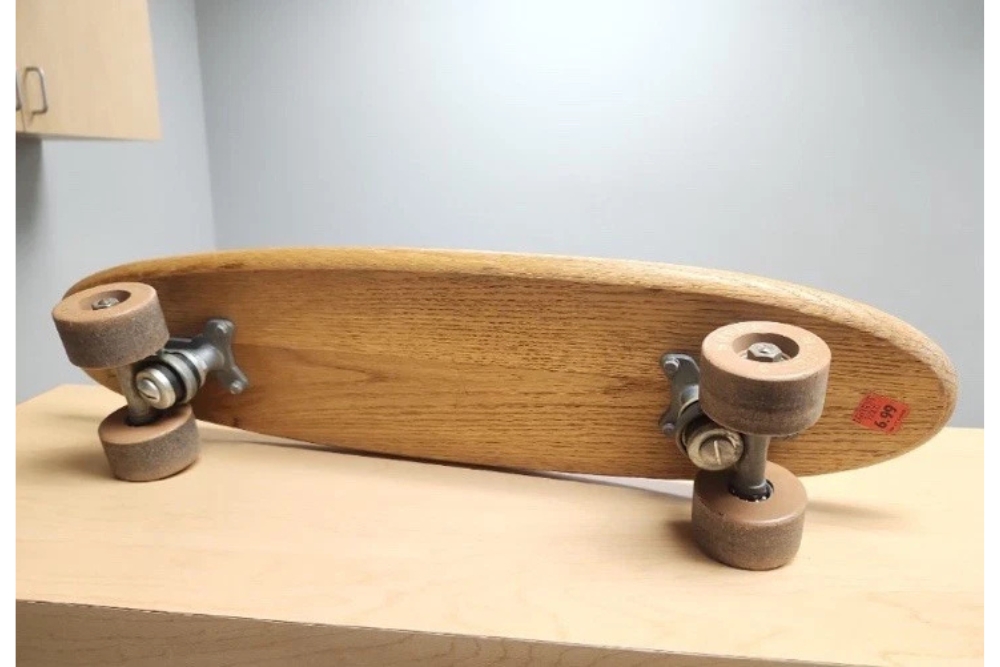
The Hobie Super Surfer was made by a California surfboard company that started shaping boards in 1950, and it became Hobie’s most popular skateboard. It has a narrow wooden deck, about six inches wide, and clay wheels that were standard before urethane wheels arrived in the 70s.
These are common enough that most sell in the ordinary range of $50 to $100. A board with a good decal, a straight deck and sound wheels sits at the top, and an example with chips, a warped deck or a missing decal sells nearer $52 after a few bids. Other 1960s Super Surfer boards sold for $75 to $100.
Check the wheels first. Clay wheels crack, flatten and crumble with age, and replacement wheels lower the price. Original trucks help, and so does a deck with all its hardware in place. Look for age you can feel, such as dried-out wood and a decal that has faded evenly rather than one that looks freshly printed, since a replaced decal or repainted deck is worth less. A board with a snapped end or missing hardware is worth a small fraction of a good one.
14. Roller Derby wooden skateboard with clay wheels
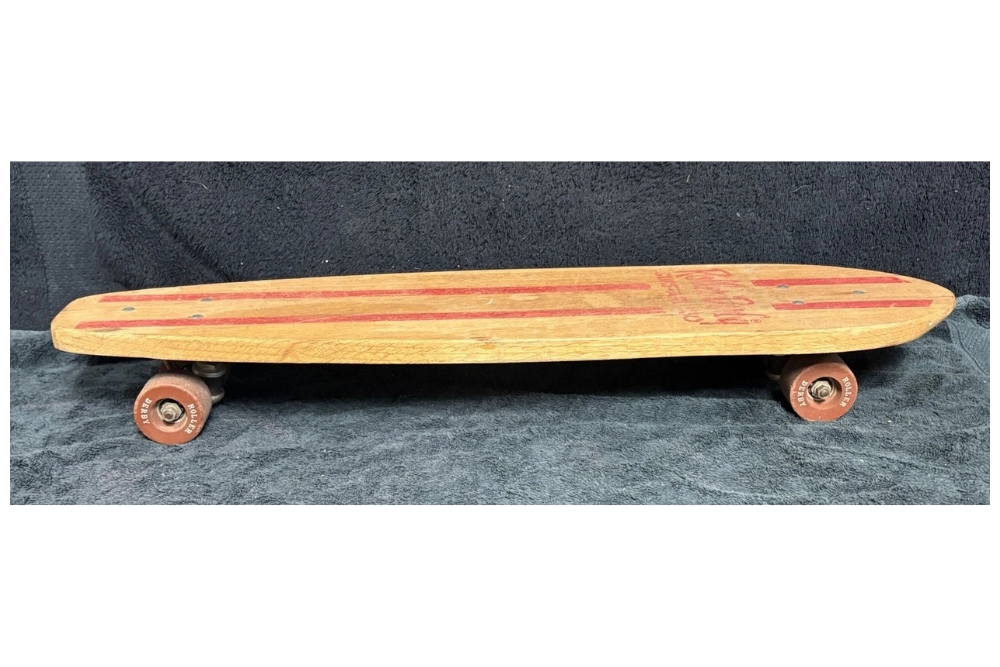
Roller Derby sold wooden skateboards with clay wheels in the 1960s, and many turn up in basements and estate sales. The common Deluxe #20 sells for $50 to $90, which is a reasonable payday for something that has sat on a shelf for 60 years.
Some models sell for more. A Surf-Ari #30 reached about $160, and a Mustang with an inlaid stripe brought $125. A board with Chicago trucks and clay wheels that looked original has sold for around $200. Model name and the quality of the hardware make the difference.
Clay wheels are the weak point. They crack, flatten and crumble, and a board with its original wheels intact is worth much more than one with replacements. Check the deck for splits along the grain, chipped paint and rust on the trucks. A board that looks too clean or has modern wheels was probably assembled from parts. These boards are also easy to confuse with later copies, so favor one with real wear, rust and aged wood over one that looks new.
15. Hobie Competition fiberglass skateboard from the early 1970s
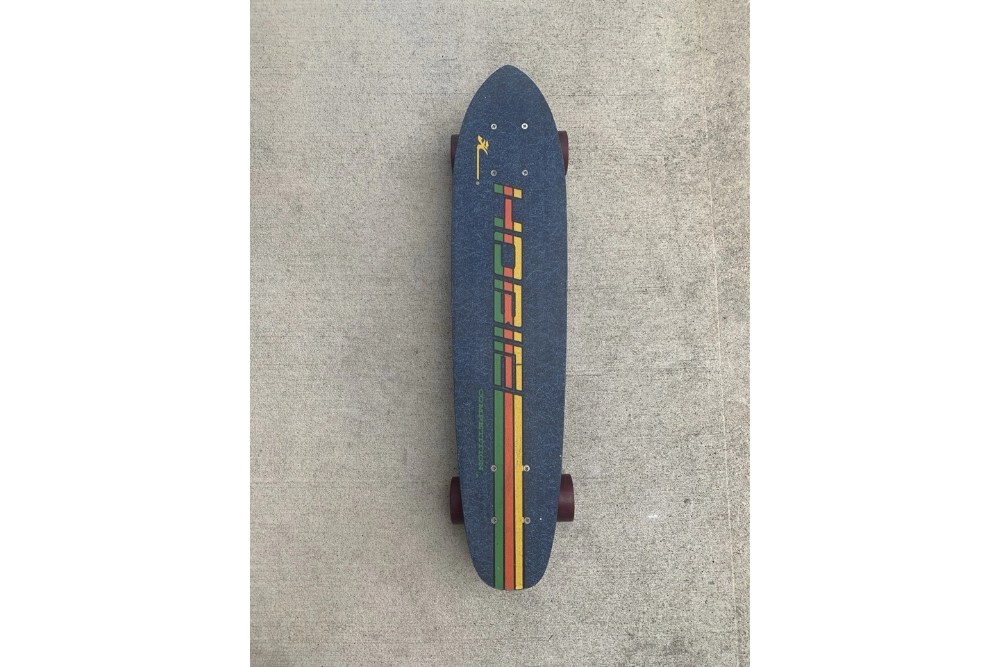
The Hobie Competition model is an all-fiberglass board from the early 1970s that came with Bennett trucks as original hardware. A 27-inch example with Bennett trucks and Hobie wheels has sold for about $268.
Other Hobie fiberglass boards are cheaper but still worth selling. A Hot Dogger 2 in yellow brought $115, a Weaver Woody sidewalk surfboard reached $160, and a yellow Hustler sold for $60 after a couple of bids. The Competition model with its original trucks and wheels is the one to look for.
The trucks matter more than you would think. Original Bennett trucks add value, and replacement trucks from the 80s or later take it away. Look closely along the edges for hairline cracks in the fiberglass, which are easy to miss and quietly pull a nice example down toward the bottom of the range. A board that has been repainted, repaired with epoxy or fitted with mismatched wheels will sell for much less, so favor honest wear and old hardware over a board that looks too perfect for its age.
16. Variflex XP Series skateboard from the 1980s
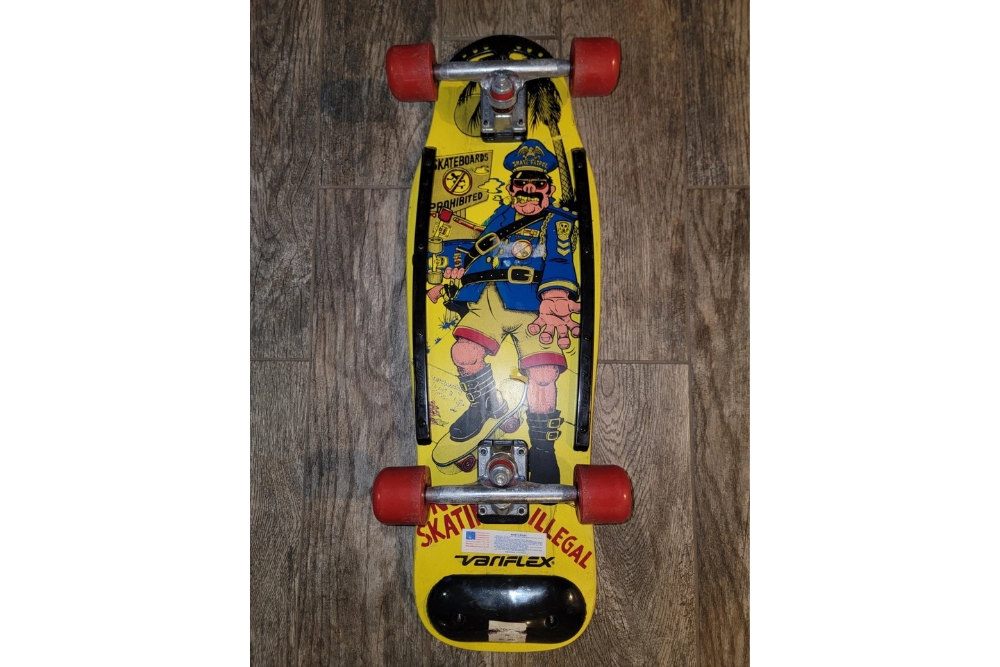
Variflex boards were budget decks sold in department stores, so plenty of kids from the 70s and 80s owned one, and most are worth little. A beat-up Quazar sold for $25 and a Joker in fair condition brought $65.
The XP Series is the one to check for. A complete 1980s Skate Patrol went for $199, an XP Series Speed Freak from 1987 brought $299, and another XP Series board reached $250. That is a big gap from the $25 beater, and it comes down to the model name and the condition.
Condition rules everything here. Cracked plastic, faded graphics and missing trucks or wheels keep the price at the bottom, and a board with all its original parts and clean colors is the one buyers want. Check the trucks and wheels for real age. Old urethane wheels get flat spots and go hard, and old trucks show corrosion. A board that looks too clean may have had parts swapped, which lowers the price.
17. Independent trucks from the 1980s
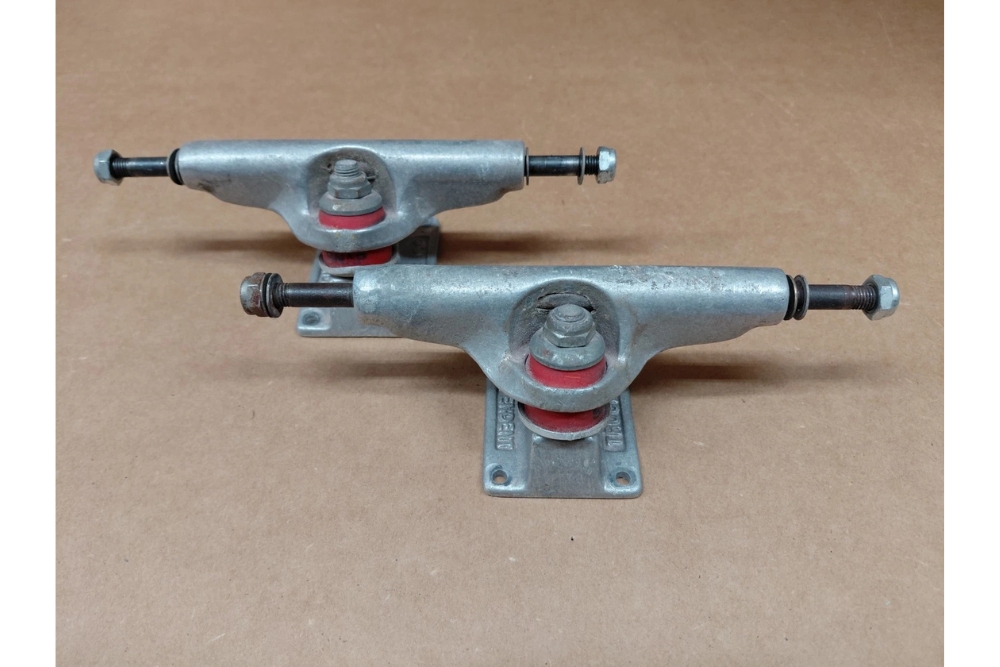
Sometimes the valuable part of an old skateboard is the hardware, not the deck. A pair of vintage Independent trucks in used condition typically sells for $50 to $75, and a stage 2 pair has brought $166 while a Stage 5 pair reached $180.
A pair still attached to Kryptonics 70mm wheels sold for about $340, which shows that matching, period-correct parts pull a better price than a loose pair on its own. Even a pair of trucks pulled off a trashed deck can be worth a decent amount.
Independent still makes trucks today, so the main risk is mixing up new and old pairs. Look for the stage number and wear you would expect after 35 years, such as oxidized baseplates and scuffed hangers. Bent axles, stripped threads and cracked baseplates all lower the price, and a pair that has been repainted or re-polished is worth less to collectors. Keep the pair together, and keep the bushings and washers if you still have them.
18. Powell Peralta Rat Bones wheels from the 1980s
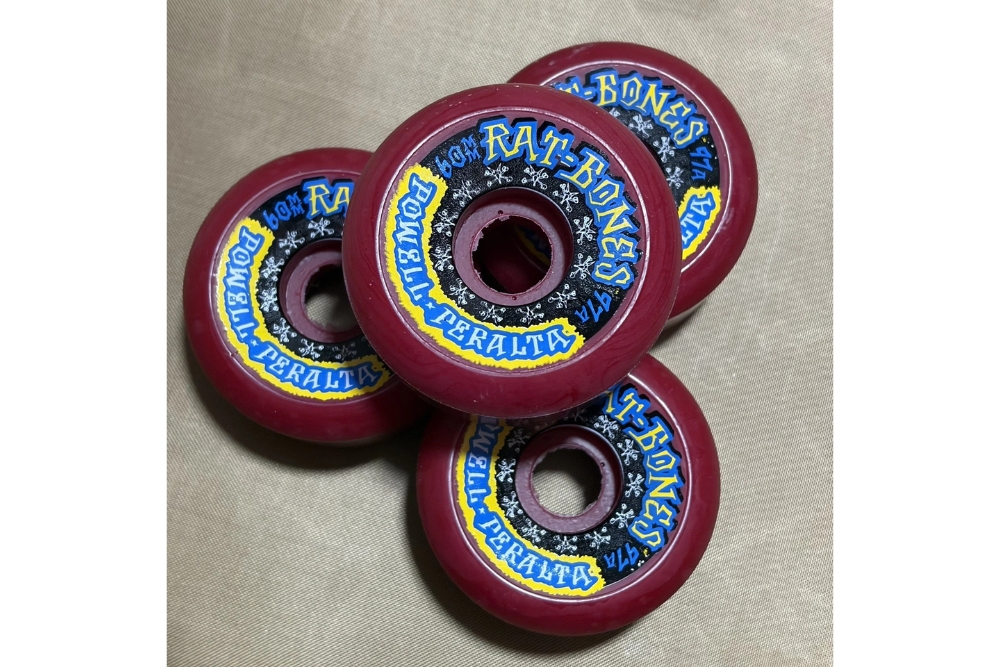
Rat Bones are the red Powell Peralta wheels that came on thousands of 80s boards, and they sell well on their own. New old stock sets in red typically bring $55 to $65, a clean original set reached $214, and NOS sets in the original 60mm size have sold for $100 to $120.
Condition decides which end you land on. Flat spots from skidding, chips, cracks around the bearing seat and wheels that have gone hard all cut the price, and a set with its original bearings and spacers is easier to sell. Unused wheels with no flat spots and the original markings sit at the top. A beaten set from a ridden board sells for much less.
Rat Bones and OJ wheels have both been reissued. Check the markings, the color and how aged the urethane looks. Wheels that look glossy and brand new are usually reissues, and they sell for a fraction of the original price. Vintage Kryptonics sets from the 70s, especially NOS, can also sell for $40 to $180.











