
The box in the garage marked “kids’ stuff” has been sitting there since someone cleared out a childhood bedroom, and nobody has opened it in years. Inside is a pile of plastic, tin, and rubber from the 1970s, the kind of thing you figured would go for a dollar at a yard sale.
Most of it would. Toy makers turned out millions of these, and a scuffed, incomplete copy is worth very little. A smaller group has steady buyers, though, and the gap between a $20 toy and a $400 toy usually comes down to three things: whether the original box survived, whether the small parts are still there, and whether anyone ever played with it hard.
The prices in each entry assume the condition described. Cracked, sun-faded, or missing pieces push a toy to the low end of its range, or under it.
1. Kenner 18-inch Alien figure
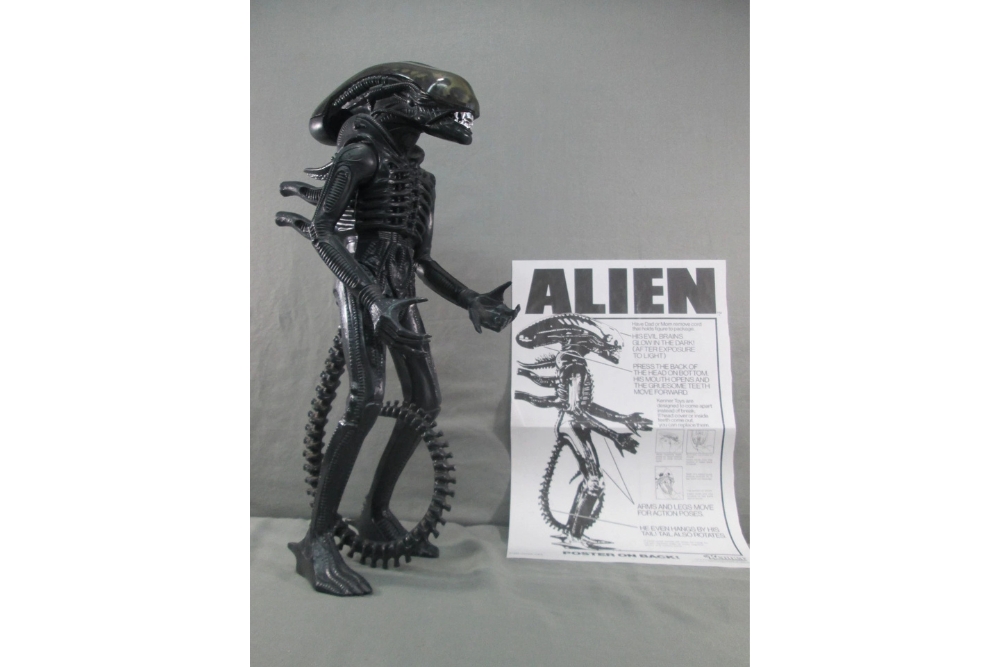
The 18-inch Alien arrived with the movie’s May 1979 release at a $16 price tag, and it was a strange thing to hand a child. It is a tall black Xenomorph with mechanical jaws, a tongue that pokes out, and a glow-in-the-dark head. The gimmicks are part of the draw, so check that the jaws still move and that the head still glows.
A complete figure with working jaws and the original dome in place typically runs $400 to $600, and an especially clean one can climb higher. Figures with flaws, a worn finish, or jaws that no longer work tend to land between $150 and $250.
Check the dome first, because a cracked or missing one cuts the price sharply. Yellowed plastic and loose shoulder or hip joints do the same. Modern figures in the same oversize style have been made since, so compare yours to photos of an original before you trust the word “vintage.”
2. Magnavox Odyssey console
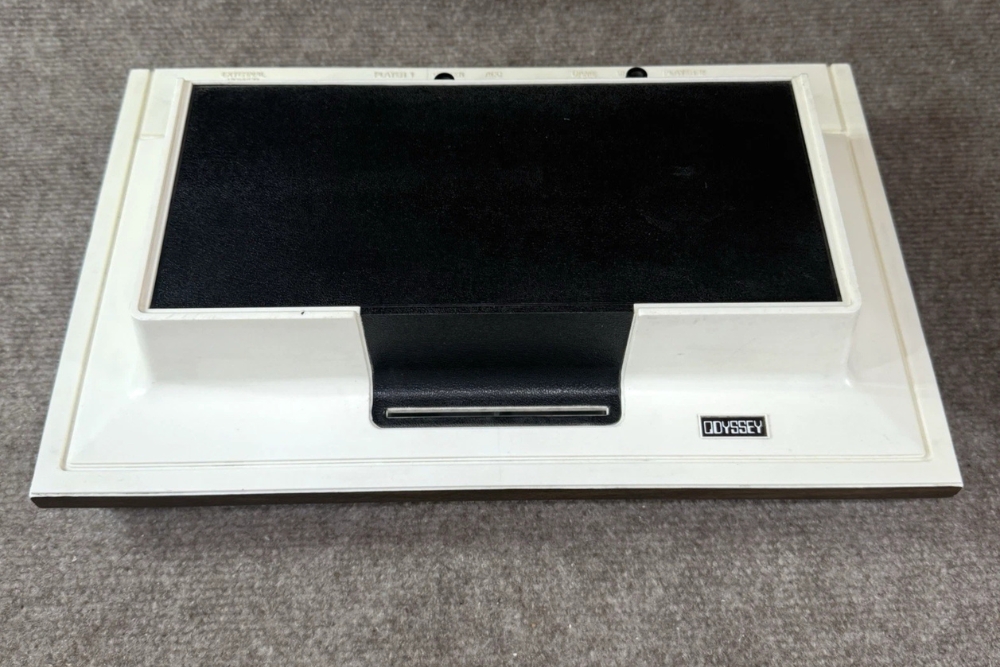
The first home video game console is also one of the more valuable things a 1970s closet can hold. Ralph Baer’s design reached stores in 1972, built on his earlier “Brown Box” prototype, and it played simple games using plastic overlays pressed onto the TV screen. Extra games and accessories came separately, which matters when you are checking for completeness.
A complete boxed set with the console, controllers, overlays, cards, and game pieces typically runs $750 to $850. A console with controllers and part of the accessories lands closer to $400. The 1977 Odyssey 2000 and the Odyssey 3000 look similar on a shelf, but they are different machines, and they go for $75 to $90.
Look at the plastic for yellowing and cracks, and make sure the overlays and cards are originals and not reprints. A console that has lost its controllers loses most of its value with them, and an untested machine sells for less than a working one.
3. Kenner Death Star Space Station playset
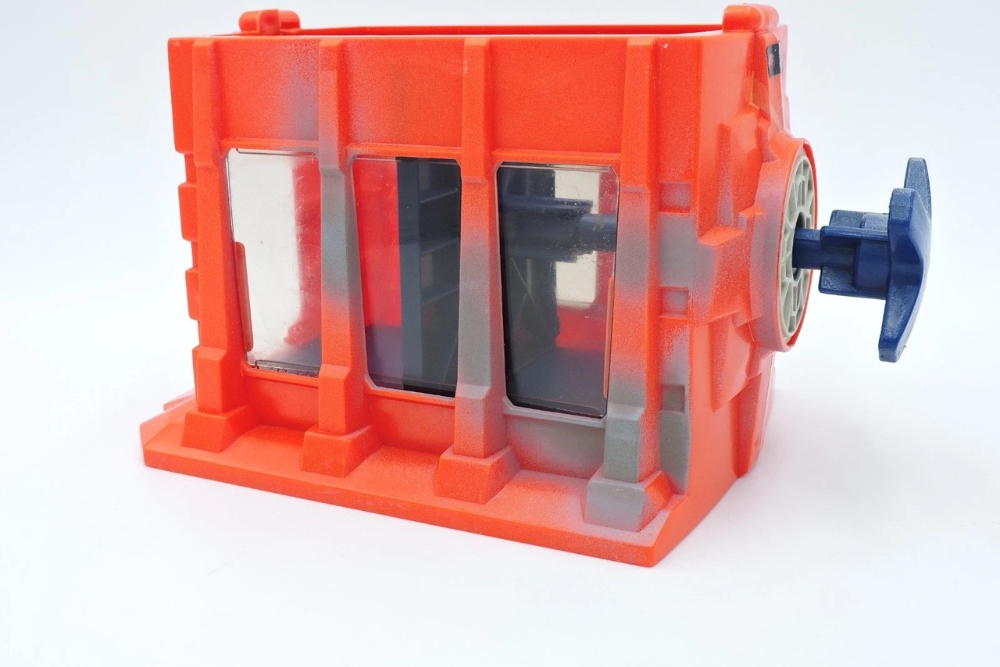
Kenner’s Death Star Space Station playset came out in 1978, the year after the movie. It was a major playset in Kenner’s early Star Wars line, and most copies lost small parts along the way.
Copies with missing pieces typically go for $60 to $100. A complete set with its box lands near $300, and a boxed one missing only the rope can still reach that level.
Small parts are what disappear first. The gunner’s seat and the rope are the usual losses, and peeled stickers or reprinted replacements count against a set. Sun-faded plastic and cracked floors pull the price down too. A bare shell with no accessories is a parts piece, and buyers treat it that way, so a playset in that shape stays at the bottom of the range no matter how good it looks. Photograph the box corners and flaps before you price it, because crushed corners, water stains, and tape residue each take off a chunk. If the box is gone, the playset still has buyers, but at the low end of the range.
4. Coleco Telstar Arcade
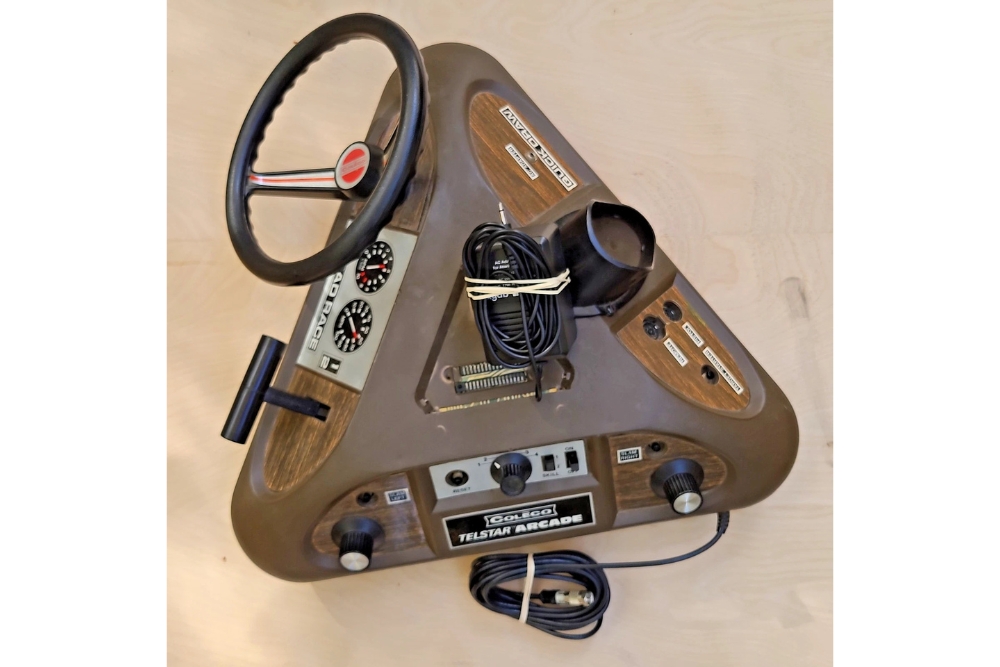
The Telstar Arcade is shaped like a triangle, and each side has its own controls: a steering wheel and lever, a light gun, and a pair of paddles. It came out in 1977, and its games arrive on four silver triangular cartridges that plug into the console.
A working console with all four cartridges and the attachments typically sits between $850 and $975. That price depends on completeness. A bare console with no cartridges or attachments is more like $35 to $50.
Other Telstar models are a different story. The Alpha and the Regent are separate consoles from the Arcade, and they go for $50 to $225 even when boxed, so check the name on the console before you get excited. Look for a cracked case, a missing light gun, and corroded battery contacts, and test every cartridge you have. The light gun and paddles are the accessories buyers ask about first, so photograph them next to the console. A complete set in its original packaging tops the range, while a console that has been opened up or repaired goes for less.
5. Hot Wheels Redline cars from 1970 and 1971
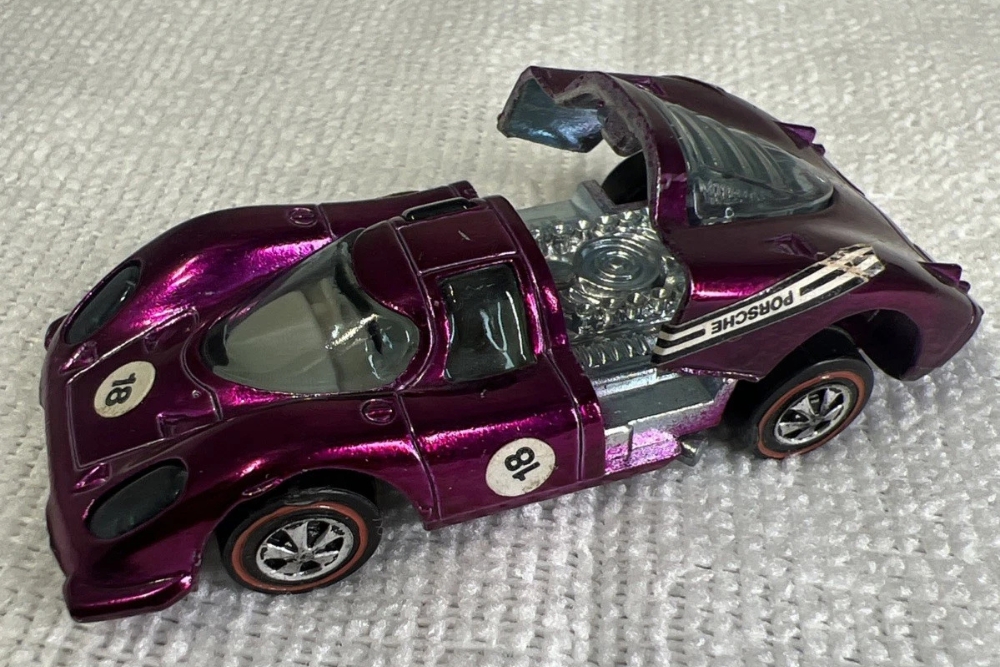
Hot Wheels from the Redline years take their name from the red stripe on the tires, which were phased out in 1977. The shiny Spectraflame paint on the early cars drew collectors in the first place. By 1973 most cars had switched to solid enamel colors, so the glossy ones are the earlier ones.
Loose cars with paint wear, like a 1970 Bye-Focal or a 1971 Evil Weevil, typically run $40 to $90. The real money is in cars still sealed on their original cards. A 1970 Porsche 917 on its card lands in the $385 to $450 range, and a Carabo in similar shape sits close by.
Chips, missing axles, bent wheels, and repainted bodies cut value fast. Repaints and swapped wheels are the usual fakes, so check that the paint and wheels match the casting. Cars from the late 1970s with plain enamel and ordinary wheels are common and worth a dollar or two.
6. Atari 2600 Heavy Sixer
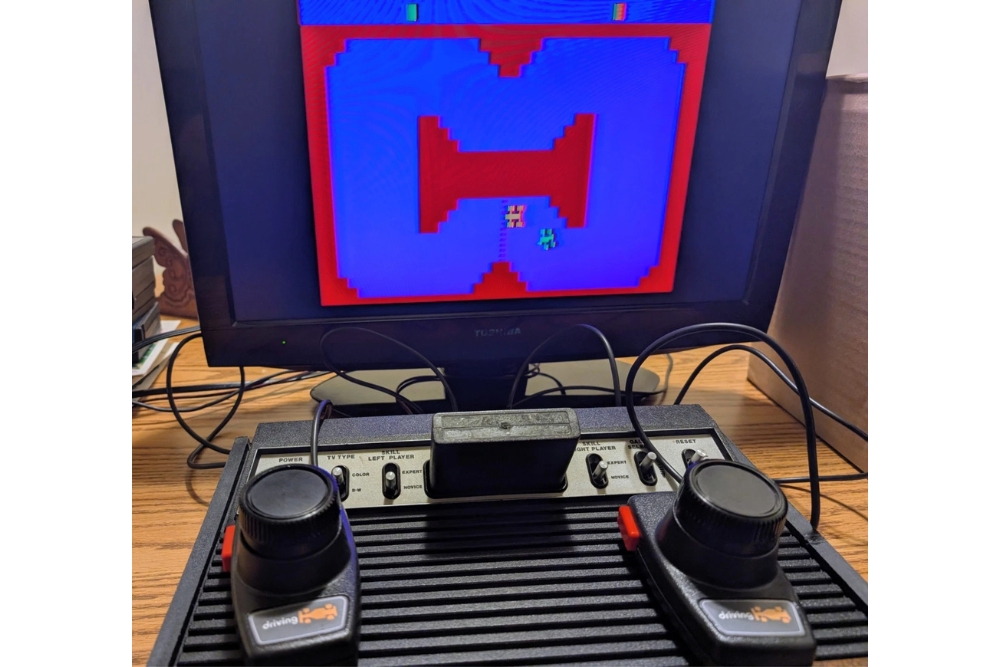
The first Atari 2600 consoles have six switches on top and were built in Sunnyvale, California. That earned them the “Heavy Sixer” nickname, along with a heavier case, a rounded front, and thick trim. They went on sale in the fall of 1977.
A loose console with controllers typically goes for $100 to $160. One with joysticks and a few games reaches $250, and a boxed console tends to land near $450. The later woodgrain models with fewer switches are common, and they run $50 to $75.
Look for the Sunnyvale label on the bottom and the CX10 joysticks, which have no “TOP” printed on them. Test the console before you pay a premium, since yellowed plastic, missing joysticks, and modified consoles all lower the price. Sears put its own name on some of these consoles, so a Sears label does not rule out a Heavy Sixer. Original boxes push the price toward the top of the range, so keep the packaging if you have it. A console with a mismatched joystick or a replaced power cord goes for less than one with every original piece.
7. Mego Star Trek U.S.S. Enterprise bridge playset
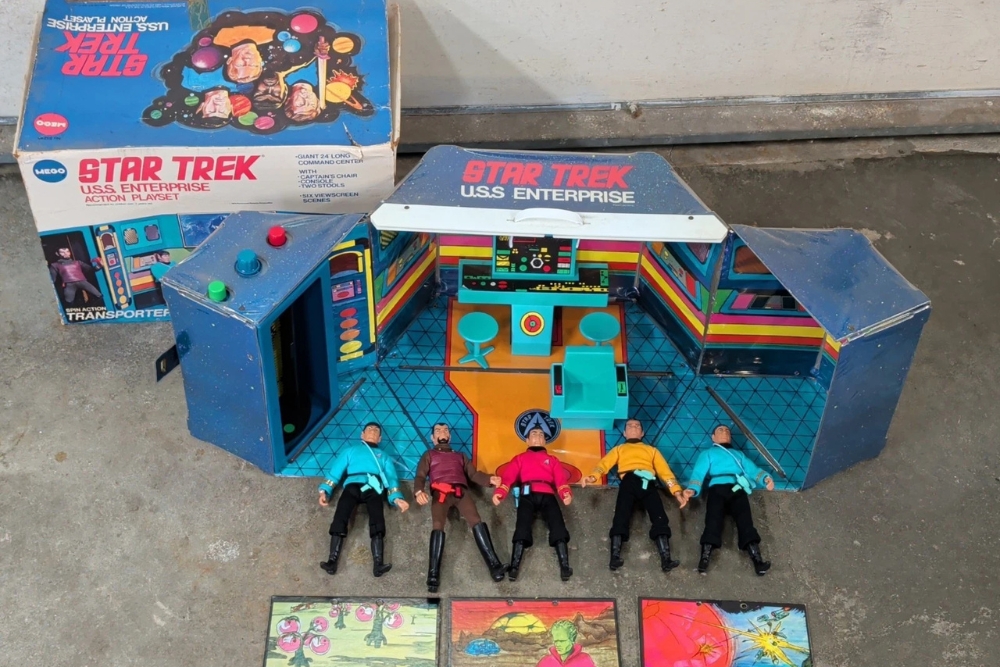
Mego’s Enterprise bridge was part of the first wave of its Star Trek line in 1974. It came with a captain’s chair, a navigation console, two crew stools, a transporter, and double-sided telescreen cards, all sized for Mego’s 8-inch figures.
A complete set with its box and a couple of figures typically runs $100 to $170. A set with missing pieces and no box lands closer to $60.
The paper telescreen cards and stickers are what tend to go missing, and they are hard to replace. Cracked stool bases and a missing transporter piece also cut the price. Reprinted cards are out there, so look closely at the print quality against photos of an original. Figures came separately, and they are worth more with their uniforms and tricorders still in place. Because the set is mostly thin plastic and paper, damage is common, and a complete one with the instruction sheet and the fold-out brochure sits at the top of the range. If you only have the chair and the console, you have part of a set, and it is priced that way.
8. Milton Bradley Big Trak
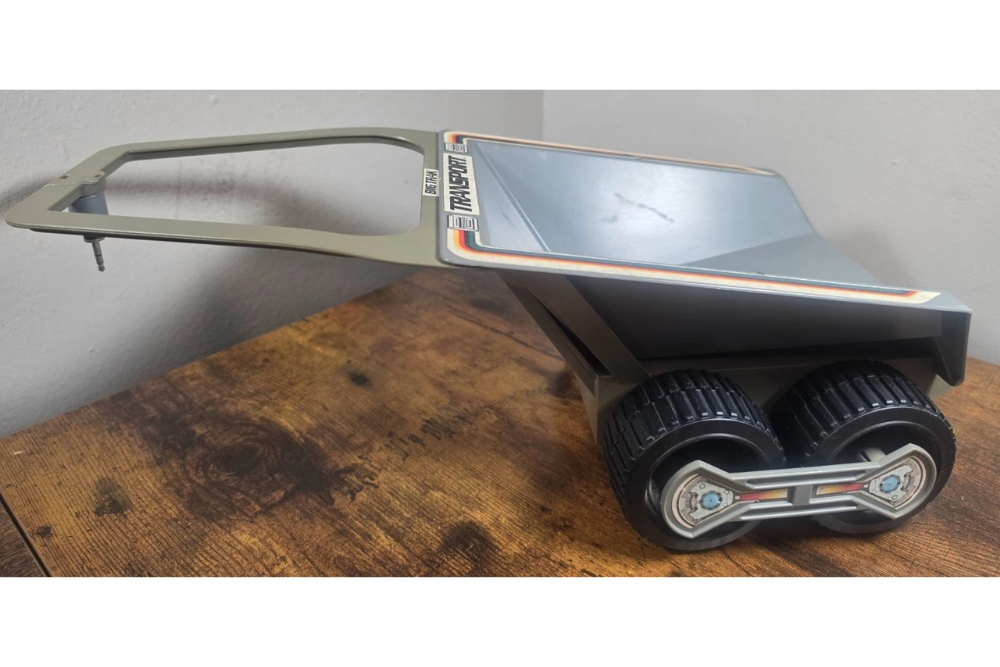
Big Trak was a toy tank you programmed with a keypad, and it launched in 1979 with room for 16 commands. An optional cargo trailer could be programmed to dump its load, which is why a Big Trak with the trailer is worth more than the tank alone.
A used Big Trak that has not been tested typically goes for $50 to $70. A complete one with the dump trailer reaches $200, and a factory-sealed tank tends to land near $280.
Battery acid is the usual killer. Corroded contacts, a cracked keypad, and missing parts keep the price down, and a Big Trak that does not move is worth much less than one that does. Sealed sets that include the transport accessory can climb far higher, but those are outliers. If you have the tank and the trailer, keep them together. Test the keypad buttons one by one, since a few dead keys can make the toy unusable even when the motor runs. The original box and the instruction booklet both help the price.
9. Kenner X-Wing Fighter
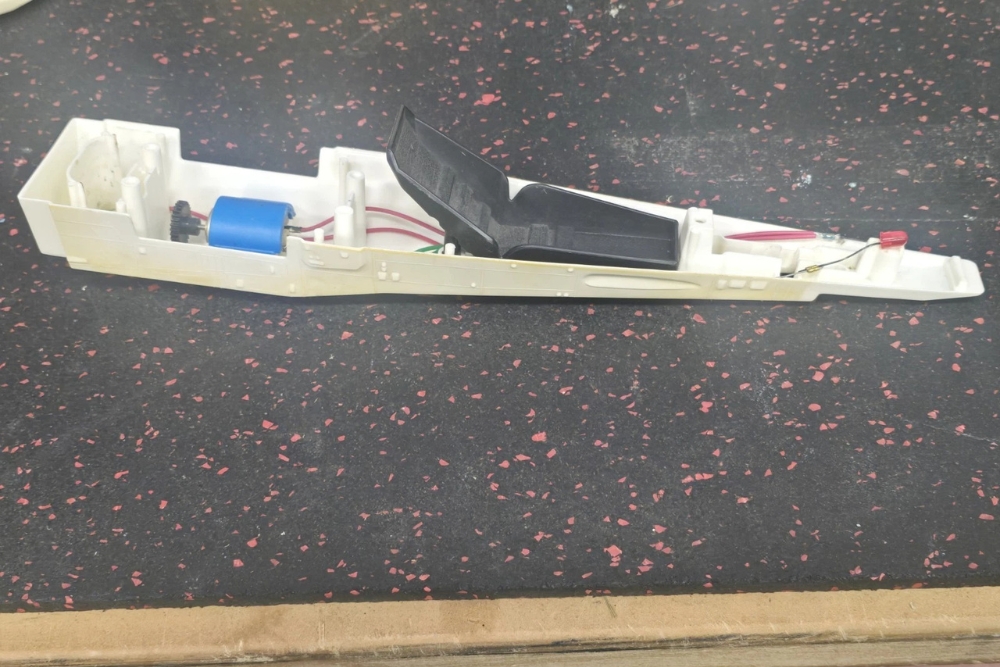
Kenner’s X-Wing Fighter arrived in 1978. It ran on two AA batteries, and a press of the thumb switched on a red light and a sound effect. That electronic gimmick is part of what buyers pay for today.
A working one with some wear typically goes for $45 to $125. A complete example with every original piece, its box, and the insert tends to reach $190.
The laser cannons are what kids lost first, and a set of four replacement cannons sells on its own for around $50. Battery corrosion, cracked pieces, and sun-faded decals pull the price down. If the lights and sound still work, buyers pay more. Reproduction decals and replacement parts exist, so ask whether the cannons and stickers on yours are original before you put a price on it. A box with its insert is the difference between the middle and the top of the range, so keep it flat and dry. Test the lights with fresh batteries before you decide anything, since a dead light on an otherwise clean toy is often just corrosion.
10. Ideal Evel Knievel Stunt Cycle
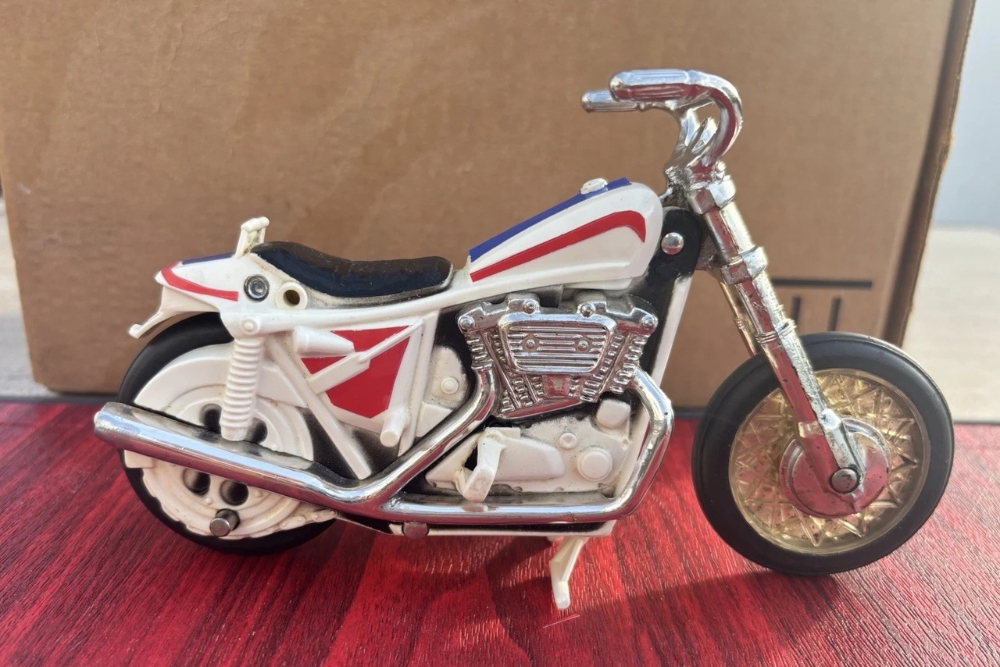
The Stunt Cycle ran on a heavy metal flywheel. You spun it up with a hand-cranked energizer, which took roughly 10 to 20 turns, let go, and the motorcycle shot across the room. A flexible plastic body and a spring-loaded front fork made it hard to break.
A cycle with the figure, energizer, and launcher typically runs $100 to $200. Copies with the original box sit at the top of that range, and a never-opened box can reach about $750, which is an outlier.
Check that the flywheel still spins and that the figure’s fabric suit has not rotted. Scratches and scuffs are normal, since the toy was built to crash. Missing energizers and missing riders are common and take real money off. A reissue made from the original molds also exists, so look for old plastic and honest old wear before you pay a vintage price. Put the launcher, energizer, and rider in the same photo, because buyers count them as separate pieces. Heavily scratched cycles with no box commonly land closer to $100, and complete ones in good shape reach the top.
11. Mattel Shogun Warriors
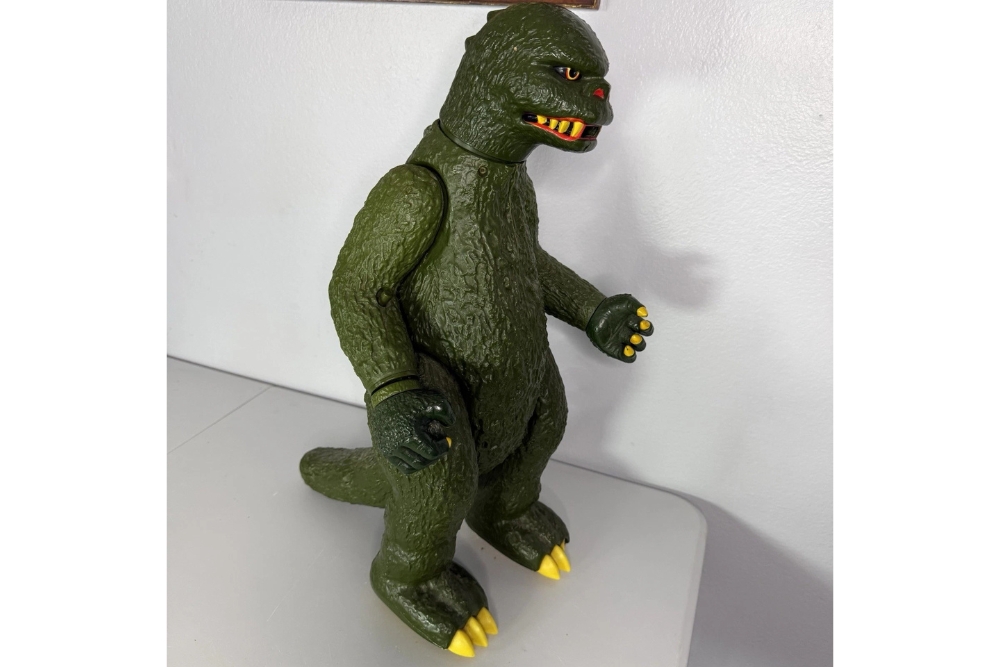
Mattel brought Shogun Warriors to the US from 1977 to 1980. The robots came in three sizes: a 24-inch plastic version and two smaller die-cast versions, all based on Popy toys from Japan.
A complete 24-inch Godzilla in working order typically runs about $250, and other 24-inch robots, like Gaiking, land near $145. Loose pieces such as a bare torso are closer to $50. The small Japanese die-cast Popy robots tend to go for $100 to $120.
Small parts, like fists and missiles, are what separate a full-price robot from a cheap one. Check every piece and make sure the plastic has not turned yellow or cracked at the joints. Replaced parts and mismatched limbs lower the price, so photograph the robot from every angle before you decide what you have. If you have more than one robot, keep the parts sorted by figure, because loose fists and missiles are easy to mix up. Check the back and underside for markings, since buyers ask what they say.
12. Mego World’s Greatest Super-Heroes 8-inch figures
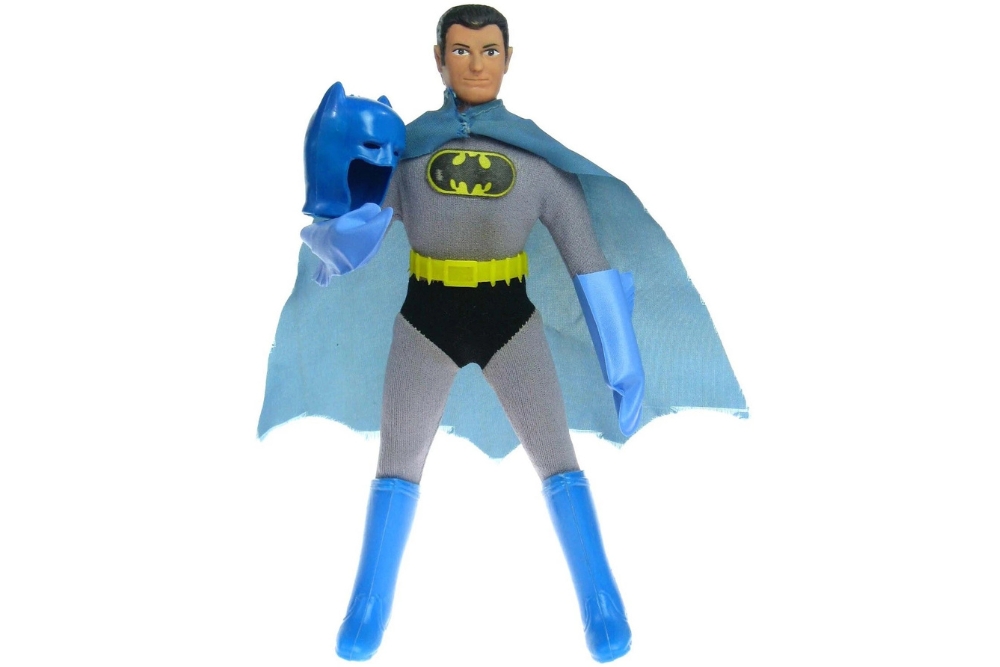
Mego’s 8-inch superhero line started in 1972, when Batman came out in a solid box, and it ran through 1980. The cloth costumes are part of what makes the figures valuable, and they are also the part that wears out.
A single figure with its outfit and accessories typically goes for $60 to $130. A group of four tends to land near $160. Graded, boxed examples reach far higher, but those are outliers.
Check the costume and the body. Replacement boots, capes, and swapped heads are very common, and each one lowers the price. A figure with a faded or stained costume or a stretched-out body is worth much less. Modern reissues of the line are also around, so check the markings on the back before you assume a figure is from the 1970s. Original boxes add real value even when worn, so keep a boxed figure in the box and lay it flat.
13. Kenner Millennium Falcon
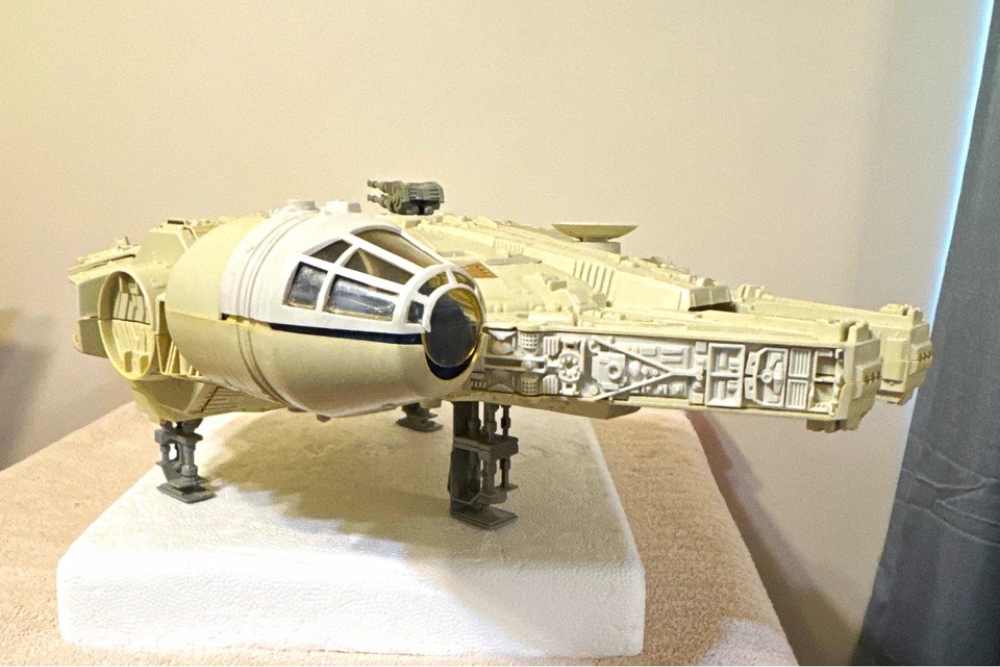
Kenner’s Falcon reached stores in 1979 with a battle alert sound, a removable top, and a smuggling floor panel that was added early in production. It needs two C batteries, so check the battery compartment for corrosion.
A beat-up or incomplete Falcon typically lands near $50. An all-original one with some parts missing tends to run about $180. The small die-cast version is a different toy, and it usually goes for around $50 in good shape.
Missing radar dishes, broken hinges, and cracked cockpit pieces are the usual problems. The electronics are part of the value, so test the sound with fresh C batteries. Reproduction radar dishes and stickers exist, so look for worn old plastic and match the parts against photos of an original before you assume the whole toy is original. Photograph the smuggling panel and the radar dish, since buyers check those first. A box in good shape moves the price toward the top of the range.
14. Mego Micronauts
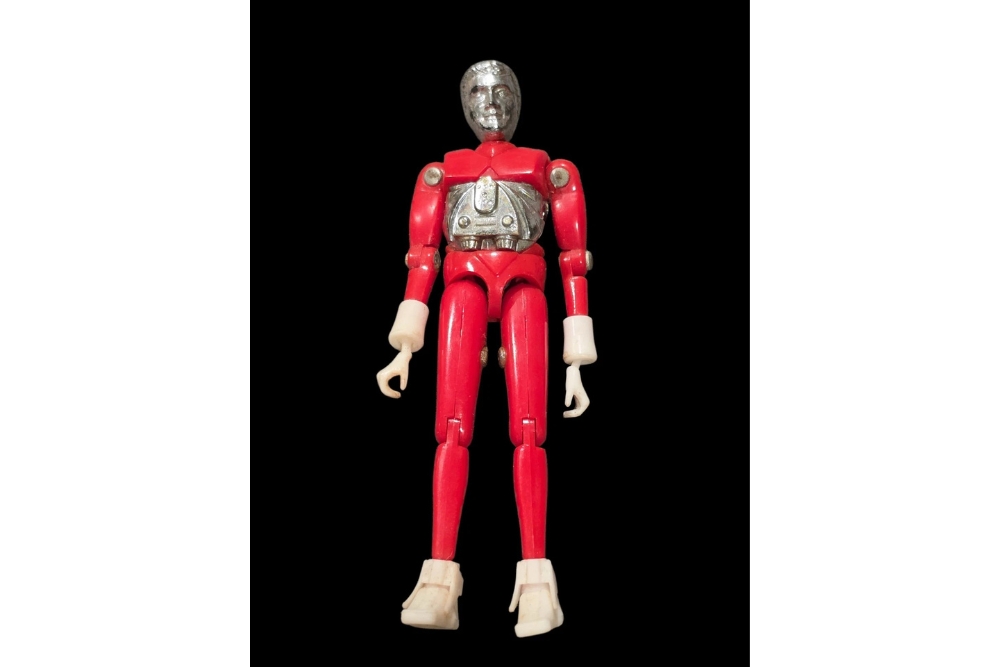
Mego’s Micronauts debuted in 1976 and were based on Japan’s Takara Microman toys. The line ran for four years, until 1980, and the figures and vehicles were built to come apart and snap back together.
Loose figures, like an Acroyear or a Time Traveler, typically go for $37 to $55. A Time Traveler still sealed on its card lands near $225, and a boxed set with several figures, like the Astro Station with the Crater Cruncher, runs about $220.
Rubbed-off paint, missing weapons, and loose joints are the usual issues. Complete sets are worth far more than the same pieces on their own, so keep everything together. Mixed-up parts from different figures are common, so check each piece against photos of an original and expect a lower price for anything that has been pieced together. Boxed and carded figures are worth the most, so if you have any in packaging, leave them sealed. Loose figures with bright, unscratched finishes sit at the top of the loose range.
15. Hasbro G.I. Joe Adventure Team Man of Action with Kung Fu Grip
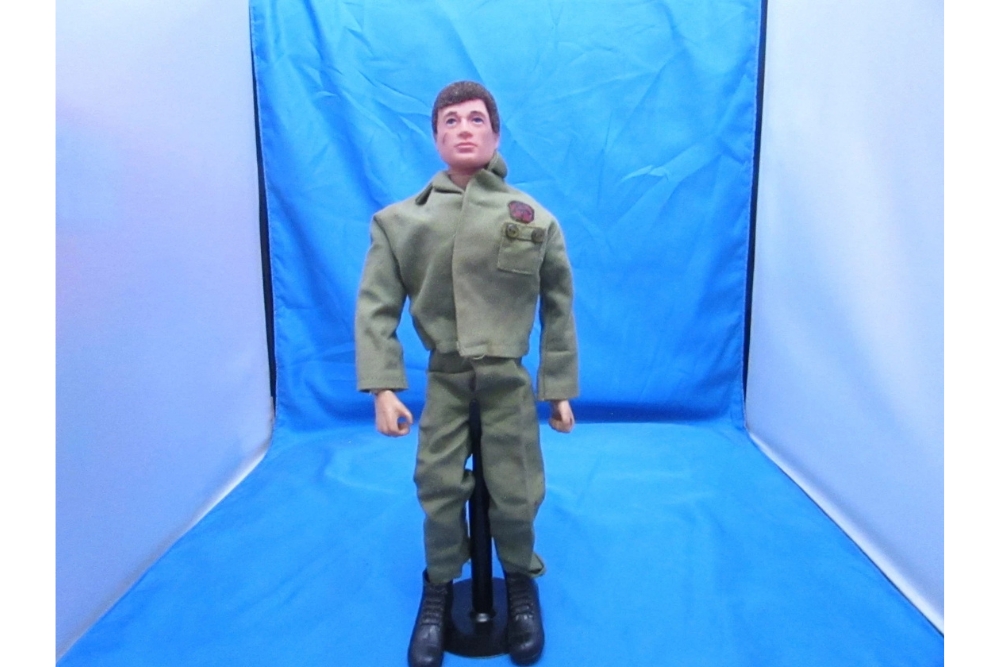
The Adventure Team ran from 1970 to 1976, and Kung Fu Grip hands arrived in 1974 when the first nine figures were rereleased. Man of Action was one of them.
A Man of Action with the gripping hands, a decent body, and his clothes typically goes for $55 to $140. One in the original box tends to reach $220.
Fuzzy hair, a faded flesh tone, and missing uniform pieces all hold prices down. Hasbro released vintage-style reissues of this figure later, so look at the markings and the packaging. A modern version in an old-looking box typically sells for around $75 and not much more. The original box, with its age and wear, is what brings the real money. Hands that open and close properly and a body that has not gone stiff sit at the top of the loose range. Clothing and boots are often replaced, so check the uniform against photos of the original set.
16. Kenner Star Wars Land Speeder
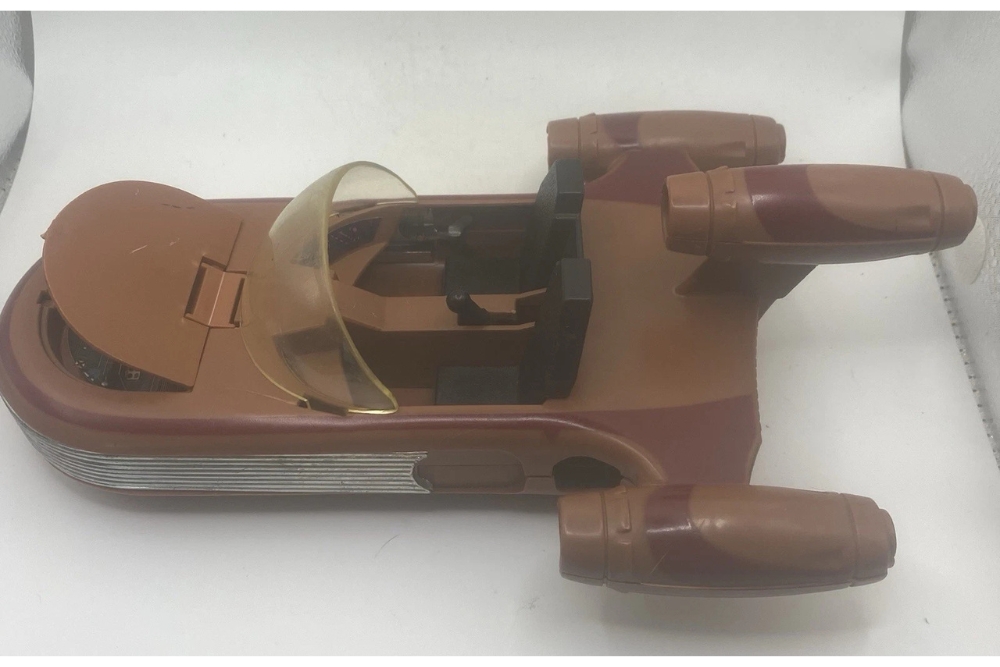
The Land Speeder is a Kenner vehicle from around 1978, made to carry Luke Skywalker across the sand. A complete copy is within reach of most collectors, so prices stay modest next to the big playsets.
A complete one typically runs $45 to $100, and the top of that range goes to ones that still have their box. A damaged one in a box still lands near $90.
Check the windshield first, since it is the piece that cracks or goes missing. Check the underside for the maker’s markings too, and make sure the wheels still turn. Scratched decals, loose bodies, and sun fading lower the price. A Land Speeder that comes with the original figures can climb much higher, but that is the exception and not the usual price. Original decals in good shape help the price, and a replacement sheet drops it. A box in good shape is where the extra money comes from, so keep it flat and dry.
17. Mattel Big Jim Sports Camper
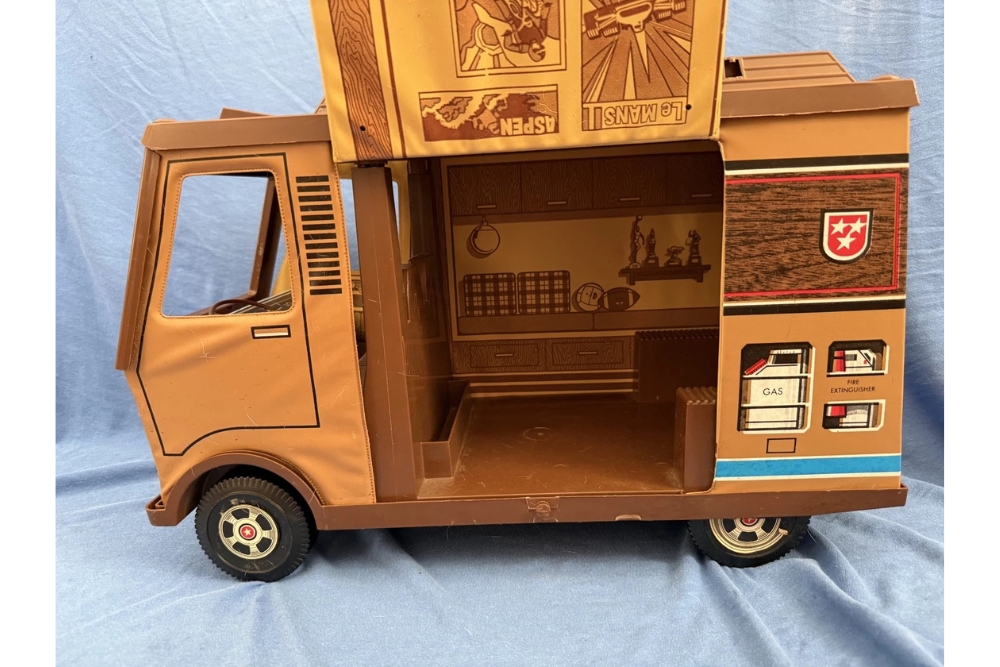
Big Jim launched in 1972 with a push-button karate chop, and the Sports Camper was part of the original run.
A complete camper with its accessories can reach $300 to $350. A camper missing parts tends to run $50 to $100, and one in its box with some gear missing sits near the bottom of that range.
Small gear is what goes missing: sports equipment, camp accessories, and decals. Sun-faded or cracked plastic cuts the price too. The figures themselves typically sell for under $75 each, so a camper loaded with matching gear is worth more than the sum of its parts. Compare every accessory against photos of a complete one before you price it. A box in decent shape adds to the price, so keep it if you have it. Check the underside for markings, and look for cracks around the wheel wells. Big Jim ran until 1986, but this camper belongs to the original 1970s run, so check that yours carries the early markings.
18. Lego Technic 853 car chassis
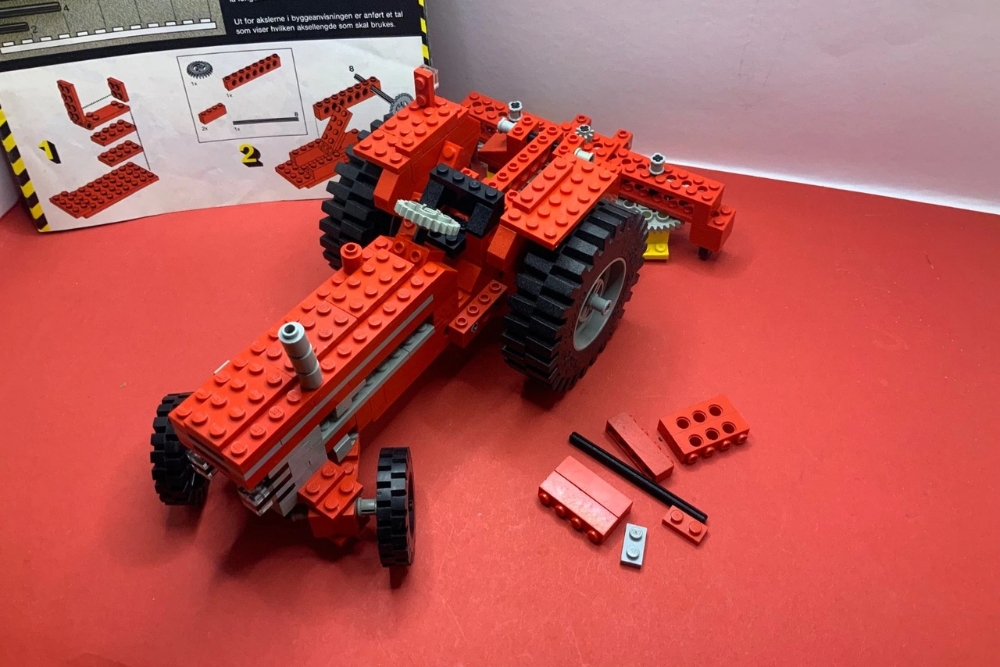
Lego Technic began in 1977 with four sets: a forklift, a farm tractor, a sky copter, and the 853 auto chassis. They went on sale in Europe first and carried the Expert Builder name before Technic took over.
An 853 chassis typically goes for $90 to $180, and an 851 tractor tends to run $85 to $115. A complete set with the original box inlay is the one buyers want.
Check for missing gears, yellowed or sun-faded pieces, and bricks swapped in from other sets. Plastic stored in a hot attic can turn brittle, so test a few pieces before you assume the set is sound. Instructions add value when they are in good shape, and a set with the box, inlay, and instructions all together sits at the top of the range. Pieces from later years can be mixed in, so check that the gears, axles, and wheels match the era. A tractor missing its steering parts goes for less than a complete one.
19. Kenner Star Wars Boba Fett
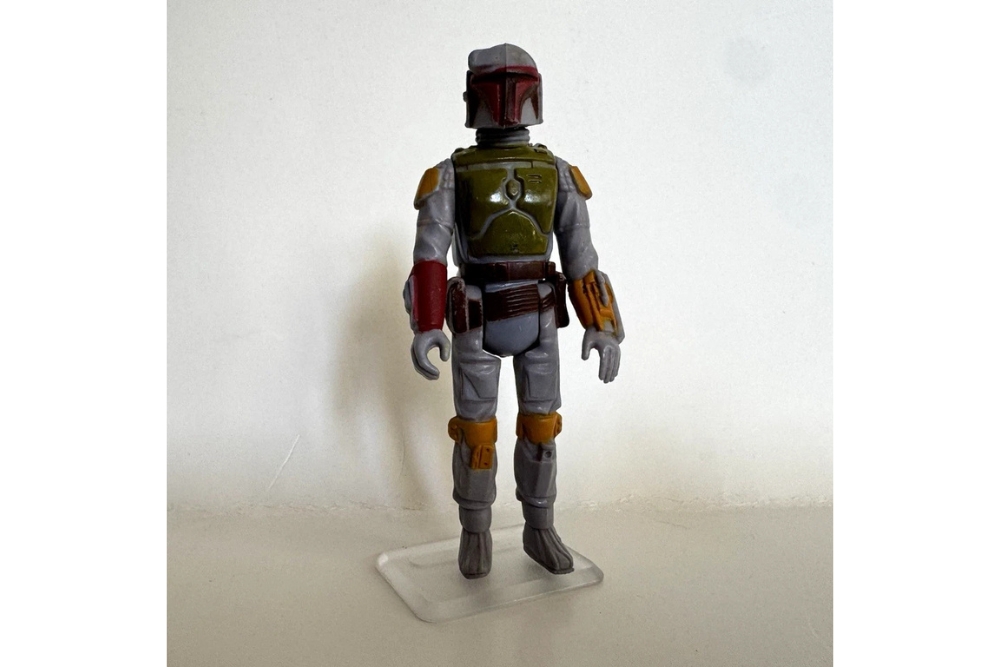
Boba Fett was released in 1979 as part of Kenner’s Star Wars line. A complete one, with his weapons and a clean cape, is a realistic find.
Hong Kong versions typically go for $60 to $100, and Taiwan versions with their blaster tend to land around $90 to $140. The larger 12-inch Boba Fett can reach about $400 when complete.
Replacement weapons and reproduction capes are common, so compare the pieces against photos of an original. A figure with a cracked backpack or missing weapons is worth much less, and a loose figure with no accessories at all is usually a few dollars. Keep him out of direct sunlight, because the paint fades. Both versions have collectors, and the differences are small but known to buyers: the country stamp, the plastic color, and the style of the weapons. If you have more than one Boba Fett, line them up side by side and compare. The cape matters too, since a clean, uncreased cape adds to the price.
20. Kenner Six Million Dollar Man Bionic Transport and Repair Station
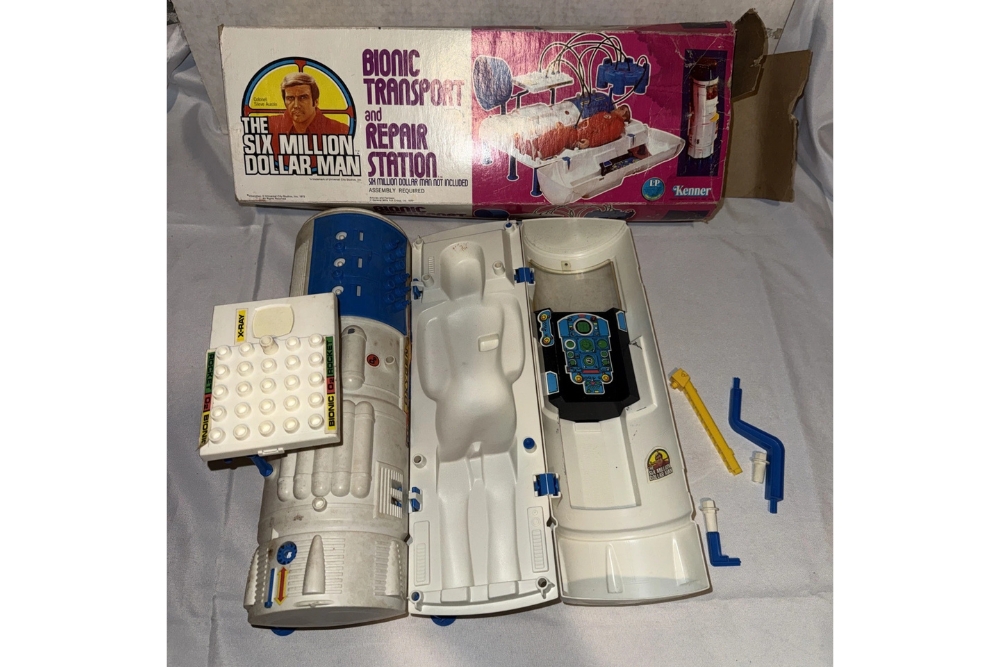
Kenner’s bionic toys filled toy store shelves in the years before Star Wars, riding the TV series that ran from 1973 to 1978. The Bionic Transport and Repair Station is the set to look for.
Examples with their box typically run $40 to $160, and a set that includes the Steve Austin figure tends to land near $150. Loose figures alone go for $25 to $70.
Missing parts and cracked plastic cut the price. Check the figure’s bionic arm and the transport’s controls, and make sure the pieces that came with the set are all still there. Mismatched outfits and replaced limbs are common on loose figures, so a figure with its original clothes and parts is worth more than one that has been pieced together. Photograph the box, since the artwork and its condition affect the price, and keep the figure and the set together if you have both. Loose figures are common, so the set is what adds the money.
21. Mego Wizard of Oz figures
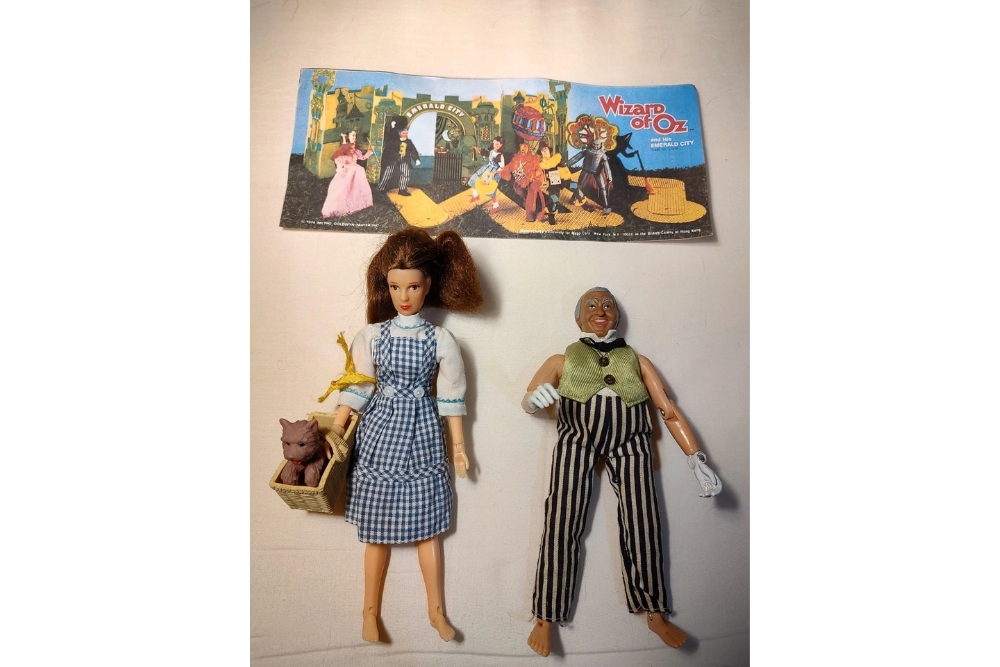
Mego’s Wizard of Oz line ran in 1974 and 1975 with Dorothy, the Scarecrow, the Tin Man, the Cowardly Lion, Glinda, and the Wicked Witch, plus a set of Munchkins. The Emerald City playset followed in 1975.
A boxed set of figures typically goes for $100 to $110, and loose or boxed singles usually run $30 to $55. The Emerald City playset with its Wizard figure tends to land near $55.
Missing accessories, faded outfits, and damaged boxes cut the price. A full set of the main characters with their clothes and props adds up to more than the single figures would suggest, so keep a collection together if you have one. Check that each outfit belongs to the figure it is on, because mismatched clothes are common. Munchkins and the Witch’s Castle, a Sears catalog exclusive, are part of the same line, so check whether any of those turned up in your box too.











