Self-employment can provide valuable flexibility for a single mother, but it also removes some of the predictability that comes with a traditional paycheck. Income may change each month, taxes are not automatically withheld, and benefits often become your responsibility. A financial plan built around those realities can make uneven income easier to manage while protecting your family from expensive surprises.
Table of contents
Build a budget around your baseline income
A conventional budget may assume roughly the same paycheck arrives every two weeks. That approach can be risky for freelancers, contractors, and business owners.
Review six to 12 months of income and identify what you typically earn during slower periods. Use that conservative figure to build a baseline household budget covering housing, groceries, utilities, transportation, insurance, childcare, and minimum debt payments.
During stronger months, avoid automatically increasing spending. Extra income can help fund future slow periods, taxes, savings, or irregular expenses.
Keep business money separate
Open separate accounts for business and personal finances. Client payments can enter the business account, while a planned amount is transferred to your personal account for household expenses.
This separation makes it easier to track revenue and business costs. It can also simplify bookkeeping when tax season arrives.
Set aside money for taxes as income comes in rather than waiting for a quarterly payment deadline. The appropriate amount depends on income and individual tax circumstances, so a tax professional can help determine a realistic percentage.
Create more than one savings bucket
An emergency fund is especially important when one parent is responsible for the household income. However, emergencies are not the only reason to save.
Consider separate reserves for business slowdowns and predictable expenses. Car repairs may be unexpected, but annual insurance premiums, school costs, holiday spending, and professional fees can often be anticipated months ahead. Automatic transfers can make saving more consistent, even if the amount varies according to monthly income.
Protect the income your family depends on
Single parents should consider what would happen financially if illness, injury, or death removed their income. Health insurance is one piece of that protection. Disability coverage may also help replace part of your earnings if a qualifying condition prevents you from working.
Life insurance can provide financial support for children or other dependents after a parent’s death. Comparing life insurance quotes online can provide an initial look at pricing, but coverage needs should reflect debts, ongoing household expenses, childcare, and future financial responsibilities.
Do not ignore retirement
Self-employment does not mean retirement saving has to stop. Depending on your circumstances, options may include a traditional or Roth IRA, SEP IRA, or solo 401(k).
Contribution rules and tax treatment differ, so choosing an account requires more than comparing annual limits. Consider income patterns, business structure, tax situation, and whether you expect to contribute consistently or primarily during profitable months.
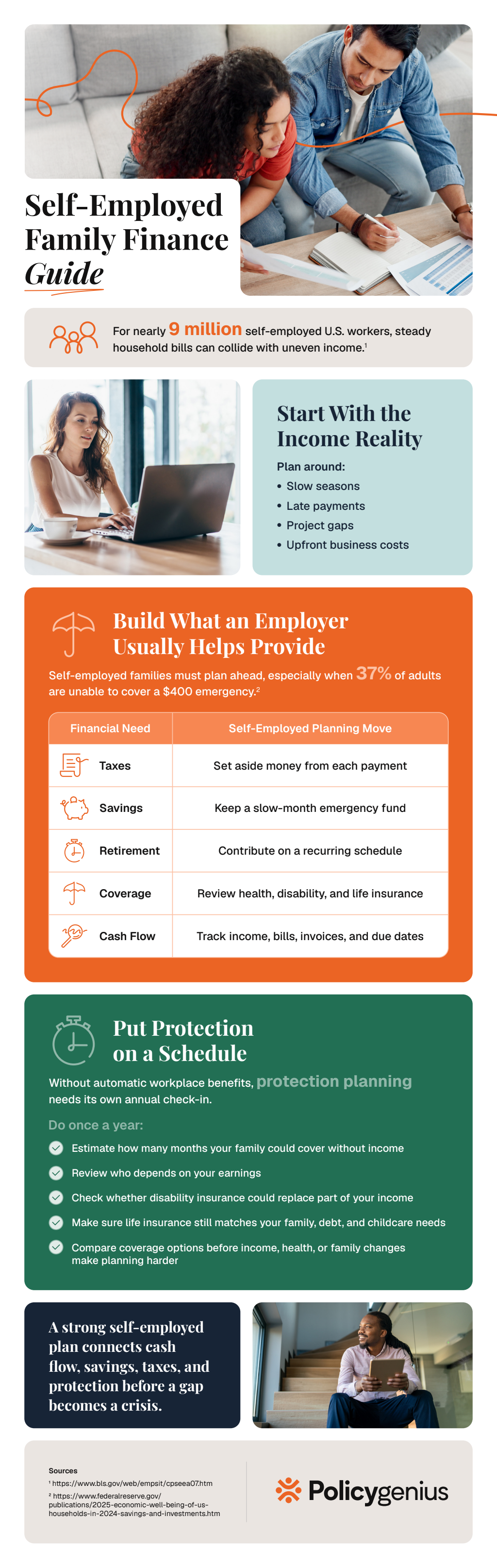
Self-employed single mothers need financial systems that can absorb change. A conservative budget, separate business finances, multiple savings reserves, appropriate insurance, and retirement contributions create layers of protection. Check out the infographic below to learn more.