
Your badge stops working on a Tuesday morning, or the recruiter who called last week stops answering, or your manager asks you to hop on a call with no agenda attached. However it happens, a layoff rearranges your week before it rearranges anything else. The calendar empties out, the direct deposit stops, and everyone around you still expects you to have a plan by dinner.
That shock lands differently depending on where you are in your life. A 26-year-old with six months of rent saved has one kind of problem. A 46-year-old with a mortgage, two kids and braces to pay for has another. A 61-year-old three years from a pension has a third. None of those problems get solved by panic, and none of them get solved by jumping straight to the resume either.
The order you handle things in matters more than how fast you move. Fix the money first, protect the legal ground you’re standing on second, and only then turn to the job search itself.
Table of contents
- File for unemployment the same week you lose your job
- Make sure your final paycheck is actually final
- Decide on COBRA or a marketplace plan before your coverage lapses
- Check whether the WARN Act owes you 60 days of pay
- Don’t sign a severance agreement before the clock runs out
- Ask if outplacement is already sitting in your severance package
- Roll over your 401(k) without triggering a tax bill
- Reconnect with former managers and colleagues while they still remember you
- Stop blaming a robot for your resume getting ignored
- Rewrite your LinkedIn headline for keyword search, not vibes
- Get retraining paid for through your state’s workforce program
- Train for a trade that’s short on workers, not long on competition
- Train for a healthcare role that doesn’t take years of school
- Take a staffing assignment to keep money moving while you search
- Turn your expertise into consulting with free help from SCORE
- Use the job boards built for workers over 50
- Check if you qualify for paid training through SCSEP
- Revisit your Social Security claiming age if this changes your timeline
File for unemployment the same week you lose your job

Don’t wait to see if another offer shows up first, and don’t assume a severance check disqualifies you right away. Most states still let you file the week your job ends, and weekly unemployment checks that average around $532 nationally and typically run about 24 weeks depend entirely on when your claim starts, not when your severance runs out. The amount varies enormously by state, since each one sets its own minimum and maximum payment and its own rules about how severance pay interacts with eligibility. Some states count a lump-sum severance against your benefits for a number of weeks; others don’t touch it at all. Call your state unemployment office or check its website before you assume either way, because guessing wrong in either direction costs you money.
Filing is also not a one-time event. Most states require a weekly or biweekly certification confirming you’re still looking for work, and missing even one can stall your payments for weeks while a caseworker sorts it out. Set a recurring reminder the same day you file your initial claim. If your state’s online system rejects your application because of a technicality, such as a mismatched employer name or a severance payout showing up as wages, don’t give up and assume you’re ineligible. Call and ask a person to walk you through it. The system is clumsy, but the money is real, and it’s yours whether or not you feel like you need it yet.
Make sure your final paycheck is actually final

Federal law doesn’t set a deadline for when a last paycheck has to arrive. The Department of Labor’s own guidance says an employer isn’t required by federal law to pay a departing employee immediately, which surprises most people who assume there’s a national rule. What actually controls the timing, and often whether unused vacation or PTO gets cashed out at all, is state law, and state rules on this vary widely: some require payment on your last day, some allow until the next scheduled payday, and some treat accrued vacation as wages that must be paid out while others don’t.
Pull up your state labor department’s page on final wages before you assume either way. If your regular payday comes and goes with nothing in your account, that’s the point to contact your state labor agency or the federal Wage and Hour Division, not three paydays later once the amount feels too awkward to chase. Keep your final pay stub and any written severance or PTO payout terms somewhere you can find them, since a claim for unpaid wages moves a lot faster with paperwork attached than with a memory of what HR said in the exit meeting.
Decide on COBRA or a marketplace plan before your coverage lapses

The average employer health plan now costs $9,325 a year for a single person, with the worker covering only about 16 percent of that out of pocket. COBRA lets you keep the exact same plan after a layoff, but you pick up the full premium yourself, plus a 2 percent administration fee, which for most people runs somewhere between $400 and $900 a month depending on the plan and the state.
A marketplace plan bought through a special enrollment period is usually cheaper, sometimes dramatically so once your lower income qualifies you for a premium tax credit. The trade-off is a different network and possibly a different deductible you’re starting over on. If you’re mid-treatment for something, or your spouse or kids have specialists tied to your current plan, that continuity might be worth the higher COBRA bill. If you’re healthy and just need a safety net, price out a marketplace bronze or silver plan before you default to COBRA out of habit. You have 60 days after your coverage ends to elect COBRA retroactively, so you don’t have to decide on day one, but don’t let that deadline sneak up on you while you’re busy with everything else on this list.
Check whether the WARN Act owes you 60 days of pay

If your layoff was part of something bigger than just you, a plant closing, a round of mass layoffs, a division shut down, federal law may already be on your side. Companies with 100 or more employees are generally required to give 60 calendar days of written notice before a mass layoff affecting 50 or more people at one location, and the notice has to go to workers directly, not just to a union representative or a state office.
If your employer skipped that notice and didn’t qualify for one of the law’s narrow exceptions, such as an unforeseeable business circumstance or a natural disaster, it owes affected workers back pay and benefits for the days of notice they didn’t get, up to the full 60. This isn’t something that gets applied automatically. The Department of Labor enforces the notice requirement but doesn’t pursue damages on your behalf, so the burden falls on you or a lawyer to raise it, often through a wage claim or a lawsuit. Several states, including California, New York, Illinois and New Jersey, have their own WARN laws with lower thresholds, so a smaller layoff that wouldn’t trigger the federal version might still qualify under your state’s rules. It costs you nothing to check before you assume there’s no case here.
Don’t sign a severance agreement before the clock runs out

A severance offer usually comes with a release, a document where you agree not to sue your employer in exchange for the payout. If you’re 40 or older, federal law gives you real time to think it over before that release becomes binding, and the company isn’t allowed to rush you past it. You get 21 days to consider the offer on your own, 45 days if you’re part of a group layoff, and seven more days to change your mind after you’ve already signed.
The release also has to spell out, by name, that you’re giving up your right to bring an age discrimination claim under that specific law, not just a vague waiver of “all claims.” If your employer changes the offer in any meaningful way during that window, the clock is supposed to restart from the new offer, not the original one. None of this means you shouldn’t sign. Most severance agreements are fine, and most layoffs aren’t discriminatory. It means you shouldn’t sign on the day it lands in your inbox just because the email makes it sound urgent, and it’s worth a one-time conversation with an employment lawyer if the number seems low for your years of service or if you were one of several older employees let go in the same round.
Ask if outplacement is already sitting in your severance package

Outplacement, paid career coaching and job-search support funded by your old employer, is common enough now that most people who are eligible for it never find out it exists. Career transition help has become standard practice, to the point that 82 percent of U.S. companies now build some form of it into their severance packages, yet it’s rarely mentioned out loud in the termination meeting. It usually shows up as one line in the paperwork, or not at all until you ask.
Before you sign anything, ask HR directly whether outplacement is included and what it covers: a resume rewrite, interview coaching, LinkedIn help, a job-search portal, access to a recruiter network. If it’s not offered, it’s often one of the easier things to negotiate into a severance package, since it comes out of a different budget than cash severance and costs the company far less than another month of pay. A company that has already decided no to more money will frequently say yes to this instead, mainly because it looks better to everyone who’s still watching. Get the specifics in writing, including how long the service lasts, since some outplacement contracts quietly expire after three or six months whether you’ve used them or not.
Roll over your 401(k) without triggering a tax bill

Leaving an old 401(k) behind isn’t dangerous on its own, but cashing it out by accident is one of the more expensive mistakes people make after a layoff. The IRS gives you 60 days from the date you receive a distribution to deposit the full amount into another retirement account before the whole balance becomes taxable income for the year, plus a 10 percent penalty if you’re under 59 and a half.
A direct, trustee-to-trustee transfer sidesteps that deadline entirely, since the money moves straight from your old plan to an IRA or your new employer’s plan without ever passing through your hands. An indirect rollover, where your old plan cuts you a check, automatically withholds 20 percent for taxes, which means you have to come up with that missing 20 percent from somewhere else just to roll over the full original balance within the 60 days. Call your old plan’s administrator and ask specifically for a direct rollover, not a distribution. It’s one phone call that can be the difference between keeping your retirement savings intact and losing a chunk of it to the IRS over paperwork.
Reconnect with former managers and colleagues while they still remember you

The people most likely to help you land your next role are the ones who already know what you’re good at, and that window closes faster than people expect. A manager who left the company eight months ago still remembers your work clearly. The same manager five years from now barely remembers your name. Reach out within the first few weeks, not after you’ve exhausted every job board and finally decided to network as a last resort.
Keep the message specific and short: what happened, what you’re looking for next, and one clear ask, whether that’s an introduction, a reference, or just advice on a particular company. A vague “let me know if you hear of anything” rarely produces results, because it gives the other person nothing concrete to act on. If a former colleague landed somewhere interesting, ask them directly what the hiring process is actually like there rather than applying cold through the careers page. People are far more willing to help in the first month after a layoff than the sixth, partly because the situation still feels urgent to them too, so don’t save this step for when you’re already discouraged.
Stop blaming a robot for your resume getting ignored

The idea that an applicant tracking system automatically rejects three out of four resumes before a human ever looks at them is one of the most repeated numbers in job searching, and it isn’t true. A recent survey of recruiters using more than ten different hiring systems found that 92 percent said their software doesn’t automatically reject resumes over formatting, missing keywords, or a low match score. Most tracking systems just rank and organize applications; a human still decides who moves forward.
That’s actually better news than the myth, because it means a resume that gets ignored usually has a content problem, not a software problem. If you’re not hearing back, the likely culprits are a resume that lists duties instead of results, a title that doesn’t match what the job posting calls the role, or an objective statement nobody reads anymore sitting at the top where your strongest accomplishment should be. Fix those before you spend an evening trying to reverse-engineer an algorithm that the recruiters who actually run it say isn’t doing the rejecting you’ve been blaming it for. Save the real anxiety for the parts of the process you can actually control.
Rewrite your LinkedIn headline for keyword search, not vibes

Recruiters searching LinkedIn aren’t scrolling through profiles the way you’d browse a magazine. They’re running the same kind of search you’d run on any database, by typing in job titles and skills and filtering by what’s listed in your profile, not by reading your summary top to bottom and forming an impression. A clever, vague headline like “problem solver and connector of dots” is invisible to that kind of search, because it doesn’t match anything a recruiter would ever type in.
Put your actual target job title in your headline, along with two or three of the specific skills or tools that show up in the postings you want to apply to. Do the same in your skills section, since recruiters filter searches by those tags directly. This isn’t about writing for a machine instead of a person. It’s about understanding that the first step in getting noticed is showing up in a search result at all, and a profile full of personality with no searchable substance never gets that far. Update your current title the day you’re laid off, too. A LinkedIn profile that still lists you at your old job six weeks after you’ve left raises more questions than it answers.
Get retraining paid for through your state’s workforce program

Most people have no idea that free, federally funded job training exists specifically for workers who’ve been laid off, and that it’s run out of a physical office they’ve probably driven past dozens of times. Nearly 2,400 of these exist nationwide, and American Job Centers offer free resume help, job search assistance and a direct line to Workforce Innovation and Opportunity Act training funding, all paid for by the Department of Labor.
Walk in, or make an appointment, and ask specifically about WIOA-funded training for dislocated workers. If you qualify, the program can cover tuition for a short-term certificate or trade program in a field with real local demand, not just hand you a stack of job listings and wish you luck. Eligibility and funding amounts vary by state and by how the money has been allocated that year, so what one caseworker tells you in one county might differ from what another tells you two counties over. Ask directly whether you qualify as a “dislocated worker,” since that status often unlocks a different, better-funded bucket of money than the general training programs offered to everyone else.
Train for a trade that’s short on workers, not long on competition

While plenty of office roles have more applicants than openings right now, the skilled trades have the opposite problem. The Bureau of Labor Statistics expects the country to need 77,400 more electricians by 2034, a 9 percent jump from current levels, with a 2024 median pay of $62,350. That’s a career most people enter through a paid apprenticeship rather than a degree, which means you earn while you train instead of taking on debt to get there.
An apprenticeship typically runs four to five years and combines on-the-job hours with classroom instruction, usually through a union, a trade school, or a contractor association. Pay starts well below that median but climbs steadily as you log hours, and the work itself, residential, commercial or industrial wiring, is largely insulated from the kind of software automation that’s reshaping a lot of white-collar jobs right now. If you’re coming from a field where the demand has dried up, the career change is bigger than most on this list, but it’s one of the few paths where age and steady hands are an asset rather than a liability, and where the retraining period comes with a paycheck attached from day one.
Train for a healthcare role that doesn’t take years of school

The aging of the U.S. population is creating demand for in-home care faster than almost any other part of the economy, and it’s one of the few growth areas that doesn’t require a four-year degree to get started. Home health and personal care aide jobs are projected to grow 18 percent by 2035, with about 760,500 openings a year and a median pay of $35,800, and most positions ask for nothing more than a high school diploma, with training completed on the job or through a short certificate program.
The pay at entry level won’t replace a mid-career office salary, and the work is physically and emotionally demanding in ways a desk job isn’t, so this isn’t a fit for everyone who’s between jobs. But it’s a real, fast entry point if you need income now while you figure out your next move, or if you’re drawn to caregiving work specifically and want a sense of what full-time home health work is actually like before committing to something bigger, such as nursing school. Some states require a license or a competency exam for aides working through certified agencies, so check your state’s health department before you assume the job is open-and-apply.
Take a staffing assignment to keep money moving while you search

Temporary and contract work has a reputation as a last resort, but for a lot of people it’s a deliberate bridge rather than a backup plan. America’s staffing companies kept close to 2.2 million people working in temporary and contract roles in a typical week, and most of them took the work specifically to keep income coming in between one job and the next, not because they couldn’t find anything permanent.
A staffing agency can usually place you faster than a direct application, because the agency already has relationships with the companies doing the hiring and gets paid for filling the role quickly. Register with more than one agency in your field, since each one has different client relationships, and be specific with your recruiter about pay floor and how long an assignment needs to run to be worth your time. Plenty of temp-to-hire placements turn permanent once the employer sees your work firsthand, which can be an easier way in the door than competing against two hundred other applications for the same posted job. It also keeps a paycheck coming while you hold out for the right permanent offer instead of taking the first one out of desperation.
Turn your expertise into consulting with free help from SCORE

If you’ve spent fifteen or twenty years getting good at something specific, a layoff is one of the few moments where turning that into independent consulting actually makes sense, because you already have the track record and the industry contacts that take most people years to build. You don’t have to figure out how to structure it alone. SCORE, a nonprofit resource partner of the Small Business Administration with more than 10,000 volunteer mentors, offers free, one-on-one mentoring for as long as your business exists, not just for a single session.
A SCORE mentor can walk you through the unglamorous parts that stop most people before they start: setting rates, writing a simple contract, handling quarterly estimated taxes, and deciding whether to form an LLC. This path isn’t for everyone, and it works best in fields where companies already hire outside consultants, like finance, engineering, project management or specialized operations work, rather than fields that depend on a steady salary and benefits. But if former colleagues have already said some version of “I wish we could just hire you back for this one project,” that’s usually a sign the market for your expertise exists before you’ve even gone looking for it.
Use the job boards built for workers over 50

Age bias in hiring is common enough that most older job seekers have already felt it, whether or not anyone ever said it out loud. Research on the subject backs that up directly: two in three adults over 50 believe older workers face discrimination on the job, and 93 percent think age discrimination is common in hiring today. That’s exactly why a handful of job boards exist specifically to route you toward employers that have already said, in writing, that they want experienced workers.
AARP’s own job board matches you with companies that have signed a pledge committing to a multigenerational workforce, and it lets you filter by title, keyword and location the same way any other job board does. Other sites built around the same idea, such as RetirementJobs.com and the National Older Worker Career Center, skew toward companies that have gone out of their way to say age isn’t a mark against you there. None of this replaces a strong resume or a sharp interview, but it does mean you’re spending your energy applying to employers who’ve already shown they’re not going to quietly screen you out the moment they see your graduation year.
Check if you qualify for paid training through SCSEP

If you’re 55 or older and your household income is tight, there’s a federal program built specifically for this situation that most people have never heard of. The Senior Community Service Employment Program pays the highest of the federal, state or local minimum wage for about 20 hours a week while you train at a nonprofit or government agency, as long as you’re unemployed and your family income sits at or under 125 percent of the federal poverty line.
The placements themselves run through schools, hospitals, day-care centers and senior centers, and they’re designed as a bridge into unsubsidized employment rather than a permanent arrangement, so you come out the other side with recent, verifiable experience and a reference instead of a resume gap. You can find a local SCSEP provider through your state’s aging services office or through CareerOneStop’s older worker program finder. It won’t replace a full-time salary, but it’s real paid work while you retrain, and it’s aimed at exactly the group that often gets the least attention in general job-search advice: workers over 55 who need both income and a credible answer to “what have you been doing since the layoff.”
Revisit your Social Security claiming age if this changes your timeline
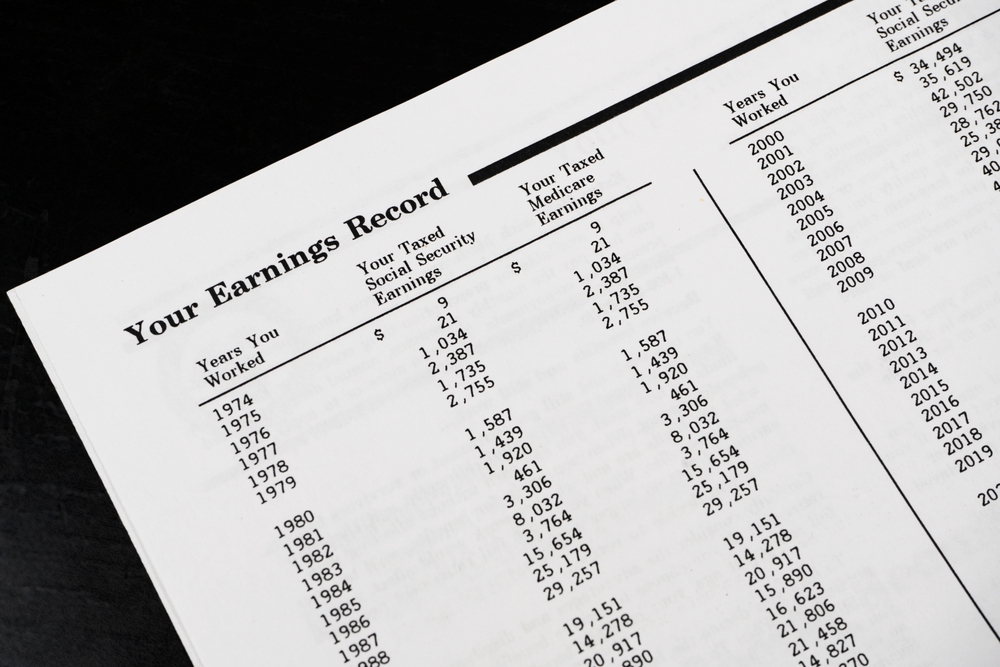
For anyone within a decade of retirement, a layoff forces a decision that usually would have waited: do you claim Social Security earlier than planned, or find a way to hold off? Every year you delay past your full retirement age adds a permanent increase to your monthly benefit, up until you turn 70, when the increase stops. Claiming early, as soon as 62, locks in a permanently smaller check instead.
There’s no universal right answer here, since it depends on your health, your other savings, whether you have a spouse whose benefit is tied to timing decisions, and how long you expect this gap in employment to last. What matters is not defaulting into either choice out of panic. If you can bridge the next few years with unemployment, part-time work, or savings, delaying even a couple of years can meaningfully raise your income for the rest of your life. If claiming now is what keeps you afloat, that’s a legitimate decision too, not a failure. Either way, run the numbers with the Social Security Administration’s own calculators before you decide, rather than guessing at what delay is actually worth in your specific case.
A layoff is a specific financial and legal situation with its own deadlines, not a verdict on your career. Work through it in the order it hits your bank account, and the rest of it gets a lot easier to plan.











