
Your grandmother’s china cabinet probably has one of these tucked behind the everyday plates: a little porcelain lady holding a fistful of balloons, or a grinning jug nobody’s poured from in forty years. Royal Doulton sold so much of this through American department stores between the 1940s and the 1980s, often as wedding and anniversary gifts, that it still turns up in nearly every estate sale in the country. Most people walk right past it.
The company started as a Victorian stoneware maker on the Thames in Lambeth and became Royal Doulton in 1901 after a royal warrant from Edward VII. Over the following century it put out street-seller figurines, whisky flasks shaped like historical characters, nursery plates with rabbits on them, and character jugs by the thousands. Very little of what collectors chase was expensive when it was new. It’s almost always the early colorway, the retired mark, or the version with the right backstamp sitting next to ten nearly identical pieces worth a fraction as much.
1. Royal Doulton Old Balloon Seller figurine (HN1315)
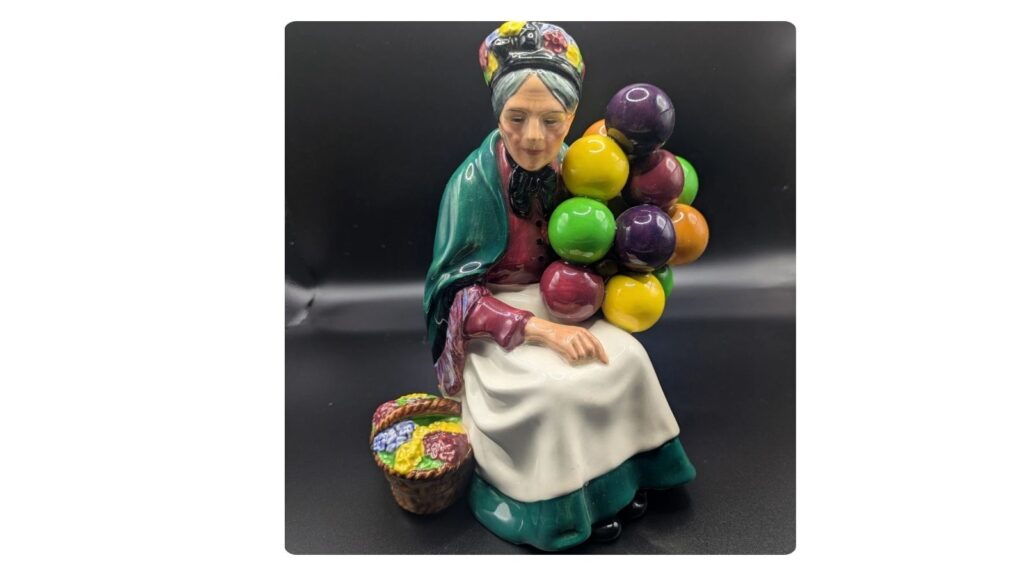
Leslie Harradine designed this one in 1929: a street seller in a bonnet and shawl, a cluster of colorful balloons bunched in her hand. Doulton kept the mold in production for almost seventy years, and it’s probably the best known figure the company ever made, which is exactly why she’s everywhere: thrift shops, church sales, inherited cabinets.
That ubiquity keeps prices reasonable. Clean examples with crisp paint and no restoration typically bring $35 to $65, with early pre-war pieces in excellent condition pushing toward $100 to $150. Check the balloon strings first, since the thin raised porcelain chips easily, and look for a backstamp style that actually matches the era the piece claims to be from. A grayed or crazed glaze, or a touched-up face, knocks the price down fast even on an otherwise complete figure. Buy her for the charm, not as an investment: with millions made, she was never going to be rare.
2. Royal Doulton Bunnykins figurines
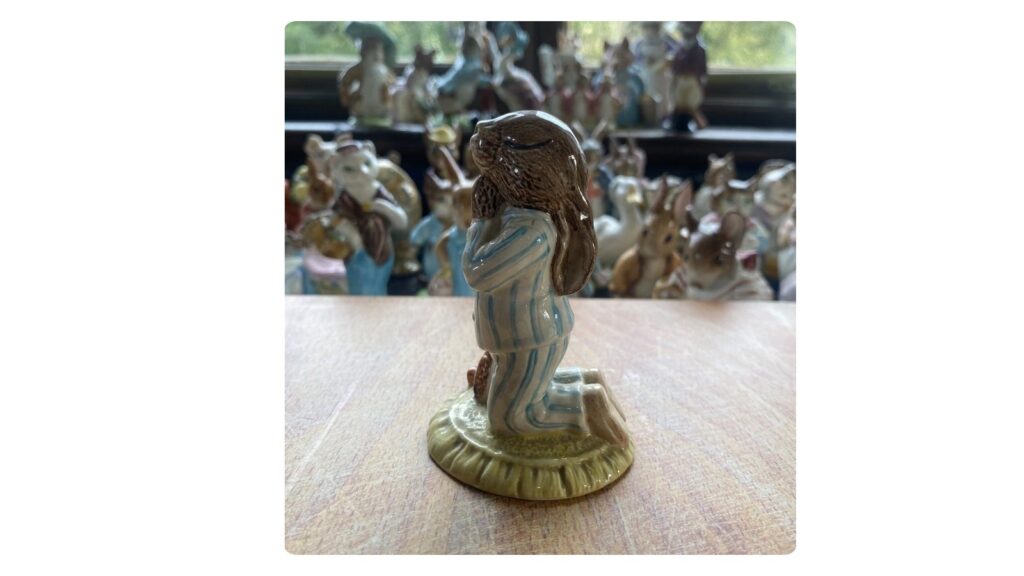
Royal Doulton bought the Beswick factory in 1969 and used its modelers to launch Bunnykins as three-dimensional figures in 1972, giving rabbits every job and costume imaginable: vicars, drummers, surfers, wizards. More than 500 different Bunnykins figures have been produced since, each carrying its own DB catalog number on the base.
Common unboxed figures from the 1970s through the 1990s run $25 to $60, which is why they’re an easy, cheap find at any sale with a china table. Limited editions with their certificate and box intact are a different story: numbered runs of 2,000 or fewer routinely bring $100 to $250, and scarcer ones in the hundreds-made range go well beyond that. Check the base for the DB number and any limited-edition count, and look the figure over for chips to ears, hands, and the thin painted details that take the most handling. A Bunnykins with its original box and paperwork is worth noticeably more than the same figure alone, so don’t toss what looks like ordinary packaging.
3. Royal Doulton Old Charley toby jug (D5420)
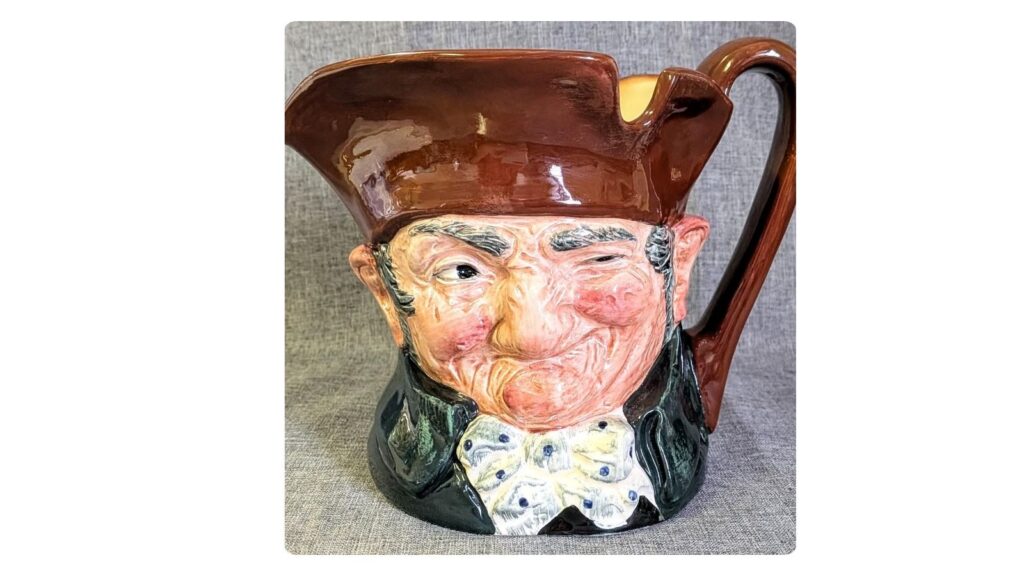
Charles Noke added Old Charley to Doulton’s toby jug lineup in the 1920s, a portly, red-cheeked night watchman clutching his lantern and stick, and the company produced him in huge numbers for decades afterward. He’s one of the most commonly found Doulton pieces in American homes, usually the large size, sitting on a shelf doing nothing but looking cheerful.
That volume keeps values modest. Clean examples with no chips to the hat brim or handle typically sell for $20 to $45, with the small and miniature sizes bringing less. Royal Doulton’s toby jug line goes back to the early 20th century, and Old Charley was also issued briefly as a musical jug with a tiny movement in the base in the late 1930s, which is the genuinely scarce version worth tracking down. Check the underside for the D5420 mark and condition of the glaze around the raised details, since splotchy repainting is common on pieces this well loved and drags the price down hard.
4. Royal Doulton Bunnykins nursery ware signed Barbara Vernon
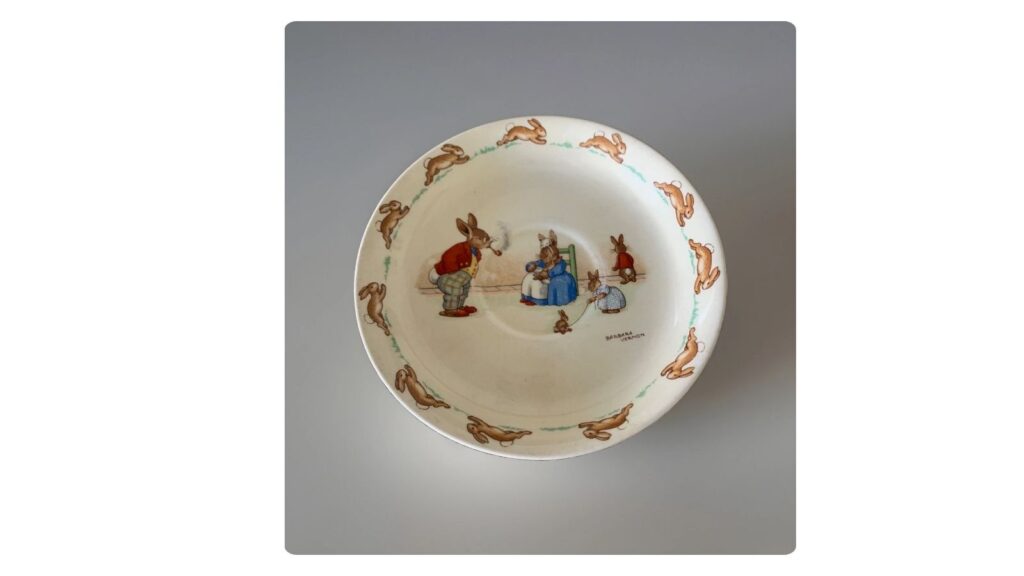
Before Bunnykins were figurines, they were tableware. A nun named Sister Mary Barbara, born Barbara Vernon Bailey, sketched the rabbit family in the early 1930s for her father, who happened to run Doulton’s Burslem factory. The earliest plates, bowls, and mugs carry her pen signature on the base, and those signed pieces from the 1930s and 40s are the ones collectors chase hardest.
A signed dessert plate or bowl in good condition typically brings $60 to $120, while unsigned later-production Bunnykins nursery pieces from the 1960s onward sell for a fraction of that, usually under $20. The production run was long and the patterns changed hands between artists, so check the base carefully for the actual signature rather than assuming an early-looking design means an early piece. Crazing and utensil scratches are common on anything meant for a child’s breakfast table and matter less here than they would on a display figurine, but chips still cut the price substantially.
5. Royal Doulton Top o’ the Hill figurine (HN1834)
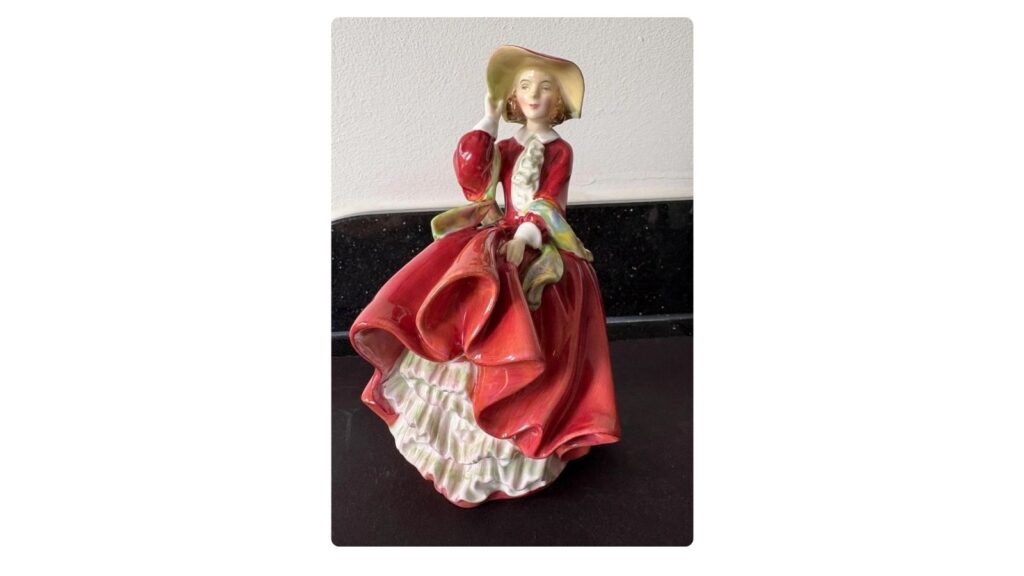
Leslie Harradine modeled this one in 1937, a woman in a wide-brimmed hat and flowing cape caught mid-stride, based on a magazine illustration Doulton bought the exclusive china rights to. It’s widely considered Doulton’s single most recognizable figure, which made it a demonstration piece at exhibitions for decades and put it in an enormous number of homes.
Standard postwar examples in good condition typically run $40 to $90. The real money is in the 1937 to 1938 originals, which came in only three colorways before the mold was tweaked for a deeper base and thicker hat brim in response to fragility complaints; those earliest pieces in excellent shape can bring $150 or more. Her red version also changed during the war years, originally painted with blue-tinged streaks before switching to a solid red afterward, which is a quick way to narrow down the date. Watch the hat brim and outstretched hand for chips, since both are thin and exposed.
6. Royal Doulton Balloon Man figurine (HN1954)
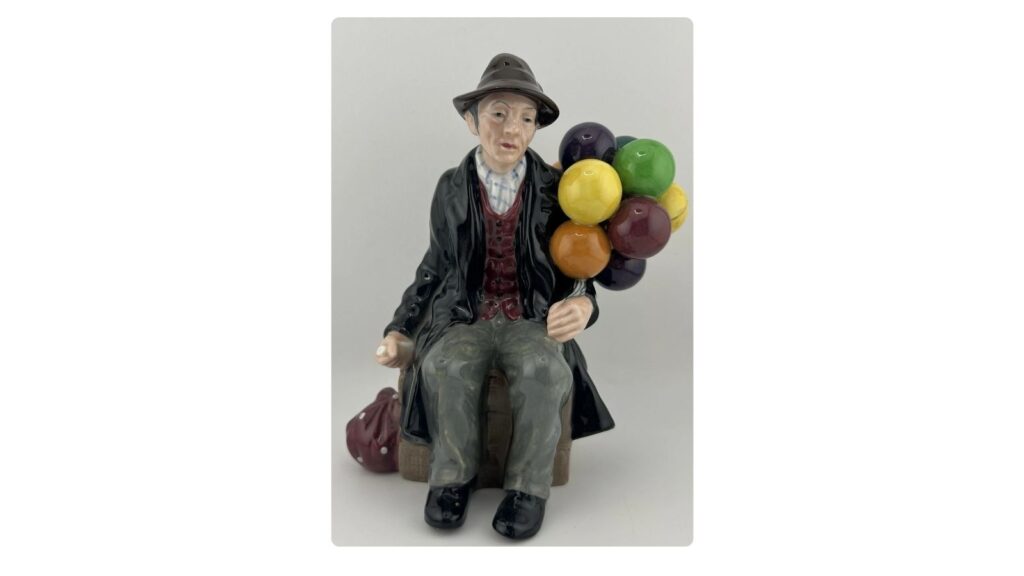
Leslie Harradine designed the Old Balloon Seller’s male counterpart around 1950, a gentleman in a flat cap holding up a bouquet of hand-painted balloons in yellow, green, and purple. He was part of Doulton’s long-running street-seller series, alongside later additions like the Punch and Judy Man, and he’s noticeably less common than his female counterpart despite the similar subject matter.
Clean examples with all the balloon tips intact and no restoration typically bring $25 to $70, occasionally more when sold as a matched pair with the Old Balloon Seller, since the two display well together and collectors like completing the set. The balloons are the vulnerable point on every example, thin cast porcelain that chips if the figure gets knocked around in a box, so examine each one under good light before paying full price. A repaired balloon tip, even a well-done one, is usually visible as a slightly different glaze sheen up close.
7. Royal Doulton Snowman figurines
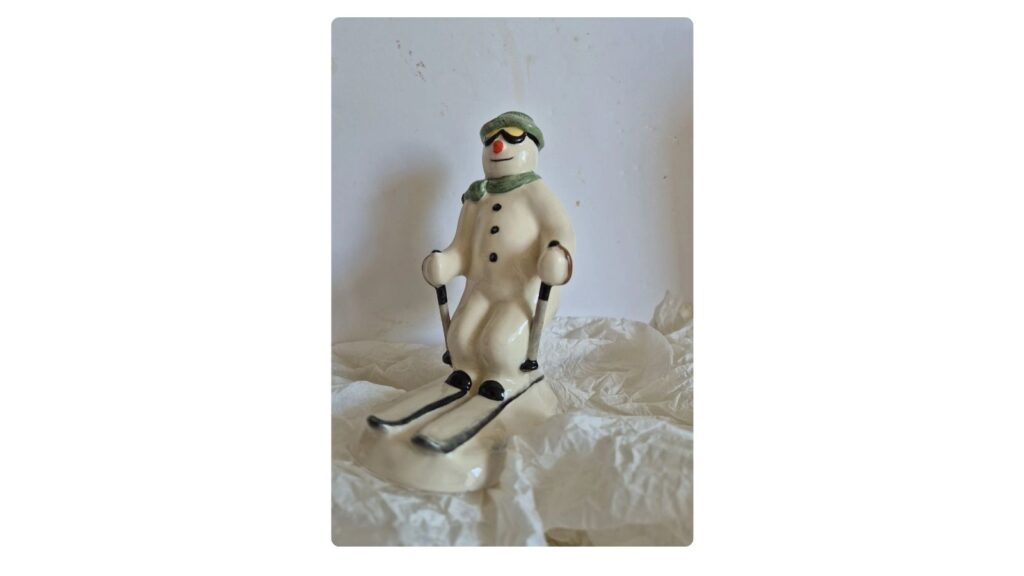
Royal Doulton launched a line of figurines based on Raymond Briggs’ snowman character in 1985, built from the Beswick factory’s modeling expertise, and the range has stayed in production in one form or another ever since; Dartington Crystal, which now owns the molds, still produces Snowman nursery pieces today. The character’s instant recognizability makes these an easy holiday-season find in attics and donation boxes.
Retired figures from the original 1980s and 90s releases typically bring $40 to $75 in good condition, with paired figures like the Snowman alongside a companion character running toward the higher end. Mugs, egg cups, and other everyday tableware pieces from the same line sell for far less, usually $10 to $25. Retirement status matters more here than age: a figure Doulton pulled from the catalog decades ago is worth meaningfully more than one still sold new, so it’s worth checking whether a specific pose or colorway is still in current production before assuming it’s special.
8. Royal Doulton Old King Cole character jug
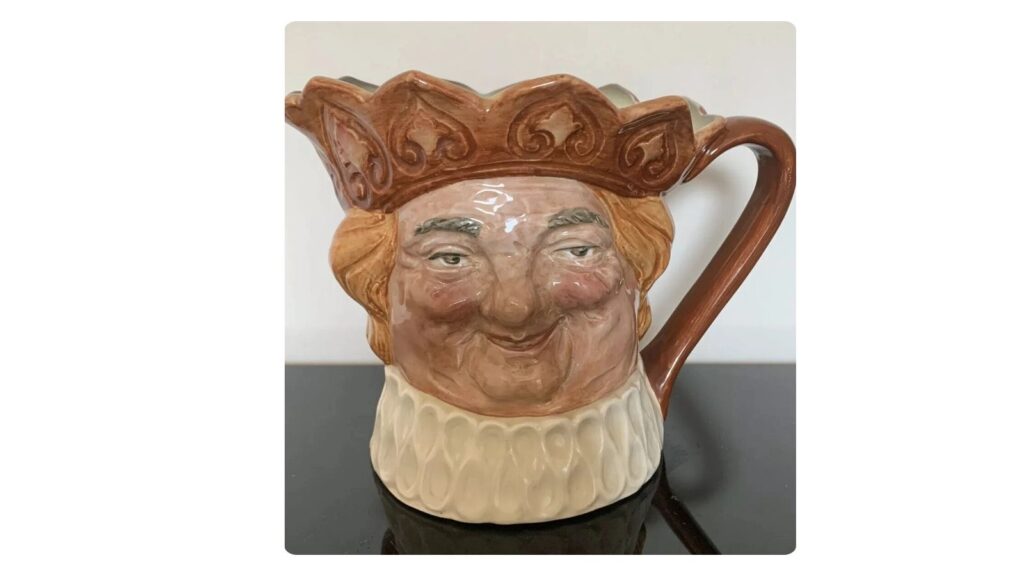
Harry Fenton modeled this jolly, crowned monarch in 1939, pipe in hand and fiddlers presumably somewhere nearby, and Doulton kept him in the catalog through 1960 in large and small sizes, later adding a tiny version for collectors’ club members. The large size is the one most often found at estate sales.
A standard large jug in clean condition typically brings $50 to $100, with the small size running less. The later tiny collectors’-club edition is the surprise here: despite its size, clean examples have sold for over $100, purely on novelty and limited production. The genuinely scarce version is the musical jug made only from 1939 to 1942, with a tiny Swiss movement built into the base that plays the nursery rhyme; production of the whole musical jug series was cut short by the war, making surviving examples with a working movement worth considerably more than the standard jug. Check that the handle hasn’t been reglued, a common repair point on character jugs this age.
9. Royal Doulton Gibson Girl series plates
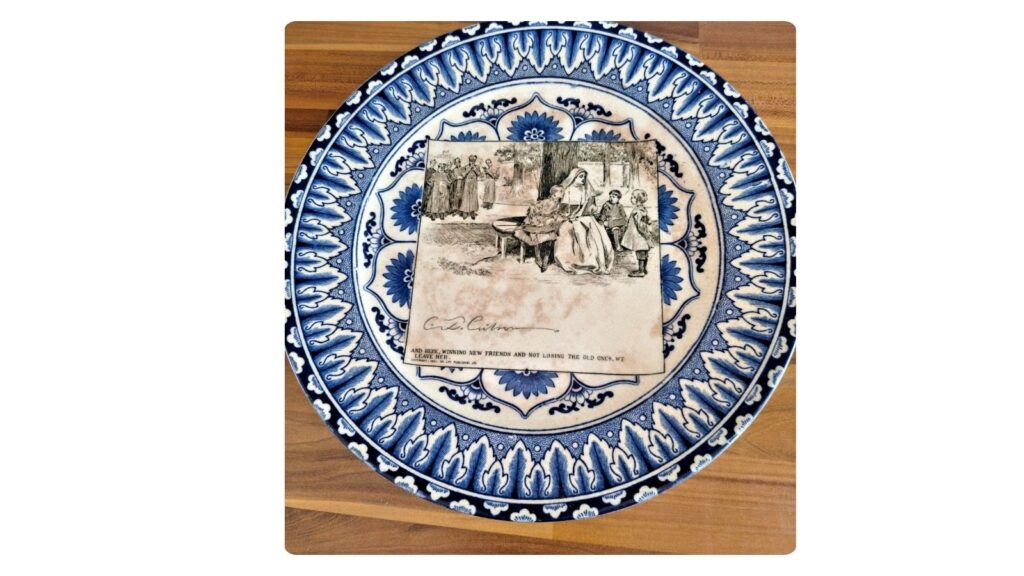
Royal Doulton licensed Charles Dana Gibson’s pen-and-ink “Widow and Her Friends” cartoons, originally run in Life magazine in 1900, and turned them into a 24-plate blue-and-white transferware series depicting a stylish young widow’s social misadventures. Each plate carries its own captioned scene, from costume balls to morning runs, which is part of what makes the full set appealing to collect.
A single plate in good condition with only light crazing typically sells for $25 to $65, with popular or visually striking scenes bringing the upper end of that range. Because the series ran to two dozen different plates, a matched partial or complete set is worth considerably more than the same plates sold individually, and it’s worth checking flea markets and estate sales for others from the same run before splitting one up. Crazing is nearly universal on plates this age and doesn’t hurt value much on its own, but chips to the rim or a worn transfer pattern will.
10. Royal Doulton Clown character jug
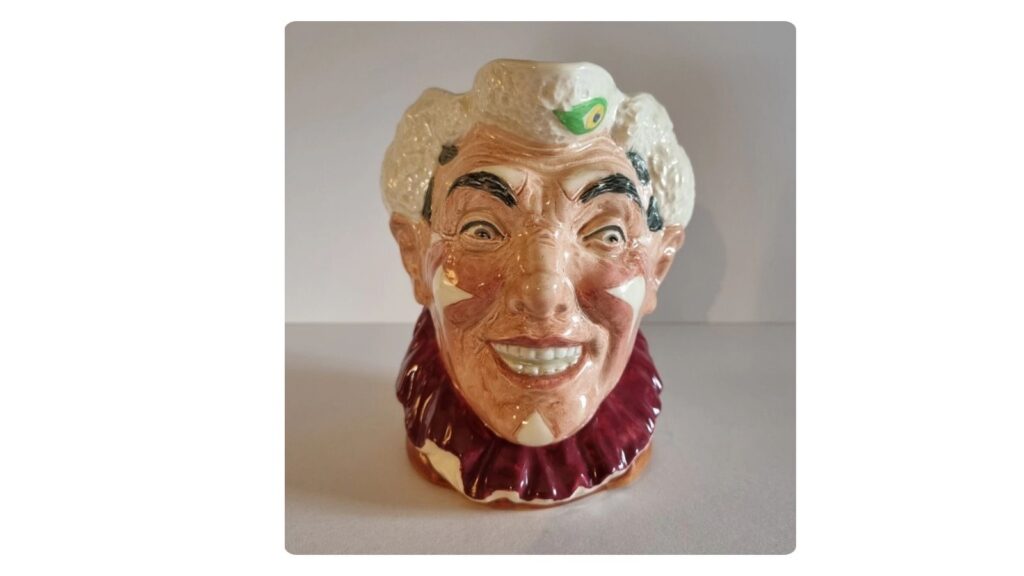
Harry Fenton modeled The Clown in 1951 in two color variants released almost back to back: a red-haired version produced only briefly that year, and a white-haired version that followed and stayed in the catalog through 1955. Both show the same wide, painted grin and ruffled collar, but the white-haired jug is the one collectors actually find, since it had the longer production run.
A white-haired Clown jug in clean condition with sharp paint typically brings $150 to $350, and prices climb for examples with strong, unfaded color on the ruffled collar. The red-haired version, made for a shorter window the same year, commands a meaningfully higher price whenever one surfaces, simply on account of how few were produced before Doulton switched to the white-haired model. A later, simplified reissue from 1989 to 1995 also exists and is worth considerably less than either original, so check the modeling detail and hair color together before assuming you have an early piece.
11. Royal Doulton Darling figurine
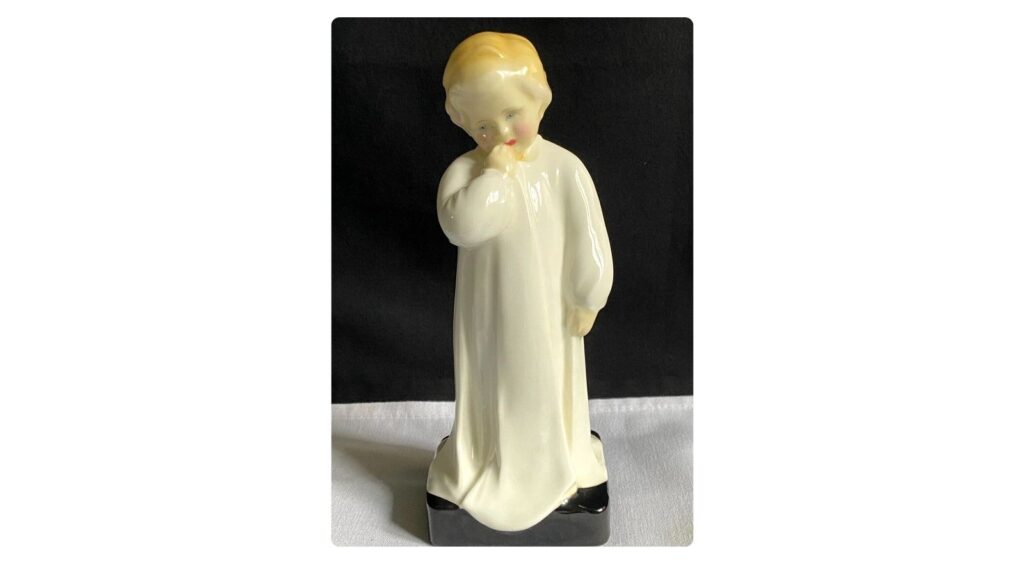
The very first figurine Royal Doulton ever numbered, back in 1913, was a small boy in a nightshirt that Queen Mary saw on a factory visit and reportedly exclaimed over, calling him “a darling.” The name and the number one spot in Doulton’s HN catalog stuck, and the company kept reviving the design under new HN numbers for most of the twentieth century, including a popular postwar version produced into the late 1990s.
A postwar Darling figurine in good condition, which is the version most people are likely to actually find, typically brings $25 to $60. The original 1913 HN1 version and its immediate 1920s colorways are in a different league altogether, since they predate decades of reissues and are correspondingly much scarcer. Check the HN number stamped on the base against a reference guide before assuming any particular Darling is an early one, since the same cheerful design was reused across several completely different catalog numbers over the decades.
12. Royal Doulton flambé animal figurines
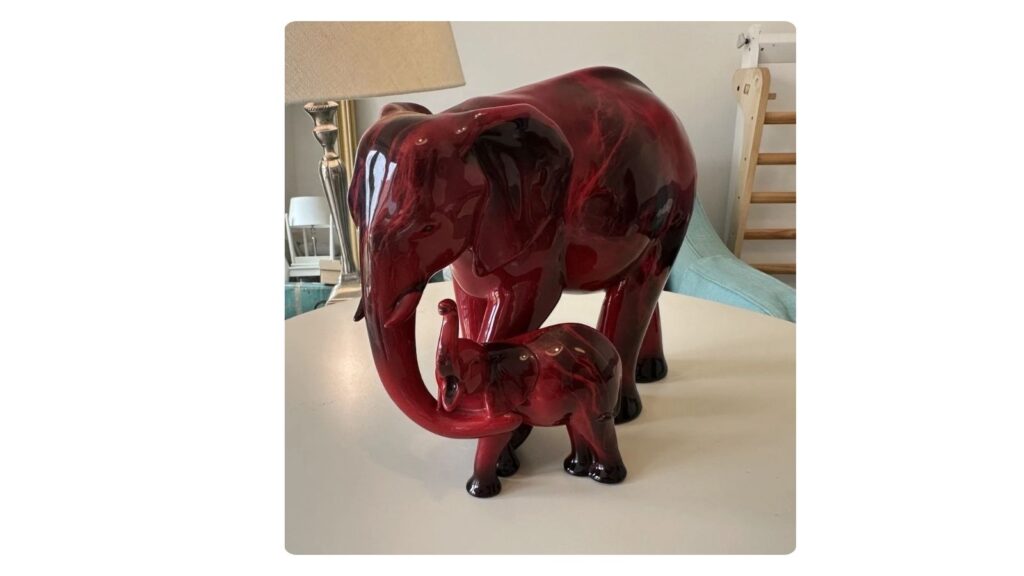
Doulton’s flambé glaze, a deep oxblood red streaked with purple and turquoise, was adapted from a centuries-old Chinese technique and debuted at the 1904 St. Louis Exhibition under art director Charles Noke, with ceramicist Bernard Moore consulting on the notoriously secretive formula. Small animal figures in the glaze, foxes, owls, elephants, and tigers among them, were produced steadily from the 1920s onward and still turn up as unassuming little red ornaments on mantelpieces.
A small to medium flambé animal in good condition, no scratches through the glaze and a clean base mark, typically brings $150 to $350, with larger pieces and the signature seated or stalking fox selling for more. The glaze itself is impossible to fake convincingly, but the streaking and depth of color vary a lot between individual pieces, and richer, more dramatic coloring generally commands a premium. Check for scratches that have worn through to a duller base glaze underneath, since flambé pieces were often used as everyday decor rather than kept behind glass.











