
They’re wedged in the back of a closet with the heels worn soft, or still sitting in a box at an estate sale, barely touched, smelling faintly of cedar and old leather. Most people walk past a pair of cowboy boots at a thrift store without a second look. Collectors flip them over and check the sole first.
The vintage boot market runs on the same handful of signals every time: who made them, what they’re made of, and how much life is left in the leather. A scuffed pair from a mall store in the 1990s is still a scuffed pair from a mall store. A pair stamped with the right maker’s name from the right decade is a different story, especially if the sole hasn’t separated and the toe hasn’t been stepped flat.
None of this requires a barn find or a pair that once belonged to a rodeo champion. Most of what turns up at estate sales and thrift stores falls somewhere in the middle: ordinary working boots from extraordinary bootmakers, worth real money if the leather survived and the right details are still there.
1. Acme “Pee Wee” inlaid cowgirl boots, 1940s and 1950s
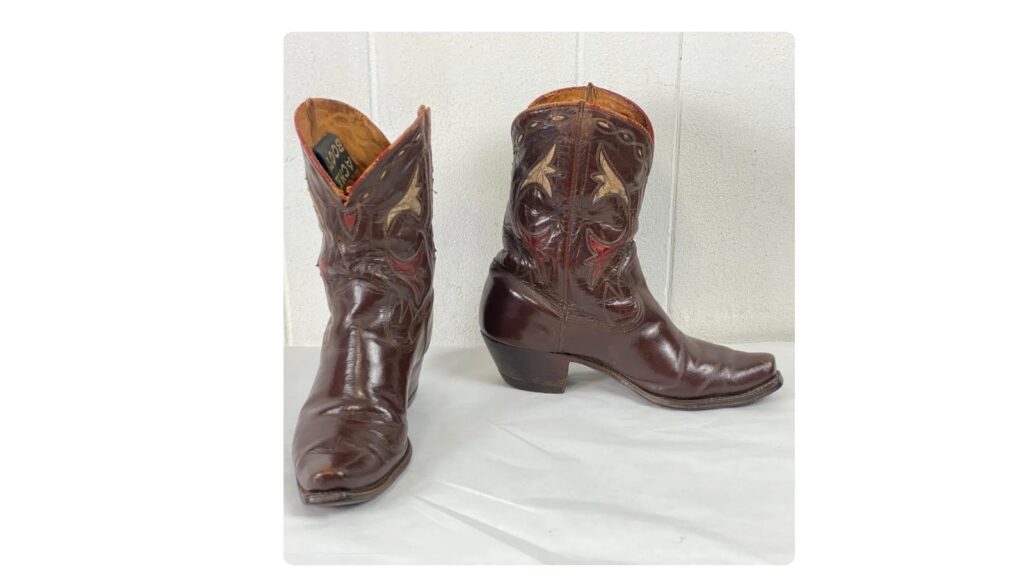
Acme Boot Company started out in 1929 making children’s shoes in Chicago, then relocated to Clarksville, Tennessee, where the owners pivoted to western boots in 1935 after studying a pair they’d bought on a business trip to Texas. The gamble paid off. By the 1940s Acme had become the largest cowboy boot manufacturer in the world, a title it held into the 1980s.
The boots worth hunting for from this era are the short-shaft “Pee Wee” styles, cut just below the calf and decorated with cutout inlay panels in contrasting leather: diamonds, birds, florals, and starbursts worked in red, white, turquoise, or black against tan or brown. These were everyday boots when they were new, which is exactly why survivors with crisp, undamaged inlay are scarce now.
Plain, unadorned Acme pairs from the same decades typically bring $40 to $90 in wearable condition. Boots with bold, intact inlay patterns are worth considerably more, often $150 to $300 when the cutout leather hasn’t cracked or flaked away, with especially striking patterns and an original box pushing toward the top of that range. Check the inlay first, since it’s thinner than the main upper and the first thing to go. A cloth ACME tag sewn inside the shaft helps confirm authenticity.
2. Justin Roper pull-on boots, made in USA
pink tw via eBay
H.J. Justin started repairing and making boots out of a one-room shop in Spanish Fort, Texas, in 1879, building a reputation good enough that cattlemen driving herds up the Chisholm Trail would order a pair on the way out and collect them on the way back. The company his children built became Justin Boots, one of the three names, alongside Nocona and Tony Lama, that define Texas bootmaking.
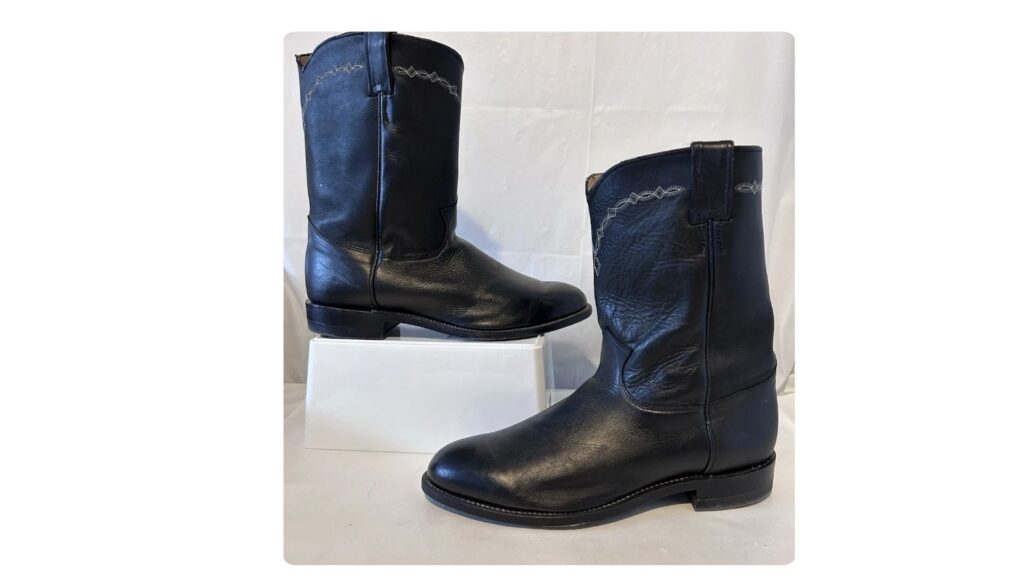
The Roper style, with its low walking heel and round toe built for a cowboy who spends more time on the ground than in the saddle, became Justin’s most-produced casual boot through the 1970s, 80s, and 90s. It’s also the easiest vintage Justin to find, since millions of pairs were made and plenty survive in wearable shape.
Clean examples with the leather still supple typically sell for $30 to $70, with unusual colors like teal or pink pulling toward the higher end and basic black or brown toward the lower. A “Made in USA” stamp inside points to a pair made before some production shifted overseas. Check the sole and heel for separation, a common issue on boots that sat in a closet while the leather dried out, and flex the vamp crease for cracking before buying anything meant to actually be worn.
3. Tony Lama Black Label boots, pre-1990
Tony Lama opened his bootmaking shop in El Paso, Texas, in 1911 after working as an Army cobbler at Fort Bliss. The company stayed family-run until 1990, when it was sold to Justin Industries, the same company that already owned Justin Boots and Nocona.
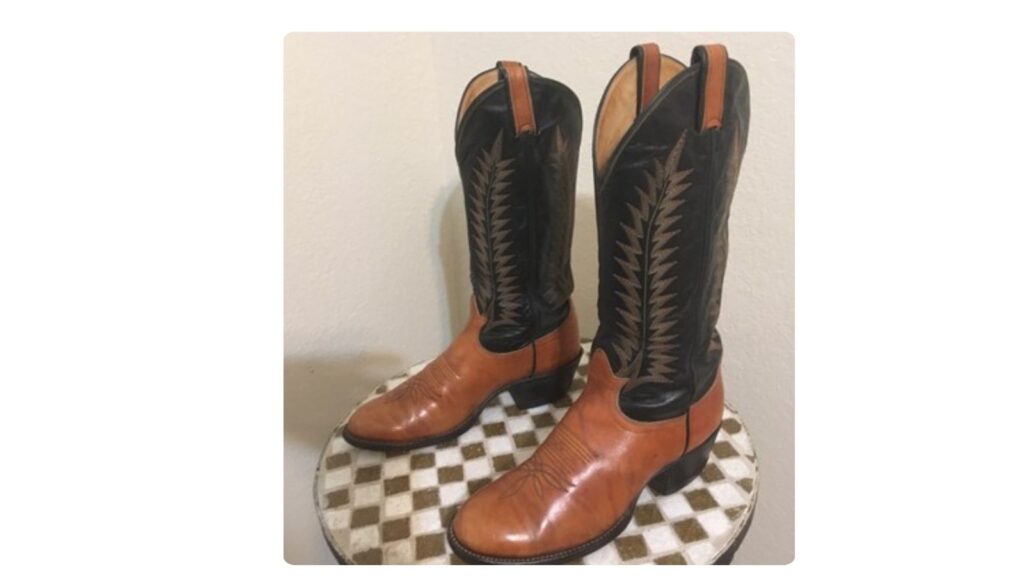
Pairs made before that sale carry a black fabric tag sewn inside the shaft reading “Black Label,” which collectors use to date a boot to the independent, El Paso-only era. These tend to be heavier and better constructed than later mass-market Tony Lamas, with a stitched leather sole and a stacked leather heel rather than synthetic substitutes.
Clean Black Label pairs in plain leather, no exotic skins involved, regularly bring $90 to $230 depending on color, size, and how flat the sole sits. A pair that wobbles on a hard floor has likely warped from heat or damp storage and is worth noticeably less. Check the stitching around the welt for separation and look for a legible style number stamped inside, which helps confirm the boot is genuinely pre-1990 rather than a later pair made with similar styling.
4. Dingo campus boots, 1970s
Dingo has been a name in western footwear since at least 1964, when the trademark was first filed for a line of leather boots, and it’s sold today as part of the Dan Post Boot Company’s family of brands. In its most collected era, the 1970s, Dingo carved out a spot as a cheaper, trend-forward alternative to heavier working boots, closer to a fashion boot that happened to be sturdy enough for actual wear.
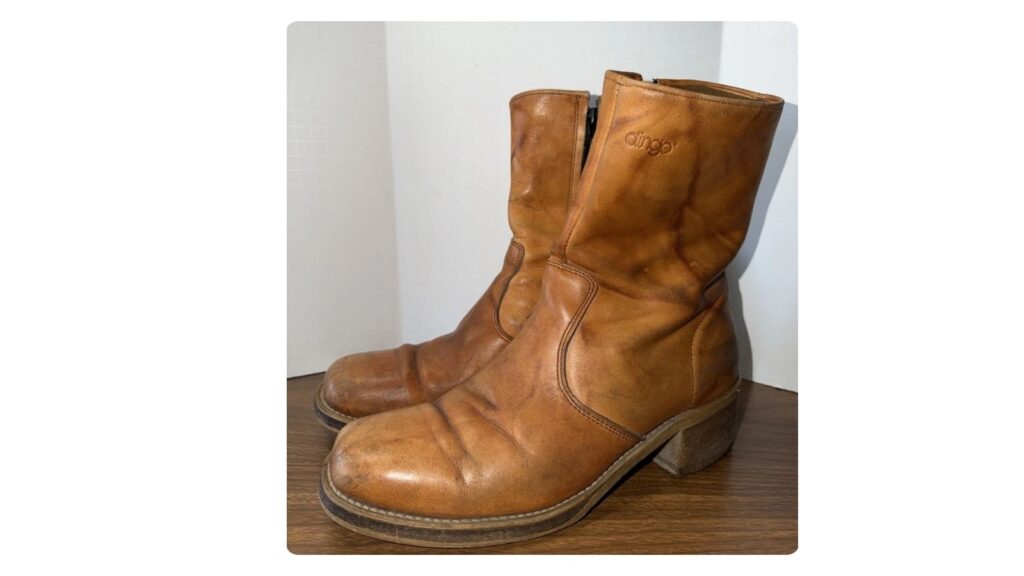
The style collectors look for now is the tall “campus” boot: a squared riding toe, double-stitched welt, leather pull tabs, and a modest stacked heel, usually in natural tan or brown cowhide that’s developed a buttery patina with age.
A clean pair in that classic campus cut can bring around $130, though plain, lightly worn Dingos more commonly sell for $25 to $90 depending on condition and colorway. Since this was a budget line to begin with, construction quality varies more than on Acme’s mainline boots, so check the sole for separation and the heel for wobble before paying toward the top of that range. A legible Dingo tag and visible double stitching on the welt are the marks of an original rather than a later reissue carrying the same name.
5. Lucchese San Antonio boots, pre-1986
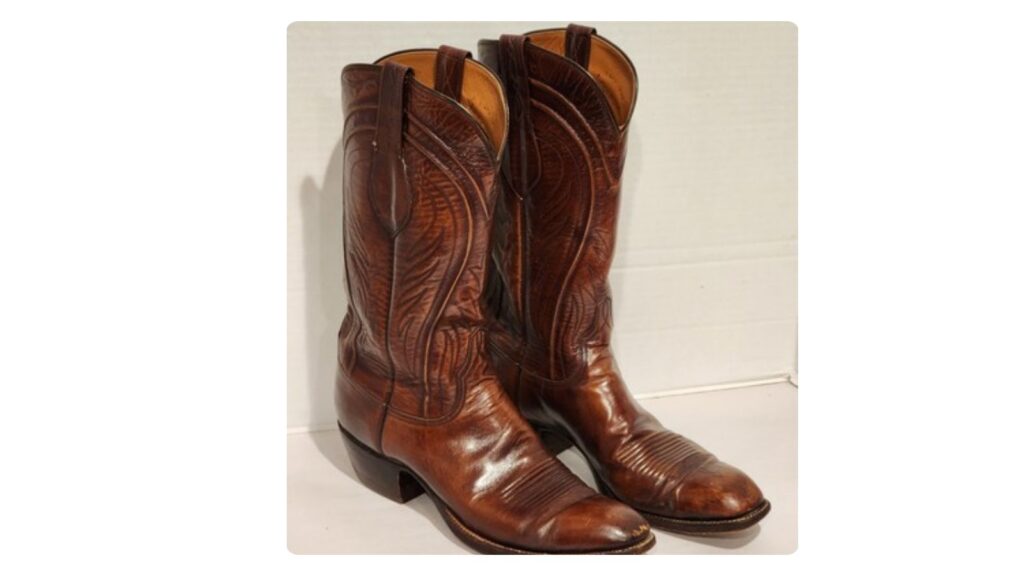
Salvatore Lucchese opened a bootmaking shop near Fort Sam Houston in San Antonio in 1883, and for most of a century the Lucchese name stayed tied to that one city and one family. The company was sold out of the family in 1970, and manufacturing moved from San Antonio to El Paso in 1986. Boots made before that move, stamped San Antonio on the sole rather than a different city, are the ones collectors specifically seek.
These pairs were built one at a time on a last the company still credits with giving Lucchese boots their close, comfortable fit, using heavier leather and denser stitching than later production-line pairs made after the move.
Clean examples in plain leather typically bring $150 to $300, with exotic skins like ostrich or lizard from the same era pushing toward $400 and above when condition holds up. Check the sole stamp for the San Antonio marking and a legible style number, both signs of an earlier pair. Hairline cracks near the vamp and a sole separated from the welt are the most common problems on a boot this old, and either one meaningfully lowers what a buyer should expect to pay.
6. Nocona Boot Co pull-on boots, pre-1999
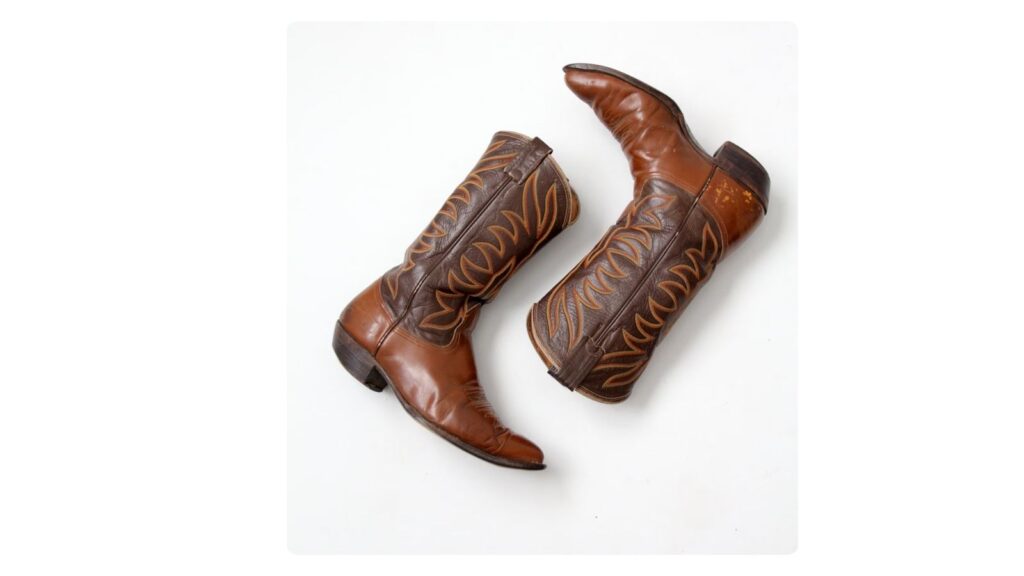
When H.J. Justin’s sons moved the family bootmaking business from Nocona to Fort Worth in 1925, his daughter Enid stayed behind. She borrowed five thousand dollars, hired seven employees, and started the Nocona Boot Company in the same small Texas town, becoming one of the first women to run a bootmaking operation in the country. Justin Industries bought the company from her in 1981, and the Nocona factory itself kept running until the plant finally closed in 1999.
Plain leather pull-on boots from any point in that long run show up regularly at estate sales and thrift stores. Clean pairs typically sell for $35 to $130 depending on age, color, and condition, with a legible “Made in USA” stamp adding some confidence that a pair predates the 1999 closure.
Check the toe for separation from the sole and flex the vamp to see whether the leather has dried out. A boot that creases sharply and holds the crease is past easy reconditioning. Two-tone leather combinations, common on Nocona’s dressier styles, tend to bring more than a plain single-color pair in the same condition.
7. Dan Post full quill ostrich leg boots
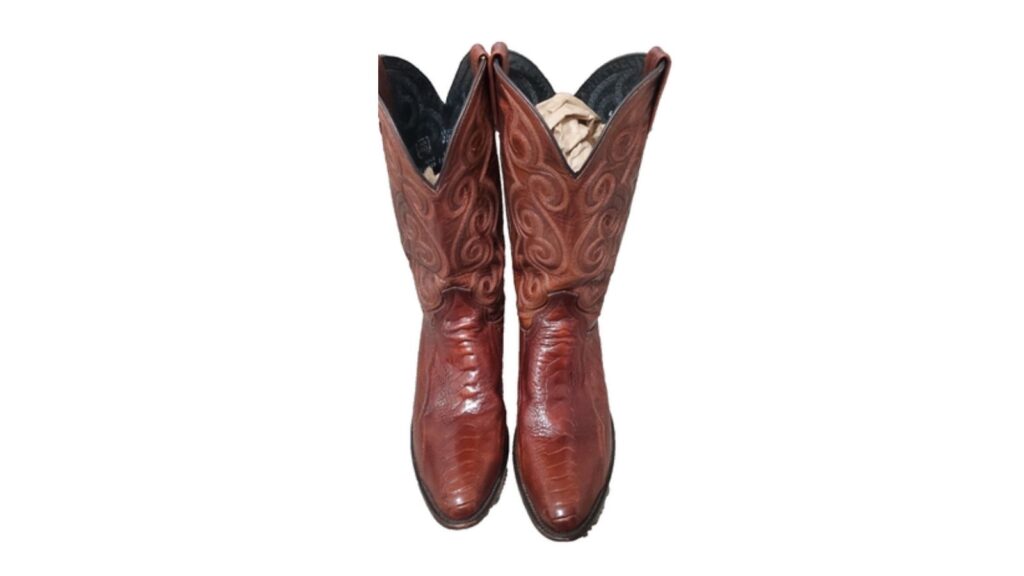
Dan Post launched in 1965 with one specific complaint about every other cowboy boot on the market: they all needed a long, uncomfortable break-in period. The company built its reputation on exotic skins paired with a softer, more pre-broken-in feel, making it a popular step up from Acme or Justin for buyers who wanted something fancier without going fully custom.
Ostrich leg, the scaled, bumpy-textured skin taken from the bird’s leg rather than the smoother body, became one of Dan Post’s signature exotics. It’s instantly recognizable and durable enough that plenty of vintage pairs have survived in wearable shape.
Clean examples typically bring $100 to $200, with the exact figure depending on how supple the leg skin has stayed and whether the sole and heel are original. Ostrich leg flexes more easily than most exotics, so cracking is less of a concern than with smooth ostrich or lizard, but check the vamp crease anyway. A Dan Post label with no city or factory listed generally points to an older pair, since the company has changed ownership and manufacturing locations more than once since the 1960s.
8. Hyer boots, pre-1977 Olathe
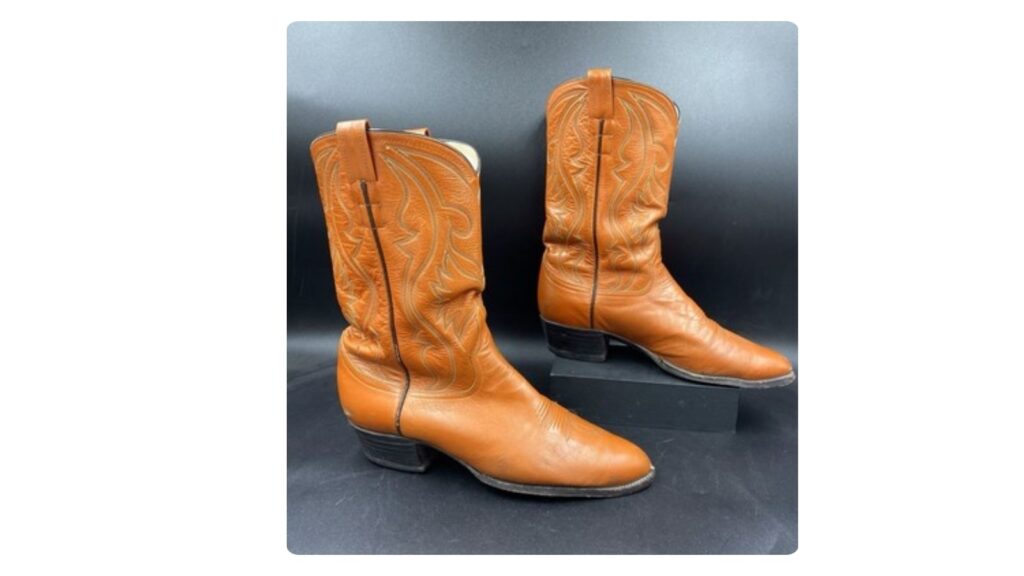
Depending on who’s telling it, the modern cowboy boot was either invented or simply perfected in a small shoemaking shop in Olathe, Kansas, in 1875, when a cowboy riding home from the Kansas City stockyards asked Charles Hyer for a boot different from his Civil War-style pair. Whatever the full truth, Hyer Boot Company grew into one of the largest handmade boot manufacturers in the country, outfitting cattlemen, rodeo performers, and film stars before the family sold the business in 1977, ending 102 years of continuous operation in the same Kansas town.
Because every Hyer boot was handmade in small batches rather than mass-produced, surviving pairs are genuinely uncommon, and the name carries real weight with anyone who knows the history.
Clean examples with legible markings and no major repairs typically bring around $120 in solid, wearable condition, with earlier or especially well-preserved pairs going higher. Given the age involved, almost any surviving pair will show some wear, so focus on whether the sole and heel are intact, the stitching has held, and the leather hasn’t dried to the point of cracking. A pair with its original box is a genuine rarity.
9. Justin exotic snake and lizard boots
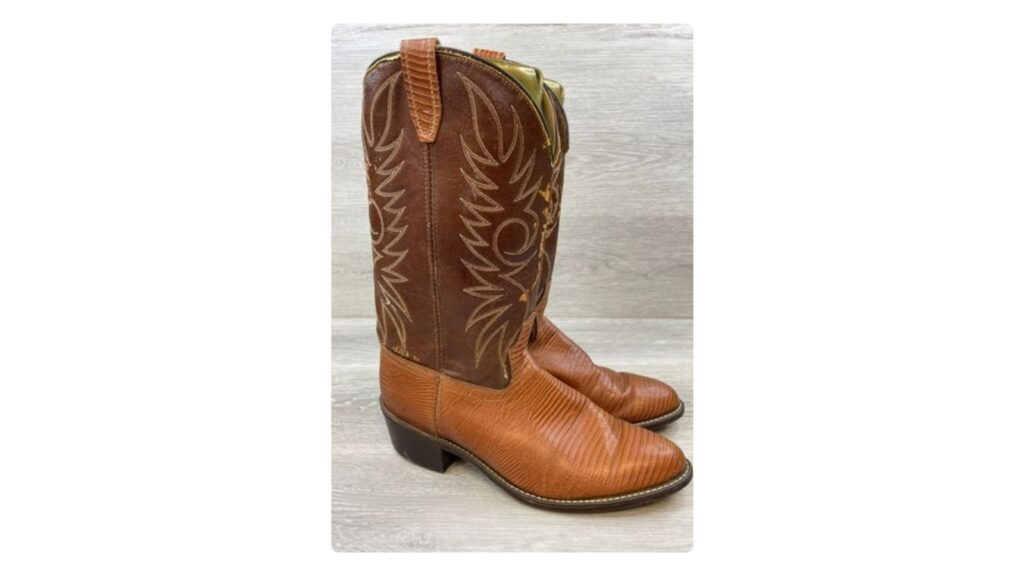
Justin’s exotic-skin line grew alongside its everyday Ropers as the company expanded through the twentieth century, giving buyers a dressier option built on the same reputation H.J. Justin built delivering boots to cattlemen along the Chisholm Trail. Snakeskin and lizard were the two most common exotics Justin worked with, usually paired with a plain leather shaft and a contrasting exotic vamp.
Python, rattlesnake print, and teju lizard are the varieties that turn up most often at estate sales, since they were more affordable than full exotic boots and sold in higher volume through the 1970s and 80s.
Clean vintage pairs typically bring $60 to $200, depending on the type of skin, how vivid the scale pattern still is, and whether the boot sits flat. Exotic leather is more prone to drying out than cowhide, so check carefully for cracking across the vamp where the boot flexes most. A legible Justin label and visible stitching along the seam where exotic meets leather are good signs the boot hasn’t been re-soled or repaired in a way that hurts its value.
10. Acme snakeskin cowboy boots
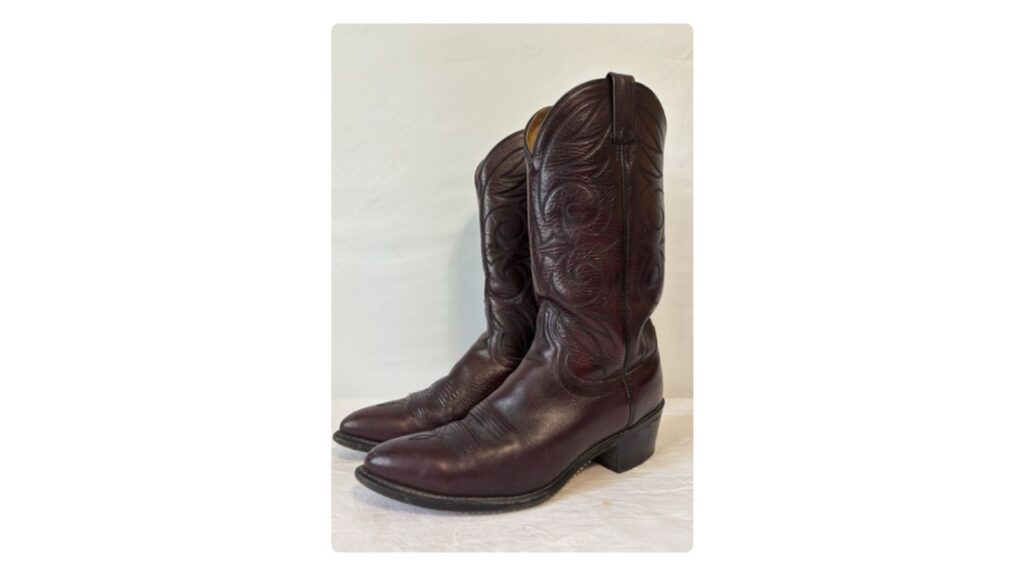
Acme’s snakeskin boots sat a notch below the company’s hand-inlaid “Pee Wee” styles in the catalog but still used real snake or lizard skin on the vamp, paired with a plain leather shaft to keep costs down. They were marketed as an affordable way into exotic western footwear during the decades when Acme was turning out more cowboy boots than any other company in the country.
These are some of the most commonly found vintage boots at thrift stores and estate sales today, since Acme made enormous volumes of them for decades.
Clean pairs typically sell for $35 to $100, with condition mattering more than any other factor since the skin itself was never especially rare. Check the scale pattern for flaking or lifting, which happens as the thin exotic leather ages, and look at where the snake or lizard panel meets the plain leather for separation. A cloth ACME tag inside the shaft confirms it’s an original rather than a later boot using a similar design.
11. Larry Mahan signature boots, 1970s
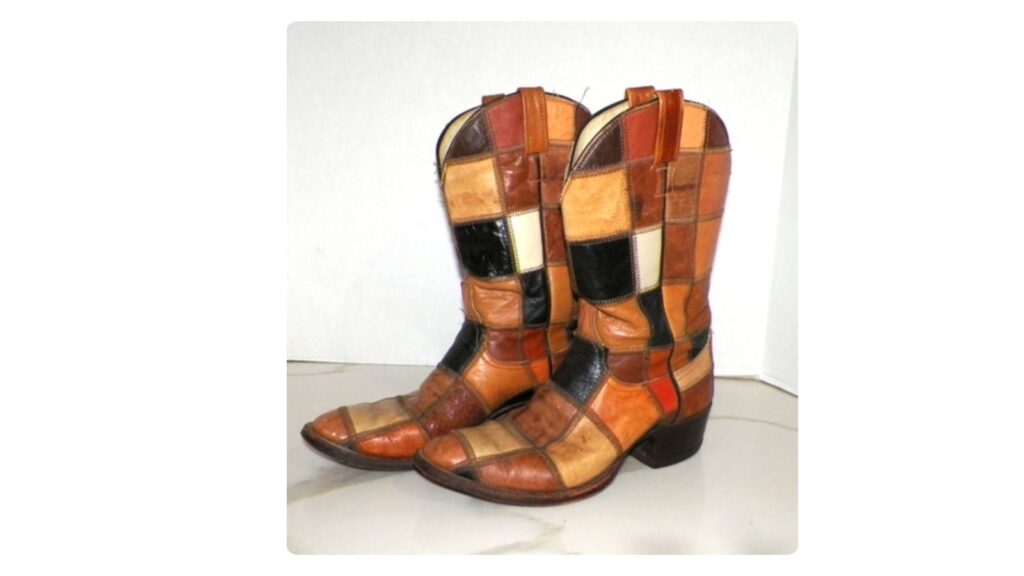
Larry Mahan won six world all-around rodeo titles in the 1960s and 70s, and the boot line that carried his name capitalized on that fame with hand-tooled leather, patchwork panels, and embroidered designs well beyond what a standard working boot offered. Justin later acquired the Larry Mahan line from Hyer Boot Company, folding it into its own stable of brands.
The patchwork and hand-tooled styles from the 1970s are the ones collectors chase hardest, since they show off the decorative work that made the line distinctive in the first place.
Clean examples typically bring $150 to $250, with exotic-skin versions in python or ostrich often pushing higher when they turn up. Embroidery and tooling are the first things to check, since loose threads or worn-through leather in a decorative panel are far more noticeable, and far more costly to repair, than wear on a plain boot. A legible Larry Mahan label and intact stitching along any patchwork seams are what separate a display-worthy pair from one only good for parts.
12. M.L. Leddy’s custom handmade boots
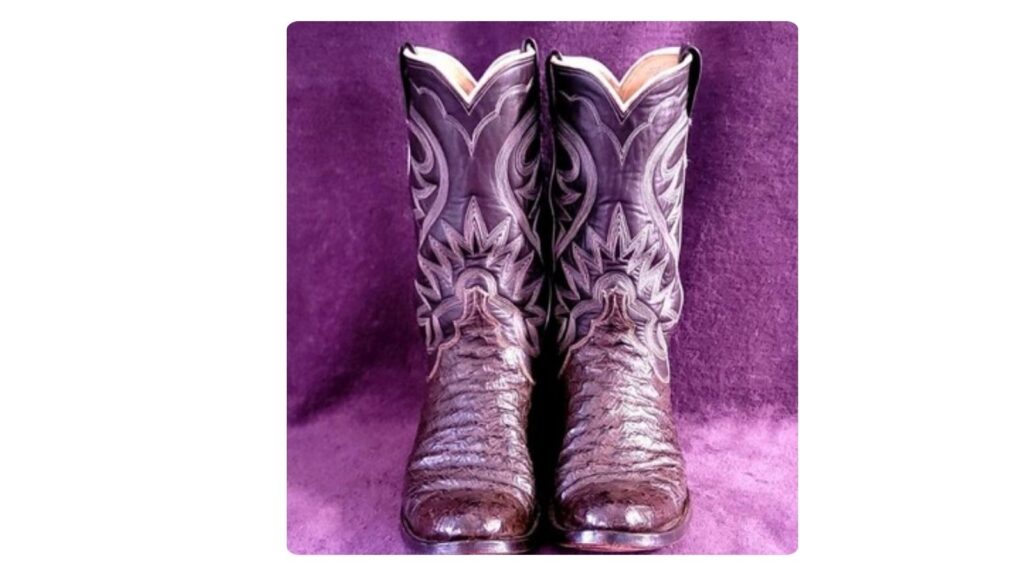
M.L. Leddy began making boots and saddles in Brady, Texas, in 1922, then moved the operation fifty miles west to San Angelo in 1936, where the company still builds custom boots to order today, one customer’s measurements at a time, recorded in the same style of leather-bound ledger the shop has used for a century. New custom Leddy’s boots start at well over a thousand dollars, which is part of why a secondhand pair is worth a second look.
Every Leddy’s boot was made to one specific customer’s feet, so no two vintage pairs are quite alike, and the fit on a stranger’s foot can vary more than with a factory boot built to standard sizing.
Clean plain-leather pairs typically bring $150 to $300, while exotic skins like full quill ostrich can run $400 to $650 or more in excellent condition. Check the sole for the Leddy’s stamp and look closely at the stitching, which tends to be noticeably finer than on a mass-produced boot. Any repair work should be disclosed, since custom boots lose much of their appeal once they’ve been altered for a different foot.
13. Nocona exotic skin boots
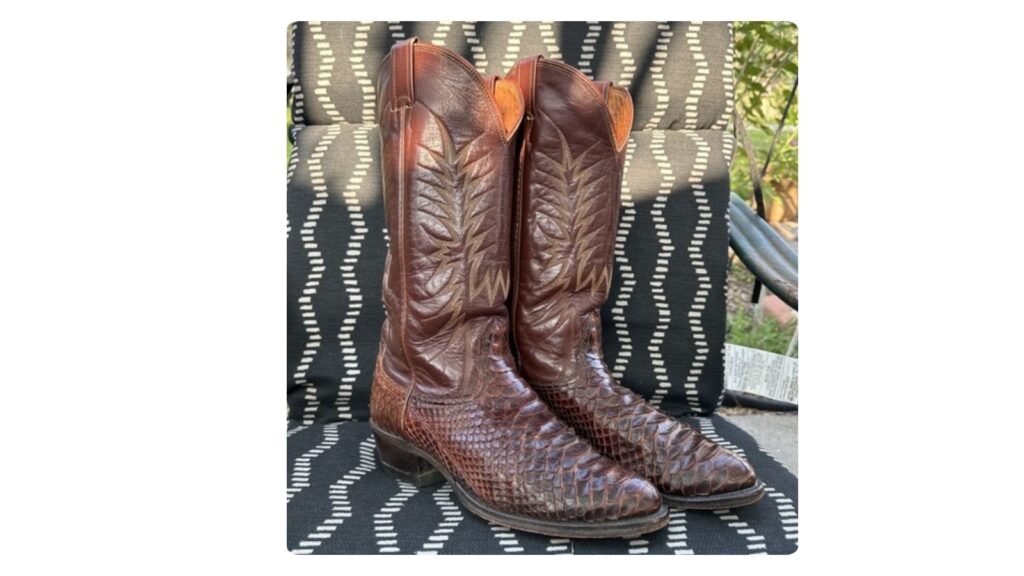
Nocona built its exotic line the same way its competitors did, pairing snake, lizard, or ostrich panels with the company’s own pull-on construction, sold alongside the plain leather boots that made Enid Justin’s company one of the most successful bootmaking operations in the country. Python and ostrich turn up most often in exotic Nocona pairs from the 1970s through the 1990s.
These sit a step up from the brand’s everyday pull-ons in both materials and price, and condition swings the value more dramatically than with plain leather since exotic skin shows damage more visibly.
Clean vintage examples typically bring $125 to $200, with new-old-stock pairs that were never worn pushing toward the higher end. Check the exotic panel closely for cracking or lifting scales, especially around the vamp crease where the boot flexes with every step. A “Made in USA” stamp and a legible style number inside help confirm a pair predates the Nocona factory’s 1999 closure, after which the brand name continued on boots made elsewhere.
14. Tony Lama exotic ostrich and lizard boots
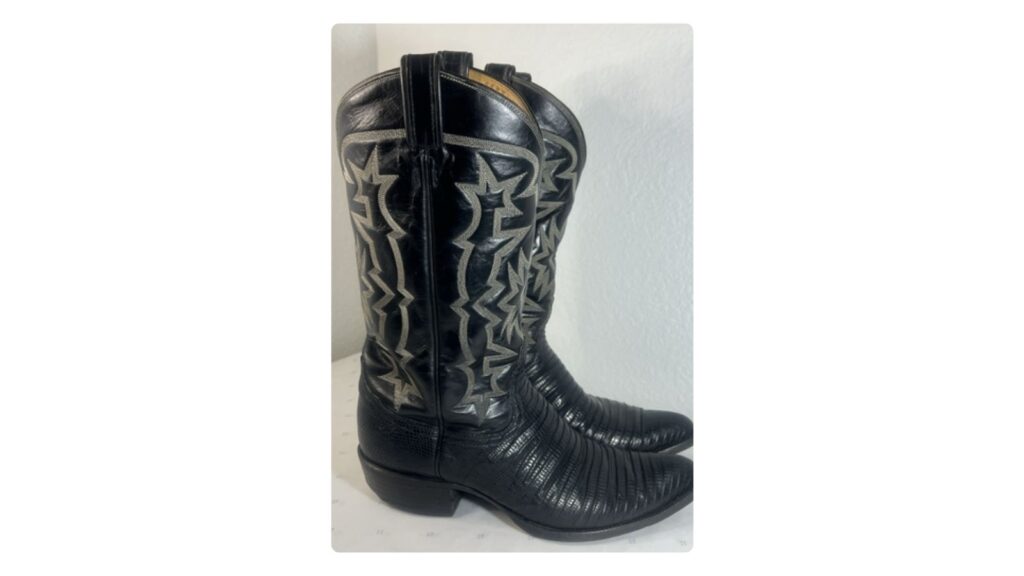
Alongside its plain leather Black Label line, Tony Lama built a reputation on exotic skins, and the “Gold Label” medallion that appears inside some pairs marks the company’s higher exotic tier from the same era its mainline boots were still made entirely in El Paso. Smooth ostrich, full quill ostrich, and teju lizard are the varieties that show up most often secondhand.
Full quill ostrich, with its raised quill bumps across the leg and vamp, is generally the most sought-after of the three, since the texture is unmistakable and harder to convincingly fake than a plain exotic print.
Clean vintage pairs typically bring $90 to $250 depending on the skin type and how well the exotic leather has held up. Lizard is more prone to drying and cracking than ostrich, so flex the vamp gently and look closely at the scale pattern before buying. A legible style number and an intact Gold Label or similar medallion inside the shaft are good signs the boot hasn’t been heavily altered or repaired.
15. Olathe Boot Co handmade boots
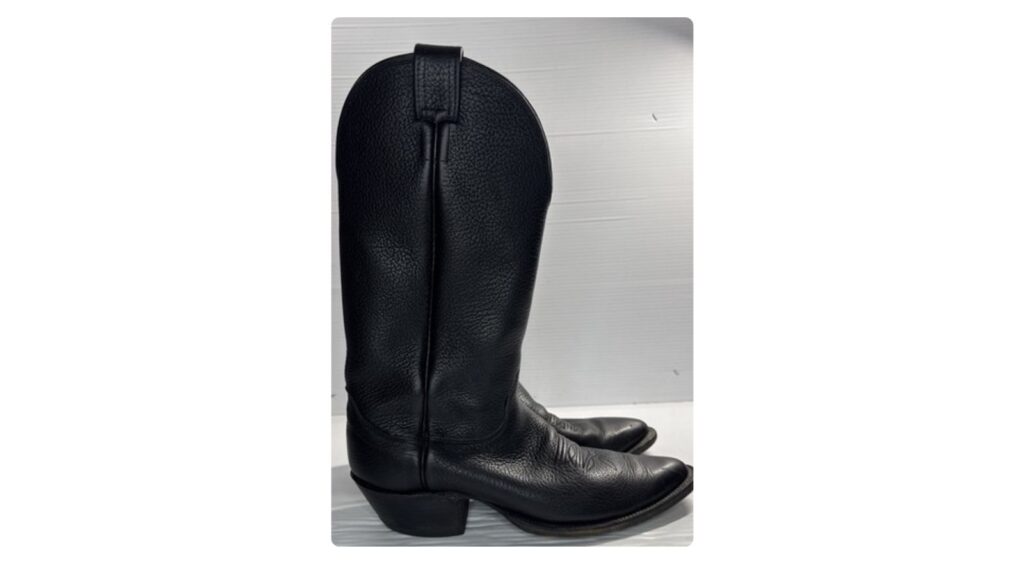
Olathe Boot Company opened in 1975 in the same Kansas town where the Hyer Boot Company had operated for a century before selling its name and equipment away. Several former Hyer employees joined the new company, carrying the town’s bootmaking tradition forward under a different name, and Olathe remains in operation today building boots largely by hand.
Vintage Olathe pairs don’t carry quite the name recognition of Justin or Tony Lama outside collector circles, which keeps prices more accessible even though the construction quality rivals much pricier brands.
Clean examples typically bring $55 to $120, with elaborate “buckaroo” styles featuring tall colorful shafts and flame stitching running higher when they turn up in good condition. Check the stitching along the welt and the condition of the sole, since these were working boots built for ranch use and plenty saw hard years before landing at a thrift store. A legible Olathe label and solid, unseparated stitching are what to look for before paying toward the top of that range.











