
You call three electricians about a flickering breaker panel, and the earliest appointment you can get is five weeks out. Multiply that by every plumber, dental hygienist, and airplane mechanic in the country, and you start to understand why so many essential jobs are suddenly almost impossible to fill.
About 72,700 electrician jobs open up every single year through 2034, and the trade still can’t fill an apprenticeship class fast enough, let alone finish training everyone who starts one. The same story is playing out in plumbing, dental offices, funeral homes, and the maintenance crews that keep commercial jet engines running. High schools cut most of their shop and trade programs a generation ago, four-year degrees got pushed as the only respectable path, and the workers who used to fill these roles are now retiring by the thousands with far too few people trained to replace them.
None of these jobs can be handed off to a chatbot. Nobody is asking an AI model to climb inside a jet engine, run new wiring through a two-hundred-year-old house, or hold someone’s hand through a family funeral. That’s exactly why these shortages keep getting worse instead of quietly fixing themselves.
Table of contents
- Electricians
- Plumbers, pipefitters, and steamfitters
- HVAC and refrigeration technicians
- Welders
- Diesel and heavy equipment technicians
- Aircraft mechanics
- Elevator and escalator technicians
- Wind turbine technicians
- Power line workers
- CNC machinists and tool and die makers
- Dental hygienists
- Veterinary technicians
- Respiratory therapists
- Diagnostic medical sonographers
- Home health and personal care aides
- Funeral directors and embalmers
- Water and wastewater treatment operators
- Airline pilots
Electricians

Electricians earn an average $63,190 a year, and that number keeps climbing as demand for wiring outpaces the supply of people who know how to run it. Data center construction has become such a draw for licensed electricians that ordinary projects unrelated to AI or cloud computing now compete for the same shrinking pool of workers, and often lose.
Electrical work makes up 45 to 70 percent of the total construction cost on a typical data center, which pulls experienced electricians toward multi-year megaprojects and away from ordinary home and business jobs. Meanwhile, a four or five year apprenticeship remains the only real path into the trade, and apprenticeship slots can’t be created overnight the way a coding bootcamp seat can.
Somebody still has to physically run the wire, read the code, and flip the breaker. As electrification of vehicles, homes, and the power grid keeps accelerating, that somebody is getting harder to find.
Plumbers, pipefitters, and steamfitters

A licensed plumber earns a median $62,970 a year, and roughly 44,000 new plumbing jobs open every year, mostly to replace workers aging out of the trade. Emergency plumbers now routinely book weeks in advance in many markets, not because pipes are breaking more often, but because there aren’t enough licensed people available to answer the call.
Becoming a plumber typically means four to five years of a paid apprenticeship on top of passing a state licensing exam, and most states require that license before anyone can legally touch a gas line or a main water supply. That’s a serious time commitment compared to a two-year associate’s degree, and it’s part of why fewer young workers are entering the field even as demand for new construction and aging pipe replacement keeps climbing.
Every new apartment building, hospital wing, and kitchen renovation needs someone who can physically install and pressure-test the piping, standing in the room, tools in hand. There’s no app for that.
HVAC and refrigeration technicians
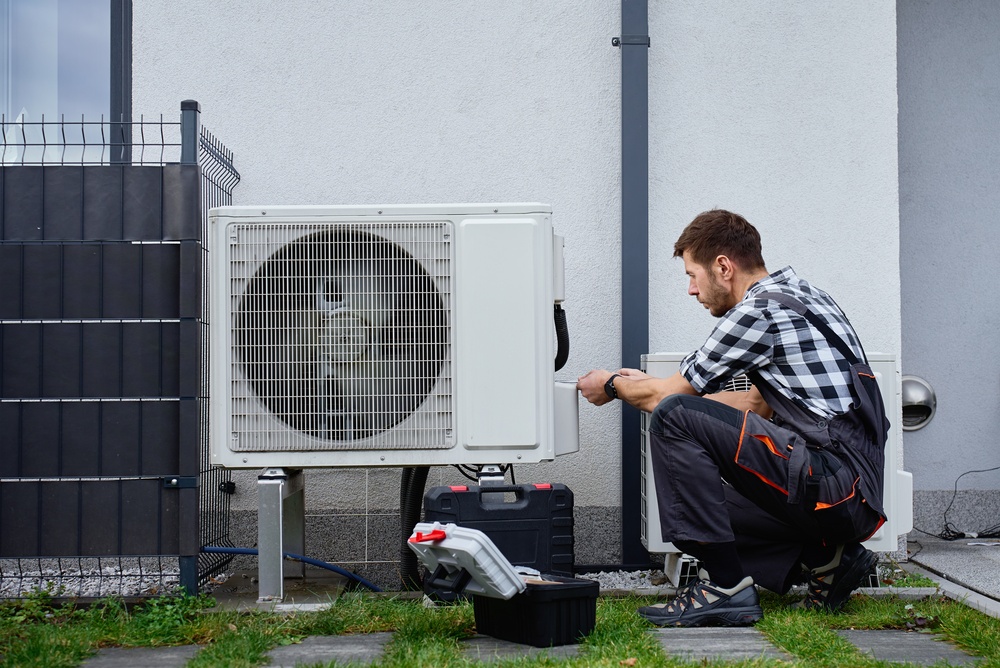
Heating and cooling technicians earn a median $59,810 a year, with 8 percent job growth projected through 2034 and about 40,100 openings expected every year, well above average for the broader job market. Summers keep getting hotter, more homes are switching from gas furnaces to electric heat pumps, and every one of those systems eventually needs someone who understands refrigerant lines and electrical controls to install or repair it.
The training path here is shorter than plumbing or electrical work, often a postsecondary certificate paired with an apprenticeship, but the job is physically brutal in a way that scares off plenty of otherwise interested workers. Climbing into a sweltering attic in July or crawling into a freezing crawl space in January comes with the territory, no matter how good the eventual paycheck looks on paper.
As homes and commercial buildings keep adding more complicated heating, cooling, and air quality systems, the technicians who can actually service them are only getting harder to find.
Welders

Welders earn a median $51,000 a year, but that number understates how badly the industry needs new people. Industry groups have warned for years that the country is heading toward a shortfall of more than 300,000 welders by 2029, driven almost entirely by an aging workforce edging toward retirement.
At one welding program in Springfield, Missouri, enrollment has dropped from around 120 students to about 80 in just six years, even as local manufacturers beg for graduates. Program directors say output would need to more than double, every year, for years, just to catch up with the coming wave of retirements. Part of the problem is image. Welding still gets dismissed as a fallback career instead of a skilled trade that pays well and can travel anywhere in the world there’s a pipeline, shipyard, or factory.
Automated welding exists for repetitive factory work, but it hasn’t come close to replacing the skilled manual welders needed for custom fabrication, pipeline work, and repairs that never look the same twice.
Diesel and heavy equipment technicians
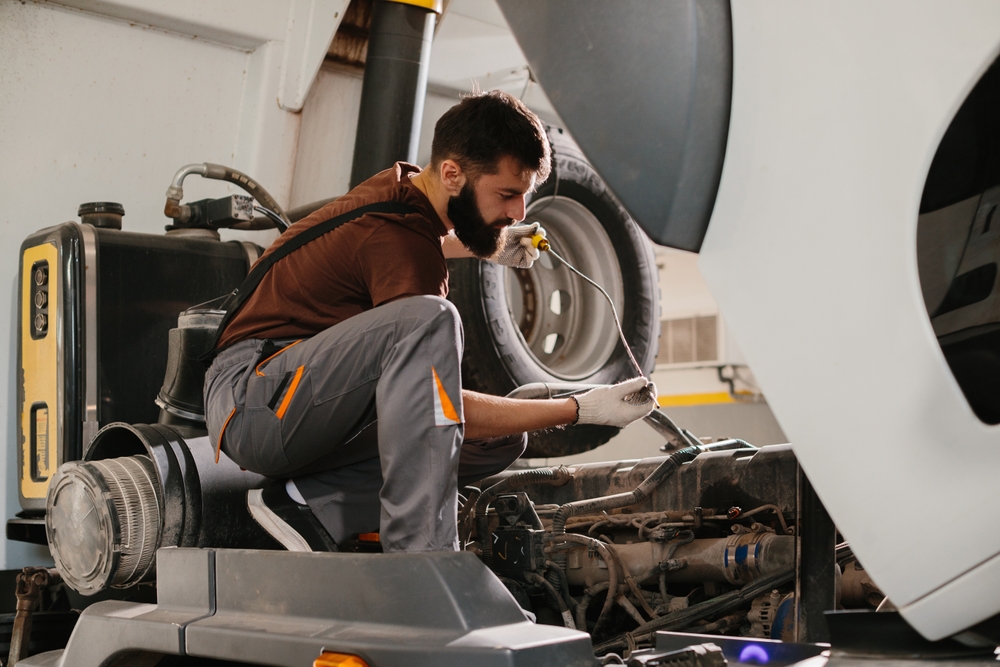
Diesel technicians earn a median $60,640 a year, and about 26,500 openings appear every year, most of them because someone retired or transferred out rather than because the field is expanding quickly. Every long-haul truck, farm combine, city bus, and piece of construction equipment on the road runs on a diesel engine that eventually needs a technician who can actually diagnose what’s wrong with it.
Modern diesel engines are loaded with onboard computer systems now, so employers increasingly want technicians who’ve completed a postsecondary program in diesel repair rather than someone who picked up the trade purely on the shop floor. That raises the bar to entry right as fewer young people are choosing vocational programs over a four-year degree, leaving shops competing hard for a shrinking pool of qualified candidates.
Freight, agriculture, and construction all depend on someone being able to get a broken-down truck or excavator running again, and that work has to happen in person, hands on the engine.
Aircraft mechanics

Aircraft mechanics earn a median $78,680 a year, and avionics technicians, who work on the electronics inside a plane, earn slightly more at $81,390. Around 13,100 openings are expected every year through 2034, and North America alone is projected to need roughly 123,000 new aviation maintenance technicians over the next twenty years just to keep the current fleet flying and support new aircraft coming into service.
Becoming an aircraft mechanic almost always requires completing a program certified by the Federal Aviation Administration, and there simply aren’t enough of those schools producing technicians at the rate airlines and repair stations need them. An aging mechanic workforce is retiring alongside the pilots making headlines, which puts airlines in direct competition with each other, and with the military, for a limited supply of certified people.
There’s no substitute for a licensed mechanic personally inspecting and signing off on an aircraft before it flies. Federal law requires that inspection, and no algorithm can put its name on that line.
Elevator and escalator technicians

This might be the best-paying trade most people have never heard of. Elevator and escalator technicians earn a median $106,580 a year, more than most electricians or plumbers, and the only formal education requirement is a high school diploma. The catch is getting in. Almost everyone in the field learns through an apprenticeship, and those classes are notoriously small and hard to break into, which keeps the total workforce tiny relative to the demand.
There are only about 24,200 elevator and escalator technicians in the entire country, with that workforce expected to grow just 5 percent through 2034 while adding only around 2,000 openings a year. Every high-rise, hospital, hotel, and parking garage in the country depends on a small number of licensed technicians to keep vertical transportation running safely, and that imbalance gets tighter every year a new building goes up.
The job involves crawling into cramped machine rooms and working at real heights inside a shaft, which is part of why it hasn’t attracted the crowds you’d expect for six-figure pay and no student debt.
Wind turbine technicians

Wind turbine technicians hold the title of the fastest growing job in the entire country. Employment is projected to jump nearly 50 percent between 2024 and 2034, a growth rate no other occupation in America comes close to matching. The median pay is $62,580 a year, and the typical entry requirement is a postsecondary certificate, not a four-year degree.
Despite that growth rate, most people couldn’t describe what a wind turbine technician actually does, let alone name a training program near them. That’s part of the problem. The specialized certificate programs that teach this work are still relatively new and concentrated in a handful of states with heavy wind investment, so plenty of potential workers elsewhere never hear about the career at all.
The job itself involves climbing hundreds of feet up a tower and working inside a cramped nacelle, often in high wind, which is exactly the kind of hands-on, physically demanding work that can’t be handed off remotely. As more turbines go up across rural America, the technicians who service them will stay in short supply.
Power line workers

Line workers who install and repair high-voltage power lines earn a median $92,560 a year, with 7 percent job growth projected through 2034 and about 10,700 openings expected every year. The country’s power grid is aging, storms are knocking it down more often, and every mile of new solar or wind power still needs a physical line connecting it to homes and businesses.
The job is dangerous, which is part of why the applicant pool stays thin. Line workers deal with lethal voltage at real heights, often in bad weather, and the training involves years of technical instruction and supervised apprenticeship before anyone lets a new hire near a live line unsupervised. That combination of risk and required training time scares off plenty of people who would otherwise be drawn to the pay.
When a storm knocks out power to a whole region, it’s a line worker climbing the pole in the middle of the night to fix it, not a piece of software.
CNC machinists and tool and die makers
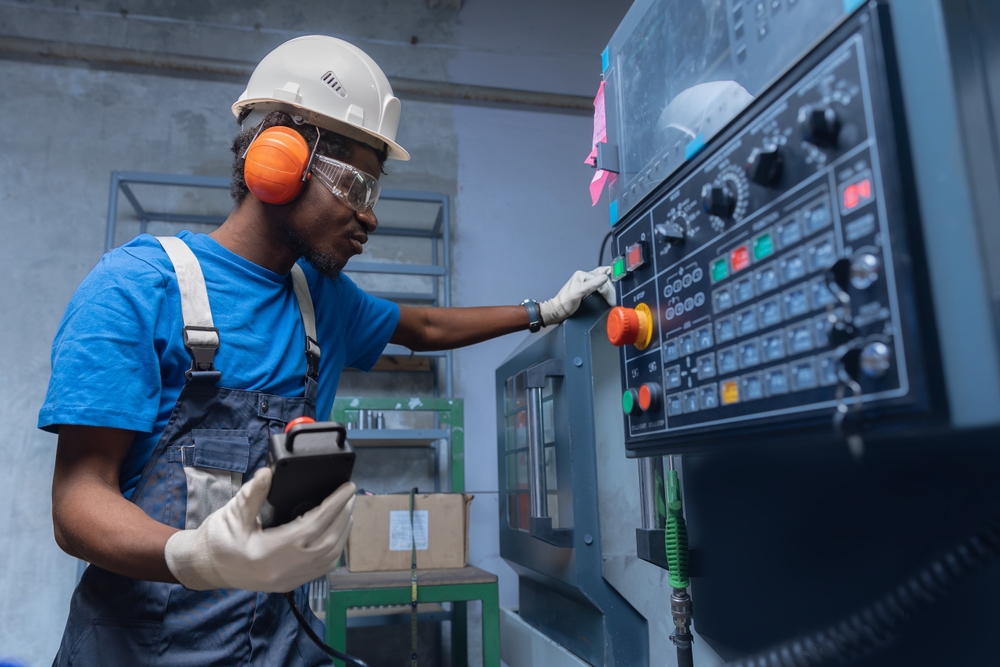
Machinists earn a median $56,150 a year, and tool and die makers, who build the precision molds and tools other manufacturing depends on, earn $63,180. Overall employment in this field is actually projected to shrink slightly through 2034, but that number is misleading. The country still needs roughly 34,200 new machinists and toolmakers every single year, almost entirely because the current workforce is retiring faster than anyone can replace it.
Industry surveys show close to three-quarters of the tool and die workforce is over 45, and about two in five are already eligible to retire or will be within seven years. Most high schools stopped offering machine shop classes decades ago, so the pipeline that used to feed this trade largely disappeared, right as manufacturers try to bring more production back to the United States.
A machinist has to physically set up a machine, read a blueprint, and check tolerances down to a fraction of a thousandth of an inch. That kind of precision work still needs a trained person standing at the machine, even as the machines themselves get more advanced.
Dental hygienists

Dental hygienists earn on average $94,260 a year for a job that typically requires a three-year associate’s degree rather than a four-year one, with 7 percent growth projected through 2034 and about 15,300 openings a year. That’s a strong return on a relatively short and affordable education, and dental offices across the country are still struggling to keep chairs staffed.
Part of the bottleneck isn’t interest, it’s capacity. Dental hygiene programs need supervised clinical training with real patients, and accredited programs can only take as many students as they have clinical seats and instructors for. That cap has kept the pipeline narrower than actual demand for years, especially as an aging population keeps more of its natural teeth and needs more regular preventive care to keep them.
The work itself, cleaning teeth, taking x-rays, screening for oral disease, still requires a licensed person physically in the room with the patient.
Veterinary technicians
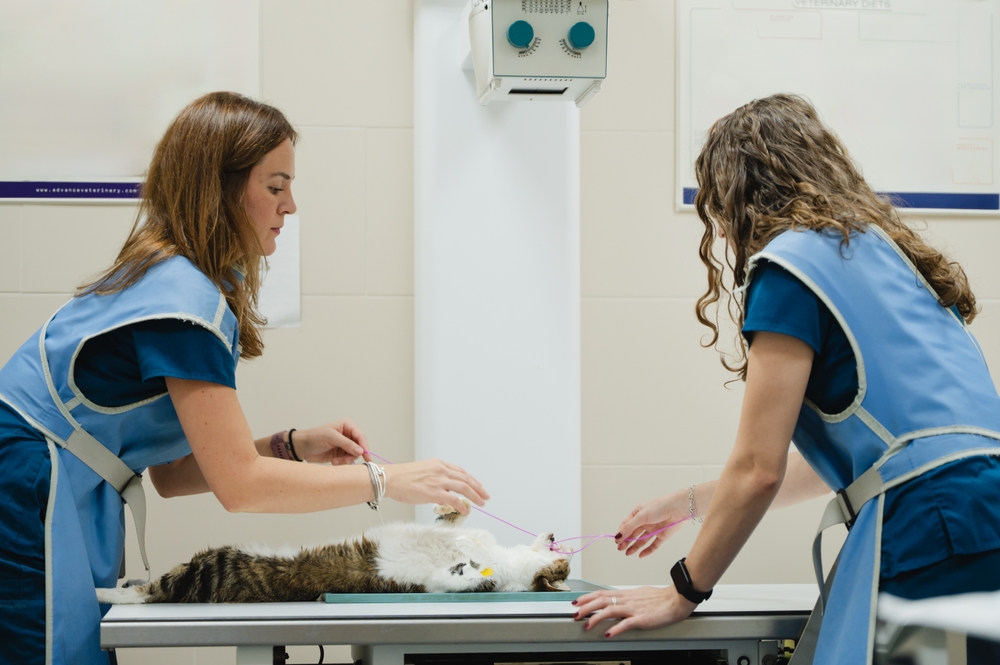
Veterinary technicians earn a median $45,980 a year, which is modest for a job that typically requires a two-year associate’s degree, a state licensing exam, and skills that overlap heavily with human nursing. Employment is still projected to grow 9 percent through 2034, much faster than average, as pet ownership and spending on veterinary care keep climbing.
That mismatch between required training and actual pay is a big part of why clinics everywhere report they can’t keep techs on staff. Veterinary technology programs require the same kind of supervised clinical hours as human nursing programs, but the pay ceiling is a fraction of what a human nurse eventually earns, so plenty of qualified people burn out or leave for better-paying healthcare roles within a few years of getting licensed.
The role itself, drawing blood, running lab tests, monitoring anesthesia, comforting a scared animal, requires someone physically present and trained to read an animal’s condition in real time.
Respiratory therapists

Respiratory therapists earn a median $80,450 a year for work that typically only requires a two-year associate’s degree, with 12 percent job growth projected through 2034 and about 8,800 openings expected every year, four times faster than the average occupation. That’s one of the strongest pay-to-training ratios in healthcare, and hospitals still can’t hire fast enough.
An aging population means more chronic lung disease, more asthma, and more patients who need help breathing during and after a hospital stay, and all of that work requires a licensed respiratory therapist physically adjusting a ventilator or oxygen setup at the bedside. Every state except Alaska requires a license to practice, which keeps out anyone without formal training, but the associate’s degree programs that produce these therapists haven’t scaled up nearly as fast as hospital demand has.
Respiratory therapy is exactly the kind of job where a machine can display data, but a trained person still has to read a patient’s breathing, adjust settings by hand, and make judgment calls that keep someone alive.
Diagnostic medical sonographers

Sonographers, sometimes called ultrasound technicians, earn roughly $89,340 a year, with 13 percent job growth projected through 2034 and about 5,800 openings a year. That’s strong pay for a career that usually takes two years or less to train for, without the six-figure student debt a lot of other healthcare careers require.
Ultrasound has become the go-to tool for diagnosing everything from pregnancy complications to heart problems, partly because it doesn’t involve radiation and can be done right at a patient’s bedside. That growing reliance on ultrasound imaging has outpaced the number of accredited sonography programs, most of which cap enrollment because, like dental hygiene, they need enough clinical placements and hands-on supervision to actually train someone properly.
Reading an ultrasound image well enough to catch something dangerous takes real skill, and someone still has to physically hold the transducer and move it across a real person’s body.
Home health and personal care aides

Home health and personal care aides are projected to add more new jobs than almost any other occupation in the country, nearly 740,000 of them by 2034. Employment is expected to grow 17 percent over that period, much faster than average, as an aging population increasingly chooses to stay in its own home instead of moving into a facility.
The catch is pay. The average wage for this work is just $34,900 a year, low enough that plenty of people who could do this job, and who might be good at it, take retail or warehouse work instead for similar money and less physically and emotionally demanding hours. That pay gap is the single biggest reason agencies everywhere report they can’t find or keep enough aides, even as demand keeps climbing every year the baby boomer generation ages further.
This work can’t be automated. It means physically helping someone bathe, take medication, get out of bed, and stay safe in their own home.
Funeral directors and embalmers

Funeral service workers earn a median $59,420 a year, though funeral home managers typically earn more at $76,830 while morticians and funeral arrangers earn closer to $49,800. About 5,800 openings appear a year, and becoming licensed usually requires an associate’s degree in mortuary science, a supervised apprenticeship, and passing a state board exam, with most states also requiring applicants to be at least 21 years old.
That’s a longer and more specific path than most people realize exists for this career, and mortuary science programs remain a small, niche corner of higher education that most high school students never hear mentioned as an option. Meanwhile, the population that funeral homes serve keeps aging, and small, family-run funeral homes across the country report struggling to find licensed staff to replace owners who are retiring.
This is about as hands-on and personal a job as exists. Someone has to physically prepare a body, meet grieving families face to face, and manage the logistics of a funeral, and that has to be a licensed human being who shows up in person.
Water and wastewater treatment operators

Water and wastewater treatment operators earn a median $58,260 a year for work that only requires a high school diploma and on-the-job training, and the industry is heading into what officials have started calling a retirement cliff. Roughly a third of the entire water sector workforce is old enough to retire within the next decade, and sector projections show the industry could lose more than 27,500 operators by 2031 if the current pace continues.
Around 10,000 openings will need to be filled every year through 2034 just to keep systems staffed, even as public awareness of the career stays close to zero. Most people never think about who keeps their tap water safe or their sewage properly treated until something goes wrong, which makes recruiting into the field an uphill fight even with decent pay and no college debt required.
Every public water system in the country legally requires a certified human operator monitoring it, testing it, and responding when something breaks. That’s federal and state law, not a preference.
Airline pilots

Airline pilots earn a median $226,600 a year, one of the highest-paying careers on this entire list, and the country is still short an estimated 24,000 pilots as of this year. Roughly 4,300 airline pilots hit the mandatory retirement age of 65 every year, and that wave is expected to stay elevated for another two decades as the huge cohorts hired in the 1980s and 1990s age out.
Becoming an airline pilot is also just expensive and slow. Federal law requires 1,500 flight hours before a pilot can be hired at a regional airline, a rule put in place after a deadly 2009 crash, and getting from zero experience to that certification typically costs between $80,000 and $150,000 out of pocket. That’s a serious barrier for anyone without family money or a military background, and it’s a big part of why regional airlines have had to cut flights to smaller cities entirely.
Flying a commercial aircraft full of passengers is one of the last jobs anyone seriously expects to stay human-piloted for a long time. Every seat in that cockpit still needs a licensed, trained person, and there simply aren’t enough of them coming up behind the ones retiring.











