
You’re counting out change for a garage sale, or going through a shoebox of bills your grandfather kept in his sock drawer, and something looks off. The seal is brown instead of green. There’s a strange word stamped across the back. The portrait looks like Hamilton, but the whole bill feels wrong somehow. Before that $10 note goes back into circulation, it’s worth a second look.
The ten has gone through more redesigns than almost any other US bill, gold certificates, silver certificates, wartime emergency notes, and a run of brown and yellow seals that all look unfamiliar if you’ve never handled one. Most of what turns up is still just worth ten dollars. But a few categories below apply to a bill sitting in your wallet right now, not just to old currency pulled from an estate.
Table of contents
- 1. A $10 bill with a printing error
- 2. A $10 bill with a fancy or low serial number
- 3. A $10 star note from a small print run
- 4. A 1929 $10 bill with a brown seal
- 5. A 1934A $10 Hawaii note
- 6. A 1934A $10 North Africa note
- 7. A 1928 $10 gold certificate
- 8. A 1864 Confederate $10 note
- 9. A 1901 $10 Bison legal tender note
1. A $10 bill with a printing error
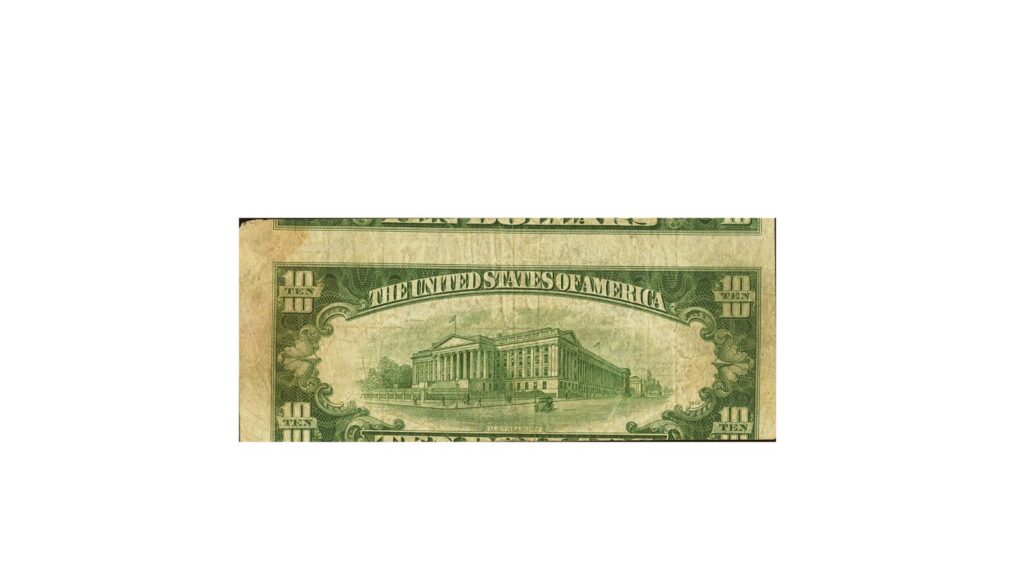
The Bureau of Engraving and Printing runs a tight quality control process, but mistakes still slip through. A misaligned print, where the design shifts off center or the margins come out uneven, is the most common error and the least dramatic, typically worth $25 to $500 depending on how far off it is. Ink smears are more eye-catching. A small dark blotch might add $50 to a bill’s value, while a dramatic streak across the whole note can push it well past $1,000. A $10 bill with a heavy, full-width ink smear has brought around $700 in the past.
Check both sides of any bill you get in change, especially fresh ones straight from a bank. Look at the margins, the serial numbers, and the ink itself for anything that looks off compared to a normal bill. Genuine errors are mechanical mistakes from the printing process, not damage from wear, and not alterations someone made later. Washing, bleaching, or trimming a bill to fake an error destroys its value rather than creating it. For anything that looks like a serious error, professional grading from PMG or PCGS protects the value and confirms it’s real.
2. A $10 bill with a fancy or low serial number
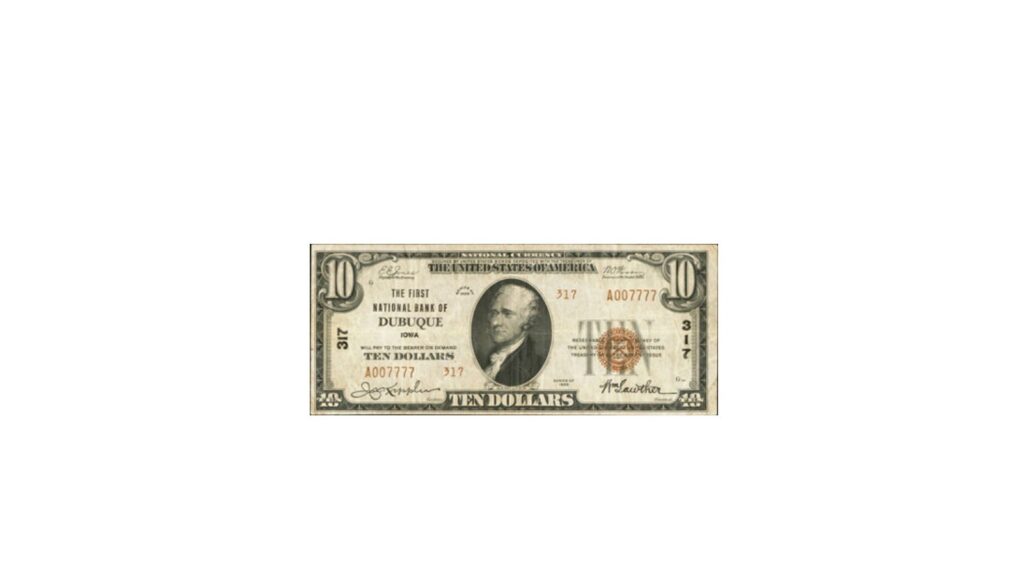
Every bill has an eight digit serial number printed twice on the front, and collectors chase specific patterns regardless of denomination. A ladder, where the digits run in order like 12345678, is the rarest and can bring anywhere from $9 to $10,000 depending on how clean the sequence is. Repeaters, radars that read the same forward and backward, and solid numbers where every digit matches all carry smaller but real premiums, often a few dollars up to a few hundred. Low serial numbers matter too. Anything under 100 can bring $10 to over $1,000, and a true 00000001 can bring as much as $15,000.
This is the one item on this list that applies to money you might be holding right now. The pattern matters more than the bill itself, so a $10 note with a ladder serial number is worth roughly the same as a $1 or $20 with the identical pattern. Check the two serial numbers on the front of any bill before you spend it. It takes a few seconds and costs nothing.
3. A $10 star note from a small print run
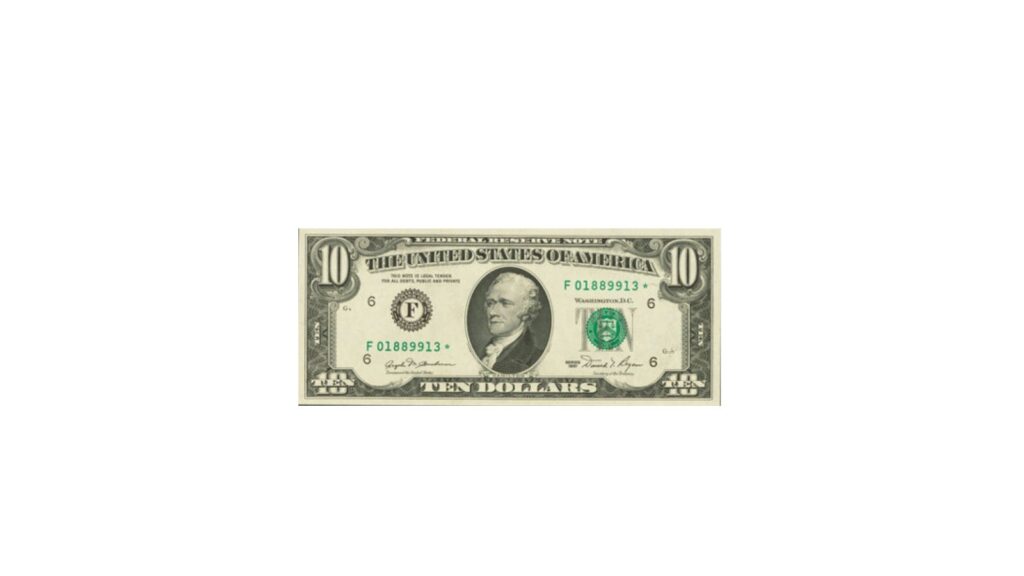
When a sheet gets damaged during printing, the Bureau replaces it with a star note, identified by a small star symbol at the end of the serial number instead of a letter. Most modern $10 star notes are common and worth close to face value in circulated condition, maybe $10 to $15. Crisp uncirculated examples run a bit higher, generally $15 to $30. The number that actually moves the price is the print run size for that specific series and Federal Reserve district. When the run comes in at 640,000 notes or fewer, especially the smaller runs of 320,000, 160,000, or 80,000, the premium can climb to $25 to $60 or more depending on condition.
Finding the run size takes a little digging. You need the series year printed near the portrait and the full serial number including the prefix letters, then you can look up the specific print run for that combination. Older star notes tend to have smaller runs and higher premiums, but a modern star note from an unusually small batch can still outperform an older one from a large print run. Keep any star note flat in a sleeve rather than folded in a wallet, since condition affects the value as much as rarity does.
4. A 1929 $10 bill with a brown seal
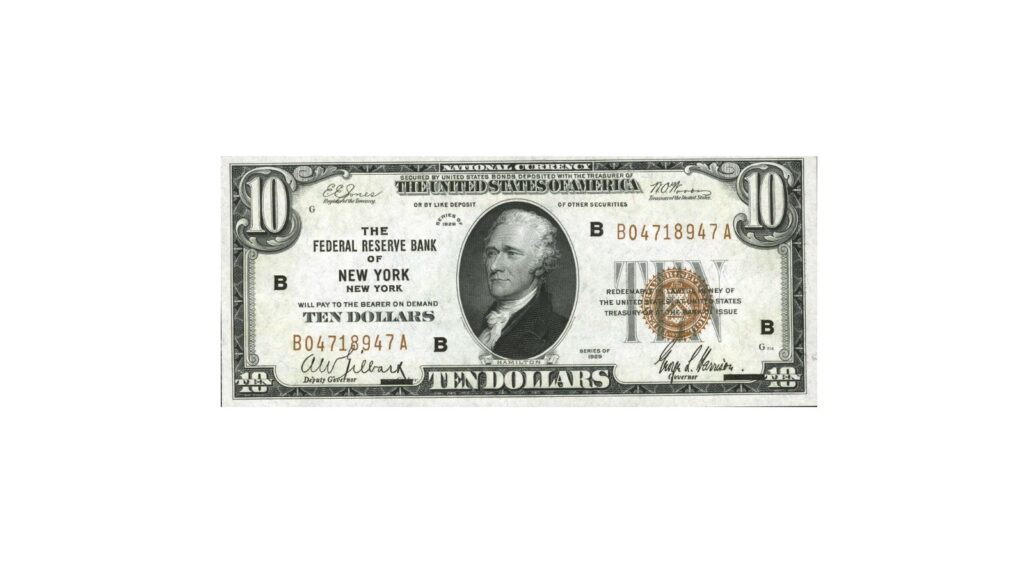
Two entirely different types of currency share this look, and telling them apart matters for value. Federal Reserve Bank Notes have “Federal Reserve Bank” printed in the bank title and a bold letter stamped four times on the bill. A common, non-star example in average circulated condition is worth about $20, while a bill that’s never been folded can bring $100 or more.
National Bank Notes are the other type, printed with the words “national bank” in the title and a serial number tied to the issuing bank’s charter. These depend heavily on which bank issued them. A note from a common bank typically brings $40 to $100, one from a slightly scarcer bank can reach $250, and notes from genuinely rare small town banks sometimes exceed $500. Before assuming a brown seal ten is worthless, look up the charter number and bank name printed on it. That single detail, more than the bill’s condition, is what separates a $40 note from a $500 one.
5. A 1934A $10 Hawaii note
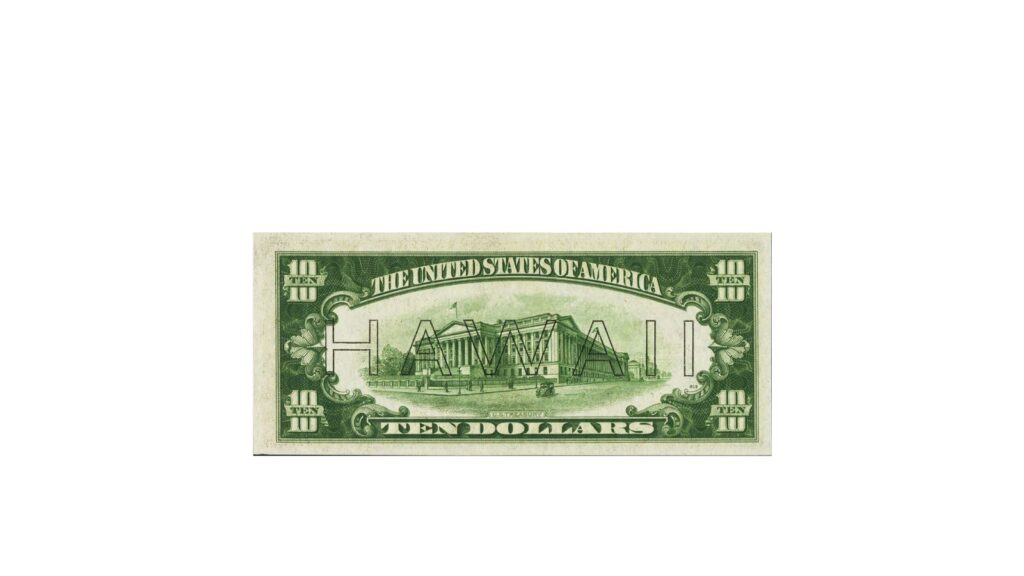
After the attack on Pearl Harbor, the Treasury feared a Japanese invasion of Hawaii and issued specially marked currency so it could be declared worthless if captured. These notes carry a brown seal and brown serial numbers, with the word HAWAII stamped in bold outline letters across the back and smaller overprints on the front. They circulated only in the islands from 1942 to 1944.
A standard circulated example is worth about $50 today, while a choice uncirculated note starts around $300 and climbs from there with grade. The design is simple compared to some wartime issues, with no rare block varieties to chase, which keeps it more of a solid historical piece than a jackpot find. Check that the brown seal and serial numbers are genuinely brown rather than the standard green seal, and confirm the HAWAII overprint appears clearly on both the front and back. Given how many of these were printed and how often they turn up in estate collections from Pacific veterans’ families, this is one of the more realistic wartime notes to actually own.
6. A 1934A $10 North Africa note
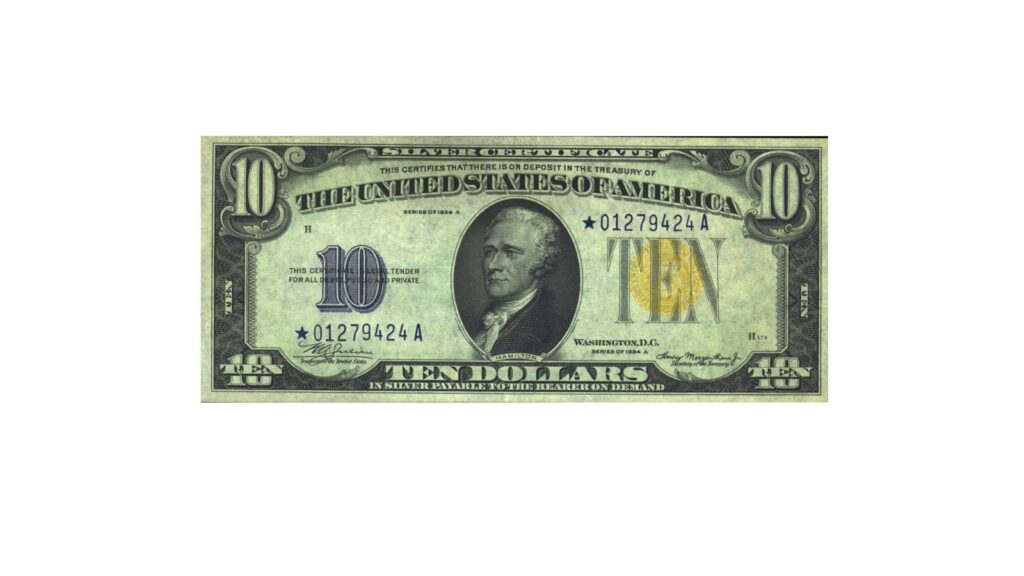
A companion to the Hawaii notes, this yellow seal silver certificate was issued for American troops in the North African and European theater starting in 1942, again so it could be voided if enemy forces captured large amounts of it. A circulated 1934A example typically brings around $30, with uncirculated notes starting near $200 and rising slowly.
There’s a rarer sibling worth knowing about. The plain “1934” version, without the A, is genuinely scarce and circulated examples start at $1,500. Because the two look almost identical, some fakes are made by removing the A from a common 1934A note to pass it off as the rare version, so any plain 1934 North Africa note should be checked closely for disturbed paper near the series date before anyone pays a premium for it. For most people, what turns up is the common 1934A, still a genuine piece of WWII history and worth setting aside rather than spending.
7. A 1928 $10 gold certificate
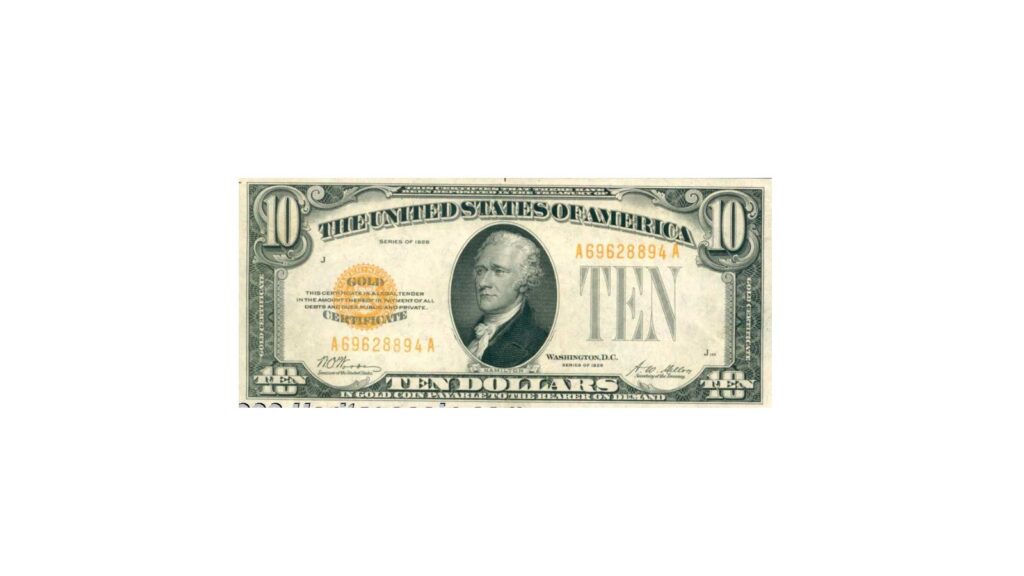
Before 1933, this bill could be exchanged for actual gold at a bank, which is why it carries a bright yellow gold seal instead of the familiar green one. It was the smallest denomination gold certificate ever issued in the small size format, which meant the Bureau printed a huge number of them, and that volume keeps common examples affordable today.
A lightly circulated example is worth around $75, while uncirculated notes climb into the hundreds and the scarcest high grade examples have reached close to $9,800. Star note replacements are worth considerably more than a standard bill in the same condition. Confirm the seal is genuinely gold or yellow rather than green before getting excited, since a worn green seal Federal Reserve Note can look similar under bad lighting. This is a good starter piece for anyone curious about old currency because genuine examples aren’t hard to find, even if the truly high grade ones are.
8. A 1864 Confederate $10 note
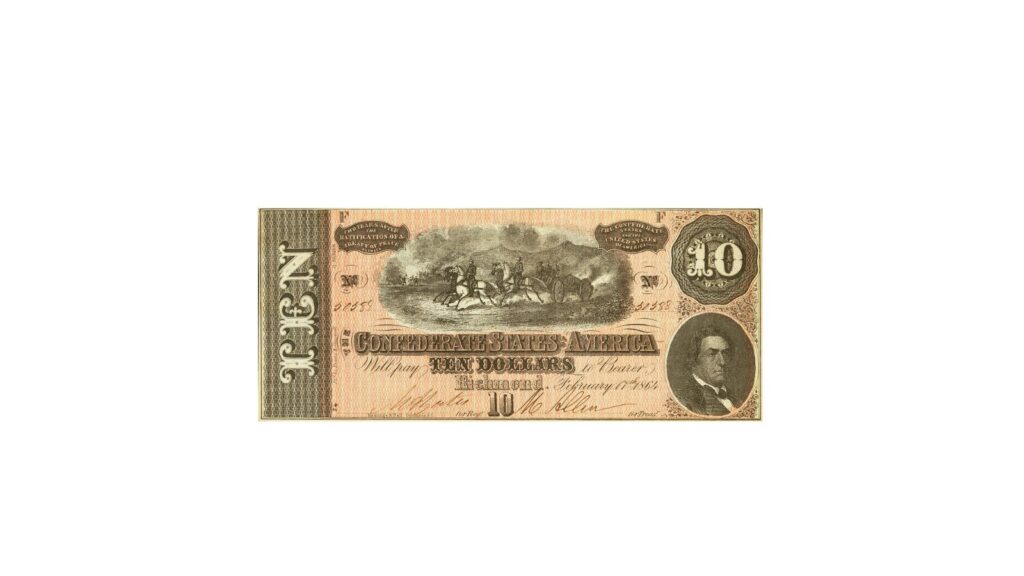
Not every valuable old ten in a family collection is federal currency. Confederate notes from the Civil War era show up regularly in estate sales and inherited paper, and the February 1864 ten dollar issue, featuring cavalry pulling a cannon into battle, is one of the more commonly encountered types. Depending on condition, these range from about $12 to $4,000, with most surviving examples landing toward the lower end of that range.
The bigger risk here isn’t overvaluing a worn note. It’s mistaking a reproduction for the real thing. A large share of Confederate $10 bills that circulate among the public today are 20th century souvenir reprints with no collector value, and certain serial numbers are known to only appear on reproductions. Genuine notes were hand numbered and hand signed by Confederate treasury officials, so look closely at the signatures and the texture of the paper before assuming you’ve found something valuable. If the numbers match a known reproduction batch, it’s a neat piece of history, just not a financial one.
9. A 1901 $10 Bison legal tender note
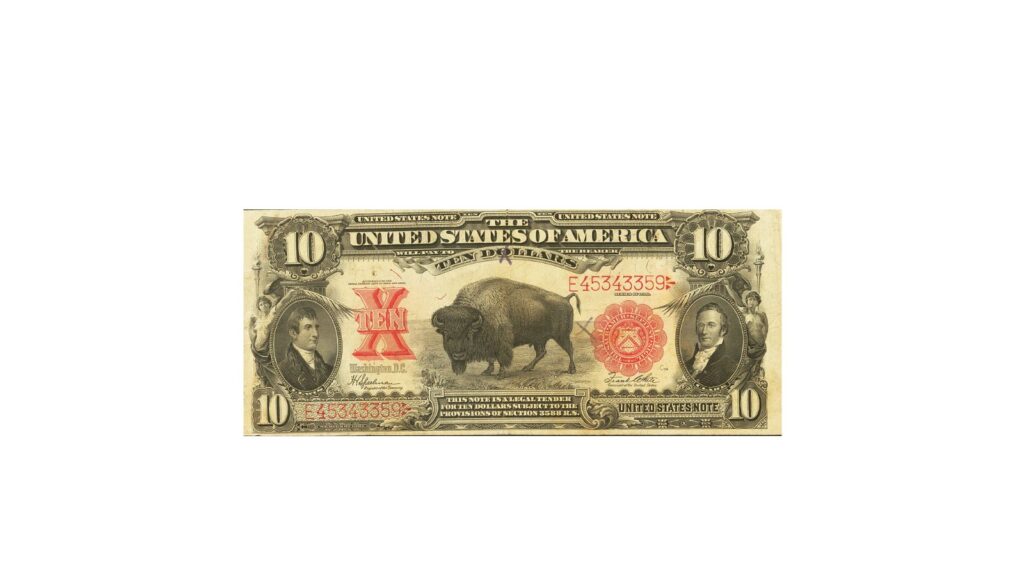
Nicknamed for the American bison stamped across its center, flanked by portraits of Lewis and Clark, this large size note is nearly twice the size of a modern bill and instantly recognizable. It isn’t especially rare in absolute terms, since it circulated for two decades, but condition swings the price dramatically.
A heavily worn example with tears or writing typically brings a few hundred dollars or less. One in fine to very fine condition, the grade most commonly found, usually brings $500 to $1,000, and a crisp, lightly folded example can reach $1,000 to $3,000. Choice uncirculated notes start around $5,000 and climb from there. Star note replacements are rare enough on their own to start near $1,500 regardless of condition. Check for tape, missing corners, or repairs, since any restoration work collapses the value even on an otherwise good looking note. This is one of the more satisfying pieces to own precisely because it’s genuinely findable, not a needle in a haystack.











