
The junk drawer at an estate sale is where the real finds hide. Not the furniture, not the dishes, but the little dish of loose stuff nobody bothered to sort: a chipped compact, a stray earring, a pill box with a dent in the lid. Most of it is exactly what it looks like. But the 1950s produced an enormous amount of small, well-made tabletop and pocket objects, the kind of thing a woman kept in her purse or a man kept on his dresser, and a surprising number of them are worth real money to the right collector.
These pieces are easy to walk past precisely because they’re small. A cigarette case doesn’t announce itself the way a piece of furniture does. A pill box the size of a quarter can sit in a bowl of change for years. What follows are 18 specific, pocket-sized or tabletop-sized objects from the decade, with honest expectations about what condition and maker actually get you.
Table of contents
- 1. Shiny Brite Christmas ornament
- 2. Holt-Howard Pixieware condiment jar
- 3. Hugging salt and pepper shakers
- 4. Powder compact
- 5. Sterling silver charm bracelet
- 6. Sterling silver souvenir spoon
- 7. Sterling silver thimble
- 8. Josef Originals miniature figurine
- 9. Atomic pattern glass ashtray
- 10. Cast iron woodpecker toothpick dispenser
- 11. Ronson table lighter
- 12. Cufflinks and tie clip set
- 13. Murano glass paperweight
- 14. Cameo brooch
- 15. Enamel pill box
- 16. Rhinestone clip earrings
- 17. Ceramic figural pin cushion
- 18. Sterling silver cigarette case
1. Shiny Brite Christmas ornament

Pull an old cardboard box out of an attic in December and there’s a decent chance you’ll find a set of these: thin, almost weightless glass balls with a mirrored finish, some plain, some dusted with mica for a snow-like sparkle, some stenciled with a Santa or a holly sprig. Shiny Brite made them by the millions from the 1940s through the 1960s, using a manufacturing process borrowed partly from the costume jewelry industry, and while most of what survives is common, the more decorated examples have real collector demand. Well-preserved individual ornaments bring $5 to $90 depending on the finish, and a complete set still in its original box lands toward the top of that range.
Dating a set starts with the box. A design showing Uncle Sam shaking hands with Santa points to the World War II years, while a box with a cellophane window is postwar, from 1955 onward. The metal cap and wire hook on each ornament are original factory parts, so a replacement cap is an immediate red flag to a serious buyer. Plain colored glass without any decoration is the least valuable version; stenciled, painted, and mica-coated ornaments all sell for noticeably more.
2. Holt-Howard Pixieware condiment jar
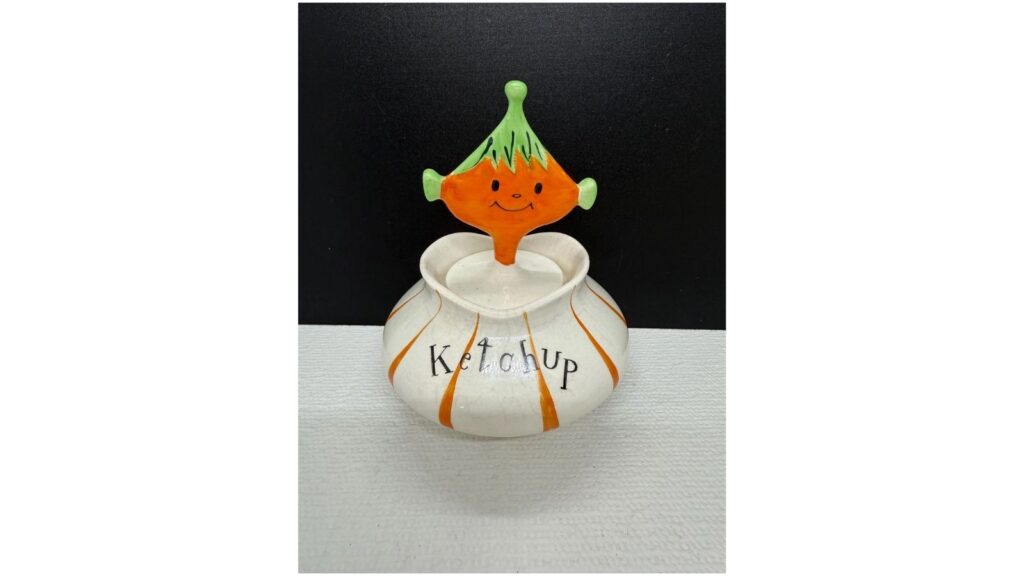
Few pieces of 1950s kitchenware are as instantly recognizable as a Pixieware jar: a grinning, wide-eyed elf face on a ceramic body, wearing a pointed hat that doubles as the lid, with a matching long-handled spoon resting inside. Holt-Howard launched the line in 1958 to hold mustard, ketchup, jam, and other everyday condiments, selling each jar for around a dollar as a novelty gift item rather than anything meant to last. It lasted anyway. Ordinary jars, the mustard and the ketchup, are the ones most likely to turn up and generally sell for under $50, but the condiments Holt-Howard made in smaller numbers, chili sauce, honey, and the paired oil-and-vinegar cruets, along with the line’s rarer serving pieces, regularly bring $200 to $1,000, with the scarcest examples going well past that.
Several competing importers copied the look almost immediately, so authentication starts with flipping the piece over to look for the Holt-Howard name or the “HH” stamp along with a date. A web of fine surface cracks in the glaze, called crazing, is normal for ceramics this age and won’t scare off a serious buyer. What does hurt the price is a chipped spoon, a broken hat-lid, or a cork stopper that’s been swapped for a non-matching replacement.
3. Hugging salt and pepper shakers
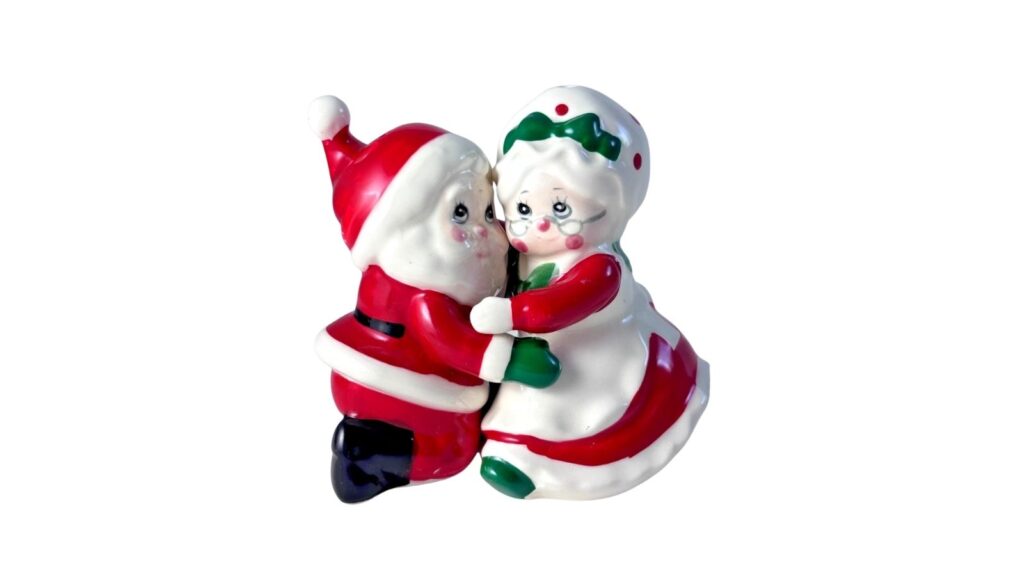
Somewhere between novelty and obsession, American kitchens of the 1950s embraced the figural salt and pepper shaker in a way that hasn’t really been matched since. The specific style worth looking for is the “hugger” set: two figures, often a bear and its cub, a pair of Dutch children, or a matched set of animals, positioned to lean into each other with a magnet or interlocking notch holding the pair together on a shelf. Regal China was the biggest producer of this format. An average pair in decent shape is genuinely cheap, usually $10 to $20, but sets carrying a mark from a recognized giftware name like Lefton or Holt-Howard climb to $30 to $100 or more, and the odder mechanized designs, ones that spin, wobble, or nest inside each other, bring the most of all.
The weak point on nearly every set is underneath: the cork stoppers that plug the fill holes dry out, crack, and go missing over seventy years, and a pair with its original, unreplaced corks is worth more than an identical set with mismatched ones. Because these figures are small, damage hides easily. Run a finger over the ears, hat brims, and any outstretched hands or paws, since chips in those spots are common and easy to miss under a quick glance.
4. Powder compact
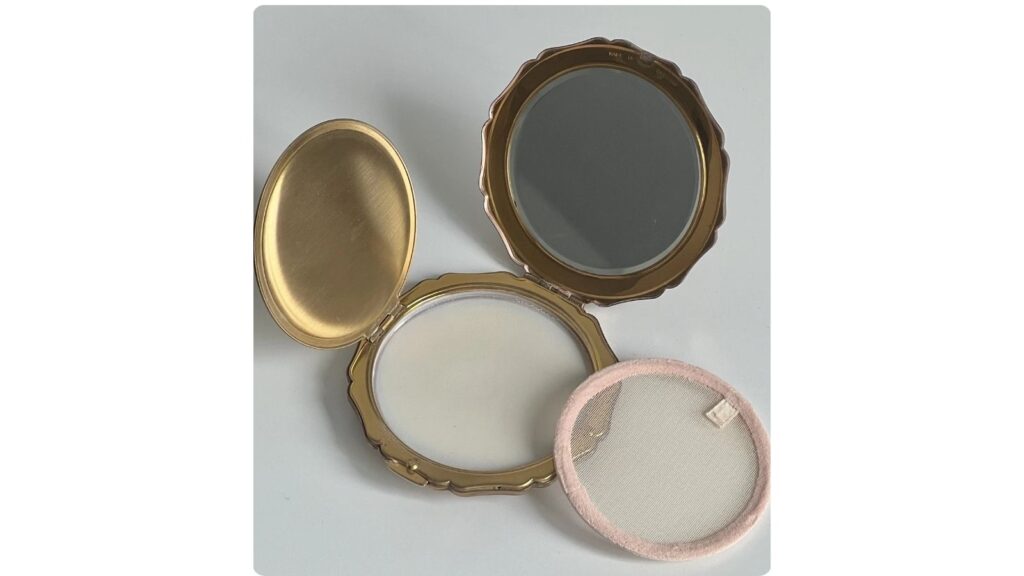
A compact from the 1950s is a small hinged case, usually two to three inches across, holding a mirror and a powder well, carried in a handbag rather than left on a dresser. Stratton and Volupte were the two big names of the decade, and both turn up constantly at estate sales. Common examples with light wear typically sell for $25 to $300 depending on the maker, the decoration, and whether the original powder puff survives inside, while Art Deco gold and enamel examples from higher-end makers push into the thousands.
Check inside the lid for a stamped maker’s name, “Stratton, Made in England” or “Volupte, Made in USA” are the two most common marks from this decade, since unmarked compacts sell for considerably less regardless of how nice they look. A working mirror, an intact powder puff, and the original box or pouch all add to the price. Dented lids and cracked mirrors are the most common condition problems and both reduce value sharply.
5. Sterling silver charm bracelet
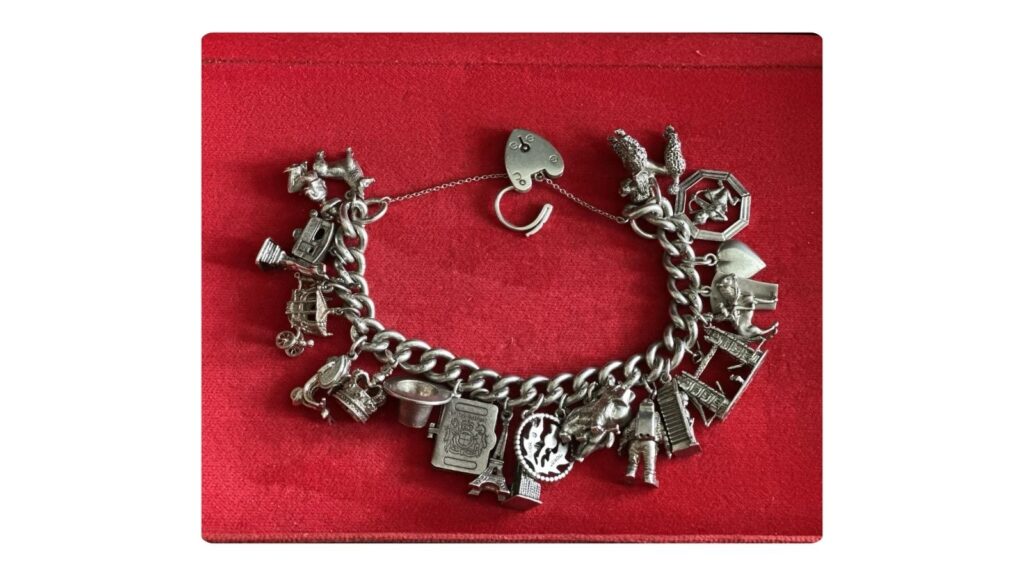
Charm bracelets peaked as a genuine fashion habit in the 1950s, with women adding a new sterling silver charm to mark a trip, a birthday, or a milestone, one at a time, until the bracelet became a kind of wearable scrapbook. A plain sterling chain with no charms is worth little more than its silver weight, but a well-loaded bracelet changes the math entirely. Individual well-made sterling charms typically run $30 to $55 each, and a bracelet carrying twenty or more charms in good condition can bring $300 or more as a complete piece.
Look for the “sterling” or “925” stamp on the clasp and on individual charms, since gold-tone and silver-plated imitations were also common in this era and are worth a fraction of the real thing. Articulated charms, ones with moving parts like a tiny opening locket or a spinning wheel, are worth more than flat, static charms. Tarnish is normal and cleans off; missing or bent charms reduce the count and the value.
6. Sterling silver souvenir spoon
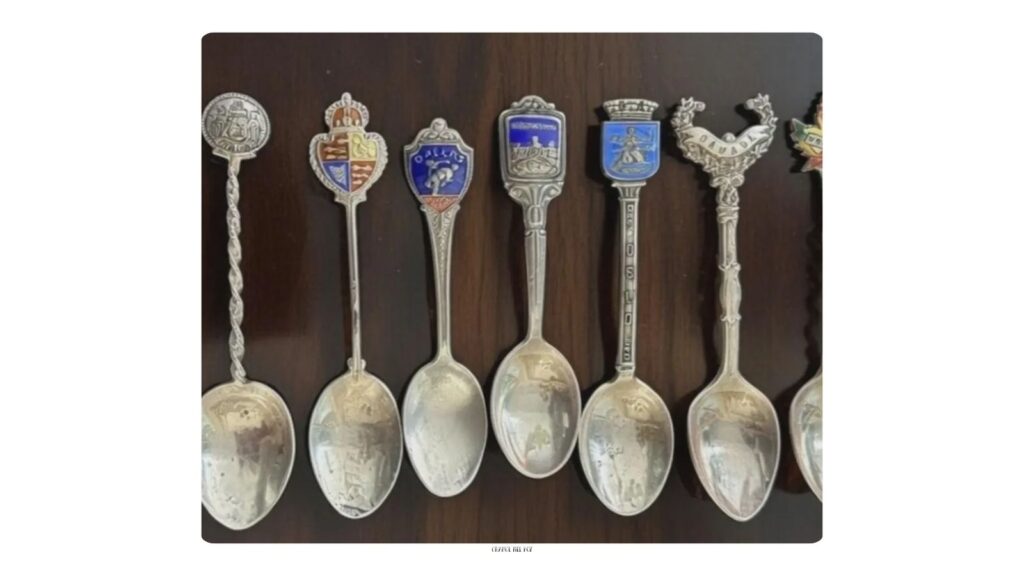
Souvenir spoons were a genuine travel habit through the middle of the twentieth century, a small sterling silver teaspoon engraved or embossed with the name of a city, a landmark, or a state, picked up as a cheap keepsake and tucked in a drawer for decades afterward. Most individual spoons are modest finds. Prices for sterling examples run from about $5 up to $2,500 at the extreme high end, though the large majority sell for under $30, with figural handles, enamel decoration, or an unusual or early destination pushing a spoon toward the higher end of that range.
Check the back of the handle for a sterling mark, since silver-plated souvenir spoons are common and worth only a couple of dollars each regardless of design. A set from a single collector, gathered over years of travel, is worth more assembled than the same spoons would be sold off one at a time, so a matched lot is worth keeping together if you find one.
7. Sterling silver thimble
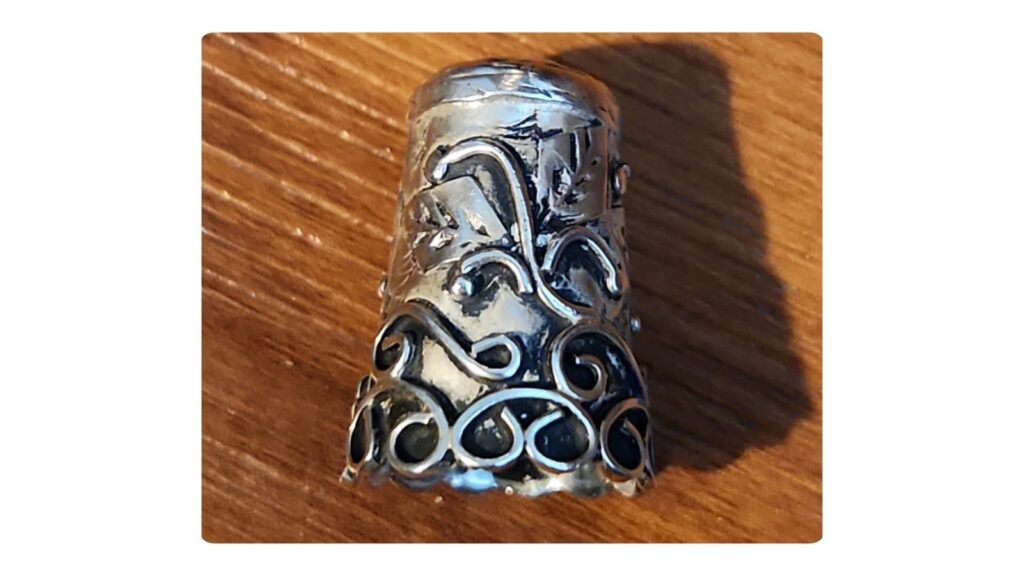
A sewing basket from the 1950s often held at least one sterling silver thimble, sometimes plain, sometimes engraved with initials or a floral band, small enough to fit inside a coin purse. Prices for sterling thimbles range from under $10 for a plain example to over $100 for one from a known maker like Simons Brothers, with unusual decoration, gemstones, or enamel work pushing individual pieces higher still.
The sterling mark is usually stamped just inside the rim and can be worn faint from decades of use, so a jeweler’s loupe helps. A thimble with a maker’s name adds meaningfully to the price over an unmarked one of similar quality, since collectors specifically seek out pieces from established makers rather than generic sterling. Dents, splits along the rim, and heavy tarnish that won’t polish out all reduce value, though light tarnish on an otherwise sound piece is normal and expected. Thimbles are one of the most collected small antiques categories, with dedicated clubs and price guides devoted entirely to them, so a genuinely rare or early example can surprise a seller who assumes it’s worth only its weight in silver.
8. Josef Originals miniature figurine
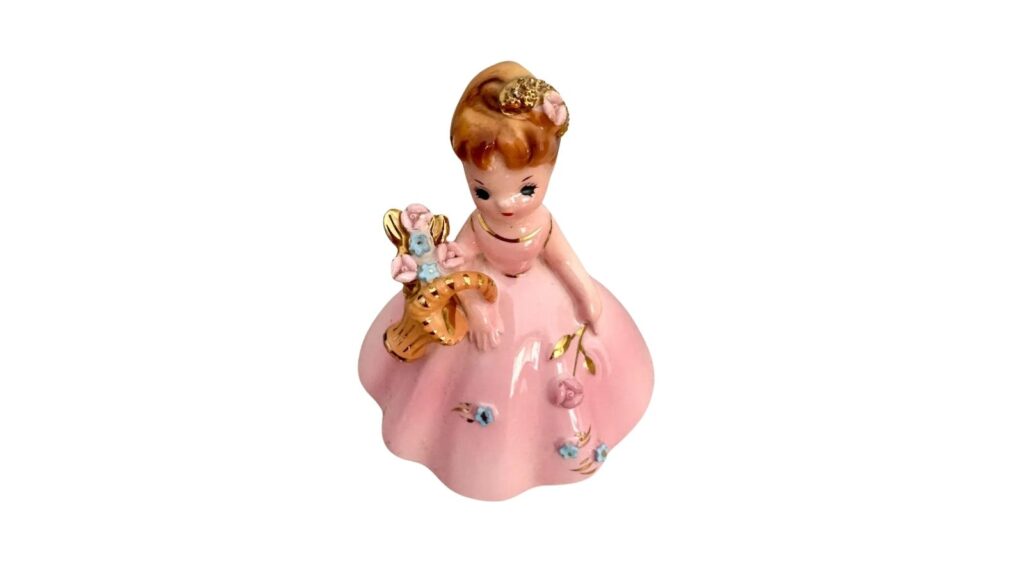
Josef Originals made small, hand-painted ceramic figurines throughout the 1950s, mostly little girls in period dress marking a birthday month, a special occasion, or a profession, each one just a few inches tall and instantly recognizable by their distinctive black-eyed painted faces. Most common pieces from this era are worth $30 to $60, with harder-to-find pieces reaching $75 to $100, and the earliest, rarest designs bringing $125 to $150.
The mark on the underside matters. Pieces made in California during the company’s earliest years are the most desirable, followed by the Japan-made figurines that followed once production moved overseas in 1959. Cheap Japanese imitations from the same era exist and can fool a quick glance, so check the base for the Josef Originals sticker or stamp before assuming a piece is genuine. Chipped fingers, a common casualty on these delicate figures, reduce value noticeably.
9. Atomic pattern glass ashtray
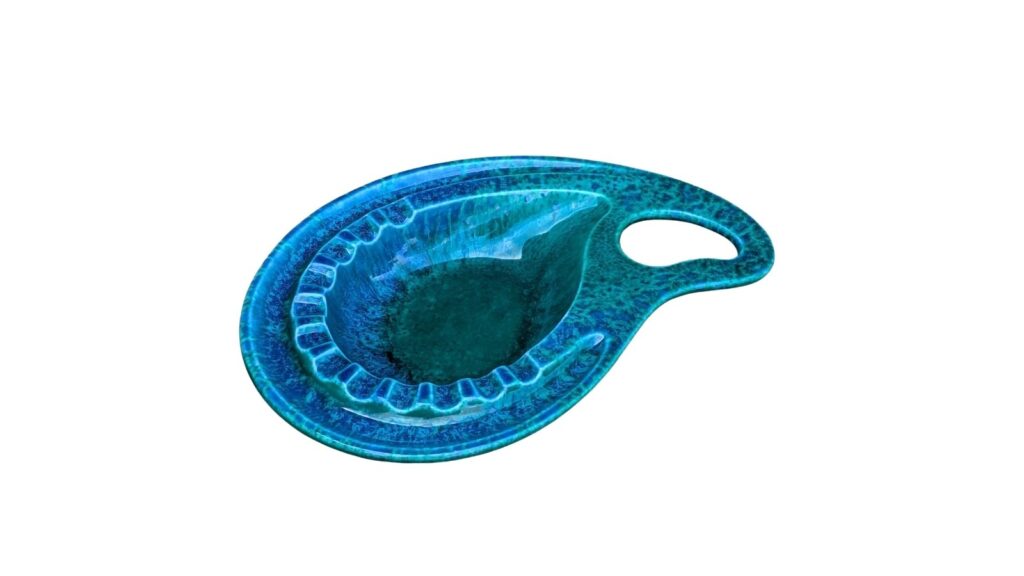
The boomerang shape, an asymmetrical, amoeba-like silhouette, showed up everywhere in 1950s design, and colored glass ashtrays in that pattern are some of the most recognizable small objects of the decade. Common examples in clear or colored glass typically bring $15 to $25, while name-brand pieces, a Franciscan Ware starburst design or a Fiesta original, for instance, can bring $75 to $200 depending on rarity and condition.
Foil paper maker’s labels were common on these pieces and are easily washed or worn off, so an intact label adds real value when you find one. Check for chips along the rim, which are common on glass this thin and reduce the price significantly. A matched pair or a stacked set with its original chrome carrying stand is worth noticeably more than a single ashtray on its own. Color matters too: bold saturated hues like ruby red or cobalt blue tend to draw more interest than plain clear glass, since they read as more distinctly of the era on a shelf.
10. Cast iron woodpecker toothpick dispenser
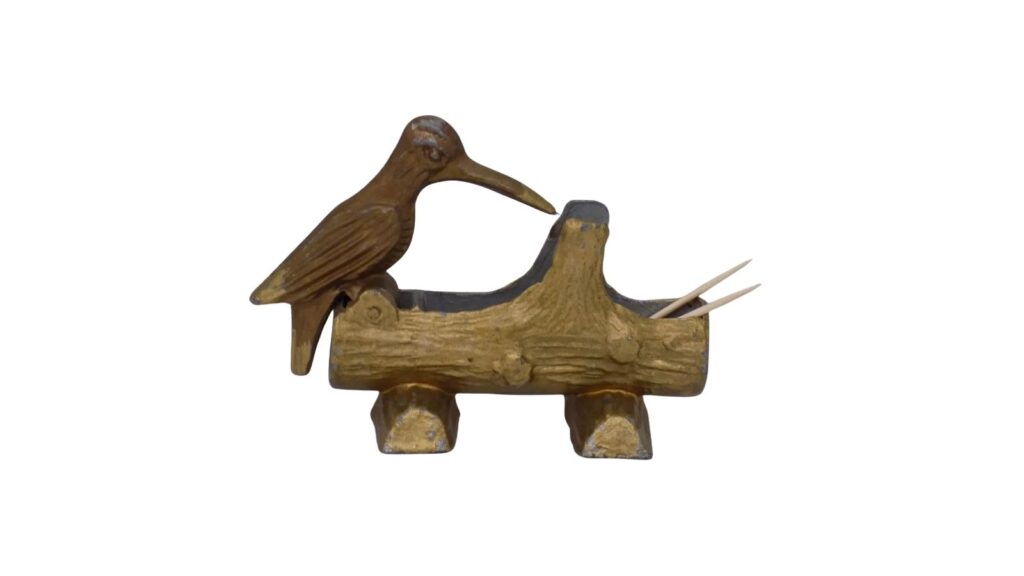
This is a genuinely fun mechanical novelty from the 1950s: a small cast iron woodpecker perched on a log, and pressing a lever makes its head dip down and “peck” a toothpick out of the holder underneath. Working examples in good condition are worth $200 to $300, which is a striking price for something that started life as a five-and-dime novelty next to the cash register.
The mechanism is the whole story here. Rust on the lever, a stiff or frozen action, or a missing spring all reduce the price sharply, since a woodpecker that no longer pecks is really just a paperweight to most buyers. Original paint on the woodpecker’s head and body should show honest wear rather than a recent repaint, which collectors can usually spot and which lowers the value considerably. Cast iron novelties like this were made in large numbers as impulse-buy items, so condition and a functioning mechanism do almost all the work in separating a five-dollar flea market piece from a genuinely desirable one.
11. Ronson table lighter
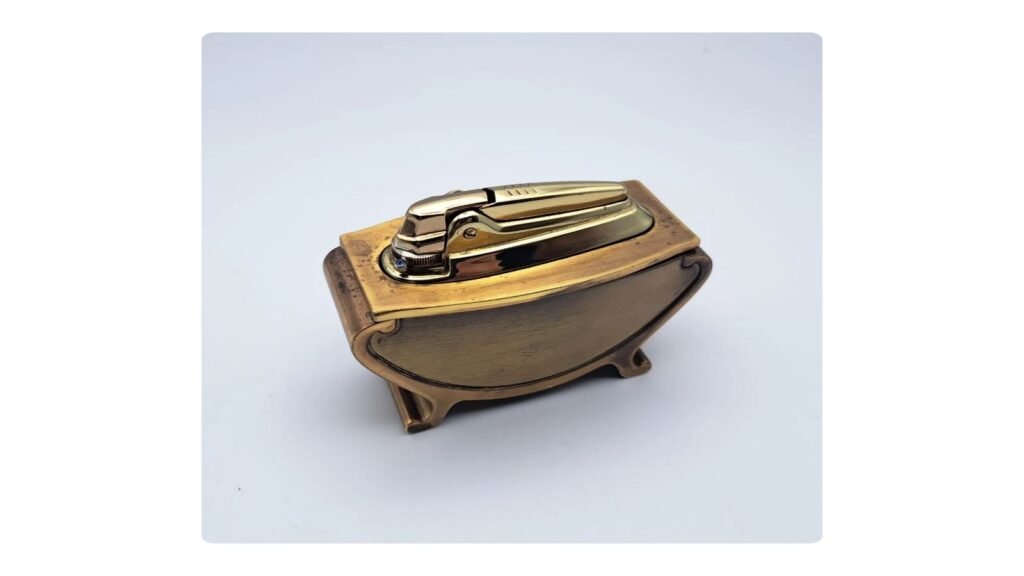
Before disposable lighters took over, a heavy chrome or silver-plated table lighter sat on the coffee table or the bar cart, and Ronson was the dominant American brand of the era. The Crown and Queen Anne models, both small, rounded designs with a flip-top snuffer cap, are the ones most commonly found today. Clean, working examples typically bring $18 to $122, with enameled or novelty-shaped models at the top of that range.
A lighter that still strikes and holds fluid is worth considerably more than one that doesn’t, though even non-working examples have decorative value if the plating is clean and undamaged. Check the underside for the Ronson name and a model stamp. Heavy tarnish that won’t polish out and dents to the body both reduce the price, while an intact original felt-lined presentation box adds to it. Many of these lighters were converted from the original naphtha fuel to butane at some point over the decades, which isn’t a problem for collectors as long as the mechanism itself is original and functioning.
12. Cufflinks and tie clip set
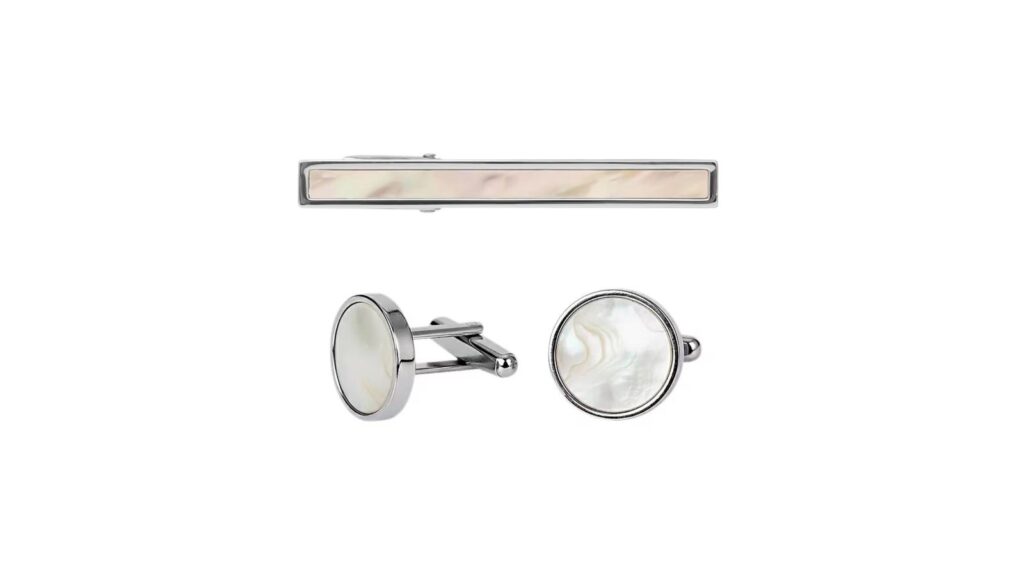
A matched cufflinks and tie clip set was standard men’s formalwear in the 1950s, usually sterling silver or gold-filled metal, sometimes set with a polished stone or an engraved motif. Simple, unsigned sets in decent condition are modest finds, typically $15 to $35 per appraisal, while sterling sets with a hallmark or a known maker’s name regularly bring $75 to $150, and handmade designer sets from makers working in Mexican silver bring considerably more still.
Signed, one-of-a-kind pieces by Mexican silversmiths depicting scenes like a bullfighter or an abstract figure study can push well past $300 for the pair, since these were handmade rather than mass-produced. A set that’s clearly a matched pair, with the cufflink design echoed on the tie clip, is worth more than two individually purchased pieces that happen to be worn together.
Flip the pieces over and look for a hallmark or maker’s stamp, since an unsigned set is worth a fraction of the same design with a name attached. A matching set, cufflinks and tie clip together in the original style, is worth more than either piece alone. Tarnish is normal; a bent or missing clip mechanism is the more serious problem to watch for.
13. Murano glass paperweight
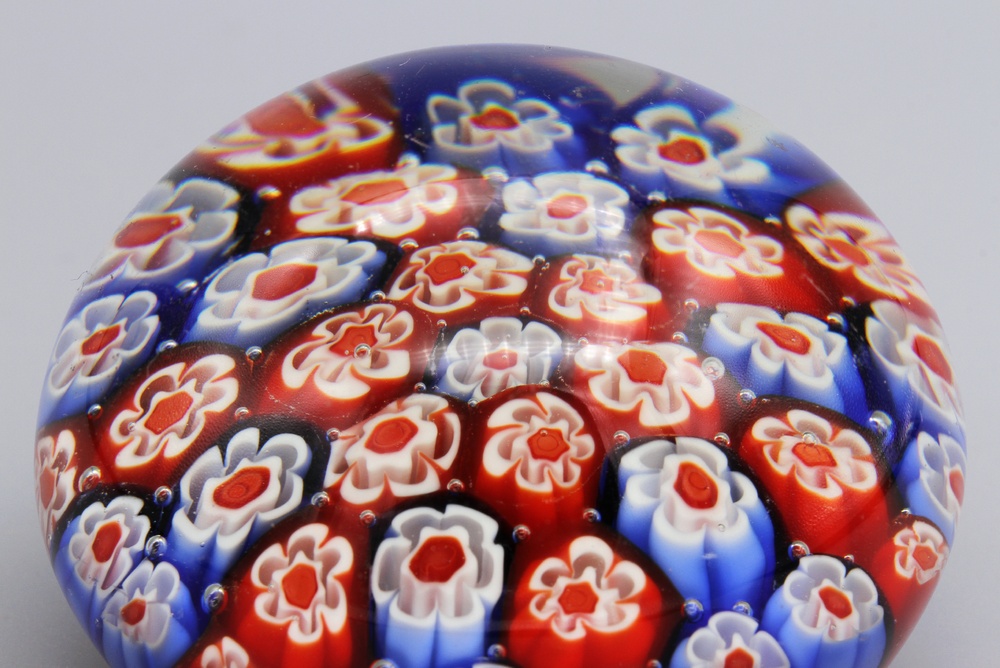
Hand-blown Italian glass paperweights, often featuring swirled color, millefiori canes, or trapped air bubbles, were a popular small souvenir and gift item through the 1950s. Prices for genuine Venetian and Murano examples range from about $23 to $1,378 depending on maker, size, and complexity, with pieces attributed to a named glasshouse or designer at the top of that range and simple, unsigned millefiori weights at the bottom.
A paper label reading “Murano” or “Made in Italy” is common but easily lost, so its absence doesn’t rule out authenticity on its own. Weight and clarity are the best tells of quality glass, since a genuine hand-blown piece feels substantial for its size and the colors sit in distinct, controlled layers rather than muddying together. Chips on the base, which can be hard to spot without running a fingertip around the edge, reduce value noticeably. Fish, aquarium scenes, and cased bubble designs tend to be more sought after than plain solid-color weights, since they show off more of the glassblower’s skill.
14. Cameo brooch
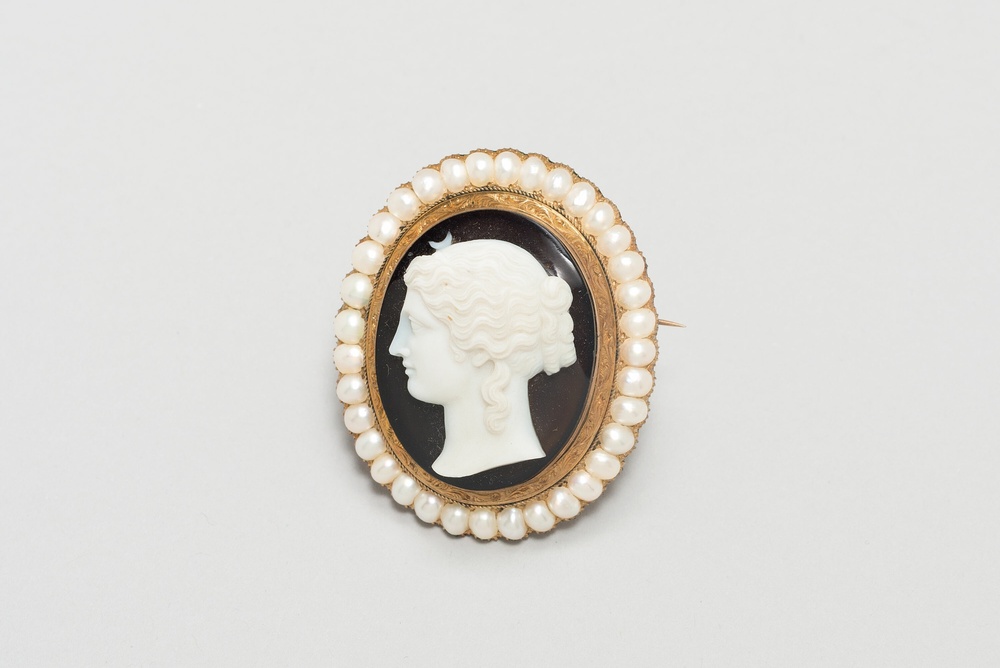
Cameo jewelry had a real revival in the 1950s, and the shell-carved profile brooch, usually set in a simple gold-filled or gold-tone frame, was a common gift item of the decade. Most 1950s tourist-market cameos are molded resin rather than hand-carved shell and are worth $10 to $30, while genuinely hand-carved shell examples in a marked gold setting bring considerably more, and signed pieces from a known Italian workshop reach $200 to $700.
The test is depth and translucency. Hold the piece up to light: a real carved shell cameo shows visible layering between the pale background and the raised figure, while molded resin looks flat and uniform, often with a faint seam line around the edge. A gold-filled or gold-plated frame that’s worn through to base metal at the edges is a normal sign of age and doesn’t hurt value much on its own.
15. Enamel pill box
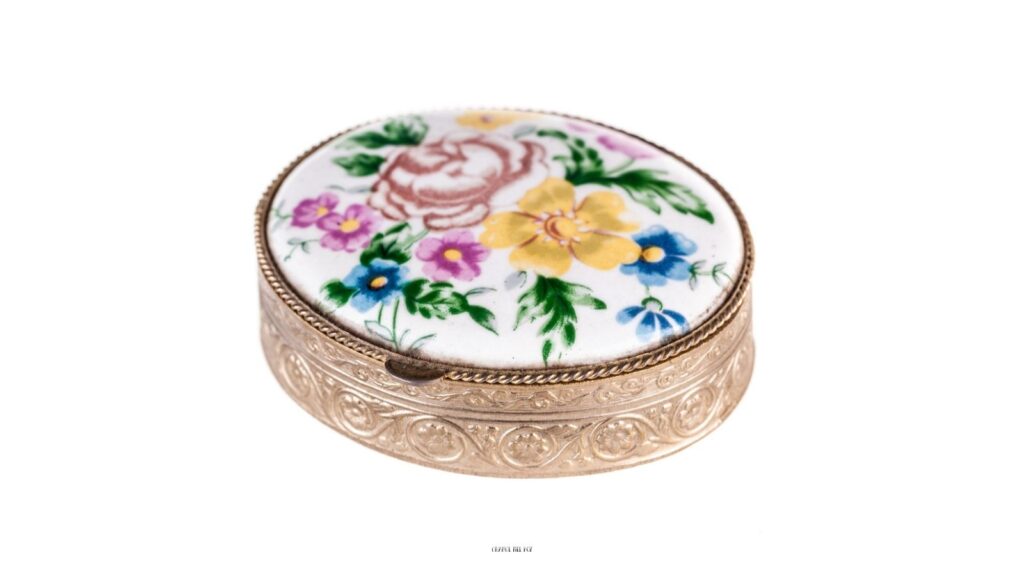
A small hinged box, often no bigger than a large coin, meant to carry a few pills or tablets discreetly in a handbag or pocket, usually decorated with enamel, a painted scene, or a semi-precious stone set into the lid. Average examples from this era sell for under $10 to $50, while boxes by name makers like Stratton, or those with fine enamel or mosaic work, bring considerably more, occasionally into the hundreds.
Check the hinge action, which should open and close smoothly without catching, and look inside for a maker’s mark, since an unmarked box is worth a fraction of the same design with a known name attached. A small interior mirror, common on compact-style pill boxes, adds a little to the value if it’s intact and unclouded. Enamel work is the most fragile element here, and any chipping to the painted or enameled surface reduces the price noticeably, so examine the lid closely under good light before buying.
16. Rhinestone clip earrings
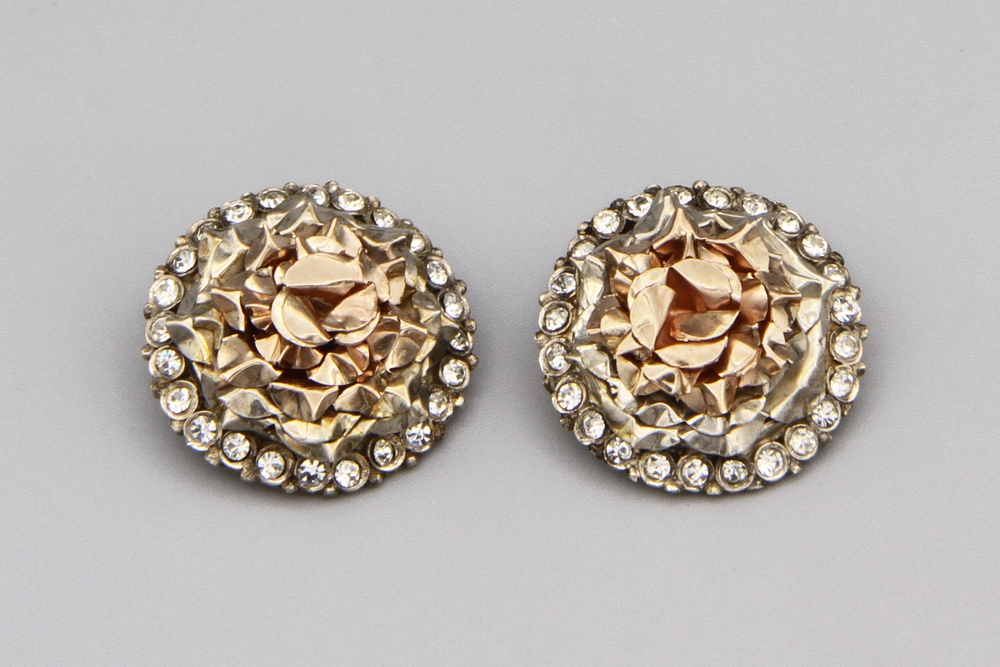
Clear or colored rhinestone clip earrings were an evening wardrobe staple through the 1950s, and the big American costume jewelry houses, Weiss, Eisenberg, and Coro among them, made enormous quantities in prong-set glass rhinestones on silver-tone metal. Unsigned pairs in good condition are modest, generally under $30, while signed pieces from a recognized maker average around $200 to $325 depending on the design and how much sparkle survives.
Turn the earrings over and look for the maker’s name stamped on the clip back, since Weiss and Eisenberg both signed their work and unsigned pieces bring noticeably less even when the design is identical. Missing or cloudy rhinestones, a common problem after decades of wear, reduce value, and a full, unbroken pavé setting is worth seeking out over a piece with gaps. Weiss in particular was known for the quality and brightness of its glass rhinestones, which still catch light noticeably better than cheaper competitors from the same era, so clarity is worth checking closely under a bright lamp.
17. Ceramic figural pin cushion
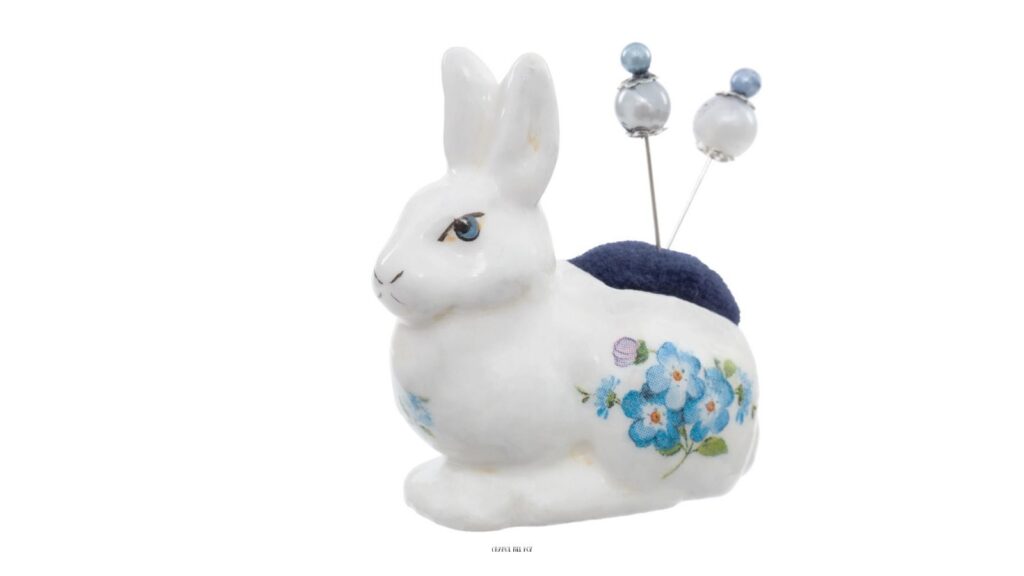
Sewing baskets in the 1950s often held more than the plain red tomato pin cushion. Ceramic figural pieces, animals like poodles and roosters with a fabric or velvet cushion built into the design, were popular mid-century novelties from the same Japanese ceramics importers who made Pixieware and figural salt shakers. Simple fabric tomato cushions are worth only a few dollars, but ceramic figural examples from known makers are typically worth $30 to $60 in good condition, similar to other small figural giftware from the same era.
The cushion itself, usually velvet or felt set into a recess on the figure’s back, is the part most likely to be replaced or missing, and an intact original cushion adds to the value. Chips on ears, tails, and other small extremities are common on ceramic figures this size and reduce the price the way they would on any figural giftware.
18. Sterling silver cigarette case
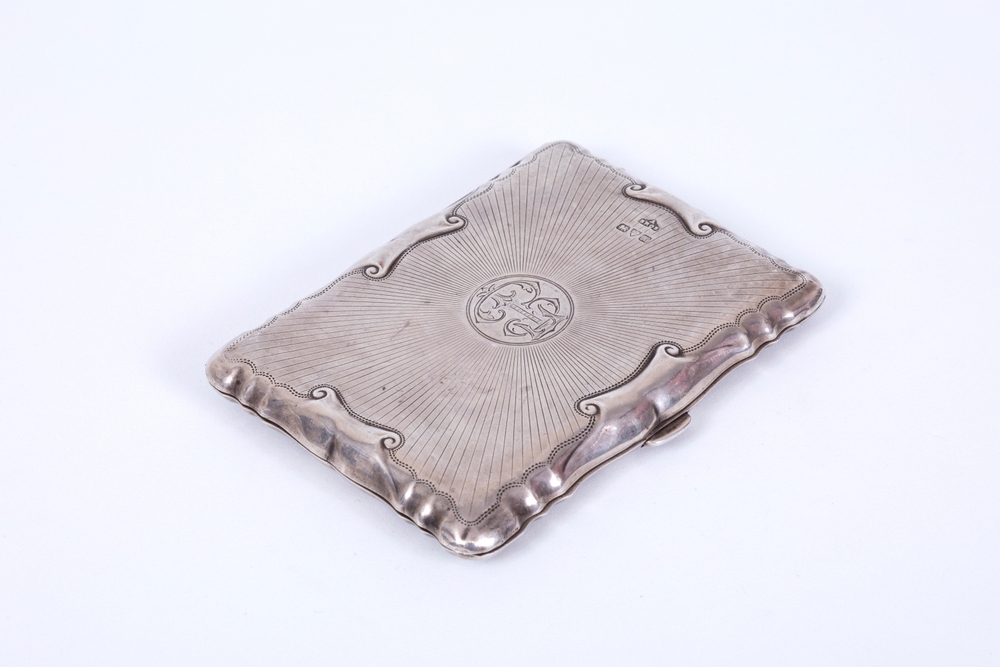
A slim, flat case that held a half-pack of cigarettes, carried in a jacket pocket or a handbag, was a near-universal accessory in the 1950s, made in sterling silver, chrome, or gold-filled metal, sometimes engraved with initials or a monogram. Prices for sterling examples range from about $23 to $6,710 depending on maker, weight of silver, and decoration, with plain engine-turned cases at the low end and enameled or figural examples from named makers at the high end.
Open the case and check for a hallmark or “sterling” stamp inside, since silver-plated cases marked EPNS are common and worth a fraction of solid sterling. The hinge and the internal elastic strap that held cigarettes in place are the parts most likely to have failed, and a case with both still intact and functional is worth more than one that’s merely decorative at this point.











