
A wind turbine technician harnesses in two hundred feet above a cornfield, opens the nacelle, and finds a burned-out converter that has to come out before the next storm front rolls in. No robot is making that climb. A person is, and the median pay for that person is $62,580 a year, in a job the government expects to grow 50 percent by 2034, faster than almost any other occupation tracked in the country.
Watching AI write emails, generate images, and handle customer service chats has a way of making every job feel temporary. If you’re wondering whether yours is next, that worry makes sense. Software is moving through desk work fast, and the headlines about layoffs aren’t invented.
But somebody still has to wire, plumb, weld, and staff the buildings that software runs in. Microsoft’s president has called the shortage of qualified electricians the single biggest obstacle to building out AI data centers in the United States, and the company has resorted to flying electricians in from 75 miles away to keep sites moving. The same industry racing to automate white collar work can’t find enough people to build the buildings it needs. That’s worth sitting with. Here’s a look at 18 jobs where the physical presence, judgment, and trust of an actual human are the whole point, along with what they pay right now.
Wind turbine technicians

Turbines don’t fail in predictable ways, and they don’t fail on the ground. A technician has to climb the tower, diagnose a problem inside a cramped nacelle using touch and sound as much as instruments, and often make the repair in wind and cold that would ground a drone. Every turbine model has its own quirks, and a lot of the job is knowing which sound or vibration means trouble before a sensor would catch it. Technicians also work in confined mechanical spaces where a wrong move has real consequences, which is part of why the training leans so heavily on hands-on apprenticeship rather than classroom hours alone.
The median annual wage is $62,580, and most technicians get in with a postsecondary certificate rather than a four-year degree. Employment is projected to grow 50 percent over the next decade as wind capacity keeps expanding and the existing fleet of turbines ages into needing more maintenance. Very few careers without a college degree come with growth numbers that high, and the entry point, usually a one or two year technical program, is a fraction of the cost of a bachelor’s degree.
Elevator installers and repairers

Every elevator shaft is a slightly different puzzle of hydraulics, electronics, and code requirements, often in a cramped machine room or a shaft where a mistake can seriously hurt someone. When a hospital elevator gets stuck with a patient inside, someone has to physically show up, diagnose the fault, and fix it under pressure, working from decades-old blueprints that may not match what’s actually behind the panel. That combination of tight spaces, mechanical variety, and zero tolerance for error is hard to hand off to software, and it’s part of why the trade has stayed almost entirely apprenticeship-based rather than moving toward remote diagnostics.
It also happens to be the highest paid trade job tracked by the government. The median annual wage is $106,580, well above what most electricians or plumbers earn, and the job typically starts with a high school diploma followed by a paid apprenticeship. Employment is projected to grow 5 percent through 2034, and because the field is small and heavily unionized, openings don’t sit empty for long once they appear.
Electricians

Every building’s wiring is a one-off. An electrician walks into a house or a job site, reads the specific layout in front of them, and makes real-time calls about code, safety, and what’s actually behind the wall, often based on what a previous electrician did decades ago and never documented. That’s before factoring in that electricians now build the physical infrastructure AI itself depends on. Data centers can’t run without them, and the industry can’t train them fast enough to keep pace with the demand.
Median pay is $62,350 a year, with the top 10 percent clearing over $106,000. Employment is projected to grow 9 percent through 2034, well above the average for all jobs, with about 81,000 openings a year as older electricians retire faster than new ones are trained to replace them. Apprenticeships pay from day one, which matters if student debt isn’t something you’re interested in taking on to start a career.
Plumbers, pipefitters, and steamfitters

No two houses route their pipes the same way, and half the job is crawling into a space nobody designed for comfort to find a leak by feel and sound before it floods a wall or rots a subfloor. That kind of improvisation, in tight, wet, unpredictable spaces, isn’t something a camera and an algorithm can pull off from a control room somewhere else. Commercial and industrial work adds another layer, since steamfitters deal with pressurized systems where getting the read wrong has real safety stakes.
The median annual wage is $62,970, and the job is projected to grow 4 percent through 2034 with roughly 44,000 openings a year, most from retirements rather than brand new positions. Apprenticeships typically run four to five years and pay a rising wage the entire time, which beats paying tuition to sit in a lecture hall for the same stretch of years.
HVAC technicians
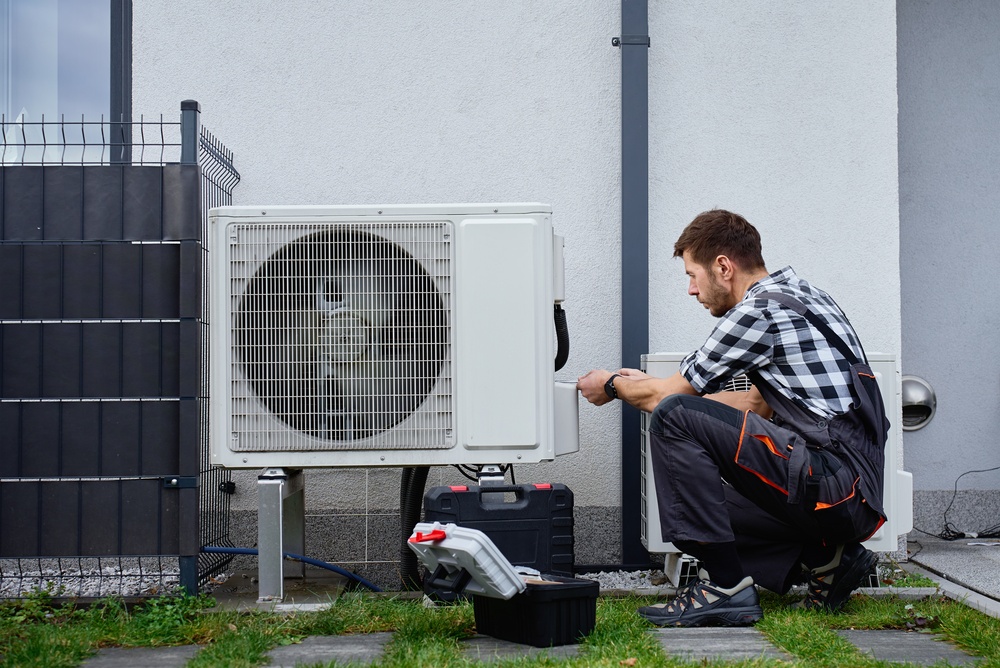
Diagnosing a dead furnace or a leaking refrigerant line means climbing into an attic in July, running a multimeter, and figuring out which of a dozen possible failures is the actual one, often in a system that’s been patched together by three different installers over twenty years. Every home and commercial building has its own history, and reading that history correctly is most of the skill, along with knowing which shortcuts a previous technician probably took.
Median pay sits at $59,810 a year, and the field is projected to grow 8 percent through 2034, adding about 40,100 openings a year on average. Extreme heat and cold aren’t going anywhere, and neither are the aging systems that need someone to physically climb up, get dirty, and fix them on-site rather than remotely. Most technicians train through a certificate program lasting six months to two years, then keep earning while they rack up the hours needed for licensing.
Diesel service technicians and mechanics
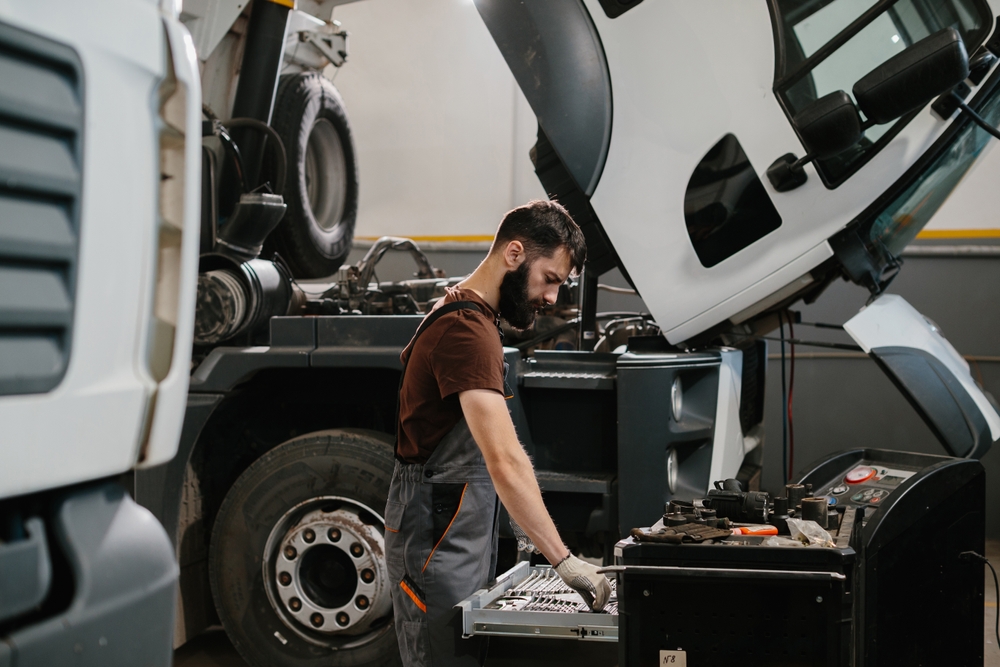
Every truck, bus, and piece of farm equipment that keeps freight and food moving runs on a diesel engine that eventually needs a person underneath it. Diesel repair means working with your hands in cramped engine bays, often on the side of a highway or in a field during harvest season, diagnosing problems that don’t show up the same way twice even on the same make and model. It’s physical, dirty work that has to happen exactly where the broken equipment is sitting, not somewhere convenient.
The median annual wage is $60,640. Growth is modest at 2 percent through 2034, but that undersells the opportunity: about 26,500 openings a year come from retirements alone, in a field most people learn on a high school diploma plus on-the-job training rather than an expensive degree program. Trucking, agriculture, and construction all depend on diesel equipment staying running, and none of those industries are shrinking anytime soon.
Welders

Factory robots can weld the same seam on the same part a thousand times in a row without getting tired. What they can’t do is crawl into a half-built pipeline trench, judge the heat of a molten puddle by eye, and adjust technique on the fly for a joint that’s slightly out of position because the ground shifted overnight. Field welding, construction welding, and repair welding all depend on judgment that changes with every single job, which is exactly the kind of variability automation struggles with.
Median pay is $51,000 a year, with specialized welders in pipeline, underwater, or aerospace work earning far more than the median. Growth is projected at a modest 2 percent through 2034, but roughly 45,600 openings a year open up regardless, mostly from people retiring or moving into supervisory and inspection roles. Certification usually takes a matter of months at a trade school, and shipbuilders and infrastructure crews are actively short on qualified hands right now.
Construction equipment operators

Running an excavator or a bulldozer means reading ground that shifts under the machine, avoiding buried utility lines nobody marked correctly, and making judgment calls about load and grade that change with every scoop of dirt. Job sites are chaotic and irregular in ways that factory floors simply aren’t, which is exactly why this work has resisted automation even as manufacturing has moved heavily toward robotics over the past few decades.
The median annual wage is $58,320, and employment is projected to grow 4 percent through 2034 with about 46,200 openings a year. Most operators learn through a combination of vocational training and supervised time in the seat, not a four-year degree, and pay tends to rise quickly once someone is certified on specialized equipment like a crane or a paver. Highway work, pipeline projects, and the ongoing data center building boom are all keeping demand for experienced operators well ahead of supply.
Dental hygienists

Scaling tartar off someone’s teeth without hurting them requires a feel for pressure and angle that changes with every patient, every tooth, and every visit. It’s a job done inside another person’s mouth, with instruments that have to respond in real time to what the hygienist is sensing through their hands, while also reading X-rays and flagging early signs of disease for the dentist. That kind of tactile feedback loop, combined with clinical judgment, is a long way from anything AI does well today.
The median annual wage is $94,260, which is one of the highest wages on this list, and it typically only requires an associate’s degree, not four years of school. Employment is projected to grow 7 percent through 2034, and part-time schedules are common, which makes this one of the few high-paying fields where flexible hours aren’t a compromise. Nearly all hygienists work directly in a dentist’s office, which keeps the job firmly in-person by design.
Massage therapists

Touch is the entire service. A massage therapist reads tension in a client’s muscles through their hands and adjusts pressure, angle, and technique second by second based on what they’re actually feeling under their fingers, not what a chart says should be happening. There’s no version of this job that doesn’t involve a real person’s hands on another real person’s body, working with an anatomy that never behaves exactly like the textbook.
Median pay is $57,950 a year, and the field is projected to grow 15 percent through 2034, among the fastest growth rates of any healthcare occupation tracked by the government. Many therapists are self-employed and set their own rates, which means this wage figure likely understates what a busy, established therapist with a loyal client base actually takes home. Training usually runs through a postsecondary program, not a four-year degree, and state licensing is required almost everywhere.
Home health and personal care aides

Helping someone bathe, get dressed, and move safely from a bed to a chair requires physical strength, patience, and trust built over repeated visits to a person’s home, often for clients with dementia, mobility loss, or chronic illness who need consistency from a familiar face. This is some of the most human work there is, done for people who are often at their most vulnerable, and it can’t be handled by a screen, a scheduling app, or a delivery robot.
The median annual wage is $34,900, on the lower end of this list, but the job outlook is extraordinary: 17 percent growth through 2034, with about 765,800 openings projected every single year as the population ages. Few careers offer that much certainty about future demand, or that low a barrier to entry for someone starting over, since most agencies provide short, paid training rather than requiring a credential up front.
Veterinary technologists and technicians

Restraining a frightened, injured animal while drawing blood or placing an IV takes a read on body language that shifts from second to second, plus the physical skill to keep both the animal and yourself safe in the process. Every appointment is a negotiation with a patient who can’t explain what hurts, might bite, and doesn’t understand why a needle is coming anywhere near it. Vet techs also run labs, take X-rays, and monitor anesthesia, all of which require hands-on presence in the room.
Median pay comes in at $45,980 a year, and the job is projected to grow 9 percent through 2034 as pet ownership keeps climbing and veterinary care gets more advanced and specialized. Most vet techs enter with a two-year degree, and additional certifications in anesthesia or emergency care can push pay noticeably higher over time. Rural areas are especially short on qualified techs, which is opening up scope-of-practice changes in several states.
Firefighters

Entering a burning building and physically carrying someone out isn’t a task that gets automated, and it never will be, no matter how good drones or sensors get at spotting a fire from the outside. Firefighting also increasingly means responding to medical emergencies, car accidents, and hazardous materials calls, all of which demand split-second judgment in chaotic, dangerous conditions that change by the minute and don’t wait for a system to process them.
The median annual wage is $59,530, and the top 10 percent earn over $101,000. Growth is projected at 3 percent through 2034, roughly average for all occupations, but departments across the country are actively struggling to staff up, which keeps pressure on both pay and benefits for new recruits. Most firefighters also need EMT certification, which adds a medical skill set on top of the physical training, and many departments now handle more medical calls in a year than actual fires.
Barbers, hairstylists, and cosmetologists

A good haircut depends on reading someone’s head shape, hair texture, and unspoken taste, then adjusting technique in real time based on how the hair is actually behaving that day, in that humidity, after whatever product someone used at home. It’s also a relationship business built on trust and conversation that people come back for specifically because it’s human, not because it’s efficient.
The median annual wage is $35,420, and that figure leaves out tips and the income of the many stylists who lease their own booth space and set their own prices. Employment is projected to grow 5 percent through 2034, and licensing typically takes a postsecondary program measured in months, not the years a bachelor’s degree requires. A growing wave of male clients booking regular grooming appointments is helping push demand higher, too, and experienced stylists who build a loyal book of clients can earn well beyond the median.
Funeral service workers

Arranging a funeral within 24 to 72 hours of a death means coordinating logistics under real time pressure while also sitting with a grieving family and helping them make decisions they’ve never had to make before, often about a relationship or a religion an outsider wouldn’t understand. Preparing a body for viewing is a hands-on, physical task that also requires real care for the people left behind, and no software is going to sit across a table from a widow.
Morticians and funeral arrangers earn a median of $49,800 a year, while funeral home managers earn a median of $76,830. The field is projected to grow 4 percent through 2034, and it typically requires only an associate’s degree plus a licensed, supervised apprenticeship to get started. Most states require applicants to be at least 21 and pass a board exam before they can work unsupervised, and the internship that follows school usually lasts one to three years.
Pest control workers

Finding where termites are actually nesting, or where mice are getting into a house, means crawling into attics and under foundations and reading physical evidence, droppings, chew marks, moisture patterns, that doesn’t show up clearly in a photo. Every infestation and every building is different, and treatment has to be targeted to the specific pest and the specific structure rather than applied the same way everywhere.
The median annual wage is $44,730, and the job is projected to grow 5 percent through 2034, faster than average for all occupations. Most workers train on the job and earn state certification to apply pesticides, rather than going through years of formal schooling before they can start earning. Warmer average temperatures in many regions are also stretching pest season longer, which keeps demand steady year-round instead of tapering off every winter the way it once did. Termite inspections tied to home sales add another steady source of work that doesn’t depend on the broader economy.
Grounds maintenance workers

Keeping a landscape alive means reading soil, weather, and plant health in a specific yard on a specific day, then pruning, planting, and treating by hand in terrain that’s rarely flat or predictable enough for a machine to handle alone. Robotic mowers exist for flat, fenced lawns, but the broader job of shaping and maintaining an actual landscape, trees, shrubs, uneven slopes, seasonal planting, stays firmly manual.
Median pay is $38,470 a year, and employment is projected to grow 4 percent through 2034 with about 45,900 new jobs added over the decade. It’s outdoor, physical, often seasonal work that doesn’t require a degree to start and can be picked up while training for something else. Crew leaders and licensed pesticide applicators tend to earn well above the median once they’ve built up a few years of experience, and starting a small crew of your own is one of the more accessible ways to eventually work for yourself.
Preschool teachers

Watching a room full of three and four year olds safely, while also fostering early language and social skills, takes constant physical presence and split-second attention that no app can substitute for, since a toddler can go from fine to in danger in about four seconds. States set legal ratios of adults to toddlers for a reason: this job is about bodies in a room, not information delivered through a screen.
The median annual wage is $37,120, and the field is projected to grow 4 percent through 2034. Most preschool teachers enter with an associate’s degree, and those who go on to earn a bachelor’s in early childhood education can move into better paying roles teaching kindergarten through third grade later on. Demand tends to hold steady even in slow economies, since working parents need care regardless of what the job market is doing, and that steadiness is part of what makes the field a reliable landing spot.
Bottom line

A recent analysis of automation risk across more than 900 occupations found that in-person manual services and skilled trades sit below a 10 percent automation exposure threshold, while engineering, legal, and management roles run as high as 29 percent. The jobs that involve a body in a room, a hand on a tool, or a person sitting with someone else in a hard moment keep showing up on the safe side of that line, and the pay for doing them keeps climbing to match.











