
The person who installs your elevator probably doesn’t have a college degree. They completed a four-to-five year apprenticeship, earned while they learned, and now makes a median of $106,580 a year. Most people have never thought about that career for five minutes.
That gap between what people assume a good career requires and what good careers actually require is real and substantial. Millions of people carry student loan debt from four-year programs while fields like diagnostic medical sonography, powerline installation, and wind turbine technology hire from two-year degree holders, certificate completers, and apprentices who earn a paycheck from day one.
The 15 careers below were selected because the barrier to entry is genuinely lower than most people expect, demand is real and documented, and none of them are vulnerable to AI doing the core work. Every one of them is hiring.
Table of contents
- HVAC technician
- Electrician
- Wind turbine technician
- Solar photovoltaic installer
- Electrical powerline installer
- Elevator installer and repairer
- Aircraft mechanic
- Plumber and pipefitter
- Dental hygienist
- Diagnostic medical sonographer
- MRI technologist
- Respiratory therapist
- Surgical technologist
- Physical therapist assistant
- Radiation therapist
- Discover job hunting tips, ways to earn more, and flexible working options:
HVAC technician

Heating, ventilation, air conditioning, and refrigeration mechanics are in every building in America, and there are about 40,100 job openings projected each year through 2034. That’s not a small number. The median pay is $59,810, and the top 10 percent of technicians earn more than $91,000. The field is projected to grow 8 percent over the next decade, faster than average for all occupations.
Entry is through a certificate or associate’s degree program, typically six months to two years at a community college or technical school. Some employers hire entry-level technicians and train on the job. The work involves diagnosing mechanical and electrical problems in heating and cooling systems, which means the thinking is real and the solutions are physical. No AI is fixing your broken air conditioner in August.
The job is physically demanding and some installations involve working in tight spaces or extreme temperatures. But the scheduling flexibility for experienced technicians is significant, and those who go into business for themselves can substantially increase their earnings. A licensed HVAC contractor running their own shop is not an unusual outcome.
Electrician

Electricians enter the trade through apprenticeship programs, which means they earn a wage from their first week on the job. There is no tuition to pay. A typical apprenticeship runs four to five years, with classroom instruction combined with supervised fieldwork. By the time it’s finished, the electrician is a licensed journeyman with several years of practical experience and no student debt.
The median pay is $62,350, with about 81,000 job openings projected every year through 2034. Employment is expected to grow 9 percent over that period, driven by construction, solar and wind installation, and the build-out of EV infrastructure. The top 10 percent of electricians earn more than $106,000.
The barrier people perceive is that they don’t know how to get into an apprenticeship. The path starts with contacting a local union hall affiliated with the International Brotherhood of Electrical Workers or with the Independent Electrical Contractors organization. Both sponsor apprenticeship programs. Most require a high school diploma or GED and basic math. Applications open periodically and competition varies by region, but electricians are in demand in nearly every market in the country.
Wind turbine technician
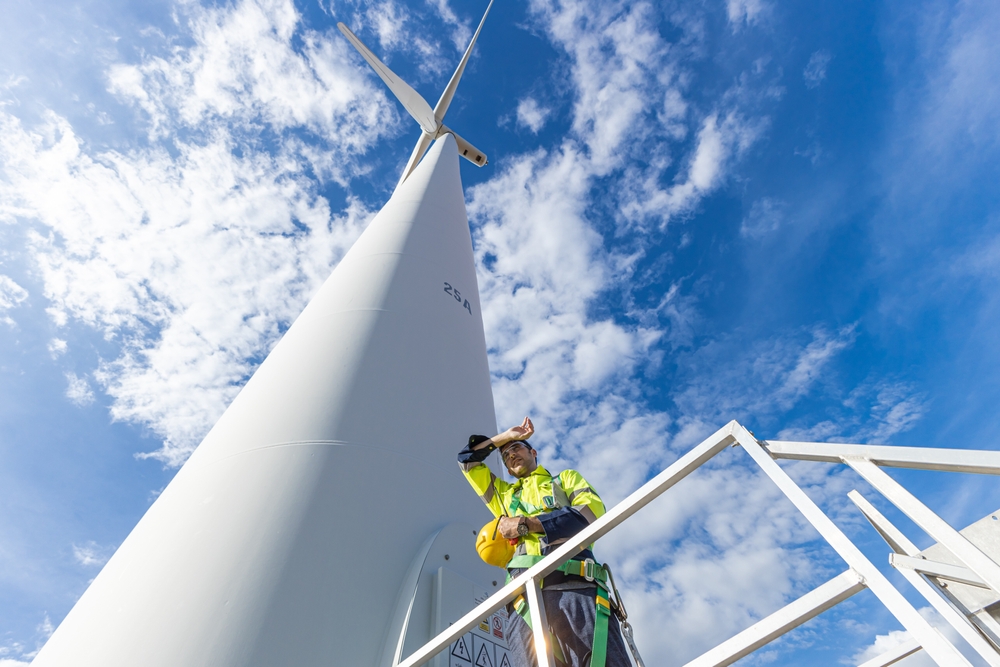
Wind turbine service technicians, often called windtechs, maintain and repair the giant turbines that generate electricity from wind. They climb inside tower shafts, diagnose mechanical and electrical failures hundreds of feet off the ground, and keep a rapidly growing energy infrastructure running. The job is physical, technical, and not for anyone with a strong fear of heights. It also pays $62,580 at the median, with the top 10 percent earning more than $88,000.
The entry path is a one-to-two year technical certificate or associate’s degree in wind energy technology, available at community colleges and trade schools in wind-heavy states. Programs cover electrical systems, hydraulics, safety protocols, and tower climbing. Some employers hire with a general mechanical background and train on site. The Global Wind Organisation Basic Safety Training certification is widely recognized and can be completed in a few days.
The reason this career makes this list is the growth projection: 50 percent employment growth from 2024 to 2034, the highest of any occupation in the country. The U.S. wind energy sector is already facing a projected worker shortage. Salaries are rising in states with offshore wind development, with some technicians in Pennsylvania and New Jersey earning well above the national median. One-year of technical training has rarely led to a field with this level of projected demand.
Solar photovoltaic installer

Solar panel installers assemble and maintain rooftop and ground-level systems that convert sunlight into electricity. Residential installers work on home rooftops; commercial and utility-scale installers build large solar arrays. Most PV installers learn on the job working alongside experienced crews, though short certificate programs are available and some employers specifically recruit from them. A high school diploma or GED is the standard starting point.
The median pay is $51,860, with 42 percent employment growth projected through 2034, the second-fastest growth rate of any occupation in the country. Top earners make more than $80,000. The NABCEP PV Installation Professional certification is an industry standard that increases employability and pay, and it can be earned after completing a qualifying program and some field experience.
The pay isn’t the highest on this list, but the barrier to entry is among the lowest. People who want to get into a growing trade without committing to a multi-year apprenticeship or a two-year degree often land here first. Several states with aggressive solar targets, including California, Texas, and Florida, employ the largest concentrations of installers. Rhode Island and Nevada top the pay rankings at the state level.
Electrical powerline installer

Line installers and repairers build and maintain the electrical transmission and distribution lines that carry power from generation sources to homes and businesses. They climb poles and work from aerial buckets, often in difficult weather and sometimes after major storms when power is out across a region. It’s dangerous, physical work that commands serious pay: the median wage is $92,560, with the highest 10 percent earning more than $126,000.
Employment is projected to grow 7 percent through 2034, faster than the average for all occupations, with about 10,700 openings per year. The expanding electric grid, driven by renewable energy installations and EV charging infrastructure, is the primary growth driver. Entry is through apprenticeship programs run by utilities and union locals affiliated with the International Brotherhood of Electrical Workers. A high school diploma and a valid driver’s license are typically the entry requirements.
Most people don’t know this career exists as a distinct path. They think of electricians and stop there. Lineworkers are a separate occupation with higher median pay and their own apprenticeship pipeline. The physical demands are significant and the hazard premium is real. But so is the paycheck, and the apprenticeship entry model means someone can start earning close to $45,000 to $50,000 in their first year of training, growing steadily toward the median as they advance.
Elevator installer and repairer

Elevator and escalator installers and repairers are among the highest-paid skilled trades workers in the country. The median annual wage is $106,580. The lowest 10 percent earn $54,720. The highest 10 percent earn more than $149,000. Entry is through a four-to-five year apprenticeship sponsored by the International Union of Elevator Constructors. Apprentices earn roughly 50 percent of journeyman wages in their first year and receive regular increases throughout the program. No degree required.
Employment is projected to grow 5 percent through 2034, faster than average, with about 2,000 openings annually. The work involves installing new elevator and escalator systems in buildings under construction as well as maintaining and repairing existing equipment. Hydraulic systems, electrical controls, and structural mechanics are all part of the job. It requires precision and problem-solving under time pressure, especially for service calls where the elevator in a hospital or high-rise has stopped working.
The reason most people have never considered this career is simple: no one talks about it. It doesn’t appear on high school guidance counselor lists. It doesn’t have a visible pipeline the way nursing or teaching does. But the pay is better than most jobs requiring a bachelor’s degree, the apprenticeship is a genuine earn-while-you-learn path, and the work is not going to be automated. Someone has to physically get into that machine.
Aircraft mechanic

Aircraft mechanics and service technicians inspect, maintain, and repair commercial and private aircraft. The work is safety-critical and requires methodical attention to detail, an FAA-issued certificate, and the ability to read technical manuals and work under time pressure. It does not require a four-year college degree. The path runs through an FAA Part 147 aviation maintenance technician school, where programs typically run 18 to 24 months and cover airframe and powerplant (A&P) systems.
The median wage is $78,680, with about 13,100 openings projected each year through 2034. Employment is expected to grow 5 percent over that period, driven by increasing air travel demand and the expanding commercial space industry. The top 10 percent earn more than $120,000. Some airlines and cargo carriers provide tuition assistance for employees who pursue A&P certification while working in adjacent roles.
This career draws people who want to work in aviation but aren’t interested in or eligible for flight training. Military veterans who worked in aircraft maintenance often transition directly, since military experience counts toward FAA certification requirements. The work is demanding and the safety stakes are real, but the entry timeline is shorter than most people assume. A year and a half of structured training leads to a career with genuine upward mobility, including supervisory roles, quality control inspection, and avionics specialization.
Plumber and pipefitter

Plumbers install and repair the water, gas, and drainage systems that run through every building. It’s one of the oldest trades, and it remains one of the most consistently in-demand. There are about 44,000 job openings projected each year through 2034, with a median wage of $62,970. The top 10 percent earn more than $105,000. Self-employed master plumbers with their own businesses frequently earn more than that.
Entry follows the same apprenticeship model as electricians: five years of combined on-the-job training and classroom instruction, with pay from the first week. Unions affiliated with the United Association of Plumbers and Pipefitters and the Plumbing, Heating and Cooling Contractors Association both sponsor programs. Journeyman licensure and, eventually, a master plumber’s license open the door to running independent contracting work.
Pipefitters, who specialize in industrial piping systems for manufacturing plants and refineries, often earn above the median and work in unionized settings with strong benefits. The distinction matters when considering which path to pursue. What doesn’t change across either specialty is the core reality: water and gas systems require human hands to install and repair. That was true a hundred years ago and will be true in a hundred more.
Dental hygienist

Most people assume that working in a dental office in any clinical capacity requires dental school. It doesn’t. Dental hygienists examine patients, clean teeth, take X-rays, and provide preventive care. They are licensed, clinical oral health professionals. What it takes to become one is a two-year associate’s degree in dental hygiene and a state license. The median wage is $94,260, with about 15,300 job openings projected annually through 2034.
Employment is expected to grow 7 percent over that period, faster than average. The top 10 percent of dental hygienists earn more than $120,000. Many work part time by choice, since dentists often hire hygienists for two or three days a week and hygienists may work in multiple offices. That flexibility is genuinely valued by people managing other obligations.
The two-year degree programs are competitive in some states because the pay-to-education ratio is hard to beat. Getting in requires strong grades in sciences, particularly anatomy and biology, and hands-on clinical hours are part of the curriculum. But the barrier is a two-year program, not an eight-year medical degree. People who enjoy patient interaction, have good fine motor skills, and want a clinical healthcare role without committing to the expense of a four-year or graduate degree should take a hard look at this one.
Diagnostic medical sonographer

Diagnostic medical sonographers operate ultrasound equipment to create images of the body’s internal structures. Physicians use those images to assess pregnancies, diagnose organ problems, identify masses, and guide minimally invasive procedures. The role requires technical skill, patient communication, and the ability to recognize what’s appearing on a screen in real time. It pays $89,340 at the median, with 13 percent employment growth projected through 2034, much faster than average.
Entry typically requires an associate’s degree or postsecondary certificate from an accredited sonography program, which can be completed in two years. Most programs include a clinical component where students work in a hospital or imaging center alongside credentialed sonographers. The American Registry for Diagnostic Medical Sonography issues the primary credentialing exam, which most employers require. Specializations, including cardiac sonography and vascular technology, carry higher pay.
This is a career most people don’t know to look for. It doesn’t carry the name recognition of nursing or radiologic technology, but the combination of two-year entry timeline, nearly $90,000 median wage, and strong projected demand makes it one of the clearer value propositions in healthcare. The aging population will generate more imaging orders over the next decade, and sonography avoids radiation, which makes it the preferred modality for a growing number of diagnostic situations.
MRI technologist

MRI technologists operate magnetic resonance imaging scanners to produce detailed images of soft tissue, organs, and the nervous system. They position patients, administer contrast agents in some cases, run the imaging sequences, and produce the images that radiologists then interpret. The median annual wage is $88,180. The standard entry path is a two-year associate’s degree in radiologic technology or MRI technology, followed by certification through the American Registry of Radiologic Technologists.
Overall employment of radiologic and MRI technologists is projected to grow 5 percent through 2034, with about 15,400 openings per year. The top 10 percent of MRI technologists earn more than $121,000. Hospitals, outpatient imaging centers, and physician offices all employ them. Evening and weekend shifts are common in facilities that run scanners around the clock.
The career tends to appeal to people who are interested in medicine and technology but aren’t drawn to direct patient care in the nursing or clinical assistant sense. The work is focused, requires technical accuracy, and the patient interaction is real but contained to the duration of an imaging session. Many MRI technologists cross-train in CT or other modalities to increase their marketability and scheduling flexibility. A radiologic technology associate’s degree is often the base credential from which MRI certification is added.
Respiratory therapist

Respiratory therapists treat patients who have trouble breathing. They work in intensive care units, emergency rooms, and neonatal units. They manage ventilators, administer oxygen therapy, assess patients with asthma and COPD, and respond to respiratory crises. It’s critical care work that carries genuine responsibility. The median wage is $80,450, with 12 percent employment growth projected through 2034, which is much faster than average.
The typical entry path is a two-year associate’s degree in respiratory therapy from an accredited program, followed by the Therapist Multiple-Choice exam administered by the National Board for Respiratory Care. Some states require licensure in addition to national certification. About 8,800 openings are projected annually. The aging population, the prevalence of chronic respiratory disease, and the consistent demand in hospital settings all support steady hiring.
Respiratory therapy sits in a blind spot for a lot of career seekers. It doesn’t have the cultural visibility of nursing, but the entry time is comparable in some cases and the work is arguably more specialized. Respiratory therapists consistently work alongside physicians in acute care settings, their scope of practice is clinically meaningful, and the two-year education timeline is a genuine entry point into a $80,000-plus career. The field got brief attention during the COVID pandemic and then receded from public awareness. The job didn’t go anywhere.
Surgical technologist

Surgical technologists, sometimes called operating room technicians or scrub techs, prepare operating rooms, sterilize instruments, hand tools to surgeons during procedures, and assist with patient positioning and draping. They are inside the OR for every surgery, and surgeons depend on them to anticipate what’s needed next. It’s fast-paced, high-stakes work. The median wage is $62,830, with about 8,700 openings projected each year through 2034.
Entry requires a postsecondary certificate or associate’s degree from an accredited program, typically 12 to 24 months. Most programs include substantial clinical hours in real operating rooms. The National Board of Surgical Technology and Surgical Assisting offers the Certified Surgical Technologist credential, which most hospitals require for hire. Employment is projected to grow 5 percent through 2034, with increasing demand in ambulatory surgical centers.
The career is genuinely accessible and genuinely demanding. People who complete a one-to-two year program can be in a surgical setting within two years of starting. The work environment is sterile, structured, and requires attention under pressure. For someone who wants to be in a hospital operating room and doesn’t have the inclination or means to pursue a nursing or surgical residency, this is a real path. Surgical technologists who pursue further education can advance to surgical first assistant roles, which carry significantly higher pay.
Physical therapist assistant

Physical therapist assistants, working under the supervision of licensed physical therapists, help patients recover from injury and illness through exercise, manual therapy, and functional training. They work in hospitals, outpatient clinics, nursing facilities, and home health settings. The median wage is $67,160, and employment is projected to grow 22 percent through 2034, which is much faster than the average for all occupations and one of the stronger growth rates in the healthcare sector.
Entry requires an associate’s degree from an accredited PTA program, typically two years, plus a state license. The Commission on Accreditation in Physical Therapy Education accredits PTA programs throughout the country. Programs include significant clinical fieldwork. Licensure requires passing the National Physical Therapy Examination for PTAs.
Most people who are interested in physical therapy assume they need a doctor of physical therapy degree, which runs three years beyond a bachelor’s degree. The PTA role is a distinct occupation with its own scope of practice, not just an aide title. PTAs conduct treatment sessions, track patient progress, communicate with the supervising PT, and adjust exercises based on patient response. The 22 percent growth projection is driven by the aging baby boomer population, who will generate sustained demand for rehabilitation services over the next decade. Two years of school for a role with that trajectory is worth knowing about.
Radiation therapist

Radiation therapists administer precisely calibrated doses of radiation to cancer patients as part of their treatment plan. They work closely with oncologists and medical physicists, operate linear accelerators and other treatment machines, position patients accurately for each session, and monitor for side effects. The median annual wage is $101,990. The lowest 10 percent earn $77,860. The highest 10 percent earn more than $141,000.
The entry path is an associate’s or bachelor’s degree in radiation therapy from an accredited program, plus certification through the American Registry of Radiologic Technologists. Most states require licensure. Programs typically run two years for an associate’s or four years for a bachelor’s. Employment in the field is relatively small, around 19,000 workers nationally, with about 900 openings projected per year. The field is not growing fast, but it is stable and the pay is exceptional for the education required.
Radiation therapists earn more than $100,000 at the median on an associate’s degree. That’s an unusual combination. The work requires precision, calm with patients who are often frightened and physically depleted, and technical fluency with complex equipment. Programs are competitive and clinical experience is part of the curriculum. But the end point, a clinical healthcare career clearing six figures from a two-to-four year program, is a pay-to-education ratio that most people looking at college options have never had the chance to consider.
Discover job hunting tips, ways to earn more, and flexible working options:

21 high-paying careers that desperately need workers, but nobody wants to do them: The pay is generous, but these jobs are searching for workers.
No background check jobs: 12 background friendly jobs: If you’re struggling to find a job due to past issues, here are jobs you can get without background checks.
15 remote jobs you probably didn’t know pay $150,000+ In 2026: High income and flexible work hours from home is not a myth — here are some remote-friendly careers.











