
You inherit a house. You look around the living room, check the jewelry, wonder about the furniture, and then completely ignore the lamp in the corner. It’s vaguely space-age looking, odd color, probably from the sixties. You figure it goes in the donation pile.
That’s the right call for the vast majority of mid-century lamps. Mass production meant that tens of millions of broadly similar-looking fixtures were sold through department stores and furniture chains between 1945 and 1975, and most of them are worth almost nothing today. But a specific and identifiable slice of that market, defined by designer names, manufacturer labels, and production quality, has become seriously collectible. Prices have climbed sharply over the past fifteen years as interior designers and collectors rediscovered the originals.
The complication is that nearly every valuable piece from this era has been reissued, reproduced, or copied. Louis Poulsen still makes the PH5. &Tradition now produces the Flowerpot. All of these are excellent products, but none of them is the same as an authentic vintage original, and the market prices them accordingly.
Table of contents
- Poul Henningsen PH5 pendant lamp (Louis Poulsen, white, 1958 onward)
- Verner Panton Flowerpot VP1 pendant (Louis Poulsen, 1968+)
- Jo Hammerborg Nova pendant for Fog & Mørup (1960s)
- Italian Murano glass cased mushroom table lamp (1950s-60s)
- Isamu Noguchi Akari light sculpture, early 1950s-60s models with sun/moon stamp
- Arne Jacobsen AJ table lamp for Louis Poulsen (original 1957-60s)
- Gerald Thurston Triennale floor lamp for Lightolier (1960s)
- Fog & Mørup Fibonacci pendant by Sophus Frandsen (1963)
- Italian brass Sputnik chandelier (Stilnovo or Gaetano Sciolari, original 1950s-60s)
- Greta Magnusson Grossman Grasshopper G-33 floor lamp (Bergboms, 1947-50s)
- Greta Magnusson Grossman Cobra table lamp for Ralph O. Smith (1950)
Poul Henningsen PH5 pendant lamp (Louis Poulsen, white, 1958 onward)
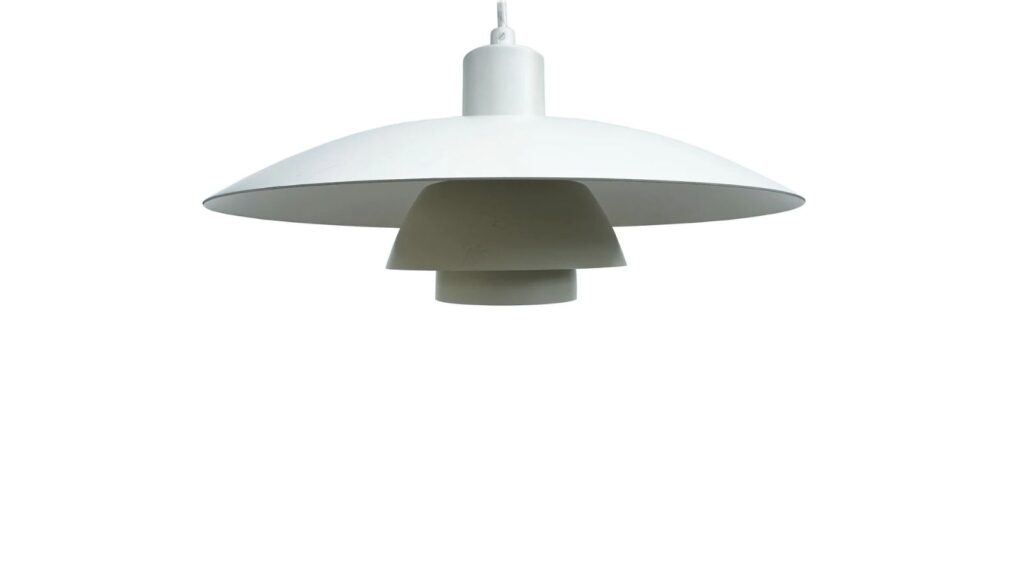
The PH5 is one of the most copied lamp designs in history, which creates an immediate identification problem. Designed by Danish architect Poul Henningsen in 1958 and produced by Louis Poulsen, it has been continuously reissued, widely imitated, and counterfeited to varying degrees of quality. What you want is a pre-1980 example with the original Louis Poulsen label intact inside the upper shade and all five disc layers present and undamaged.
Standard white vintage PH5 pendant lamps in good condition typically bring $700 to $1,200, depending on age and whether the internal colored accent discs are clean and intact. First-edition examples from the late 1950s in rare colorways like purple-blue or red bring more, often $1,500 to $2,500. The small internal reflector cone must be present. A replaced cord in a non-original color is a minor issue; a missing disc is a major one.
The Louis Poulsen foil label on the inside surface of the largest shade is the authentication point. Check the five-layer disc system carefully. Any bent, cracked, or missing layer reduces value substantially. The lamp has been made for sixty-seven years and counting, so the age indicators (heavier gauge metal, earlier socket types, period-appropriate cord) matter to buyers who know what they’re looking at.
Verner Panton Flowerpot VP1 pendant (Louis Poulsen, 1968+)
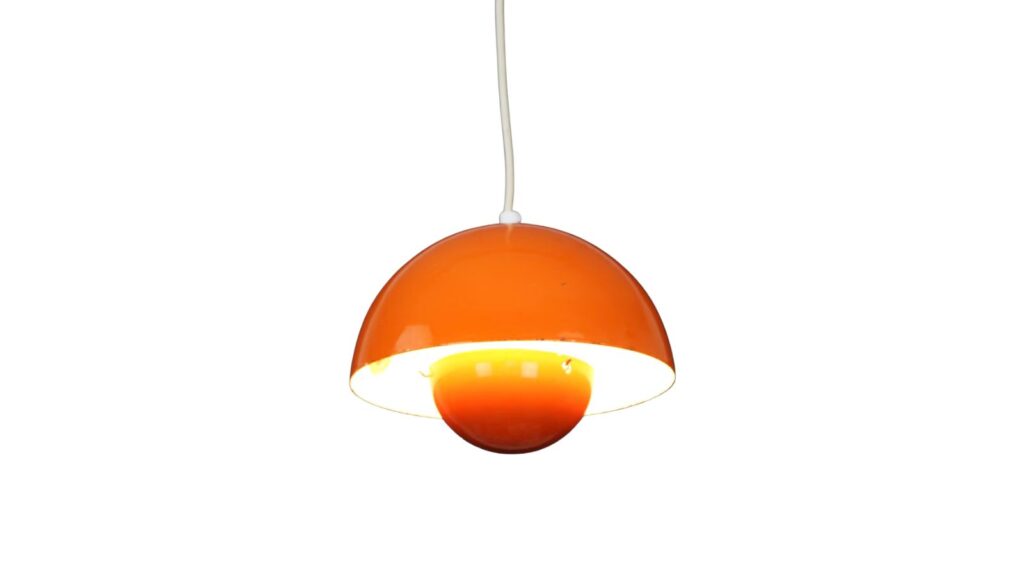
Two offset hemispheres, the larger on top, the smaller below, hiding the bulb completely. Verner Panton designed the Flowerpot VP1 for Louis Poulsen beginning in 1968 and it’s been reissued by &Tradition since 2015. That distinction matters because original Louis Poulsen examples are heavier, made with thick enamel rather than painted metal, and carry the old Poulsen label on the inside.
Standard white or orange vintage examples from the 1970s typically bring $500 to $900. First-edition 1968-1969 examples with original thick heavy-gauge enamel and the matching textile cord command $900 to $1,500 and sometimes more for unusual color combinations. The internal red reflector disc must be intact. &Tradition and any other reissue label means you have a reissue, not a vintage original. The difference in resale value is the difference between a few hundred dollars and close to a thousand.
Enamel chips anywhere visible on the exterior substantially reduce value. The cord should ideally be original textile in a matching color. A replaced modern cord is manageable but negotiable. The original Louis Poulsen label on the inside is the primary authentication point, and its presence separates a $600 lamp from a $60 lamp at resale.
Jo Hammerborg Nova pendant for Fog & Mørup (1960s)
i.sell.my.art.collection via eBay
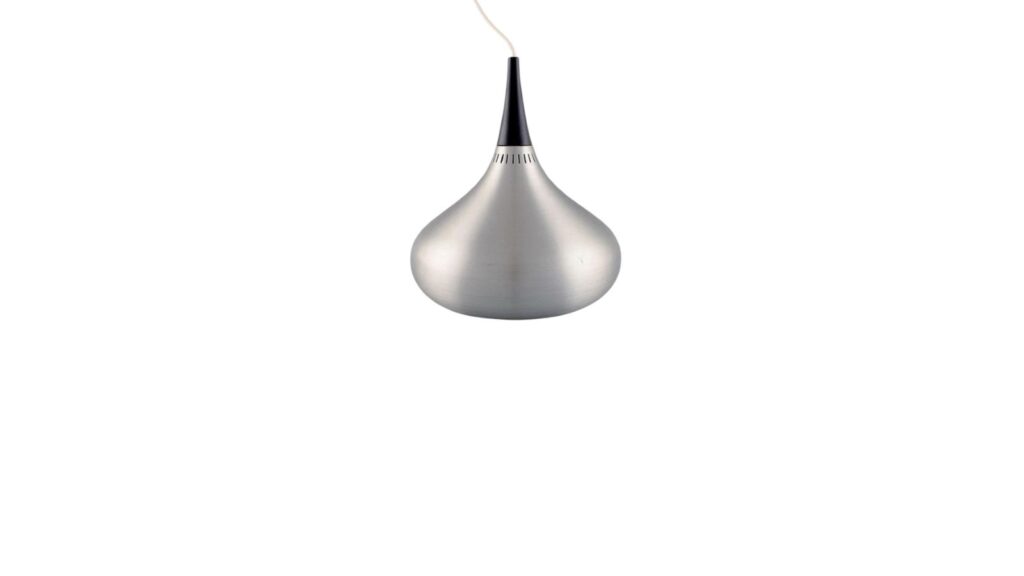
Denmark’s Fog & Mørup was one of the serious Scandinavian lighting companies of the postwar decades, and Jo Hammerborg served as its principal designer from 1959 until he retired in 1980. The Nova pendant, with its wide shallow aluminum disc and clean geometric profile, is among the most representative of what Hammerborg produced: clearly space-age in proportion, still looking purposeful rather than dated.
Original Nova pendants in good condition with the Fog & Mørup maker’s mark typically bring $400 to $700. Hammerborg designed several related pendant lamps under different model names (Juno, Saturn, Corona), and all bring roughly similar money. The company closed for good in 2005, so all genuine examples are now vintage. Condition of the aluminum finish is the primary value driver: original matte or brushed finishes in clean shape bring the most, while repainted examples are worth noticeably less.
The Fog & Mørup maker’s mark and Hammerborg’s design credit are usually found on the inside or back of the shade. The shade should have no significant denting, which is visible on a plain aluminum surface. Check the joint between the stem and the shade for stability. Original canopy and period cord are a genuine plus.
Italian Murano glass cased mushroom table lamp (1950s-60s)
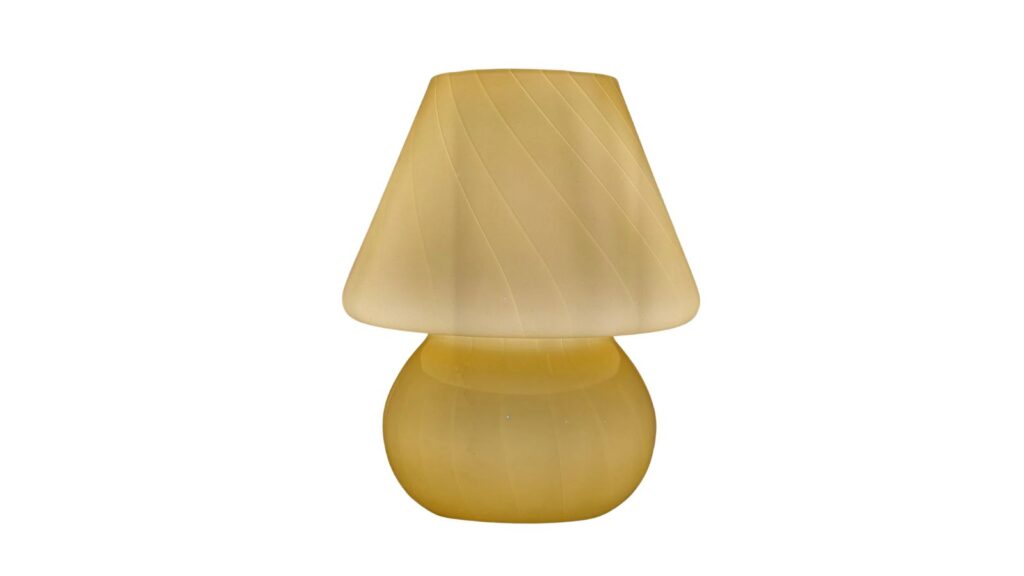
Murano glassmakers were producing some of the most striking decorative lamps in the world during the 1950s and 1960s. The mushroom-cap form in cased glass, where a layer of colored glass is encased in clear and shaped into a broad rounded shade, is the most recognizable. These lamps show up fairly often at estate sales, but the ones worth real money are those with a maker’s label intact and no chips along the shade rim.
Signed or labeled examples from established Murano houses in clean condition typically bring $300 to $700 depending on color and how clearly the piece is attributed. Unlabeled Italian mushroom lamps, however similar they look, sell for much less because attribution is impossible without documentation. Rich amber, deep green, and layered swirl finishes command more than standard yellow or white.
Check the rim of the mushroom shade first. Small chips are extremely common on glass that has seen sixty years of use and substantially reduce value. The brass or chrome base fittings should show age-appropriate patina but no verdigris. If a label is present on the base or underside, it is worth researching the maker before assuming the lamp is generic.
Isamu Noguchi Akari light sculpture, early 1950s-60s models with sun/moon stamp
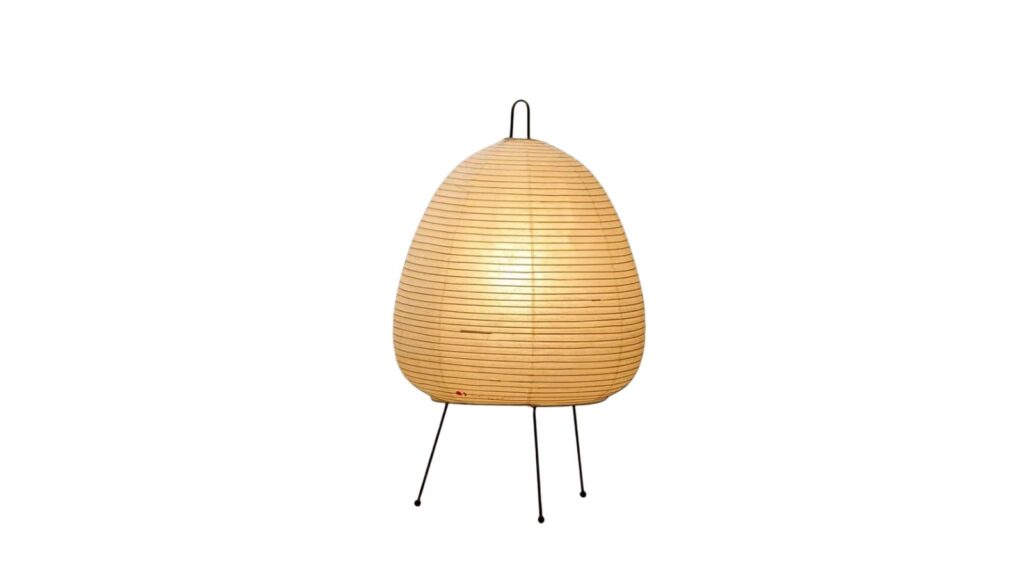
Noguchi began making Akari lamps in 1951 through the Ozeki workshop in Gifu, Japan, and Ozeki still produces them today. That continuous production is what makes authentication essential: originals from the 1950s and 1960s carry the red sun-and-moon ideogram stamped on the bamboo ribbing inside the shade, a marking that distinguishes vintage examples from the long succession of later production and imitations.
Early original Akari lamps with the sun/moon stamp in good condition, undamaged washi paper, and an intact original base typically bring $700 to $2,000 for common models like the 1A table lamp or 10A floor lamp. Examples from the 1950s with the original cast iron base and full “Made in Japan” marking are rarer and bring more. The later 1980s Gemini/Ozeki editions are authentic but bring considerably less.
The washi paper is the most fragile element. Any tear, water staining, or significant yellowing reduces value sharply. The bamboo ribs should flex without cracking. Never open a folded shade roughly. The sun/moon stamp on the internal ribbing is the authentication point: without it, early vintage origin cannot be confirmed.
Arne Jacobsen AJ table lamp for Louis Poulsen (original 1957-60s)
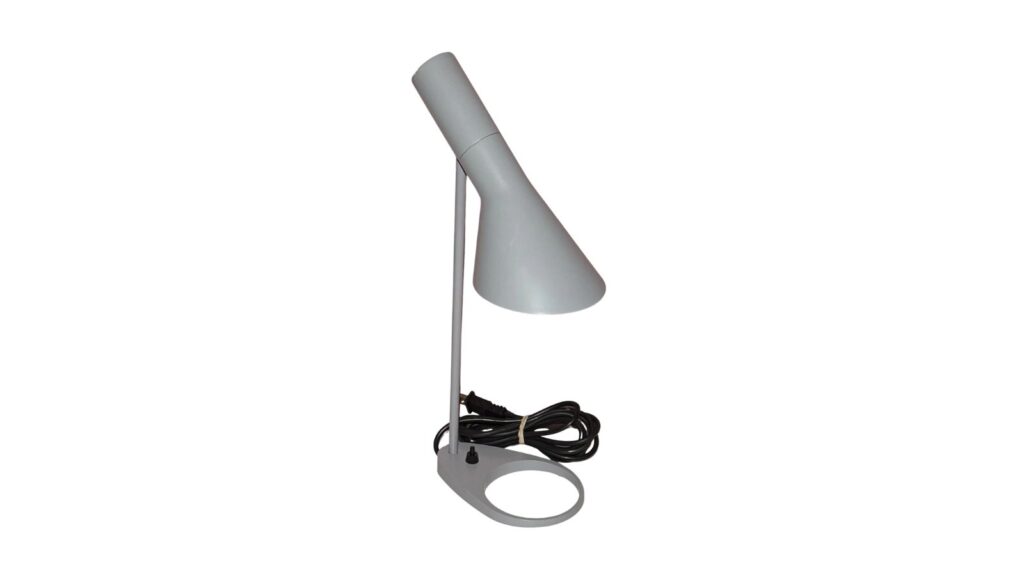
Jacobsen designed the entire AJ lamp family in 1957 for the SAS Royal Hotel in Copenhagen, creating one of the most completely resolved examples of Scandinavian design thinking: a cylindrical housing with an angled conical shade, the whole assembly rotatable to direct light with precision. Louis Poulsen still produces it, so original vintage examples need the appropriate age indicators.
Original 1960s AJ table lamps with the Louis Poulsen label, working tilt mechanism, and clean interior white-painted shade typically bring $1,200 to $2,500. The floor lamp version sells for roughly the same. Condition of the shade interior matters more than people expect: the white painted reflecting surface should be clean, without yellowing or scorching from an incorrect bulb. The copper colorway is rarer than chrome and commands a premium.
The Louis Poulsen label inside the shade is the authentication point. The tilt mechanism should move smoothly and hold position. A modern replacement cord is manageable but worth noting in any price negotiation. The SAS Royal Hotel still exists and is now a design-designated landmark, which has only increased awareness of these pieces.
Gerald Thurston Triennale floor lamp for Lightolier (1960s)
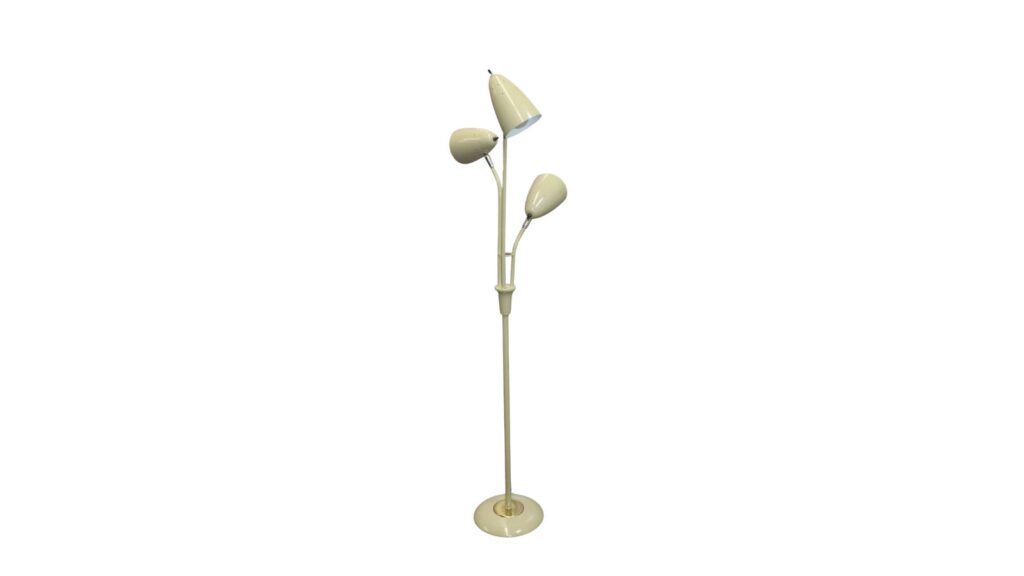
Thurston’s response to the Italian Triennale design is its own distinct object: three independently positionable enameled cone shades on adjustable arms extending from a central brass pole. Several Lightolier versions exist, and the most desirable are the polychrome configurations with three shades in different colors, typically red, white, and black, or the dusty rose arrangement. The color combination is part of the design, not cosmetic.
Original Thurston Triennale floor lamps with all three original shades, intact counterweight arm handles, and the Lightolier marking typically bring $600 to $1,400. Replaced shades in non-period colors substantially reduce value because the original colorway is what makes the piece. Finding a polychrome example with all three period shades in matching condition is genuinely harder than it sounds.
Check the pivot mechanisms on each arm: they should hold position without freezing. The cone shades should have no significant denting at the socket opening and no chips at the rim. The base should be the original cast metal disc, not a substitute. Period color shade configurations command the premium; single-color versions are worth less.
Fog & Mørup Fibonacci pendant by Sophus Frandsen (1963)
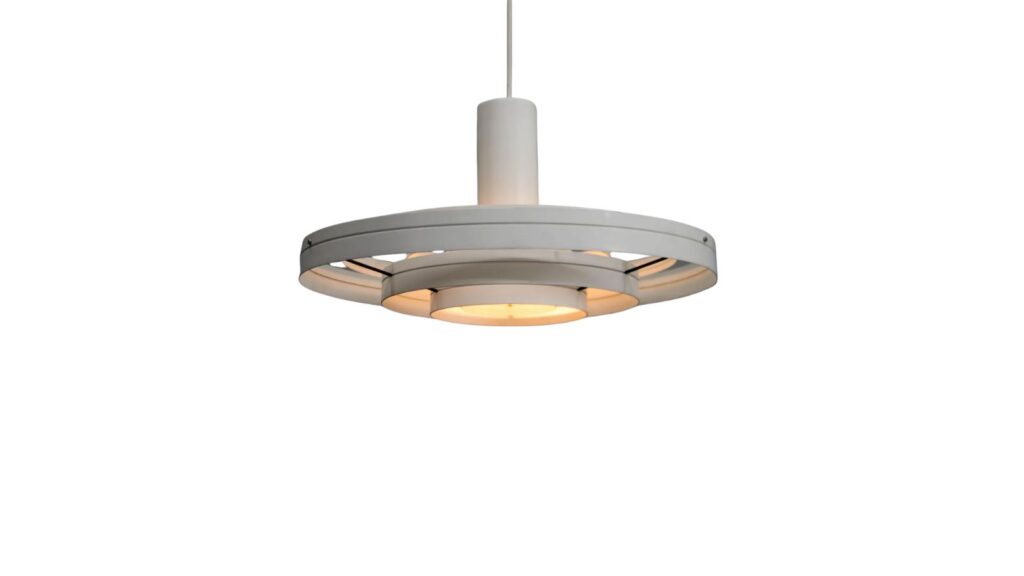
The Fibonacci is the most unusual lamp in the Fog & Mørup catalog: a pendant built from a spiraling sequence of graduated flat metal sections arranged mathematically, which creates a layered shadow pattern when lit that looks like nothing else. Frandsen designed it in 1963, production was limited, and the design never had a straightforward reproduction or reissue. That means genuine examples are both rarer and more confidently identifiable than most Danish pendants of the era.
Clean original Fibonacci pendants with the Fog & Mørup label and all spiral sections intact typically bring $600 to $1,200. The precise arrangement of the sections is the first check: they should be evenly spaced without bending or gaps. A single missing section breaks the mathematical sequence visually and reduces value meaningfully. This lamp surfaces rarely outside Europe.
The finish on the metal sections should be original and consistent throughout. The canopy and period cord should be intact. The Fog & Mørup label is authentication. Because the design is unusual enough to attract forgery, verify the canopy marking before committing to anything above $300.
Italian brass Sputnik chandelier (Stilnovo or Gaetano Sciolari, original 1950s-60s)
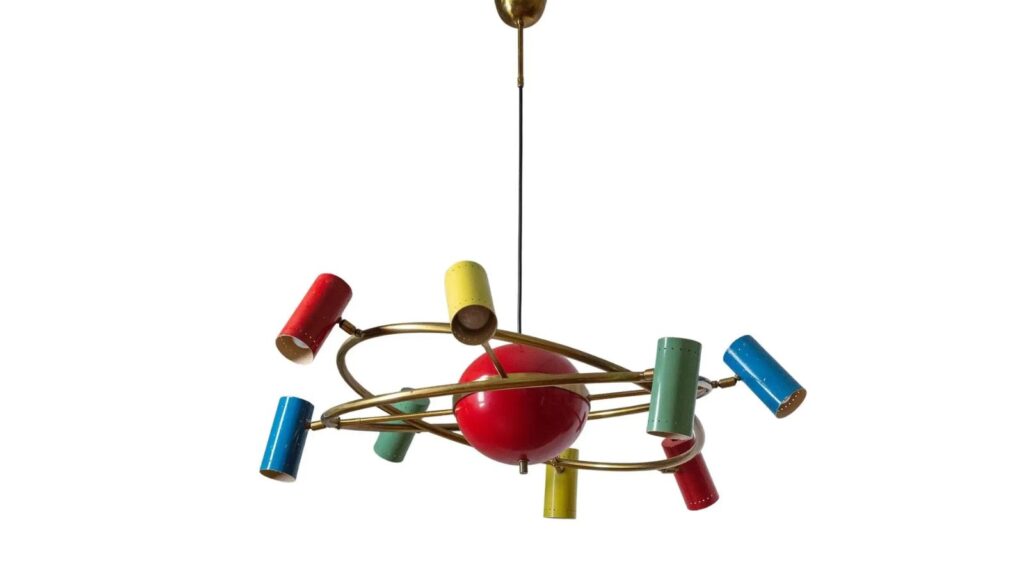
Italian lighting companies were producing serious brass Sputnik chandeliers before the design became a mass-market phenomenon, and the originals by Stilnovo and designer Gaetano Sciolari are in a different category from what followed. The difference comes down to brass gauge, socket fitting quality, and manufacturing origin. Original Italian examples from the late 1950s and 1960s are heavier, better engineered, and carry specific markings that modern reproductions and current decorative chandeliers do not.
Verified Stilnovo or Sciolari originals with authentic period hardware and markings typically bring $1,500 to $4,500 depending on arm count and condition. Higher arm counts from 1950s production bring the most. Reproductions look similar but are dramatically lighter. The Stilnovo logo on the canopy or socket caps is the authentication point.
The weight is the first tell between original and reproduction. Lift it if you can: a period Italian original is noticeably heavier. Check for the Stilnovo marking before assuming attribution. Wiring will typically need inspection and possible rewiring for modern use, which is normal and does not reduce collector value. Any replaced arms or socket caps in non-matching metal reduces value proportionally.
Greta Magnusson Grossman Grasshopper G-33 floor lamp (Bergboms, 1947-50s)
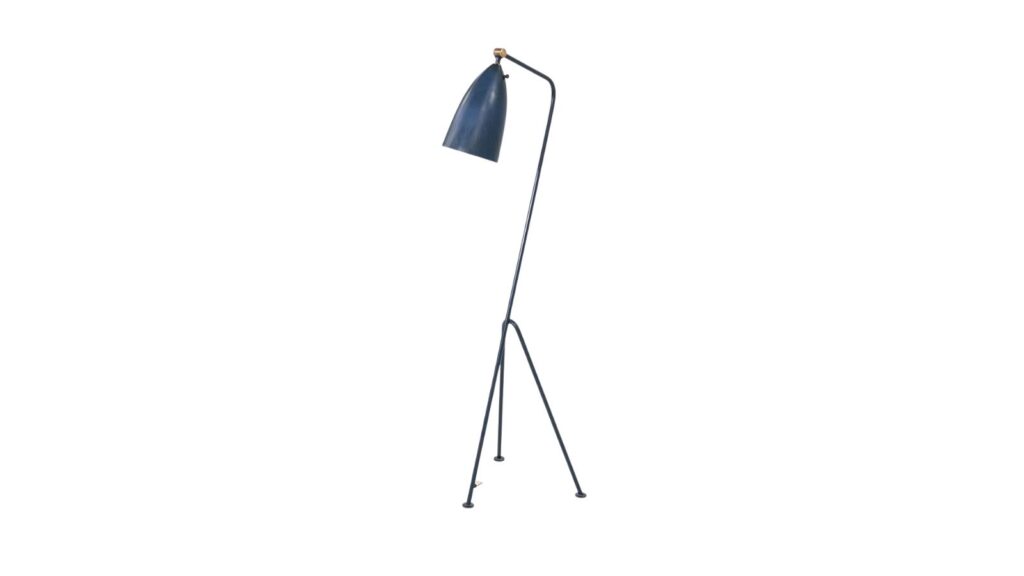
This is where the market gets serious. Grossman designed the Grasshopper in 1947, producing the American version via Ralph O. Smith and a nearly identical Swedish version through Bergboms. GUBI has made an authorized re-edition since around 2011, and Design Within Reach sells it as a current product. The re-editions are excellent quality and clearly labeled as GUBI. They are not the same investment as an original.
Bergboms-produced originals with the “G-33 Bergboms Max 25W” label on the socket fitting, original lacquered metal finish (black, grey, or the rarer petroleum blue), and intact counterbalance mechanism typically bring $3,000 to $6,000. Ralph O. Smith American originals from 1947 with the original paper label inside the shade push toward the top of that range. Unusual original lacquer colors bring the most.
Confirm whether you have a GUBI re-edition or an original before making any commitment above a few hundred dollars. A GUBI piece is labeled as GUBI and is worth what a quality new lamp is worth. On an authentic period original, the ball joint at the shade attachment should pivot freely and hold position. All three tripod legs should be period metal with no replacement hardware.
Greta Magnusson Grossman Cobra table lamp for Ralph O. Smith (1950)
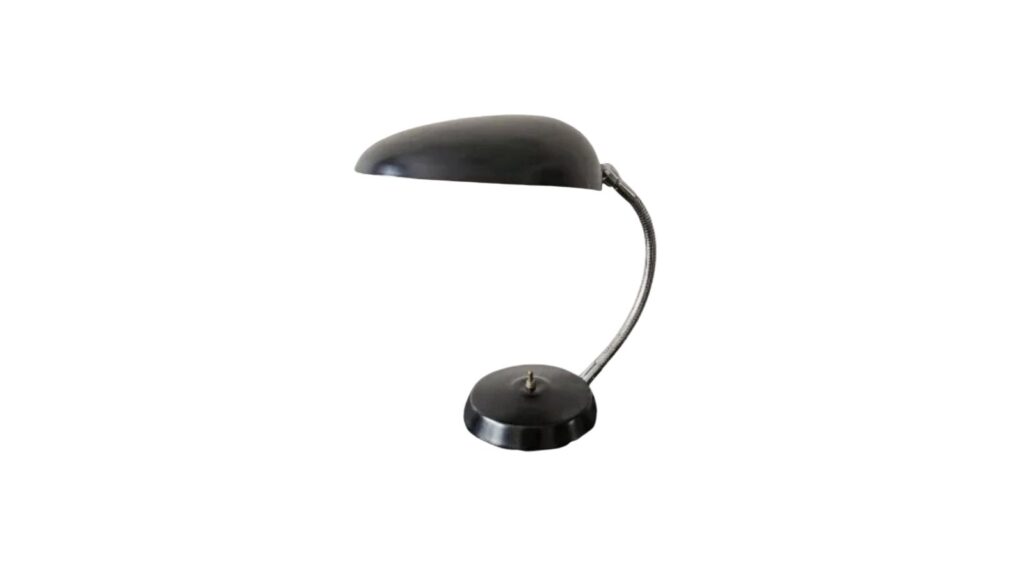
Grossman designed the Cobra in 1950, the year she was at the peak of her popularity with California modernist clients including Greta Garbo and Joan Fontaine. The lamp curves like a cobra’s neck and terminates in a directional socket. It is smaller and more accessible than the Grasshopper, which means it turns up more frequently, particularly at California estate sales where Grossman’s work concentrated. GUBI makes an authorized re-edition here too.
Original Cobra table lamps for Ralph O. Smith, with the original paper label intact and the original lacquered finish, typically bring $1,200 to $2,500. Period colors (black, grey, or olive) command more than any repainted examples. The original socket fitting should be appropriate to the era rather than a modern replacement.
Confirm the label before committing to anything above $300. Without a label, this piece cannot be distinguished from anonymous period-similar lamps or from current re-editions. The Cobra neck should be smooth continuous metal, not welded sections. Any visible weld or repair anywhere on the body warrants a direct explanation from the seller.











