
That electronic memory game with the four colored buttons is probably still sitting in a box somewhere, batteries long dead, buried under board games nobody plays anymore. The same goes for the drum machine your uncle swore he was going to start a band with, the little black box with the swiveling antenna that used to catch three channels on a good day, and the computer that weighed as much as a car battery and somehow passed for portable.
The 1980s produced an enormous amount of electronics, and not all of it aged the same way. Some of it is landfill. Some of it is quietly worth hundreds, or in a few cases thousands, of dollars to people who know exactly what they’re looking at. The difference usually comes down to which specific model you have, whether it still works, and how much of the original packaging survived.
These are 14 pieces of 1980s electronics worth a closer look before any of it ends up in a donation pile.
1. Milton Bradley Simon (1978)
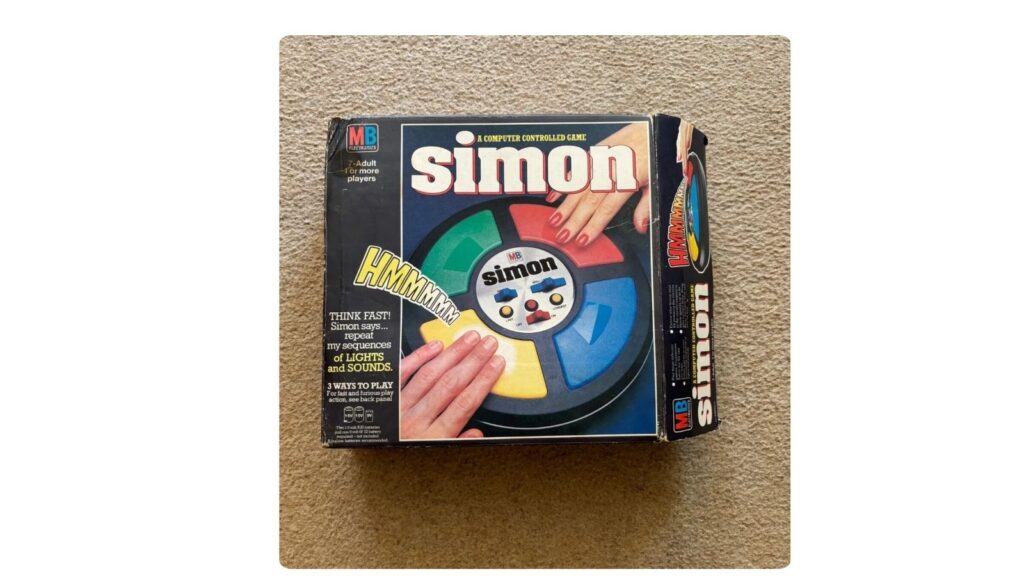
Simon is the electronic memory game with four colored buttons, each one lighting up and beeping in a sequence you have to repeat back, longer each round. Milton Bradley launched it at a midnight party at Studio 54 in 1978, and it went on to sell more than 10 million units within a few years. Nearly every household had one at some point, which is exactly why most surviving examples aren’t worth much.
A loose, working Simon in decent cosmetic shape typically brings $15 to $30, and one with its original box and instructions reaches $40 to $70. The appeal holds steady because the four-button design and chirpy sound effects are instantly recognizable even to people who never played it.
Check that all four buttons register reliably and that the volume switch works, since a sticky button or dead speaker is the most common fault. The clear “See-Thru” Simon variant and the smaller Pocket Simon from 1980 turn up less often and carry a modest premium over the standard black model. This isn’t a retirement fund, but it’s a genuinely easy, low-stakes find if one turns up for a dollar at a yard sale.
2. JVC GR-C1 camcorder (1984)
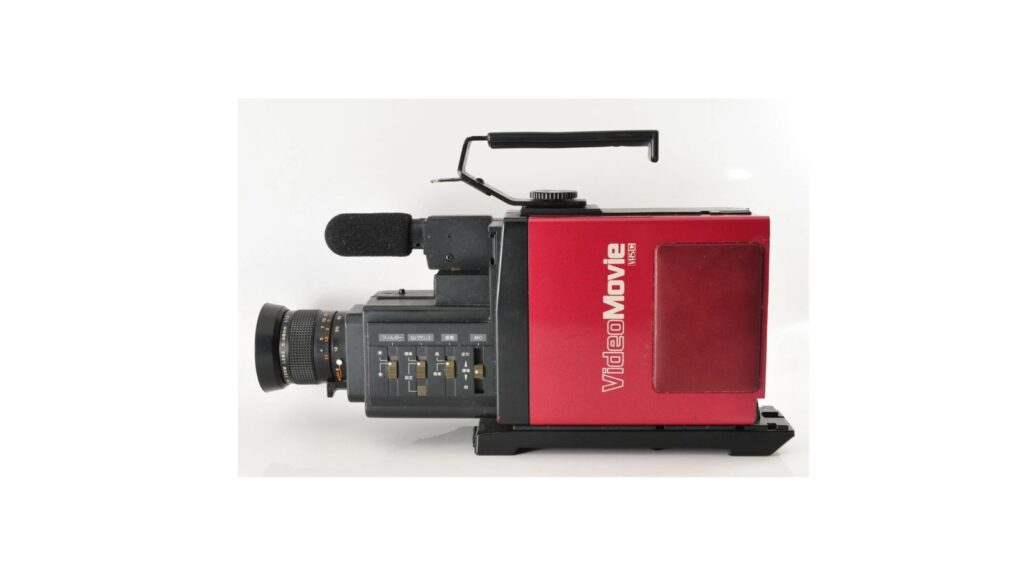
Doc Brown handed Marty McFly a boxy red camera in the opening scene of Back to the Future and called it a “portable television studio.” That was the JVC GR-C1, the first camcorder to combine the camera and the recorder into one handheld unit instead of a shoulder-slung deck wired to a separate camera. It used compact VHS-C tapes that played in any home VCR with a simple adapter shell, which made it genuinely useful rather than just a novelty.
A working GR-C1 with its original battery charger and RF unit typically commands $400 to $900, with the movie connection pushing clean examples toward the higher end. That cameo keeps demand steady among prop collectors even outside the usual camcorder crowd.
These units are old enough that failing capacitors and hardened drive belts are common, and a camera that won’t power on or eject a tape usually needs a repair technician rather than fresh batteries. Streaking across the viewfinder in bright light is a known quirk of the original tube sensor, not necessarily a fault. Confirm the unit actually records and plays back before paying serious money, since a display-only shell is worth a fraction of a working one.
3. Texas Instruments TI-99/4A (1981)
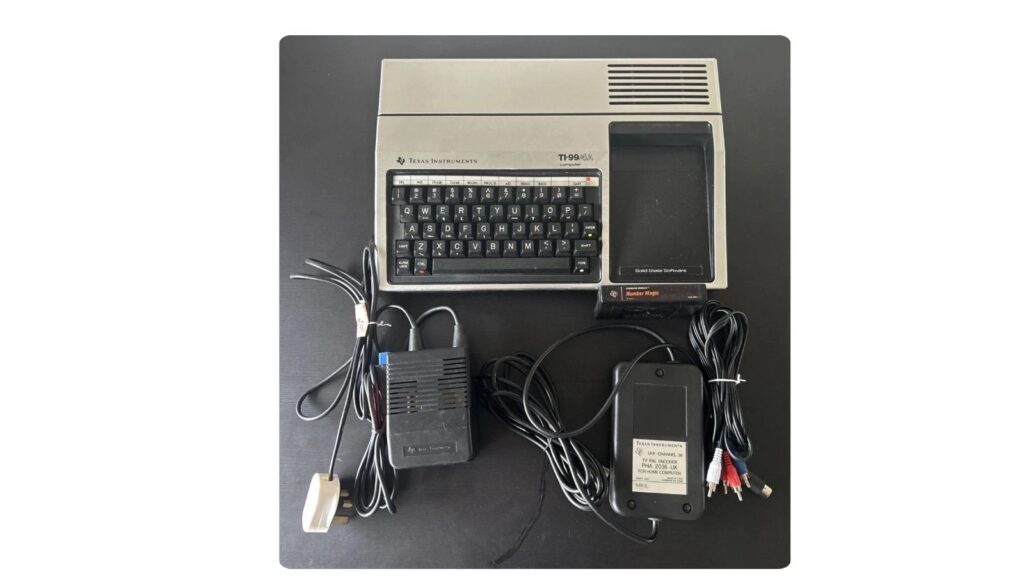
The TI-99/4A was Texas Instruments’ home computer, built around the same chip technology the company used in its calculators, and it briefly undercut Commodore and Atari on price during the early-80s home computer wars. TI sold millions of them before pulling out of the computer business entirely in 1984, which means working units still surface regularly in basements and storage units.
That volume keeps prices modest. A loose, working TI-99/4A typically brings $30 to $60, and a complete example with the original box, power supply, and manuals reaches $100 to $180. The Speech Synthesizer module and cartridge games add a little more when they’re included and tested.
The most common failure is a dead or corroded power supply, so test before assuming the computer itself is broken. Keyboard keys can stick or stop registering after decades of dust, and the membrane underneath isn’t always repairable. Original retail price was $525, which makes even a modest resale a reasonable return, but this is a volume item rather than a rarity. Clean, boxed examples with working cartridges are what actually move for real money.
4. Technics SL-1200MK2 turntable (1979)
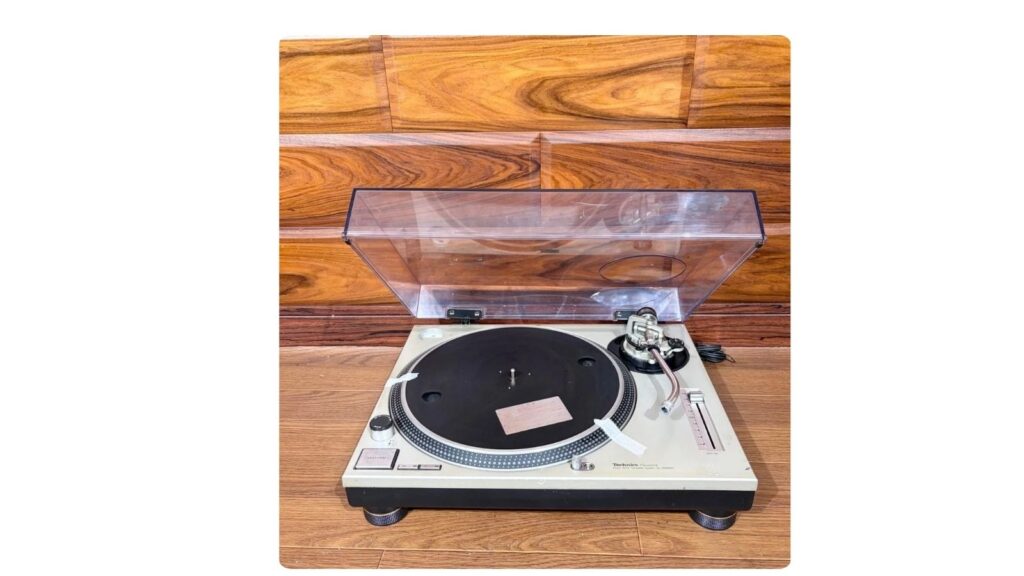
The SL-1200MK2 is the turntable that built hip-hop DJ culture, prized for a direct-drive motor strong enough to handle scratching and a pitch control that let DJs beatmatch two records by ear. Technics kept the design in production for decades with only minor changes, which means a clean MK2 still performs exactly like one would have in 1985.
A well-maintained, working deck without a cartridge typically sells in the $400 to $900 range, depending on cosmetic condition and whether the original dust cover survived. Factory-sealed, never-opened units from the original production run are a different category entirely and have reached well into four figures.
Check that the platter spins at a true, steady speed using the built-in strobe light, since motor wear shows up as pitch drift before anything else fails. The tonearm counterweight and anti-skate dial should move smoothly without grinding. A missing headshell or cartridge isn’t a dealbreaker since both are easy to replace, but a cracked plinth or water damage to the internals is much harder to fix and drops the value sharply.
5. Sony Watchman FD-210 (1982)
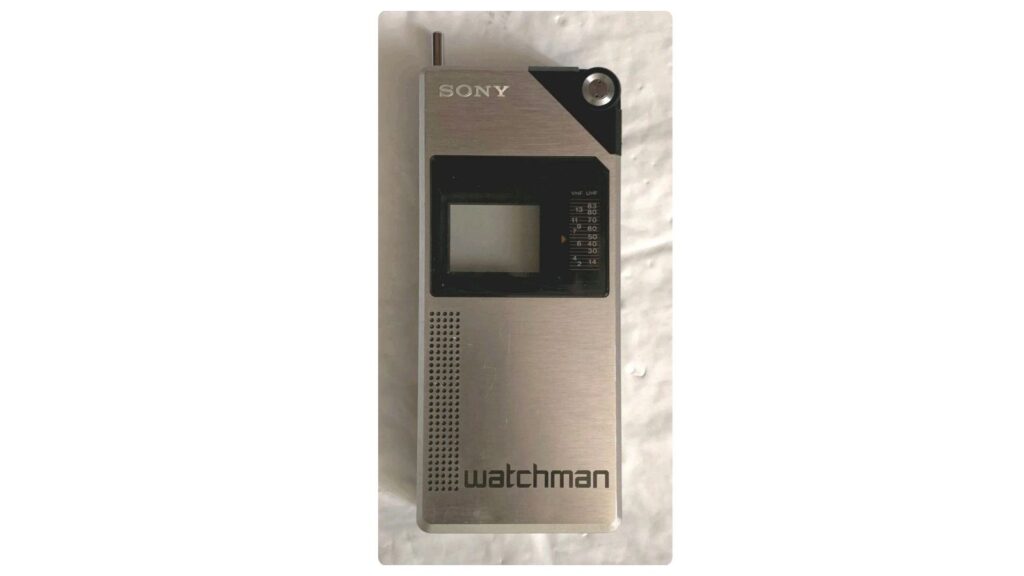
Gadget Goodies For Less via eBay
The FD-210 was the first television small enough to fit in a coat pocket, built around a genuinely clever flat cathode-ray tube that let Sony shrink a living room appliance down to the size of a paperback book. It launched in Japan in 1982 and reached the US and Europe in 1984, selling for roughly $300 at the time.
Since over-the-air analog broadcasting ended, a Watchman can no longer pull in live television without a separate digital converter box, which keeps most examples in the hands of collectors rather than actual viewers. Working original silver FD-210 units with their carrying case typically bring $60 to $100, while later plastic-bodied models in the same line usually sell for less.
Test the screen for a stable picture rather than just a powered-on glow, since the flat tube is the one component that can’t be easily replaced if it fails. Battery compartment corrosion is extremely common on anything this age and is usually fixable with a careful cleaning. This isn’t a big payday, but it’s a genuinely distinctive piece of design history for not much money.
6. ColecoVision (1982)
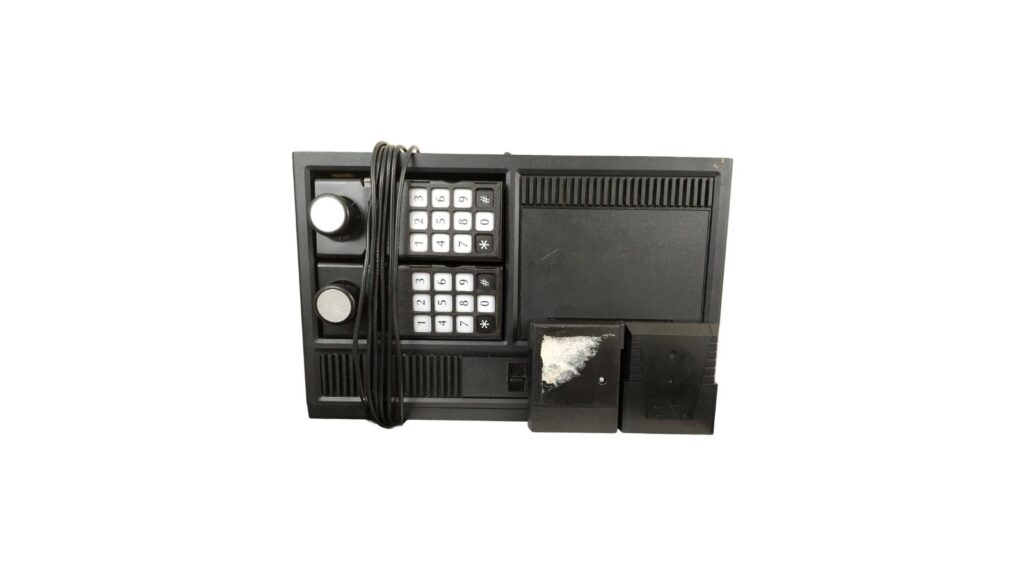
Coleco’s console briefly outmuscled Atari on graphics quality, thanks to a built-in adapter that let it run genuine arcade conversions of games like Donkey Kong at a level the 2600 couldn’t match. It sold well for two years before the video game crash of 1983 ended Coleco’s run in the console business.
A clean, working ColecoVision on its own typically brings $80 to $150, and a complete example with the original box, controllers, and overlays reaches $200 to $300. The Expansion Module that let it play Atari 2600 cartridges adds real value when it’s included and functional.
The controller wires are prone to breaking at the connector after decades of flexing, so test both controllers rather than assuming they work because the console powers on. The numeric overlay panels that slot over each controller’s keypad are commonly missing and worth tracking down separately, since a controller without its overlay looks incomplete even when it technically works. Yellowing on the light grey plastic case is normal and doesn’t hurt value much on its own.
7. Casio VL-Tone VL-1 (1981)
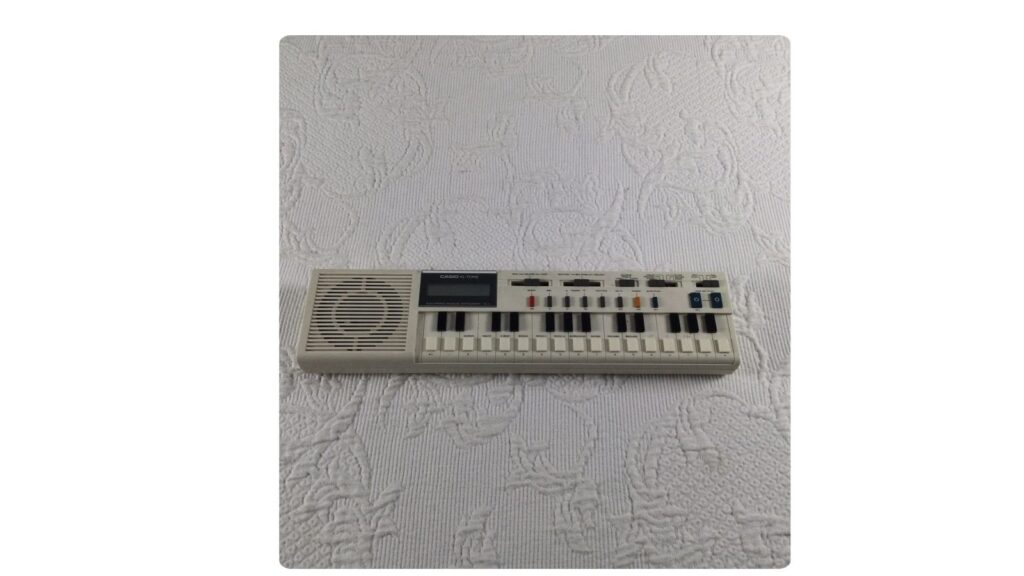
The VL-1 is a calculator, a drum machine, and a monophonic synthesizer crammed into one battery-powered unit small enough to carry in a bag. Casio marketed it as a novelty, but its tinny, instantly recognizable sound ended up on records by the Human League and the Cars, and most famously anchors the French duo Trio’s 1982 hit “Da Da Da.”
A working VL-1 in good cosmetic condition typically brings $70 to $150, with boxed examples including the manual pushing toward the higher end. The calculator mode still works on most surviving units, which is a quick way to confirm the logic board hasn’t failed.
Check that all 29 keys register and that the small built-in speaker produces clean sound without crackling, since a blown speaker is a common and sometimes tricky repair on a unit this small. The soft carrying case Casio included is often missing and adds a little to the price when present. This is an easy, cheap way into vintage synth collecting, and genuinely useful for anyone who wants that specific lo-fi sound rather than just a shelf piece.
8. Osborne 1 (1981)
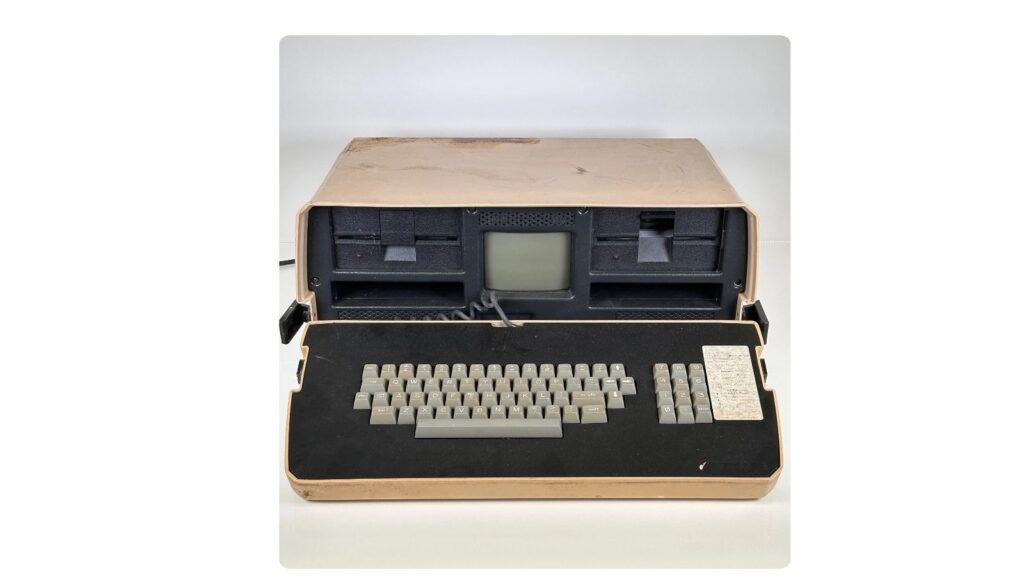
The Osborne 1 was the first portable computer to actually sell in meaningful numbers, a 24-pound case with a built-in 5-inch screen and two floppy drives that Osborne marketed as something that would fit under an airline seat. It shipped with word processing and spreadsheet software worth almost as much as the hardware itself, which was unheard of at the time.
Working examples typically bring $200 to $400, and upgraded or boxed survivors with their accessories have reached $800 or more. The company’s rapid rise and 1983 bankruptcy are part of what makes an intact example appealing to computing history collectors specifically, not just general vintage tech buyers.
The floppy drives are the weak point. Decades of sitting unused lets the internal lubricant solidify, so a drive that grinds or fails to read a disk usually just needs cleaning and relubrication rather than full replacement. Test that the small built-in screen displays text clearly, since a dim or flickering display points to a failing component that’s harder to source than most other parts. This is heavy and awkward to ship, which keeps some buyers away and holds prices more reasonable than the history might suggest.
9. Nintendo Game & Watch Donkey Kong (1982)
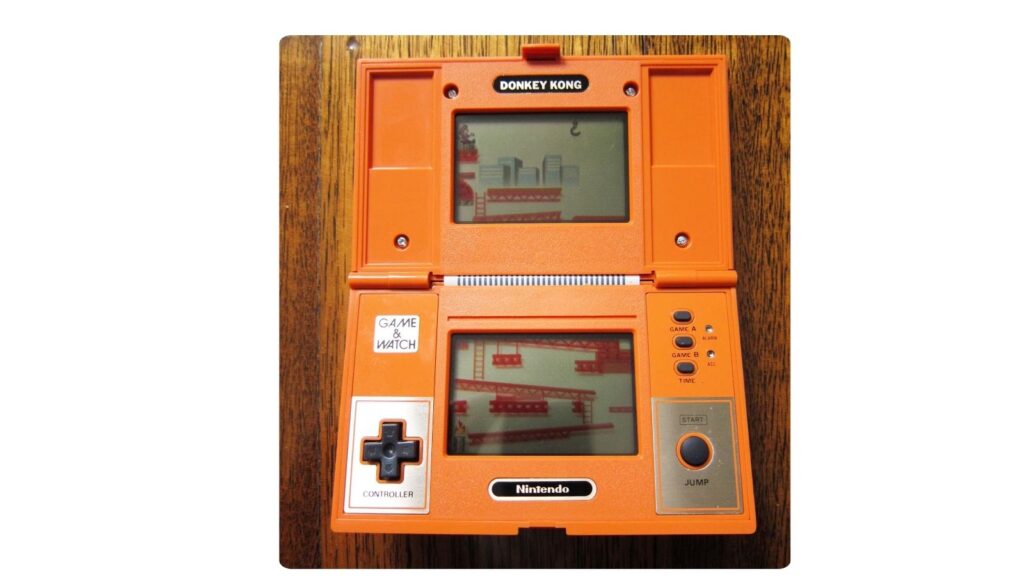
Nintendo’s Game & Watch line put a single game and a working clock into a flat plastic case small enough for a shirt pocket, years before the company made a home console people actually remember. The Donkey Kong model used a dual-screen “multi screen” design, a hinge-opened case with one screen for the ladders Mario climbs and another for the barrels Donkey Kong throws, and it was one of the best-selling entries in the whole series.
A loose, working Donkey Kong Game & Watch typically brings $80 to $110, and a complete example with the original box and manual reaches $220 to $300. Other multi-screen titles in the series follow a similar pattern, with scarcer titles commanding noticeably more.
LCD segments can fade or die with age, so check that every digit and figure on both screens displays fully before buying. The hinge is a common failure point on multi-screen models, since repeated opening and closing over forty years wears down the plastic pins. A unit that won’t stay open on its own, or that pops shut mid-game, has a worn hinge that’s difficult to repair properly.
10. Lasonic TRC-931 boombox (1981)
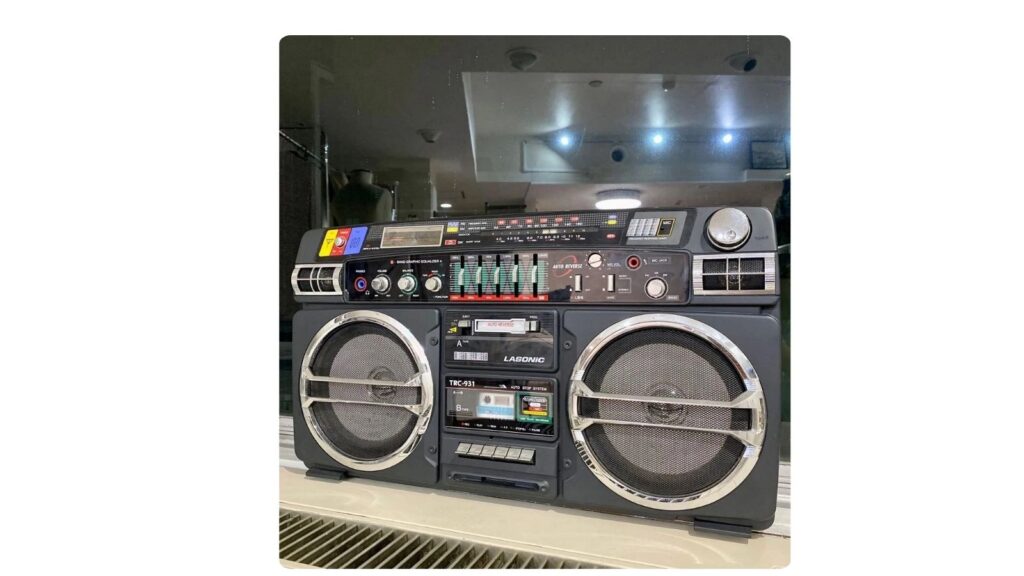
The TRC-931 is one of the most recognized boomboxes of the hip-hop era, with a squared-off silver and black body, chrome detailing, and a sound that made it a fixture in early rap videos and street photography. Lasonic built later versions of the 931 with updated features, but collectors specifically want the original first-generation cassette model.
Clean, working first-generation units typically sell for $350 to $600, with originality mattering more than almost anything else in that range. Later reissues and the CD-equipped CDX-931 variant that followed the same body style are considered less desirable by serious collectors even though they share the same look.
The cassette mechanism’s rubber belts degrade on nearly every surviving unit, so don’t assume a boombox that won’t play tape is beyond saving. Chrome trim pieces scratch easily and are hard to source as replacements, so cosmetic condition on the metal accents matters more than on the plastic body. A unit missing its original speaker grilles or with mismatched screws is a sign it’s been repaired with non-original parts, which brings the price down.
11. Polaroid 600 series camera (1981)
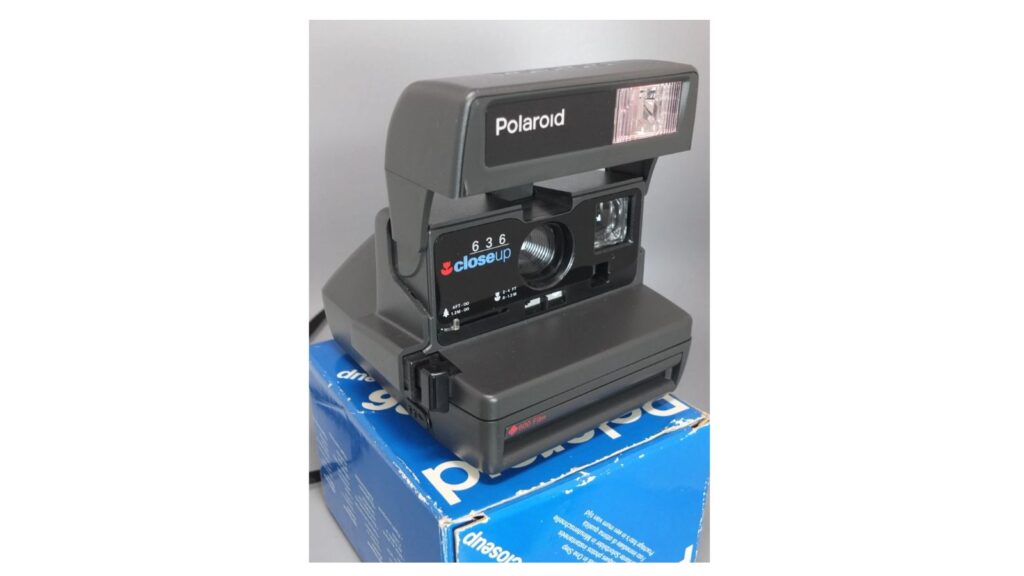
Polaroid’s 600 series brought the OneStep design into the 80s with a faster, more forgiving film speed that made instant photography genuinely easy for casual use. It was wildly popular, which means most surviving examples turn up constantly at thrift stores and estate sales for next to nothing.
Standard working 600-series box cameras typically bring $60 to $180, with complete, boxed examples at the top of that range. The premium Sun 660, which added Polaroid’s Sonar autofocus system to the 600 body, tends to sell for more than the base OneStep models because of that added feature.
Test the camera with actual film before assuming it works, since many units power on and sound functional but have a failed motor or shutter that only shows up mid-shot. The battery that powers the camera is built into each film pack, so a camera with no obvious power switch isn’t broken, it’s just waiting on film. Cosmetic cracks around the film door are common and usually cosmetic only, but a camera with visible mold or water damage inside the body is rarely worth restoring.
12. Sega Master System (1986)
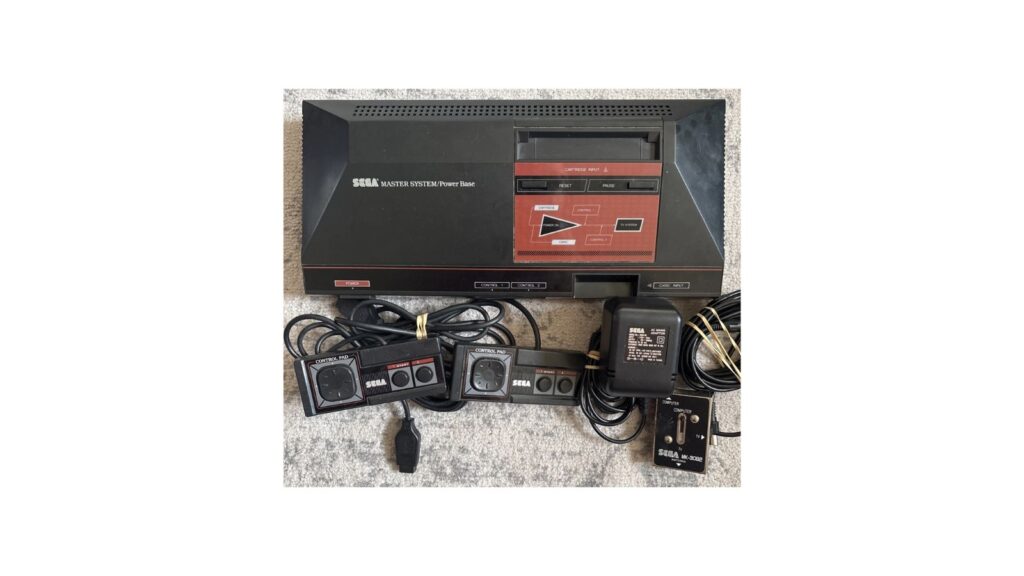
Sega’s first serious console launch in the US arrived a year after the NES and never caught up in sales, which makes it the quieter sibling in most collections today. It had genuinely strong graphics for the era and a library that leaned on arcade conversions, and its relative rarity in the US has made it more interesting to collectors than its sales numbers would suggest.
A working console on its own typically brings around $120, a complete example with the original box and hookup cables reaches $300 to $350, and factory-sealed units have climbed close to $800. The light gun game that shipped with many bundles adds a little value when the gun itself is present and functional.
Check the RF switch box and AV cables, since these are the parts most often missing from an otherwise complete set and are harder to source than the console itself. The cartridge slot’s pins can corrode from decades of cartridges being swapped, so test that the console reads a game reliably rather than flickering on boot. The card slot built into some models for Sega’s card-based games is a distinguishing feature worth checking for.
13. Teddy Ruxpin (1985)
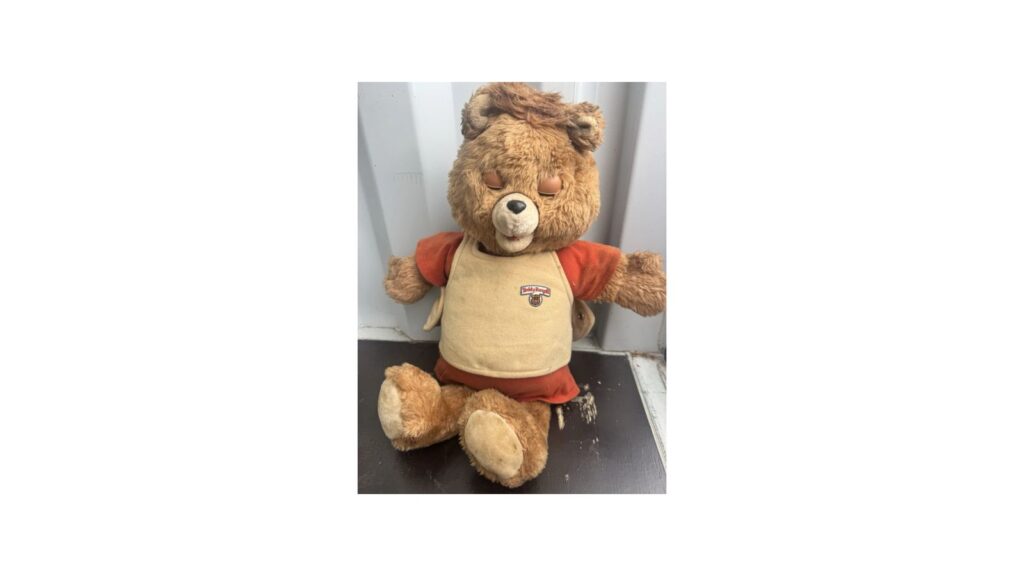
Teddy Ruxpin was the animatronic storytelling bear with a built-in cassette player that synced his mouth and eyes to a cassette tape, reading along with an accompanying storybook. He cost $70 at launch, a steep price for a toy at the time, and sold well enough to become one of the defining gifts of the mid-80s before the company behind him went bankrupt in 1987.
Working original 1985 bears with their original box typically bring $100 to $150, with the figure’s internal cassette mechanism being intact the single biggest factor in price. A bear without the original storybook and cassette still has value, but noticeably less, since a non-working or silent Teddy is really just a plush toy at that point.
Battery corrosion inside the compartment is extremely common and can damage the wiring if it’s been left unattended for years, so check that area closely before assuming a silent bear is simply dead. The fabric itself fades and mats with age, and a well-preserved coat adds real value since most surviving bears show decades of handling. Test the mouth and eye movement specifically, not just whether the cassette plays sound, since the motor mechanism can fail independently of the audio.
14. Roland TR-808 Rhythm Composer (1980)
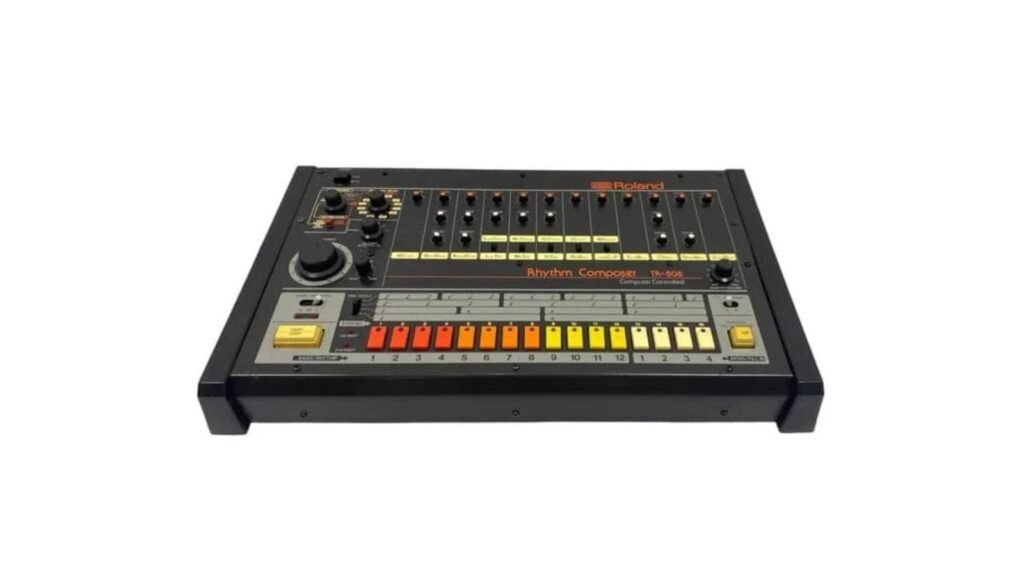
The 808 is the single most influential drum machine ever made, its analog kick, snare, and cowbell sounds built into the foundation of hip-hop, house, and electro music since the early 80s. Roland made only around 12,000 units before discontinuing it in 1983 over weak initial sales, a decision the company has surely reconsidered given what original units go for now.
A working original 808 in good condition typically sells for $4,500 to $8,000, with fully serviced units from reputable sellers commanding the top of that range. This isn’t a thrift store find the way most of this list is, but original units genuinely do surface in estate sales belonging to former musicians, which is exactly how many of the best-documented finds have turned up.
Originality matters enormously here. A unit with replacement capacitors is still desirable if the work was done properly, but modified circuit boards or non-factory MIDI additions can hurt value with purist buyers even when they add functionality. Every drum voice should trigger cleanly without crackling, and a unit missing its original box of patch cords or manual is still fully desirable, since those were often lost decades ago. If you inherit one of these from a relative who played music, get it appraised by someone who actually works with vintage synths first.











