
Your mom kept the good mixer on the counter and the everyday one in a cabinet nobody else was allowed to touch. There was a casserole dish with a pattern nobody makes anymore, a set of drinking glasses that came free with a movie tie-in, and a coffee maker that looked exactly like every other coffee maker in America because it basically invented the category. None of it looked valuable. It looked like Tuesday.
Forty years later, a fair amount of that stuff is worth real money, and the reasons are usually the same. Something got discontinued fast. Something got used hard enough that clean examples are scarce. Something was tied to a movie or a decade-defining design trend that people now actively chase down. This isn’t a list of grail pieces that require a specialist to find. It’s the stuff that’s genuinely still sitting in basements, garages, and the back of kitchen cabinets across the country.
Condition decides almost everything here, more than age and more than brand. A working motor, an unfaded pattern, and all the original pieces together can be the difference between a five-dollar garage sale item and a three-figure one.
Table of contents
- 1. Pyrex Colonial Mist nesting bowl set
- 2. Corelle Butterfly Gold complete dinnerware set
- 3. Corning Visions amber glass cookware
- 4. Osterizer Galaxie blender in harvest gold or avocado
- 5. Wilton Star Wars character cake pan
- 6. Mr. Coffee MC-1 original coffee maker
- 7. Farberware electric wok
- 8. Rival Crock-Pot in avocado or harvest gold
- 9. Fiesta dinnerware in apricot, the 1986 revival color
- 10. Star Wars Burger King promotional glass set
- 11. KitchenAid stand mixer in harvest gold or avocado
- 12. White Mountain hand-crank ice cream maker
- 13. Saladmaster stainless waterless cookware set
- 14. Jenn-Air downdraft cooktop or range
1. Pyrex Colonial Mist nesting bowl set
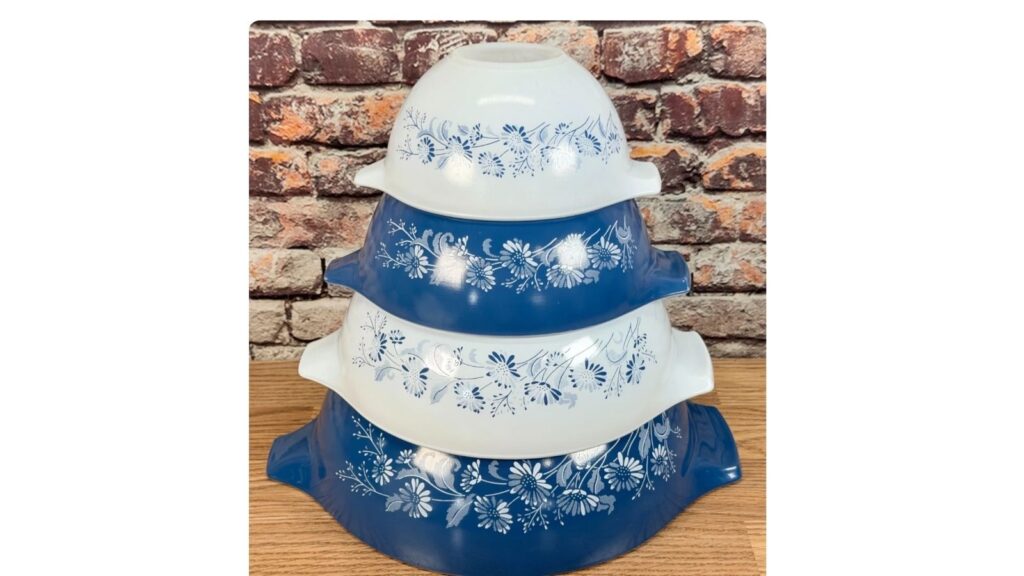
Pyrex released Colonial Mist in July 1983 as the last patterned opal glass line it ever made before switching the entire opal Pyrex operation over to plain white in 1986. The pattern shows up two ways: white flowers on a blue background, or blue flowers on white, and the pieces were designed to match the Corelle dinnerware line of the same name, which is why you’ll sometimes find both in the same cabinet.
A complete four-piece nesting mixing bowl set in clean condition, with no chips and the pattern still crisp, typically brings $40 to $75. Individual bowls sell for less, and a rare clear “White Lace” variant released in the mid-1980s under a different name commands a premium of its own when collectors can confirm it.
Flip any piece over first. By the 1980s, Pyrex had switched entirely to metric measurements on the base markings, which is a fast way to confirm you’re looking at genuine period production rather than a later reissue. Check the rim and the underside for hairline cracks, which are common on pieces that spent decades in a hot oven, and watch for a cloudy, worn-down pattern from years of dishwasher cycles. A sharp, high-contrast pattern with no fading is what pushes a set to the top of its range.
2. Corelle Butterfly Gold complete dinnerware set
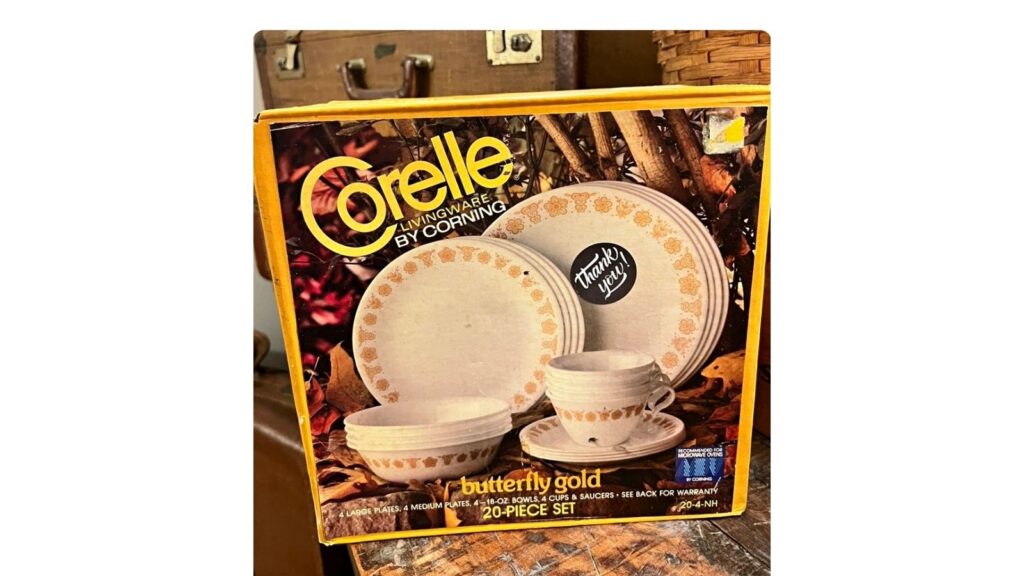
Corelle launched Butterfly Gold in 1972 and it stayed in production and in regular rotation in American kitchens well into the 1980s, which means an enormous number of households owned it without ever thinking of it as anything but the plates. The pattern shows a wing-shaped orange and gold flourish on the rim, and it’s one of the most recognizable designs Corning ever put out.
Individual plates and bowls sell for a few dollars each, which is where most people stop looking. Large, matched sets are a different story. A 24-piece set with a full range of plates, bowls, cups, and a serving platter typically brings $50 to $100 in clean condition, and even 20-plus piece lots without a platter usually land in a similar range if nothing is chipped.
The unbreakable Vitrelle glass Corelle used holds up remarkably well, so condition problems here are usually chips on the rim from decades of stacking, not cracks or fading. Check every piece individually rather than assuming a lot is uniform, since mismatched patterns sometimes get bundled together by sellers who don’t know the difference. A set assembled entirely from one production run, with matching gold tone across every piece, is worth more than a similar-sized lot pieced together from several sources.
3. Corning Visions amber glass cookware
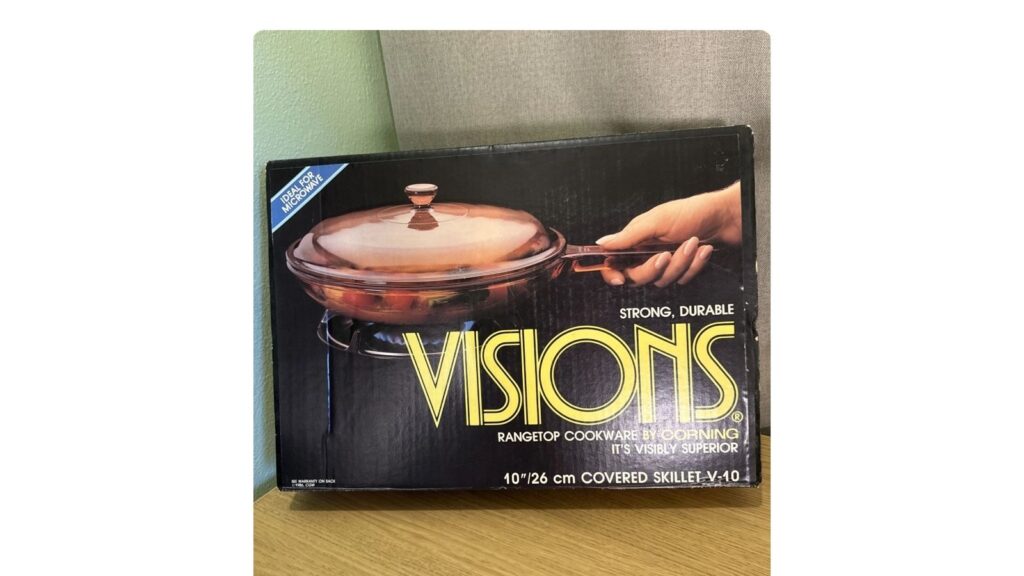
Visions is the cookware most people confuse with CorningWare, and it’s a genuinely different product. Corning developed the amber, see-through glass-ceramic material in France in the late 1970s, quietly test-marketed it in the United States starting in 1981 under names like “Le Clair” to sidestep a trademark dispute, and finally launched it nationwide as Visions in 1983. The appeal was simple: you could watch your food cook through the pot itself.
A matched set of two or three amber saucepans with lids, in clean condition with no cloudiness or scratching on the glass, typically brings $50 to $120 depending on how many pieces are included and whether the lids match their pots. Single pieces sell for considerably less.
The main thing to check is the glass itself. Years of metal utensil scraping leave visible scratch marks on the cooking surface, and that kind of wear reduces value even when the piece is otherwise intact. A hairline crack anywhere in the glass makes a piece essentially unsellable, since Visions cookware is not meant to go from a cold surface straight onto a hot burner and stress cracks do happen. Original boxes are uncommon enough now that a set with its packaging intact commands a real premium over the same pieces sold loose.
4. Osterizer Galaxie blender in harvest gold or avocado
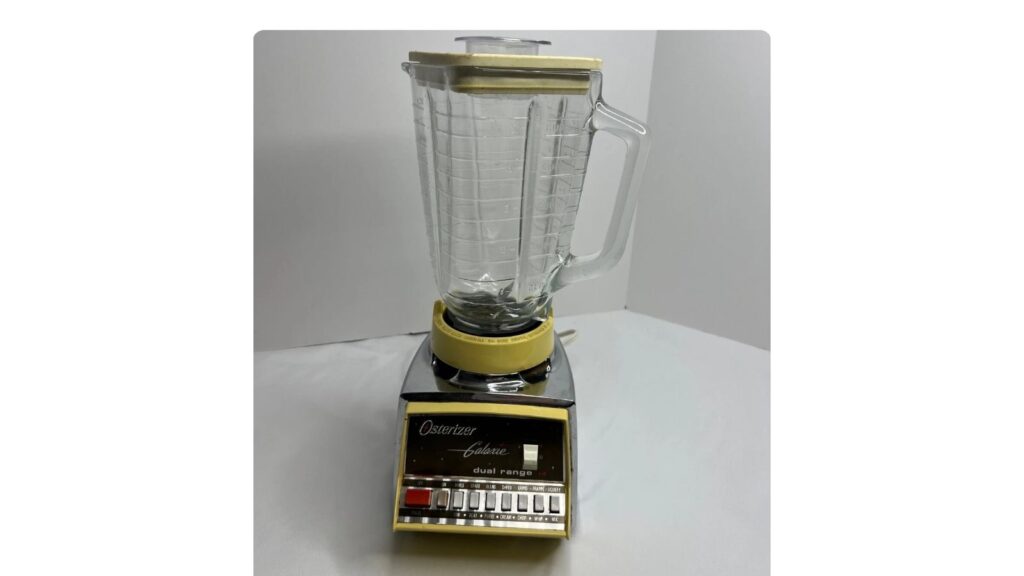
The Osterizer Galaxie ran through most of the 1970s and into the 1980s with a starburst control panel that’s instantly recognizable to anyone who grew up around one. It came in the full spread of decade-appropriate colors, and the harvest gold and avocado green versions are the ones people specifically go looking for now, more so than the plain white or chrome models that were far more common.
Working examples in harvest gold or avocado, with the glass or plastic pitcher intact and no cracking, typically bring $25 to $50 in tested, functional condition. New-in-box examples that never got used are the exception, and those have reached $90 for a harvest gold unit still sealed in its original packaging.
Test the motor before assuming a blender is worth anything close to top dollar. A seized or smoking motor drops the value to parts-only territory regardless of how good the color looks. Cracked or cloudy plastic pitchers are common and easy to spot, and a scratched or missing control panel graphic hurts a piece that otherwise looks clean. The rubber gasket under the blade assembly perishes over time, but it’s a cheap and easy fix, so don’t let a leak scare you away from an otherwise solid example.
5. Wilton Star Wars character cake pan
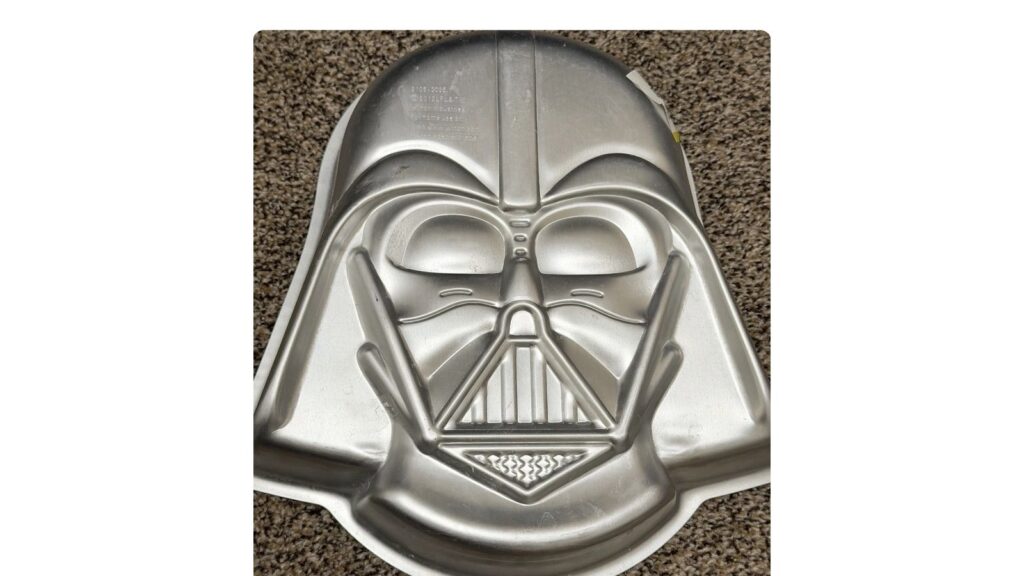
Wilton released a run of shaped cake pans tied to the original Star Wars trilogy starting around 1980, timed to The Empire Strikes Back, with characters including Darth Vader, R2-D2, C-3PO, and, in the rarer 1983 wave tied to Return of the Jedi, Boba Fett. Each came as a cast aluminum pan with a paper decorating guide showing kids how to turn a sheet cake into the character’s face or silhouette.
A single character pan in good condition, with the metal unwarped and no major scratching, typically sells for $20 to $40. The scarcer characters bring more, and a complete 1983 Boba Fett pan in this condition is worth around $40, with examples that still include the original paper insert and full decorating instruction booklet pushing toward the higher end of that range or above it.
The paper insert and instructions are the first things lost over 40 years, so a pan with both intact is worth actively seeking out over a bare pan alone. Check for pitting or heavy scratching on the aluminum, which happened from decades of metal spatula use, and watch for warping, which makes the pan unusable and drops the value to display-only. Boxed, unused examples from old stock occasionally surface and bring a real premium over used ones.
6. Mr. Coffee MC-1 original coffee maker
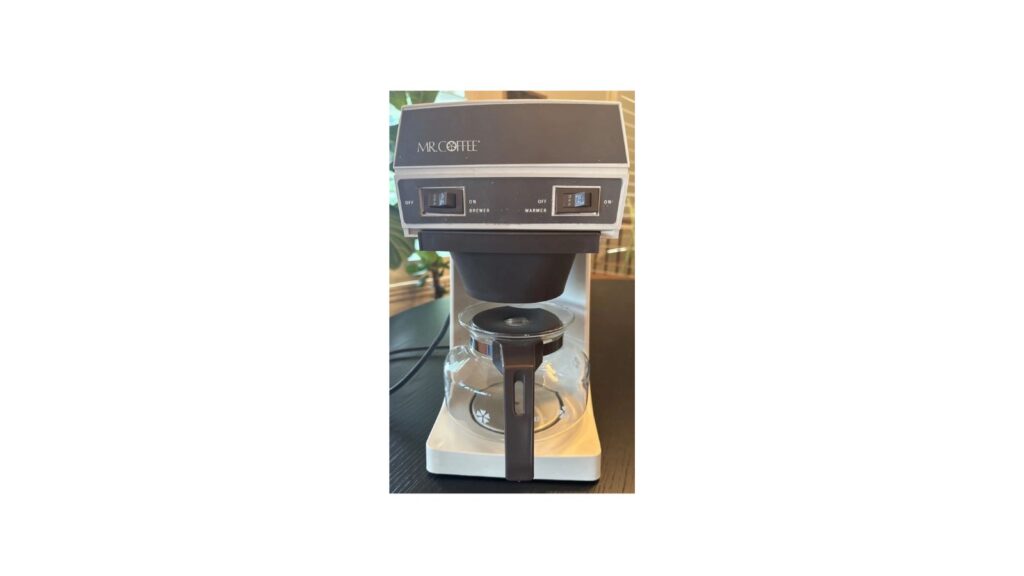
Mr. Coffee didn’t just make a popular coffee maker, it created the automatic drip category almost overnight after launching in 1972, and it sold over a million units within its first two years thanks in part to a very effective ad campaign fronted by Joe DiMaggio. The original MC-1 model, with its simple rectangular body and glass carafe, is the version collectors specifically want, not the later redesigns.
A complete, working MC-1 with its original glass pot, scoop, and lid typically brings $40 to $50 in good cosmetic condition. Units missing the carafe or scoop sell for considerably less, since replacement parts for a machine this old are not simple to source.
Check that the warming plate still heats and that the water reservoir doesn’t leak, since a machine that doesn’t function is really only worth something to a collector who wants it for display. The glass carafe is the single most fragile part and the one most often missing or cracked on surviving units, so a matched original pot adds real value. Avoid confusing the MC-1 with Mr. Coffee’s later 1990s and 2000s models, which share the brand name but have essentially no collector interest.
7. Farberware electric wok
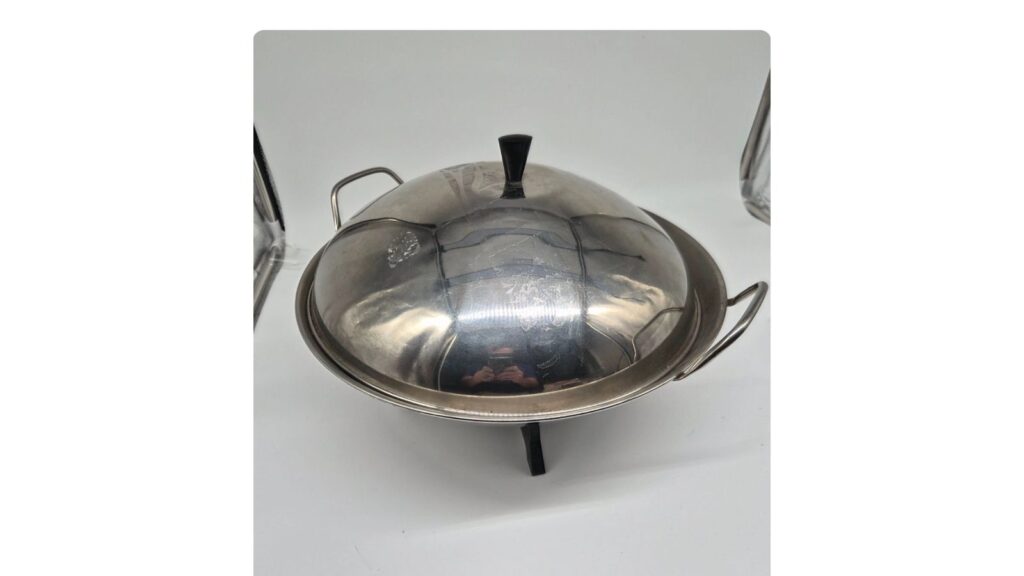
Wok cooking had a real moment in American kitchens through the late 1970s and 1980s, and Farberware’s stainless steel electric wok, sold with a dome lid and often a steaming rack, was one of the most common ways households tried it at home without buying a dedicated gas burner. It’s a genuinely useful piece, not just a nostalgia item, which keeps steady demand going.
Complete, tested units with the dome lid and original stand typically bring $30 to $50 in working condition. Sets that also include the steaming rack and recipe booklet land at the higher end of that range.
Plug it in before buying if you can, since a wok with a dead heating element is close to worthless and repairs aren’t straightforward on a 40-year-old appliance. The detachable temperature control probe is a small part that’s frequently missing, and without it the wok won’t turn on at all, so confirm it’s included. Surface scratching on the stainless steel interior from metal spatula use is cosmetic and doesn’t hurt value much, but pitting or rust around the base is a bigger problem.
8. Rival Crock-Pot in avocado or harvest gold
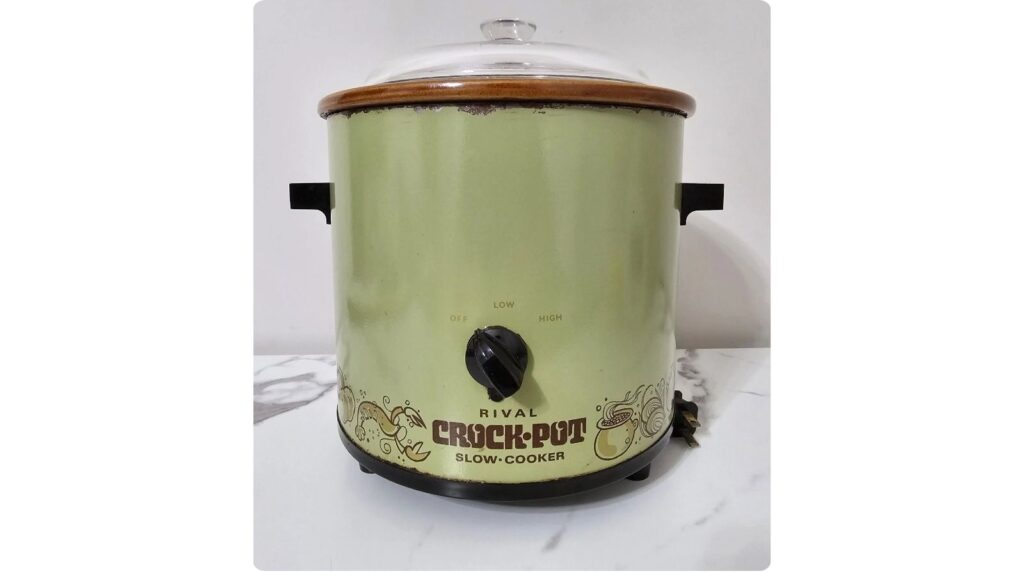
Rival didn’t invent the slow cooker, but the Crock-Pot name became so synonymous with the category that most people use it as a generic term. The stoneware-insert models sold through the 1970s and into the 1980s in the full range of decade colors, and the avocado and harvest gold versions with a floral or plaid pattern on the crock are the ones with the most consistent demand now.
Clean, working examples with the original stoneware liner and a glass or lift-off lid typically bring $25 to $35 in tested condition. Sets with an unusually well-preserved decorative pattern on the crock, and no chips on the stoneware, land toward the top of that range.
The stoneware insert is the part most likely to show damage, since it’s ceramic and takes the brunt of daily use, so check it closely for chips or hairline cracks that could compromise it under heat. A missing lid is common and drops the value meaningfully, since replacement lids for older models are not easy to match. Cosmetic fading on the avocado or gold exterior finish is normal for the age and doesn’t disqualify a piece, but heavy scratching down to bare metal does.
9. Fiesta dinnerware in apricot, the 1986 revival color
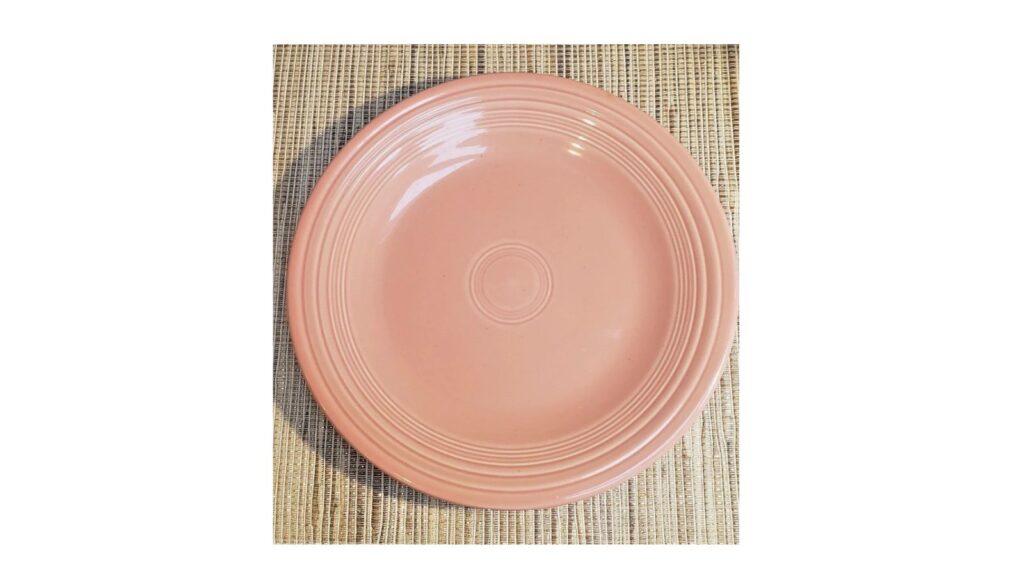
Homer Laughlin discontinued the original Fiesta line in 1973 and brought it back in 1986 for the company’s 50th anniversary in five new colors: white, black, cobalt, rose, and apricot. Apricot turned out to be the shortest-lived of the group, pulled from production by 1992, which makes it the rarest of the five relaunch colors on today’s secondary market even though it’s barely 35 years old.
Common apricot pieces like salad plates and bowls typically bring $20 to $35 each in clean condition. Rarer forms hold considerably more value: a 4-ounce apricot pitcher runs closer to $130, and teapots, covered casseroles, and other specialty shapes land somewhere in between depending on how often that specific form was produced.
Check the base for the “Fiesta HLC USA” stamp, which confirms genuine production rather than a later color that only looks similar under indoor lighting. Apricot is a warm, muted peachy tan, easy to mix up with the rose color from the same relaunch if you’re not comparing them side by side. As with any Fiesta, chips, scratches, and utensil marking on the glaze all reduce value, and pieces should be checked individually since a set assembled over time can include mismatched wear levels.
10. Star Wars Burger King promotional glass set
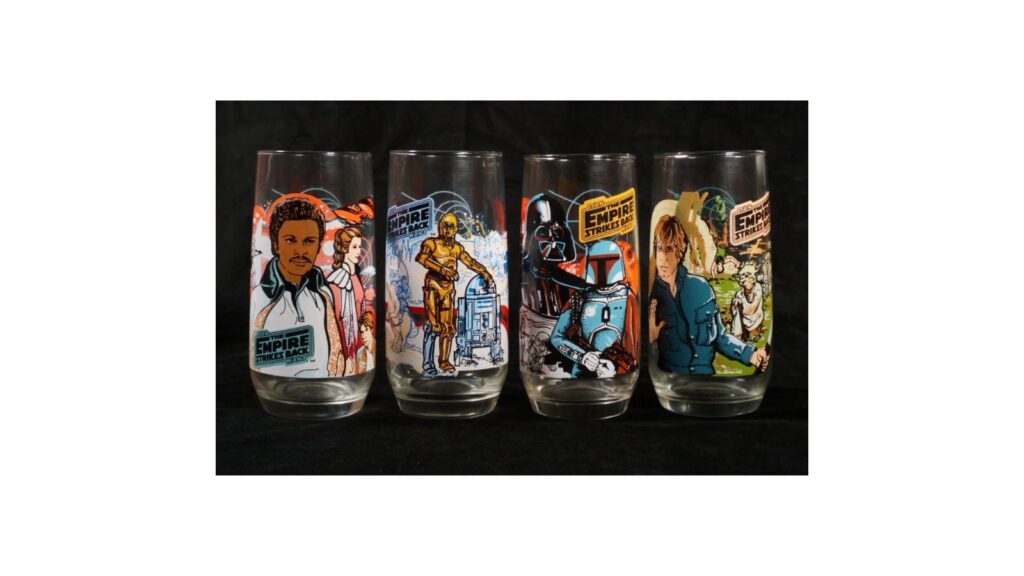
Burger King partnered with Coca-Cola to give away a set of drinking glasses featuring Star Wars characters with any purchase, running in waves tied to the original 1977 film, 1980’s The Empire Strikes Back, and 1983’s Return of the Jedi. They were a completely disposable fast food promotion at the time, which is exactly why so few complete sets survived a childhood of daily use and dishwasher cycles.
A complete set of all 12 glasses spanning the three release years, in good condition with no significant fading to the printed artwork, is worth around $180. Smaller partial sets of six to eight glasses typically bring $60 to $90, and individual glasses in strong condition sell in the $10 to $25 range depending on the character.
Check the printed design closely under good light, since decades of dishwasher use fades the ink and a glass with a faint, washed-out image is worth a fraction of one with crisp, saturated color. Cracks and chips on the rim are common on glassware this age and reduce value sharply. Massachusetts residents got plastic cups instead of glass due to a state law restricting restaurant giveaways at the time, which makes the plastic versions a genuine regional rarity worth researching separately if you come across one.
11. KitchenAid stand mixer in harvest gold or avocado
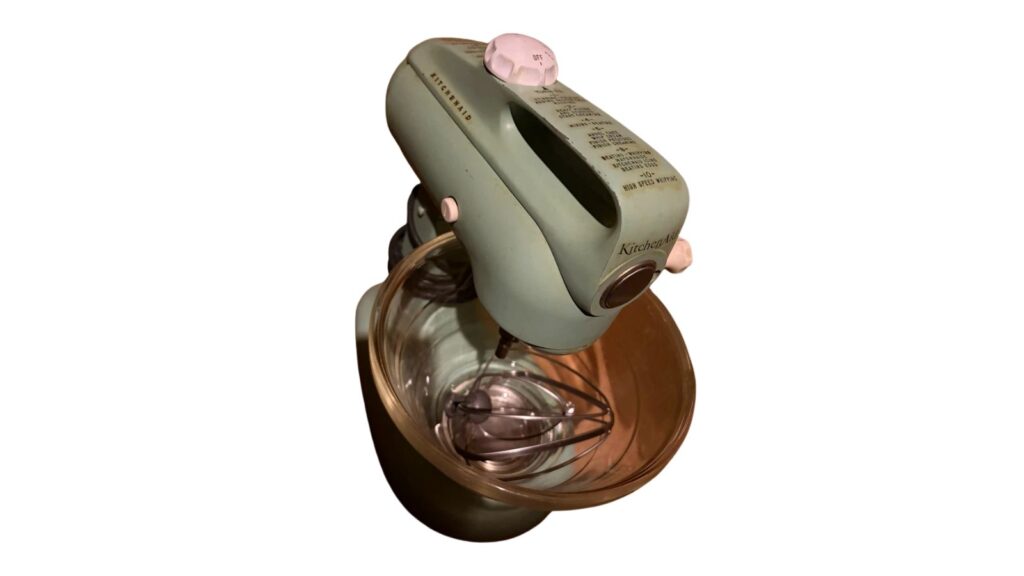
KitchenAid’s K45 and K45SS tilt-head stand mixers, built under Hobart in the 1970s and 1980s, are the mixers people mean when they talk about a “vintage KitchenAid,” and the appeal is entirely practical: the all-metal gear-driven design from this era is genuinely more durable than a lot of current production, so these machines still run daily in real kitchens decades later.
A tested, working example with its mixing bowl and standard attachments typically brings $90 to $130 in white or the common colors, with clean harvest gold or avocado units landing at the higher end of that range simply because fewer of those colors survive in good cosmetic shape. Units missing the bowl or attachments sell for considerably less.
Always ask for the mixer to be plugged in and run through its speeds before buying, since a jammed gearbox or a burnt-out motor is a real risk on a machine this old and repairs can cost more than the mixer is worth. Check the mixing bowl for scratches and confirm it’s the correct size and shape for that specific model, since bowls aren’t universally interchangeable across KitchenAid’s decades of production. A mixer with heavy rust on the tilt-head hinge or a cracked plastic gear inside is a bigger repair than most buyers want to take on.
12. White Mountain hand-crank ice cream maker
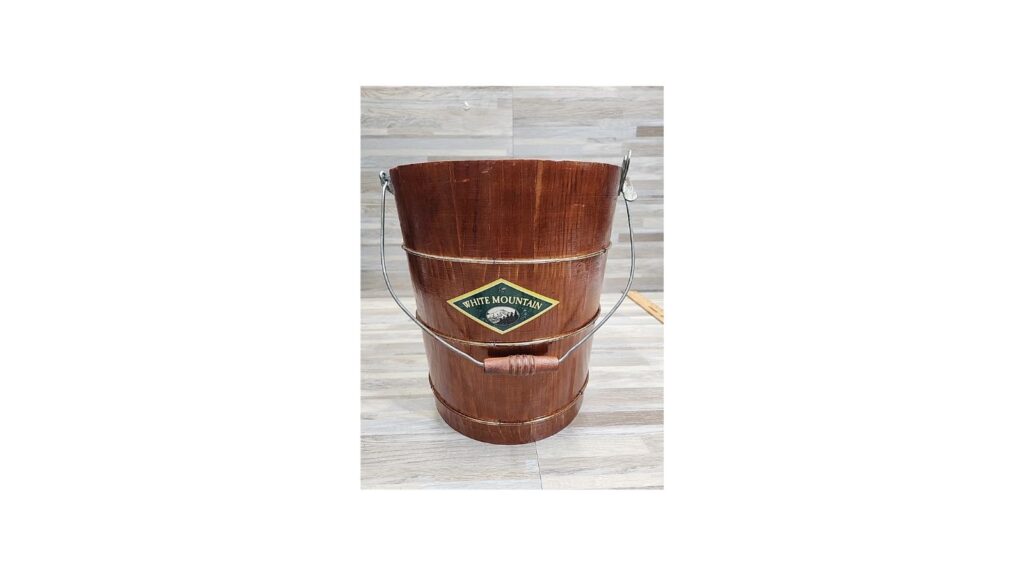
The wooden-bucket, hand-crank ice cream freezer was a fixture of backyard cookouts and Fourth of July gatherings straight through the 1980s, long after most other kitchen tasks had gone electric. White Mountain has made this same basic design, with a wood outer bucket, a metal canister, and a triple-motion dasher, for generations, which makes dating an individual unit tricky but doesn’t hurt its appeal.
A clean, complete 4-quart model with the original wood bucket intact and all its internal gears working typically brings $130 to $200, and exceptional examples with an older orange label and no wood damage have reached as much as $275. Smaller 2-quart models generally sell for somewhat less.
The wood bucket is the part most likely to have failed over the decades, since it spends its working life packed in ice and rock salt, so check the staves for rot, cracking, or loose metal hoops before buying. Confirm all the internal gears and the dasher paddle are present and turn freely, since a missing dasher makes the unit effectively decorative. A full recipe book or original box adds a modest amount on top of a clean unit, but function matters far more than paperwork here.
13. Saladmaster stainless waterless cookware set
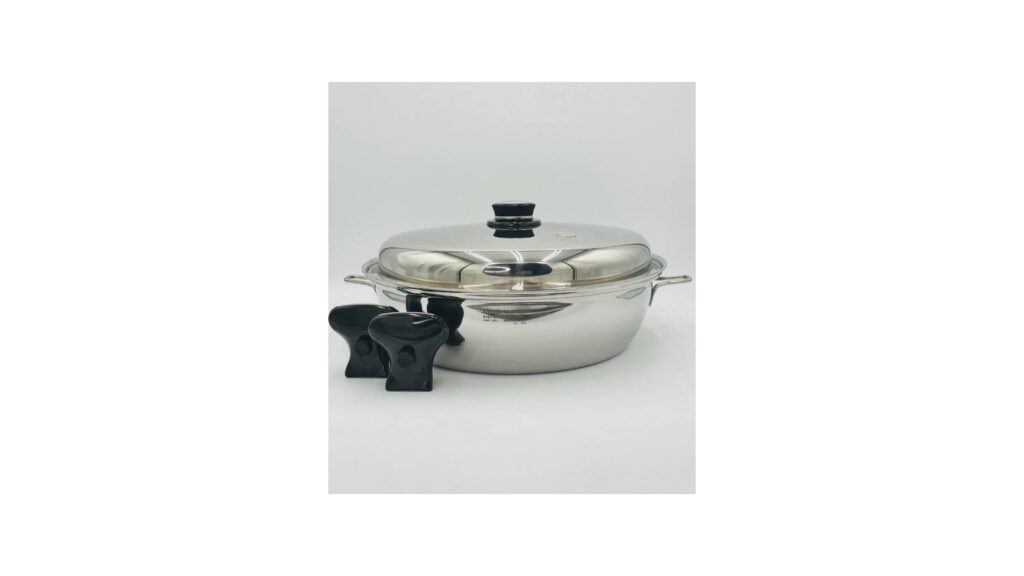
Saladmaster sold heavy-gauge stainless steel cookware door-to-door starting in the mid-20th century and continuing strong through the 1980s, pitched on a “waterless cooking” method using tight-fitting vapor lids. It was genuinely expensive when new, often running well over a thousand dollars for a full set, and that build quality is exactly why complete sets are still functional and desirable decades later.
A complete 18-8 tri-clad set of five to nine pieces, with matching vapor lids and no significant scratching, typically brings $135 to $200 in clean, usable condition. Larger sets with a full range of pot sizes, skillets, and a stockpot bring meaningfully more, since Saladmaster pieces are rarely sold as complete large sets outside of estate situations.
Check that every lid actually seals against its matching pot, since vapor lids are sized to specific pieces and a mismatched set loses the “waterless” function that’s central to the appeal. Look for deep scratching or discoloration inside the pots from years of use, which is common but doesn’t disqualify a piece the way a warped base does. A warped or uneven pot bottom won’t sit flat on a modern glass or induction cooktop, which matters more now than it did when these were new.
14. Jenn-Air downdraft cooktop or range
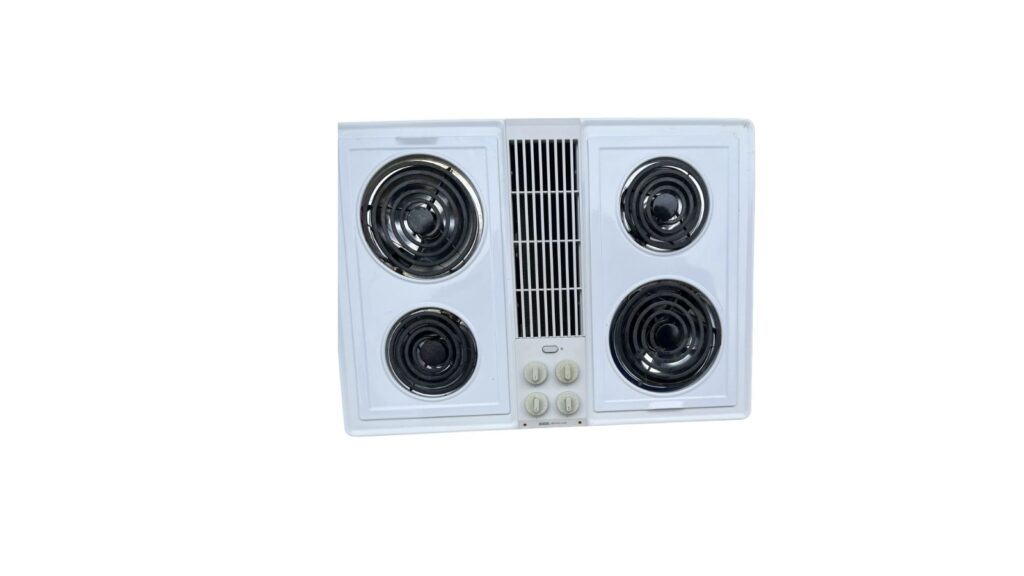
Jenn-Air’s electric downdraft cooktop, with its swappable “cartridge” system that let one unit switch between standard burners, a griddle, or an indoor grill, was one of the defining kitchen fixtures of the 1970s and 1980s, and it’s still installed and working in a surprising number of homes built or renovated during that era. The built-in fan pulled smoke and grease down through a filter instead of relying on an overhead range hood, which is exactly the feature people now go looking for when they want to grill indoors.
Clean, working units, especially original stainless steel models with a functioning grill or wok cartridge, typically bring $600 to $1,000 as a complete removable unit, with well-preserved examples and extra cartridges pushing higher. Individual accessory cartridges and cast iron grill grates sell separately for $40 to $100.
Because these are full appliances rather than small collectibles, function matters more than almost anything else on this list. Confirm every burner and the downdraft fan actually work, since replacement parts for original 1970s and 1980s units are increasingly hard to source. Check the exhaust ductwork and blower motor if you’re buying one still installed in a home, since that’s a bigger job to move or reinstall than the cooktop itself. A unit with all its original cartridges, not just the one currently installed, is worth meaningfully more than a base model alone.
Most of what’s sitting in your parents’ old kitchen cabinets is still just dishware. But a surprising amount of it, especially the pieces with a specific pattern name, a movie tie-in, or a color nobody makes anymore, has quietly become worth tracking down before it goes to a donation bin.











