
An extra $100 landed in your lap this month. Maybe it was a tax refund that came in higher than expected, a refund from a cancelled subscription, something you sold on Facebook Marketplace, or just a grocery bill that came in lighter than usual. Whatever it was, you have a little breathing room you didn’t have last month.
A hundred dollars doesn’t feel like much on its own, especially with rent, groceries and gas all costing more than they did a few years back. But where that money goes matters more than how much of it there is. Park it in the wrong place and it quietly disappears into a tank of gas and a couple of takeout orders. Put it somewhere specific and it actually does something for you.
None of the moves below require you to have your whole financial life sorted out first. Some take five minutes online. A few take a phone call. All of them beat leaving the money sitting in checking, where it earns nothing and gets spent on whatever’s convenient.
Pay down the credit card charging you the most interest
If you’re carrying a balance on more than one card, this is almost always the highest-return move on the list. Credit card companies are charging cardholders who carry a balance an average interest rate above 22%, and plenty of store cards and subprime cards run well past 29%. No savings account, CD or index fund is going to beat a guaranteed 22% to 29% return, which is effectively what you get by not paying that interest anymore.
Put the $100 toward whichever card has the highest rate, not the lowest balance. That’s the avalanche method, and it saves more in interest over time than knocking out your smallest debt first for the psychological win. If you only have one card, it’s an easy call. If you have three or four, pull up the actual rates before you decide where the money goes, because a 19% card and a 27% card cost you very different amounts on a balance that sits for months.
If your card is already maxed out and the minimum payment is the real problem, a one-time $100 payment won’t fix that on its own. In that case, it’s worth a call to the card issuer about a hardship plan or a lower rate before the next statement cuts, rather than treating this as the whole solution.
Move it into a savings account that actually pays you

The average traditional savings account is paying 0.38% in interest, which on $100 works out to a few cents a year. Meanwhile, the top online high-yield savings accounts are currently paying up to 4.35% APY, more than ten times as much, for the exact same safety and FDIC insurance.
Opening one takes about ten minutes: most online banks just need your ID, your Social Security number and a linked checking account to transfer from. There’s no reason to keep an emergency fund, or the start of one, sitting in a checking account that pays nothing when a high-yield account costs you nothing extra and pays real money. If you don’t have three to six months of expenses saved somewhere accessible, this $100 is a perfectly good start, and it compounds every month after that. Some online banks also run new-account bonuses worth $100 or more just for opening an account and setting up a direct deposit, which stacks on top of the higher rate instead of replacing it.
Buy a few shares of a low-cost index fund

You don’t need thousands of dollars or a finance degree to start investing. Most major brokerages, including Fidelity, Schwab and Vanguard, let you buy fractional shares, so $100 buys you a real stake in a fund that tracks the S&P 500 or the total U.S. stock market instead of one single, riskier company.
The point of an index fund isn’t to get rich off $100. It’s to get the habit started while the amount is small and the stakes are low. Money in a taxable brokerage account isn’t locked up the way retirement money is, so it stays available if you actually need it, but it also isn’t meant to be touched for at least five years if you want a real shot at riding out the market’s ups and downs. If you already have a workplace 401(k) with an employer match you’re not fully using, that match beats a brokerage account every time, since it’s free money before the investing even starts.
Add it to your Roth IRA
For 2026, Roth IRA contributions are capped at $7,500, or $8,600 if you’re 50 or older, as long as your income falls under the limit for your filing status. That’s $7,500 of room you’re probably not filling, and $100 toward it costs you nothing in taxes now and nothing in taxes later, since qualified withdrawals in retirement come out completely tax-free.
A Roth IRA isn’t a separate investment, it’s a tax wrapper you put investments inside, so once the money lands in the account you still need to choose something to put it in, usually a target-date fund or an index fund. Most major brokerages will open one with no minimum balance. If you’re self-employed or your income is irregular, a Roth is one of the few accounts where contributing a little whenever you have it, rather than on a fixed schedule, works perfectly fine.
Stash it in your HSA if you have one
A health savings account tied to a high-deductible health plan has 2026 contribution limits of $4,400 for individual coverage and $8,750 for family coverage. An HSA is the only account in the entire tax code that’s tax-free going in, tax-free growing, and tax-free coming out, as long as the money goes toward qualified medical expenses.
Most people never come close to maxing it out, so $100 toward this year’s limit is an easy add. Unlike a flexible spending account, HSA money never expires and never has to be spent by December 31, so it can sit and grow for decades if you don’t need it right away. If you’re healthy now and can afford to pay small medical bills out of pocket instead of from the HSA, keeping receipts and reimbursing yourself years later, once the balance has grown, is a legitimate strategy some people use to treat it almost like a second retirement account.
Make a principal-only payment on your mortgage or car loan

An extra $100 applied specifically to principal, not the regular payment, shaves interest off the entire remaining life of the loan. On a mortgage, that can mean shaving weeks or months off a 30-year term, since interest is calculated on the balance that’s left. On a car loan, where terms are shorter and rates are often higher, the effect shows up faster.
The important part is telling your lender the extra money is for principal only, not for next month’s payment in advance. Most lenders have a specific field for this on their online payment portal, and if you can’t find it, call and ask, because skipping that step means your $100 just prepays a future bill instead of cutting the balance. This move doesn’t make sense for everyone. If your loan rate is low, say under 5%, you’re usually better off putting the $100 somewhere it can earn more than your loan is costing you.
Buy a CD or an I bond instead of letting it sit
If you want a fixed, predictable return and you know you won’t need the money for a while, a certificate of deposit or a Series I savings bond beats a regular savings account. Top 12-month CDs are currently paying up to 4.35% APY, locked in for the full term regardless of what happens to rates afterward.
Series I bonds, bought directly through TreasuryDirect, are currently earning a composite rate of 4.26% on bonds issued through the end of October 2026, with a new rate announced every May and November. I bonds also adjust with inflation and are exempt from state and local income tax, which makes them a decent spot for money you’re saving for something specific, like a wedding or a down payment, that’s still a year or more out. The catch with both is access: a CD charges a penalty for early withdrawal, and I bonds can’t be cashed at all in the first 12 months, so this isn’t the place for your actual emergency fund.
Start a sinking fund for a bill you already know is coming

A sinking fund is just a savings account, or a named pocket inside one, for an expense you can see coming from months away: car registration, the holidays, a kid’s sports fees, your annual Amazon Prime renewal. Instead of that bill feeling like a surprise every single time, you’ve been quietly funding it for months.
Most online banks let you open multiple savings accounts or create labeled “buckets” within one account for free, so this $100 can become the seed money for “Christmas 2026” or “car registration” specifically. The psychological trick is real: money that’s labeled for a specific future bill is much harder to accidentally spend on something else than money that’s just sitting in a general savings account. Come December, or whenever the bill actually lands, you’re pulling from a fund you built on purpose instead of scrambling or reaching for a credit card. Run two or three of these at once, one for the holidays, one for car costs, one for whatever your household always seems to get hit with in the same month every year, and the whole category of “surprise” expenses stops being a surprise.
Get the car maintenance you’ve been putting off

An overdue oil change, worn brake pads or tires that are down to the wear bars are the kind of small problems that turn into expensive ones. A $100 oil change and inspection now is the difference between catching a slow leak early and replacing an engine later, or between a $40 set of brake pads and a $400 rotor replacement because you drove on metal-on-metal too long.
This isn’t about babying a car, it’s about math. Preventive maintenance is cheap specifically because it’s preventive. Once a part fails instead of wearing down gradually, the repair bill usually includes labor for parts that were fine but got damaged by the part that wasn’t. If you don’t know what your car actually needs, most shops will do a basic inspection for free or close to it when you bring it in for something simple like an oil change, and they’ll tell you what’s actually urgent versus what can wait another few months.
Stock the freezer and pantry while staples are on sale

Grocery prices move constantly, and the staples you buy every single week, chicken, ground beef, rice, pasta, canned tomatoes, go on real sales on a predictable cycle even if the timing varies by store. An extra $100 spent stocking up when those items are actually cheap, rather than buying them one week at a time at whatever the current price is, functions like a discount on your future grocery bills.
This only works if you actually have freezer space and you buy things you’ll use. A deep discount on 10 pounds of a cut of meat your family won’t eat isn’t savings, it’s waste with extra steps. Focus the $100 on proteins that freeze well, pantry staples with a long shelf life, and anything your household already goes through regularly. Building up a two or three week buffer of staples also means a tight week, a lost shift, or an unexpected expense doesn’t automatically mean a thin grocery budget on top of everything else.
Cover the fee for a certification or license exam that pays off

Plenty of better-paying jobs are gated behind a single exam fee that costs less than $100: a forklift certification, an insurance producer license, a Series 65 for financial roles, a notary commission, a food handler’s card for a promotion into management. These aren’t side hustles that AI can replace next year, they’re credentials tied to a physical trade, a regulated license or a specific employer requirement.
Before spending the money, check with your employer or the specific job posting about what’s actually required, since some employers will reimburse the fee once you pass, effectively making it free. If you’re between jobs or job hunting, picking a credential that’s actually in demand in your area, not just the first one you find online, is worth ten minutes of research before you commit the fee. The $100 you’d spend otherwise, say, on a few nights out, disappears either way. Spent on an exam fee, there’s a real chance it comes back to you many times over in a higher hourly rate.
Knock out a payday loan or buy now pay later balance

If you have an outstanding payday loan, the interest is brutal enough that paying any of it down early is worth doing before almost anything else on this list. A typical payday loan carries an APR of close to 400%, which means a $100 payment toward the principal saves you real money within weeks, not years.
Buy now, pay later balances are usually interest-free if you pay on schedule, but miss a payment and plenty of them convert to a standard interest rate or tack on late fees that function the same way a payday loan does. If you’ve got several of these stacked across different apps, a late payment on one of the smaller ones is an easy thing to lose track of. Use the $100 to clear whichever balance is closest to a due date or carries the steepest penalty for missing it, not necessarily the smallest one.
Get your pet’s preventative care out of the way

A routine vet visit, a round of vaccines, or a dental cleaning for a cat or dog costs real money, but it’s a fraction of what treating an advanced dental infection, heartworm, or a preventable illness costs once it’s gone untreated. $100 covers a decent chunk of an annual wellness exam or a vaccine booster at most vet clinics, and plenty of vets will let you put it toward a payment plan if the full visit costs more.
Pet insurance is a different conversation and depends heavily on the animal’s age and breed, but preventative care isn’t optional in the same way insurance is a choice. Skipping a $100 dental cleaning now because the pet “seems fine” is how a lot of owners end up facing a $1,500 extraction later, done as an emergency instead of scheduled in advance. If cost is the only thing standing between your pet and care, many areas have low-cost vet clinics or vet schools that offer the same services for less.
Put the $100 into home upgrades that actually lower your bills
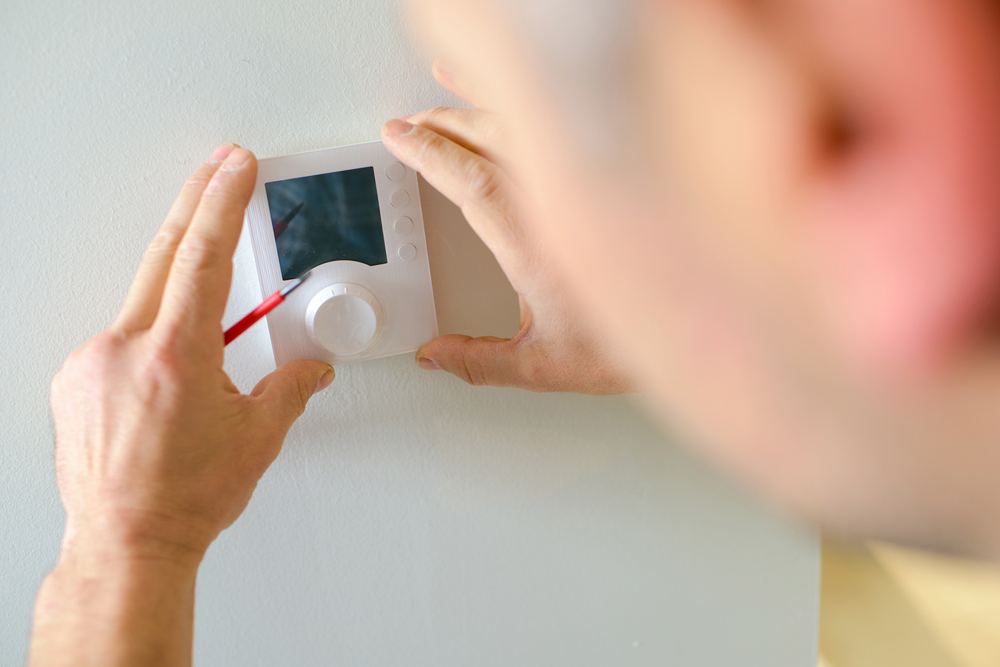
A programmable thermostat, weatherstripping around drafty doors and windows, and swapping incandescent bulbs for LEDs are all upgrades you can buy for $100 or less that pay for themselves. The Department of Energy says setting your thermostat back 7 to 10 degrees for eight hours a day can save up to 10% a year on heating and cooling, and a programmable or smart thermostat does that automatically without you remembering to touch the dial every night.
Weatherstripping is the cheapest fix on this list, usually a few dollars a door, and it directly targets the draft that’s making your furnace or AC work harder than it needs to. LED bulbs cost more upfront than incandescents but use a fraction of the electricity and last years longer, so the $100 spread across a house full of bulbs keeps paying you back on every single electric bill after that, not just once.
Fund a 529 or custodial account for a kid in your life
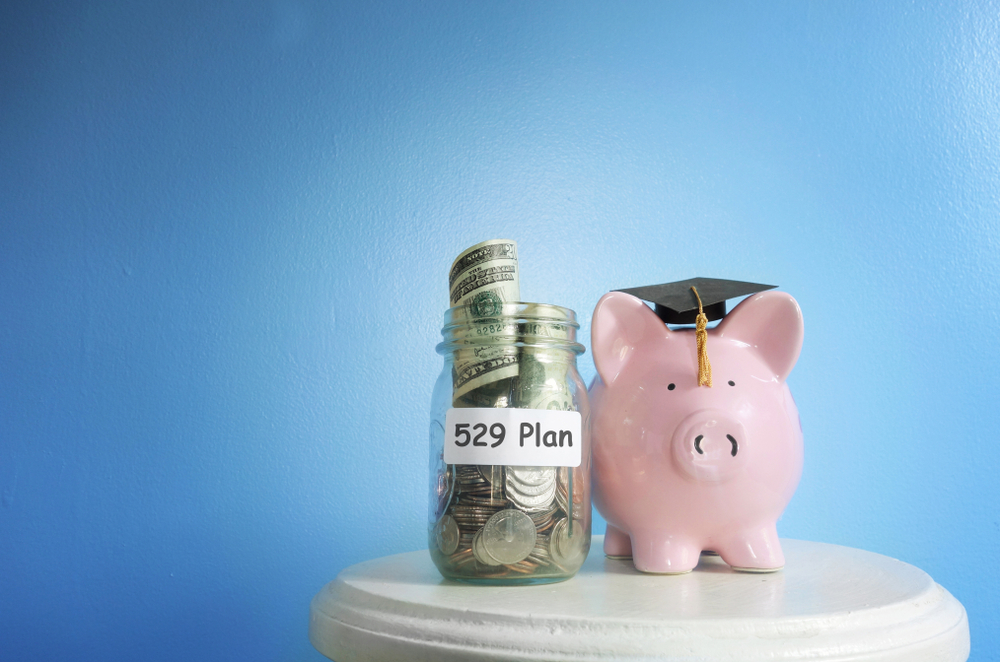
There’s no federal limit on 529 contributions, only a gift tax rule that kicks in above $19,000 per beneficiary per year in 2026, which means $100 fits in with plenty of room to spare. Money grows tax-free and comes out tax-free as long as it’s spent on qualified education expenses, and many states offer a state tax deduction on top of that for contributions made by residents.
If the goal is more general than education, like giving a kid a head start on money they can use for anything once they’re an adult, a custodial brokerage account under UTMA or UGMA rules works differently: there’s no tax break, but there’s also no restriction on what the money eventually gets used for. Grandparents, aunts, uncles and family friends can all contribute to either type of account, so this doesn’t have to be a parent’s job alone if you’re the one with the extra $100 and a kid you want to help.
Get professional photos and a sharper resume for your job search

If you’re job hunting, $100 covers a solid headshot session or a professional resume rewrite, and both change how fast you move through a hiring process. Recruiters spend seconds on a first pass through a resume, and a document that’s cluttered, outdated or formatted strangely gets skimmed past regardless of the experience underneath it. A blurry selfie as a LinkedIn photo sends a similar signal before anyone reads a word you wrote.
This doesn’t require a studio. Plenty of photographers offer a 15-minute headshot package for well under $100, and some cities have mall kiosks or local photographers who specialize in exactly this at a lower price point than a full portrait session. For the resume, a professional resume writer who understands your specific industry’s keywords and format expectations is usually a better use of $100 than a generic template, especially in fields where applicant tracking software filters resumes before a human ever sees them.
Take the defensive driving course that knocks down your insurance

Most major insurers offer a discount for completing an approved defensive driving course, typically somewhere between 5% and 20% off your premium, and the course itself often costs less than $100, sometimes a fraction of that if you take it online. The discount usually holds for up to three years, so this isn’t a one-time saving, it’s a multi-year discount for a single afternoon’s worth of effort.
Check with your specific insurer before signing up for a course, since not every provider is approved and some states only recognize certain programs for the discount to apply. If you’ve gotten a ticket recently, a defensive driving course sometimes does double duty: it can knock points off your license in some states on top of lowering your premium, which is a better return on $100 than almost anything else that requires an afternoon of your time. Most courses are approved for either the classroom or the online format, so there’s no real excuse to put this off once you know your insurer offers the discount.
Put it toward next quarter’s estimated taxes if you’re self-employed
If you freelance, run a small business, or otherwise owe quarterly estimated taxes, the fourth-quarter payment for 2026 is due January 15, 2027. Chipping $100 toward that payment now, rather than scrambling to cover the whole quarter at once in January, is one of the least exciting but most useful things you can do with extra cash if self-employment income is unpredictable.
Underpayment penalties on estimated taxes are calculated quarter by quarter, so being short in one quarter costs you even if you make up for it later in the year. If you’ve historically underpaid or you had a strong quarter and expect to owe more than usual, setting aside money as you go, even in $100 increments, beats discovering a four-figure tax bill you weren’t expecting when you file. A separate savings account earmarked specifically for taxes keeps this money from quietly blending into your regular spending before January rolls around.
An extra $100 isn’t going to transform your finances on its own. What it can do is nudge one part of your situation, a balance, a bill, a bare-bones emergency fund, slightly closer to where you want it to be, and that’s worth more than letting it disappear into whatever’s easiest to spend it on this week.











