
Your phone plan is costing you $141 a month. Your neighbor pays $45 for the same coverage on the same network, just with a different company name on the bill. That gap, $96 a month, is money you’re paying for brand loyalty that the carrier doesn’t return. It’s not the only place this is happening.
Most households have between $200 and $400 a month in spending that’s automatic, unexamined, or priced higher than it needs to be. Not spending on things people love. Spending on things they barely notice: the insurance renewal they clicked through, the streaming service running in the background, the $6,523 in credit card debt that’s quietly costing them $115 in interest every month.
None of the items below require cutting anything you actually want. They’re about switching to cheaper versions of the same thing, stopping what’s happening on autopilot, and using tools that most people have heard of but haven’t gotten around to trying.
Table of contents
- Shop your car insurance every year
- Switch to a budget cell carrier
- Move your savings out of a traditional bank account
- Do a real subscription audit
- Transfer credit card debt to a 0% balance transfer card
- Stop throwing away a month’s worth of groceries every quarter
- Use your library card for things you’re currently paying for
- Check what your employer is offering that you haven’t claimed
- Negotiate your internet bill
- Compare prescription prices before you pay
- Switch to store brands on pantry staples
- Rotate streaming services instead of keeping them all on at once
- Install a smart thermostat
- Add a cash-back browser extension
- Pay annually instead of monthly on subscriptions
- Meal plan before you shop
- Negotiate your medical bills
- Check whether you’re over-withholding on your taxes
Shop your car insurance every year

Auto insurance rates jumped 12% in 2025 alone, and carriers regularly charge long-term customers more than new ones. The math is brutal: staying loyal costs money. Policyholders who shop around and switch save a median $461 a year, which is nearly a third of what the typical driver pays annually for coverage. Over 40% save $500 or more.
The process takes under an hour. Get quotes from at least three carriers using a comparison site, then set your new policy to start the same day your old one ends. Do not cancel your old policy before the new one is active. 92% of people who switch save money, and most carriers refund the unused portion of your old policy if you paid ahead.
A few things that often drop your rate without reducing coverage: raising your deductible if you have savings to cover it, combining auto with homeowners or renters insurance through the same carrier, and taking a defensive driving course, which typically earns you a 3% to 10% discount for up to three years.
Switch to a budget cell carrier

The big three wireless carriers (AT&T, Verizon, T-Mobile) lease their networks to smaller providers who resell the exact same coverage at a fraction of the price. Switching to one of them doesn’t mean worse reception. It means the same towers at a lower rate, because those smaller carriers don’t have to pay for a national chain of retail stores. Consumer Reports members who switched to carriers like Consumer Cellular or Mint Mobile saved close to $500 a year.
Consumer Cellular’s unlimited plan for two lines runs $70 a month. AT&T’s comparable plan for two lines runs $122. Both use AT&T’s network. That $52 monthly difference is purely a matter of overhead and brand pricing. Before you switch, check that your phone is paid off and unlocked. You can keep your number. The porting process typically takes a few hours.
Worth noting: most people significantly overestimate how much data they actually use. 63% of people on unlimited data plans use less than 15GB a month. Paying for unlimited when you use 8GB is a common, quiet drain. Look at your last few bills before you pick a new plan.
Move your savings out of a traditional bank account

The national average savings account interest rate is 0.61% APY as of May 2026. The best high-yield savings accounts at online banks are paying around 4% to 4.2% APY right now. On a $10,000 balance, that’s the difference between earning $61 a year and earning $420 a year. On $20,000, the gap is nearly $700 annually.
These accounts are FDIC-insured up to $250,000, exactly like the bank down the street. Most have no monthly fees and no minimum balance requirements. The only real trade-off is that there are no physical branches, which matters less than it used to when most banking happens on a phone anyway.
The accounts that consistently top rate comparisons are almost all from online-only banks. If you have a meaningful amount sitting in savings at a traditional bank, moving it takes about 10 minutes of setup and starts earning immediately.
Do a real subscription audit

The average American spends $219 a month on subscriptions across 8.2 active services, but when asked to estimate, people guess $86. That 2.5x gap between reality and perception is how subscriptions work: they’re small, they’re automatic, and they’re designed to be easy to forget.
The audit isn’t about canceling things you love. It’s about finding the ones you’ve simply forgotten. Pull up your last three months of bank and credit card statements and mark every recurring charge. Common findings: a gym membership from before a move, a streaming service attached to an old email address, an annual software subscription that auto-renewed, a box service that was supposed to be a trial. These don’t disappear when you stop using them.
Once you’ve found them, make two lists: ones you want and ones you don’t recognize or haven’t used in over three months. Cancel the second list immediately. Then look at what’s left and check whether you’re on the cheapest plan for each service, whether any can be bundled at a discount through your phone carrier or internet provider, and whether any you use seasonally would be cheaper to cancel and re-subscribe as needed.
Transfer credit card debt to a 0% balance transfer card

The average American carries about $6,523 in credit card debt, and the average interest rate on cards that carry a balance is around 21%. That works out to roughly $115 a month in interest going straight to the card issuer, making no dent in the actual balance. Over time, minimum payments on a balance like that can take seven years and cost thousands in total interest.
A 0% intro APR balance transfer card lets you move that balance to a new card where no interest accrues for 12 to 21 months, depending on the offer. Every dollar you pay during that window goes to the principal. On a $6,000 balance with $300 monthly payments, the difference between paying at 22% APR and paying at 0% is roughly $1,500 in interest saved over two years.
There are two things to watch: balance transfer fees typically run 3% to 5% of the transferred amount, and you generally need a credit score of 670 or higher to qualify for the best offers. The fee stings a little, but it’s almost always far less than what you’d pay in interest over the same period. Run the math with your actual numbers before you apply.
Stop throwing away a month’s worth of groceries every quarter

For Unsplash+
The EPA calculated in 2025 that the average American consumer wastes $728 worth of food a year. For a household of four, that figure climbs to nearly $2,913 annually, roughly $243 a month in food that was bought, never eaten, and thrown out. That number is nearly double what it was a decade ago, updated to reflect current food prices.
Most food waste isn’t the result of poor planning. It’s the result of no planning. Produce gets forgotten behind other things in the fridge. Leftovers get demoted to “I’ll eat that tomorrow” until they’re not safe. Expiration dates get misread. More than 80% of Americans throw out perfectly edible food because they misunderstand what “best by” means. That date is about quality, not safety, and most foods are fine for several days beyond it.
The highest-impact habit is simple: shop with a specific meal plan and check the fridge before you shop. Households that plan their meals consistently report significant reductions in waste and in grocery spending, because they buy for what they’ll actually cook rather than optimistic intentions. The freezer is also an underused resource. Most foods can be frozen right up to their use-by date and remain good for months.
Use your library card for things you’re currently paying for

A public library card is free. What comes with it is less obvious than it used to be. Most library systems in the U.S. now provide access to Libby, an app where you can borrow e-books and audiobooks from your library’s digital catalog, including bestsellers and new releases, at no cost. Many systems also offer Kanopy, a streaming platform for films and documentaries that would otherwise cost money to rent or require a Criterion subscription.
On top of those, most library systems provide free access to digital magazine and newspaper archives through apps like Pressreader or Libby’s magazine collection, which covers hundreds of titles. LinkedIn Learning and other professional development platforms are sometimes bundled as well, depending on your system. These are services people routinely pay for separately.
If you don’t already have a card, most systems let you sign up online in minutes. If you do have one and haven’t looked at the digital benefits section of your library’s website recently, it’s worth checking. The catalog is almost certainly larger than it was two or three years ago, and many libraries added services during the pandemic that they’ve kept running.
Check what your employer is offering that you haven’t claimed

Most people look at their paycheck, not their benefits portal. That’s expensive. Employers frequently offer programs that go unclaimed because employees either don’t know they exist or assume the enrollment window is closed. It’s usually not. Common examples: flexible spending accounts (FSAs), which let you pay for medical, dental, and vision expenses with pre-tax dollars; gym reimbursements of $20 to $50 per month; employee assistance programs that cover therapy sessions at no cost; and commuter benefits that let you pay for transit or parking pre-tax.
FSAs deserve particular attention. An FSA contribution of $2,000 at a 22% effective tax rate saves roughly $440 in taxes, effectively discounting everything you’d spend on healthcare costs anyway. The catch is the use-it-or-lose-it rule: more than 40% of people with FSAs forfeit at least part of their balance each year, losing an average of $339 to $408. The solution is estimating carefully and checking your FSA balance monthly, not in December when it’s too late.
The broader point is that most employers pay for benefits they don’t actively advertise. Logging into your company’s HR portal and reading through the benefits section can easily surface $50 to $150 a month in services you’re eligible for but not using. Tuition reimbursement, legal services, identity theft protection, and childcare subsidies are all common and commonly overlooked.
Negotiate your internet bill

Your internet provider almost certainly has a better rate available than what you’re paying. Promotional pricing expires quietly, usually after the first 12 months, and the bill shifts to the standard rate without any notification beyond the line items on your statement. The average monthly cost for wired broadband is around $83, but most carriers offer new-customer rates well below that.
The call takes 15 to 20 minutes. Tell the representative you’ve been a customer for X years, that you’ve noticed your bill went up after the promotional period ended, and that you’ve seen lower rates at competing providers. Ask specifically for a retention offer or a promotional rate extension. If the first representative says no, ask to speak to the retention department. Carriers have significant latitude to reduce bills for customers who call; they just don’t do it proactively.
If your provider has no competition in your area, this still works, because even monopoly providers run promotional windows for existing customers when you push. Experian’s guidance on lowering internet bills notes that most customers who call specifically referencing competitor pricing get some kind of offer. If you’d rather not make the call yourself, services like Trim and BillFixers negotiate on your behalf for a percentage of whatever they save you.
Compare prescription prices before you pay

Pharmacy pricing for the same medication can vary by more than $100 depending on which chain you walk into. Most people don’t know this because they hand over their insurance card and pay whatever the register says. The price the insurance company negotiated is not always the lowest available price, especially for generics.
Tools like GoodRx are free and work at over 70,000 pharmacies nationwide, including CVS, Walgreens, Costco, Walmart, and most independent pharmacies. You look up your medication, see the price at nearby pharmacies, and show the coupon at checkout. You don’t need to be insured, and in many cases the GoodRx price is lower than your insurance copay. Generic medications show the largest discounts, often 60 to 80% off retail.
One practical step that takes five minutes: look up every prescription you fill regularly on GoodRx and compare the cash price with what you’re paying now. If your doctor has only ever prescribed a brand-name version of a medication, it’s worth asking whether a generic equivalent is available. Many are. The active ingredient is identical; the price is not. For people taking multiple maintenance medications, this comparison alone can easily save $50 to $100 a month.
Switch to store brands on pantry staples
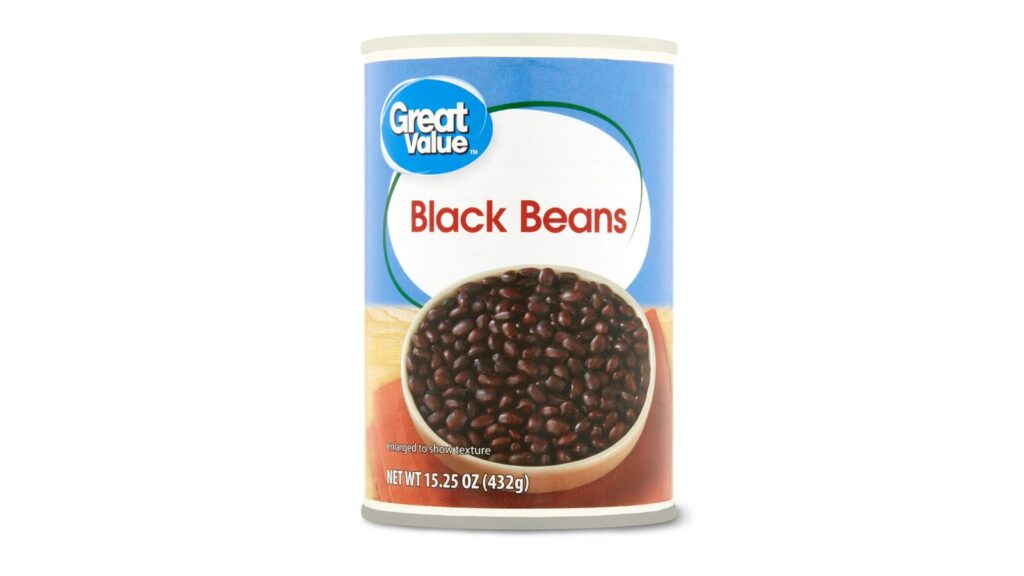
Shoppers save an average of one-third or more on grocery and household items by choosing store brands over name brands on comparable products. For a household spending $600 a month on groceries, that’s a meaningful number, even if you only make the swap on part of the cart.
The products where the difference matters least: flour, sugar, pasta, rice, canned beans, frozen vegetables, oats, butter, milk, vegetable oil, baking soda, and most cleaning supplies. These are commodity products where the manufacturing process produces an essentially identical result regardless of the label. A 2025 study found that 72% of consumers couldn’t tell the difference between store brands and national brands when shown pictures of the products. Many store-brand items are made by the same manufacturers as the name-brand versions.
The practical approach isn’t to overhaul the entire cart. It’s to identify the 10 to 15 items you buy every single week and try the store version on those. Pasta that saves 49% is pasta. Ketchup that saves 67% is ketchup. Keep buying the name-brand products where you genuinely notice a difference. The goal is to stop paying a premium on the ones where you wouldn’t.
Rotate streaming services instead of keeping them all on at once

The average household is paying for streaming subscriptions totaling somewhere between $69 and $73 a month, spread across four to five services. Most of those services release their biggest titles in concentrated windows, which means there are months when a given service has nothing you want to watch, and you’re paying for it anyway.
Rotating means picking the two or three services with the content you actually want to watch right now, subscribing to those, and canceling the others. When a show you want comes out on a service you’ve paused, you subscribe again. Most services make cancellation and re-subscription frictionless, and your watch history typically restores when you return. The only thing this requires is noticing when a service has gone quiet for you.
As a rough target: if you’re currently paying for five streaming services, most households can get to three without missing anything they’d actually sit down to watch. At current prices, the difference between five services and two is $40 to $60 a month. That said, this is one item where the right number is genuinely personal. The goal isn’t to minimize streaming; it’s to stop paying for services you’ve already finished with.
Install a smart thermostat

Heating and cooling account for 45% to 55% of the average household’s energy spending. That’s the largest single category in the energy bill, and it’s the category most susceptible to waste: running the AC at full strength while the house is empty for eight hours, heating the whole house to 72 degrees at 3 a.m. when everyone is under blankets. The U.S. Department of Energy says you can save up to 10% a year on heating and cooling by setting back the temperature 7 to 10 degrees for eight hours a day.
A smart thermostat (Ecobee, Google Nest, or similar) automates that setback without requiring you to remember anything. It learns your schedule, adjusts when you’re away, and can be controlled from your phone. ENERGY STAR-certified models have shown average savings of 8% to 10% on HVAC bills, which translates to roughly $155 to $237 a year at current energy costs. Most models cost $100 to $200, meaning they typically pay for themselves in the first year.
Worth knowing: if you already have a programmable thermostat, there’s a decent chance you’re not using it as designed. About 29% of programmable thermostat owners don’t use the programming feature at all. A smart thermostat solves this by doing it automatically, which is why the real-world savings from smart models tend to be meaningfully higher than from traditional programmable ones.
Add a cash-back browser extension

Every time you shop online without a cash-back extension running, you’re leaving money on the table that the retailer is paying out anyway. Stores like Target, Walmart, Nordstrom, Nike, and hundreds of others pay referral fees to shopping portals. Those portals pass a percentage of that back to you as cash. The retailer’s price doesn’t change. You just get a portion of the marketing budget that would otherwise stay with the middleman.
Rakuten is the largest of these platforms, with over 3,500 partner stores and $4.6 billion paid to members since 1999. The average cash back per member in 2024 was $101.46. Active users who shop online regularly tend to earn significantly more. It’s free to use, pays out quarterly via PayPal or check, and the browser extension activates automatically when you land on a participating store’s site. Other options like Capital One Shopping work similarly and can be run alongside Rakuten for comparison.
This one requires almost no behavior change. You shop where you already shop. The extension shows you whether cash back is active on that site and applies it at checkout. The only habit it asks of you is not turning it off.
Pay annually instead of monthly on subscriptions

Most subscription services, including software, streaming, antivirus, cloud storage, and some insurance products, charge more when you pay month to month. The monthly option offers flexibility, which has a price. Annual billing typically saves 10% to 20% depending on the service, and for some products it’s closer to two months free. If you know you’ll use something for the next 12 months, paying upfront is almost always cheaper.
The same principle applies to some insurance products. Paying your car insurance premium in full upfront, rather than in monthly installments, can cut that bill by 5% to 15% depending on the carrier. Some carriers frame this as a “monthly billing fee” that disappears when you pay in full; others offer an explicit discount. Ask specifically, because it’s rarely advertised prominently.
The math is simple: if you pay $15 a month for a service that costs $130 a year when billed annually, you’re paying $180 a year for the monthly version. That $50 annual difference is the price of flexibility you may not actually need. Go through your monthly subscriptions and check whether each one offers an annual option, then decide which ones you’re confident enough in to commit to a year at a time.
Meal plan before you shop

The average American household spends around $519 a month on groceries, and then wastes a significant portion of that. But beyond the food that goes bad, there’s another cost that rarely shows up in the analysis: impulse purchases and the take-out orders that happen because there’s food in the house but nothing that comes together into a meal. Having ingredients without a plan is expensive in a different way than not having ingredients at all.
Planning five or six dinners for the week before you shop changes the math. You buy what you need. The fridge doesn’t fill up with things that have no destination. When Monday’s dinner doesn’t happen, Tuesday’s can use the same protein. The studies that measure this consistently find savings of $40 to $50 per person per month from households that plan consistently versus those that don’t, and those savings compound with the food waste reductions that come from the same habit.
The most practical version isn’t elaborate. It’s a 15-minute Sunday exercise: look at what’s in the fridge, decide what you’re eating and when, and build the grocery list from that. Shopping with a list also dramatically reduces the incremental impulse adds: the things that look good in the aisle but don’t fit into anything you’re actually cooking that week.
Negotiate your medical bills

Medical billing is one of the least transparent pricing systems in the American economy, and that opacity works almost entirely in the provider’s favor. The same procedure can carry wildly different list prices depending on the facility, and the price on the bill you receive is frequently not the price you’re actually required to pay. Most hospitals and large medical practices have financial assistance programs, hardship discounts, or negotiated rate reductions that they don’t mention unless you ask.
The first step is requesting an itemized bill, not just the summary statement. Billing errors are common, and many patients find charges for services that weren’t provided, duplicate entries, or charges coded at a higher level than the service delivered. The second step is calling the billing department and asking directly whether any discount or financial assistance program is available. Even patients who are not low-income often qualify for reductions; many hospitals apply discounts to uninsured or high-deductible patients as standard practice.
If the bill is significant and negotiations stall, patient advocates and medical billing advocates can negotiate on your behalf, usually for a percentage of the savings. For large bills, $5,000 or more, this is frequently worth doing. For smaller bills, the call itself is often sufficient. The phrase that tends to work: “I want to pay this, but I need to understand whether there’s a lower rate available for someone in my situation.”
Check whether you’re over-withholding on your taxes

The average federal tax refund in recent years has hovered around $3,000. That’s $250 a month that you overpaid to the IRS throughout the year, interest-free, that you then get back in a lump sum the following spring. For most households, the refund feels good but is actually a quiet cost: that money was unavailable to you all year, couldn’t earn interest, and couldn’t pay down debt.
Adjusting your W-4 with your employer tells the IRS to withhold less from each paycheck, putting that money back in your hands monthly instead of as an annual refund. If your life situation is relatively stable (same job, no major new deductions or credits), the IRS’s online withholding estimator can tell you in about 10 minutes whether your current withholding is calibrated correctly or whether you’re sending the government an interest-free loan every month.
This one has a caveat: it works in your favor if you’re disciplined enough not to spend the extra $150 or $200 a month on things that don’t matter. If having a forced savings mechanism is genuinely useful for you, keeping the refund may be worth the opportunity cost. But for anyone carrying high-interest debt that those extra dollars could go toward, over-withholding is an expensive habit.











