
The clock over the kitchen doorway stopped keeping time sometime around 2009, and nobody has taken it down since. Before it lands in the donation pile, lift it off the nail and look at the back. A paper label, a stamped name, or a model number can be the difference between a $15 clock and an $800 one.
Millions of wall clocks were made for kitchens, offices, schools, and bars, and many were thrown out once the motor stopped working or the pendulum went missing. The ones that survived are the ones collectors look for now. Even common models can bring $50 to $150, so it is worth checking what you have before you get rid of it.
Condition drives nearly everything. A clock that runs, keeps its original glass, key, cord, and pendulum, and has never been repainted or rewired sells for far more than one that is cracked, rusted, or missing parts. Reissues and reproductions are everywhere too, so look for dated labels and wear that matches the age.
1. Kit-Cat Klock with the wagging tail
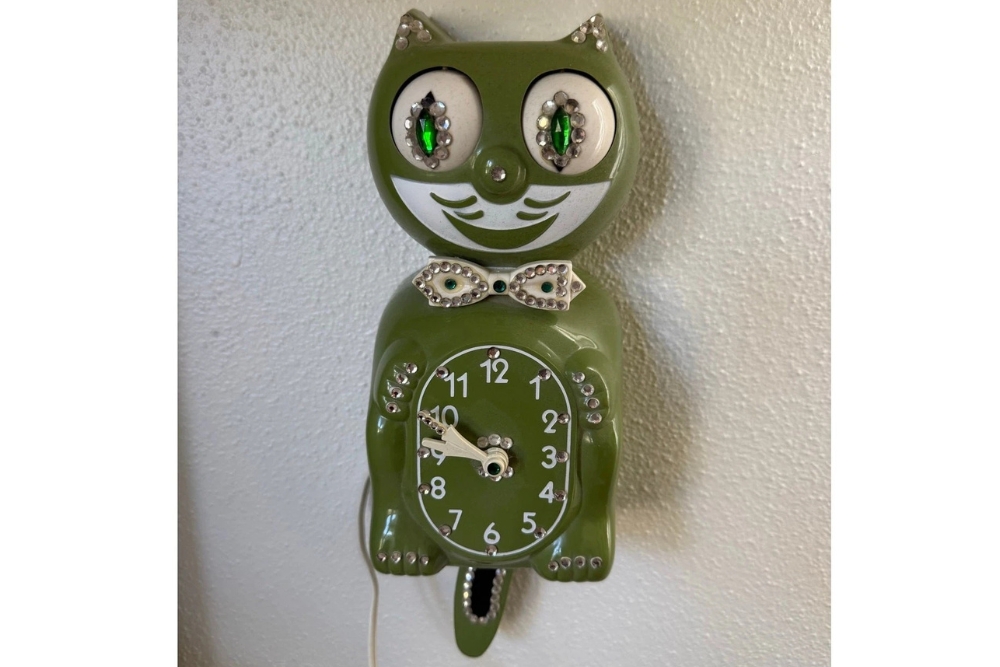
The grinning black cat with rolling eyes and a swinging tail has been around since 1932, which is exactly why so many newer versions are floating around. The easy test is the power source. An electric cord means it was made before 1990, and no bow tie means it predates 1954, when the design picked up its bow tie.
That matters because a brand-new Kit-Cat costs $60 to $70, so a battery-powered clock is worth about what it cost. A working vintage electric clock with a clean case is worth more. Those usually start around $100 and climb past $200 when the tail swings freely and the original box survived. A face without the Kit-Cat name usually points to an earlier clock, since the name wasn’t printed on it until 1982.
Check the tail first. Missing or bent tails, cracked plastic, a seized motor, and a frayed cord all knock the price down fast. Colors other than black exist, but a glossy finish that looks too perfect for its age deserves a second look.
2. West German Black Forest cuckoo clock
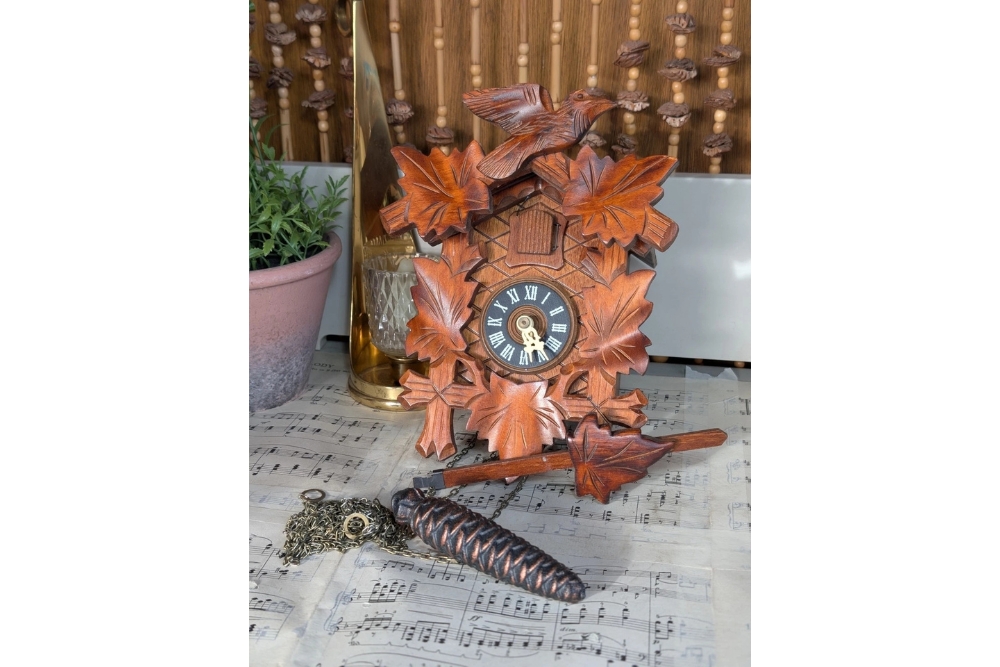
Turn the cuckoo clock from the hallway around and look for “West Germany” stamped on the back. That wording was used between 1949 and 1990, which puts the clock in the souvenir-and-gift era rather than the antique one. Visitors carried these carved leaf-and-bird clocks home by the thousands, and most sell for $50 to $150.
Completeness sets the price. A clock with both pinecone weights, the pendulum, a bird door that opens, and bellows that still squeak sells for far more than one headed for parts. Eight-day movements and clocks with a music box bring the most, and a chalet-style case with moving figures can reach $300.
Watch for battery-powered copies. A real Black Forest cuckoo is mechanical and wound by pulling the chains, so a battery compartment on the back means you have a decorative clock worth a fraction as much. Missing weights and chains are the most common flaw, and tracking down matching replacements can cost more than the clock brings.
3. Elgin and Welby starburst wall clock
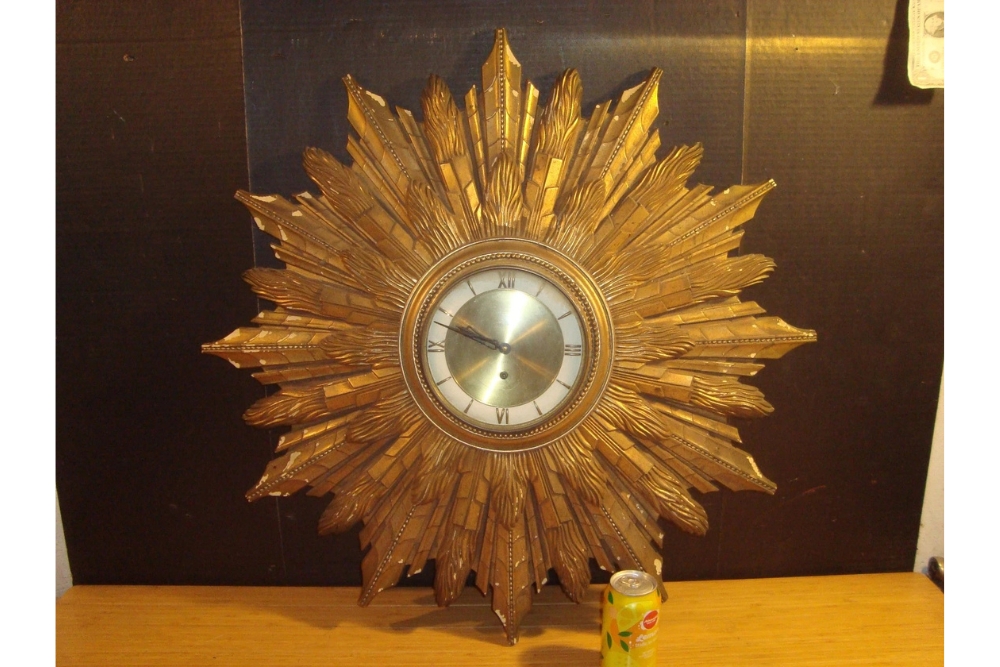
The starburst clock was everywhere in the late 1950s and 1960s, and the brass-and-wood versions made by the Welby division of Elgin are the ones that hold their value. Metal or wood rays spike out from a gold-toned face. A big 30-inch Elgin in excellent shape brings $235, and most examples land between $100 and $250.
Size and completeness decide where yours falls. The large versions with every spike in place and the original winding key command the high end. Smaller clocks, battery conversions, and ones with bent or missing rays sit closer to $100.
Brand-new metal sunburst clocks cost about $50 and copy the look, so check the back for a Welby or Elgin mark and for the wear that comes with real age. Tarnish on the brass, a faded dial, and a soft patina where fingers handled it are good signs. A mechanism swapped for a modern quartz motor is worth less than the original.
4. Nelson ball clock
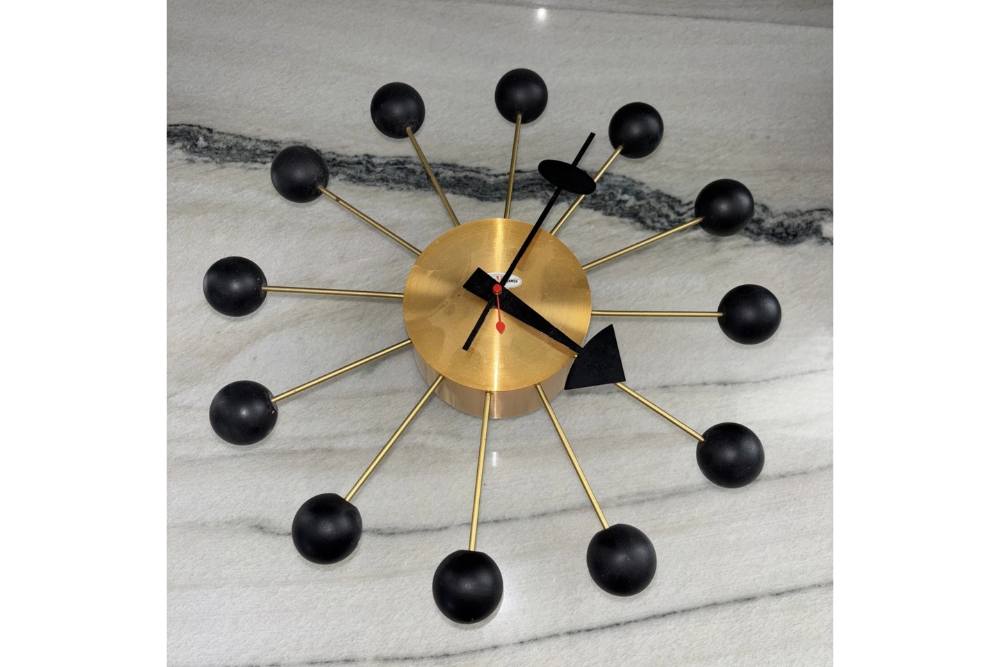
George Nelson’s name is on it, but Irving Harper, who worked in Nelson’s studio, designed the ball clock. Howard Miller sold it in six versions starting in 1949, and it dropped the numbers entirely, with twelve wooden balls on spikes standing in for the hours. The multicolor version is the one most people picture, and it’s the one collectors ask for first.
A tired example with loose hands and a chipped, stained body brings $250 to $300, while a pristine one reaches $600 to $800. Bent hands are the usual flaw because the metal is thin and soft, and repainted balls are common, so look for even, original enamel instead of fresh gloss.
A new one from the current catalog runs $535, and those reissues are made in Poland, so check the back for a Howard Miller label and wear that goes with real age. Missing balls, a replaced motor, and a cut-and-spliced cord all pull the price toward the bottom of the range.
5. Burwood owl family clock
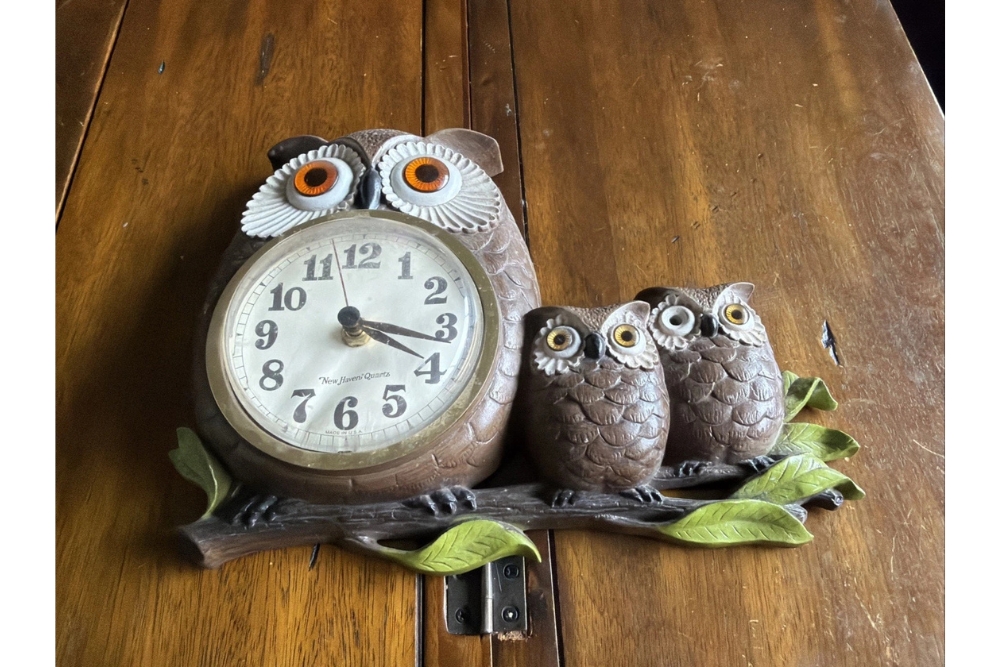
Check the den or the wall above the kitchen phone for a plastic owl clock with two owlets tucked beside the face. Burwood molded these during the early 1970s decor craze, and the 1972 owl family is the one that surfaces most often. Most bring $30 to $50 when they work and the face is clean.
Scuffed faceplates, yellowed plastic, and corroded battery contacts are the usual problems, and a clock stored in a hot attic can warp. A never-used example with its original tags is a different story, and it can climb to about $135.
Look for the Burwood name and a date stamp on the back, since later copies and unmarked knockoffs sell for less. Other molded novelty clocks from the same era are worth a look too. These are low-value clocks, so expect a small payout. An owl with a working motor and an unscratched face is the easiest one to sell.
6. Telechron Café kitchen clock, Model 2H11
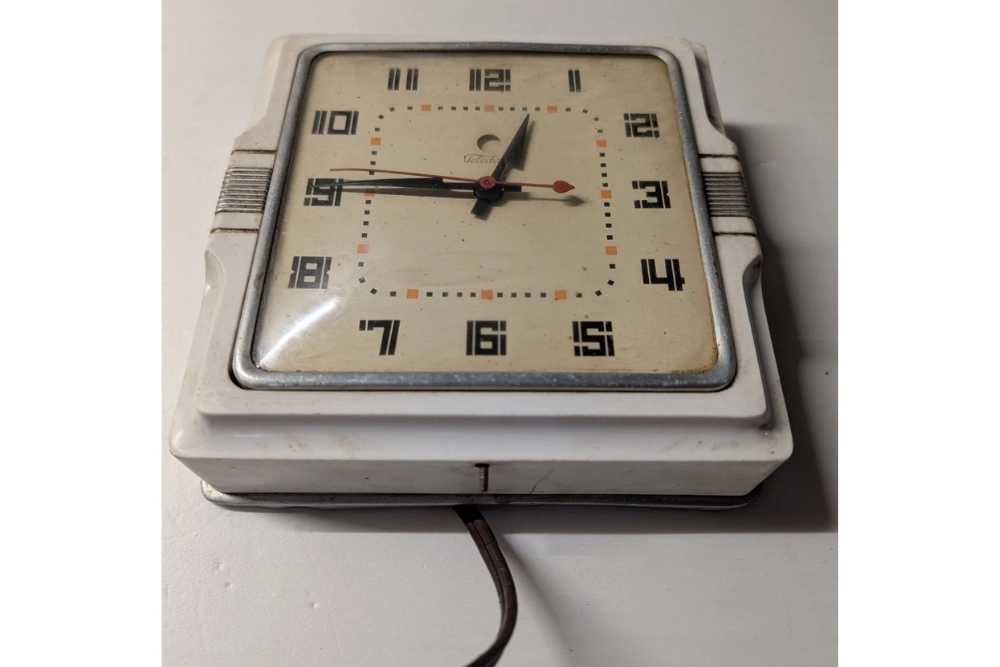
If your grandparents had a small square clock humming over the stove, there’s a decent chance it was a Telechron. The Café, Model 2H11, ran from 1940 to 1951, and more than 770,000 were sold, which is why they turn up so often at estate sales.
That volume keeps prices modest. A working clock in clean condition brings $60 to $120. The molded cases came in red, ivory, green, white, and blue, so a color you like is as good a reason to keep one as any.
Cracks in the case, a yellowed dial, a missing glass lens, and a motor that hums without turning are the problems to look for. A clock that hums but won’t run often needs a new motor, and that repair can cost more than the clock is worth. Look for the Telechron name and a model number on the dial or on a sticker on the back to be sure of what you have.
7. Spartus black cat clock
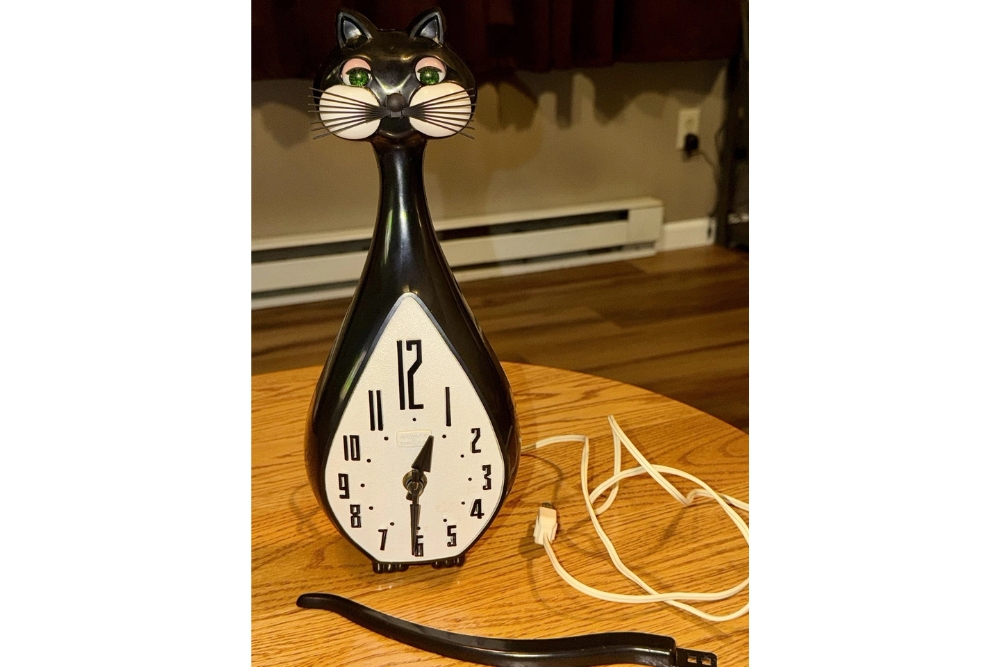
The Kit-Cat isn’t the only cat on the wall. Spartus made its own black cat in the 1950s, with a tail that swings and green eyes that blink, and a clean working one brings $200 to $250. Haddon’s lighted Kit Kat Kitten clock from the 1940s lands in the same range.
That’s more than a new Kit-Cat costs, so condition matters. Check that the tail swings freely and the eyes move together, since a seized motor is the most common failure. Missing or replaced tails, cracks in the plastic body, and rewired cords reduce the price quickly, and a clock with its original box and instructions is worth more.
Check the dial and the back for a maker’s name, and note whether the clock lights up, since the Haddon kitten is a lighted design. A cat clock with no marks anywhere is harder to price, and buyers pay less for the uncertainty.
8. Syroco sunburst wall clock
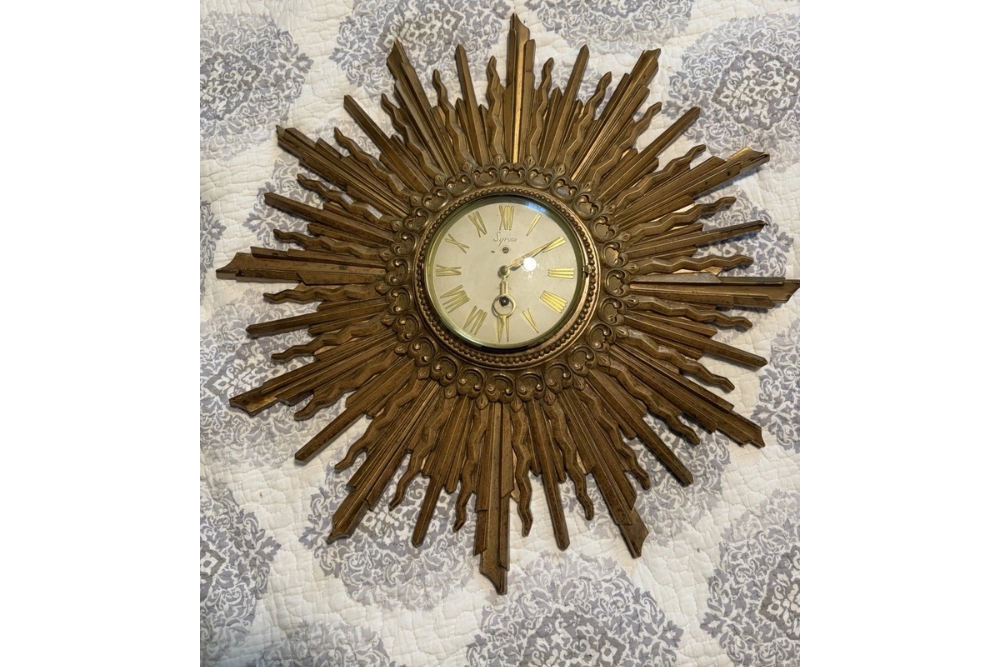
Syroco made its name molding wood-look decor from a composition material, and the gold sunburst wall clocks from the late 1960s are among its best-known pieces. The big 22-inch version in working order brings $200 to $300, and a Danish-style wood sunburst can reach the top of that range.
Size is the first thing to measure. The big clocks carry the premium, while smaller versions sell for less. Look for chipped gilt, cracked or missing rays, a missing glass door over the dial, and a movement that has been replaced.
Many sunburst clocks from German and American makers look alike from across the room, so turn it over. A Syroco name or stamp on the back is what separates it from an unmarked copy. Buyers also pay more when the original dial and hands are still in place, so skip any clock with a fresh coat of gold spray paint.
9. Red GE Telechron school-style clock
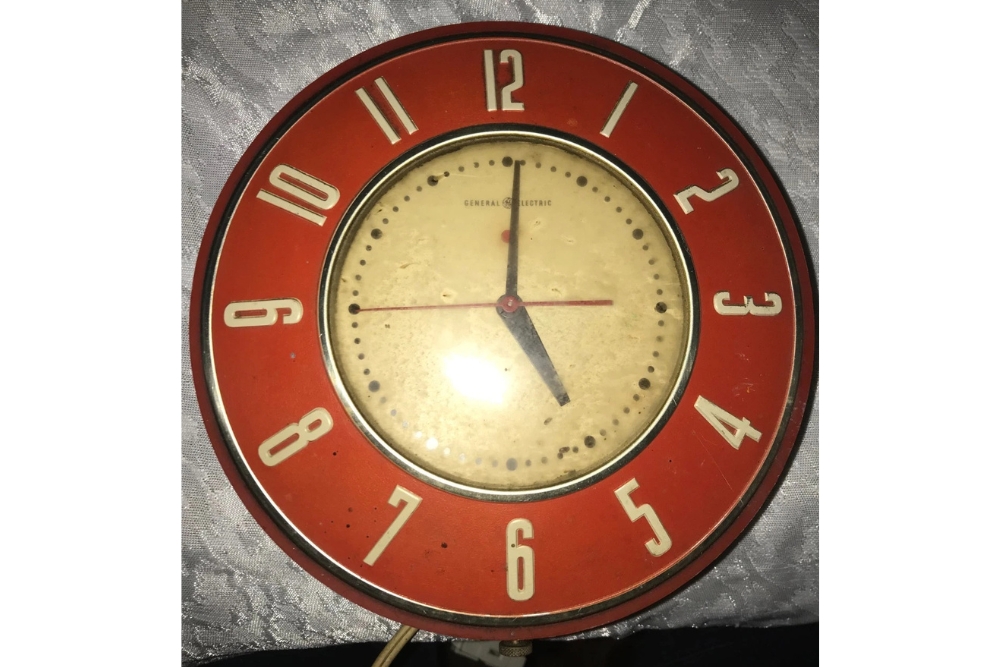
Plain, round, glossy red wall clocks like the ones that hung in classrooms and offices are easy to recognize, and the General Electric Telechron versions from the 1960s bring about $150 when they run.
Other makers sold red school clocks that look nearly identical, so check the dial and the back for the Telechron or General Electric name before you price it. Restored clocks with new quartz works are a different product from original electric ones, and the price should reflect which you have.
Look for cracked or chipped paint, scratches in the glass lens, a frayed cord, and rust where the case meets the wall. Because these hung in hallways and kitchens for decades, grime and stains are common. A gentle cleaning helps, but repainting hurts the value, and a clock with its original cord and sticker is worth more than one with a replaced plug. Plan to photograph the back, since buyers want to see the label.
10. Standard Electric Time school clock
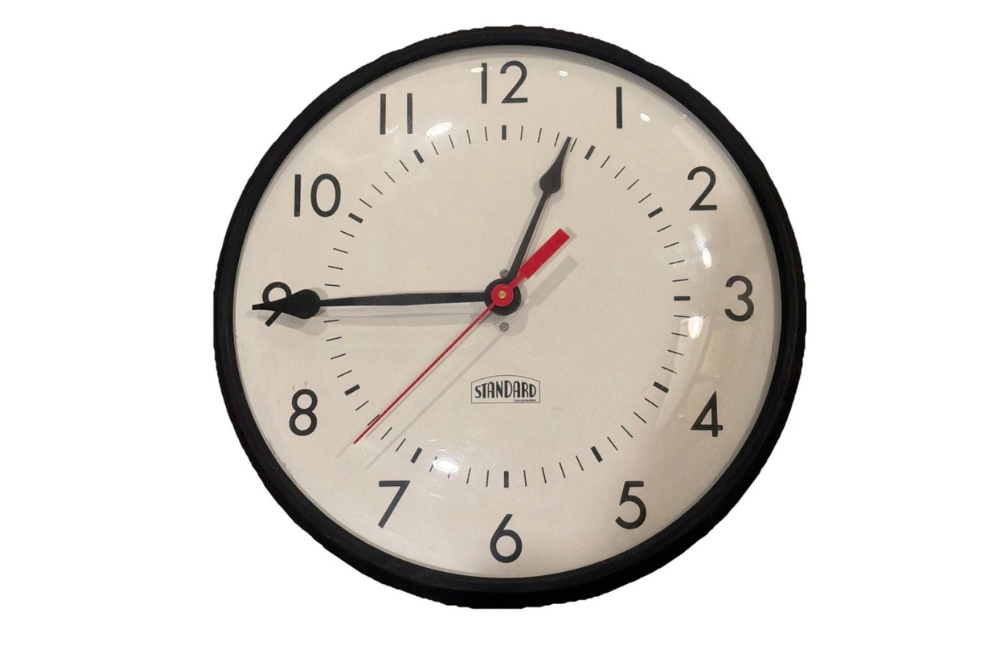
Aluminum-framed school and factory clocks from Standard Electric Time and Simplex look plain on the wall, but they have a following among people decorating with an industrial look. A 13-inch Standard Electric with a domed glass lens from around 1960 usually sells for $60 to $100.
The catch is that many of these were part of a master-clock system, meaning the clock had no motor of its own and took its signal from a control unit in the school office. Those only work if they’ve been converted to run on batteries or household current, and converted ones are worth the most. Look for a model sticker on the back and ask whether it has been tested.
Check the dome glass for cracks, the dial for rust and flaking, and the frame for dents. Original paper labels from the factory help, and a clock with a replaced bezel or paint touch-ups is worth noticeably less.
11. Lighted Coke and Pepsi clock
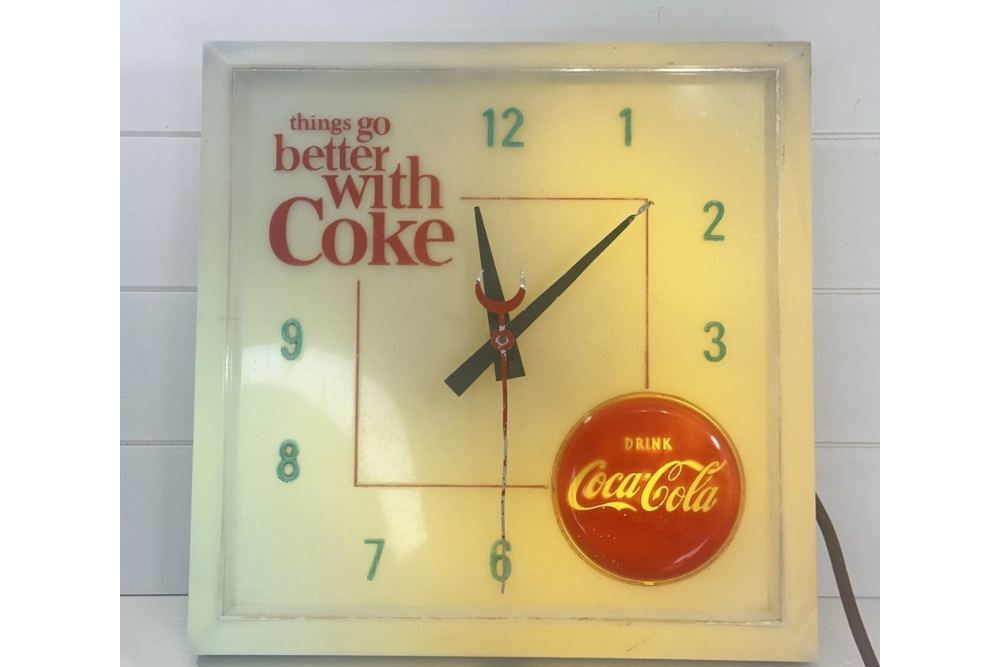
Soda companies put lighted wall clocks in stores for decades, and the Coca-Cola and Pepsi versions from the mid-century years bring $275 to $350 when they light up and keep time.
Age makes a big difference in price. The plastic Pepsi and Coke clocks from the 1970s sell for $25 to $50, so look at the cord, the style of the glass, and the lettering before you get excited.
Condition problems pile up on lighted clocks. Cracked or yellowed glass, faded decals, dead bulbs, and rusted cases all cut the price, and reproductions made to look old are sold everywhere. A real one has a maker’s mark or model number, wear that matches its age, and an original cord that hasn’t been replaced. If the glass looks crisp, the colors look too bright, and there is no maker’s name anywhere, assume it is a copy and price it that way. A genuine clock in worn condition can still bring more than a copy, as long as you can show it is real.
12. Lighted beer bar clock
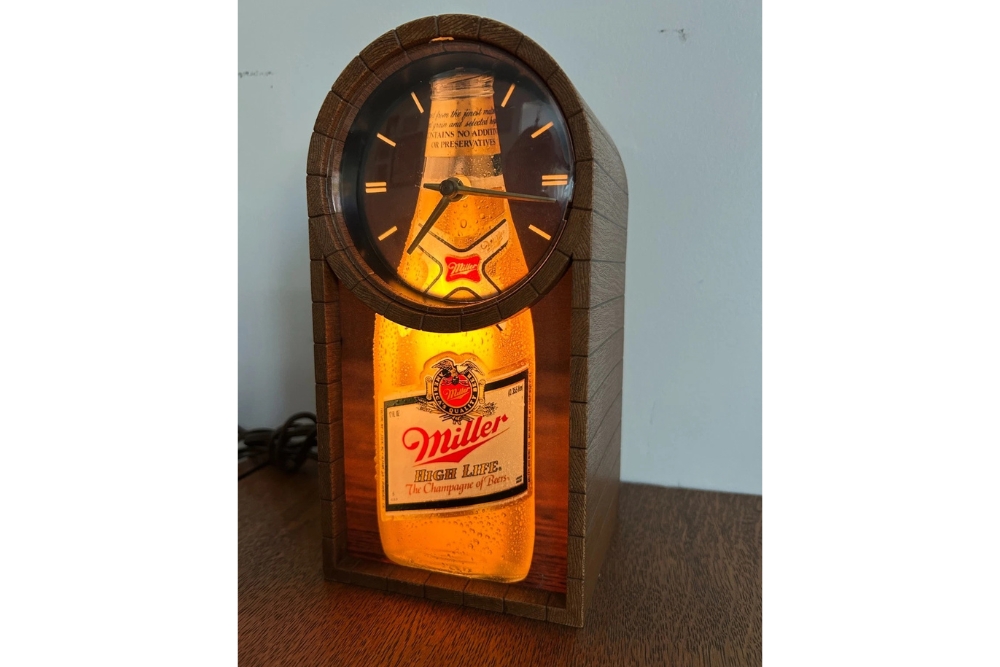
The Schlitz clock that hung over the basement bar, the Budweiser clock with the swinging pendulum, and the Miller High Life clock with the spinning starburst all sell as breweriana. The older and cleaner ones bring $40 to $80, and a 1990s Bud Light bar clock lands near the top of that range.
Brewery clocks were molded from cheap plastic, so brightness and condition matter more than age. Fading, cracks, and missing pendulums reduce the price, while a bulb that lights up and a clock that keeps time lift it.
Check the cord, the lamp socket, and the glass before you plug it in. Old wiring is a fire hazard, and a rewire from an electrician costs money, so for a $50 clock it’s worth skipping one with a brittle or crumbling cord. If you are selling instead of buying, say plainly that you haven’t tested it. Buyers trust that more than a promise it works, and it keeps returns down.
13. Gingerbread kitchen clock
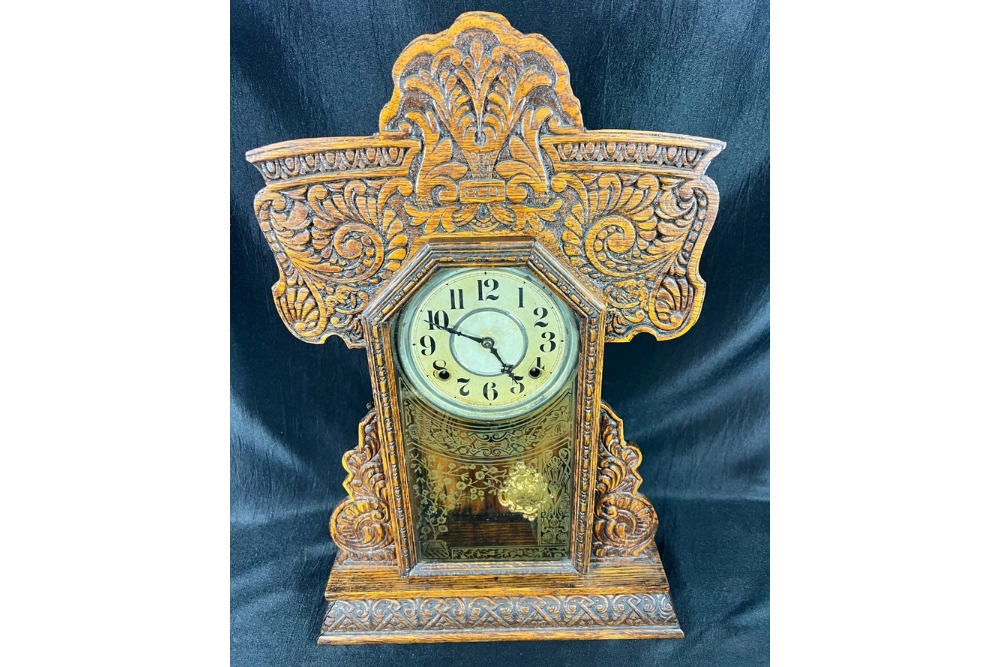
The carved walnut shelf clock with the glass door and the busy scrollwork on top is called a gingerbread clock, and Ingraham, Waterbury, Ansonia, Gilbert, and New Haven all made them by the thousands. They sold cheap in the 1880s and 1890s to families who wanted a clock for the kitchen. Today a complete one with an eight-day movement sells for $100 to $125.
Prices stay modest for these clocks. One missing its pendulum, key, and minute hand drops to $70 to $80, which is the range to expect for most found-in-the-attic examples.
Open the door and check the paper label inside, which usually names the maker and the city. Cracked decals on the door glass, veneer lifting at the edges, and a missing pendulum are the common problems, and a repair at a clock shop can cost as much as the clock. Value it for the case and the label, since repairs rarely pay off.
14. Seth Thomas schoolhouse regulator
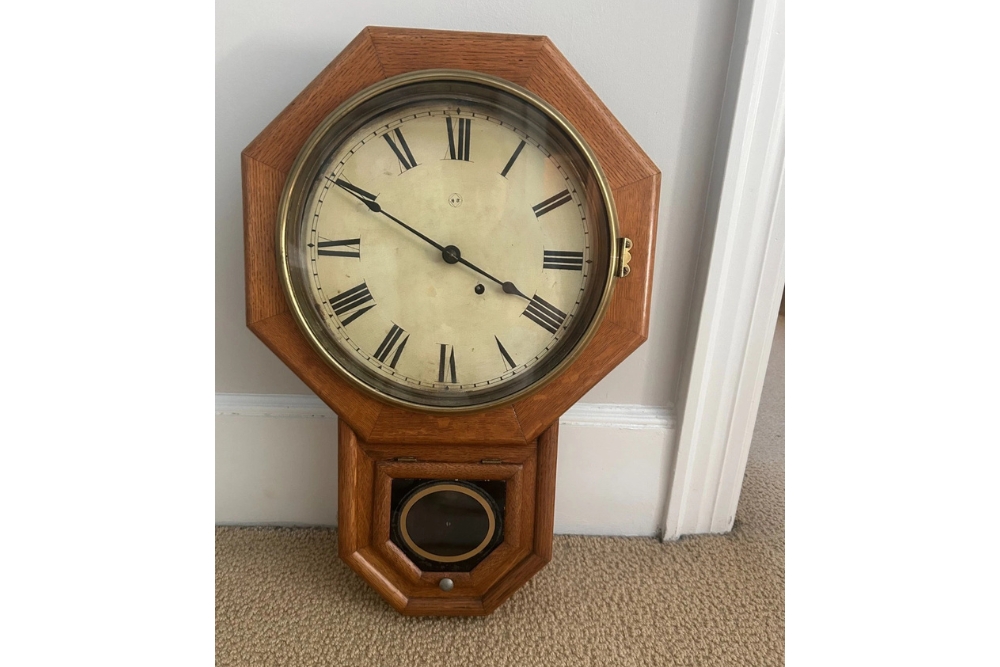
The long wall clock with a pendulum swinging behind a glass door and a round white dial looks like it came out of a one-room school, which is where the name schoolhouse regulator comes from. Seth Thomas made them in Thomaston, Connecticut, and an authentic one from the 1890s with an eight-day movement is valued around $175 to $225.
Some of these are calendar clocks with 31 numbers around the dial in addition to the Roman numerals, a detail worth checking before you price one. Plainer examples in everyday working shape trade closer to $80, which is what most thrift-store finds earn. Missing pendulums, cracked dials, and cases that have been refinished in a hurry all push the price toward that lower number.
Reproductions are common. Quartz-powered schoolhouse clocks sold in gift shops and catalogs for decades look similar and typically sell for $50 or less. A real one has a mechanical movement with a winding key, a paper label inside the case, and wear that matches the age.
15. Waltham banjo clock
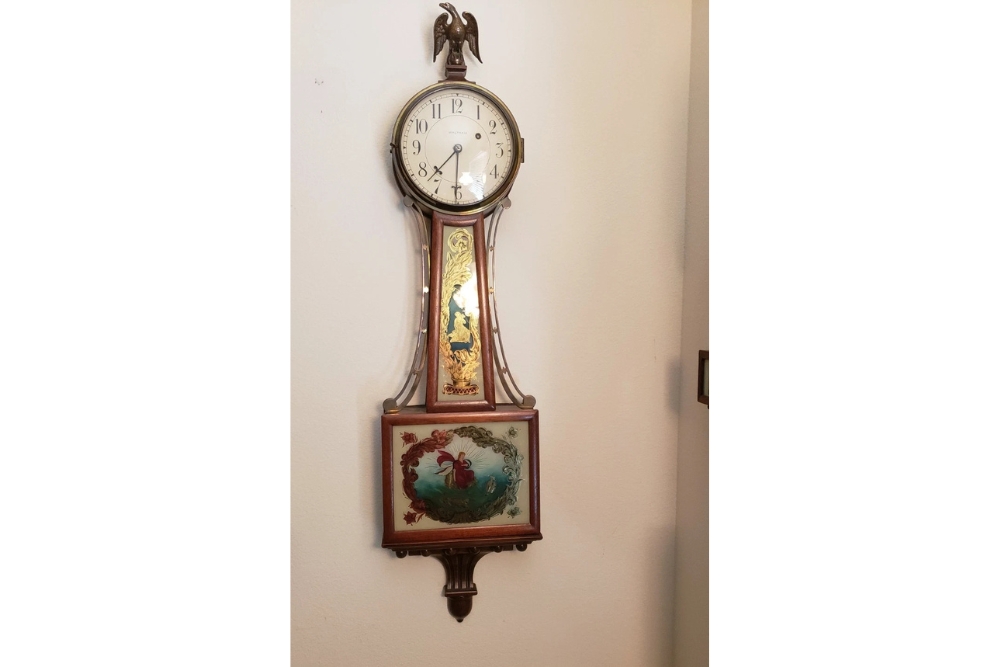
The banjo clock, named for its shape, began as a patent timepiece from Simon Willard in the early 1800s, and Waltham made copies of the Willard design well into the 1930s. Those Waltham versions are the ones that turn up at estate sales, and they bring $500 to $800 when the painted glass panels are original and the eagle on top is intact.
The reverse-painted glass tablets are what to inspect first. Flaking paint, cracks, and replaced glass drop the price quickly, and a banjo with modern glass is closer to decor than collectible. Check the dial for the Waltham name and the movement for the same mark. A clock with a dial from one maker and works from another has been pieced together, and that lowers the price.
Later electric banjo-style clocks look similar from across the room but sell for far less. Those usually have a cord instead of a pendulum and weight, which is the quickest way to tell them apart.
16. Chelsea ship’s bell clock
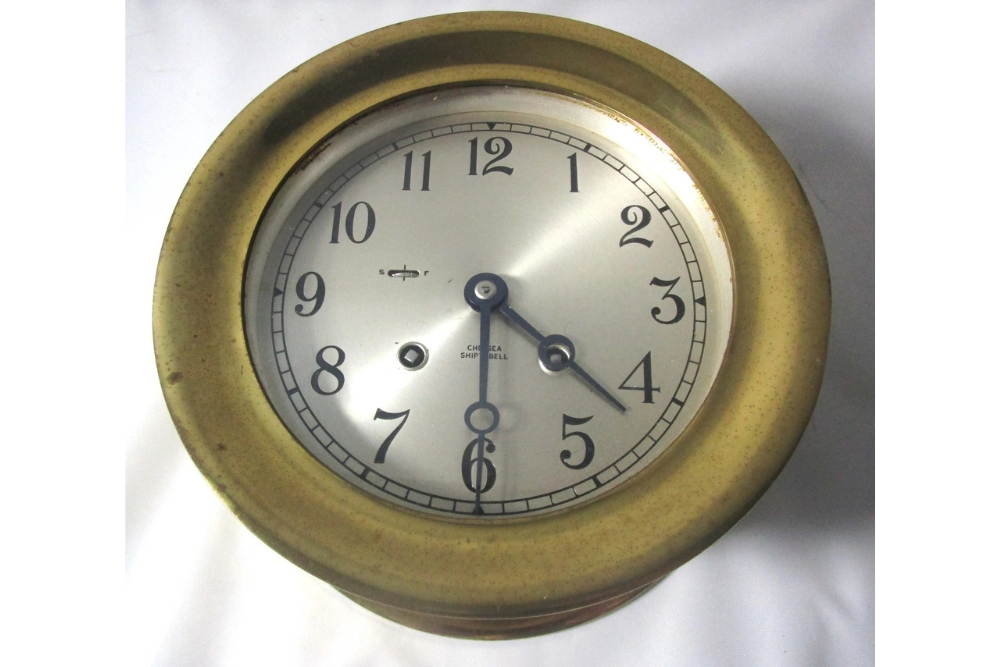
Chelsea Clock Company still makes its brass ship’s bell clocks, and a new 8.5-inch one costs $9,500, so vintage ones hold their value well. A six-inch mid-century clock that strikes the hour and half hour on a ship’s bell typically brings $400 to $650.
Look for the Chelsea name on the dial and a serial number stamped on the back plate, since other ship’s-style clocks usually sell for less. Solid brass cases with hinged bezels are the ones buyers want most, and plenty of cheaper “ship’s clocks” in gift shops have nothing in common with the real thing beyond the round brass look. If the dial is signed Chelsea and the movement runs, it is worth having it appraised before you sell it.
Test the strike as well as the time. Dents, heavy pitting in the brass, a missing winding key, and a strike that rattles are all condition problems. A clock with matching case and movement serial numbers is worth more than one that has been married together from different parts.
17. Vienna regulator by Gustav Becker
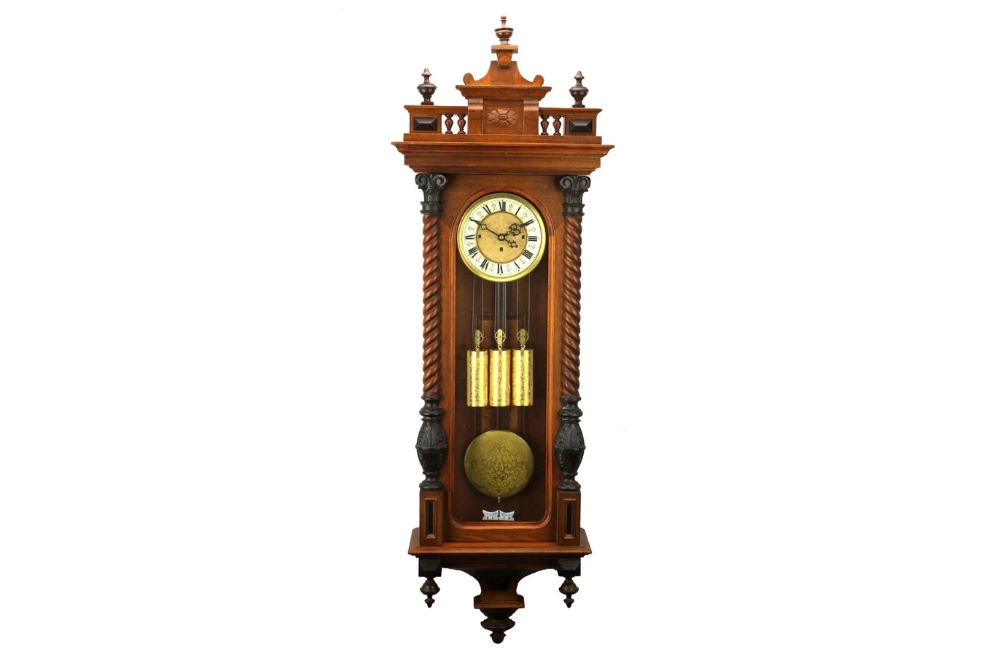
The tall, narrow walnut wall clock with weights you can watch drop behind glass is a Vienna regulator, and Gustav Becker’s factory in Freiburg made some of the best. A fine signed three-weight clock in excellent condition is valued around $700 to $800, while one in less perfect shape lands closer to $250 to $450.
The mark matters. Becker stamped his name and a serial number on the movement, and that number helps date the clock. An unsigned clock in the same style is worth noticeably less, so a careful look at the movement before you price it pays off.
Check for chips in the carved crown, lifting veneer, scratched glass, and missing weights, since replacement weights stand out next to the originals. Plenty of look-alikes from other German factories are sold under the Vienna regulator name, and some are quite nice, but only the signed Becker commands the top of the range.
18. Seth Thomas Regulator No. 2
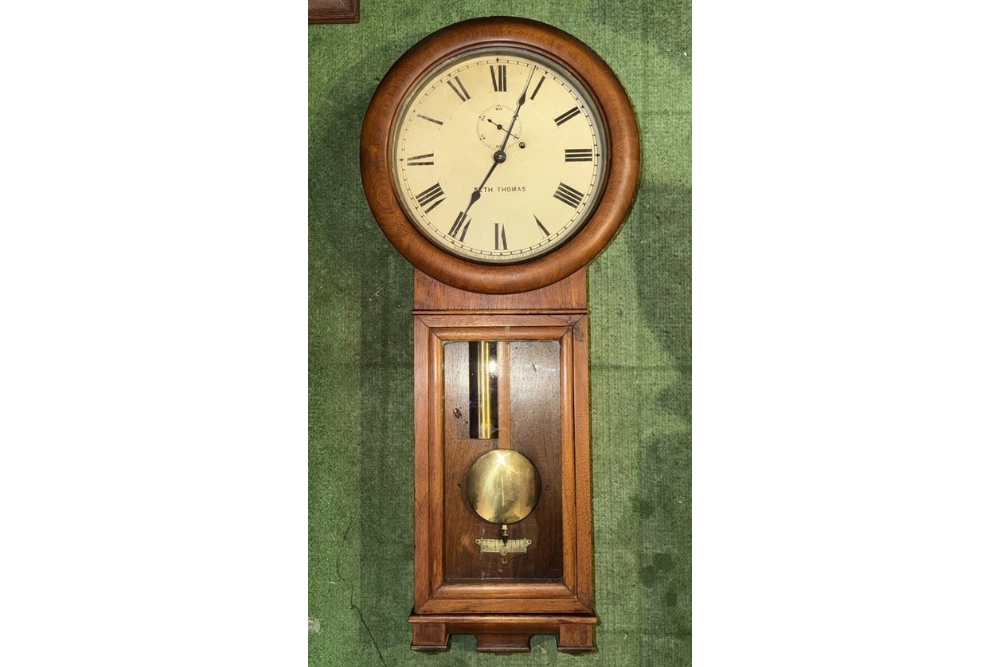
Seth Thomas built the Regulator No. 2 for more than a century, starting in the 1860s, so plenty survive. The case started in walnut veneer, switched to cherry and oak around 1890, and settled on mahogany and oak by about 1913, which makes the wood a good clue to the age. An oak example in decent shape brings $600 to $1,300, and a restored, running clock sits at the top of that range.
The painted metal dial and the eight-day weight-driven movement are the details to match. A reissue from the 1970s also exists, with a solid oak bezel instead of a veneered one, so look closely at the bezel and the Seth Thomas name on the dial before you call yours an original.
Condition problems are expensive. An alligatored or cracked finish, veneer loss, a replaced dial, and a missing pendulum bob each lower the price, and a clock that has sat in a damp garage often has a rusted movement. Spend the first few minutes checking that the case is square and the glass is intact.
Whatever is hanging on your wall, check the back before it leaves the house. The label usually tells you most of what you need to know.











