
There is a faded Hawaiian shirt at the back of the closet, probably left over from somebody’s vacation decades ago. It’s tempting to assume that anything old, floral, and made in Hawaii must be valuable. The label tucked into the collar can tell a very different story. A 2026 auction sold a vintage Kamehameha shirt for just $30, while carefully chosen older shirts from the same collecting world can attract serious money.
The important dividing line is usually the shirt itself, not the word “Hawaiian.” Original 1940s and 1950s rayon shirts with exceptional textile art are the most desirable. An ordinary later souvenir shirt, even from a famous maker, may sell for very little. Old reproductions, modern reissues, and optimistic online asking prices make it easy to confuse the two.
Look at the neck label, the fabric, the pocket where the print meets the body, and the condition under the arms. Those details matter much more than a seller calling something “rare” in all capital letters.
Early Kamehameha rayon shirts
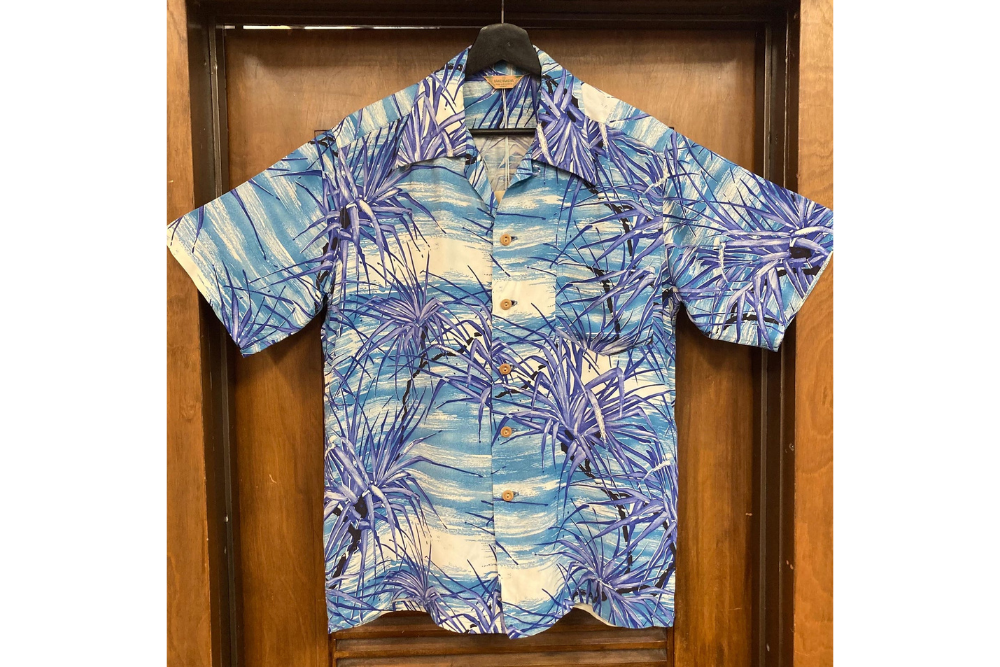
A genuine early Kamehameha shirt is worth examining before it goes onto the donation pile. The company began making ready-to-wear clothing in Honolulu in 1936, and the best pre-1960 pieces have the supple, heavy rayon fabric and expressive prints collectors associate with the aloha shirt’s heyday. Search for older woven labels, a soft open collar, and an uninterrupted pattern across the chest pocket. A basic flower print is less exciting than a strong, balanced scene with unusual colors.
Don’t stop at the name. Kamehameha continued for decades and later versions can be worth much less. A modern polyester shirt or 1990s revival is not interchangeable with an early silky rayon example, even if the tag looks reassuringly traditional. Look for thinning under the arms, small repairs along the button placket, and fading on the shoulders. When you’re selling, photograph the label, front, back, and any flaws. Those four details tell a knowledgeable buyer far more than a vague description of how old it looks.
Kamehameha shirts with Eugene Savage’s Matson artwork
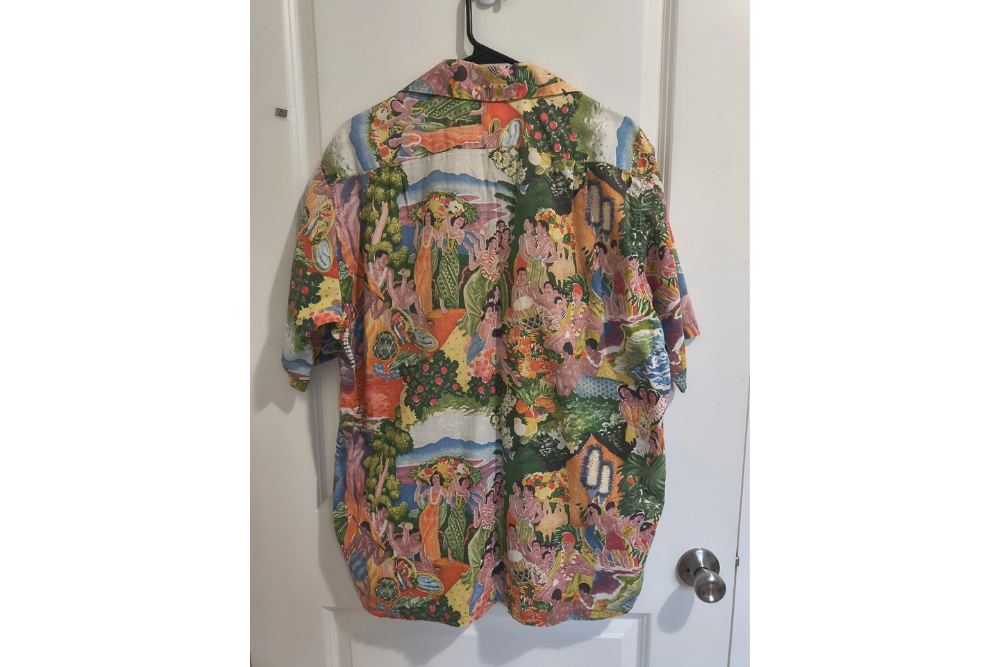
This is one of the designs where a shirt’s picture matters as much as the maker. Between 1951 and 1956, Kamehameha produced shirts using imagery derived from Eugene Savage’s Matson ocean-liner murals. The elaborate scenes began as artwork commissioned for a shipping company, then appeared on garments. They’re not the usual small repeat of hibiscus blooms. There are figures, architecture, and decorative panels arranged to create a complete visual composition.
If you’ve found a crowded Hawaiian scene that looks almost like a picture postcard turned into a shirt, examine it closely. Compare the artwork to documented originals before calling it a Matson design. Later shirts reused or echoed historic island imagery, and you cannot identify a specific licensed print simply because it has canoes or tropical figures. Originals also came in different garments and materials. A carefully documented period shirt with the right artwork is a far stronger listing than an anonymous “vintage cruise shirt” with a speculative price.
Duke Kahanamoku shirts made by Cisco
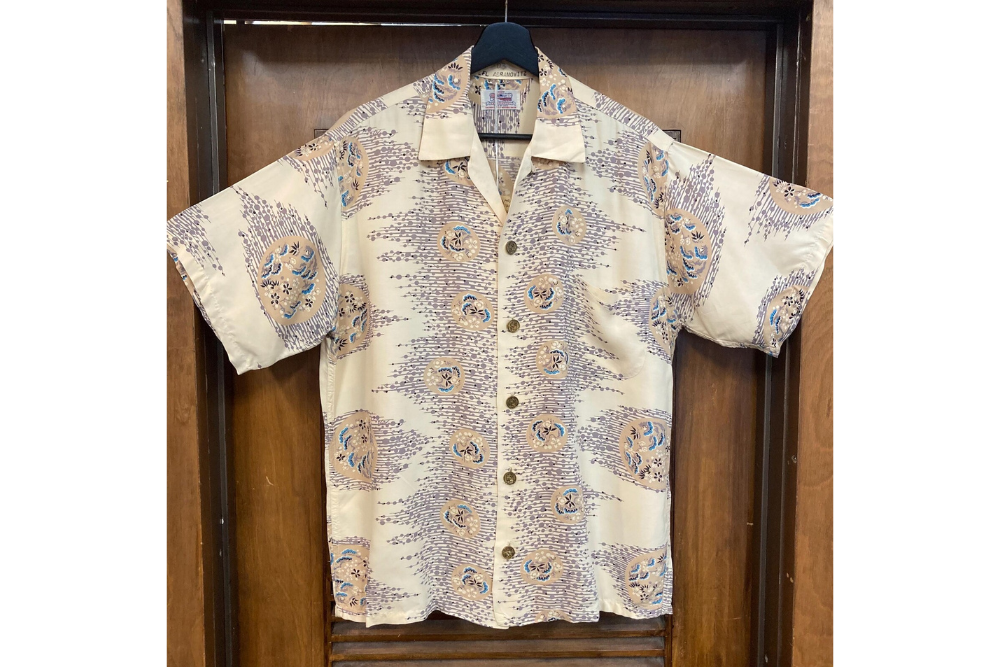
A Duke Kahanamoku label sounds promising, but what is printed underneath it matters. The Olympic swimmer’s name appeared on several clothing lines, including Cisco-made shirts beginning in 1949. Serious collectors pay particular attention to period rayon versions with the older cut, interesting print, and intact labeling. The famous name adds interest because it belongs to a major figure in surfing history, but it doesn’t make every garment expensive.
The trap is assuming that all shirts with his name are from the same decade. Catalina also used the Duke Kahanamoku name in the 1980s, and modern shirts can carry it too. Those are different objects with different buyers. Turn the collar over, inspect the maker’s line, and read the fabric information rather than dating the shirt from the portrait alone. An original in wearable condition is preferable to one with brittle rayon, missing buttons, and a collar that has been shortened by a previous owner.
Alfred Shaheen Tiare Tapa prints
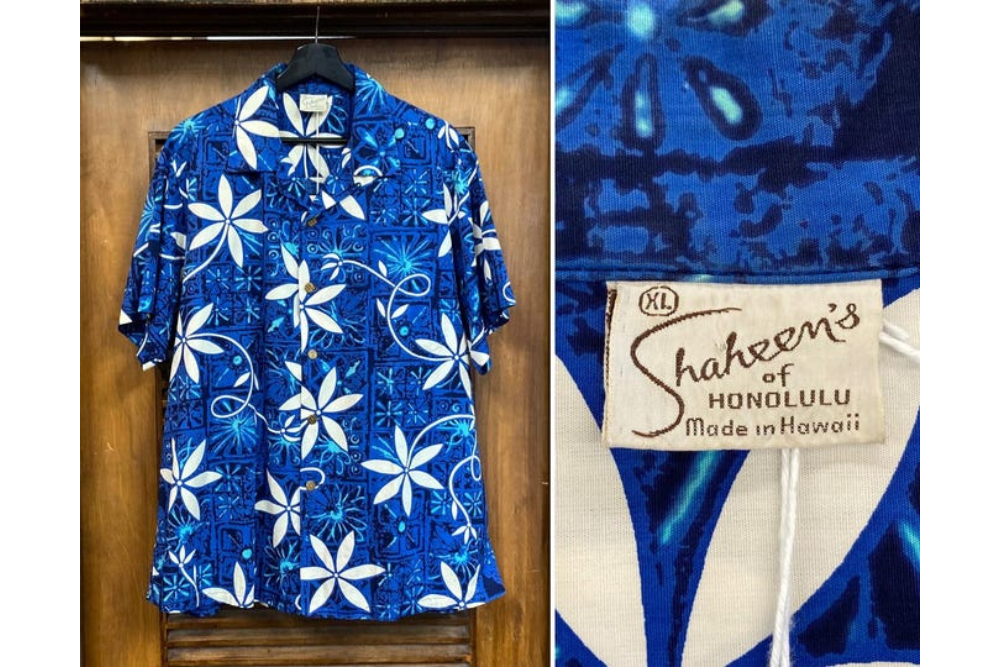
A shirt with strong red and dark geometric motifs may have more going on than the usual tropical souvenir design. Alfred Shaheen’s Tiare Tapa print is associated with Elvis Presley’s Blue Hawaii album imagery. That recognizable connection helps explain why collectors look for the design, but it has also made the print a tempting choice for reproductions. A shirt that resembles Elvis’s is not proof that it is the right original piece.
Alfred Shaheen started his Honolulu ready-to-wear business in 1948 and developed his own fabric printing operation. That gives you useful clues: look for period labeling, the actual print construction, and fabric consistent with the age claimed. Don’t describe an unverified shirt as “the Elvis shirt” merely because the colors are similar. It is the combination of the documented pattern and a genuinely old garment that brings collector interest. Later tribute versions have their own audience, but their asking prices should never be used to value an original from the 1950s or early 1960s.
Alfred Shaheen Hukilau scene shirts
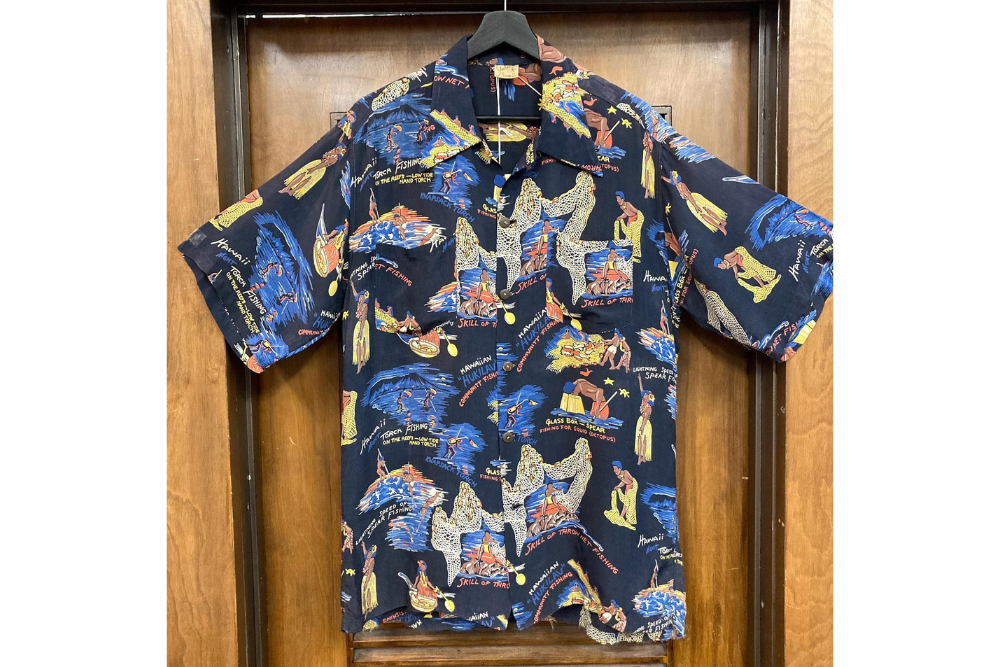
Some Shaheen shirts carry a whole story rather than a repeating flower. The Hukilau print was named for the communal gathering of fish, and its subject matter makes it distinctive among the designer’s many textiles. When the scene is complete and clearly printed, the shirt works almost like a piece of framed graphic art. That is why one strong early print can attract more attention than several attractive but ordinary later florals.
The detail to inspect is how the artwork travels across the shirt. Does the scene continue cleanly at the front? Has a pocket been replaced with fabric that no longer matches? Is there bleeding, surface wear, or fading where the colors were once sharp? A collector who knows the design will notice these things immediately. Shaheen produced a huge variety of prints, so the label by itself isn’t a price. Identify the exact artwork first and then compare actual sold examples of the same design, not every piece carrying the same surname.
1950s Kiilani shirts from the Shaheen company
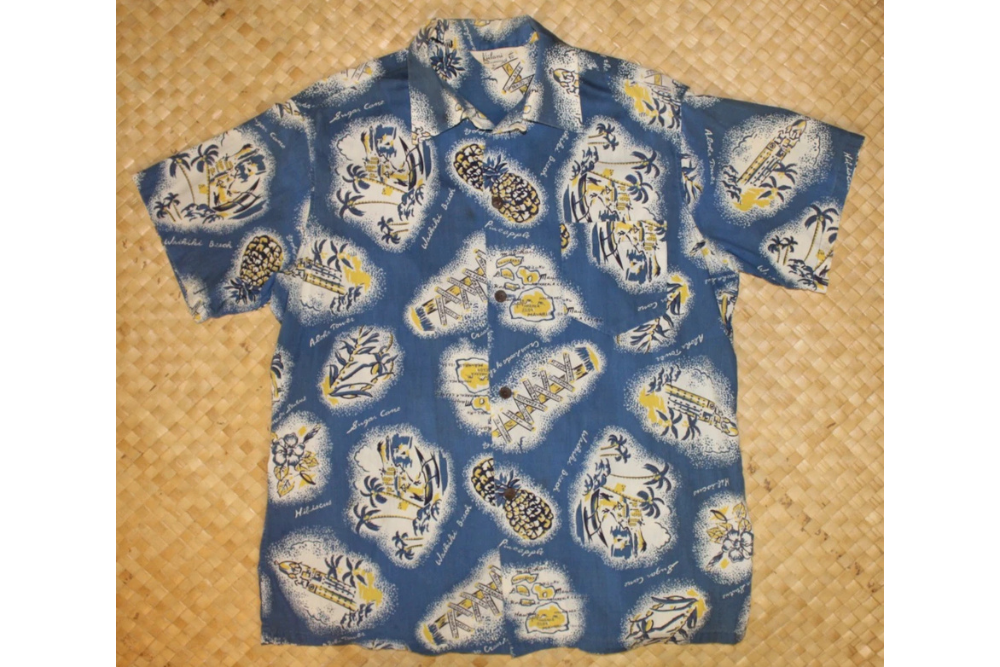
Kiilani is the sort of collar label that can get overlooked because it doesn’t say Alfred Shaheen in big letters. In fact, Kiilani was one of the labels associated with the Alfred Shaheen company, and examples from the 1950s survive. It belongs to the same wider design and manufacturing world, which makes it worth checking when you come across a well-made, brightly printed shirt with an unfamiliar brand name.
A Kiilani find still needs to stand on its own. Examine the material and label style, then turn your attention to the print. A striking period rayon textile with a clean collar is a different prospect from a generic later-looking shirt with worn-out color. Avoid automatically giving it the same value as one of Shaheen’s best-known named prints; the two labels can share a history without sharing a selling price. Photograph the Kiilani tag clearly, including any smaller lines of lettering, because buyers may search for the associated company as well as the label itself.
Early Surfriders Sportswear aloha shirts
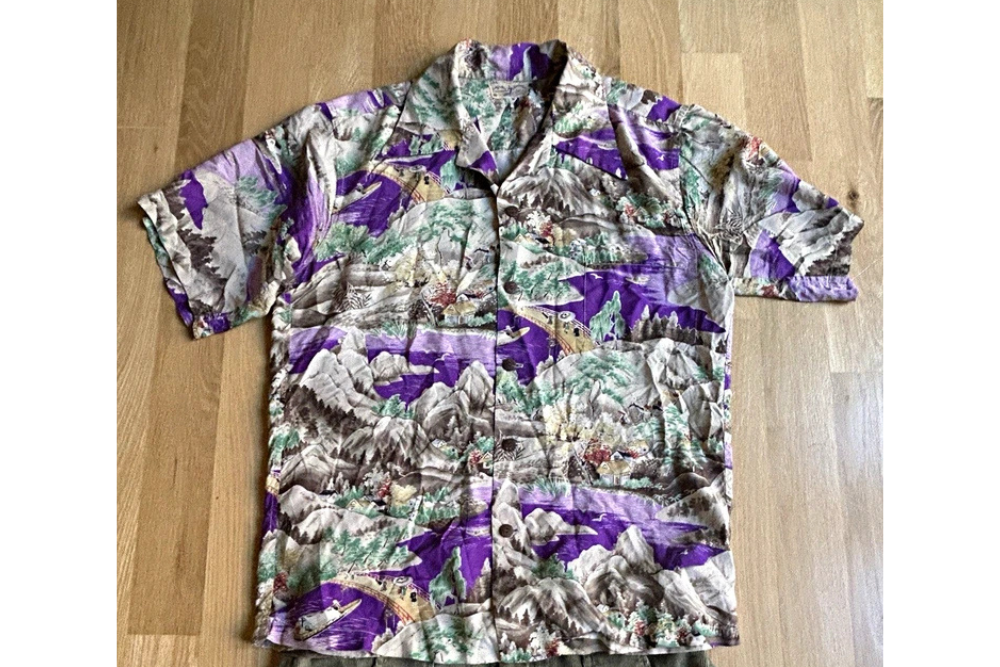
The Surfriders name can sound like a much later surf-shop brand, which is one reason it’s worth reading carefully. Surfriders Sportswear was making Hawaiian shirts in 1932, and some of its early garments used fabric repurposed from Japanese kimonos. Surviving early shirts therefore sit close to the beginning of commercial aloha wear, a very different position from a mass-produced beach shirt bought in the 1980s.
Older labels, long pointed collars, and unusual Asian-influenced textiles are useful reasons to investigate, not automatic proof of a particular year. A Surfriders rayon shirt with coconut buttons appears in an established auction catalogue, showing how specific surviving pieces are described when they reach specialist sales. Check that buttons, collar, and pocket belong together, and be suspicious of a shirt that seems freshly assembled from mismatched parts. A rare label is a starting point for research. A plausible, complete original garment is what you actually have to sell.
Kuu-Ipo rayon shirts
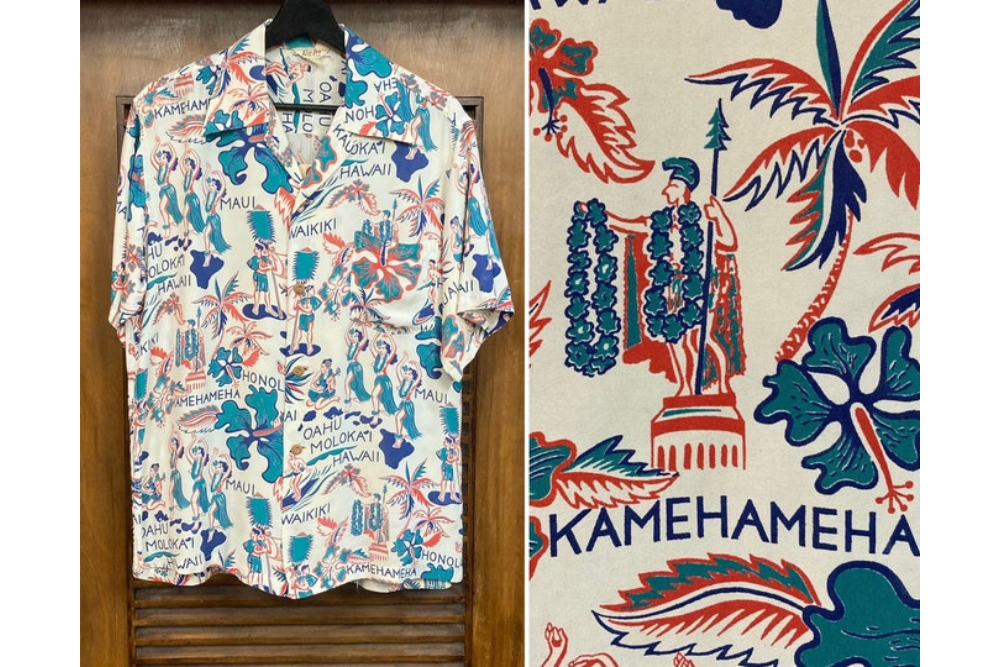
Kuu-Ipo is another lesser-known name that can be more interesting than the familiar big labels. The brand was associated with Wah Cho Lock and the Hale Hawaii clothing business, and documented older shirts carry the Kuu-Ipo name. An original period rayon example is worth pulling from the rack to examine, especially if the design is strong and the fabric still has its original drape.
Don’t assign the shirt a date simply because the tag uses Hawaiian words. Check the whole label, which may be the best clue to the maker, then examine the collar, seams, buttons, and pattern placement. The most desirable version isn’t necessarily the loudest shirt in the room, but a complete, coherent early garment with no obvious later repairs. For a seller, the name is useful in the title; the photos are what make the claim believable. Include close-ups of any damage rather than letting a buyer discover it after delivery.
Early Iolani rayon aloha shirts
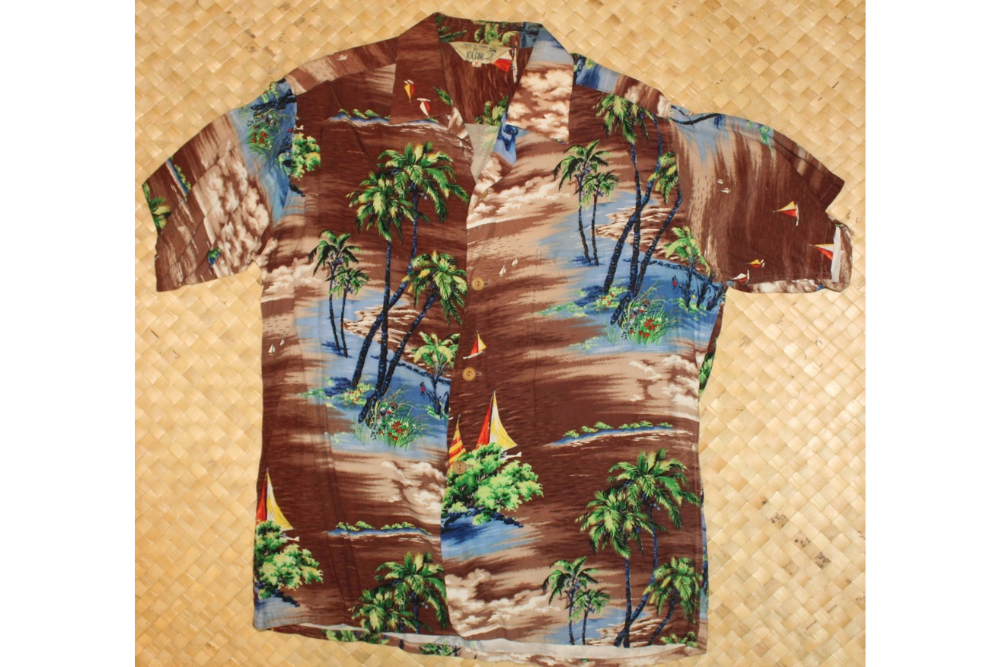
An Iolani shirt from the postwar years can be mistaken for an ordinary later souvenir because the company continued to make Hawaiian clothing for decades. The label began in 1946 and is represented by surviving early 1950s rayon shirts. Those early examples deserve a closer look, especially when the print and collar suggest the older silky style rather than a later cotton resort shirt.
Fabric and date are the questions to settle first. A 1970s Iolani can be perfectly attractive and still belong to a much lower collecting tier than a clean midcentury rayon piece. Feel the shirt for a flowing drape, inspect the label carefully, and check the armpits for staining or weakened fibers. If you’re selling, record the actual chest and length measurements rather than relying on a vintage size tag. People buying these to wear may need measurements that would have been considered large decades ago, and a guess can cost you the sale.
Royal Hawaiian Manufacturing shirts
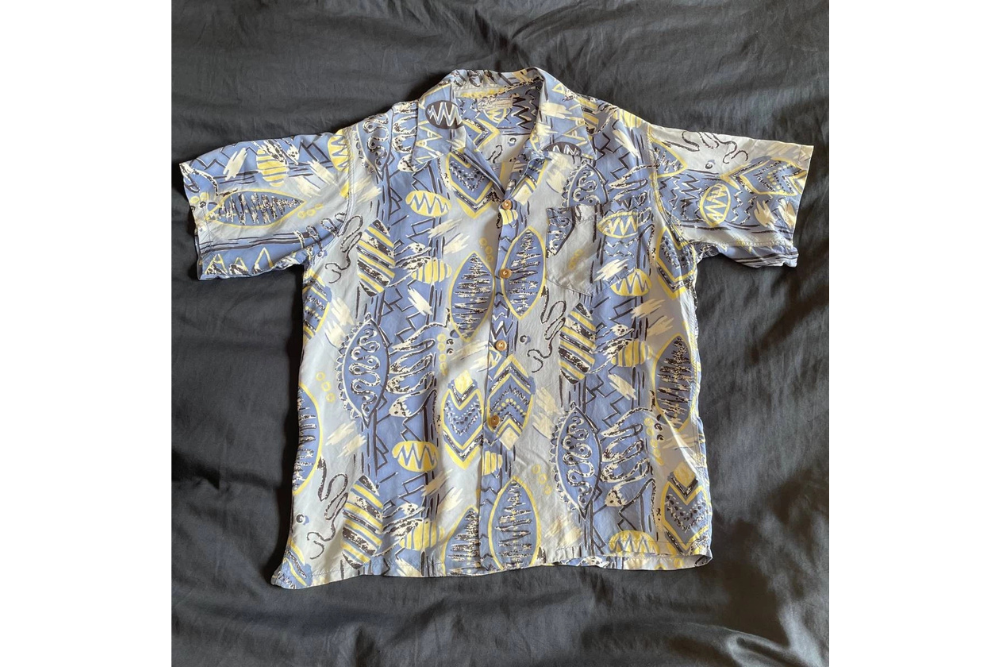
Royal Hawaiian is a historic clothing label, not just a phrase printed on countless hotel souvenirs. The Royal Hawaiian Manufacturing Company was founded in Honolulu in 1937 and later became linked with the Watumull business. This makes an early, well-printed shirt worth identifying carefully, particularly if it has fine fabric, a well-proportioned collar, and a textile pattern that doesn’t look like an ordinary later floral repeat.
Because the words “Royal Hawaiian” appear in other settings, the exact full label is important. Look for manufacturing wording rather than assuming any shirt referencing the famous hotel belongs to the company. Earlier garments may be of more interest to specialist collectors, but condition can wipe out much of that advantage. A pristine label attached to a shirt with holes along every fold isn’t a hidden jackpot. Show the entire collar tag and close-ups of the fabric, and be honest about any size alterations or lost buttons.











