
A box of cufflinks at the back of a dresser drawer looks like an afterthought, something kept out of sentiment and never sorted through. Most of what’s in there is exactly what it looks like: cheap, mass-produced, and worth closing the drawer on. But cufflinks are a strange category of men’s jewelry. The same small shirt-cuff accessory could be a department-store boxed set, or it could be a signed Tiffany, Cartier, or Georg Jensen piece that got tossed in with everything else because nobody bothered to turn it over.
Here are 18 specific types worth checking for, from Hickok sets that turn up at nearly every estate sale to solid gold pieces by the houses that made cufflinks a serious category of jewelry in the first place. Flip them over before deciding what they’re worth.
Table of contents
- 1. Hickok monogrammed cufflink and tie bar sets
- 2. Simple mother-of-pearl cufflinks
- 3. Vintage presidential campaign cufflinks
- 4. Masonic cufflinks
- 5. Antique watch-movement novelty cufflinks
- 6. Vintage NFL team logo cufflinks
- 7. Vintage Swank boxed rhinestone cufflink sets
- 8. Georg Jensen sterling silver cufflinks
- 9. Tiffany & Co. sterling silver cufflinks
- 10. Vintage enamel RAF squadron cufflinks
- 11. Dunhill vintage gold-plated cufflinks with original case
- 12. Unsigned vintage Taxco Mexican silver cufflinks
- 13. Larter & Sons Art Deco 14k gold cufflinks
- 14. Art Deco mother-of-pearl and diamond 14k gold cufflinks
- 15. Vintage 14k gold NFL championship and player cufflinks
- 16. Vintage gold $2.50 Liberty coin cufflinks
- 17. Vintage Hermès 18k gold cufflinks
- 18. Vintage Cartier 18k gold cufflinks
1. Hickok monogrammed cufflink and tie bar sets
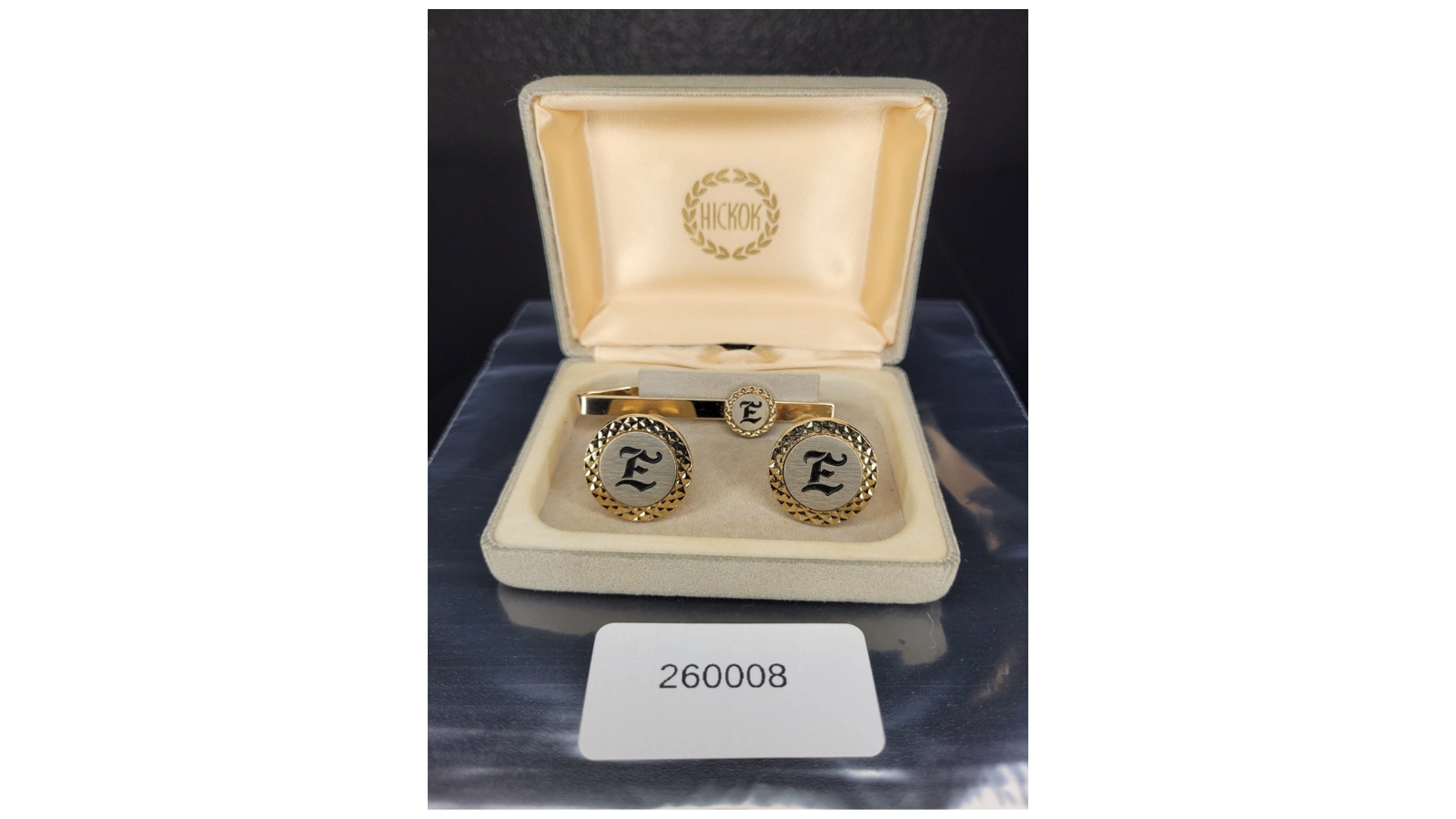
A Hickok box turning up in a father’s or grandfather’s dresser is one of the most common men’s jewelry finds there is, and most of what’s inside won’t make anyone rich. But matched sets with the original monogrammed cufflinks and tie bar, especially from Hickok’s postwar boxed-set era, sell steadily to buyers who collect the brand or want a specific initial. Clean, complete sets with their velvet-lined box typically bring $15 to $40, with unusual motifs or sterling-marked pieces pushing toward the top of that range.
Condition carries most of the value here. Look for the Hickok USA stamp on the back, check that the swivel backs still move freely, and make sure the finish isn’t pitted or peeling, since gold-tone plating wears unevenly with age. A set that still has its original fitted box, even a shabby one, is worth more than a loose pair rattling around in a drawer, and a monogram that happens to match a buyer’s own initial can add a small premium on top.
2. Simple mother-of-pearl cufflinks
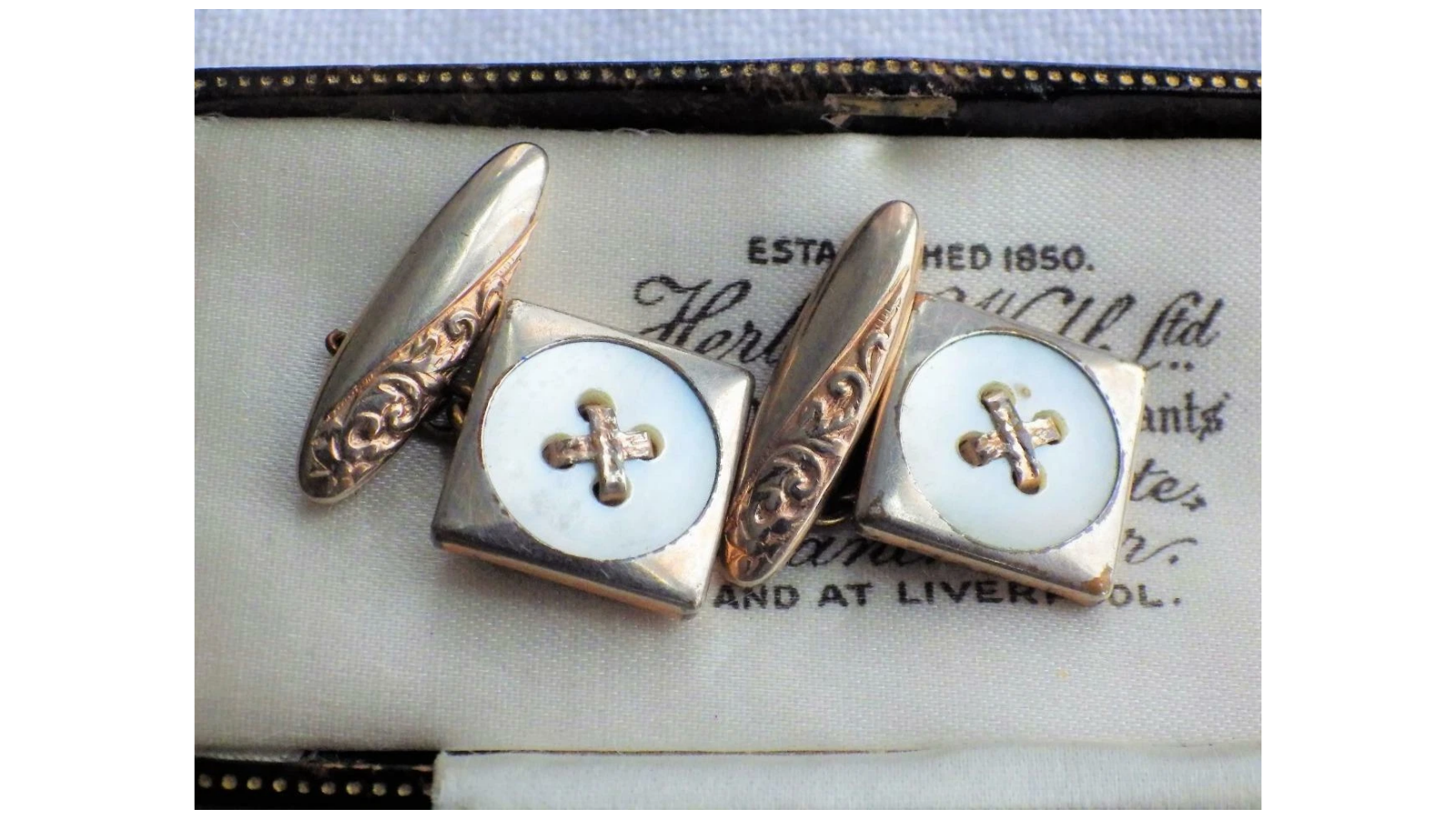
Mother-of-pearl cufflinks were a staple of formal menswear from the 1920s through the 1950s, and plain silver-mounted pairs show up often in old jewelry boxes without anyone realizing what they’re holding. A basic pair with iridescent shell discs set in sterling or silver plate typically brings $35 to $90 in good condition, with unusually large or perfectly matched discs toward the top of that range.
What separates a forgettable pair from a better one is the shell itself. Genuine mother-of-pearl has a soft, shifting sheen when it catches the light, while plastic imitations look flat and uniform by comparison. Small chips around the edge of a disc are common and generally acceptable, but a cracked or discolored disc drops the value sharply. A matched set, where the grain and color of both discs line up closely, is worth more than a mismatched pair that was assembled from spare parts over the years. Gold-mounted examples, especially ones with a diamond or seed pearl center, belong in a different and considerably higher price bracket entirely.
3. Vintage presidential campaign cufflinks
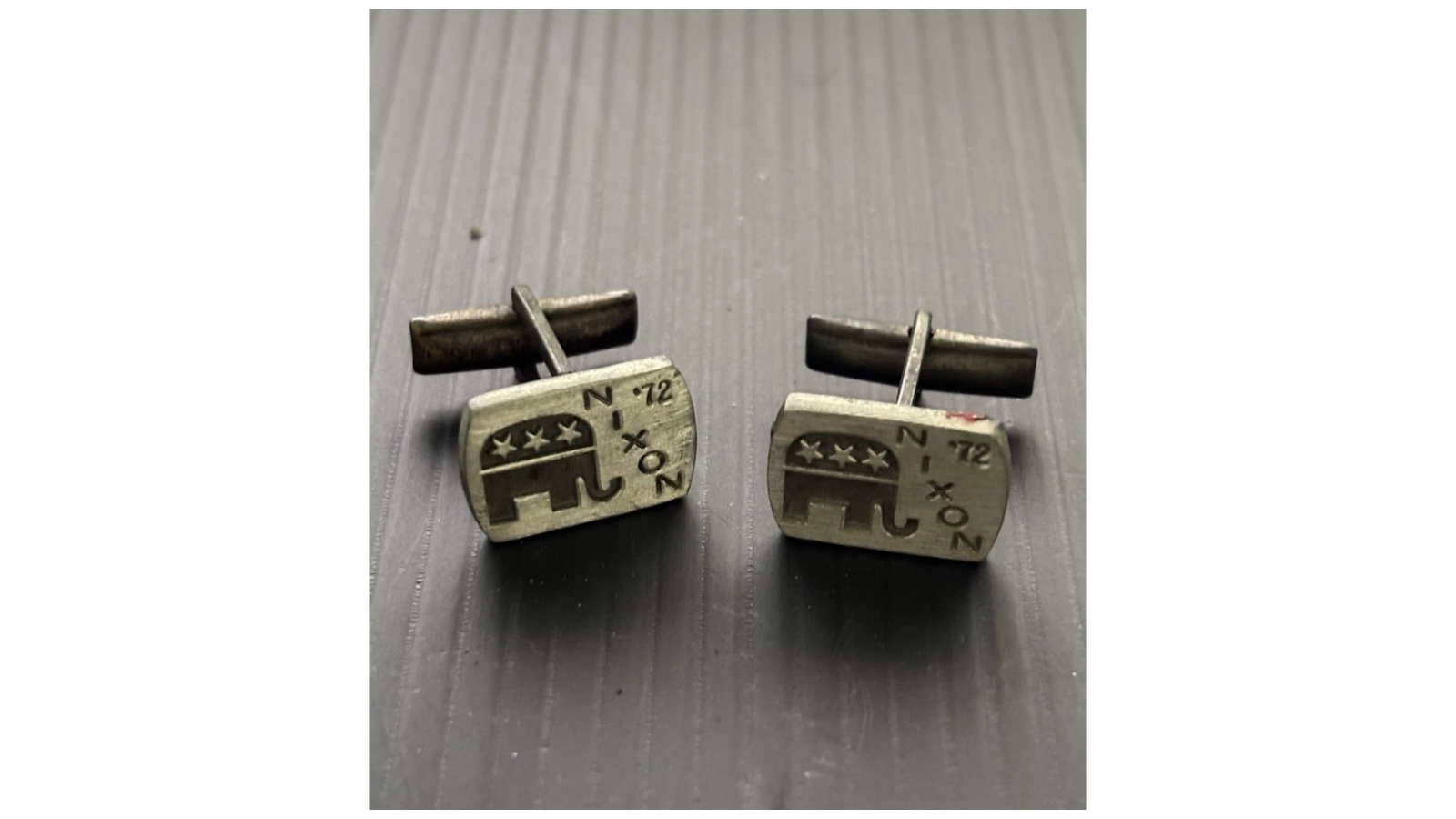
Presidential campaigns have handed out cufflinks to donors and staff for decades, and the ones that survive tend to turn up in the same box as old tie clips and lapel pins. A pair tied to a specific, named campaign, especially one with the candidate’s portrait or running mate worked into the design, typically brings $20 to $60, with inauguration sets and earlier or less common campaigns bringing more.
Condition and completeness both matter. Gold-tone plating on these pieces wears thin with handling, so a crisp, unworn finish is worth paying attention to. A pair still on its original presentation card, or paired with a matching tie bar, sells for noticeably more than loose cufflinks alone. Campaigns that lost, or candidates who never made it past the primary, sometimes bring more than a winning campaign simply because fewer of those items were ever produced or kept. Because reproduction and modern novelty versions exist for nearly every well-known election, compare the lettering style and metal finish against known genuine examples before assuming a rare year automatically means real value.
4. Masonic cufflinks
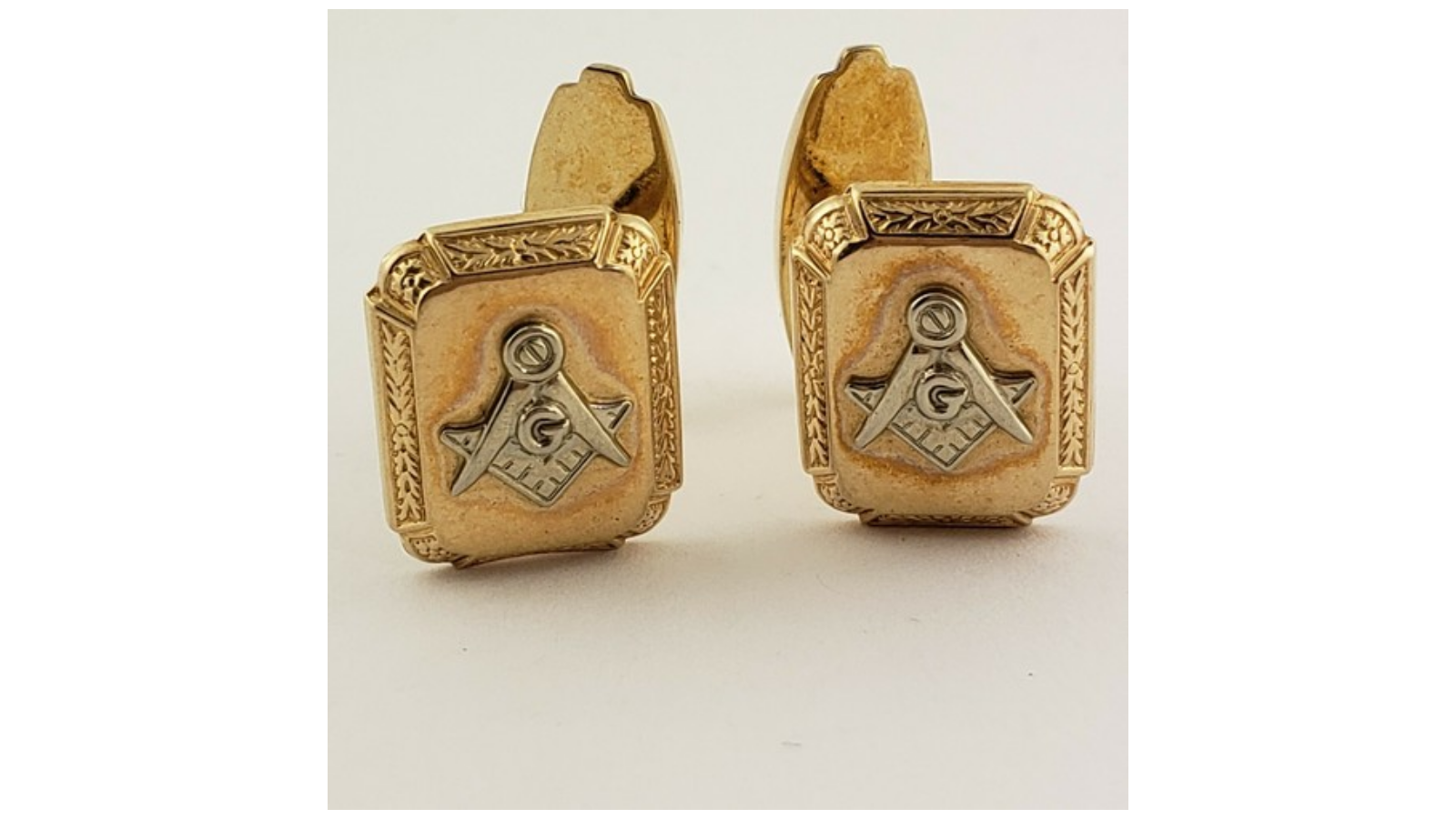
Masonic cufflinks show up constantly at estate sales, since so many lodge members owned at least one pair, and most of what surfaces is gold-tone base metal with the square and compass stamped or enameled on the face. Those common sets are modest, typically bringing $20 to $50. What changes the math entirely is the metal underneath the symbol: a pair genuinely struck in 10 karat or 14 karat gold, rather than gold-plated brass, typically brings $150 to $400, with the cleanest hallmarked examples toward the top of that range.
A metal test or a close look at the hallmark is the only reliable way to tell the two apart, since plated and solid gold Masonic cufflinks can look nearly identical. Check inside the cufflink post for a karat stamp, and weigh the pair if you have a scale, since solid gold feels noticeably heavier than its plated equivalent. Chipped enamel or a mechanism that no longer swivels both reduce value, even on an otherwise genuine gold pair.
5. Antique watch-movement novelty cufflinks
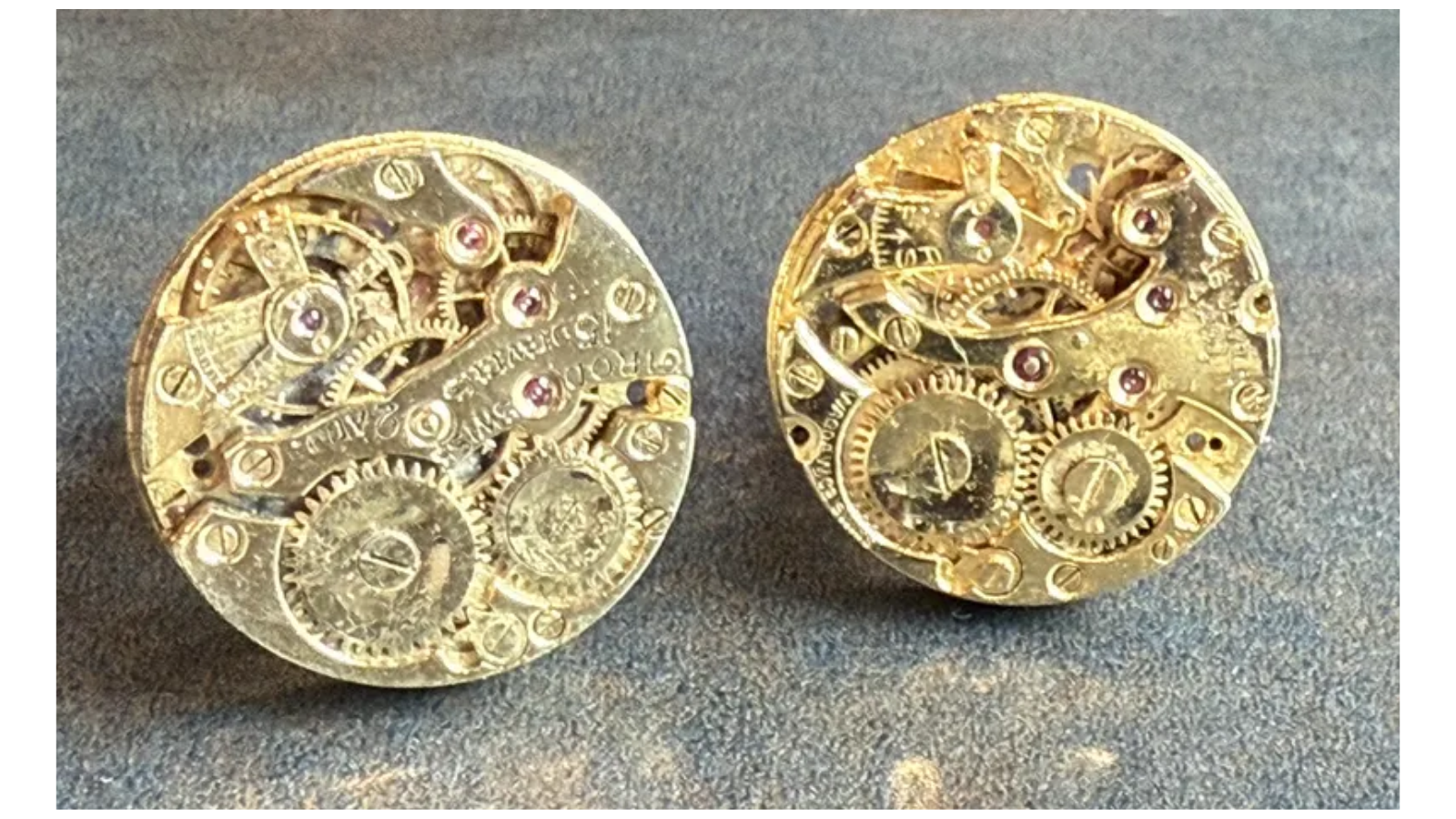
Early in the twentieth century, jewelers started repurposing worn-out pocket watch movements into cufflinks, mounting the gears and jeweled works behind a glass face. Genuinely old examples, often stamped with a defunct American watch company’s name, carry real collector interest decades later. A clean, period pair in working gold-filled or gold-plated mounts typically brings $35 to $90 for the set.
The name on the movement matters more than most buyers expect, since a recognizable but now-defunct watchmaker adds a layer of history that a generic or unmarked movement doesn’t have. These were never solid gold, since the appeal was always the ingenuity of the piece rather than the metal, so scrap value was never really the point. A pair where the gears are still visible and undamaged under the crystal is worth more than one where moisture has gotten in and clouded or rusted the works. Running movements are rare and mostly beside the point, since almost nobody buys these to keep time, but a face that’s cracked or badly fogged still counts against the pair.
6. Vintage NFL team logo cufflinks
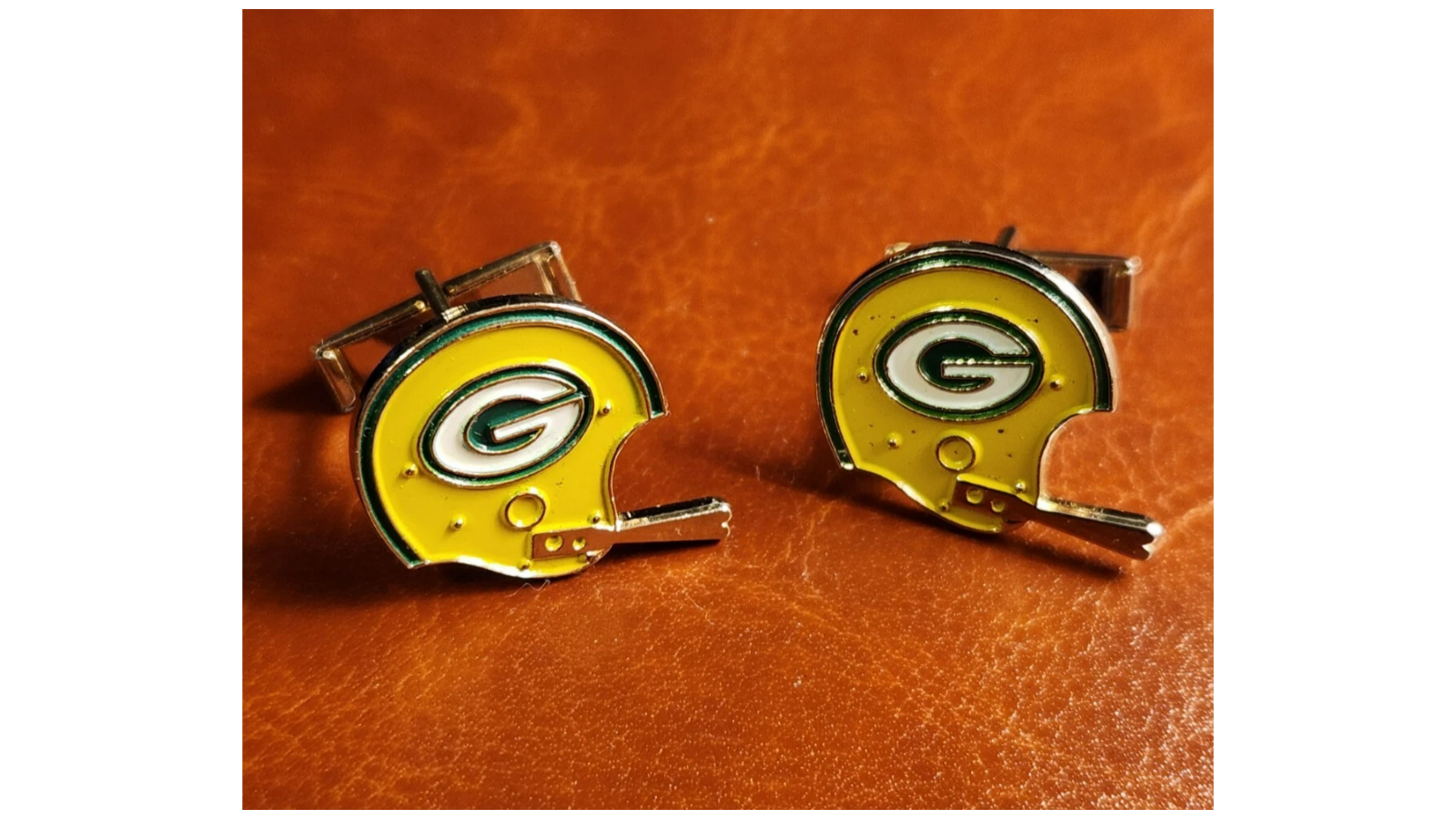
Team-branded cufflinks were standard corporate and booster-club gifts through the 1960s and 70s, usually gold-tone metal with the team’s logo worked in colored enamel. A common pair in good condition, for almost any NFL franchise, typically brings $25 to $75, with older teams, discontinued logos, and clean enamel work toward the top end.
These were mass-produced promotional items, so completeness and condition do most of the work in setting the price. Enamel that’s chipped, faded, or shows a logo that doesn’t quite match the team’s known vintage branding should lower expectations, since reproduction team merchandise exists for every popular franchise. A matching tie bar in the same set adds to the value, as does any paperwork tying the pair to a specific event or season, such as a booster-club dinner or an anniversary season. Older, discontinued logos tend to outperform current ones, since fewer of them were kept once a team rebranded. Pieces connected to a specific player or a championship season belong in an entirely different bracket.
7. Vintage Swank boxed rhinestone cufflink sets
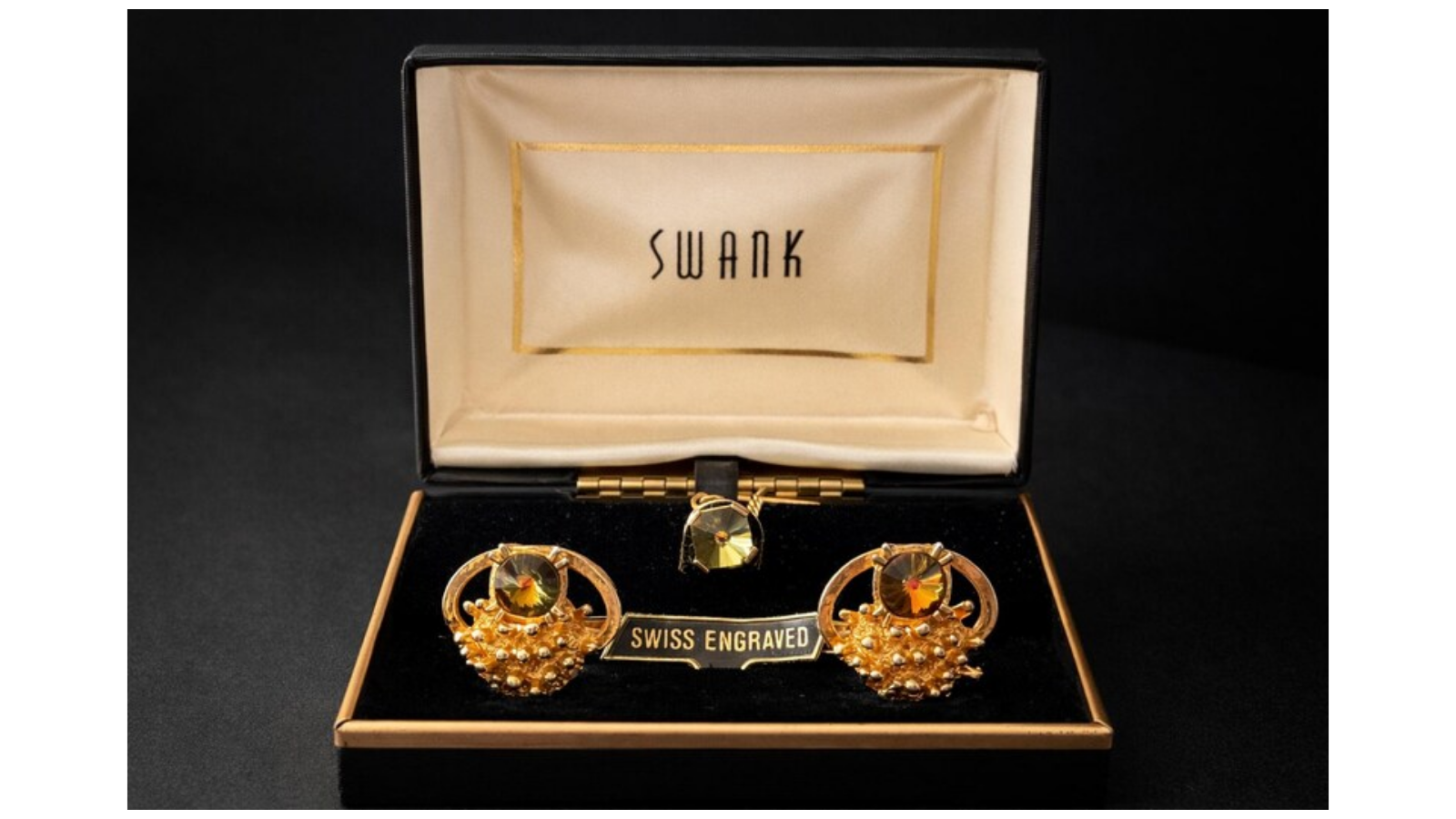
Swank was one of the biggest American names in men’s jewelry through the mid-twentieth century, and its boxed cufflink and tie clip sets, often set with clear or colored rhinestones in a tuxedo-ready design, are some of the most commonly found vintage cufflinks around. Most complete sets in their original presentation box typically bring $20 to $75, with unusual stone colors or sculptural, modernist designs pushing toward the higher end.
Because Swank made these by the millions, rarity comes down to the specific design rather than the brand name alone. Simple round rhinestone pairs are common and modest; cubist, figural, or colored gemstone designs still carrying the Swank name are scarcer and worth more. Missing stones are a frequent problem and an easy one to spot, and a set that still has its original box adds a real premium over the same cufflinks found loose. Cloudy or yellowed rhinestones, from decades sitting in a damp drawer, are harder to sell than clean, bright ones, even when the metal underneath is in good shape.
8. Georg Jensen sterling silver cufflinks
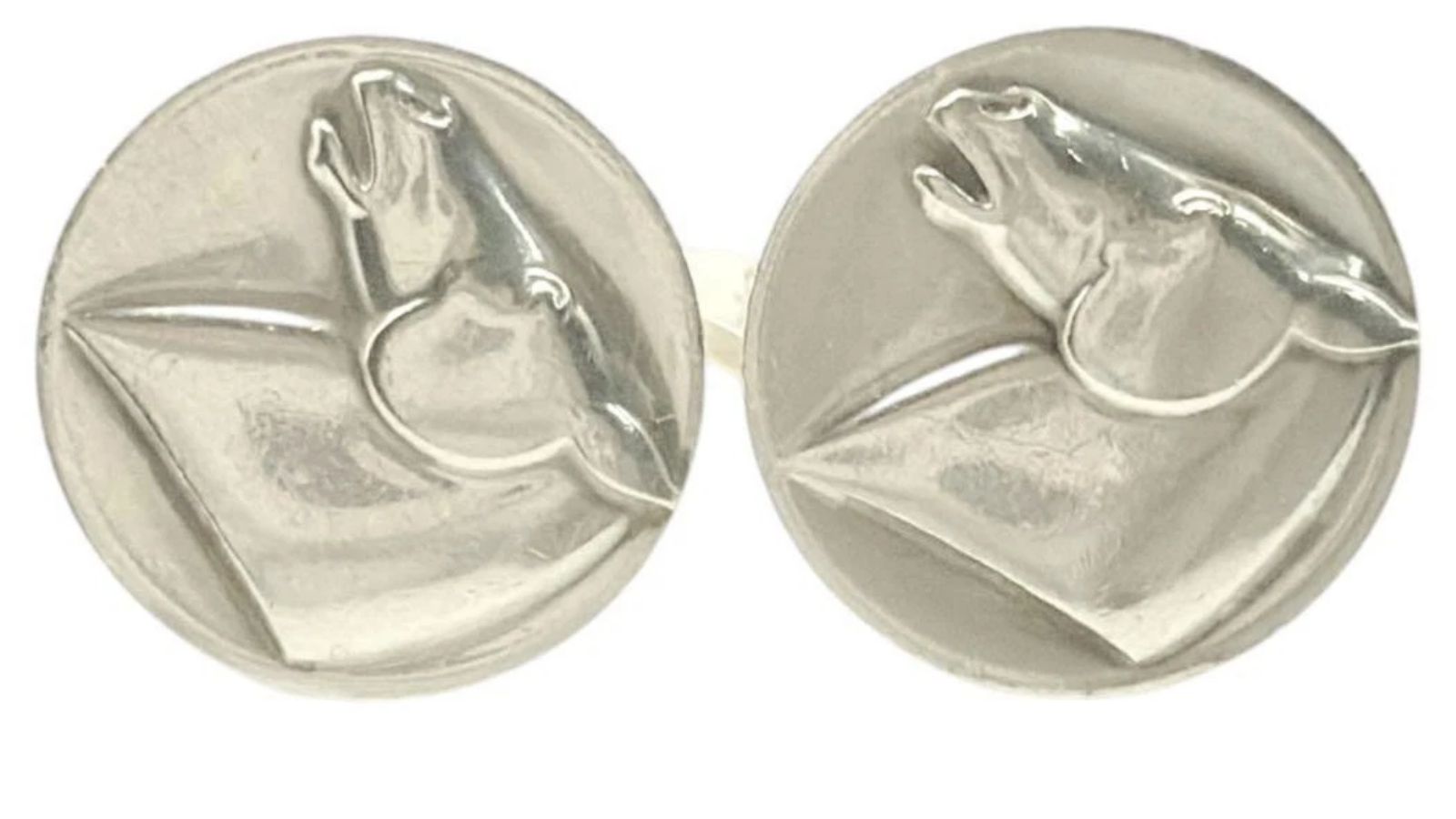
Georg Jensen’s Copenhagen workshop has produced sterling silver cufflinks since the early twentieth century, and because the house issued numbered patterns for decades, even an unassuming pair found in a drawer can often be traced to a specific design and designer. A plain, period-correct pair in good condition typically brings $80 to $150, while cufflinks tied to a named in-house designer and a documented pattern number bring considerably more, often $300 to $500.
Every genuine piece is marked, usually with the Jensen name in a dotted oval alongside a pattern number and a sterling hallmark, so the back of the cufflink matters more than the front when authenticating one. Tarnish is normal and polishes out without hurting value, but a mark that looks filed down, blurred, or machine-stamped rather than hand-struck is a reason for caution. Naturalistic and geometric Scandinavian modernist designs from the 1930s through the 1960s are the ones serious collectors chase hardest.
9. Tiffany & Co. sterling silver cufflinks
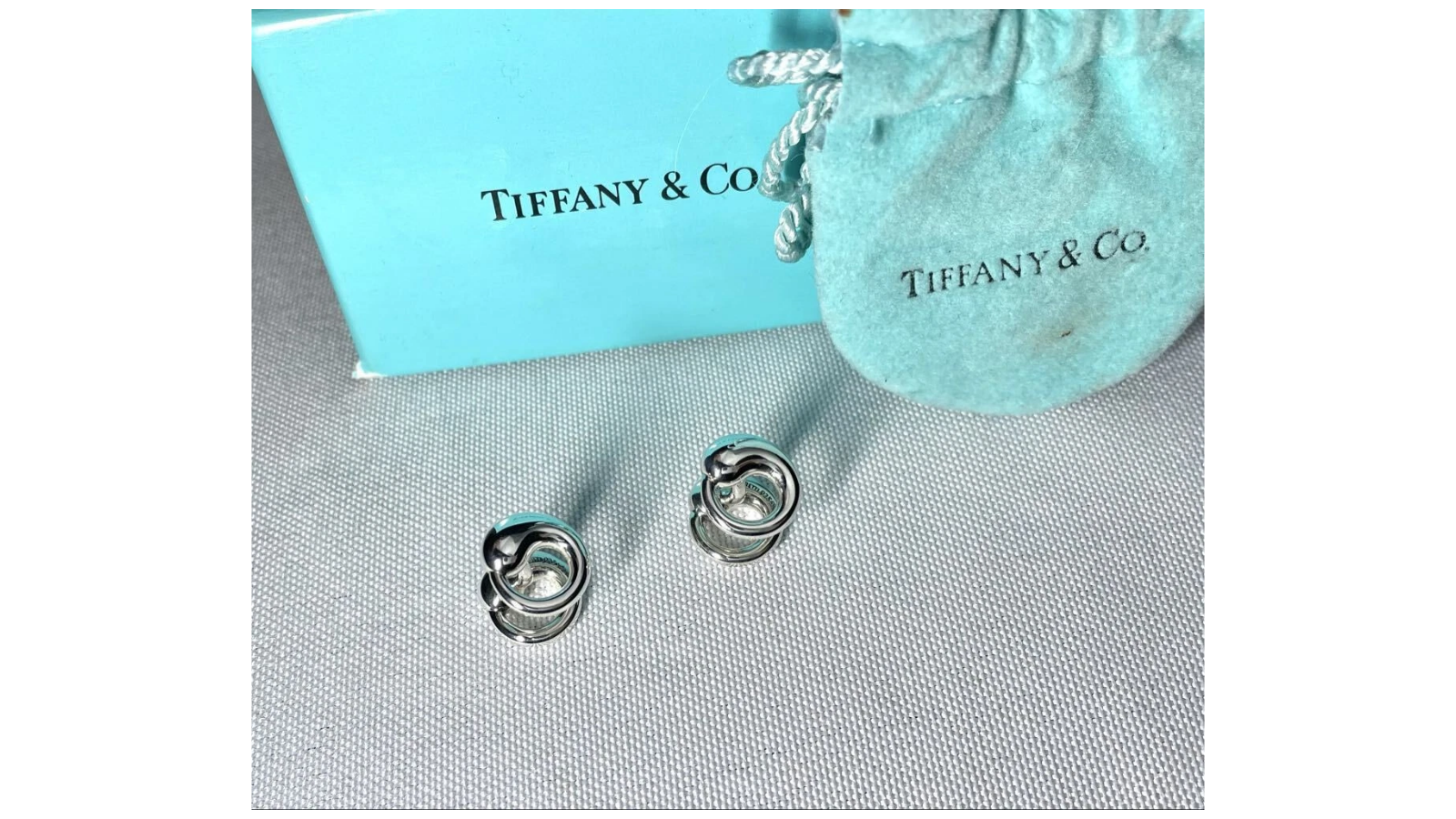
Tiffany & Co. has sold men’s cufflinks in its blue box for generations, and sterling silver examples, rather than gold ones, are the ones most likely to turn up in an inherited jewelry box at a price ordinary buyers can still reach. A genuine, hallmarked pair in a classic shape, oval, knot, or bar, typically brings $150 to $400, with heavier pieces and more distinctive shapes toward the top of that range.
The TIFFANY & CO. stamp, along with a sterling or 925 mark, should be clear and evenly struck; a soft, shallow, or oddly placed mark is worth a second look. Weight matters too, since Tiffany’s sterling cufflinks tend to be substantial rather than thin and light. Pairs tied to a well-known in-house designer, rather than an unsigned house pattern, carry a further premium once that connection is confirmed. Gold or gold-and-silver combination pieces from the same house sell in an entirely different, much higher bracket, so the name alone doesn’t put every Tiffany cufflink in the same range.
10. Vintage enamel RAF squadron cufflinks
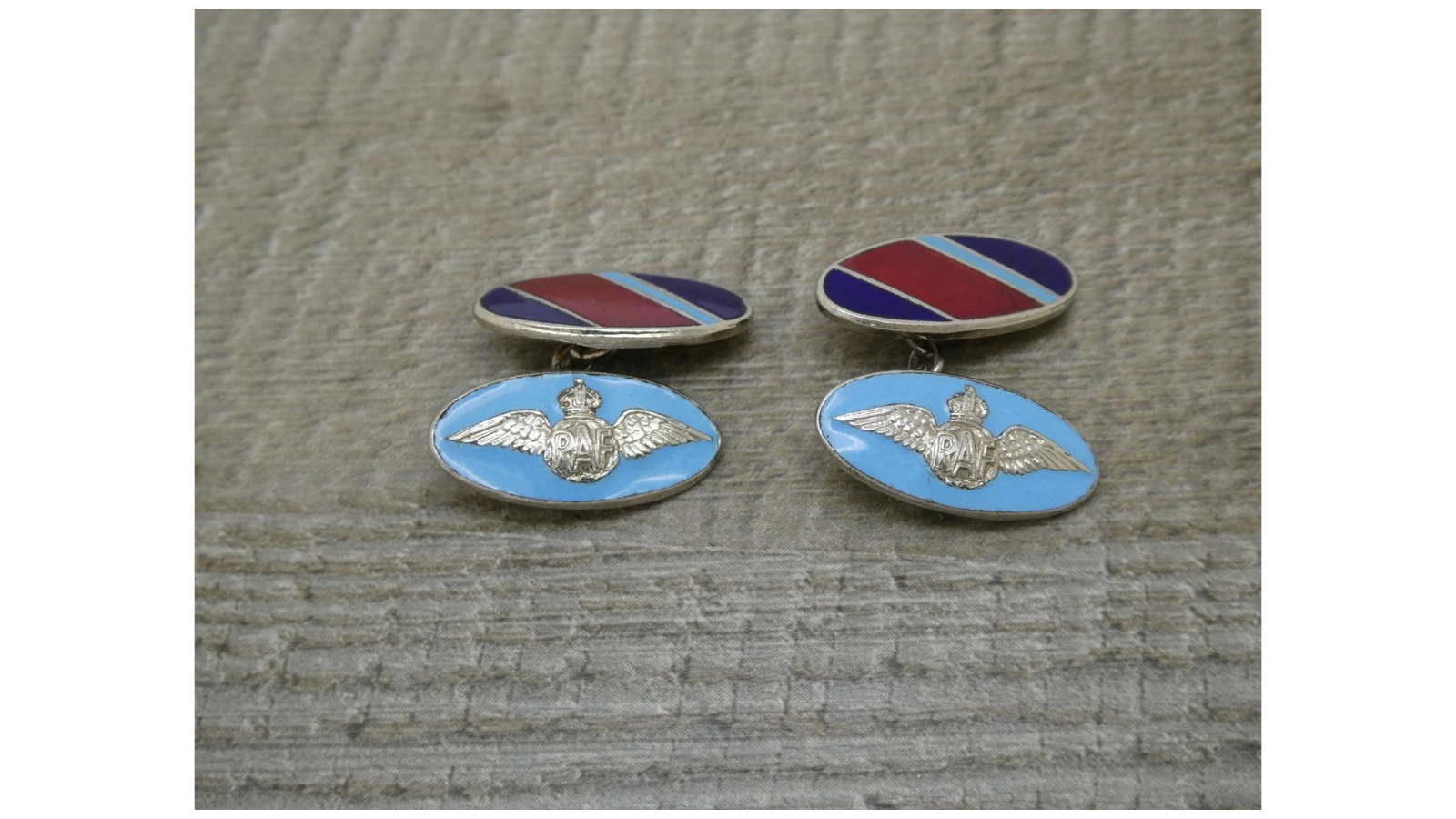
British and Commonwealth air force cufflinks, enameled in red, white, and blue with the winged crown-and-wreath emblem, are a specific and collectible corner of military jewelry that turns up regularly in estate sales on both sides of the Atlantic. A genuine period pair in brass or chrome with intact enamel typically brings $35 to $90, with examples in solid gold or tied to a specific, named squadron reaching considerably more.
Enamel condition drives most of the price here, since the roundel colors are prone to chipping and fading after decades of handling. Hold the piece up to good light and check each color field for hairline cracks before assuming it’s pristine. Reproduction and costume-jewelry versions of air force insignia are common and usually have a flatter, more uniform enamel finish than genuine wartime pieces, so comparing weight and the crispness of the stamped detail against a known original is worth the extra minute.
11. Dunhill vintage gold-plated cufflinks with original case
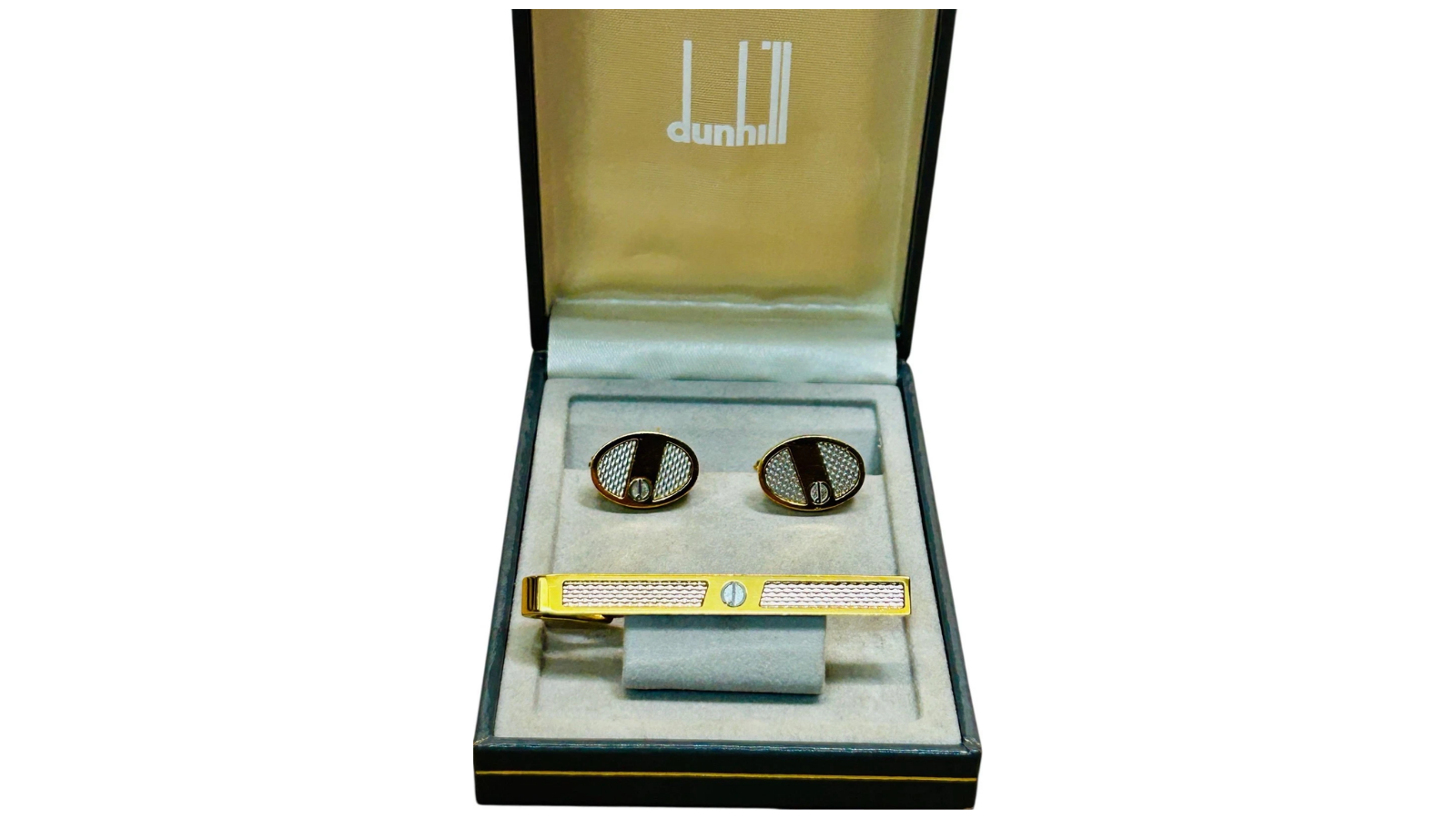
Alfred Dunhill built its reputation on menswear and smoking accessories, and its vintage gold-plated cufflinks, often set with onyx or lapis and sold in a fitted Dunhill case, are a genuine step up from ordinary mid-century cufflinks without reaching Cartier-level prices. A clean, cased pair with the Dunhill signature typically brings $275 to $375, with onyx or lapis-set examples toward the top of that range.
The original case matters more with this brand than with most, since Dunhill’s fitted boxes are instantly recognizable and buyers pay a real premium for a matched set. Check that the gold plating hasn’t worn through to a brassy base layer at the edges, a common problem on pieces that saw regular use, and look for the Dunhill name stamped clearly on the cufflink itself rather than just on the case, since the two occasionally get separated and reunited by sellers. A genuinely engine-turned surface, with fine, machine-cut parallel lines, marks the better examples.
12. Unsigned vintage Taxco Mexican silver cufflinks
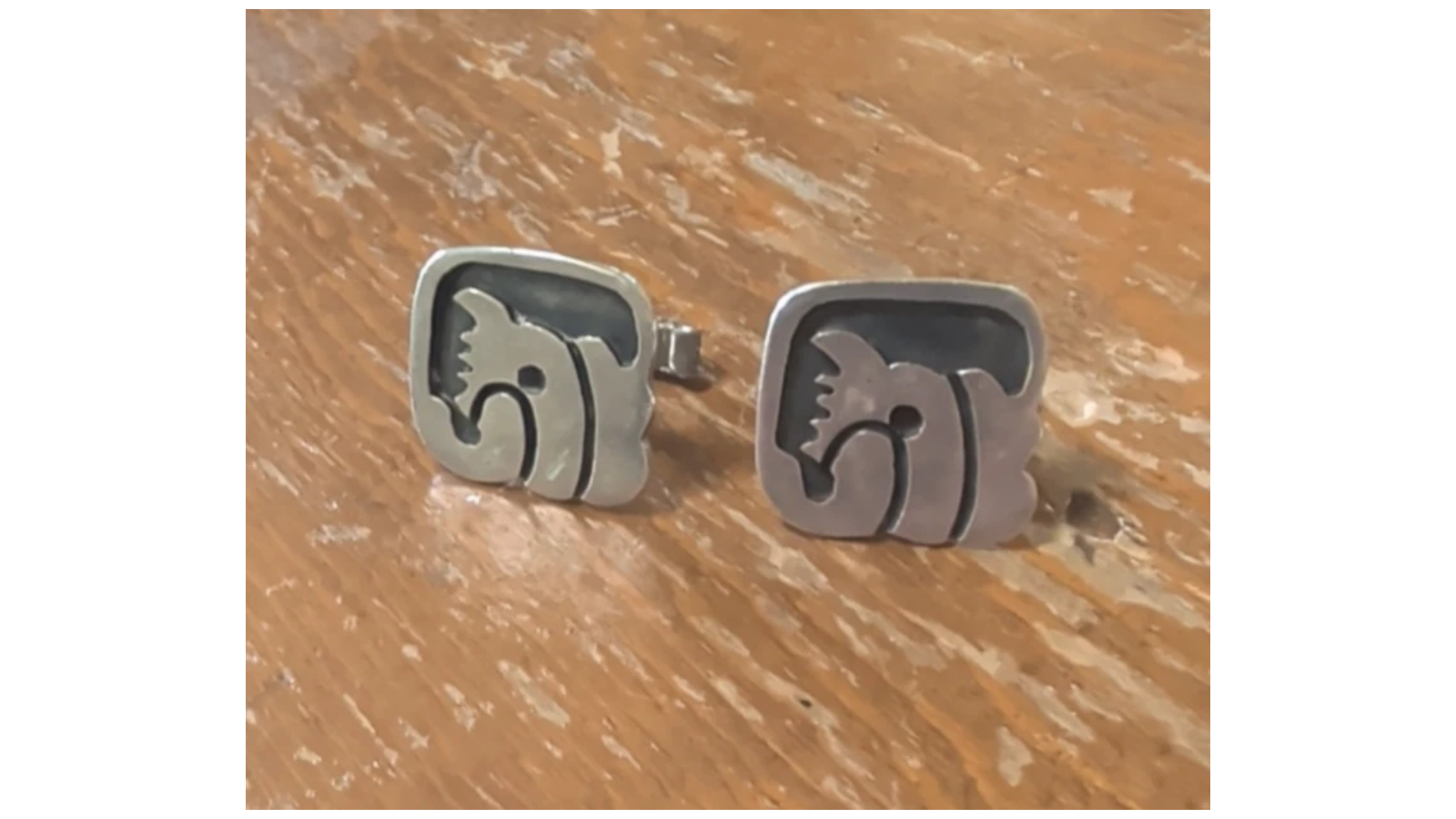
Taxco, Mexico, has been a center of sterling silver jewelry production since William Spratling set up his workshop there in the 1930s, training generations of silversmiths who went on to run their own studios. Most Taxco cufflinks that surface today are unsigned or marked only “Mexico” and “925,” and these modest, well-made pairs typically bring $40 to $90 in good condition.
A piece stamped with a named workshop’s mark rather than a generic Mexico 925 stamp is worth researching before selling, since work tied to Spratling’s own workshop or one of his trained successors commands real premiums across the wider Taxco silver market. Oxidation and tarnish are normal and polish away without harming value, but a seam that looks soldered rather than cast in one piece, or a stone that’s clearly glued rather than set, suggests a later, lower-quality piece rather than an original mid-century design. Weight is a decent rough guide too, since heavier, substantial castings tend to be earlier work than the thinner, lighter pieces made for the tourist trade in later decades.
13. Larter & Sons Art Deco 14k gold cufflinks
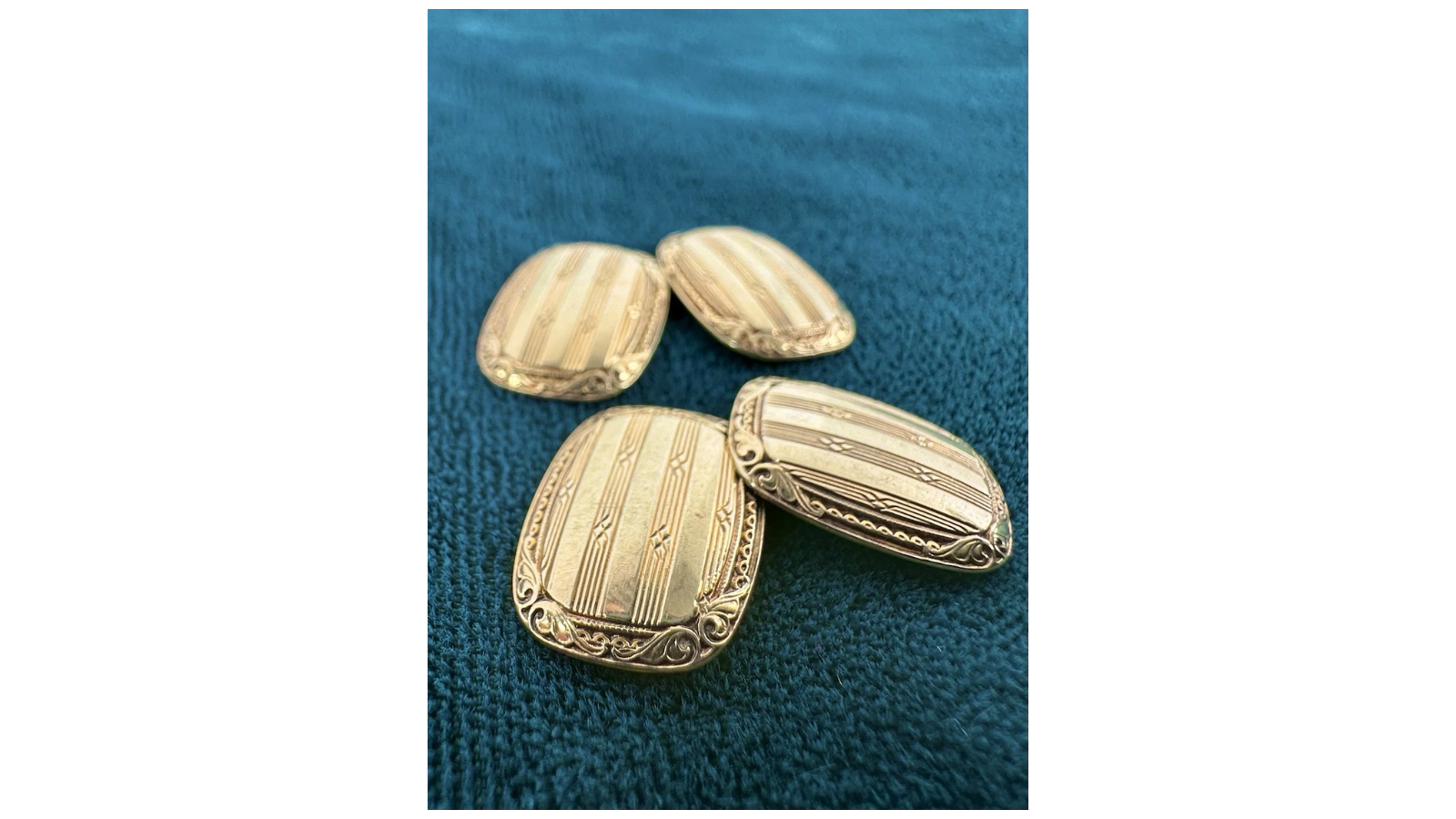
Larter & Sons, a Newark, New Jersey jeweler active from the 1860s through the mid-twentieth century, specialized almost entirely in men’s gold jewelry, and its Art Deco cufflinks are some of the most consistently well-made pieces from that era to show up in estate jewelry today. A signed, 14 karat gold pair in a geometric or enamel design typically brings $300 to $600, while carved figural or gemstone-set examples command significantly more, with the rarest designs valued well into four figures.
The Larter & Sons mark, usually a small stamped signature alongside the 14K fineness mark, is the key thing to look for on the bar fitting or the back of the cufflink face. Because the firm worked almost exclusively in solid gold rather than gold-filled or plated metal, a genuine pair carries real melt value before the maker’s name even enters the picture. Carnelian, onyx, and enamel were common accent materials; chips in a carved stone or enamel loss both reduce value, but a clean, crisply marked pair in any of the house’s signature motifs is a reliable find.
14. Art Deco mother-of-pearl and diamond 14k gold cufflinks
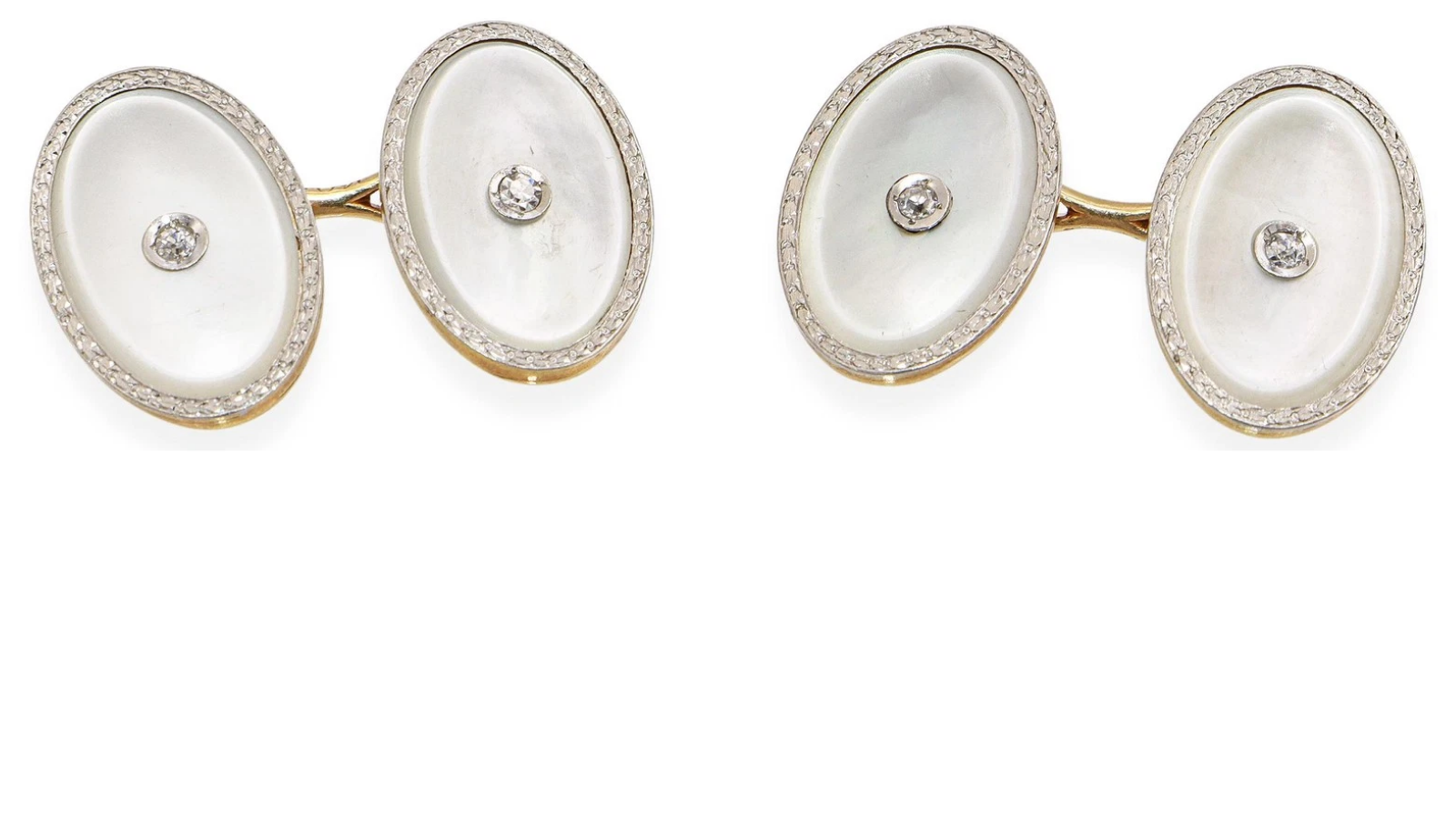
Mother-of-pearl paired with gold and a small diamond accent was one of the signature combinations in 1920s and 1930s men’s jewelry, and complete pairs that survived the century in good condition are a genuine step above the plainer silver-mounted versions. A 14 karat gold pair with mother-of-pearl discs and a modest diamond center typically brings $300 to $600, while finer examples with a larger diamond set in a millegrain border bring considerably more, with standout pairs reaching toward $2,000.
Because the shell itself is fragile, condition inspection should start there: hairline cracks across a mother-of-pearl disc are common and reduce value more than most buyers expect, while small edge chips are more tolerable. The gold mounting should show a clear karat stamp, and any diamonds should be checked for looseness in their setting, since a century of wear can gradually open up prongs. A matched set that includes shirt studs alongside the cufflinks is worth noticeably more than the cufflinks on their own.
15. Vintage 14k gold NFL championship and player cufflinks
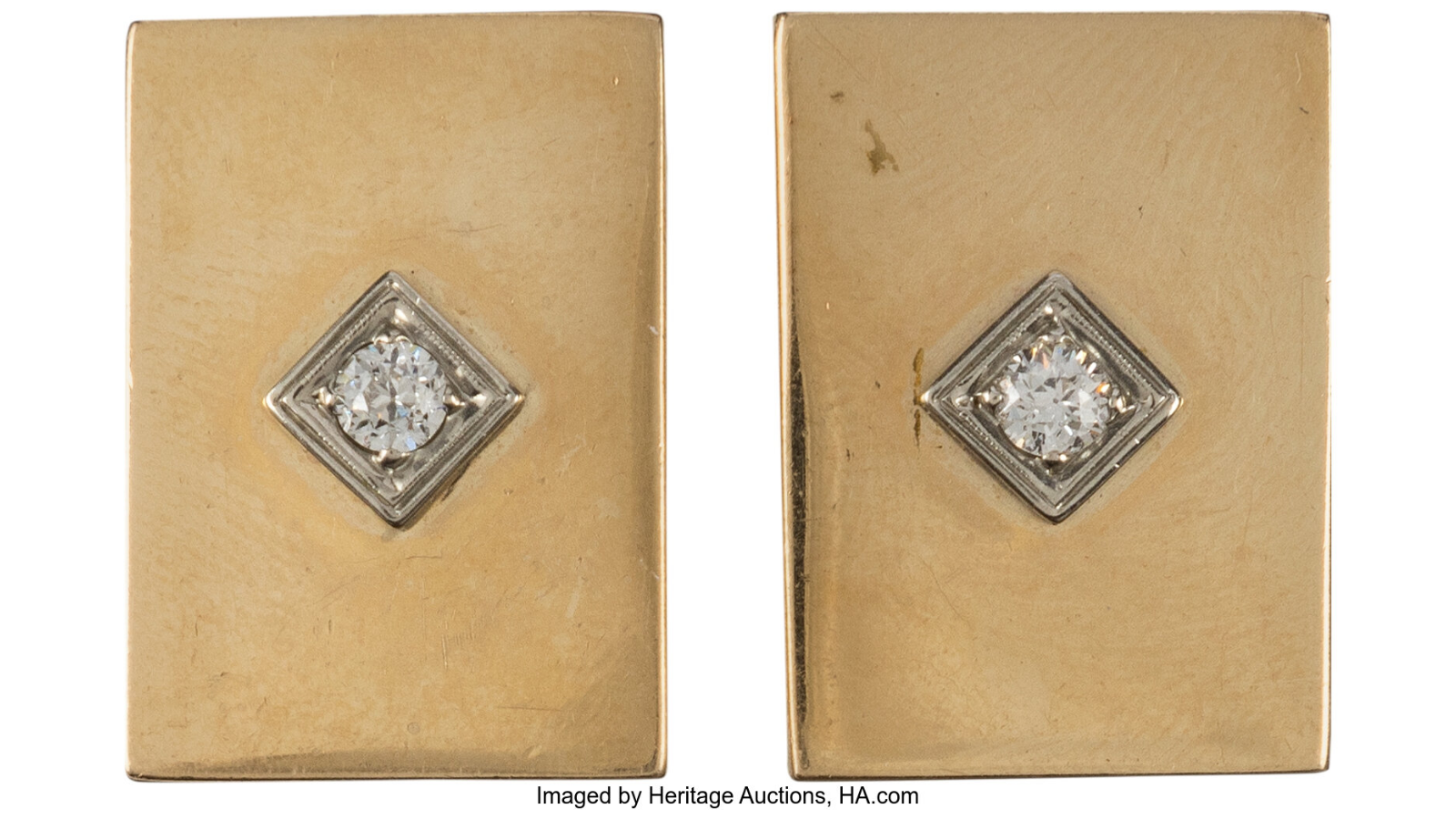
Separate from ordinary promotional team cufflinks, pieces made for players, coaches, and front-office staff around a specific championship season were often struck in solid gold rather than gold-tone base metal, and they carry a different kind of value entirely. A documented pair with a confirmed tie to a specific championship season or a named player’s career typically brings $250 to $750, depending on the team, the year, and how well the history behind the piece can be confirmed.
These were never retail items, so provenance does almost all the work here: a name engraved inside, a presentation inscription, or a family history tying the piece to a specific player or staff member turns an otherwise unremarkable gold cufflink into something genuinely valuable. Without that kind of documentation, a plain gold football-shaped cufflink is worth closer to its gold weight than its sports history. A stamp reading “1/10 10KGF” or similar means gold-filled rather than solid gold, so check the stamp carefully before assuming a presentation-style piece carries the full premium.
16. Vintage gold $2.50 Liberty coin cufflinks
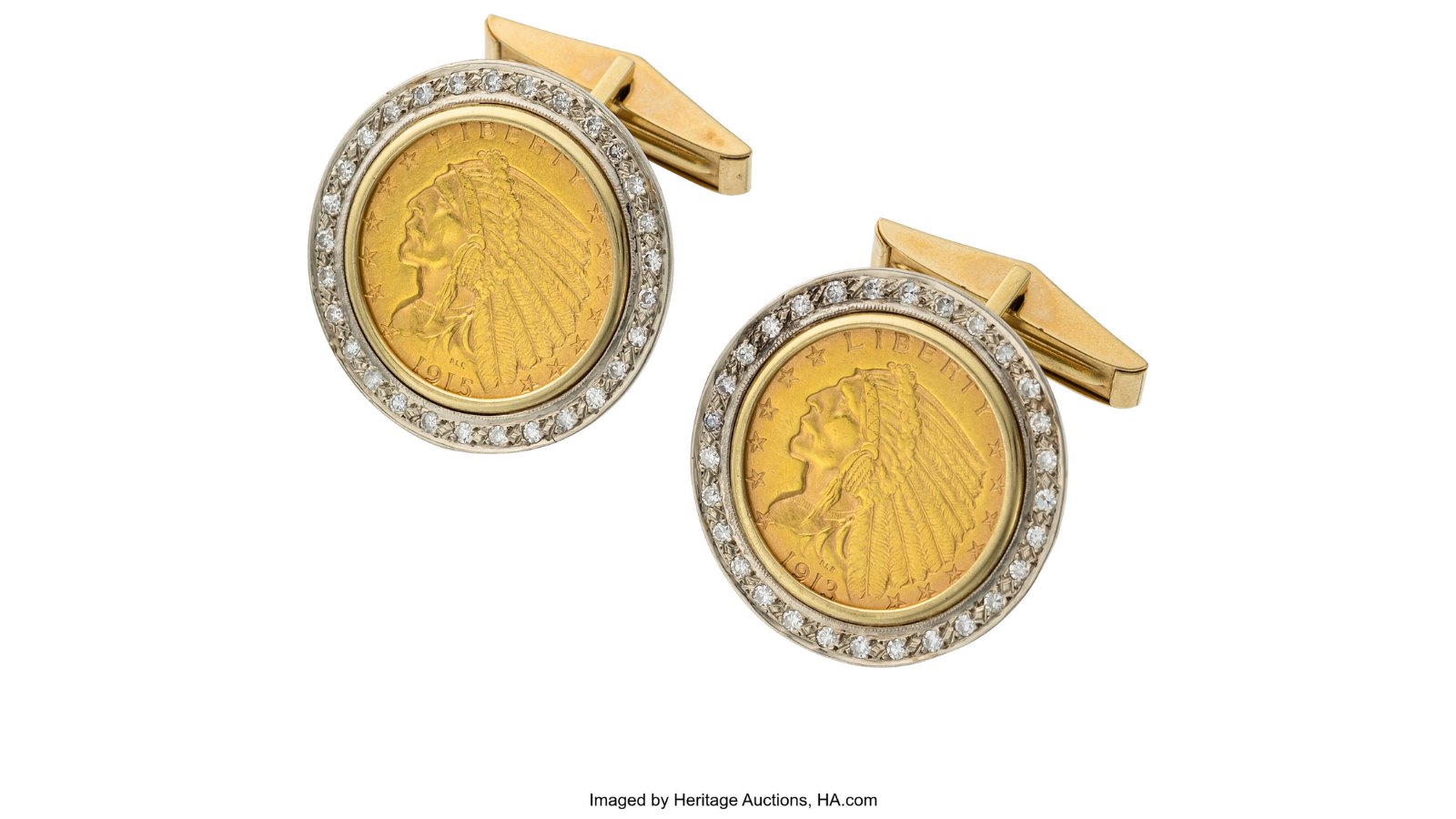
Mounting an old gold coin in a simple frame and turning it into cufflinks was a popular way to wear family gold discreetly through much of the twentieth century, and $2.50 Indian Head or Liberty Head gold pieces, each worth roughly a quarter ounce of gold, were a favorite size for the format. A 14 karat gold-mounted pair set with two genuine $2.50 gold coins typically brings $600 to $1,200, reflecting demand from both coin collectors and jewelry buyers.
The coins themselves, not just the mounting, carry most of the value, so the date and condition of each coin matter as much as the gold frame around it. A coin soldered directly to the mount, rather than held in a prong or bezel setting that could be removed without damage, is less desirable to coin collectors even though the gold content is unaffected. Scratches and solder marks on a coin’s surface, common on pieces that were worn regularly, reduce numismatic value without touching melt value.
17. Vintage Hermès 18k gold cufflinks
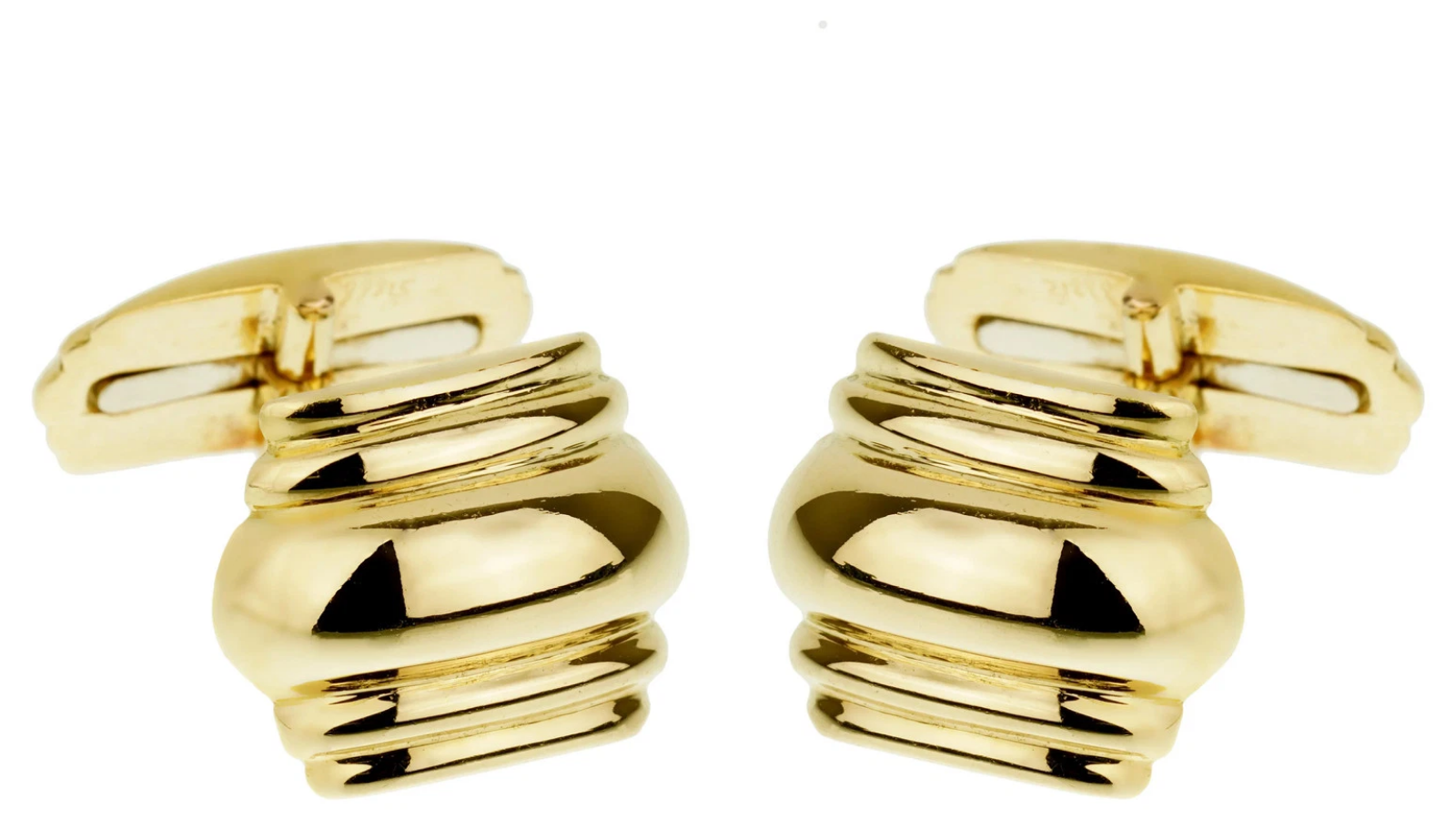
Hermès has quietly produced fine jewelry alongside its leather goods and silk scarves for decades, and its vintage 18 karat gold cufflinks, many drawing on the house’s signature equestrian motifs like the Chaîne d’Ancre link or a saddle-stud design, trade at a real but genuinely more attainable level than equivalent pieces from Cartier or Van Cleef & Arpels. A solid gold pair in a recognizable Hermès motif typically brings $600 to $2,500, with larger, more sculptural designs toward the top of that range.
Genuine Hermès gold is solid rather than plated, so the weight should feel substantial for the size, and the piece should carry a clear “750” or “18K” stamp alongside the Hermès signature. Equestrian and nautical motifs, drawn from the house’s core design language, are the most consistently collectible; generic geometric designs without a recognizable house motif tend to sell for less. Sterling silver examples from the same house exist too and sell for considerably less than the solid gold versions, so material matters as much as the name on the back.
18. Vintage Cartier 18k gold cufflinks
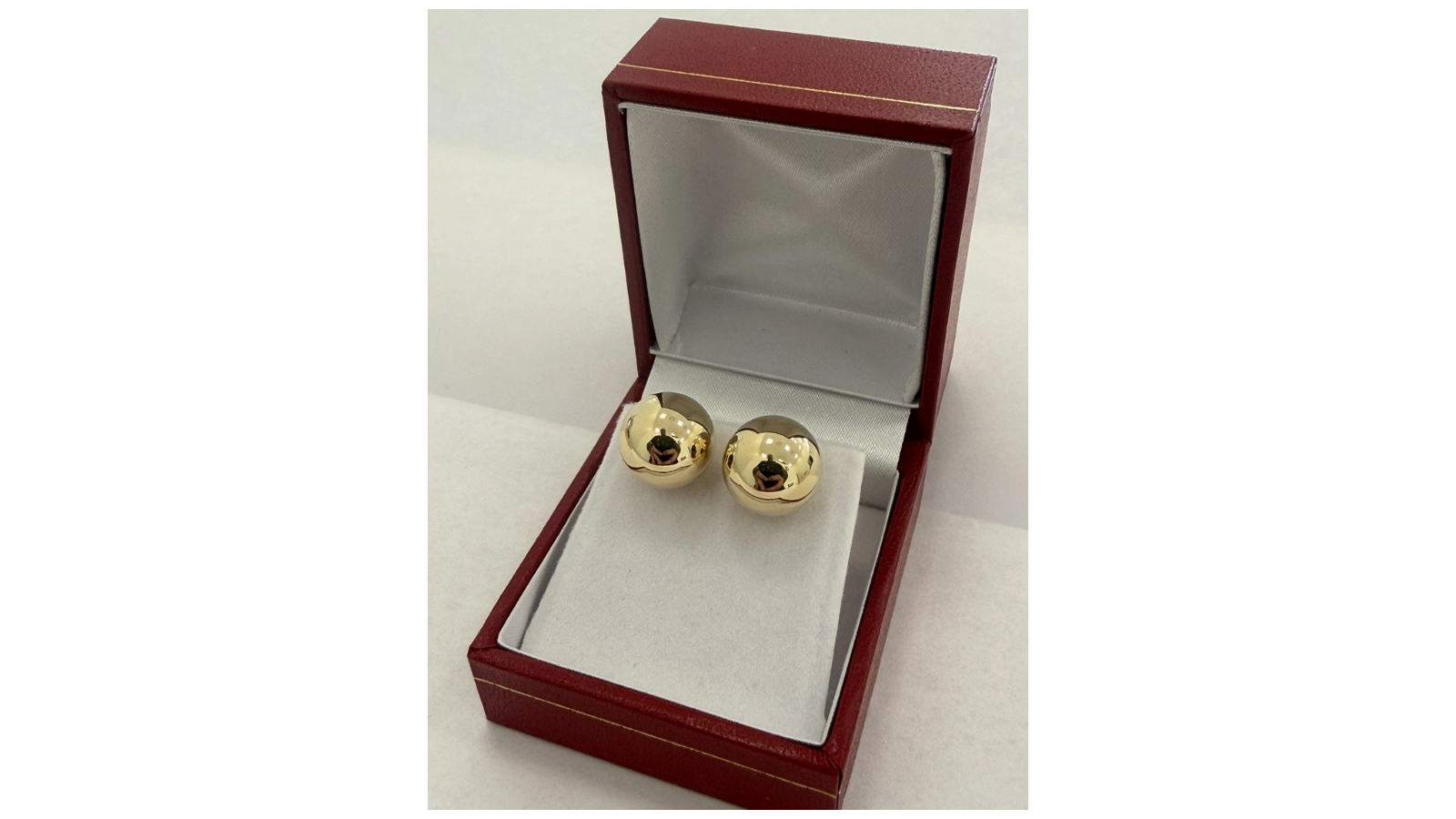
Cartier’s vintage cufflinks span everything from simple gold bar-bell designs to elaborate gem-set presentation pieces, and the gap between the two is enormous, which is exactly why a pair found in an inherited jewelry box is always worth a close look. A plain, signed 18 karat gold pair without stones typically brings $800 to $2,500, while examples set with rubies, sapphires, or diamonds bring several times that, with the finest gem-set pairs reaching well into five figures.
The Cartier signature, along with a serial number and French or American assay marks, should be clearly and evenly struck; weight is another good indicator, since Cartier’s gold cufflinks were never thin or hollow-feeling. Stirrup, barrel, and double-baton shapes from the 1950s through 1970s are among the most commonly found vintage designs. A piece that’s been resized, re-plated, or had a stone reset should be disclosed and priced accordingly, since any alteration affects both authenticity and value to serious buyers.
A loupe, a small scale, and a few minutes checking hallmarks against the backs of these eighteen designs is usually enough to tell a $20 pair from a $2,000 one.











