
With grocery costs up more than 27% since 2020, the weekly shop has become one of the biggest controllable expenses in a family’s budget. The USDA puts a moderate food plan for a family of four at between $992 and $1,628 a month, and plenty of households are spending above that. But the difference between families who stay on track and those who consistently overspend rarely comes down to what happens inside the store. It comes down to what happens before they leave the house.
32% of shoppers enter the store with no plan at all, and impulse purchases account for up to 62% of grocery store sales revenue. Stores are built to separate you from money you didn’t plan to spend. The only reliable defense is the groundwork you lay at home.
Table of contents
- Do a full pantry, fridge, and freezer audit
- Cook a use-it-up meal before shopping day
- Build the meal plan around what you already own
- Check the store’s weekly circular before planning
- Load digital coupons to the loyalty card before leaving
- Open cashback apps before writing the final list
- Set a hard budget before leaving the house
- Organize the shopping list by store section
- Do a quick price comparison on your biggest-ticket items
- Eat a proper meal before leaving
- Time the trip to catch markdown windows
- Check unit prices on your most-bought staples before you go
- Decide which name brands to swap out this week
- Add all household non-grocery needs to the same list
- Review last week’s receipt before writing this week’s list
- Plan at least one batch cook or freezer meal into the week
- Check whether frozen or canned beats fresh this week
- Find one item on the list you could make from scratch for less
Do a full pantry, fridge, and freezer audit

Before writing a single item on the list, frugal families take stock of what they already have. That means pulling things to the front of the pantry shelves, checking what’s sitting at the back of the freezer, and scanning the fridge for anything that needs using in the next few days.
This matters for two reasons. It prevents buying duplicates of things you already own, and it’s the foundation of the entire pre-shopping process. Everything else, from meal planning to coupon loading, depends on knowing your actual starting inventory. Without this step, it’s easy to come home with a third jar of pasta sauce or a second block of cheese that then goes to waste.
The average American threw away over $760 worth of food in 2024, and a family of four wastes an estimated $2,913 in food per year. A five-minute pantry sweep every week is one of the cheapest ways to start clawing that money back.
Cook a use-it-up meal before shopping day

One of the habits that separates genuinely frugal families from those who just aspire to be is the use-it-up meal. Before shopping day, they cook at least one meal built entirely around ingredients that are aging out: the half-bag of lentils, the wilting spinach, the chicken thighs that need using. It’s a deliberate clearing of the decks before new groceries come in.
This serves a double purpose. It reduces food waste from the current week and it reinforces the pantry audit, because you’re physically working with what you have rather than just glancing at it. Over the course of a month, families who do this consistently find they’re buying meaningfully less because they’ve stopped the rot at the source rather than letting it carry through.
Build the meal plan around what you already own

The most common meal planning mistake is deciding what you want to eat and then writing a shopping list to match. Frugal families do it the other way around. They start with what’s already in the house, factor in what’s on sale this week, and build the meal plan from that. Shopping becomes a top-up exercise rather than a full resupply.
Meal planning saves the average family around $1,200 per year by reducing both impulse buys and food waste. The savings compound when you plan around existing stock because you’re not adding unnecessary ingredients to the list. A family with half a bag of dried chickpeas in the pantry plans a chickpea curry. A family ignoring their pantry buys more chickpeas and a ready-made curry sauce.
Check the store’s weekly circular before planning

Most major grocery chains release a weekly ad with their current deals, usually running Wednesday to Tuesday. Frugal families check it before building their meal plan, not after. That order matters: when you check the circular first, you can structure your meals around what’s on sale rather than hoping the things you already planned to buy happen to be discounted.
All the major chains publish their circulars in their apps or on their websites. Apps like Flipp aggregate deals from multiple stores in your area into one place. Spending ten minutes scanning the week’s deals before your planning session consistently saves more than any individual coupon you’ll clip at the store.
Load digital coupons to the loyalty card before leaving

Most major grocery chains now offer digital coupons you load directly to your loyalty card and have automatically applied at checkout. The catch is you have to load them before you shop, not while you’re standing in the aisle. Frugal families make this a fixed part of their pre-shopping routine, usually alongside checking the weekly circular.
Loyalty programs save shoppers 8-12% on their grocery bill on average, and digital coupon loading requires no paper clipping, barcode scanning, or remembering to hand anything over at the register. You load the offers at home, put your phone away, and they apply automatically when you check out. Not using this system at a store that offers it is leaving consistent money on the table every week.
Open cashback apps before writing the final list
Cashback apps like Ibotta and Fetch Rewards are not the same as store loyalty coupons and are worth treating as a separate step. Ibotta requires you to activate specific offers before you shop, which means you need to check it while you’re still writing your list. If a specific brand of yogurt has $1.50 cash back and it ends up close to the store brand price after rebate, that might reasonably shift what goes on your list.
Ibotta users earn $218 per year on average, returned directly to a bank account or PayPal, but only if offers are activated before shopping. Fetch is more forgiving since it rewards any receipt, but Ibotta’s higher per-item payouts make it worth the extra two minutes of planning. Running both on every receipt gives you the broadest coverage with minimal additional effort.
Set a hard budget before leaving the house

Knowing you want to spend less is not a budget. A budget is a specific number you write down before you shop. Frugal families set it before they leave the house, based on their weekly or monthly food allocation, and many of the most disciplined ones withdraw the exact amount in cash. Paying with physical notes makes different decisions happen at the shelf: when you see money leaving your wallet, the calculus on marginal items changes.
If cash feels impractical, the alternative is setting a specific spending limit or tracking a running total in a notes app as you go. The number matters less than the commitment to it before you walk through the door. Without a firm ceiling, the default is whatever everything in your cart adds up to.
Organize the shopping list by store section

A list written in whatever order things occurred to you is not a useful shopping tool. It sends you crisscrossing the store, which means more time in aisles you didn’t need to be in and more opportunities for unplanned items to land in your cart. Frugal families organize their list by section before they leave: produce, dairy, meat, frozen, dry goods, personal care. It makes the shop faster and keeps them out of temptation’s path.
This is a small habit with a disproportionate effect. Stores are deliberately laid out to maximize the distance between items on your list, routing you past as many categories as possible. An organized, section-by-section list is a direct counter to that design: you move through efficiently and you leave.
Do a quick price comparison on your biggest-ticket items

Not every item warrants a cross-store price check, but frugal families know which items in their regular cart carry the most price variation: fresh meat, organic produce, baby products, vitamins and supplements. For those specific items, they spend a few minutes before shopping checking whether their usual store is actually the best option that week.
Apps like Basket let you compare prices across multiple stores without visiting each one. For families who shop near both a warehouse club and a regular supermarket, knowing in advance which items are genuinely cheaper at Costco or Sam’s Club (and which aren’t) is worth a quick weekly check. The goal isn’t driving to four stores for four items but knowing whether one or two key things justify a second stop.
Eat a proper meal before leaving

This sounds too simple to include, but the evidence is consistent: shopping on an empty stomach leads to more spending. Food cues are more compelling when you’re hungry, and judgment around items not on the list becomes less reliable. The willpower required to walk past a bakery display when you haven’t eaten since breakfast is measurably higher than when you’ve had lunch.
Frugal families treat eating before shopping as a non-negotiable step, not an optional warmup. Even a quick snack is enough to reduce the physiological pull of food cues in the store. It’s not a matter of willpower or discipline. It’s removing an unnecessary handicap before entering an environment that is specifically engineered to trigger purchase behavior.
Time the trip to catch markdown windows

Grocery stores follow predictable markdown schedules, and frugal families know their store’s pattern. Meat and poultry are typically marked down in the early morning, between 7 and 9 a.m., when staff evaluate inventory against sell-by dates. Bakery items are discounted late in the evening as stores clear fresh-baked goods before the next delivery. Produce markdowns often happen in the late afternoon.
These markdowns reach 30-50% off on meat at major chains, with discounts on bakery items documented at over 40% at some locations. Timing your weekly shop to coincide with the markdown window for your most expensive items can save $10-20 in a single trip. If you’re unsure of your store’s schedule, ask a department employee directly: most will tell you exactly when they tag things down.
Check unit prices on your most-bought staples before you go

Price tags on grocery shelves show a per-unit or per-ounce figure in small print, usually in the corner of the label, and most shoppers never look at it. Frugal families use this number, not the total price, to compare between sizes. The larger package is usually but not always cheaper per unit, and knowing the current breakdown prevents two specific mistakes: paying for bulk when the smaller size is genuinely the better deal, and defaulting to the smaller size when bulk would save money.
For a handful of high-volume staples, whether oats, canned tomatoes, olive oil, or dried pasta, it’s worth keeping a rough unit price reference and checking it occasionally. Prices shift with promotions and seasonal fluctuations. What was the better deal in February may not be in June.
Decide which name brands to swap out this week

Store brands have closed most of the quality gap with national brands, and the savings are substantial. Buying private-label products saves 25-30% compared to national brands on average, and U.S. consumers saved a collective $35 billion in 2025 by choosing store brands over name brands. For many categories, the product is made in the same facility as the national brand with a different label on it.
Frugal families don’t wholesale switch everything to store brand or wholesale refuse to. They decide item by item, week by week, based on what’s available and what matters to the household. Categories where store brands typically match or beat national brands in quality include canned goods, frozen vegetables, dairy basics, cooking oils, and spices. Categories where the name brand genuinely performs differently (specific coffee brands, certain condiments) are worth keeping. The distinction is made before the shop, not in the aisle where the marketing does its work.
Add all household non-grocery needs to the same list

Every extra trip to the store is another opportunity for unplanned spending. Before their weekly shop, frugal families scan the whole house, not just the kitchen: bathroom supplies, cleaning products, pet food, over-the-counter medications, paper goods. Anything running low goes on the same list so everything gets handled in one trip.
This is partly about consolidation and partly about reducing exposure. 72% of Americans made an unplanned in-store discretionary purchase in the past month even while intending to cut back on spending. The fewer trips you make, the fewer times you walk into an environment engineered to trigger spending you didn’t plan. The “I just need one thing” trip that reliably turns into $30 of extras is a known and avoidable pattern.
Review last week’s receipt before writing this week’s list

The weekly grocery receipt is a record of actual behavior, not intended behavior. Frugal families look at it before they write their next list. They’re checking for specific things: items that went unused, categories where spending crept higher than planned, and repeat purchases that could be sourced cheaper or swapped for a store brand.
This closes a feedback loop that most households leave permanently open. Without it, the same patterns repeat indefinitely: the fresh herbs that wilt unused, the specialty sauce that accumulates in the back of the cupboard, the yogurt brand that’s been overpriced for months. Seeing last week’s receipt before writing this week’s list catches those patterns before they become another cycle of waste.
Plan at least one batch cook or freezer meal into the week
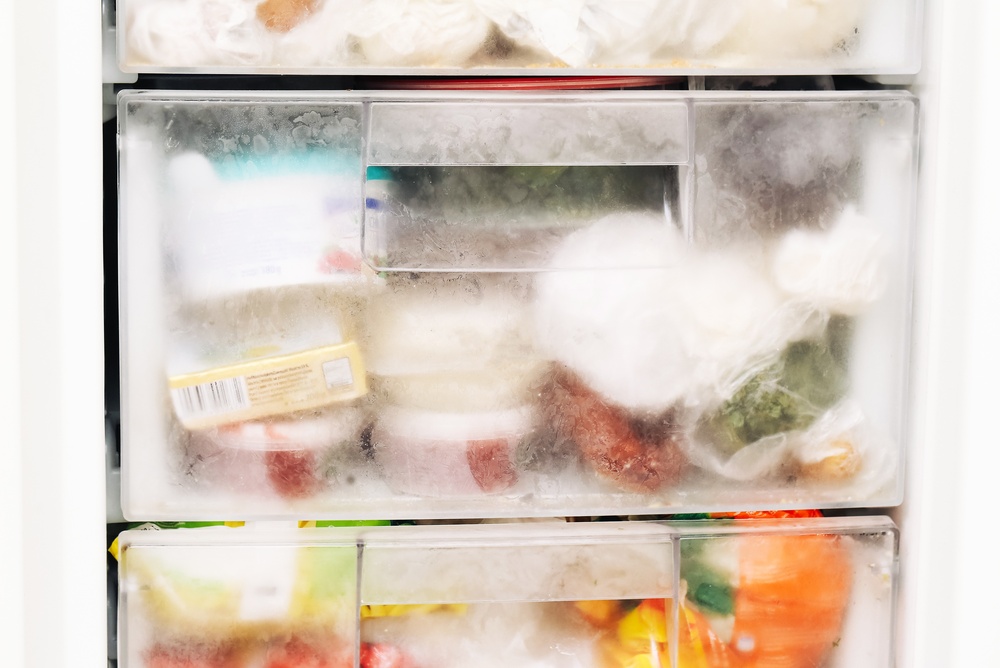
Frugal families don’t just plan seven dinners. They plan one of those dinners specifically to produce leftovers large enough to freeze or to cover two meals: a large pot of chili, a double batch of soup, a tray of meatballs, a whole chicken that becomes stock and sandwiches. Whatever it is, it goes on the meal plan before the shopping list is written because it determines quantities.
The economics compound quickly. A single batch of homemade chili that costs $12 in ingredients and feeds the family twice is a meaningfully cheaper outcome than a $12 shop that produces one meal and results in a takeout order midweek. Planning this in advance means buying the right quantities rather than an optimistic amount that becomes food waste, and it means the expensive per-serving cost of convenience food doesn’t fill the gap.
Check whether frozen or canned beats fresh this week

Fresh produce at peak season and on sale is often the best buy. The same produce out of season, imported, and at full price frequently is not. Before they write the list, frugal families check whether the fresh version of what they need is worth the premium that week or whether frozen or canned is the smarter choice.
Nutritionally, frozen and canned vegetables are broadly comparable to fresh and sometimes better, because they’re processed quickly after harvest rather than sitting in cold storage for days. For ingredients going into cooked dishes such as soups, stews, casseroles, and curries, the distinction between fresh and frozen matters very little to the finished result. A quick scan of what’s in season and what fresh produce is actually priced competitively takes two minutes before shopping and can easily save $5-10 on a single trip.
Find one item on the list you could make from scratch for less

Convenience is expensive. Pre-made sauces, spice blends, salad dressings, marinated meats, portioned snacks, pre-cut vegetables: all carry a significant premium because the store has done work that takes minutes at home. Before finalizing the list, frugal families go through it and identify at least one item where the convenience markup is clearly not worth paying this week.
This isn’t about making everything from scratch or turning grocery shopping into a labor-intensive project. It’s about one item per week where the calculation is obvious: a bottle of salad dressing versus oil and vinegar already in the pantry, a spice packet versus individual spices you own, a bag of croutons versus the half-loaf going stale on the counter. That habit, sustained over 52 weeks, adds up to real money. It also has a secondary effect: once you start noticing which items carry heavy convenience premiums, you stop adding them to the list in the first place.











