
You move into a new place and the walls are the exact beige every landlord in America seems to love. The cabinet pulls look like they shipped with a 1994 starter home. There’s a water stain on the ceiling nobody mentioned during the walkthrough, and the lease says no nails, no paint, no exceptions.
Nationally, the homeownership rate was 65 percent in the second quarter of 2026, which means more than a third of occupied homes in the U.S. are rented, not owned. Typical asking rent hit $1,962 a month in July 2026, the fastest annual jump in more than a year. If you’re handing over that kind of money every month, wanting the place to actually feel like yours is not asking too much.
The trick is doing it without losing your deposit. About 26 percent of renters have lost part or all of a security deposit at some point in their rental history, and most of that money goes toward damage that was completely avoidable. Start with the one thing almost nobody thinks to undo.
Swap the hardware before you do anything else

Builder-grade cabinet knobs and drawer pulls are some of the cheapest, ugliest parts of a rental kitchen, and they are also the easiest thing in the whole apartment to change. Most attach with a single screw from inside the cabinet door. Buy a set that actually fits your taste, swap them room by room, and drop every original knob, pull, and screw into a labeled zip-top bag that goes straight to the back of a closet.
This is the fix that protects you the most for the least effort. Reinstalling the originals before your final walkthrough takes less time than ordering dinner, and there’s nothing for a landlord to flag because the kitchen looks exactly like it did on move-in day. A full set of new pulls for a mid-size kitchen is one of the cheapest upgrades you can make in a rental, and the visual jump from shiny builder brass to something like matte black or brushed nickel is bigger than it has any right to be for the price.
The same approach works on light switch plates, outlet covers, and interior door hardware. None of it needs a drill or a property manager’s sign-off, and all of it comes back out just as easily as it went in.
Hang peel-and-stick wallpaper on one wall

A full room of traditional wallpaper is not a renter’s project. One accent wall covered in peel-and-stick is. The material itself runs about $1 to $3 per square foot, which for most bedroom or living room accent walls means you’re covering the whole thing for less than a nice dinner out, and there’s no labor cost because you’re doing it yourself.
The install only works well on smooth, clean, painted drywall. Textured “orange peel” walls, which show up in a lot of older rentals, will fight the adhesive, and the seams will lift within weeks. Test a small piece in an inconspicuous spot first, behind a piece of furniture you’re not moving, and let it sit for a day before committing to the whole wall.
Removal is the part that actually matters for your lease. Pull slowly at a 45-degree angle rather than straight out, and take it easy in humid weather, since peel-and-stick adhesive releases more easily when it’s warm. Done right, it comes off in full sheets and leaves the paint underneath untouched, which is exactly what you need when the walkthrough rolls around.
Go nail-free with adhesive strips and hooks
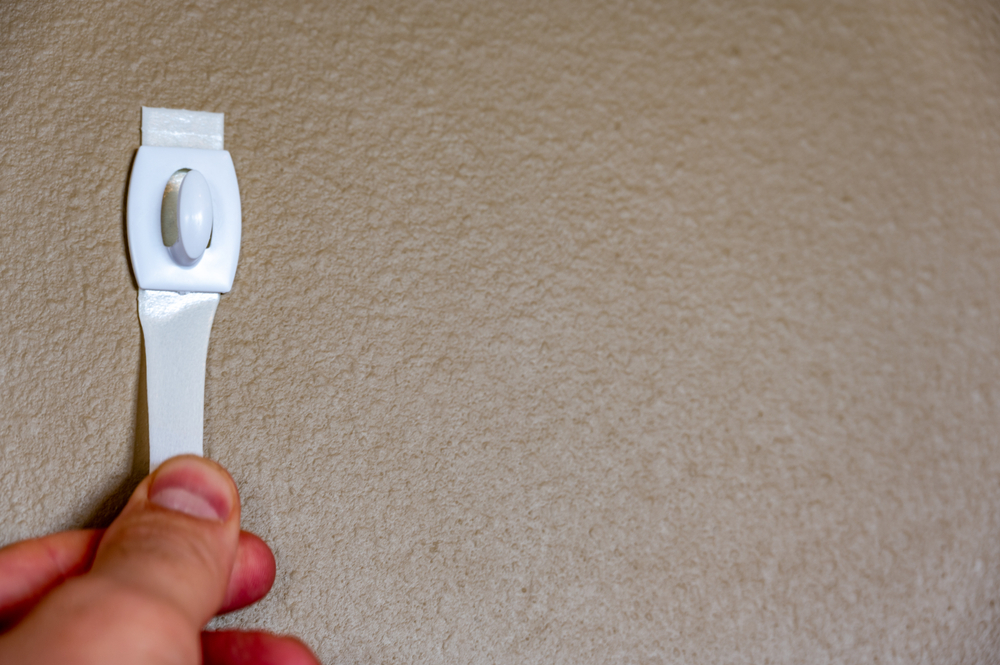
Heavy-duty adhesive wall strips and hooks exist specifically because landlords and renters have been fighting over nail holes for decades, and the current versions hold real weight, not just a postcard. They can mount a framed print, a small mirror, or a set of floating shelves, as long as you check the listed weight limit and use enough strips to stay comfortably under it rather than right at it.
The part people get wrong is the wall itself. The adhesive needs a clean, flat, non-textured surface to actually bond, and it needs about an hour of set time before you hang anything heavy on it. Wipe the spot down with rubbing alcohol first to strip away dust and grease, press firmly for thirty seconds, and walk away.
Removal matters just as much as installation. Pull each strip down slowly, not out, following the direction printed on the packaging, and the adhesive releases clean instead of tearing paint or drywall off with it. This is how you cover entire walls with art, mirrors, and shelving in a rental without a single hole to patch or explain at move-out.
Trade the blinds for real curtains on a tension rod
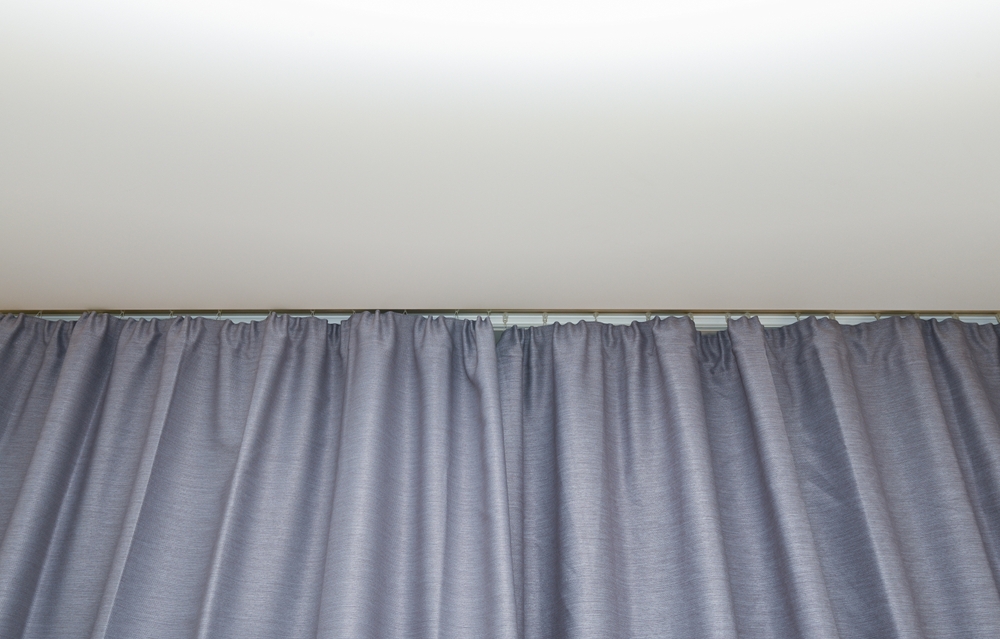
Mini blinds are the default in almost every rental, and they block light about as well as a chain-link fence blocks a view. A tension rod needs no hardware at all, just friction against the inside of the window frame, and once it’s up you can hang real fabric curtains that actually soften a room instead of making it look like an office.
Keep the original blinds. Most leases require them back in place at move-out, and a tension rod sits comfortably in front of them without removing anything, so you’re layering rather than replacing. Floor-length curtains, hung a few inches above the window frame and wide enough to clear the glass when open, make a ceiling look taller and a window look bigger than it actually is.
Blackout curtains on a tension rod are worth the extra cost in a bedroom that faces east or sits under a streetlight, and they do more for sleep quality than almost any other change you can make without a landlord’s permission. When you move, the rod comes down in about ten seconds and the blinds are exactly where the landlord left them.
Cover tired flooring with one good area rug

Scuffed hardwood, dated linoleum, and builder-grade carpet are three of the most common flooring complaints in rentals, and none of them are things you’re allowed to replace. A large area rug solves the visual problem without touching the actual floor underneath. Go bigger than feels natural. A rug that’s too small just floats in the middle of a room and makes the space look smaller, while one that extends a few inches past the edges of a sofa or bed grounds the whole layout.
A rug pad underneath does two jobs at once. It stops the rug from sliding and bunching, and it protects whatever flooring is underneath from scuffs and indentations, which matters just as much to your deposit as it does to your floor. On hardwood especially, a felt or rubber pad prevents the kind of fine scratching that shows up clearly under a landlord’s flashlight at move-out.
One well-chosen rug can anchor an entire living room, and because it’s furniture rather than a fixture, it goes with you to the next place. That makes it one of the few purchases here that isn’t really specific to this particular rental at all.
Swap the overhead light for lamps and warmer bulbs
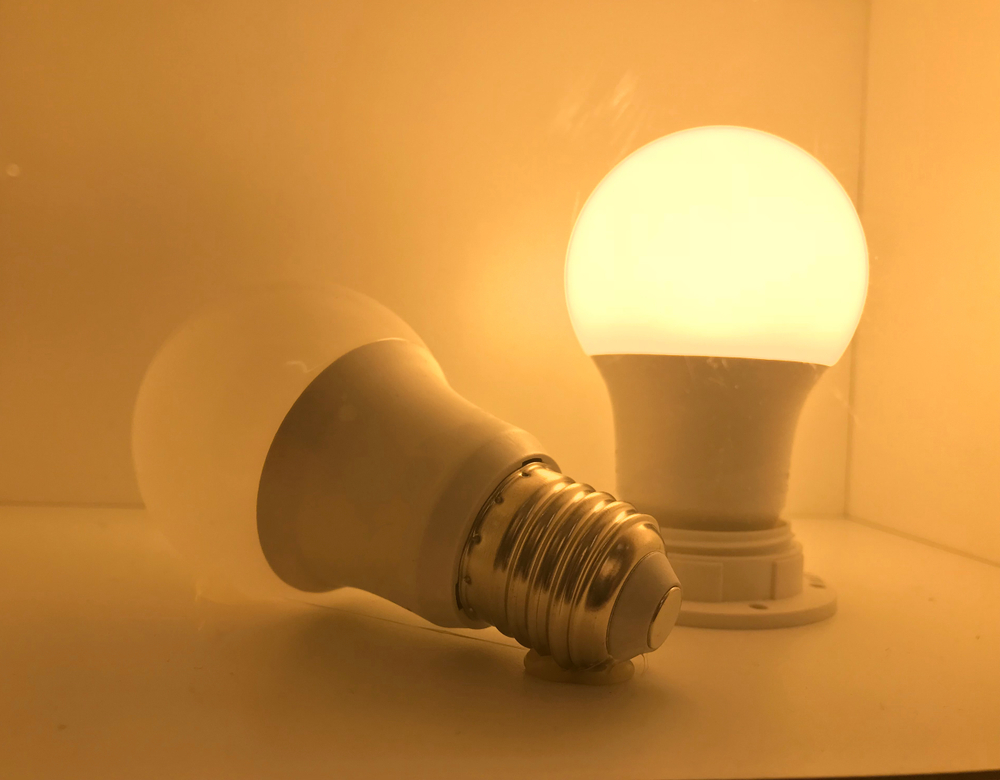
Most rentals come with a single harsh overhead fixture in the living room and bedroom, the kind that makes every space look like a doctor’s waiting room. You usually can’t swap the fixture itself without an electrician and the landlord’s blessing, but you can turn it off completely and build your lighting from the floor up instead.
A couple of floor lamps, a table lamp near the couch, and a small lamp on a nightstand do more to change how a room feels than almost any other low-cost fix, and none of it requires touching the wiring. Pay attention to the bulb’s color temperature, listed in Kelvin on the packaging. Anything around 2700K reads as warm and residential, closer to candlelight, while 5000K and above reads cold and clinical, closer to a parking garage.
Smart bulbs that screw into existing lamps let you dim the room or shift the color temperature from your phone, no electrician or tools required. Combined with the overhead light staying off most evenings, this is usually enough to make a stark rental living room feel like somewhere you’d actually choose to spend an evening.
Add a peel-and-stick tile backsplash
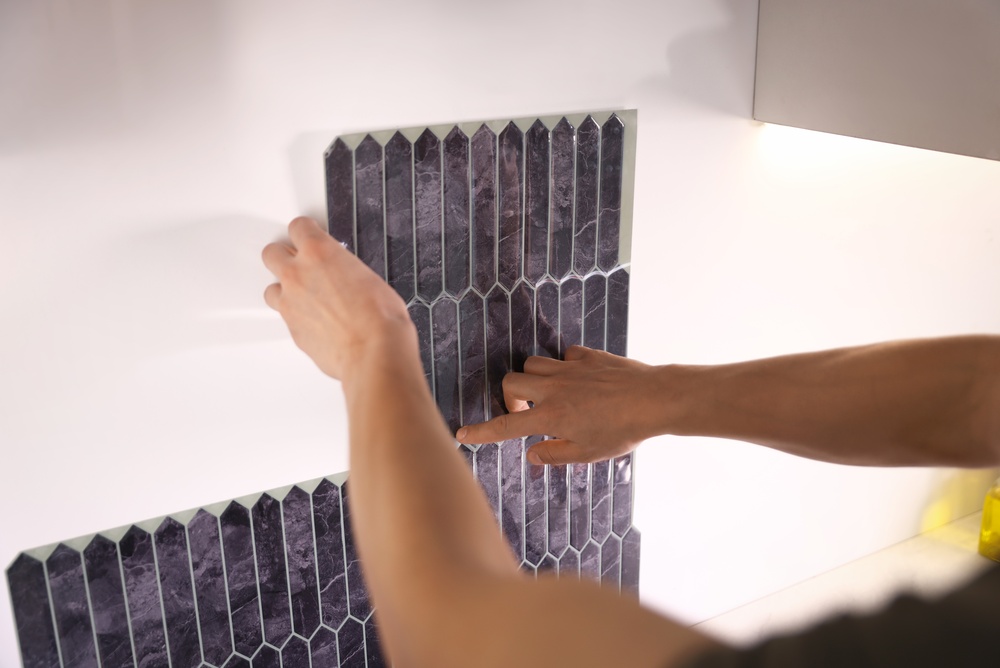
A plain, blank stretch of wall between the counter and the upper cabinets is one of the most common complaints renters have about kitchens, and it’s also one of the easiest to fix without touching the actual wall. Peel-and-stick tile sheets are designed to look like subway tile, marble, or mosaic from a few feet away, and they install directly over an existing backsplash or painted drywall with no grout, no mortar, and no tile saw involved.
Measure the area first and buy a little more material than the room seems to need, since outlets, switches, and corners eat into coverage faster than expected. Clean the wall thoroughly before you start. Any grease near the stove will stop the adhesive from bonding properly, and that’s the single most common reason these projects fail within a few months instead of lasting for years.
Like the wallpaper, removal is the part that protects your deposit. Peel slowly, from a corner, and use a hairdryer on a low setting to soften stubborn adhesive if a sheet starts to resist. Done carefully, the wall underneath goes back to exactly what it looked like before you moved in.
Upgrade the shower head

Most rental shower heads are the cheapest fixture the previous landlord could find, and they’re usually simple enough to swap with your hands and a wrench in about ten minutes. Unscrew the old one counterclockwise, wrap the threads with plumber’s tape, and thread on a new shower head. Keep the original in a drawer so you can put it back before you move.
A WaterSense-labeled model is worth seeking out specifically. The EPA estimates that replacing one old shower head with a WaterSense model saves the average family 2,700 gallons of water and more than $75 a year in combined water and energy costs, since less hot water means less energy spent heating it. That’s real money back in your pocket every month you live there, not just a one-time upgrade.
Beyond the efficiency numbers, a better shower head is one of the few changes here you interact with daily, often more than once. A high-pressure or rain-style head changes how a basic bathroom feels every single morning, and because it travels with you in a bag when you move, it’s one purchase that keeps paying off at the next address too.
Add shelving without drilling a single hole
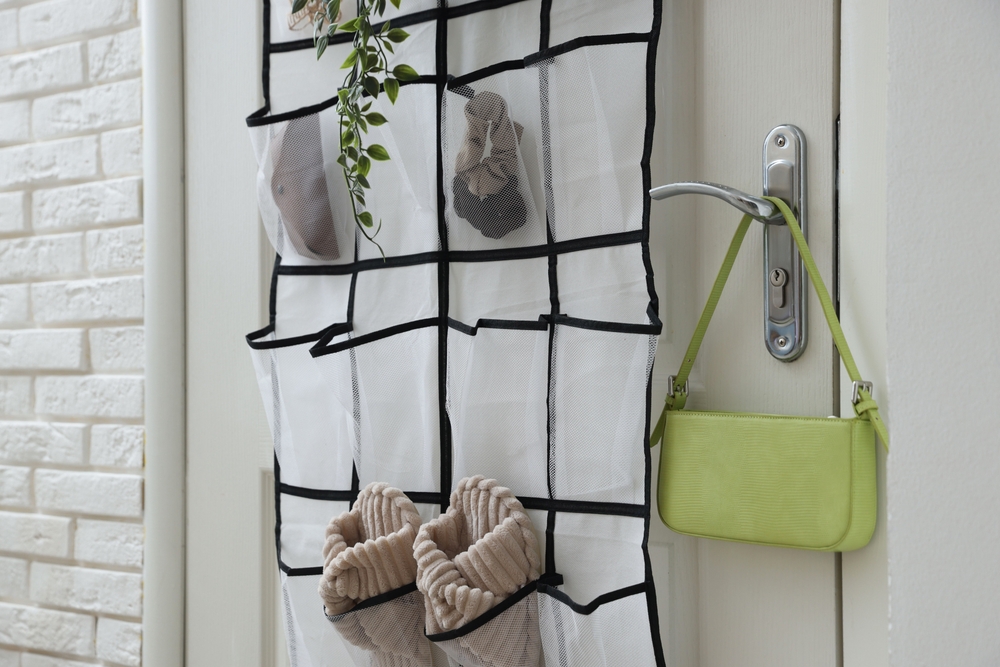
Storage is one of the biggest complaints about small rentals, and most of the easiest fixes for it involve a drill, which a lot of leases flatly prohibit. Tension-pole shelving units solve this by wedging between floor and ceiling using spring pressure, the same way a tension curtain rod works, and they can hold several shelves’ worth of books, plants, or kitchen supplies without a single screw going into drywall.
Closet systems are the other easy win. A lot of rental closets come with one sad rod and nothing else, and adjustable tension-rod closet systems or stackable cube organizers can double the usable storage without any permanent installation. Over-the-door organizers handle shoes, cleaning supplies, or pantry overflow using the door itself as the mounting point, which needs no tools at all.
For wall shelves specifically, look for heavy-duty adhesive mounting strips rated for the actual weight you plan to put on them rather than the lightest option on the shelf. Floating shelves that rely on these strips instead of brackets and screws can hold a surprising amount of weight when installed correctly, and they come down clean when it’s time to go.
Bring in big, leafy plants
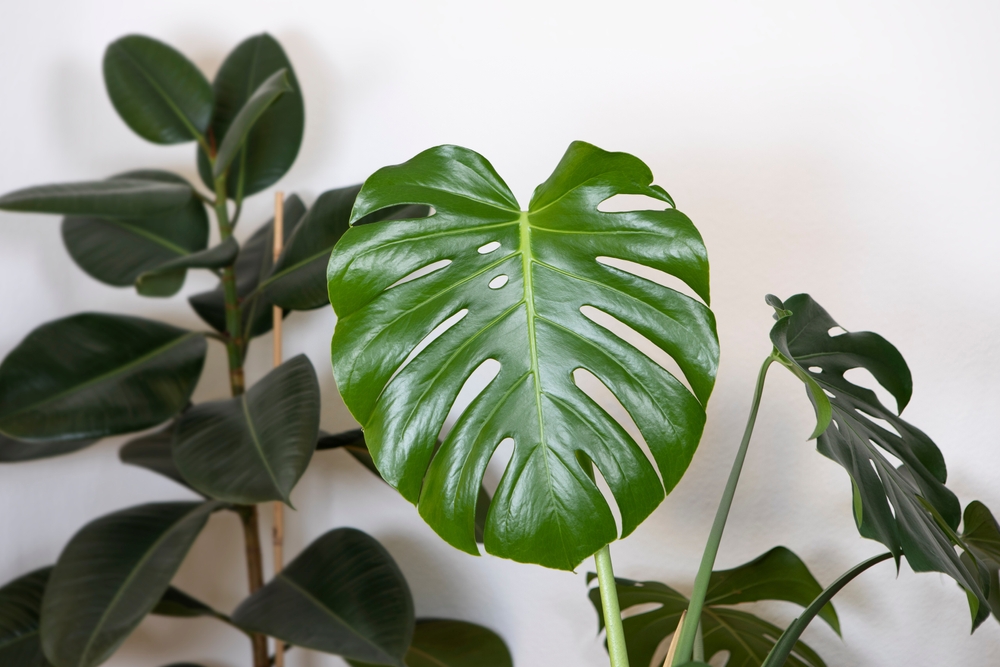
A rental with white walls and beige carpet can start to resemble a waiting room, and plants are one of the fastest ways to undo that without changing anything structural. A few large plants, rather than a dozen small ones scattered around, make a bigger visual difference for the same amount of money and effort, since a six-foot fiddle leaf fig or snake plant reads as a real design choice instead of clutter.
Low-light varieties matter more in a rental than almost anywhere else, since you rarely get to choose which direction your windows face. Pothos, snake plants, and ZZ plants tolerate the dim corners and north-facing windows that are common in apartments, and they forgive the kind of inconsistent watering that comes with a busy schedule.
Plants also solve a problem that paint and furniture can’t. They add motion, scent, and a sense of being alive to a space, which is part of what makes a hotel room feel like a hotel room no matter how nice the furniture is. Grouping a few plants of different heights near a window does more for a room’s warmth than most single furniture purchases at the same price.
Update furniture with slipcovers and throw pillows
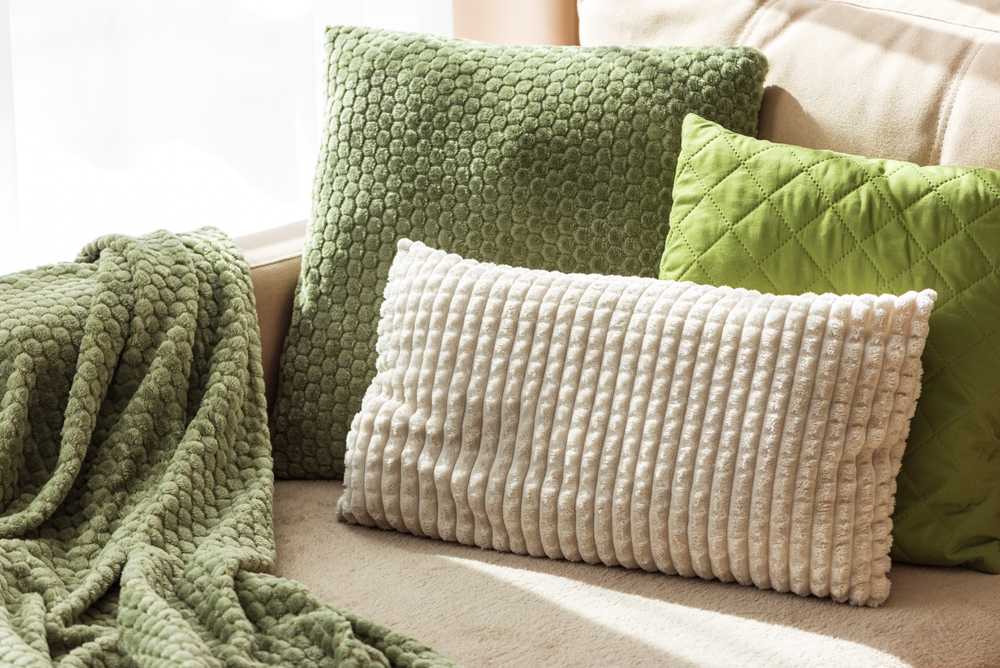
A secondhand or hand-me-down couch is extremely common in a first rental, and it doesn’t have to look like one. A fitted slipcover changes the entire tone of a sofa or armchair in under an hour, with no sewing and no commitment, since most modern slipcovers stretch over the existing frame and cushions using elastic edges and tuck-in panels.
Throw pillows and a blanket draped over the back do almost as much work for a fraction of the price. Mixing two or three complementary colors or patterns, rather than buying a matched set, tends to look more intentional and less like a showroom display. A room with mismatched hand-me-down furniture can look fully coordinated once the textiles across it are speaking the same visual language.
This category is also the easiest to update seasonally. Swapping a slipcover or a few pillow covers for something warmer in the fall or lighter in the summer costs very little and makes a space feel current without buying new furniture at all. Everything here travels with you at move-out, since none of it is attached to the apartment in the first place.
Hang an oversized mirror
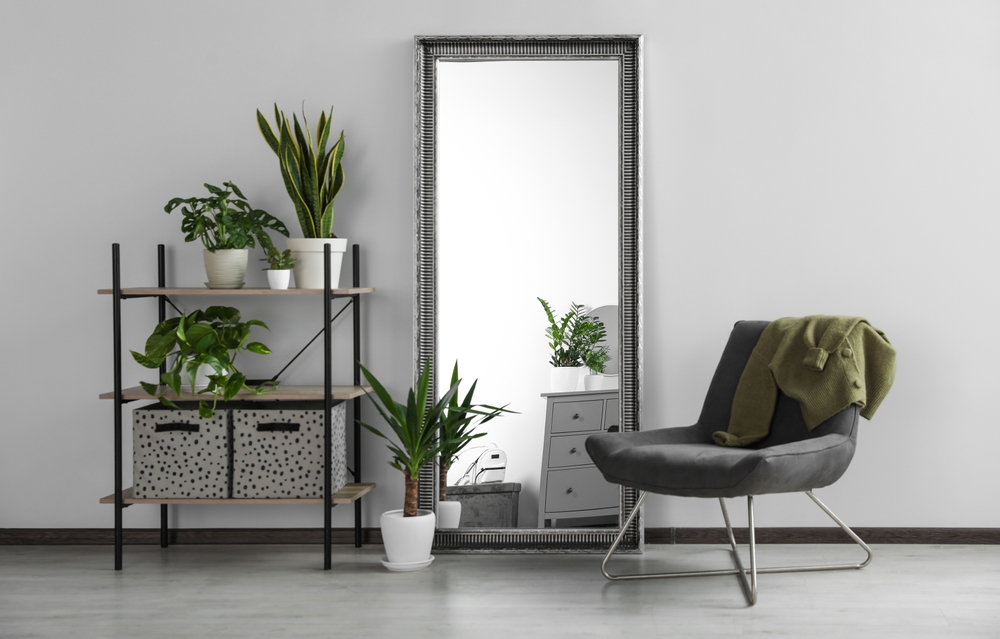
A large mirror does two jobs that almost nothing else can manage at once. It reflects whatever light the room already has, which makes a dim rental feel noticeably brighter, and it makes a small space read as larger simply by doubling the visible square footage in the reflection. A single oversized leaning mirror, propped against a wall rather than mounted, needs no installation of any kind.
For a mirror you actually want hung on the wall, heavy-duty adhesive strips rated for the mirror’s specific weight are usually enough for anything under about twenty pounds, with D-ring hangers and a small nail as the backup option for anything heavier. Worth knowing: typical wear and tear, including barely noticeable nail holes and faded paint, generally shouldn’t be deducted from a security deposit the way actual damage is.
Position matters as much as size. A mirror placed across from a window multiplies the natural light in a room throughout the day, while one placed at the end of a hallway makes the whole space feel longer than it is. Either way, it’s one of the highest-impact, lowest-effort changes available to a renter.
Control your lighting with smart plugs
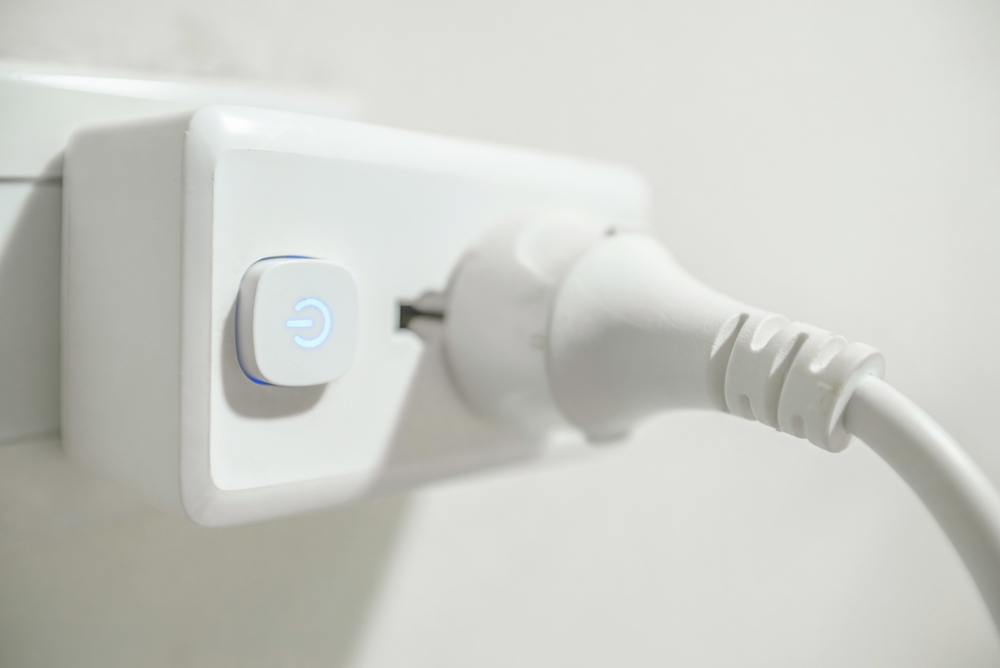
A smart plug sits between a lamp and the wall outlet, and it turns anything plugged into it into something you can schedule, dim, or control from your phone, all without touching a single wire. For a renter who can’t install smart switches or rewire a fixture, this is the entire workaround in one small device.
String lights, floor lamps, and table lamps all work through a smart plug the same way they would through a regular outlet, except now they can turn on automatically at sunset or shut off on a timer, so you’re not fumbling for a switch in the dark. Several plugs grouped into one app-controlled scene can turn on every lamp in a living room at once with a single tap, which replicates what a wired dimmer switch does without an electrician ever stepping into the apartment.
Most plug in directly with no setup beyond a phone app and a home internet connection, and they unplug just as easily when you move. For the cost of a nice dinner, you get lighting control that would otherwise require rewiring a wall switch a landlord is very unlikely to approve.
Layer rugs and a doormat at the entry
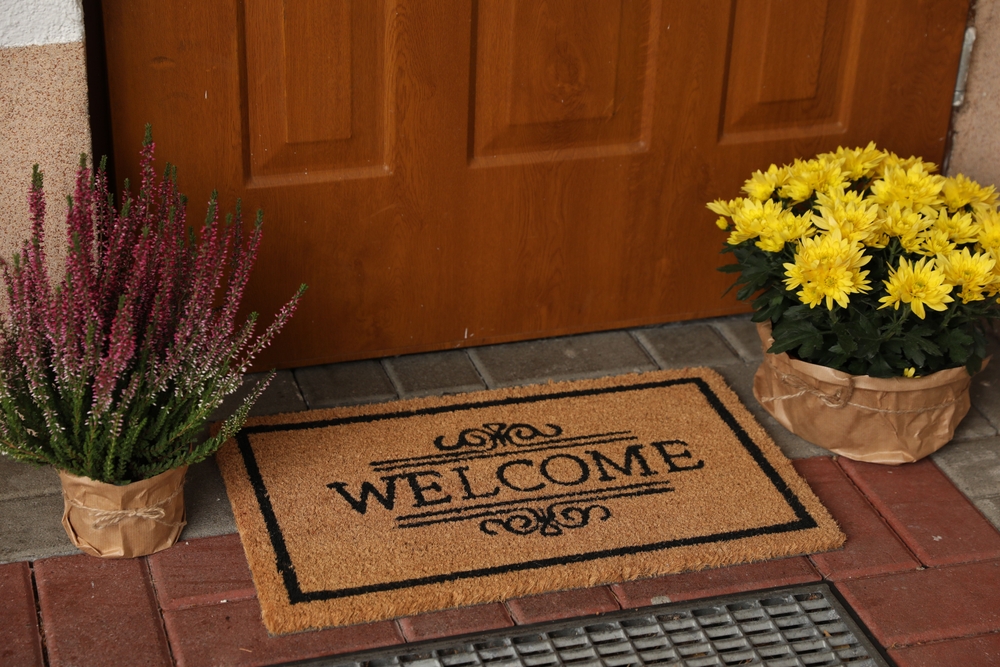
The entryway sets the tone for the entire apartment, and in most rentals it’s also the most neglected square footage in the place, usually just bare flooring and a wall hook if you’re lucky. A doormat outside the door and a smaller accent rug just inside it create a clear sense of arrival, the same transition a house with a proper foyer gets for free.
Function matters as much as looks here. A textured outdoor mat scrapes dirt and moisture off shoes before they ever touch your floor, which matters even more in a rental since every scuff and water stain is something you’re responsible for at move-out. A washable indoor rug just past the door catches whatever the outdoor mat missed.
This is also one of the cheapest fixes relative to its visual impact. A hallway or landing that currently looks like an afterthought becomes the first impression of a home the moment it has something underfoot, and both pieces move with you exactly as easily as any other rug in the apartment.
Apply removable window film for privacy
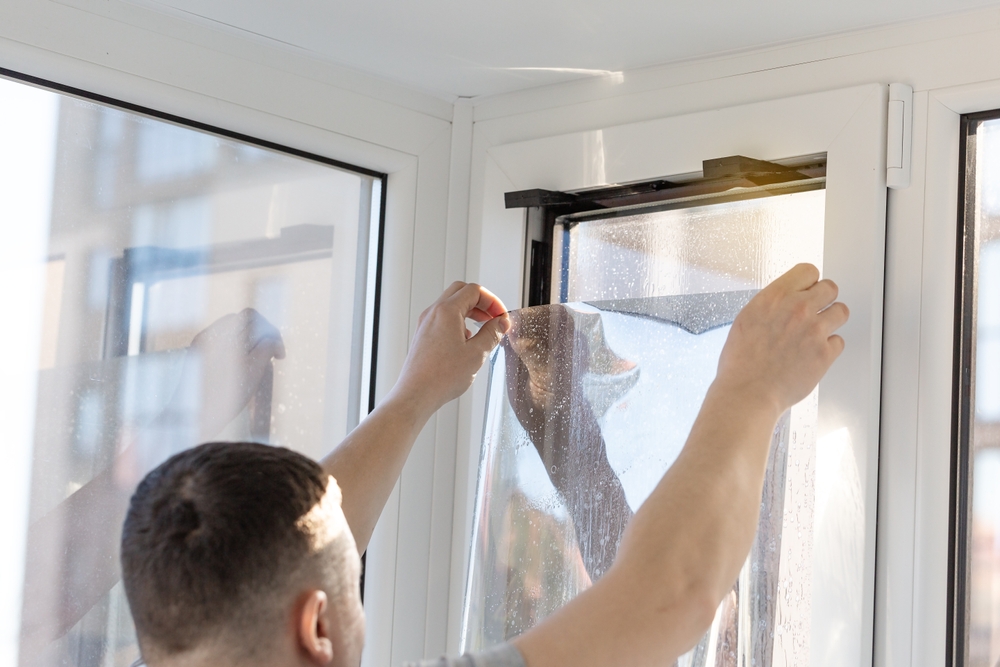
Ground-floor apartments and units facing a parking lot or a neighbor’s window come with a privacy problem that curtains only partly solve, since closing them all day also blocks out every bit of natural light. Static-cling window film sticks to glass using water and pressure rather than adhesive, so it holds in place without any residue and peels off in one piece whenever you decide to take it down.
Frosted and textured patterns let diffused light through while blurring anything on the other side of the glass, which works well for a bathroom window, a street-facing living room, or a sliding door that opens onto a shared patio. Decorative patterned film does the same privacy job while also doing some of the visual work a curtain would otherwise handle, which is useful on windows too small or awkwardly placed for a full curtain setup.
Installation is just glass, water, and a squeegee or credit card to push out air bubbles, no tools and no adhesive residue left behind. It comes off just as easily with a little water and a fingernail at the edge, leaving the glass exactly as clear as it was on move-in day.











