
You watch the total climb at checkout without really looking at it, the same way a car alarm stops registering after the third minute. Then one week the cart, the same groceries as every other week, rings up at $187. Eighteen months earlier that same list cost under $100.
That’s usually the week something has to change. Cutting a grocery bill close to half doesn’t require coupon binders, warehouse-club hoarding, or a month of eating rice and beans. It requires knowing exactly where the money is actually going.
Groceries cost real money right now, and it isn’t in your head. A reference family of two adults and two kids needs about $1,024.90 a month just to eat at home on the government’s bare-bones food plan, and that figure moves up almost every time it’s updated. None of the habits below require extra income, extra hours, or a personality transplant. Most take less time than the way you’re shopping now.
The first one changes everything else on this list, because you can’t spot a real deal on a price you don’t actually know.
Table of contents
- Keep a price book instead of trusting your memory
- Plan the week’s meals off the sale flyer, not a recipe
- Rotate proteins by what’s actually cheap this season
- Swap in store brand wherever nobody can taste the difference
- Buy whole cuts and break them down yourself
- Run the numbers before joining a warehouse club
- Stack a cash-back app under every card swipe
- Check the markdown rack before you check your list
- Cut your shopping trips down to one a week
- Choose frozen or canned produce over fresh out of season
- Batch-cook proteins and freeze them in meal-size portions
- Stop buying family-size packs of anything you won’t finish
- Skip the pre-cut, pre-washed convenience versions
- Compare unit price, never the shelf tag
- Shop your own kitchen before you shop the store
- Grow the handful of herbs you buy every single week
- Take a rain check instead of overpaying for a substitute
- Put the whole grocery bill on one cash-back card
- Quit “just in case” buying with a strict list and a full stomach
- Look at what food waste is actually costing you
- Build inflation into your grocery budget instead of guessing
Keep a price book instead of trusting your memory

Write down what you actually pay for the fifteen or twenty items you buy every week: eggs, chicken thighs, milk, bread, coffee, the specific yogurt your kids will eat. Not the sale price, the price per unit, at each store you use. It takes maybe ten minutes a week.
That list becomes the most useful thing in the kitchen. Stores rotate “sale” pricing constantly, and a good chunk of it is just the regular price dressed up with a yellow tag. Once you know boneless chicken thighs run $2.49 a pound on a real deal and $3.79 a pound on a fake one, the fake ones stop working. Keep the list in a phone’s notes app and update it every couple of months, since prices this year don’t sit still for long. A spreadsheet works too for sorting by store or by item, but a notes app is fast enough to actually stick with, which is the part that matters. The goal isn’t a perfect spreadsheet, it’s knowing your own baseline well enough that a store can’t fool you with a sticker.
Plan the week’s meals off the sale flyer, not a recipe
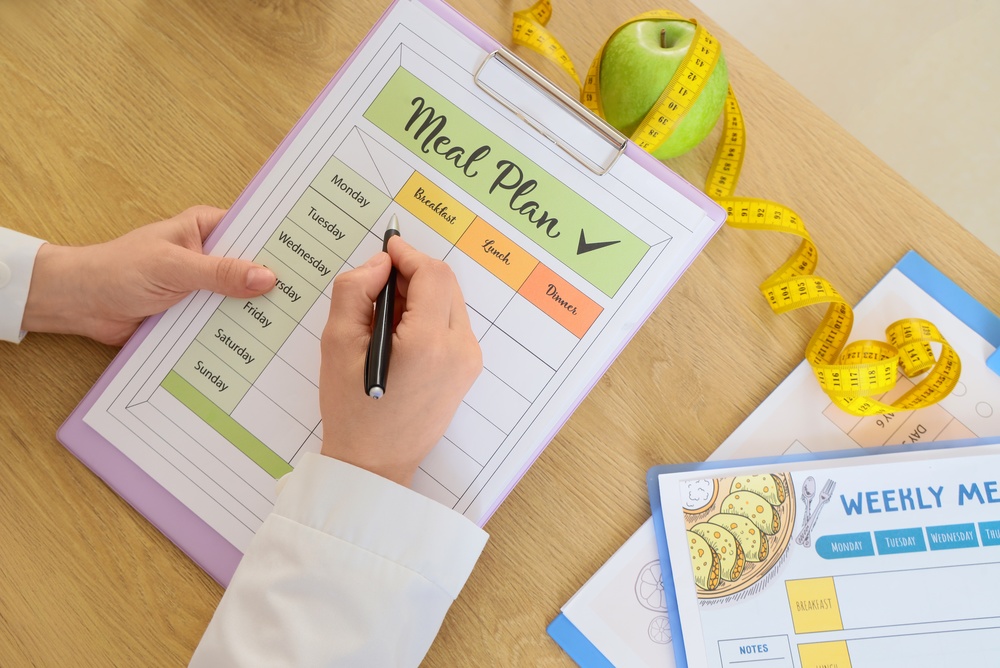
Picking meals first and then buying whatever they need, full price if that’s what it takes, keeps a grocery bill exactly where it’s always been. Open the store’s app or flyer before deciding what’s for dinner, see what’s actually discounted that week, and build around it. If ground turkey and bell peppers are cheap, that’s stir fry and taco week. If it’s pork shoulder and cabbage, that’s a different week entirely.
This flips the whole process. Instead of a fixed meal plan forcing a purchase at whatever a specific ingredient costs, the ingredients that are cheap that week decide the meals. Apps that pull together flyers from every nearby store make this faster, so there’s no need to open five different tabs to compare prices store by store.
One discounted protein usually stretches across three or four dinners once you’re building around it instead of fighting it. A marked-down pork shoulder becomes tacos on Monday, fried rice on Wednesday with the leftovers, and a soup base by the weekend. That’s three or four meals paid for at one sale price instead of three or four separate full-price trips.
Rotate proteins by what’s actually cheap this season
Buying the same handful of proteins on autopilot, ground beef most weeks, chicken breast to feel virtuous, ignores what’s actually happening with prices. Let the real price swings decide instead. Beef is on track to run about 9.8% higher this year than last because cattle supplies are tight, while egg prices are headed the opposite way, down roughly 31% for the year as flocks recover from bird flu losses.
That makes this a good year to lean harder on eggs, pork, and poultry, and to treat beef as an occasional purchase rather than a weekly default. These swings shift from year to year depending on cattle herds, feed costs, and disease outbreaks, so the protein that was cheap two years ago isn’t automatically cheap now. Checking current prices before planning the week beats sticking to habit. Beans and lentils are the quiet winners in almost any year, since they barely move in price and stretch further per dollar than any animal protein, which makes them worth keeping in regular rotation regardless of what beef or eggs are doing.
Swap in store brand wherever nobody can taste the difference

A recent comparison of 171 common grocery products found store-brand versions running more than 70% cheaper than the national brand in categories like sports drinks and breakfast cereal, with store-brand milk averaging about 61% less than name brands across the retailers tested.
Some cereals and coffee still taste different to most households, and that’s not a battle worth fighting every morning. But for canned tomatoes, flour, sugar, frozen vegetables, oats, and most cleaning products, the store brand is often made in the same facility as the name brand with a different label. Pick battles by category, not by blanket rule, and let the categories where nobody notices carry the savings.
Dairy is where price and taste diverge the most. Store-brand milk, shredded cheese, and butter taste identical in most side-by-side tests, and the price difference on milk alone adds up fast in a household going through several gallons a week. Sauces, condiments, and spices are similarly safe territory, since the recipe behind a jar of mustard or a can of paprika isn’t exactly proprietary.
Buy whole cuts and break them down yourself
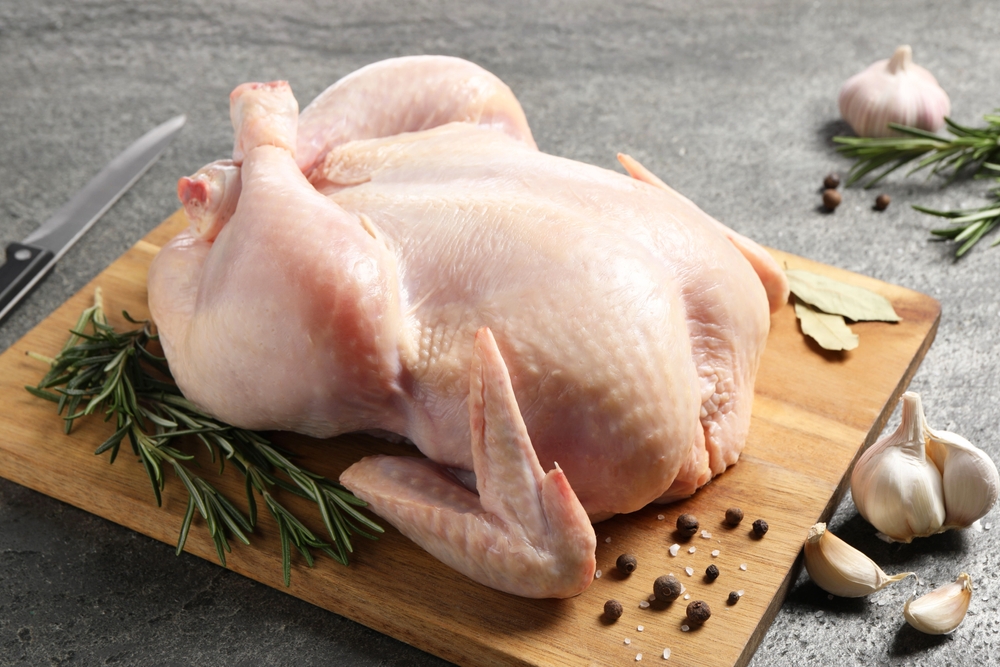
A whole chicken costs noticeably less per pound than the same bird already cut into breasts, thighs, and drumsticks. A pork loin runs cheaper than pre-cut chops. A block of cheddar costs less than the bag of shredded cheddar sitting right next to it, and shredding it takes about ninety seconds with a box grater.
Fifteen minutes a week spent breaking down whatever’s on sale into usable portions, then freezing what won’t get used in the next two days, adds up fast. The convenience version isn’t paying for better meat, it’s paying someone else’s labor to do the cutting, and that labor gets added straight to the price per pound. Once it’s been done a few times it stops feeling like a chore and starts becoming the obvious move.
A whole chicken also leaves the carcass for stock afterward, another ingredient that would otherwise get bought separately in a carton. Between the extra meat a whole bird yields compared to buying parts, and a pot of homemade stock from the bones, one chicken can quietly cover three or four separate grocery purchases that would normally happen on their own.
Run the numbers before joining a warehouse club
Costco’s Executive membership costs $130 a year and pays an annual 2% reward, up to $1,250, on qualifying purchases. The basic Gold Star membership is $65. The extra $65 for Executive only pays for itself once spending hits around $3,250 a year there, so it’s worth checking actual annual spending before upgrading, instead of assuming the higher tier is automatically the better deal.
A membership only saves money if the per-unit prices actually beat a regular grocery store, and warehouse clubs aren’t automatically cheaper on everything. Unit price is still worth checking against a usual store for anything bought there, because bulk packaging on an item that doesn’t get used fast enough is just an expensive way to throw food away later. Where warehouse clubs actually win is on shelf-stable staples, paper goods, and large cuts of meat that can be portioned and frozen, not on every single item under one roof.
Stack a cash-back app under every card swipe
Ibotta puts its own average user earnings at $256 a year, and that’s before stacking it with anything else. That figure isn’t life-changing on its own, but it’s money most people are leaving on the table without noticing.
It sounds like more effort than it is. Activating offers takes about two minutes before leaving the house, and cash back deposits straight into a bank account once the payout threshold is hit. Chasing every single offer in the app isn’t worth it, since some require buying things that wouldn’t otherwise get bought, which defeats the point. Only activate offers on items already on the list, and scan the receipt the same night to avoid sitting on a stack of them a month later trying to remember which store each one came from. Stacking a store loyalty card and a manufacturer coupon on top of the app offer, when both are available on the same item, turns one purchase into three separate discounts instead of one.
None of this requires brand loyalty to any single app. Trying a couple of the popular ones for a month and keeping whichever one actually matches the stores already in rotation beats forcing a fit with an app built around retailers that aren’t nearby.
Check the markdown rack before you check your list
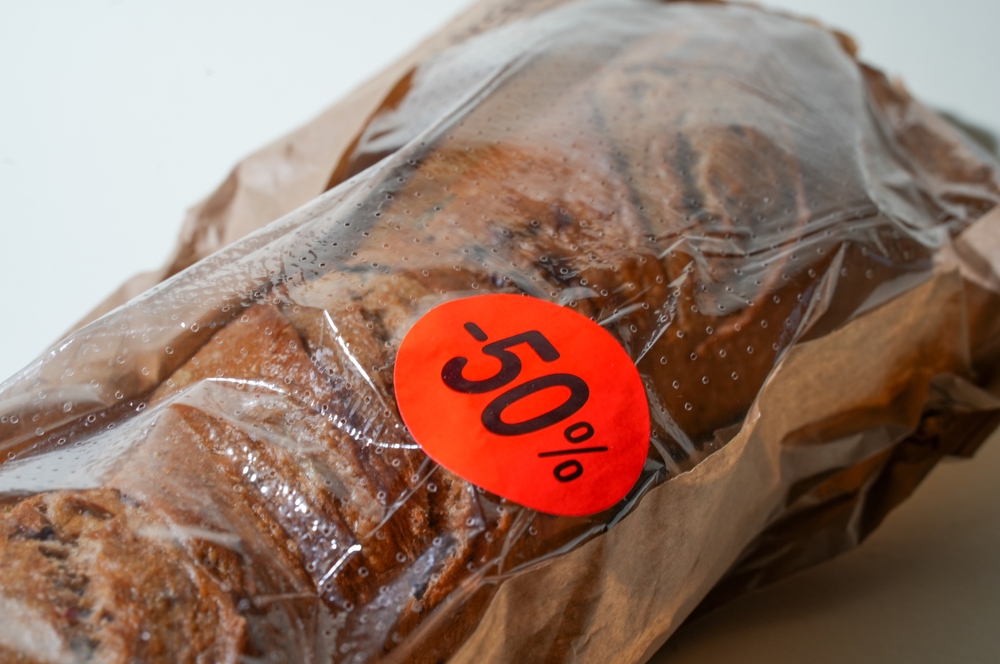
Every grocery store marks down meat, bakery items, and produce close to its sell-by date, usually with a bright sticker slapped on the package. Walk past that section first, before pulling items from the actual list, and if there’s a marked-down protein that fits this week, build a meal around it and cross something else off.
Meat marked down for quick sale is still perfectly safe to cook that day or freeze immediately, and it’s often 30 to 50% off. Bakery markdowns work the same way for bread, which freezes fine, and produce close to its peak gets discounted too, perfect for anything going into a soup, sauce, or smoothie where a slightly soft tomato or bruised banana doesn’t matter. Ask a store employee when a location typically marks things down, since it’s often a specific time of day, and showing up then means first pick before the rack gets picked over.
Cut your shopping trips down to one a week

Every extra trip to the store is another chance to grab something that wasn’t on the list. Running in for “just one thing” two or three times a week has a way of turning into a $30 to $40 basket each time. Shopping once, with a full list built from the flyer and the pantry, and making do with what’s on hand for anything forgotten, cuts that extra spending fast.
This takes discipline the first month, mostly from getting comfortable substituting instead of running back out. After that it’s just how shopping works. Fewer trips also means less exposure to end-cap displays and impulse placement near the checkout line, designed specifically to catch people who didn’t plan to buy anything there. It also cuts down on gas and the small amount of time every trip takes, which doesn’t show up on a receipt but adds up across a year the same way the extra items do.
Choose frozen or canned produce over fresh out of season
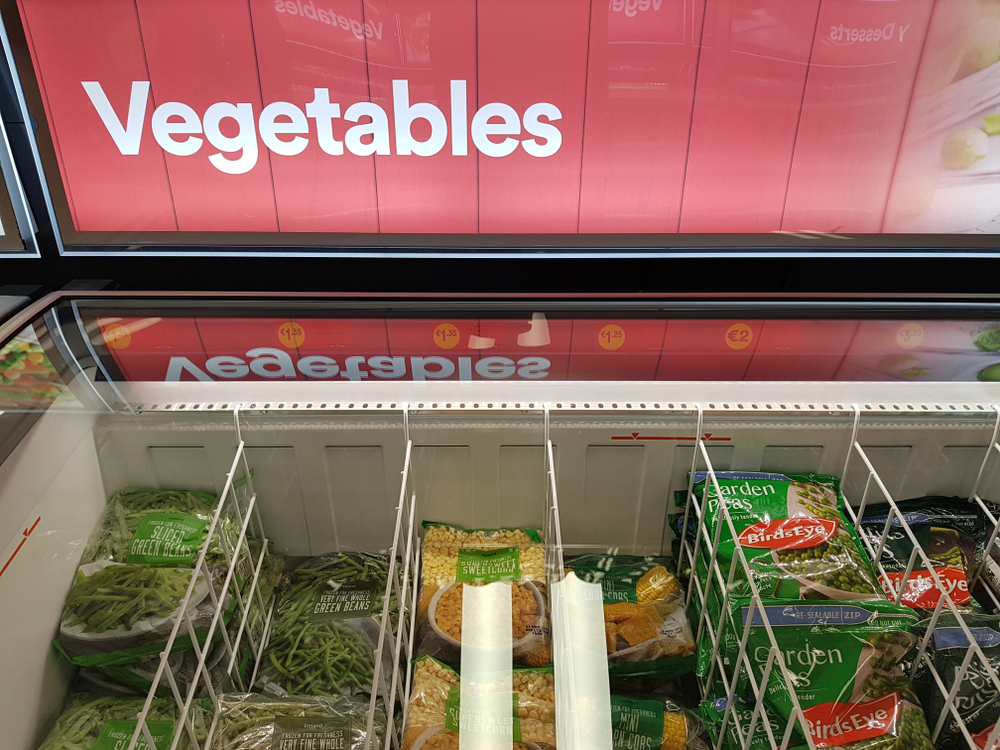
Fresh produce out of season is expensive and often mediocre, since it’s been shipped a long way to reach the shelf. Frozen fruit and vegetables get picked and flash-frozen at peak ripeness, which usually means better flavor and nutrition than a fresh version that traveled for a week, and it’s almost always cheaper per pound for things like berries, peas, corn, and spinach.
Canned tomatoes, beans, and corn work the same way for cooking, and canned fish like salmon or tuna costs a fraction of the fresh version for the same protein. Fresh produce that’s actually in season locally is still worth buying, since that’s when it’s cheapest and best, but paying a premium for fresh strawberries in January stops making sense once the frozen bag is right there. The frozen bag also doesn’t spoil in the crisper drawer, which quietly saves money on its own, since exactly what’s needed gets used and the rest waits in the freezer instead of turning to mush on the counter.
Batch-cook proteins and freeze them in meal-size portions

When ground turkey or chicken thighs hit an unusually good price, buy more than one week’s worth and cook a big batch of it that same day: shredded chicken, browned ground meat, a pot of beans. It doesn’t take special equipment, just a large pot or sheet pan and an hour on a weekend afternoon.
Portioning it into meal-size containers and freezing what won’t get used in the next two days solves the problem that tends to blow up a budget the most, the “too tired to cook” takeout order. A container of already-cooked protein in the freezer means dinner is fifteen minutes away even on the nights there’s no energy left to cook. It also means the good price found at the store follows along for weeks instead of one dinner, turning a single sale into several meals’ worth of savings instead of just one. Labeling containers with the date and contents before they go in the freezer prevents the other common failure mode, which is forgetting what’s actually in there and letting it sit until it’s freezer-burned and unusable.
Stop buying family-size packs of anything you won’t finish

The bigger package looks like the better deal, and sometimes it is. But if half of a family-size bag of spinach turns to slime before it gets used, the per-unit savings disappear completely, and that’s money spent on food that went straight in the trash. Being honest about how fast a household actually goes through a given item matters more than the size of the discount.
Some things are safe bets in bulk: rice, pasta, canned goods, anything shelf-stable that won’t go bad. Fresh produce, soft cheese, and bread are a different story unless there’s a specific plan to use the extra quickly or freeze it. Buying the size that matches actual eating speed, not the size with the lowest sticker price, is the real deal. The question worth asking at the shelf is whether this will get eaten before it goes bad, realistically, given how the week actually looks, not how it’s supposed to look.
Skip the pre-cut, pre-washed convenience versions
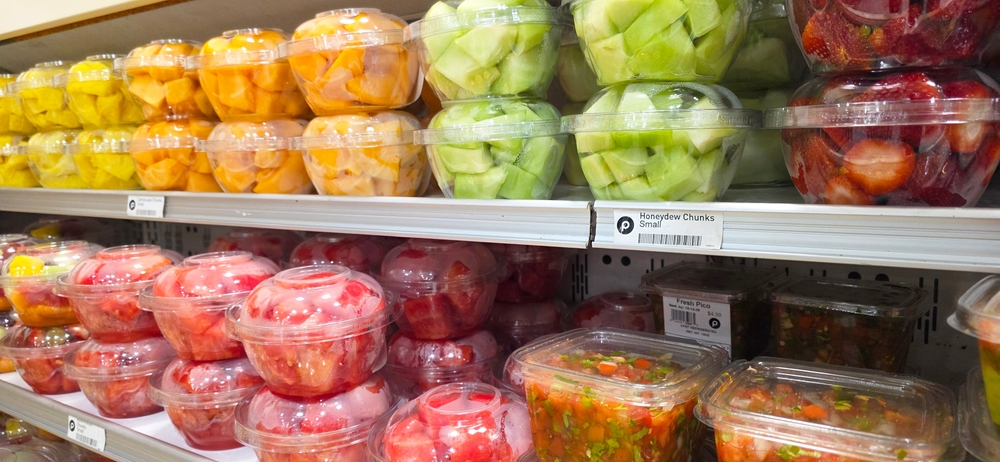
Pre-cut fruit, pre-washed bagged salad, individually wrapped cheese sticks, single-serve oatmeal packets: all of it carries a premium for labor that takes only a few minutes to do at home. A head of lettuce and a colander produce the same salad as the bag for a fraction of the price.
The appeal on a chaotic weeknight is real, and convenience food isn’t off the table entirely. But most of these swaps take less time than assumed once the five minutes gets built into the routine, and the savings add up fast across a week of groceries. A couple of convenience items can stay for the mornings that are actually too rushed to cook, with the rest cut. Pre-portioned snack packs are usually the worst offenders, since they charge a premium for someone else scooping crackers or nuts into smaller bags, something easy to do from a full-size container in about the same time it takes to unpack the groceries.
Compare unit price, never the shelf tag

Most grocery stores print a small unit price on the shelf tag, usually price per ounce or per pound, right below the big number. That’s the only number that reveals which package is actually cheaper, since packaging sizes vary constantly and a smaller box at a lower total price can cost more per ounce than the bigger one next to it.
This matters even more now because package sizes have been quietly shrinking while the price tag stays roughly the same, so a familiar-looking item isn’t the same amount of food it used to be. Unit price is worth a glance on every single purchase now, not just the big ones, since it takes about two seconds and it’s the only honest comparison on the shelf. When a store doesn’t post a unit price on a shelf tag, which happens more than it should, doing the division on a phone before deciding beats guessing, because the total price alone tells almost nothing about which option is the better buy.
Shop your own kitchen before you shop the store

Open the fridge, freezer, and pantry and take stock of what’s already there before writing a grocery list, rather than working from memory or assuming the shelves look the way they did last week. Skipping this step is how three jars of cumin and two bags of the same frozen vegetable end up in the cabinet, bought because the first one got forgotten.
Starting the list with what needs to get used soon, then filling in around it, cuts food waste more than almost anything else on this list, because meals get planned around what’s about to expire instead of around whatever sounds good that morning. It takes five extra minutes and changes what actually ends up in the cart. Checking what’s already stocked before adding staples like spices, oil, and condiments to the list also helps, since those are the items most likely to already exist in duplicate somewhere in the back of a cabinet.
Grow the handful of herbs you buy every single week

Basil, parsley, and green onions get bought constantly in most kitchens, and a fresh clamshell of any of them at the store runs a few dollars for an amount that gets used maybe twice before the rest wilts in the crisper drawer and gets thrown out.
A small pot of basil on a windowsill, or green onions regrown from the root end in a glass of water, replaces that purchase for months from one initial buy. This isn’t a full garden commitment, just three small pots that need occasional watering and a sunny windowsill, nothing more involved than that. It’s a small habit, but it’s one of the few here that saves money every single week without any ongoing effort once it’s set up. Green onions in particular practically regrow themselves from the white root end that would otherwise get thrown away, so the same bunch keeps producing for weeks past what got paid for the first time.
Take a rain check instead of overpaying for a substitute
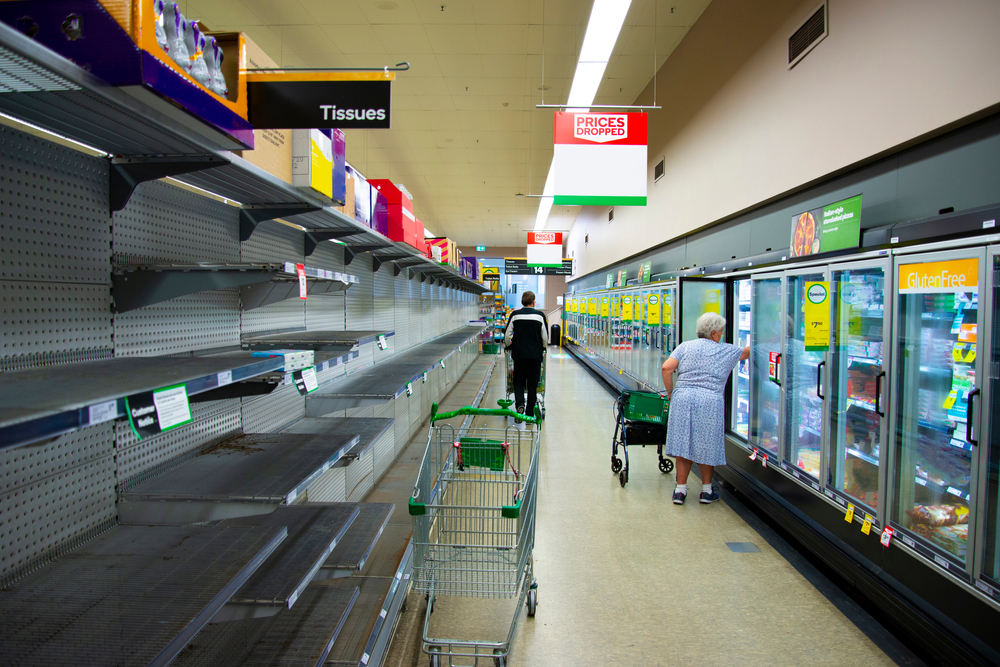
Most grocery chains will issue a rain check if an advertised sale item is out of stock at checkout time, allowing a purchase later at the sale price instead of paying full price for whatever’s actually on the shelf. This option goes unused for years in a lot of households, with the pricier substitute grabbed instead without a second thought.
Asking for a rain check at customer service before leaving, rather than grabbing whatever’s sitting next to the empty spot, is worth the extra minute. Policies vary a little by chain and by state, so it’s worth asking a specific store what theirs is, but the option exists far more often than most people realize. Most rain checks are good for thirty to sixty days, plenty of time to come back once the item is restocked, and there’s usually no limit on how many can get requested in one trip if several sale items were out at once.
Put the whole grocery bill on one cash-back card

Several credit cards offer an elevated cash-back rate, often 3 to 6%, specifically on grocery purchases, on top of whatever base rate they pay everywhere else. Picking one card that rewards groceries well and routing every grocery dollar through it beats splitting purchases across whatever card happens to be in a wallet that day.
The only rule that matters here is paying the full balance every month. Carrying interest wipes out the reward instantly, since credit card interest rates run far higher than any cash-back percentage could offset. Used this way, it’s free money on spending that was happening anyway. Used any other way, it’s a trap. Comparing a few cards before picking one is worth the time if there’s no strong grocery category card already in the wallet, since the difference between a flat 1% card and a rotating 5% grocery card adds up to real dollars over a year of feeding a household.
Quit “just in case” buying with a strict list and a full stomach

Shopping hungry, and shopping without a list, both have a way of sending extra items into the cart that aren’t there for any real reason, just a vague sense that they might come in handy later. That vague sense costs real money over a year of shopping trips.
The list is the boundary. If it’s not on the list, it doesn’t go in the cart, with rare exceptions for something actually priced too well to pass up. Eating something before leaving the house removes the impulse that drives most “just in case” purchases in the first place, since a lot of that instinct is really just hunger talking. A hard rule that anything added past the list has to replace something else already in the cart keeps the exceptions rare instead of becoming the norm within a few weeks. Writing the list from the meal plan rather than wandering the aisles hoping for inspiration closes off most of the openings where these purchases sneak in to begin with.
Look at what food waste is actually costing you

For Unsplash+
The government’s own estimate puts food loss and waste at 30 to 40% of the food supply at the retail and consumer level, worth roughly $161 billion a year. Most people don’t want to know their own household’s version of that number, but paying attention to the wilted produce and forgotten leftovers thrown out most weeks reveals it’s real money, not just an inconvenience.
Buying produce in smaller, more frequent amounts instead of a big haul meant to last two weeks helps, and so does keeping an “eat this first” spot in the fridge for anything close to its edge. Neither change costs anything. Both mean less of what’s already been paid for ends up in the trash. Freezing anything unlikely to get used in time, even something as simple as bread going stale or herbs about to wilt, quietly keeps more money around than any single coupon ever could.
Build inflation into your grocery budget instead of guessing

Grocery prices were 2.7% higher in July 2026 than a year earlier, and the government expects food-at-home prices to keep climbing by roughly 2.5% for the year overall. Setting a grocery budget once and getting frustrated every month after blowing past it, without ever adjusting the number itself, is a common trap.
Revisiting a price book and a budget every few months instead of setting either one and forgetting it closes that trap. Prices this year aren’t moving at the same pace across every category, with some going up sharply and others actually dropping, so a budget built on last year’s prices is already out of date. Checking in regularly beats being surprised at the register. It also makes the earlier habits on this list work better, since a budget that reflects reality is what actually shows whether a “sale” is worth taking or whether waiting for the next one makes more sense.











