
You don’t have to live with drips, drafts, or dead alarms. Most states require landlords to keep rentals safe and livable, and many basics such as plumbing, heat, locks, detectors, and common areas are covered by housing and health codes. Rules do vary by state and city, so always check your lease and local code, and put requests in writing. If your landlord won’t address a clear code issue, contact local code enforcement or your state consumer or housing agency for help.
1. Fix a dripping kitchen or bathroom faucet

A steady drip isn’t just annoying, it can signal failing washers or cartridges, waste water, and stain fixtures. Landlords generally must keep plumbing in good working order and repair conditions that make a place less livable. Report leaks early, note when they happen, and include photos if you can. If water is staining cabinets or walls, moisture damage can grow into bigger problems. After a simple repair, run the faucet to confirm the drip is gone and the handles turn smoothly. Keep a copy of your written request and any response.
2. Stop a running toilet or replace the flapper

Toilets should flush, refill, and seal. A constantly running tank wastes water and hints at worn parts like the flapper, chain, or fill valve. Housing codes require owners to maintain supplied plumbing fixtures and connections free of leaks and defects. Let your landlord know if the toilet runs between flushes or if you hear hissing at the valve. These are quick, low-cost fixes that prevent water damage and high utility bills if the owner pays for water. Follow up in writing if it keeps happening.
3. Clear a slow or clogged sink or tub (not tenant-caused)

When drains back up from normal use, that’s usually on the landlord, especially in multi-unit buildings where shared lines clog. Report gurgling, slow draining, or sewage smells right away. Document if backups affect more than one fixture or unit, since that points to a building issue. Don’t use harsh chemicals without permission; they can damage pipes. If the clog isn’t your fault and isn’t fixed, ask for professional service.
4. Fix leaks under the sink and dry cabinets
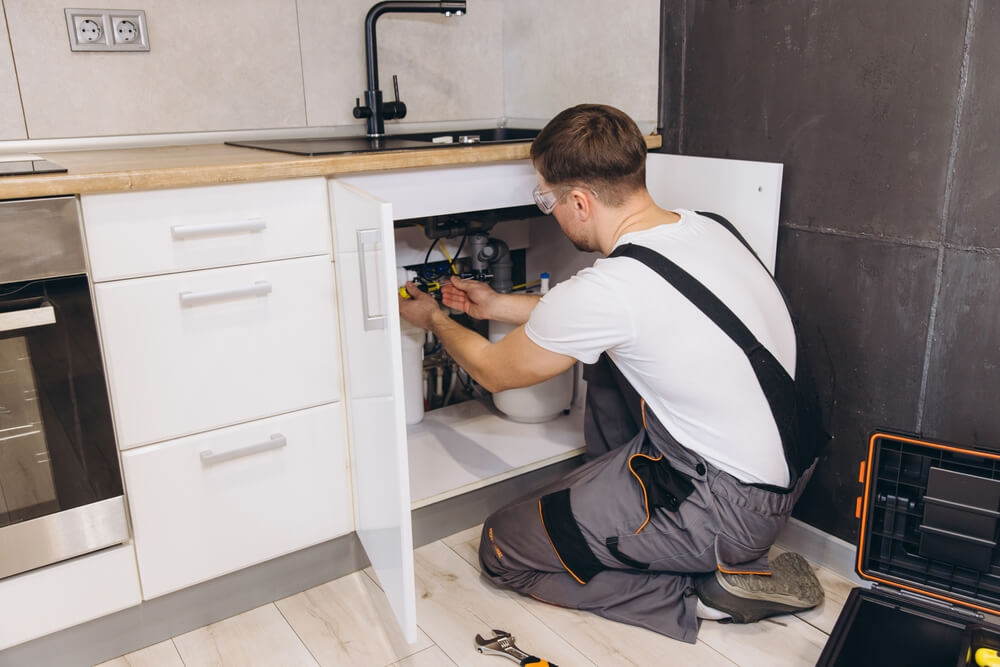
Small leaks under sinks can turn into mold, warped wood, and pests. Owners must keep structural elements watertight and free from excess moisture and are expected to dry wet surfaces quickly after leaks or flooding. If you see damp wood, soft cabinet floors, or recurring musty smells, report them and ask for both the plumbing repair and proper dry-out. Snap a photo of any water stains and follow up if moisture returns.
5. Restore hot water to safe, consistent temperatures

No hot water or water that swings from lukewarm to scalding is a fixable issue. Codes generally require owners to provide hot water at minimum safe temperatures and in enough quantity for normal use. If your shower never gets warm or the kitchen tap loses heat mid-wash, note the time and duration when you write your request. A water heater adjustment, repair, or replacement is often all it takes.
6. Fix low water pressure at faucets or shower

Very low pressure makes sinks and showers hard to use and can signal clogged aerators, failing cartridges, or bigger supply issues. Landlords are responsible for plumbing systems that deliver sufficient water pressure for ordinary use. Include details in your request “can’t rinse soap,” “pressure drops to a trickle,” or “worse at peak hours” so maintenance can pinpoint the cause.
7. Replace broken or missing outlet/switch cover plates

Cracked or missing cover plates expose wiring and pose a shock risk, especially for kids. This is a quick safety repair and should be handled by the landlord or maintenance. Don’t tape over outlets; request proper covers and note any outlets that spark, run hot, or feel loose. If you see frayed cords or damaged receptacles, include that too. (Source: U.S. Consumer Product Safety Commission)
8. Repair or replace nonworking smoke alarms

Working smoke alarms save lives and are required by fire and building codes. Owners are typically responsible for installing and maintaining alarms so they’re operable; tenants must not disable them and should report chirping or failures. If your alarm is missing, silent during tests, or constantly chirps after a battery change, request replacement. Test monthly and keep pathways to alarms clear.
9. Install or fix carbon monoxide (CO) alarms

CO is colorless and deadly. Where required, owners must provide and maintain CO alarms; tenants should report alarms that fail tests or chirp after battery changes. If you use gas heat or have an attached garage, CO alarms are especially important near sleeping areas. Ask for a new sealed 10-year unit where allowed.
10. Treat pest infestations and seal entry points

Cockroaches, mice, or bedbugs aren’t just gross they affect health and can spread through buildings. In multi-unit properties, owners are typically responsible for keeping apartments and common areas free of infestations and for using licensed pest control. Report droppings, live pests, or bites, and ask that cracks and holes be sealed to prevent re-infestation.
11. Address mold or persistent dampness from leaks

Small patches can be cleaned, but recurring mold points to moisture problems that the owner must fix like leaks, poor ventilation, or unsealed penetrations. In many cities, landlords must address both mold and the source of moisture. Report musty odors, visible growth, or condensation, and request both clean-up and the underlying repair.
12. Repair broken window locks or latches

Windows that won’t lock are a safety and security issue. Codes commonly require that openable exterior windows can be secured. If a latch is stripped, the lock doesn’t catch, or the sash won’t close, request repair. Include which rooms and windows are affected and whether the issue lets in water or drafts.
13. Rekey locks after turnover or add required security devices (where applicable)

Some states go further on entry security. For example, Texas requires specific security devices (keyless deadbolts and door viewers) and rekeying at the landlord’s expense within seven days after each tenant turnover. If your door lacks a peephole or keyless deadbolt, or if the lock was never rekeyed, cite state law in your request.
14. Seal drafts or leaks at doors and windows

Weatherstripping that’s missing or cracked allows water and cold air to enter and can damage finishes. Owners must keep buildings weathertight, watertight, and free from excess moisture that can lead to mold. Ask for new seals, proper door sweeps, and adjustments so doors and windows close fully. Note any rain intrusion or visible daylight around frames.
15. Re-caulk tubs and showers; fix crumbling grout

Loose or missing caulk lets water seep behind tile, leading to soft walls and mold. Codes require non-absorbent, waterproof surfaces in wet areas, and owners must keep fixtures free of defects that make them hard to clean. Ask for old caulk to be removed and replaced, grout repaired, and gaps sealed where tub meets wall.
16. Fix the bathroom fan or provide required ventilation

Every bathroom needs either a window that opens or a working mechanical fan. Without ventilation, moisture lingers and mold grows. If the fan is loud, dead, or doesn’t pull air, request repair or replacement. If your bathroom has no opening window and the fan is inoperable, that’s typically a code issue.
17. Replace missing or torn window screens (where required)

In many places, landlords must provide tight-fitting screens on windows designed to open, especially on lower floors and during warmer months. Screens help keep insects out and improve air flow without inviting pests. If your unit is supposed to have screens and they’re missing or damaged, request installation or repair.
18. Tighten loose handrails and repair stair guards

Wobbly handrails are a fall risk. Codes require safe handrails on stairways and guards on open sides of stairs and elevated areas. If a railing wiggles, sits too low, or has wide gaps, report it and ask for proper anchoring or replacement. Note where it’s located (unit stairs, porch, hallway) and how it’s loose.
19. Fix damaged flooring or trip hazards

Peeling vinyl, buckled boards, and ripped carpet can cause falls and collect moisture. Owners must keep structural elements free of defects that create an injury risk or are hard to keep clean. Ask for repairs or replacement of damaged sections and for thresholds to be made level and secure.
20. Restore lighting in hallways and stairwells

Dark common areas are unsafe. Many codes require owners to provide and maintain working lighting often continuously or to a minimum brightness in interior hallways and stairs used by more than one unit. If bulbs are out or fixtures fail, report locations and ask for replacement.
21. Install window guards in NYC (or fix ones that are loose)

In New York City, owners must install approved window guards in apartments where a child 10 or younger lives and upon any tenant’s request, plus in common areas when children live in the building. If yours are missing, loose, or leave more than 4½ inches of open space, ask for proper installation.
22. Repair landlord-provided refrigerator or stove

If the lease or local code requires it, or if the owner installed them, appliances like a fridge or range must be kept in working order. Report issues such as a fridge that won’t hold temperature, a dead burner, or an oven that won’t light. Include model/serial numbers if visible to help maintenance bring the right parts.
23. Fix a broken garbage disposal (if the owner installed one)

Disposals (often listed as “garbage grinders” in code) are owner-installed optional equipment. If present, the owner typically must maintain them. Report jams that reset buttons won’t clear, leaks, or humming motors that don’t spin. Ask maintenance to check for clogs, leaks, and worn blades and to remind residents what not to grind.
24. Ask for child-safety stove knob covers in NYC

In NYC, owners must provide stove knob covers to households with children 5 and under if the tenant requests them on the annual notice, or at any time. If your covers are missing or don’t fit, request replacements. They help prevent accidental gas releases and burns.
Expert advice on buying a home, including buying tips, home repair strategies, and loans for single moms.

12 first-time home buyer grants: With a 30% increase in real estate prices over the past two years, buying your first home can be challenging. This is an updated list of home buyer grants and assistance programs for first-time homeowners.
9 low-income home loans: Affordable mortgage options and support programs available for people with modest incomes looking to buy a house.
20 resources for free home repair for low-income families: Need to make repairs in your home but don’t have the money? There is help available. In this post, you’ll learn about resources for free home repairs or low-cost home repairs











