
Somewhere between the good jewelry and the junk drawer, most houses have one of these. A little wooden box that plays a tinny waltz when you lift the lid, tucked away since a grandmother passed it down or a great-aunt’s estate got boxed up. Most people wind it once, smile, and put it back on the shelf without a second thought.
That’s a mistake more often than you’d guess. Music boxes were made in huge volume for over a century, from cheap Japanese exports to precision Swiss workshops that are still household names among collectors. The gap between “cute keepsake” and “actually worth something” comes down to who made the movement, how ornate the case is, and whether it still runs. A handful of these turn up in nearly every estate sale. A few are the kind of find that changes what you thought your grandmother’s parlor was worth.
Below are twelve specific categories worth learning to spot, ranging from boxes that are genuinely common finds worth a modest sum to serious antiques that can bring four and five figures when the right one turns up.
Table of contents
- 1. Vintage Sankyo musical jewelry box, made in Japan
- 2. Wendt and Kühn Erzgebirge Christmas music box
- 3. Sorrento inlaid wood music box
- 4. Vintage Enesco musical snow globe or figurine
- 5. Schmid Brothers Peanuts or Disney music box
- 6. Vintage Reuge Swiss musical cigarette or vanity box
- 7. Vintage Reuge Swiss wood-inlay music box
- 8. Anri hand-carved wood music box
- 9. Vintage Thorens Swiss cylinder music box
- 10. Vintage Swiss chalet music box
- 11. Karl Griesbaum mechanical singing bird box
- 12. Antique Swiss cylinder music box with bells in sight
1. Vintage Sankyo musical jewelry box, made in Japan
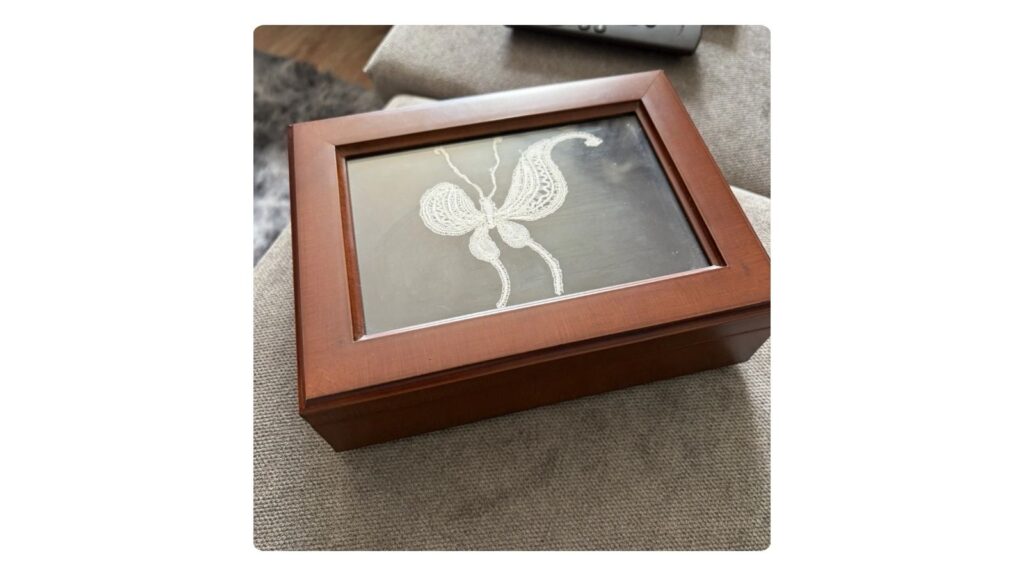
Sankyo has been the workhorse of the music box world since 1947, supplying movements to countless brands while also selling boxes under its own name. Most of what turns up at estate sales is modest: small wooden or lacquered jewelry boxes with a spinning figure or a simple lid mechanism, and most of these bring $15 to $30 in working condition. That’s not nothing, but it’s not the story here either.
The story is in the details that separate an ordinary Sankyo box from a better one. Black lacquer cases with hand-painted scenes, mother-of-pearl or abalone inlay, and novelty shapes like miniature pianos or six-sided “pentangular” boxes push value into the $60 to $90 range, sometimes higher for pristine examples with an intact serial tag. Condition matters enormously since these mechanisms are simple but delicate. A box that plays cleanly and winds smoothly is worth meaningfully more than one with a slipping spring or a cracked cylinder gear. Check the underside for a Sankyo stamp or serial number, since unmarked Japanese imports using the same movements are common and worth less. None of these were built to last foreve r, so a working example from the 1950s or 60s has already survived plenty of culling.
2. Wendt and Kühn Erzgebirge Christmas music box
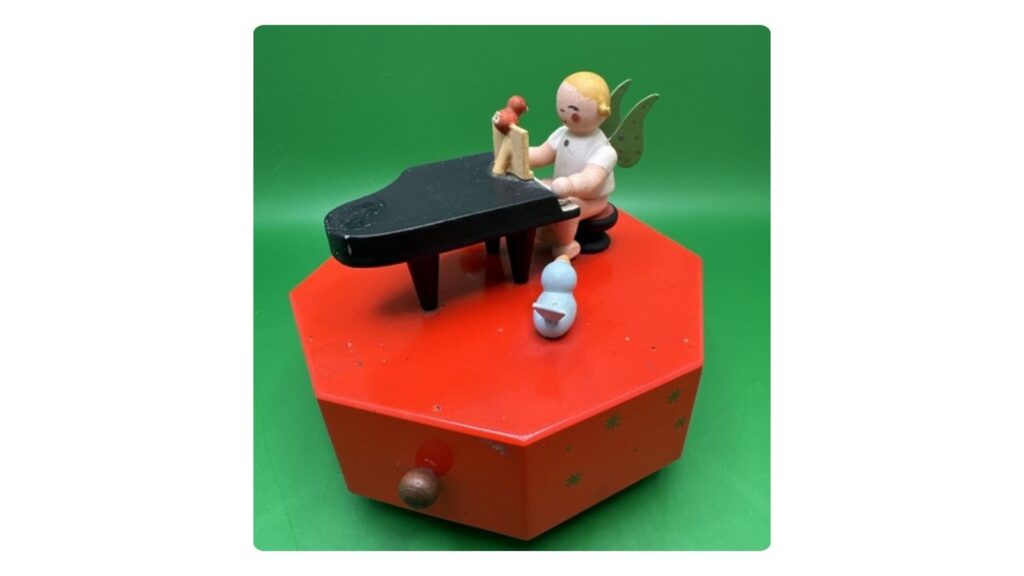
The Erzgebirge region of Germany has produced hand-carved wooden folk art for centuries, and its Christmas music boxes are some of the most recognizable: painted angels, nativity scenes, and carousel figures rotating gently to a wound melody. Wendt & Kühn is the name collectors look for first, known for a distinctive rounded, faceless figure style that’s been imitated but never quite matched. Small vintage examples with a single figure typically bring $40 to $90, while larger scenes with multiple hand-painted figures and a fuller melody command more.
New pieces from the same Erzgebirge workshops today sell for $100 to $700 depending on size and complexity, and a well-preserved vintage piece in excellent condition can command similar money, especially if the original box and paperwork survive. Paint condition is everything here. These figures were hand-painted in thin layers, and chips or heavy touch-up work drop value fast. Look for crisp, unfaded color and a movement that still turns smoothly. Reproductions and modern pieces from other Erzgebirge makers like Christian Ulbricht or Richard Glaesser are also collectible but generally bring less than genuine vintage Wendt & Kühn.
3. Sorrento inlaid wood music box
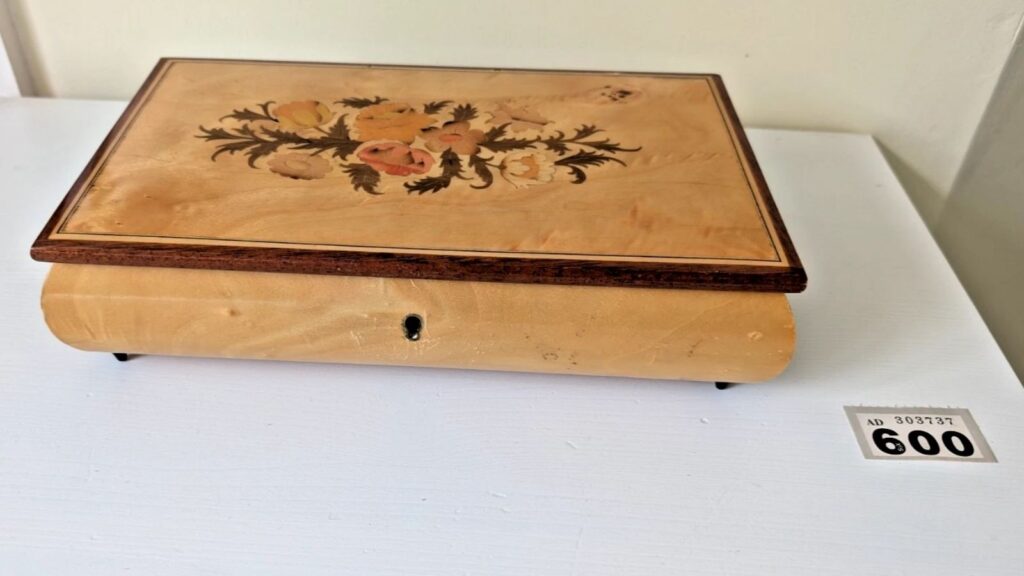
Sorrento, Italy has specialized in wood marquetry since the 19th century, and the region’s music boxes were a favorite souvenir for generations of European travelers. The technique involves layering thin strips of different colored woods, walnut, olive, elm, into floral or scenic designs without any paint. A typical vintage Sorrento box in good condition with a working movement brings $40 to $150, with price driven almost entirely by the intricacy of the inlay and how crisp the color contrast has stayed over the decades.
Boxes bearing a Reuge movement paired with fine Sorrento inlay work sit at the top of that range, and clean examples typically bring around $300 when the case and mechanism are both in excellent shape. Check for veneer lifting or separating at the seams, which is the most common damage on these pieces and is expensive to repair properly. A working lock and key add a small premium, as does an unfaded lid design, since direct sunlight bleaches the lighter inlay woods over time. These are genuinely common finds at estate sales and thrift stores, since they were imported by the thousands as tourist gifts, so don’t expect a windfall on an ordinary example.
4. Vintage Enesco musical snow globe or figurine
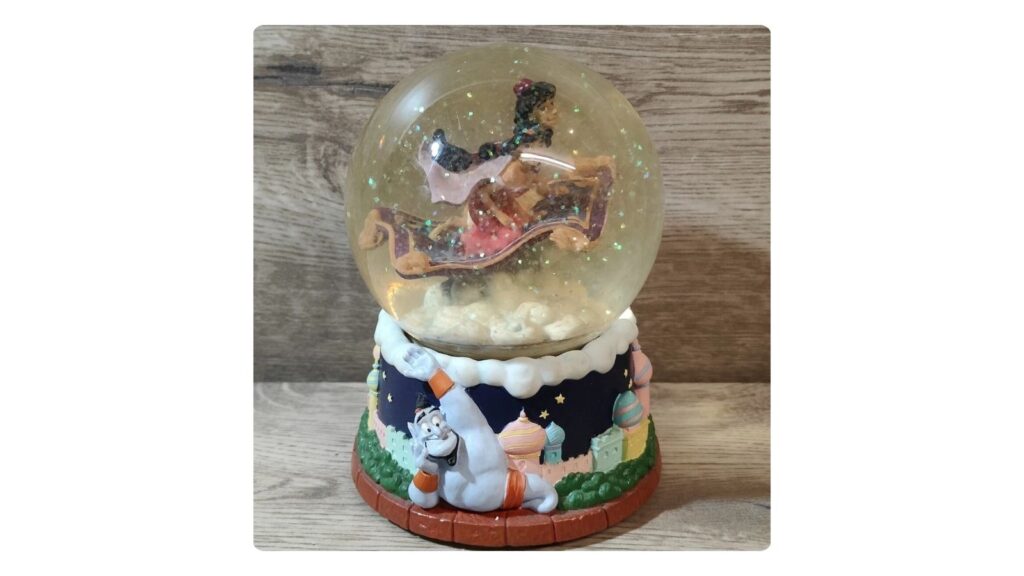
Enesco built a business on licensed character merchandise, and its musical snow globes and rotating figurines, many featuring Disney characters, were a staple of gift shops and department stores from the 1970s through the 1990s. Most examples in working condition with intact liquid and no cloudiness bring $20 to $60, with early Disney character releases and pieces still in their original box landing at the higher end of that range.
Condition is the whole game with these. Snow globes fail in predictable ways: the liquid clouds or evaporates, the glitter settles and clumps, and the base cracks from age or a fall. A globe that shakes clean and plays its tune without hesitation is worth considerably more than one that’s merely intact. Boxed examples with their original tags carry meaningfully more value than loose ones in identical condition, since Disneyana collectors specifically hunt for complete packaging. These aren’t going to fund a vacation, but they’re an easy, honest category to sort through in a box of old holiday decorations before donating it.
5. Schmid Brothers Peanuts or Disney music box
The Bird Says via eBay
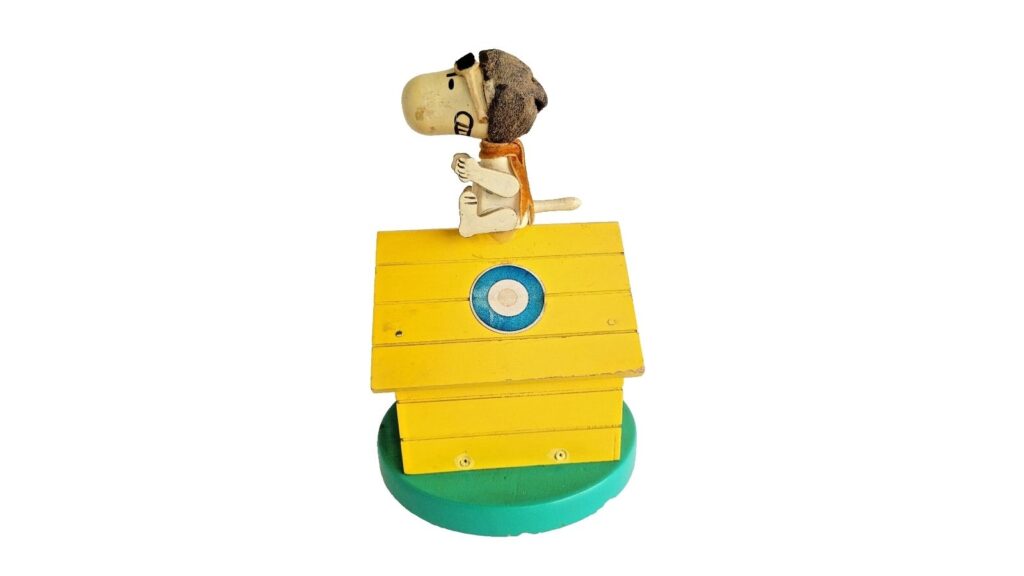
Schmid Brothers was the premium end of 1970s and 80s character merchandise, producing hand-painted ceramic and wood music boxes under license from United Feature Syndicate and Disney. Ordinary examples, small ceramic figures of Snoopy or a Disney character on a simple rotating base, typically bring $40 to $150 in good condition. The range widens considerably once you get into the rarer figural pieces.
Large sculptural Schmid pieces are where this category gets interesting. An 11-inch porcelain Charlie Brown or Lucy figure with a working music movement typically brings around $500 in clean condition, and a Snoopy birdcage-form music box commands even more. Look for the “Schmid Bros., Inc.” mark and a copyright date, since these help separate genuine vintage pieces from later reissues. Ceramic chips, especially on delicate details like Snoopy’s ears or Woodstock’s beak, cut value sharply. A movement that still plays smoothly matters as much as the figure itself, since Schmid used quality Sankyo and Swiss movements that were built to outlast the ceramics around them.
6. Vintage Reuge Swiss musical cigarette or vanity box
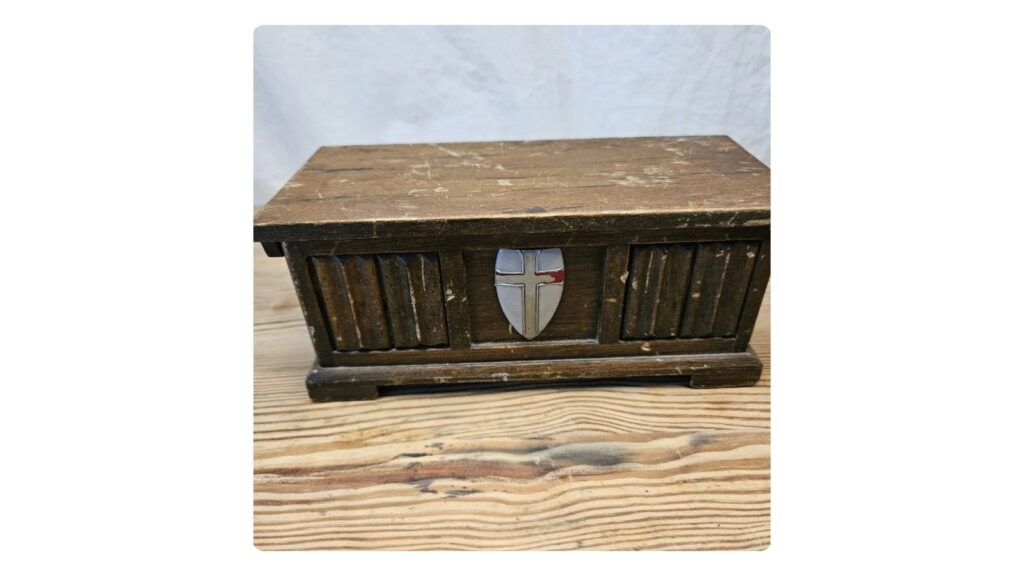
Before cigarette boxes went the way of ashtrays on coffee tables, they were often small showpieces, and Reuge made some of the more charming versions with a wind-up music movement tucked underneath the compartments. These typically show up in burl wood or leather-wrapped cases, sometimes with a carousel design that spins open to reveal the storage inside. Clean, working examples typically bring $50 to $150, with ornate brass or figural decoration pushing toward the top of that range.
These were mid-century accessories more than heirloom jewelry boxes, so condition expectations should be realistic. Hinges loosen, felt linings wear thin, and the winding mechanism can seize from decades of disuse. None of that is a dealbreaker for a buyer, but it does affect price. What collectors actually want is a movement that plays cleanly and a case free of major veneer damage or water staining. The Reuge name stamped on the movement itself, usually visible from underneath, is the easiest way to confirm authenticity, since generic Swiss-movement boxes without the Reuge mark are common and worth noticeably less.
7. Vintage Reuge Swiss wood-inlay music box
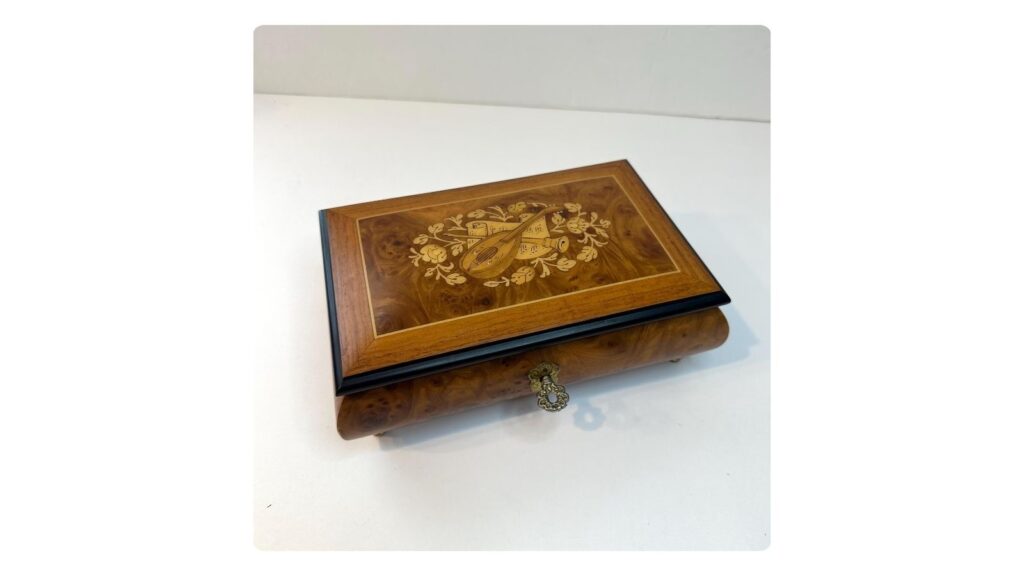
Separate from the novelty cigarette boxes, Reuge’s standard wood jewelry and keepsake boxes, made from the 1950s through the 1980s with 18 to 72-note movements, are the most common Reuge product to turn up secondhand. These typically feature inlaid marquetry lids, sometimes made in Italy with imported Swiss movements, and a velvet-lined interior for jewelry or small keepsakes. A working example in good condition typically resells for $100 to $300, with larger, multi-tune movements and finer inlay work commanding the upper end.
Note count matters more than most people realize. An 18-note movement plays a shorter, simpler melody than a 36 or 72-note version, and collectors pay a real premium for the fuller sound of the larger movements. Check the base or movement plate for a stamped Reuge name and note count, since this is stamped directly into the metal and can’t be faked easily. Cracked veneer, a stuck winding key, or a musty velvet lining are all common and fixable issues that shouldn’t scare off a buyer, but they do factor into resale price. These boxes were made in enormous numbers, so rarity isn’t the draw. Consistent quality and a recognizable name are.
8. Anri hand-carved wood music box
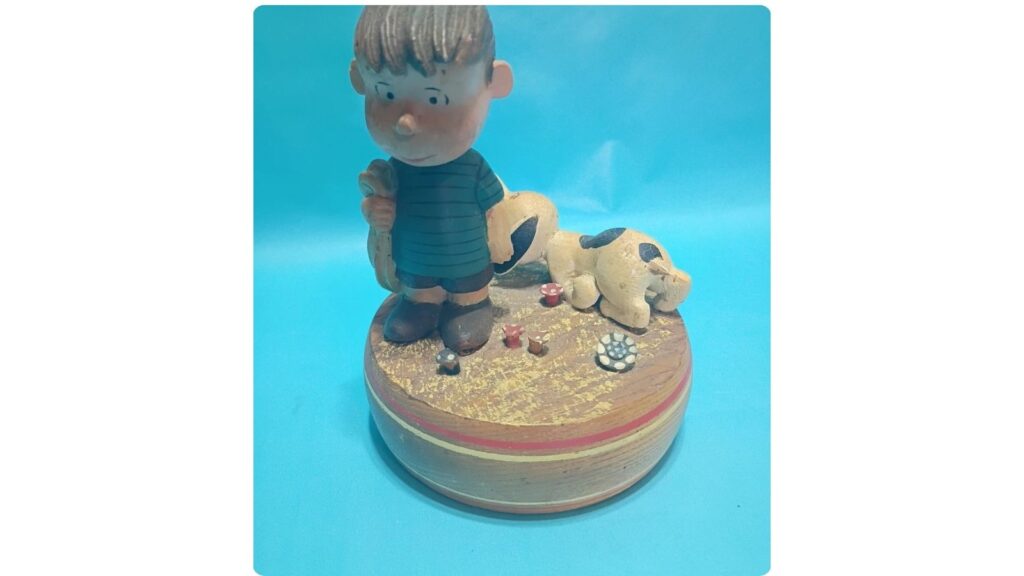
Anri has carved wood figures in the South Tyrol region of Italy since 1912, and its music boxes pair that craftsmanship with Swiss movements from Reuge or Thorens. The classic format is a carved wooden base topped with rotating figures, children, animals, angels, that spin gently as the tune plays. Clean examples with intact paint and a working movement typically bring $75 to $200, with larger, more detailed carvings toward the top of that range.
Anri also produced officially licensed music boxes for Disney and for Charles Schulz’s Peanuts characters throughout the 1960s and 70s, and these have become the most sought-after corner of the brand. A mint 1971 Anri Peanuts box featuring Snoopy and Schroeder has been valued at around $100 in top condition, with rarer Disney-licensed pieces bringing more still. Fragile paper overlay details on some Peanuts pieces are prone to water damage and warping, so check those carefully. Look on the base for the ANRI stamp alongside a Reuge or Thorens movement mark, and watch for missing figure pieces, a common issue since small carved elements like a bird or a flower detail were easily knocked loose over decades of use.
9. Vintage Thorens Swiss cylinder music box
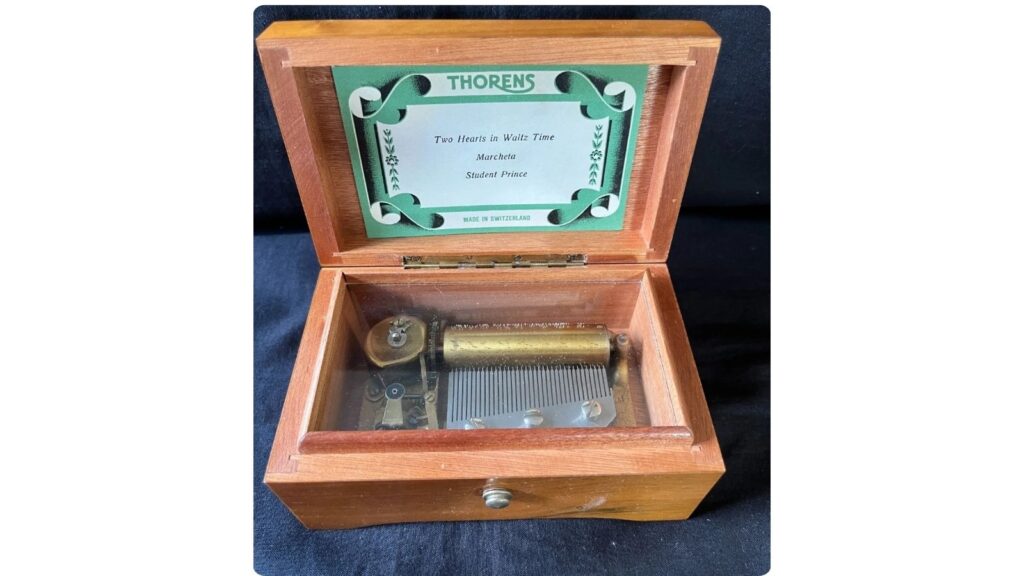
Thorens, founded in Sainte-Croix in 1883, made both cylinder and disc movements and supplied Anri with much of its music box hardware, which means the two brands overlap constantly in the secondary market. A standalone Thorens box, in a plain or inlaid wood case with no rotating figures, is a plainer but often better-built piece than its more decorative cousins. Depending on the model and condition, a vintage Thorens music box can be worth anywhere from $200 to $5,000, with most ordinary examples landing much closer to the low end of that range.
What pushes value up is the movement itself: the note count, the number of distinct tunes, and whether it’s a rarer disc-playing model rather than the more common cylinder type. Look for “Thorens” stamped on the metal base plate along with a model number like AD30 or No. 28. A movement that runs freely and holds its tune without skipping is worth considerably more than a stiff or silent one, since Thorens repairs require a specialist and aren’t cheap. Inlaid wood cases with geometric or floral patterns are a hallmark of genuine Sainte-Croix craftsmanship and add to the appeal even when the movement itself is a common one.
10. Vintage Swiss chalet music box
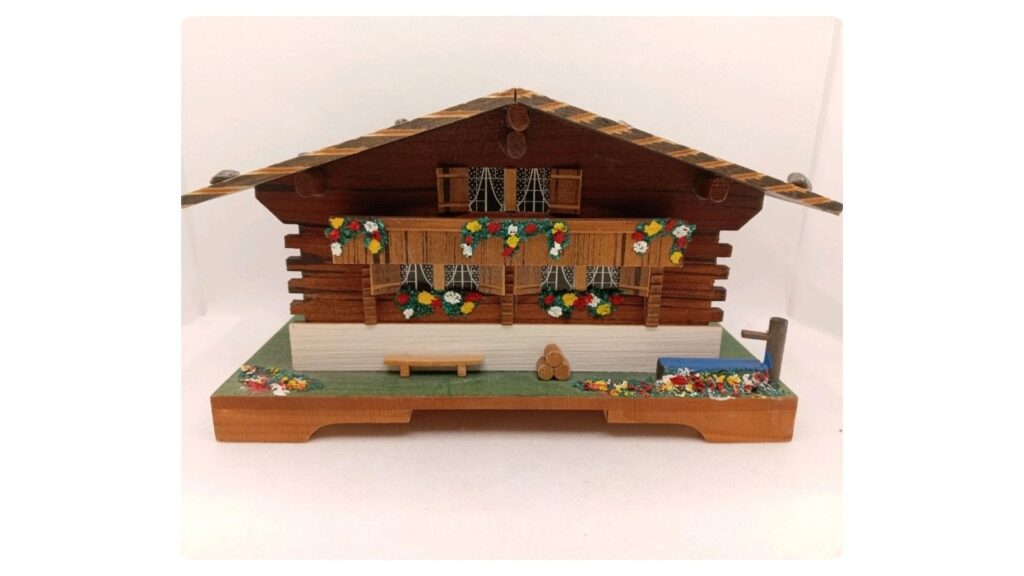
Alpine chalet music boxes, carved wooden buildings with tiny figures, waterwheels, or dancers that move as the tune plays, were popular souvenirs from Switzerland’s ski towns for decades. Some incorporate an actual cuckoo clock into the design, blending two collectible categories into one carved piece. Standard examples with a Reuge or Thorens movement typically bring $95 to $300 depending on size and the complexity of the moving scene, with cuckoo-clock combination pieces commanding more.
These were built as decorative novelties rather than fine furniture, so wear is expected and mostly forgivable. Check that the moving elements, a waterwheel, a dancing couple, a swinging door, still operate, since a chalet with a frozen mechanism is worth meaningfully less even if the music still plays. Well-preserved examples with working parts hold their value best. Cracking to the carved wood shingles or peeling paint on the alpine figures are the most common flaws. A maker’s mark from Reuge, Thorens, or the lesser-known Ami Rivenc adds confidence and a modest premium over an unmarked chalet of similar quality.
11. Karl Griesbaum mechanical singing bird box
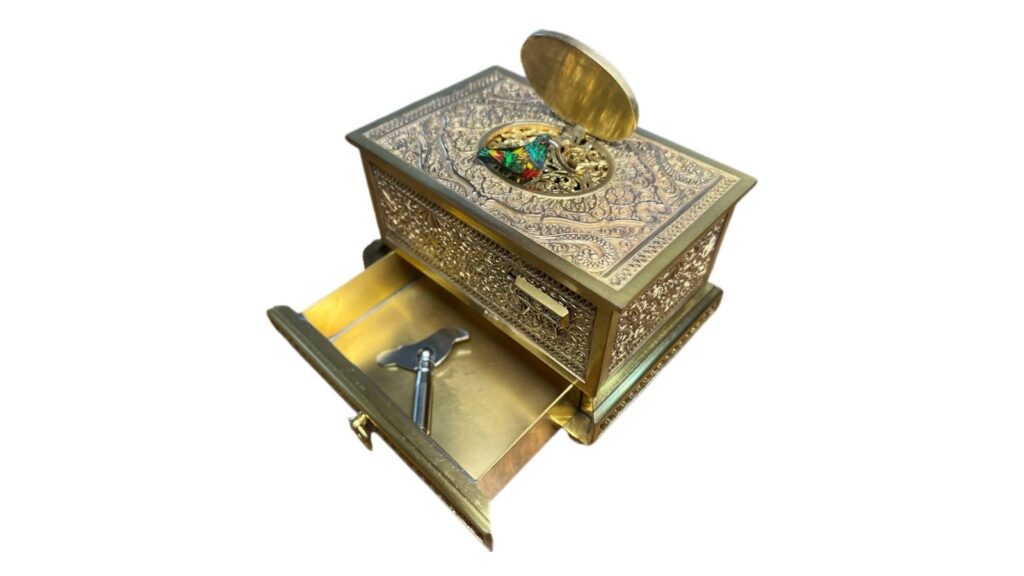
This is where music boxes shade into automata. Karl Griesbaum’s Black Forest workshop built brass birdcages housing a tiny mechanical bird that flutters, turns its head, and genuinely sings when wound, an entirely different mechanism from a standard music box comb. Clean, working examples typically bring $300 to $800, and the broader category of singing bird automatons from makers like Griesbaum, Bontems, and Reuge spans an enormous range, averaging around $2,500 across the market when rarer and more elaborate pieces are included.
The bird’s feathers are usually real, which means moth damage and fading are common condition issues worth checking closely. Look underneath the cage base for a stamped “KG” mark with a bird cypher and the word “Germany,” Griesbaum’s standard signature. A bird that moves its beak, turns its head, and produces clear, sustained chirping in time with the movement is worth considerably more than one that only manages a weak buzz. It’s worth knowing that true 18th and 19th century gold and enamel singing bird boxes, a much older and rarer category, can carry five-figure values, but those are true grails and not something to expect from a mid-century Black Forest cage.
12. Antique Swiss cylinder music box with bells in sight
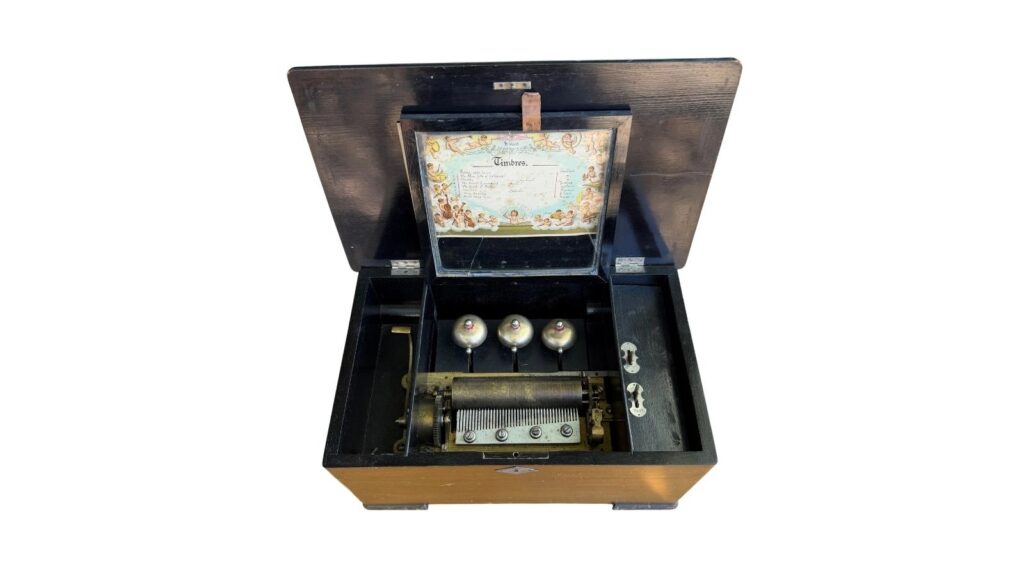
Standard cylinder music boxes just play a comb. The fancier versions add a visible percussion section, bells, a small drum, castanets, that activate alongside the melody, visible through a glass panel when the lid opens. These “bells in sight” boxes were a genuine luxury upgrade when new, and they remain the more desirable cylinder format among collectors today. Clean, working examples in a fine burl or inlaid case with a full percussion section typically fall in the $2,000 to $4,000 range.
Fine wood veneer, inlaid stringing, and a crisp comb that hasn’t lost its tuning all factor into value, but the bells-and-drum mechanism is what separates this category from an ordinary cylinder box. These were unmarked more often than not, since many Swiss workshops didn’t stamp their cases, so dating relies on the tune card inside the lid and the style of the case itself. A qualified music box restorer can confirm whether the percussion section still functions correctly, since a box with silent bells is worth considerably less than one where every element still fires. If a family piece like this has been sitting in an attic for decades, it’s worth a real appraisal before assuming it’s just a pretty box.











