
Somewhere between the shag carpet and the paneled basement, your parents or grandparents had a kitchen full of avocado green, harvest gold, and mushroom-printed everything. Most of it got donated or tossed decades ago. The pieces that survived, especially the ones still boxed up in a basement or sitting unused in a cabinet, are quietly worth real money to a growing group of collectors who grew up around this stuff and now have the disposable income to chase it down.
This isn’t about rare one-off prototypes nobody actually owned. These are things that were genuinely common in millions of American kitchens, which is exactly why finding a clean, complete example now is harder than it sounds. Condition and completeness decide almost everything here: a chipped lid, a missing scoop, or a cloudy dishwasher-worn glaze can cut a price in half or more.
Table of contents
- 1. Sears Merry Mushroom canister and cookie jar set
- 2. Pyrex Snowflake Blue mixing bowls
- 3. Anchor Hocking Soreno avocado green glassware
- 4. Rival Crock-Pot, original 1970s model
- 5. Sunbeam Mixmaster in avocado or harvest gold
- 6. Copco enameled cast iron by Michael Lax
- 7. Osterizer Galaxie blender in harvest gold or avocado
- 8. Mr. Coffee MC-1, the original automatic drip coffee maker
- 9. Tupperware harvest gold and avocado canister sets
- 10. Pyrex Homestead pattern
- 11. McCoy Pottery figural cookie jars
- 12. Farberware Superfast electric percolator
- 13. GE Toast-R-Oven
- 14. Avocado green electric skillet
- 15. GE electric carving knife in avocado or harvest gold
- 16. Welch’s jelly jar character glasses
1. Sears Merry Mushroom canister and cookie jar set
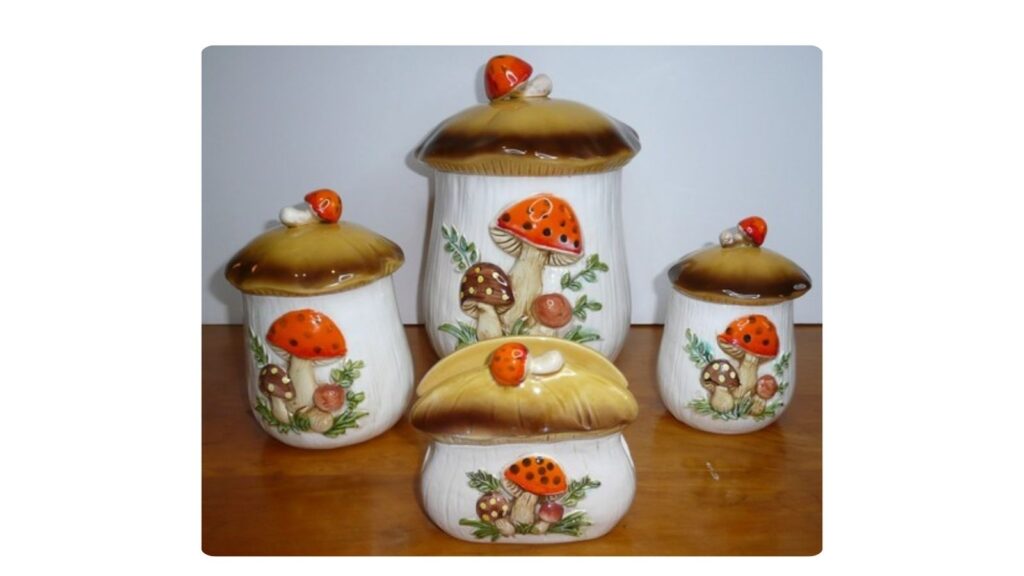
Sears introduced its Merry Mushroom line of ceramic kitchenware in the early 1970s, and by the time production wound down nearly two decades later, the collection had grown to more than 250 different pieces, from canisters and cookie jars to napkin holders and wall clocks. Made in Japan for Sears Roebuck, the pattern’s cartoonish, forest-toned mushrooms are instantly recognizable to anyone who grew up with a set on the counter.
A complete matched four-piece canister set with lids, sometimes bundled with the matching napkin holder or cookie jar, typically brings $100 to $150 in clean condition. A single cookie jar on its own usually lands lower, and individual canisters with intact lids sell in the $40 to $60 range.
Chips on the mushroom-cap knobs and mismatched or missing lids are the biggest value killers, since lids were sold separately and often get separated from their bases over fifty years. Check the base for the Sears Roebuck and Co. 1978, Made in Japan stamp, which confirms an original piece rather than a later reissue.
2. Pyrex Snowflake Blue mixing bowls
kyle518 via eBay
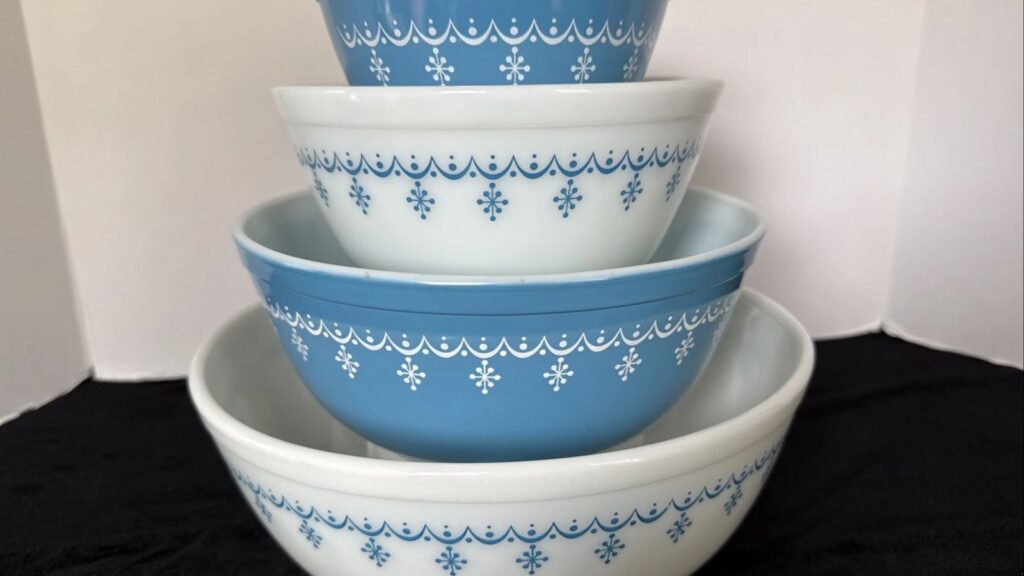
Snowflake Blue, known informally among collectors as “Garland,” was one of three original patterns launched in 1972 as part of Pyrex Compatibles, a line created to match Corning’s new Corelle dinnerware. The blue snowflake design on white opal glass was sold alongside Butterfly Gold and Spring Blossom Green, and all three became instant kitchen staples.
A single nesting bowl in excellent condition, no chips and a glossy unfaded pattern, typically brings $30 to $45, while a matched two-piece set climbs toward $55 to $60. Complete four-piece sets, especially the double-spouted “Cinderella” style, command noticeably more when every piece shares the same production run.
Look for “PYREX” in all capital letters with “MADE IN USA” stamped on the base. Lowercase “pyrex” without a USA mark signals modern overseas production with no collector value. Dishwasher use dulls the pattern over time, so a bowl with a crisp, high-gloss finish is worth chasing over one that’s been through decades of hard use.
3. Anchor Hocking Soreno avocado green glassware
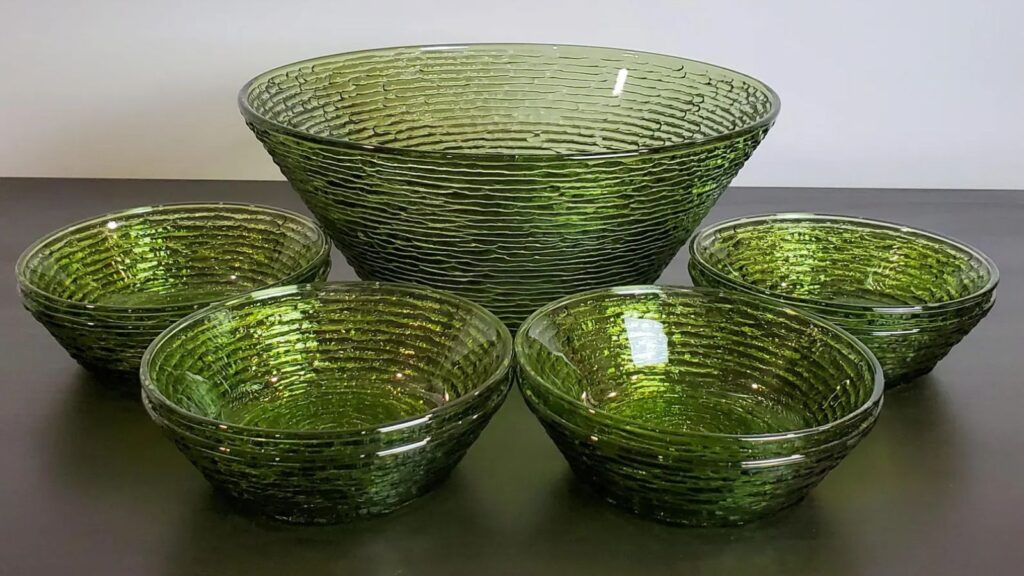
Soreno’s ribbed, bark-like texture was one of Anchor Hocking’s most popular glass patterns through the late 1960s and 1970s, produced in avocado green, honey gold, and clear. It turned up as everyday tableware in a huge number of American households, which keeps individual pieces affordable, but complete sets and larger serving pieces are a different story.
A set of four or five small bowls in good condition typically brings $25 to $30, while single pieces like creamers or tumblers sell for less. Larger serving bowls, snack sets, and complete boxed sets that were never used push toward $50 to $75, and full punch bowl sets with cups bring the most of all.
Because Soreno was so heavily produced, condition is what separates a $5 piece from a $50 one. Check for cloudiness and fine scratching from years of dishwasher use, since that dulls the ribbed texture and kills the glossy finish collectors want. A boxed, unused set is worth meaningfully more than the same pieces bought loose.
4. Rival Crock-Pot, original 1970s model
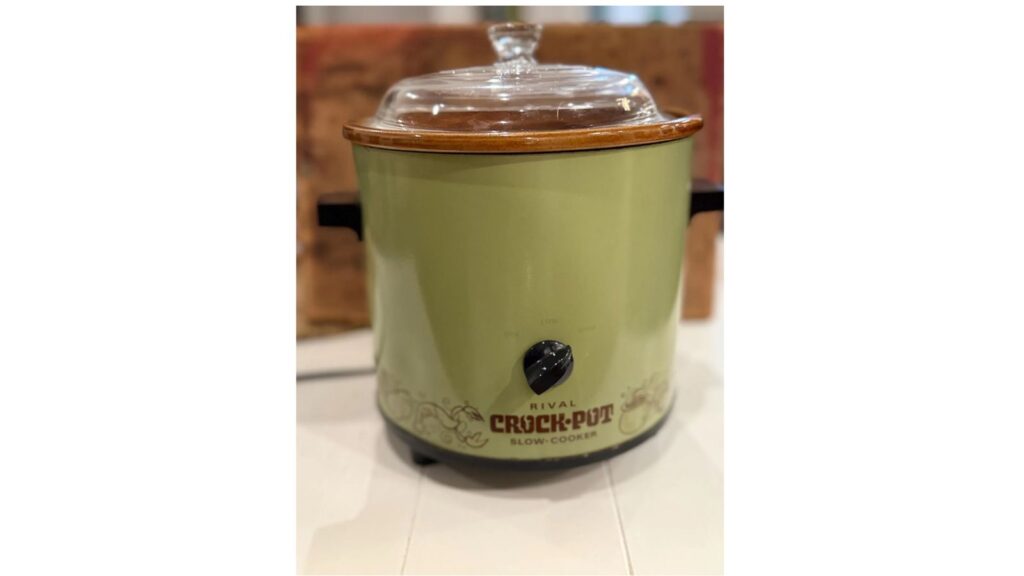
The slow cooker as we know it started with the Naxon Beanery, a niche stoneware pot that never caught on. Rival Manufacturing acquired it in 1970 and relaunched it the following year as the Crock-Pot, debuting it at the National Housewares Show in Chicago. Sales hit two million units in the first year and ninety-three million within four, making it one of the defining kitchen products of the decade.
A tested, working example from the 1970s, complete with its original removable stoneware crock and lid, typically brings $30 to $70 depending on size and color, with new-old-stock examples still in the box landing at the top of that range. Common beige and brown models sell for less than the harder-to-find green or floral country-pattern versions.
Always test the heating element before buying, and check the stoneware crock for hairline cracks, which are common after decades of use. Replacement crocks and lids exist and don’t carry the same premium as an original matched unit.
5. Sunbeam Mixmaster in avocado or harvest gold

Sunbeam’s Mixmaster had already been a kitchen fixture for decades by the time the company rolled out avocado and harvest gold color options during the era’s color takeover. The classic 12-speed stand mixer with its oversized speed dial is one of the most recognizable small appliances of the decade.
A tested, working mixer complete with its original bowls and beaters typically sells for $30 to $50, and examples paired with matching period bowls, especially Fire-King or Glasbake sets in the same color family, have brought as much as $85. A mixer missing its bowls sells for considerably less, often $15 to $30.
Test the motor and speed settings before buying, since a seized motor drops the value to parts territory no matter how good the color looks. Beaters should match the model, and any bowl should be checked for chips on the rim, which are common after decades of everyday baking.
6. Copco enameled cast iron by Michael Lax
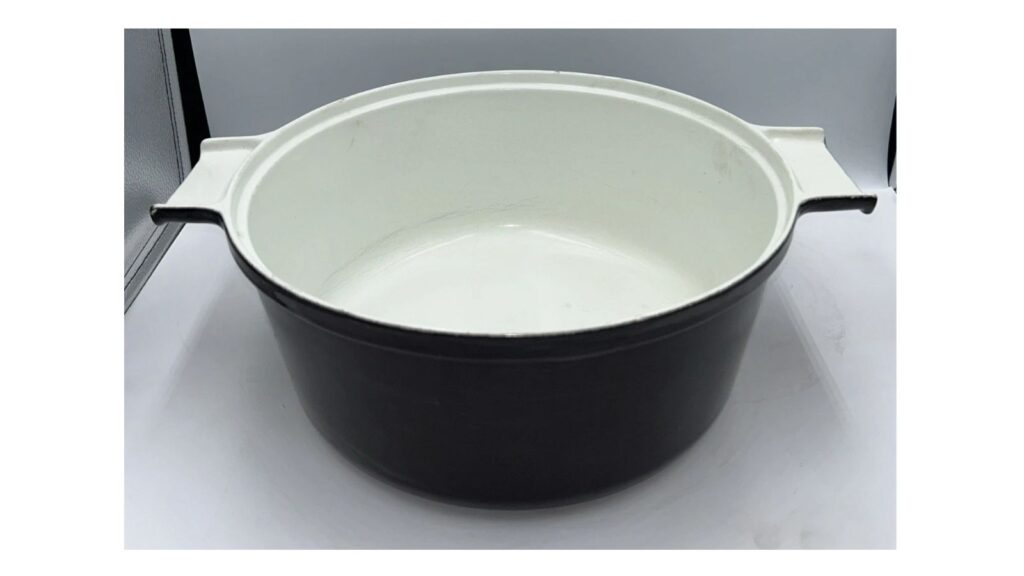
Designer Michael Lax began creating enameled cast iron cookware for Copco in the early 1960s, and his bent-teak-handle teakettle became one of the most recognizable pieces of the era, with more than a million sold before it was discontinued in the 1980s. The same line included colorful oval casseroles, Dutch ovens, and fondue pots, all made in Denmark and still stamped Copco and Michael Lax on the base.
A clean oval casserole or Dutch oven in a common color like brown or blue typically brings $30 to $50, while sought-after colors like red, yellow, and burnt orange, along with larger sizes, often bring more. The signature teakettle with its teak handle usually lands in a similar range.
Chipping along the rim and lid are the most common flaws, and any crack in the enamel affects both looks and function. The teak handle should be intact without deep cracking. Complete matched sets, where casseroles nest with lids from the same color run, are worth more than pieces bought separately.
7. Osterizer Galaxie blender in harvest gold or avocado
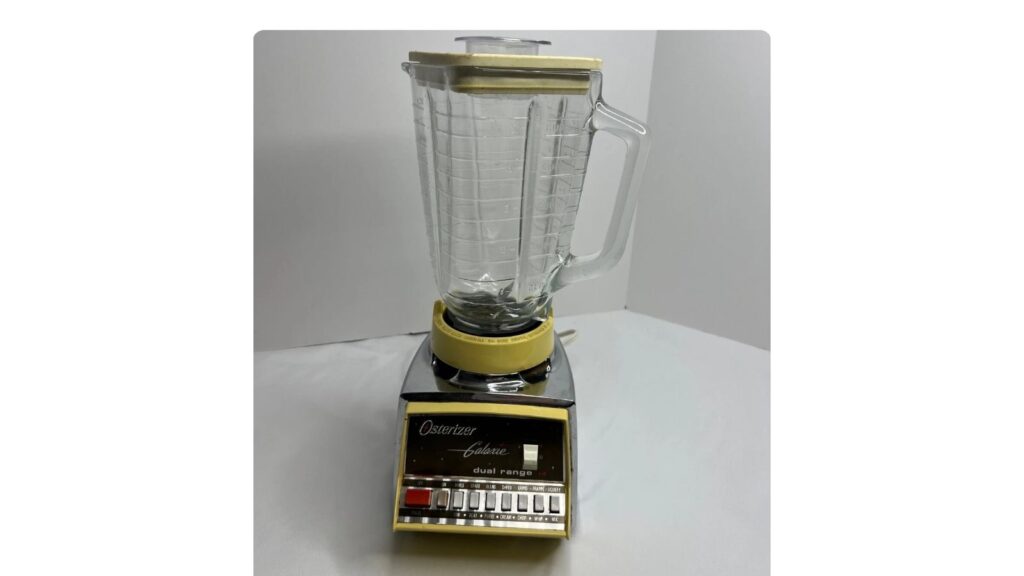
The Osterizer Galaxie ran through most of the 1970s with a starburst control panel that anyone who grew up around one would recognize instantly. It came in the full range of decade-appropriate colors, and the harvest gold and avocado green versions are the ones collectors specifically seek out now, ahead of the more common white and chrome models.
A tested, working Galaxie in harvest gold or avocado, with an intact glass jar, typically brings $25 to $45 in clean condition. New-old-stock examples still sealed in their original box are the exception, and one harvest gold unit in that condition reached $90.
Test the motor and every speed button before assuming a blender is worth top dollar, since a seized or smoking motor drops the value to parts-only territory regardless of how good the color looks. Check the glass jar for chips around the rim and confirm the blade assembly turns freely, since replacement jars and bases are common and don’t carry the same premium as a matched original.
8. Mr. Coffee MC-1, the original automatic drip coffee maker
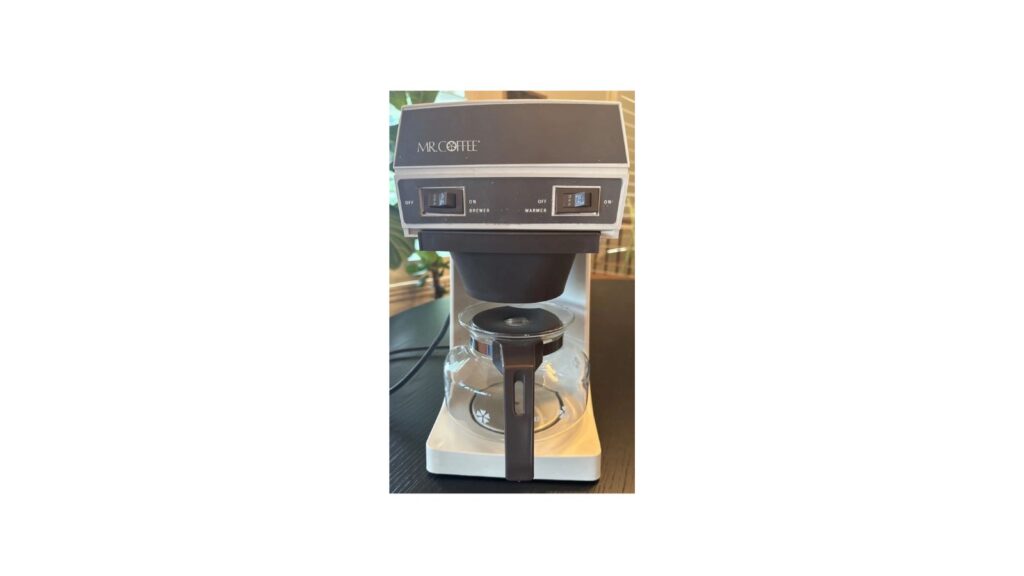
Before 1972, home coffee meant a percolator, which cycled boiling water through the grounds again and again and often produced a bitter, burnt cup. Cleveland businessman Vincent Marotta and a pair of former Westinghouse engineers solved that with the Mr. Coffee MC-1, the first automatic drip coffee maker built for home kitchens, backed by an advertising deal with Joe DiMaggio that made it a household name. More than a million had sold by 1974.
A working original MC-1 or MC-1A, complete with its carafe, typically brings $30 to $50 in clean condition, and examples that still include the original scoop, filter basket, and manual sell toward the top of that range.
Check that the heating plate actually works and the water reservoir isn’t cracked, since these are the two parts most likely to fail after fifty years. A carafe with a chip on the pour spout or a missing lid is a common flaw that reduces value even when the machine itself brews fine.
9. Tupperware harvest gold and avocado canister sets
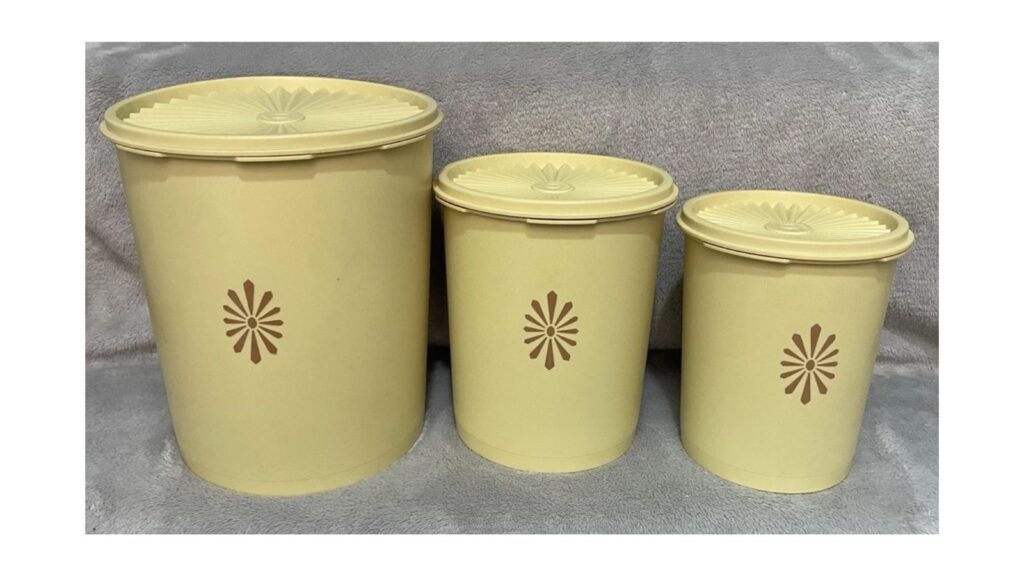
Tupperware’s Servalier canister line came in the decade’s signature colors, and a matched set with its original lids and scoop was a fixture of countless pantries. These were sold through home parties in enormous numbers, which keeps prices modest, but complete, unfaded sets are genuinely harder to find than people expect.
A three-piece nesting canister set with matching lids and original scoop typically brings $25 to $30 in clean condition, and larger four or five-piece sets with no cracking or warping can reach $40 to $50.
Check every lid for a tight seal and look closely for hairline cracks around the rim, which happen easily with decades-old plastic. Sets pieced together from different production runs, where the color doesn’t quite match across pieces, are worth less than a set that clearly came together as one purchase. A scoop is a small piece that’s easy to lose, so a complete set with its original scoop is worth seeking out specifically.
10. Pyrex Homestead pattern
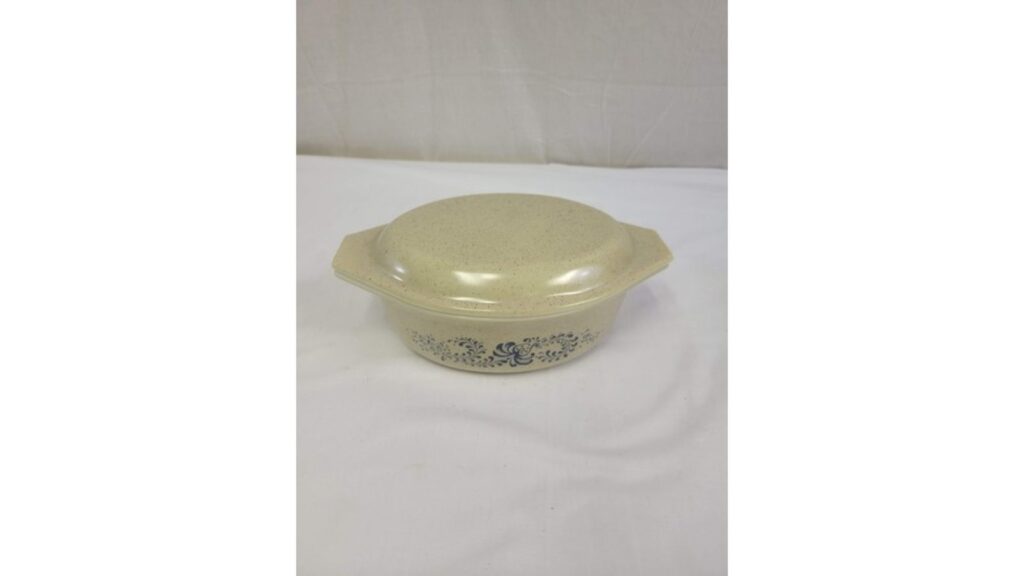
Corning designed Homestead in 1976 in direct response to a popular Pfaltzgraff folk-art pattern, riding the era’s growing appetite for country-kitchen decor. The original run paired a dark blue floral design with a speckled beige background, later replaced by a brown-on-beige version, and the pattern stayed in production into the 1980s.
A single casserole dish with its matching lid typically brings $15 to $20 in good condition, while a complete six-piece set with all original lids can climb to $85 or more.
The earlier blue-on-speckled-beige design tends to draw more interest from collectors than the later solid brown version, so it’s worth knowing which one you have. Mismatched lids are extremely common after fifty years of kitchen use, so a set where every lid actually matches its base is worth more than the sum of its individually-priced parts. Homestead was designed to coordinate with Corning’s Old Town Blue onion pattern, so pieces from both lines sometimes turn up mixed together in the same estate sale box.
11. McCoy Pottery figural cookie jars
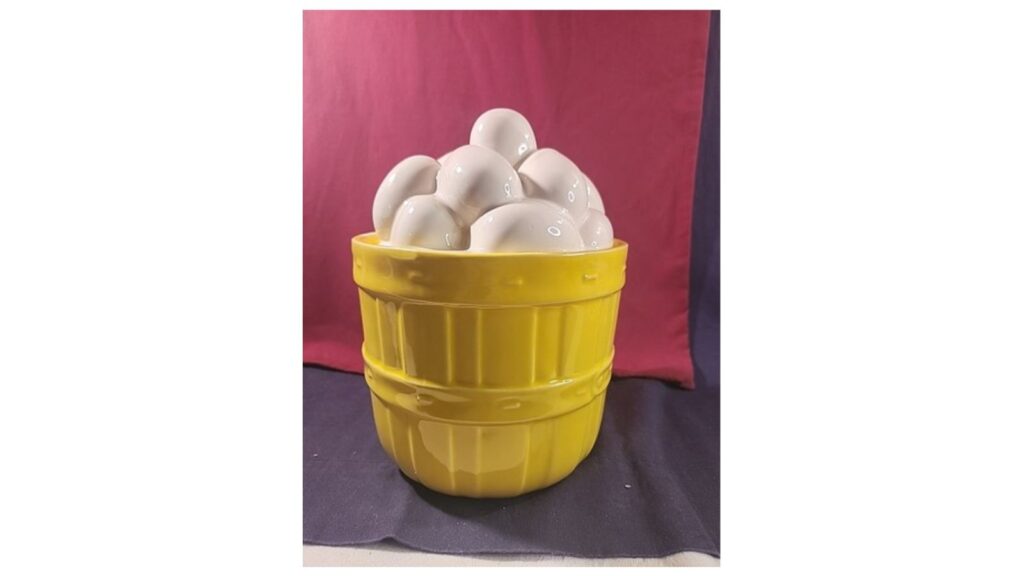
McCoy Pottery of Roseville, Ohio, produced ceramic cookie jars across several decades, and its 1970s figural designs are a specific sweet spot for collectors now. Bicentennial pieces like the Liberty Bell jar released for the country’s 200th anniversary, along with fruit and vegetable shapes like the Bell Pepper, and character jars like Bobbie the Baker, are the ones people actively look for.
A common figural jar in good condition, no chips and an intact lid, typically brings $15 to $30, while harder-to-find character designs and hand-painted collaborations can bring considerably more, sometimes well into the hundreds for the rarest pieces.
Check carefully around the lid rim for hairline cracks, which are common and easy to miss under a glaze. Verify the “USA” mark and mold number stamped on the base, since McCoy’s popularity has made it a frequent target for reproductions, particularly with the more recognizable character jars. A missing lid effectively turns a cookie jar into a vase or planter, which is exactly how some of these pieces get relisted, so always confirm the lid is original to that base.
12. Farberware Superfast electric percolator

Farberware’s chrome Superfast percolator brewed coffee in a huge share of American kitchens through the 1960s and 70s, manufactured in the Bronx by a company that had been making cookware since 1900. The streamlined chrome body with its automatic brewing light is instantly familiar to anyone who grew up around one.
A tested, working percolator in good condition typically sells for $25 to $35, and pristine, barely-used examples with all their original parts have brought as much as $79.
Check that every component is present, the stainless steel basket, the stem assembly, and the lid knob, since a percolator missing interior parts sells for much less regardless of how good the chrome looks. Pitting and deep scratching on the chrome finish also cut into value. Always confirm it actually heats before assuming it’s worth top dollar, and plug it in with plain water rather than coffee grounds the first time, since decades-old units sometimes need their heating element cleaned before they brew properly again.
13. GE Toast-R-Oven
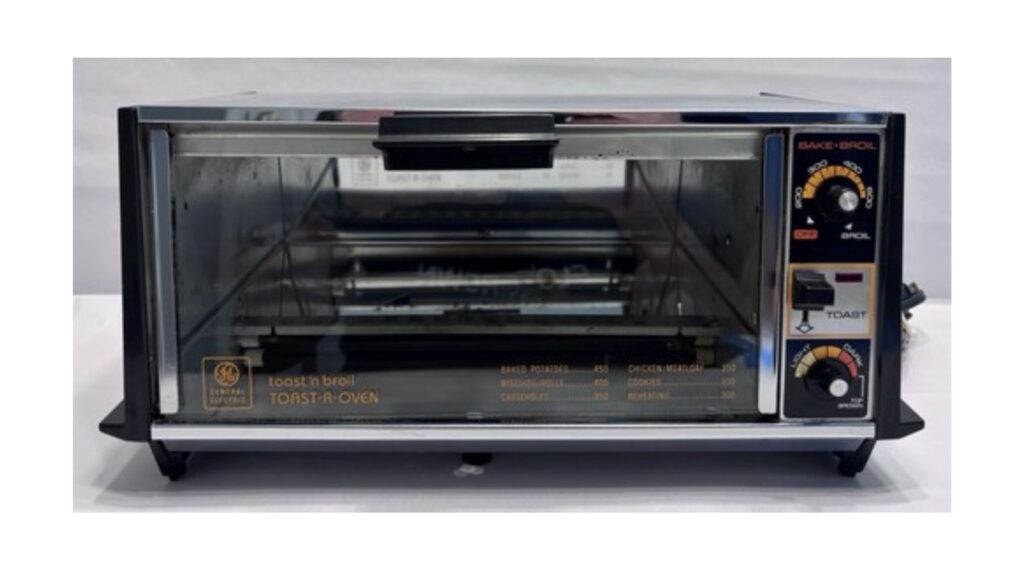
GE’s Toast-R-Oven combined a pop-up toaster with a small countertop broiler-oven in one chrome unit, letting people bake a potato or broil two chops without turning on the full range. It was a genuine convenience upgrade over a plain toaster and became a fixture of 1970s counters, later following the decade into avocado and harvest gold color variants.
A tested, working chrome model in clean condition typically brings $30 to $40, and color-matched avocado or harvest gold examples generally sell for more than the plain chrome version.
Check that both the toasting and broiling functions actually heat, since these units run two separate heating elements and either can fail independently. Look over the chrome for pitting and the hinge for a door that closes and latches properly, and inspect the cord for fraying before plugging anything in for the first time. A complete unit still has its wire broiler rack and crumb tray, both of which are easy to lose after decades of use and matter more to buyers than most people assume.
14. Avocado green electric skillet
Angrydaves via eBay
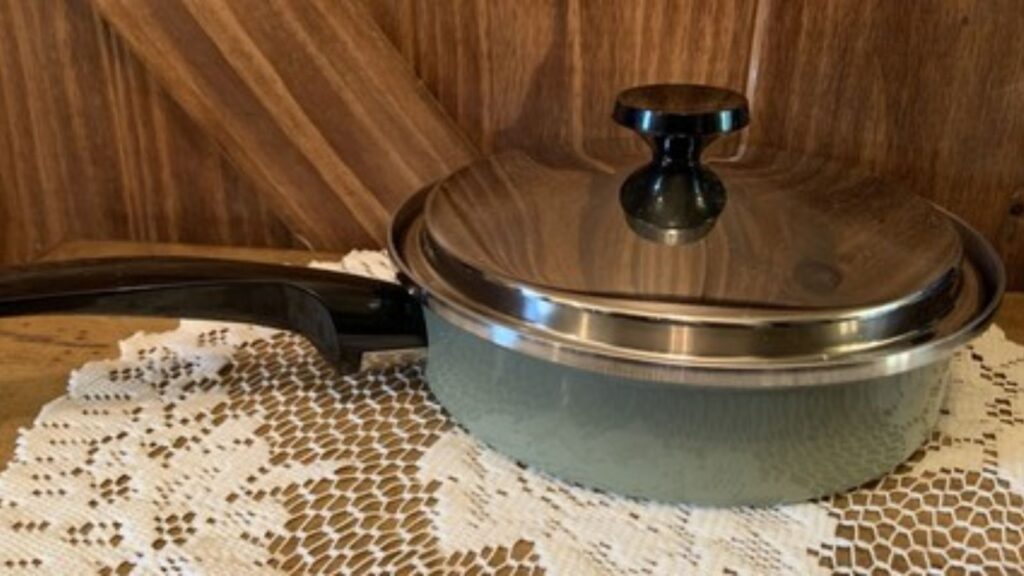
Electric skillets let people cook right at the table or free up stove space, and West Bend, Presto, GE, and Sunbeam all sold immersible versions with a removable heat control in the decade’s signature colors. They were genuinely useful rather than purely decorative, which is part of why so many survived in working order.
A tested example in avocado green or harvest gold typically brings $20 to $35, and full-size 12-inch models with their original glass lid and box bring more than smaller compact versions.
Test the removable heat control probe before buying, since that’s the part most likely to have failed or gone missing over fifty years. Check the cooking surface for warping and deep scratches, and confirm the glass lid actually belongs to that skillet, since lids get mixed and matched at yard sales more often than people expect. A skillet with its original box and recipe booklet is genuinely uncommon now and worth more than the same pan sold bare.
15. GE electric carving knife in avocado or harvest gold
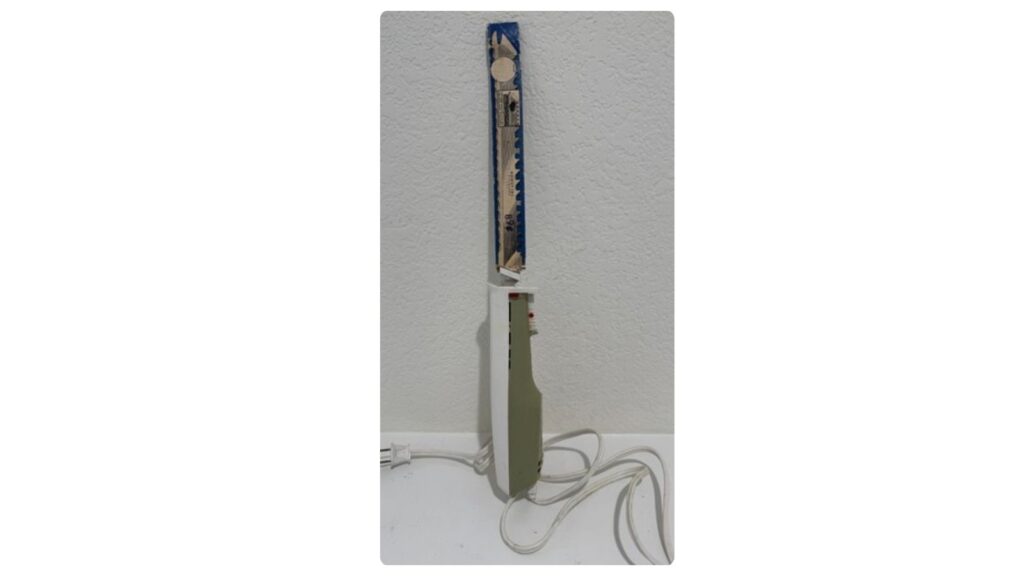
GE is generally credited with popularizing the modern electric knife, and it became one of the most common holiday and wedding gifts of the decade, with color-matched handles following the era’s avocado and harvest gold palette. Nearly every household seemed to have one tucked in a drawer for carving the holiday turkey.
A tested, working knife typically brings $15 to $25, and a complete set with its original carving fork and storage case sells for somewhat more than the knife alone.
Test that the two blades lock into place properly and the motor actually runs, since a knife that won’t hold its blades is essentially decorative. Check the blade edges for rust or pitting, and look for the original case, since a knife stored loose in a drawer for decades is far more likely to have a damaged cord or missing parts. Two matching blades of the correct length matter too, since replacement blades from a different model don’t always lock in properly.
16. Welch’s jelly jar character glasses
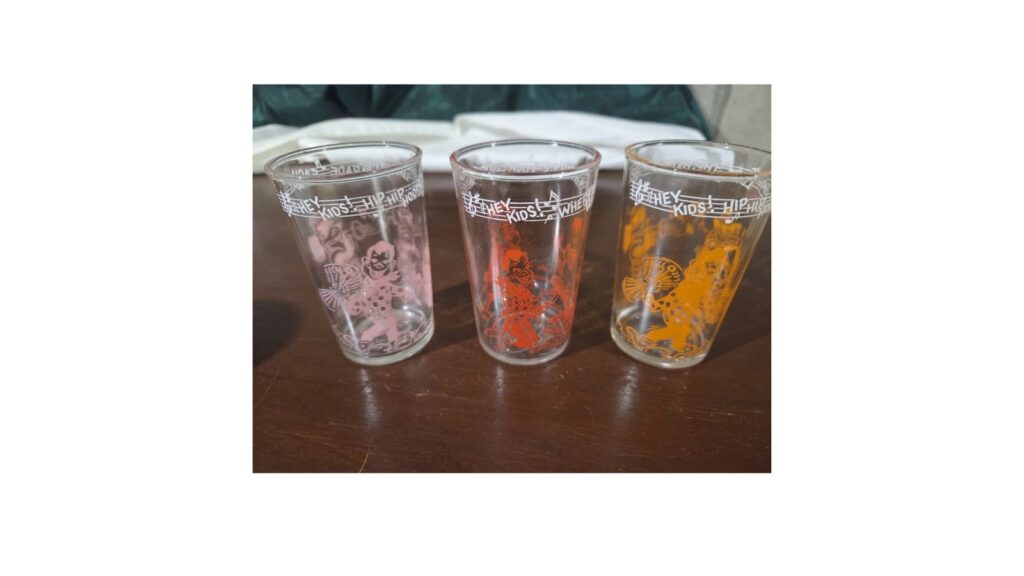
Through the 1960s and into the 1970s, Welch’s packaged jelly and jam in reusable drinking glasses printed with cartoon characters, including the Flintstones, Archie comics, and Looney Tunes lineups, banking on kids begging their parents to buy the flavor with their favorite face on it. The full-press glass technology behind the colorful printing became too costly to keep using, and Welch’s dropped the character glasses after 1978, which is exactly why the run from the early-to-mid 1970s is the one collectors chase.
A single glass in good condition typically sells for $10 to $15, while a matched set of six to eight from the same character lineup brings $30 to $45.
Check the printing for fading and scratching from years in a dishwasher, since crisp, unfaded color is what separates a set worth having from one that isn’t. A complete matching set from a single series is worth considerably more than the same number of glasses pulled from different years or character lineups.











