scroll top
Discover smart ways to stretch your entertainment budget, enjoy more of your favorite activities, and save money without missing out on fun.
Image Credit: Hollis Sinclair

$3,609. That’s what the average American household, or consumer unit in the survey’s terms, spent on entertainment in 2024, according to the Bureau of Labor Statistics’ Consumer Expenditure Survey, released in December 2025. It works out to about $300 a month, a little less than those households spent eating out and about 1.8 times what they spent on apparel.

Two lines inside that total are nearly the same size. Fees and admissions, the survey’s bucket for tickets to games, movies, concerts and plays, plus club memberships and lessons, came to $935. Audio and visual equipment and services, which covers TVs, sound gear and TV service, came to $965. One line pays to get through a door. The other pays to stay home.

Stretching either line takes less sacrifice than it sounds. Most of the room comes from moving spending onto things someone else already pays for and from giving recurring charges the scrutiny a one-off ticket gets. Offers that cost nothing to start sit between the two, and they need the closest reading.

A library card already pays for streaming, one borrow at a time

A library card works like a streaming subscription that’s already been paid for. Libby, the reading app from OverDrive, lends e-books, audiobooks, magazines and more to cardholders at no charge, and it can hold more than one library card. OverDrive’s Kanopy streams films and series on a ticket system. King County Library System, near Seattle, hands out 10 tickets on the first of each month, and titles in Kanopy’s unlimited viewing category don’t use any. The same card reserves free museum passes there, one a calendar month.

None of the digital lending is free to the library. Hoopla, a third app some libraries offer, bills the library every time someone borrows, and its own post late in 2025 put the average cost per circulation at around $2. Teton County Library in Wyoming says the fee applies whether or not the borrower ever reads or listens.

That per-borrow bill is why some libraries have cut their limits. Forest Park Public Library, outside Chicago, cut its monthly Hoopla allowance from ten borrows to seven in January. Salina Public Library in Kansas will drop Hoopla on November 30, the Salina Journal reported in September, after projecting a 2026 cost of $2.42 a checkout, against 86 cents through Libby. When a title sits in more than one app, borrow it where it costs the library least. At Teton County, the librarians’ advice is Libby first, even with a wait.

Free admission has a funder, and the extras carry the bill

Some of the country’s major art museums don’t charge for general admission at all. The Cleveland Museum of Art was founded in 1916 on a promise of free general admission every day, and its visitor page still calls general admission always free. The museum credits part of its funding to Cuyahoga County residents, through a public grant from Cuyahoga Arts & Culture.

The Nelson-Atkins Museum of Art in Kansas City puts it plainly: “Admission is free every day, for everyone.” Its garage is another matter. Parking costs $20 a visit, though members, veterans and active-duty military park free. In Cleveland, the permanent collection galleries cost nothing, but some ticketed exhibitions charge admission.

Outdoor music runs on a similar deal. New York’s SummerStage marked its 40th season in 2026 with more than 60 shows across 13 parks. Its free shows need no ticket and fill up first come, first served, with a suggested $5 donation at Central Park. Paid events carry part of the cost: one benefit dinner and concert was billed as raising $1.3 million for the series and the foundation’s free programs.

Free at the door moves the cost somewhere else: the garage, a ticketed exhibition, the trip there, or arriving early enough to get in. Price those before going, and the free door stays a bargain.

A no-cost sign-up is priced in its conditions

Offers that cost nothing to start push the price later, into the conditions. A trial that rolls into a paid plan is the familiar case. A federal appeals court opened its July 8, 2025, opinion on the subject with the problem itself: “Many American consumers have found themselves unwittingly enrolled in recurring subscription plans.”

That case, Custom Communications v. FTC in the Eighth Circuit, vacated the Federal Trade Commission’s 2024 click-to-cancel rule, which would have required cancelling to be as easy as signing up. The ruling turned on procedure, since the agency skipped a preliminary regulatory analysis that the FTC Act requires for rules with a yearly economic effect of $100 million or more.

The older law still stands. The Restore Online Shoppers’ Confidence Act of 2010 requires online sellers of automatically renewing plans to disclose the terms before taking billing details and to provide a simple way to stop the charges. Treat a trial’s end date like a bill’s due date, and find the cancel button before it’s needed.

Sweepstakes casinos make an offer that costs nothing up front, and the same reading applies. Their sign-up grants give new accounts two currencies with no purchase required: Gold Coins, which carry no prize value, and Sweeps Coins, which can turn into a gift card or a cash prize under each operator’s rules. Those rules differ by operator, a variation that this no deposit sweepstakes guide from PlayUSA tracks site by site, along with a state-by-state section.

In place of a renewal date, a grant has conditions, and they’re specific. Prize coins usually have to be played through once on the site’s casino-style games before winnings can be redeemed, and some sites set three times or more. A redemption needs a minimum balance. Most sites expire unused Sweeps Coins within 30 days to a few months, and identity checks, usually at the first redemption, ask for a photo ID plus proof of address, often with a selfie. Mail-in requests, which need no purchase, follow strict formatting rules.

Where someone lives can remove the offer entirely. Maine, for one, enacted a law on April 6 that makes operating or promoting an online sweepstakes game, defined by its two currencies and casino-style play, a civil violation, with fines paid into the state’s Gambling Addiction Prevention and Treatment Fund. Operators also keep their own lists of states they won’t serve, a business policy layered over any statute, and they limit accounts to adults, with minimum ages on that guide’s listings running from 19 to 21.

That makes a coin grant a rulebook to read closely, not a way to stretch an entertainment budget. With a trial or a grant, the exit terms say more than the sign-up page does.

Rotating two services costs less than keeping five

Streaming is where entertainment money recurs. Deloitte’s 2026 Digital Media Trends survey, fielded late in 2025, put the average subscribing household’s streaming video spend at $69 a month, flat on the year. It also found that 61% of respondents would cancel their favorite service if its monthly price rose by $5.

Prices keep testing that line. Netflix raised every plan in March, lifting Standard from $17.99 to $19.99 a month and the ad-supported plan from $7.99 to $8.99, its first increase since January 2025, as CNBC reported. The ad tier now costs less than half of Standard, and Deloitte found 68% of streaming subscribers holding at least one ad-supported plan, up from 46% in 2024.

Rotation turns those numbers into a routine. Keep one or two services, watch what you joined for, cancel, and pick up the next. Cancelling early costs no viewing time at Netflix, whose help center says a cancelled account keeps working until the end of the billing period. A pause is less tidy. It runs a month at a time, three months at most, and then Netflix charges the current plan price automatically.

Rotation has its own traps. An annual plan can cost less per month for a service watched all year, and a plan priced by the month can still be an annual contract. Shutterstock, the stock photo and video platform, agreed in May to pay $35 million to settle FTC allegations that included failing to clearly disclose a fee for leaving such plans early. Check the term before rotating out.

Midweek seats and early shows trim the admissions line

The admissions half of the budget responds to timing. AMC Theatres takes 50% off tickets on Tuesdays and Wednesdays for members of its Stubs program, including the free Insider tier, and the company’s 2026 proxy statement said it had added the Wednesday discount to a long-running Tuesday program. Shows before 4 p.m. run 20% below evening prices every day.

The same filing said AMC set all-time records in 2025 for food and beverage revenue per patron, and it named growth in that line as the main driver of higher revenue per visitor than in 2019. The midweek deal reaches that line in one place: Stubs members also get 50% off a small popcorn and drink combo on Tuesdays and Wednesdays, bought at the theater rather than ordered ahead. Anything else from the counter sits outside the deal, so decide on snacks before leaving home.

A capped fun line turns cutbacks into a plan

Most adults have already been cutting. In the Federal Reserve’s survey of household finances for 2025, 62% said they’d switched to cheaper products because of higher prices, and 60% said they’d used less of something or stopped using it. Cuts made that way land on whatever is easiest to drop, not on what matters least.

A fixed monthly line for entertainment makes the trade deliberate. Base it on the last three months of real statements, not the $300 national average, and move it to a separate account on payday. When it’s spent, the month’s paid entertainment is done. Anything left can roll into a second pot for the big nights, a concert or a festival weekend, so the money is waiting before tickets go on sale.

That second pot matters because of the alternative. The same Fed survey found that among adults who wouldn’t cover a surprise $400 expense with cash or its equivalent but could pay some other way, the most common route was a credit card carried as a balance. A night out financed that way keeps costing money long after it ends.

Unplanned buys need a speed bump too. The 48-hour hold rule described on this site makes anything that isn’t a true need wait two days, and a ticket that still looks good on day three has earned its place.

Start with the line that repeats. Open last month’s statement, list every entertainment charge that will come back next month, and decide which one or two stay for the next 30 days. Whatever that frees goes into the pot for the next big night.


Raising children on your own often means managing several responsibilities at once, from school schedules and household expenses to work commitments and unexpected emergencies. Finding additional income can make those responsibilities easier to handle, but traditional part-time jobs aren’t always practical when your available hours change from week to week.

Fortunately, earning extra money doesn’t necessarily require taking on another fixed schedule. Some opportunities allow you to work in short sessions, earn from things you already own or turn existing skills into services people are willing to pay for.

The important part is choosing something that fits your circumstances rather than creating another source of stress. Here are eight practical income ideas for single mothers who want greater financial flexibility without sacrificing valuable family time.

1. Offer freelance services based on your existing skills

Freelancing can be a practical starting point because it allows you to earn money from abilities you’ve already developed. Writing, proofreading, bookkeeping, graphic design and administrative support are services that many small businesses need without hiring additional full-time employees.

Platforms such as Upwork and Fiverr can help you find potential clients, although building relationships directly with local businesses may lead to more consistent opportunities. You can start with smaller assignments, such as editing a short document or organizing a spreadsheet, before accepting more demanding projects.

The advantage is having some control over your workload. Rather than committing to a fixed number of weekly hours, you can choose projects with deadlines that accommodate school pickups, appointments and other family responsibilities.

2. Sell digital products that don’t require inventory

Digital products offer an alternative to jobs that require your constant availability. Printable planners, household budget templates, educational worksheets and downloadable invitations are examples of products that can be created once and sold repeatedly.

Marketplaces such as Etsy allow sellers to list digital downloads, while platforms like Gumroad provide another way to distribute files directly to customers. Parents who already create household schedules or learning materials for their children may have useful ideas to develop into simple products.

However, creating something doesn’t guarantee sales. Successful products generally require thoughtful design, accurate descriptions and an understanding of what customers need. The initial work can be significant, but once a product is available, fulfilling individual orders may require relatively little effort.

3. Turn unused household items into extra cash

Selling things you no longer need is one of the quickest ways to generate extra money without learning a new skill. Children’s clothing, outgrown toys, furniture, kitchen appliances and unused electronics may still have value to someone else.

Facebook Marketplace and eBay offer access to potential buyers, although the best platform depends on what you’re selling. Larger household items may be easier to sell locally, while smaller products can sometimes reach more buyers through shipping.

To save time, group similar items together, take clear photographs and provide accurate descriptions. Selling several pieces of children’s clothing as a bundle, for example, can reduce the number of messages and transactions you need to manage.

This approach won’t provide continuous income unless you begin reselling regularly, but it can help cover an immediate expense while freeing up storage space at home.

4. Earn rewards from everyday purchases

Cashback programs can help you recover a small portion of money you’re already spending on groceries, household supplies and other regular purchases. Although these rewards won’t replace employment income, they can reduce the cost of purchases that are already part of your household budget.

Some shopping platforms offer cashback when you purchase products through participating retailers, while others provide points for uploading eligible receipts. Certain programs also offer a premium membership with additional benefits or earning opportunities, although it’s important to compare any membership fees with the rewards you’re realistically likely to receive.

The most effective approach is to focus on purchases you already planned to make. Spending more simply to qualify for rewards defeats the purpose, especially when you’re trying to manage a household on a limited budget.

5. Provide virtual assistance to small businesses

Many business owners need help with administrative tasks but don’t have enough work to justify hiring a full-time assistant. This creates opportunities for people who can manage appointments, organize documents, update customer records or respond to routine emails.

Virtual assistance can be particularly suitable for mothers who have experience in office administration, customer service or scheduling. Some assignments require availability during business hours, but others can be completed independently whenever you have uninterrupted time.

For example, a small online retailer might need someone to update product descriptions every week, while a consultant may want help organizing client information. Choosing clearly defined tasks makes it easier to estimate your working hours and avoid accepting responsibilities that interfere with family commitments.

6. Make money from things you already own

Household belongings that aren’t regularly needed may offer occasional income opportunities. Depending on your location and circumstances, you could rent out photography equipment, specialty tools, parking spaces or other items that people need temporarily.

A parent living near a busy commercial district might find demand for an unused parking space, while someone who owns specialized equipment could explore local rental arrangements. The potential earnings depend heavily on demand, location and the value of the item.

Before offering anything for rent, consider possible damage, insurance requirements and the time involved in coordinating exchanges. Some arrangements require very little ongoing attention, while others involve frequent communication or maintenance.

This strategy works best when the income comes from something you already own rather than purchasing expensive equipment in the hope of generating rental revenue.

7. Offer online tutoring or homework support

If you have strong knowledge of a particular subject, tutoring can provide extra income without requiring a conventional second job. Mathematics, reading, language learning and basic computer skills are areas where students may benefit from individual instruction.

Online lessons eliminate travel time and allow you to work from home. You could arrange a few appointments each week, concentrating them during periods when your children are at school or otherwise occupied.

Parents with teaching experience may find this especially appealing, but formal classroom experience isn’t always necessary for informal academic support. What matters is having reliable subject knowledge, patience and the ability to explain difficult concepts clearly.

Unlike digital products or rental income, tutoring involves exchanging your time for money. However, having a predictable number of students can make monthly earnings easier to estimate.

8. Participate in paid research studies and product testing

Companies and research organizations sometimes compensate participants for sharing feedback about products, websites and consumer experiences. These opportunities may involve completing surveys, testing digital tools or participating in online interviews.

Platforms such as UserTesting and Prolific connect eligible participants with different types of research activities. Payments and availability vary, and some studies have specific participation requirements.

The main benefit is flexibility. Many activities can be completed from home, and certain tasks take less time than a traditional work shift. However, available opportunities aren’t always consistent, so this option is better treated as occasional supplementary income than a dependable weekly paycheck.

It’s also important to be selective. Legitimate research opportunities should clearly explain what participation involves, how compensation works and what personal information is required. Avoid opportunities that demand upfront payments simply to access potential earnings.

Building financial flexibility one opportunity at a time

Generating additional income as a single mother doesn’t have to mean filling every available hour with work. The goal is to find opportunities that complement your existing responsibilities and offer a reasonable return on the time you invest.

Some approaches, such as selling unused belongings, can provide immediate financial relief. Others, including freelancing and digital products, may take longer to develop but offer greater earning potential over time.

Starting with one manageable activity allows you to understand what works before making a larger commitment. Even modest additional earnings can help support household savings, cover occasional expenses and create more breathing room in your monthly budget.

Your grandmother’s china cabinet probably has one of these tucked behind the everyday plates: a little porcelain lady holding a fistful of balloons, or a grinning jug nobody’s poured from in forty years. Royal Doulton sold so much of this through American department stores between the 1940s and the 1980s, often as wedding and anniversary gifts, that it still turns up in nearly every estate sale in the country. Most people walk right past it.

The company started as a Victorian stoneware maker on the Thames in Lambeth and became Royal Doulton in 1901 after a royal warrant from Edward VII. Over the following century it put out street-seller figurines, whisky flasks shaped like historical characters, nursery plates with rabbits on them, and character jugs by the thousands. Very little of what collectors chase was expensive when it was new. It’s almost always the early colorway, the retired mark, or the version with the right backstamp sitting next to ten nearly identical pieces worth a fraction as much.

1. Royal Doulton Old Balloon Seller figurine (HN1315)

Royal Doulton Old Balloon Seller figurine HN1315
Image Credit: lovely-little-gifts via eBay

Leslie Harradine designed this one in 1929: a street seller in a bonnet and shawl, a cluster of colorful balloons bunched in her hand. Doulton kept the mold in production for almost seventy years, and it’s probably the best known figure the company ever made, which is exactly why she’s everywhere: thrift shops, church sales, inherited cabinets.

That ubiquity keeps prices reasonable. Clean examples with crisp paint and no restoration typically bring $35 to $65, with early pre-war pieces in excellent condition pushing toward $100 to $150. Check the balloon strings first, since the thin raised porcelain chips easily, and look for a backstamp style that actually matches the era the piece claims to be from. A grayed or crazed glaze, or a touched-up face, knocks the price down fast even on an otherwise complete figure. Buy her for the charm, not as an investment: with millions made, she was never going to be rare.

2. Royal Doulton Bunnykins figurines

Royal Doulton Bunnykins figurines
Image Credit: happyseller12345678 via eBay

Royal Doulton bought the Beswick factory in 1969 and used its modelers to launch Bunnykins as three-dimensional figures in 1972, giving rabbits every job and costume imaginable: vicars, drummers, surfers, wizards. More than 500 different Bunnykins figures have been produced since, each carrying its own DB catalog number on the base.

Common unboxed figures from the 1970s through the 1990s run $25 to $60, which is why they’re an easy, cheap find at any sale with a china table. Limited editions with their certificate and box intact are a different story: numbered runs of 2,000 or fewer routinely bring $100 to $250, and scarcer ones in the hundreds-made range go well beyond that. Check the base for the DB number and any limited-edition count, and look the figure over for chips to ears, hands, and the thin painted details that take the most handling. A Bunnykins with its original box and paperwork is worth noticeably more than the same figure alone, so don’t toss what looks like ordinary packaging.

3. Royal Doulton Old Charley toby jug (D5420)

Royal Doulton Old Charley toby jug
Image Credit: NatesNutsAndBolts via Etsy

Charles Noke added Old Charley to Doulton’s toby jug lineup in the 1920s, a portly, red-cheeked night watchman clutching his lantern and stick, and the company produced him in huge numbers for decades afterward. He’s one of the most commonly found Doulton pieces in American homes, usually the large size, sitting on a shelf doing nothing but looking cheerful.

That volume keeps values modest. Clean examples with no chips to the hat brim or handle typically sell for $20 to $45, with the small and miniature sizes bringing less. Royal Doulton’s toby jug line goes back to the early 20th century, and Old Charley was also issued briefly as a musical jug with a tiny movement in the base in the late 1930s, which is the genuinely scarce version worth tracking down. Check the underside for the D5420 mark and condition of the glaze around the raised details, since splotchy repainting is common on pieces this well loved and drags the price down hard.

4. Royal Doulton Bunnykins nursery ware signed Barbara Vernon

Royal Doulton Bunnykins nursery ware signed Barbara Vernon
Image Credit: call22-6672 via eBay

Before Bunnykins were figurines, they were tableware. A nun named Sister Mary Barbara, born Barbara Vernon Bailey, sketched the rabbit family in the early 1930s for her father, who happened to run Doulton’s Burslem factory. The earliest plates, bowls, and mugs carry her pen signature on the base, and those signed pieces from the 1930s and 40s are the ones collectors chase hardest.

A signed dessert plate or bowl in good condition typically brings $60 to $120, while unsigned later-production Bunnykins nursery pieces from the 1960s onward sell for a fraction of that, usually under $20. The production run was long and the patterns changed hands between artists, so check the base carefully for the actual signature rather than assuming an early-looking design means an early piece. Crazing and utensil scratches are common on anything meant for a child’s breakfast table and matter less here than they would on a display figurine, but chips still cut the price substantially.

5. Royal Doulton Top o’ the Hill figurine (HN1834)

Royal Doulton Top o the Hill figurine HN1834
Image Credit: vintagecrownhouse via Etsy

Leslie Harradine modeled this one in 1937, a woman in a wide-brimmed hat and flowing cape caught mid-stride, based on a magazine illustration Doulton bought the exclusive china rights to. It’s widely considered Doulton’s single most recognizable figure, which made it a demonstration piece at exhibitions for decades and put it in an enormous number of homes.

Standard postwar examples in good condition typically run $40 to $90. The real money is in the 1937 to 1938 originals, which came in only three colorways before the mold was tweaked for a deeper base and thicker hat brim in response to fragility complaints; those earliest pieces in excellent shape can bring $150 or more. Her red version also changed during the war years, originally painted with blue-tinged streaks before switching to a solid red afterward, which is a quick way to narrow down the date. Watch the hat brim and outstretched hand for chips, since both are thin and exposed.

6. Royal Doulton Balloon Man figurine (HN1954)

Royal Doulton Balloon Man figurine
Image Credit: curationcloset via eBay

Leslie Harradine designed the Old Balloon Seller’s male counterpart around 1950, a gentleman in a flat cap holding up a bouquet of hand-painted balloons in yellow, green, and purple. He was part of Doulton’s long-running street-seller series, alongside later additions like the Punch and Judy Man, and he’s noticeably less common than his female counterpart despite the similar subject matter.

Clean examples with all the balloon tips intact and no restoration typically bring $25 to $70, occasionally more when sold as a matched pair with the Old Balloon Seller, since the two display well together and collectors like completing the set. The balloons are the vulnerable point on every example, thin cast porcelain that chips if the figure gets knocked around in a box, so examine each one under good light before paying full price. A repaired balloon tip, even a well-done one, is usually visible as a slightly different glaze sheen up close.

7. Royal Doulton Snowman figurines

Royal Doulton Snowman figurine
Image Credit: 20th Century Collectabes via eBay

Royal Doulton launched a line of figurines based on Raymond Briggs’ snowman character in 1985, built from the Beswick factory’s modeling expertise, and the range has stayed in production in one form or another ever since; Dartington Crystal, which now owns the molds, still produces Snowman nursery pieces today. The character’s instant recognizability makes these an easy holiday-season find in attics and donation boxes.

Retired figures from the original 1980s and 90s releases typically bring $40 to $75 in good condition, with paired figures like the Snowman alongside a companion character running toward the higher end. Mugs, egg cups, and other everyday tableware pieces from the same line sell for far less, usually $10 to $25. Retirement status matters more here than age: a figure Doulton pulled from the catalog decades ago is worth meaningfully more than one still sold new, so it’s worth checking whether a specific pose or colorway is still in current production before assuming it’s special.

8. Royal Doulton Old King Cole character jug

Royal Doulton Old King Cole character jug
Image Credit: macarp-8 via eBay

Harry Fenton modeled this jolly, crowned monarch in 1939, pipe in hand and fiddlers presumably somewhere nearby, and Doulton kept him in the catalog through 1960 in large and small sizes, later adding a tiny version for collectors’ club members. The large size is the one most often found at estate sales.

A standard large jug in clean condition typically brings $50 to $100, with the small size running less. The later tiny collectors’-club edition is the surprise here: despite its size, clean examples have sold for over $100, purely on novelty and limited production. The genuinely scarce version is the musical jug made only from 1939 to 1942, with a tiny Swiss movement built into the base that plays the nursery rhyme; production of the whole musical jug series was cut short by the war, making surviving examples with a working movement worth considerably more than the standard jug. Check that the handle hasn’t been reglued, a common repair point on character jugs this age.

9. Royal Doulton Gibson Girl series plates

Royal Doulton Gibson Girl series plate
Image Credit: 2007.c.pennington via eBay

Royal Doulton licensed Charles Dana Gibson’s pen-and-ink “Widow and Her Friends” cartoons, originally run in Life magazine in 1900, and turned them into a 24-plate blue-and-white transferware series depicting a stylish young widow’s social misadventures. Each plate carries its own captioned scene, from costume balls to morning runs, which is part of what makes the full set appealing to collect.

A single plate in good condition with only light crazing typically sells for $25 to $65, with popular or visually striking scenes bringing the upper end of that range. Because the series ran to two dozen different plates, a matched partial or complete set is worth considerably more than the same plates sold individually, and it’s worth checking flea markets and estate sales for others from the same run before splitting one up. Crazing is nearly universal on plates this age and doesn’t hurt value much on its own, but chips to the rim or a worn transfer pattern will.

10. Royal Doulton Clown character jug

Royal Doulton Clown character jug
Image Credit: laura780711 via eBay

Harry Fenton modeled The Clown in 1951 in two color variants released almost back to back: a red-haired version produced only briefly that year, and a white-haired version that followed and stayed in the catalog through 1955. Both show the same wide, painted grin and ruffled collar, but the white-haired jug is the one collectors actually find, since it had the longer production run.

A white-haired Clown jug in clean condition with sharp paint typically brings $150 to $350, and prices climb for examples with strong, unfaded color on the ruffled collar. The red-haired version, made for a shorter window the same year, commands a meaningfully higher price whenever one surfaces, simply on account of how few were produced before Doulton switched to the white-haired model. A later, simplified reissue from 1989 to 1995 also exists and is worth considerably less than either original, so check the modeling detail and hair color together before assuming you have an early piece.

11. Royal Doulton Darling figurine

Royal Doulton Darling figurine
Image Credit: 3824stuart via eBay

The very first figurine Royal Doulton ever numbered, back in 1913, was a small boy in a nightshirt that Queen Mary saw on a factory visit and reportedly exclaimed over, calling him “a darling.” The name and the number one spot in Doulton’s HN catalog stuck, and the company kept reviving the design under new HN numbers for most of the twentieth century, including a popular postwar version produced into the late 1990s.

A postwar Darling figurine in good condition, which is the version most people are likely to actually find, typically brings $25 to $60. The original 1913 HN1 version and its immediate 1920s colorways are in a different league altogether, since they predate decades of reissues and are correspondingly much scarcer. Check the HN number stamped on the base against a reference guide before assuming any particular Darling is an early one, since the same cheerful design was reused across several completely different catalog numbers over the decades.

12. Royal Doulton flambé animal figurines

Royal Doulton flambe animal figurine
Image Credit: singapore85 via eBay

Doulton’s flambé glaze, a deep oxblood red streaked with purple and turquoise, was adapted from a centuries-old Chinese technique and debuted at the 1904 St. Louis Exhibition under art director Charles Noke, with ceramicist Bernard Moore consulting on the notoriously secretive formula. Small animal figures in the glaze, foxes, owls, elephants, and tigers among them, were produced steadily from the 1920s onward and still turn up as unassuming little red ornaments on mantelpieces.

A small to medium flambé animal in good condition, no scratches through the glaze and a clean base mark, typically brings $150 to $350, with larger pieces and the signature seated or stalking fox selling for more. The glaze itself is impossible to fake convincingly, but the streaking and depth of color vary a lot between individual pieces, and richer, more dramatic coloring generally commands a premium. Check for scratches that have worn through to a duller base glaze underneath, since flambé pieces were often used as everyday decor rather than kept behind glass.

A 30-day supply of Xtandi for prostate cancer runs $13,480 right now, before your Medicare plan touches it. Tradjenta for type 2 diabetes rings up at $488. Starting January 1, 2027, both of those prices change for good, along with 13 other drugs that together pulled in $42.5 billion from Medicare Part D in a single year.

This is the second round of Medicare’s drug price negotiation program, created by the Inflation Reduction Act so the federal government could sit down with drug manufacturers and negotiate lower prices instead of simply paying whatever the list price happened to be. The first 10 drugs got new prices on January 1, 2026. These 15 are next, covering conditions from cancer and diabetes to asthma, depression, and psoriasis.

About 5.3 million people with Medicare Part D coverage took at least one of these drugs in 2024. If you’re one of them, or you’re managing prescriptions for a parent, this is worth five minutes of your time.

None of these new prices show up automatically on your receipt. What you actually pay still depends on your specific plan, which is the part nobody puts in the headline. More on that below, after the full list.

Here’s every drug getting a new price in 2027, before and after negotiations.

  • Ozempic, Rybelsus, Wegovy (type 2 diabetes, heart disease, weight management): $959 to $274
  • Trelegy Ellipta (asthma, COPD): $654 to $175
  • Breo Ellipta (asthma, COPD): $397 to $67
  • Ofev (lung scarring): $12,622 to $6,350
  • Xtandi (prostate cancer): $13,480 to $7,004
  • Pomalyst (multiple myeloma, Kaposi sarcoma): $21,744 to $8,650
  • Ibrance (breast cancer): $15,741 to $7,871
  • Calquence (leukemia, lymphoma): $14,228 to $8,600
  • Linzess (chronic constipation, IBS-C): $539 to $136
  • Xifaxan (IBS-D, liver complications): $2,696 to $1,000
  • Austedo, Austedo XR (movement disorders): $6,623 to $4,093
  • Vraylar (bipolar disorder, depression, schizophrenia): $1,376 to $770
  • Tradjenta (type 2 diabetes): $488 to $78
  • Janumet, Janumet XR (type 2 diabetes): $526 to $80
  • Otezla, Otezla XR (psoriasis, psoriatic arthritis): $4,722 to $1,650

The diabetes, heart, and weight-loss drugs

Ozempic
Image Credit: Shutterstock

Ozempic, Rybelsus, and Wegovy are three brand names for the same drug, semaglutide, and together they’re the single biggest line item on this list. The drug treats type 2 diabetes, lowers heart disease risk, and drives weight loss, and 2.3 million Medicare Part D enrollees used one of the three versions in 2024, running up $15.2 billion in costs. The negotiated price cuts the $959 monthly list price down to $274, a 71% discount.

Here’s the wrinkle nobody’s talking about enough. A separate deal already set Medicare’s price for these drugs at $245 a month starting in 2026, a full year before this negotiated price takes effect. That lower number is expected to supersede the $274 price once 2027 arrives, so if you’re on semaglutide, $245 is likely the figure that ends up mattering to you, not $274.

Tradjenta, a once-daily diabetes pill, drops from $488 to just $78, an 84% cut. Janumet and Janumet XR, a combination diabetes drug, see the steepest percentage discount of anything on this list: from $526 down to $80, an 85% reduction. If you’re managing type 2 diabetes with pills rather than injections, those two numbers matter more to your budget than the GLP-1 headlines do.

Breathing treatments get some of the biggest cuts

using asthma inhaler
Image Credit: Shutterstock

Trelegy Ellipta and Breo Ellipta, both inhalers used for asthma and chronic obstructive pulmonary disease, together covered close to 1.9 million Medicare enrollees in 2024. Trelegy drops from $654 to $175, a 73% cut, while Breo falls from $397 to just $67, an 83% reduction, one of the steepest discounts on the entire list.

Ofev, a treatment for idiopathic pulmonary fibrosis, a progressive scarring of the lungs that makes breathing harder over time, has its price cut roughly in half: from $12,622 down to $6,350. Far fewer people take Ofev than the two inhalers, about 24,000 Medicare enrollees in 2024, but for anyone managing a progressive disease with no cure, that cut is real money back in your pocket every single month.

Cancer drugs keep steep price tags, even after the cut

chronic lymphocytic leukemia
Image Credit: Shutterstock

Four cancer treatments made this list, and even with negotiated prices, every one of them still costs thousands of dollars a month. Xtandi, used for prostate cancer, falls from $13,480 to $7,004, a 48% discount. Pomalyst, a treatment for multiple myeloma and Kaposi sarcoma, drops from $21,744, the single highest list price on this entire list, to $8,650, a 60% cut.

Ibrance, a breast cancer drug, goes from $15,741 to $7,871, almost exactly a 50% cut. Calquence, a treatment for chronic lymphocytic leukemia and mantle cell lymphoma, gets the smallest percentage discount of any cancer drug on the list: from $14,228 to $8,600, a 40% reduction. Even after negotiation, a single month of Calquence still costs more than many people’s entire annual out-of-pocket drug spending will be capped at in 2027.

Brain, mood, and movement disorder drugs

Huntington's disease
Image Credit: Shutterstock

Austedo and Austedo XR treat tardive dyskinesia, involuntary muscle movements that often show up as a side effect of long-term antipsychotic use, along with the chorea that comes with Huntington’s disease. The drug got the smallest percentage cut of anything on this entire list: from $6,623 down to $4,093, just a 38% reduction. About 27,000 Medicare enrollees used Austedo in 2024. If you or a family member takes it, don’t expect the same kind of relief the diabetes drugs got.

Vraylar, used for bipolar I disorder, major depressive disorder, and schizophrenia, fares a little better. The price drops from $1,376 to $770, a 44% cut. Just over 118,000 Medicare enrollees used Vraylar in 2024, making it one of the more widely prescribed drugs on this list outside the diabetes and respiratory categories.

Gut and digestive drugs

irritable bowel syndrome
Image Credit: Shutterstock

Linzess, a treatment for chronic constipation and irritable bowel syndrome with constipation, was used by 632,000 Medicare Part D enrollees in 2024, more people than any drug on this list except the GLP-1s and the two inhalers above. Its price falls from $539 to $136, a 75% discount.

Xifaxan is prescribed to prevent a serious liver complication called hepatic encephalopathy and to treat irritable bowel syndrome with diarrhea. Its price drops from $2,696 to $1,000, a 63% cut. That’s still a four-figure monthly price tag, but it’s a meaningful reduction for the 105,000 people who filled a Xifaxan prescription through Medicare in 2024.

Otezla, the one drug on the list for psoriasis

psoriasis
Image Credit: Shutterstock

Otezla and Otezla XR treat plaque psoriasis, psoriatic arthritis, and the oral ulcers that come with Behçet’s disease. The price falls from $4,722 to $1,650, a 65% discount. Roughly 31,000 Medicare enrollees used Otezla in 2024, a smaller group than most drugs on this list, but anyone managing a chronic autoimmune condition knows that a price cut on a pill you take every day for years adds up fast, even at this smaller scale.

Who stands to benefit most

Medicare Part D
Image Credit: Shutterstock

The people who’ll feel this most directly are Medicare Part D enrollees who take one of these 15 drugs without much help from Extra Help, the federal subsidy program that already caps most out-of-pocket drug costs at a few dollars per prescription for lower-income beneficiaries. If you’re paying full coinsurance on Xtandi or Pomalyst right now, a negotiated price that cuts the list price nearly in half flows straight through to a smaller bill.

It’s worth saying plainly: these new prices only help you if your plan actually covers the drug for the condition you have it for. Medicare Part D still doesn’t cover GLP-1 drugs like Wegovy when they’re prescribed purely for weight loss rather than diabetes or heart disease, so the negotiated semaglutide price won’t matter to anyone using it off-label for that reason alone. Check your plan’s formulary and your drug’s approved use, not just the headline price, before you assume the lower number applies to you.

What this means for your out-of-pocket costs

lots of medication in a pile with money
Image credit: Çağlar Oskay via Unsplash

Medicare Part D enrollees are projected to save $685 million in out-of-pocket costs collectively once these prices take effect, on top of the $12 billion in net program savings the new prices would have produced had they applied back in 2024. For 2027, the annual cap on what you pay out of pocket for covered Part D drugs rises to $2,400, up from $2,100 in 2026, so once you’ve spent that much in a calendar year, covered prescriptions cost you nothing for the rest of it.

There’s a catch most people miss, too. A lower negotiated price can actually mean it takes longer to hit that cap. If a single fill of Pomalyst used to push you close to your out-of-pocket maximum by March, a cheaper Pomalyst might not get you there until May or June. You’ll still likely come out ahead for the year overall, since you’re paying a smaller share of a smaller price every time you fill it, but don’t expect the free-prescription phase of the year to arrive quite as fast as it used to.

Why your real savings depend on your plan

pills and money
Image Credit: Shutterstock

The negotiated price, officially called the maximum fair price, is what Medicare and your plan pay the drug manufacturer. It isn’t automatically your copay. Every Part D plan and every Medicare Advantage plan with drug coverage is legally required to include these 15 drugs in its formulary once the new prices take effect, but plans still decide what tier a drug sits on and what share of the cost you pay in coinsurance within that tier.

Two people on the exact same medication, enrolled in two different plans, can end up with meaningfully different bills even after the price drops. That’s why comparing plans during Medicare’s open enrollment window, which runs October 15 through December 7 every year, matters more in a year like this one than in a quiet year. Pull up your current drug list, run it through Medicare’s Plan Finder tool at Medicare.gov, and see whether your plan actually passes the lower price through to you the way you’d expect.

These 15 drugs won’t fix every expensive prescription in America, and the fine print still matters more than the headline. But for the 5.3 million people already taking one of them, 2027 should bring a real, measurable break on a bill that’s been climbing for years.

Some of the best-paid jobs are not exciting. They involve vendor contracts, inspection reports, maintenance schedules, insurance files, regulatory paperwork, budgets, and meetings about why last month’s numbers missed the plan.

That dullness can be valuable. Employers have a much smaller pool of people who know how to keep a factory compliant, a power grid reliable, a hospital staffed, or a billion-dollar construction program from going sideways. These jobs also carry real responsibility, which is why companies still need experienced people making the final calls.

Most are senior-career positions rather than quick pivots. But they show where surprisingly large paychecks can hide when you build deep expertise in work most people never dream about doing.

1. Chief manufacturing officer

Chief manufacturing officer
Image Credit: Shutterstock

A chief manufacturing officer spends a lot of time worrying about production schedules, plant capacity, equipment downtime, scrap rates, safety problems, and whether suppliers will deliver what they promised. There is little glamour in reviewing yield reports or sitting through another meeting about a packaging line that keeps stopping. The responsibility, however, is enormous. Average pay is about $147 per hour.

This role is especially important in businesses where mistakes shut down an entire plant or trigger expensive recalls. Semiconductor plants, food companies, industrial manufacturers, medical-device makers, chemicals businesses, and aerospace suppliers all need experienced operations leaders. Modern factories use more automation, but that can actually increase the need for people who understand maintenance, quality, staffing, safety, and complicated production systems. Most chief manufacturing officers work up through plant management, operations, engineering, or production leadership. It is usually a long climb, but employers cannot easily replace decades of factory experience with somebody who has never been responsible for getting thousands of physical products out the door on time.

2. Vice president of procurement

Vice president of procurement
Image Credit: Shutterstock

Imagine spending your day reviewing supplier terms, discussing payment schedules, arguing over price increases, checking contract renewals, and deciding which company gets a three-year agreement to provide thousands of nearly identical parts. That is procurement at the senior level. A vice president of procurement can earn about $133 per hour.

The job has become harder as companies deal with long lead times, trade restrictions, supplier failures, transportation problems, and pressure to cut costs without creating new risks. Big manufacturers, utilities, healthcare systems, retailers, construction companies, and industrial businesses all need people who can negotiate major contracts and know when a low bid is actually a terrible deal. Software can compare prices and flag unusual terms, but a machine does not have final responsibility for deciding whether a supplier can keep a factory running during a shortage. Senior procurement leaders often come up through purchasing, sourcing, category management, or supply-chain roles. Professional purchasing credentials can help, but employers usually care most about years of experience managing large contracts and difficult suppliers.

3. Aerospace regulatory affairs director

Aerospace regulatory affairs director
Image Credit: Shutterstock

If your idea of an exciting afternoon is reviewing certification requirements and making sure a technical change has the correct supporting documentation, aerospace regulatory affairs may be your place. Directors coordinate approvals, track changing rules, prepare compliance packages, and make sure engineers do not accidentally create a regulatory headache. In aerospace and defense, average pay can reach about $145 per hour.

The candidate pool is small because employers usually want someone who understands both complicated products and the rules governing them. Aircraft, satellites, defense systems, avionics, and other safety-critical products can spend years moving through testing and approval processes. A missed requirement can delay an expensive program, so experienced regulatory people have unusual leverage. The work also resists easy automation because regulations have to be interpreted in the context of a specific product, engineering change, test result, or safety concern. Many directors start in engineering, quality, certification, program management, or regulatory compliance, then build expertise in the standards that govern their corner of the industry. It is painstaking work, but painstaking is exactly what employers are paying for.

4. Utility engineering vice president

Utility engineering vice president
Image Credit: Shutterstock

Utility engineering leadership is full of projects that sound painfully ordinary until something fails. You may review substation upgrades, transformer replacement schedules, reliability targets, capital budgets, engineering standards, and maintenance plans. At energy and utility companies, a vice president of engineering can average about $130 per hour.

Demand is supported by an aging grid, new generation projects, growing electricity use, and the need to connect everything from factories to data centers. This is not software development. The work revolves around physical infrastructure that has to operate safely for decades. Utilities cannot simply automate away the person responsible for signing off on engineering priorities when millions of customers depend on the system. People usually reach this level after years as electrical, mechanical, civil, or utility engineers, followed by engineering management and director roles. Professional engineering credentials can matter, especially in organizations where senior leaders approve technical work. Much of the day may consist of capital reviews, reliability meetings, staffing decisions, and discussions about equipment nobody outside the industry has ever heard of.

5. Aerospace supply-chain executive

Aerospace supply-chain executive
Image Credit: Shutterstock

Aerospace supply chains can involve thousands of parts, long certification cycles, specialized suppliers, export restrictions, and components that cannot simply be swapped for something similar from another vendor. Senior supply-chain executives spend their days watching production schedules, inventory levels, supplier performance, shortages, and increasingly expensive parts. In aerospace and defense, pay for this level of work averages about $143 per hour.

The boring part is also what makes the job hard to fill. An employer needs someone who understands why an inexpensive missing component can hold up a much more expensive aircraft or defense program. Years of supplier relationships and knowledge of manufacturing constraints matter. Aerospace companies also operate with large order backlogs and complicated quality requirements, keeping experienced supply-chain leaders useful even when the wider economy slows. Most people work their way up through planning, purchasing, materials management, supplier management, logistics, or manufacturing operations. The software may tell you that a part will be six weeks late. The senior executive still has to decide which production line gets priority and what the company will do about it.

6. Financial-services corporate treasurer

Financial-services corporate treasurer
Image Credit: Shutterstock

A corporate treasurer is not doing the company’s bookkeeping. The job is managing cash, debt, liquidity, borrowing, banking relationships, and the unpleasant question of whether the company has enough money available when it needs it. In financial services, corporate treasurer pay averages about $132 per hour.

A normal week can include reviewing cash forecasts, refinancing plans, interest exposure, credit facilities, bond terms, collateral, and bank agreements. It is detailed work where a bad decision can cost millions. Banks, insurers, investment firms, lenders, and other large financial companies need experienced treasury leaders because regulators, boards, and creditors expect somebody to understand exactly where the money is and how quickly it can be accessed. The career path usually runs through treasury analysis, corporate finance, banking, liquidity management, or financial risk rather than traditional accounting. Automation can move money and produce forecasts, but employers still need a senior person deciding how much liquidity to hold, when to borrow, and what risks are acceptable when market conditions get ugly.

7. Financial-services chief compliance officer

Compliance officer
Image Credit: Shutterstock

This may be one of the purest examples of getting paid extremely well to deal with things most people would avoid. A chief compliance officer oversees policies, regulatory examinations, monitoring programs, investigations, training, reporting, and endless questions about whether the company is following the rules. In financial services, average pay is around $147 per hour.

Banks, lenders, investment businesses, payment companies, and other regulated firms cannot simply decide compliance is optional when budgets get tight. That creates steady demand for experienced people who know the rules and can deal directly with regulators. The job has also become broader as companies face requirements around money laundering, sanctions, consumer protection, privacy, conflicts of interest, and internal controls. Technology helps monitor transactions and organize records, but senior compliance decisions still require context and personal accountability. Most chief compliance officers have spent years in compliance, legal, regulatory, risk, or examination roles. Specialized certifications can help, but employers mainly want someone who has already survived audits, handled difficult findings, and knows what a regulator is likely to ask next.

8. Chief risk officer

Chief risk officer
Image Credit: Shutterstock

A chief risk officer gets paid to spend much of the day imagining boring ways the company could lose a lot of money. Credit losses, vendor failures, operational breakdowns, liquidity problems, fraud, market swings, disasters, and regulatory trouble all land somewhere on the risk map. Average pay is about $133 per hour.

The job is common in banking and insurance but also appears in large healthcare, industrial, energy, and financial businesses. Boards increasingly want someone senior who can challenge overly optimistic plans and explain what happens when assumptions fail. That requires judgment and the willingness to tell powerful people that their favorite idea carries more risk than they think. Models can measure exposures, but somebody still has to decide which risks matter, where limits should sit, and when the company needs to act. Chief risk officers generally come from credit risk, operational risk, insurance, banking, compliance, or enterprise risk management. It can take years to reach the top job because employers want people who have seen real problems unfold, not just studied them in a textbook.

9. Pharmaceutical patent attorney

Pharmaceutical patent attorney
Image Credit: Shutterstock

Pharmaceutical patent work involves scientific papers, patent claims, prior inventions, filing deadlines, office actions, technical arguments, and long discussions about exactly what a handful of carefully chosen words legally protect. Senior patent attorneys in pharmaceuticals can average around $146 per hour.

The dullness comes with high stakes. A drug company may spend years and enormous sums developing a product, making the patent portfolio around it commercially critical. Employers need attorneys who can understand the science as well as the law, which sharply narrows the hiring pool. Becoming one typically requires a technical or scientific background, law school, a law license, and qualification to practice patent law. Experienced attorneys may work inside pharmaceutical companies, biotechnology firms, universities, or specialist law practices. Search tools can make it faster to locate documents and compare claims, but responsibility for legal strategy, interpretation, and representation still rests with licensed professionals. If you genuinely enjoy spending hours arguing over the meaning of technical language, this is one of the better-paying ways to do it.

10. Corporate data center operations vice president

Corporate data center operations vice president
Image Credit: Shutterstock

Data centers may power flashy products, but operating the buildings themselves is a world of generators, cooling systems, electrical capacity, maintenance windows, backup equipment, vendor contracts, incident reports, and uptime targets. Corporate data center operations VPs average about $125.96 per hour.

The job is becoming more important as companies build more computing infrastructure and pack more equipment into facilities that cannot afford long outages. A senior operations leader may oversee multiple sites, capacity planning, disaster recovery, contractors, safety, maintenance, and emergency procedures. When a cooling system fails at 2 a.m., the issue is physical, expensive, and immediate. That keeps experienced facilities and infrastructure people valuable even as other technology work becomes more automated. Common routes into the job include electrical infrastructure, critical facilities, data center management, network operations, mechanical systems, and large-scale facilities management. It is not a coding career. Much of the work is making sure electricity, cooling, backup power, people, and procedures behave exactly as expected every single day.

11. Pharmaceutical quality-assurance vice president

Pharmaceutical quality-assurance vice president
Image Credit: Shutterstock

A pharmaceutical quality-assurance VP lives in a world of procedures, batch records, investigations, validation documents, audits, deviations, corrective actions, and questions about why somebody failed to follow a process written six years ago. In pharmaceuticals, average pay for this role is about $149 per hour.

Drug manufacturers cannot ship products simply because production finished on schedule. Manufacturing has to meet strict quality standards, and serious problems can stop production, trigger recalls, or bring regulatory scrutiny. That makes seasoned quality leaders difficult to replace. Senior people often have backgrounds in chemistry, biology, pharmacy, engineering, manufacturing, or quality systems, followed by years of progressively larger responsibilities. They may oversee laboratory quality, manufacturing quality, supplier audits, investigation teams, and inspection readiness. Software can flag missing records or organize a quality system, but a regulated company still needs qualified people deciding whether an investigation is adequate and whether a product can move forward. It is cautious, procedural work where being the person who notices a tiny inconsistency can be worth a great deal of money.

12. Vice president of construction

Vice president of construction
Image Credit: Shutterstock

A construction VP is not usually swinging a hammer. The job is reviewing schedules, budgets, change orders, contractor problems, safety results, permits, delays, and the steady stream of reasons a project suddenly costs more than it did last month. Average pay is around $131 per hour.

Large builders, developers, infrastructure contractors, industrial companies, healthcare systems, and data center developers need leaders who have already managed complicated projects. Construction demand also creates ongoing need for experienced managers as older leaders retire and major projects become larger and more technical. The work stays tied to real sites, physical materials, local rules, subcontractors, inspectors, and weather, so it is difficult to move entirely onto a screen. Most construction VPs spend years as project managers, superintendents, estimators, construction managers, or operations directors before moving into executive responsibility. The exciting part might be seeing a finished building. The actual job is months or years of schedules, invoices, progress meetings, contract disputes, and trying to figure out why something that was supposedly arriving Tuesday is still sitting hundreds of miles away.

13. Vice president of claims litigation

Vice president of claims litigation
Image Credit: Shutterstock

When an insurance claim turns into a lawsuit, somebody has to manage the lawyers, settlement strategy, reserves, legal spending, case reviews, and mountains of documentation. At the senior level, a vice president of claims litigation averages roughly $149 per hour.

The role sits at the intersection of insurance, law, finance, and operations. An ordinary day may involve reviewing serious injury claims, discussing whether to settle a case, examining litigation trends, approving outside counsel, and questioning why a lawsuit has been open for three years. Large insurers and self-insured corporations need experienced people because complicated cases can expose them to substantial losses. Legal technology can organize documents and summarize files, but the final strategy depends on facts, negotiation, jurisdiction, credibility, and judgment. Many people reach the role through claims management, insurance defense, litigation, or legal operations. A law degree can be valuable and may be required by some employers, while others promote longtime claims executives. Either way, this is a career built on reading unpleasantly detailed files and making decisions nobody wants to get wrong.

14. Senior vice president of real estate

Senior vice president of real estate
Image Credit: Shutterstock

A senior real estate executive can spend an astonishing amount of time on leases, property valuations, capital plans, maintenance problems, occupancy figures, renewal dates, zoning questions, and negotiations over buildings that employees barely notice. Average pay for an SVP of real estate is about $131 per hour.

Large companies, healthcare systems, retailers, financial firms, industrial businesses, and property owners may control hundreds of locations. Someone has to decide which buildings to keep, where to expand, when to sell, and how much money to put into an aging property. Those decisions still depend heavily on local markets, physical inspections, negotiations, financing conditions, and long-term business plans. The field can be cyclical, but experienced portfolio leaders remain useful because leases and buildings do not disappear when the market slows. Senior executives usually rise through corporate real estate, leasing, development, asset management, acquisitions, or property operations. The job is less about touring shiny buildings than reviewing another spreadsheet of lease expirations and discovering that a roof replacement has just become next year’s problem.

15. Hospital vice president

Hospital vice president
Image Credit: Shutterstock

Hospital executives deal with staffing levels, patient capacity, department budgets, regulatory requirements, vendor contracts, quality targets, scheduling problems, and meetings about why another department is running behind. A hospital vice president averages about $131 per hour.

Healthcare administration continues to need experienced leaders because hospitals are complicated, heavily regulated organizations that operate every hour of every day. Even when technology improves scheduling or paperwork, somebody still has to balance staffing, safety, finances, physician needs, patient demand, compliance, and physical capacity. Many hospital VPs come from healthcare administration, nursing leadership, clinical operations, finance, facilities, or department management. A master’s degree in healthcare administration, business, public health, or a related field is common at larger systems, but long operating experience matters just as much. The work is not dramatic in the way bedside medicine can be. Most days are filled with budgets, performance reports, staffing discussions, committee meetings, and operational problems. Keeping a hospital functioning smoothly is boring right up until something goes wrong, which is exactly why experienced administrators are so valuable.

By the first weekend in October, Halloween spending starts sneaking in from every direction. There are classroom treats, trick-or-treat buckets, porch decorations, party supplies, and the little extras that turn a basic costume into something kids are actually willing to wear.

Dollar Tree’s current Halloween section has several useful finds at $1 to $1.50, plus a few larger pieces that still come in well below typical seasonal-decor prices. The trick is skipping the filler and buying the pieces that either do a real job or can come back out next October.

Prices are accurate at the time of publishing but may vary by store or sell out quickly.

Halloween mini hopping toy

mini hopping toy
Image Credit: Dollar Tree

At $1, this little wind-up hopping toy is one of the cheapest Halloween finds currently listed. It comes in assorted seasonal designs and works better as a small party favor or treat-bag extra than another handful of candy.

The price matters most if you’re filling several bags at once. You can mix one with pencils, stickers, or a few sweets without turning each favor bag into a $10 project. It is also an easy small treat for kids who cannot have certain candies, assuming the toy is age-appropriate for them.

Halloween sippy cup

Halloween sippy cup
Image Credit: Dollar Tree

A seasonal cup is much easier to justify at $1 than at the prices you often see for character drinkware. Dollar Tree’s Halloween sippy cup comes in assorted designs, so it adds a little seasonal fun without requiring another expensive piece of kids’ gear.

This is especially useful for toddlers who are too young for much of the candy that fills Halloween baskets. Pair it with a book, pajamas you were buying anyway, or a small toy and you have a practical alternative to piling on sweets. After October, it is still a cup rather than a decoration taking up storage space.

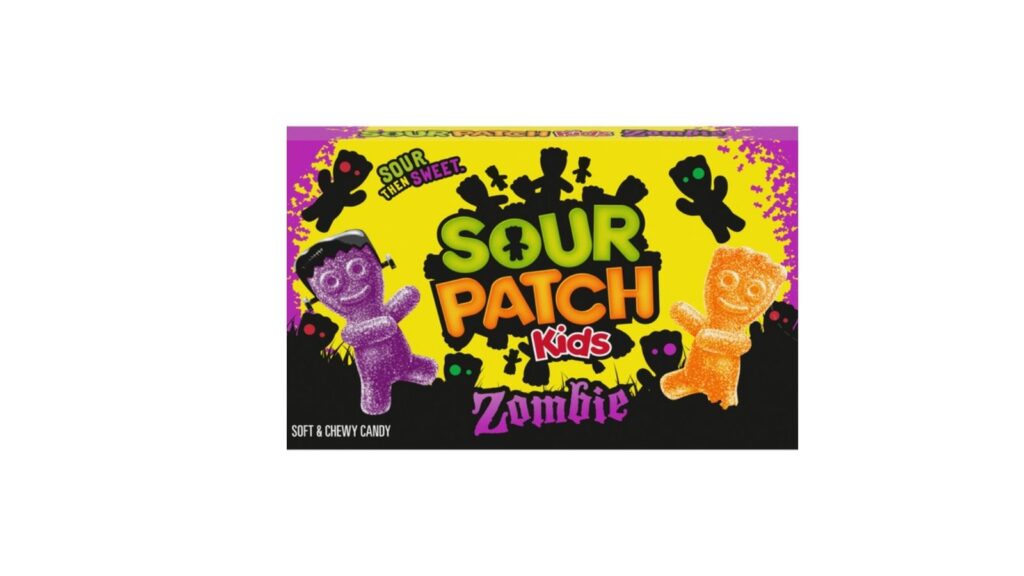
SOUR PATCH KIDS Zombie candy

Zombie Candy
Image Credit: Dollar Tree

If you’re making a movie-night bowl or a couple of small Halloween treat bags, the 3.5-ounce SOUR PATCH KIDS Zombie bag is $1.25. The orange and purple pieces actually fit the holiday, so you are not paying extra simply for fancy Halloween packaging.

This is a better fit for a small household than buying a giant variety bag just because Halloween candy is everywhere right now. Large bags can make sense for a busy trick-or-treat route, but if you only need candy for a few kids or a party table, buying the amount you’ll actually use can cost less overall.

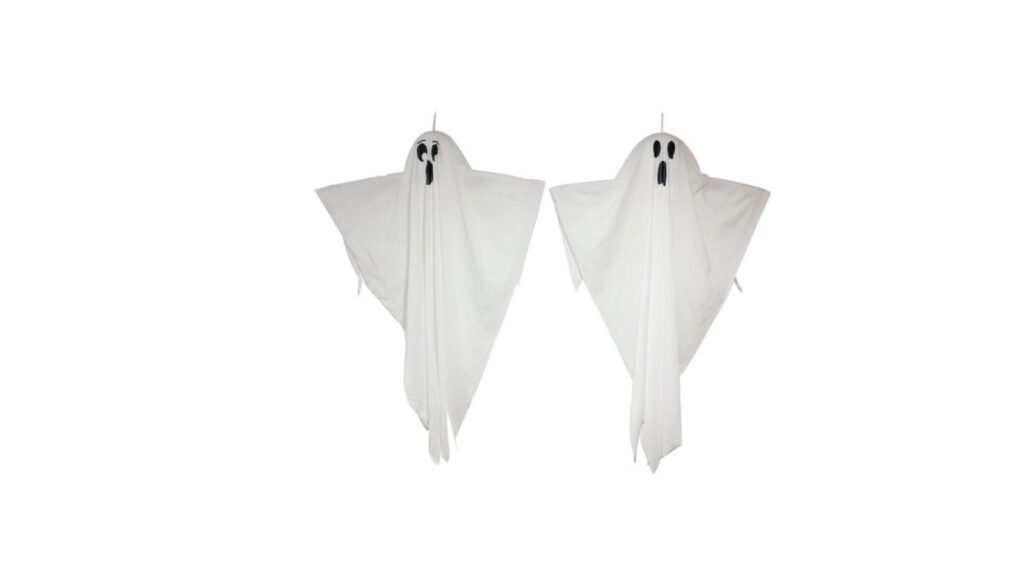
Hanging ghost decoration

Hanging Ghost Decoration
Image Credit: Dollar Tree

A 36-inch decoration for $1.50 gives you a lot more visual impact than another tiny shelf ornament. This hanging ghost can fill an empty porch corner, doorway, tree branch, or covered entry without needing a complicated setup.

For renters or anyone without room to store a yard full of Halloween props, hanging decorations are a sensible compromise. They fold down much smaller than molded plastic decor once the season is over. Buy two or three and you can cover a decent stretch of porch for less than the cost of one larger animated decoration.

Light-up Halloween decor

Light up Halloween Decor
Image Credit: Dollar Tree

Dollar Tree’s assorted light-up Halloween decorations are $1.50 each. They give you the glow people want from Halloween decorations without committing to a large plug-in display or a pile of specialty lighting.

Small light-up pieces make the most sense on a mantel, bathroom counter, entry table, or office desk where one or two items can do the job. That keeps the decorating budget under control and saves storage space in November. Because the styles are assorted, check what your store actually has rather than buying several just to chase a particular design.

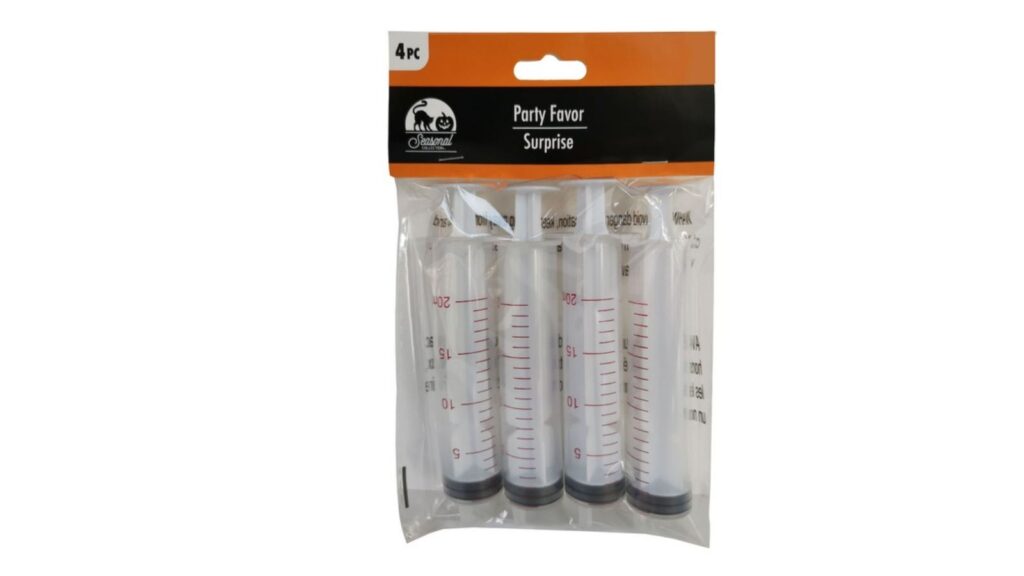
Halloween syringe party favors

Halloween syringe party favors
Image Credit: Dollar Tree

You get four Halloween plastic syringe favors for $1.50, or about 38 cents apiece. They are a cheap way to dress up a mad-scientist party, haunted snack table, or themed favor bag without buying a large party-supply kit.

The useful part is the pack size. If you’re hosting a small gathering, you can buy exactly what you need instead of ending up with 50 pieces of disposable decor. They can also help make ordinary drinks or desserts look more planned, which is handy when the food itself is coming straight from the grocery-store aisle.

Stacked wooden Halloween wall hanging

Halloween wall hanging
Image Credit: Dollar Tree

This 23.5-inch wooden wall decoration costs $1.50, which is unusually low for a Halloween piece large enough to show up clearly on a wall or door. It gives you height without needing several smaller signs clustered together.

A larger flat decoration also stores better than bulky tabletop pieces. Slip it behind a bin or lay it flat with other seasonal signs when Halloween is over. For apartments and smaller homes, that matters. Seasonal decor loses its bargain status pretty quickly when you have to buy another storage tote to keep all of it.

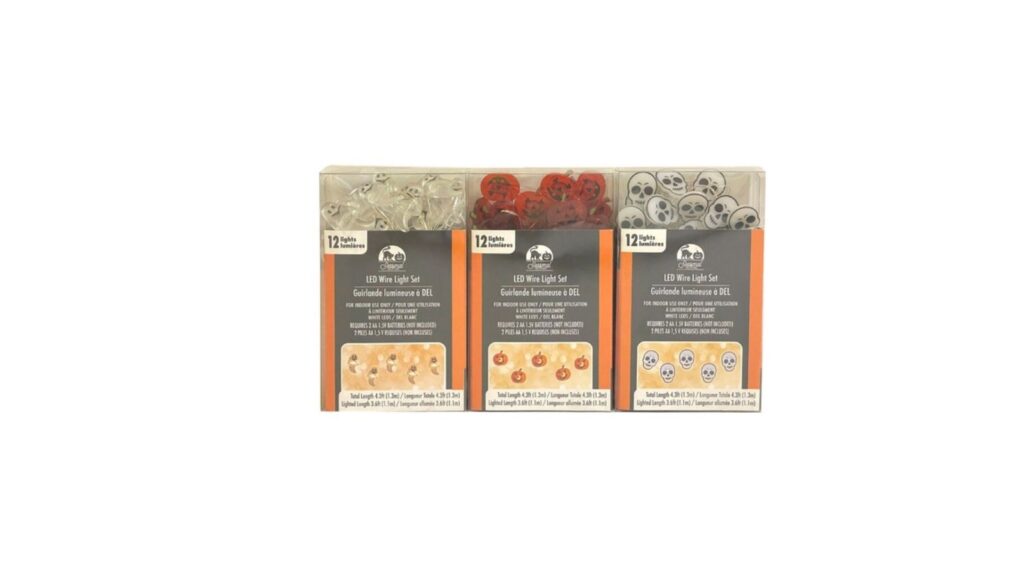
Halloween mini icon LED light set

Halloween Mini Icon LED Light Set
Image Credit: Dollar Tree

String lights are one of the easiest ways to make a small space feel decorated, and this Halloween mini icon LED set is $1.50. Use it around a small window, shelf, party table, or Halloween display instead of buying a longer strand you do not really need.

This is particularly useful in apartments, dorm rooms, or kids’ rooms where a giant outdoor light setup makes no sense. A short seasonal strand can provide enough color to change the feel of the room, then takes up almost no space in storage. That is a better value than decor you use once and have to wrestle into a closet.

Plastic skeleton garland

Plastic skeleton garland
Image Credit: Dollar Tree

Dollar Tree’s skeleton garland includes four plastic skeleton pieces for $1.50. That works out to about 38 cents per skeleton, whether you leave the garland intact or work the pieces into a larger Halloween display.

This is the sort of cheap decor that works best when you need to fill space. Hang it across a bookshelf, doorway, fireplace, or party table and you get more coverage than you would from a single figurine at the same price. Plastic also gives it a decent chance of surviving another Halloween if you pack it away instead of tossing it after the party.

Halloween kitchen towel

Halloween kitchen towel
Image Credit: Dollar Tree

Seasonal kitchen linens are an easy place to overspend because plenty of stores sell decorative towels in multi-packs when you only wanted one. Dollar Tree’s Halloween kitchen towel is $1.50, so you can add a seasonal print without replacing an entire set.

Unlike a purely decorative sign, a towel still earns its space by doing an everyday job. This is a sensible pick if your current kitchen towels are already looking rough and you were going to replace one anyway. If your linen drawer is overflowing, though, the cheap price alone is not a reason to add another.

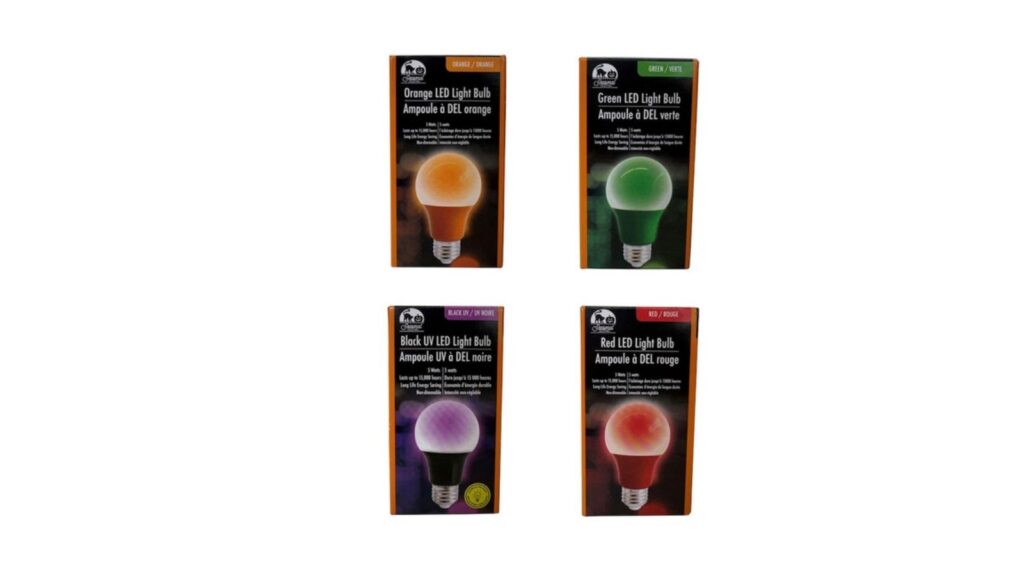
Halloween LED color light bulb

Halloween LED color light bulb
Image Credit: Dollar Tree

For $1.50, this seasonal LED color bulb can change the mood of a room without adding another string of decorations. Put it in a compatible fixture during a party or on Halloween night, then switch back to your usual bulb afterward.

That makes it a useful option for people who want a stronger Halloween look but do not want to buy or store much decor. One colored light can make ordinary decorations look more intentional, especially in an entryway or party room. Just check the bulb and your fixture before using it rather than assuming every lamp is suitable.

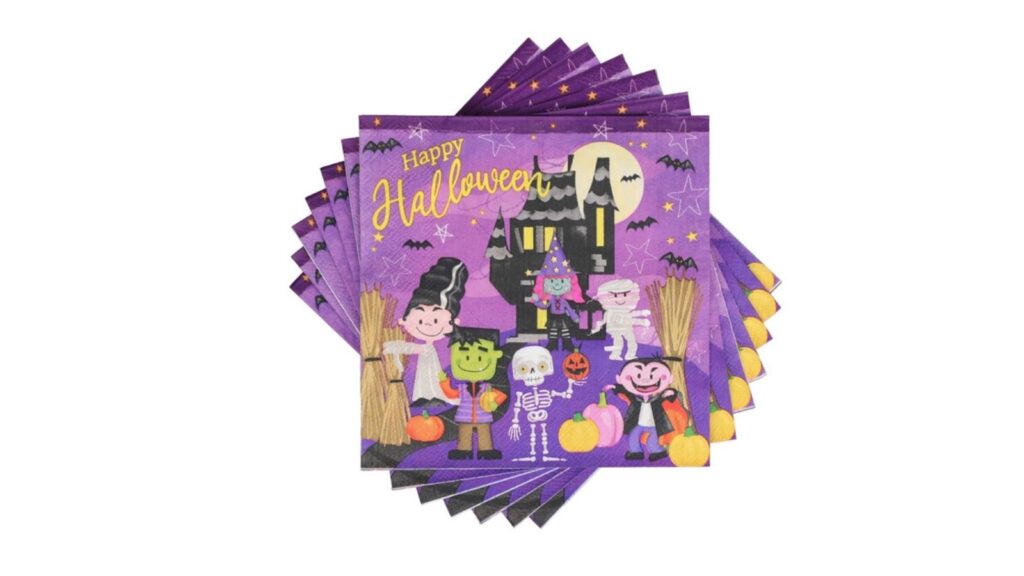
Happy Halloween napkins

Halloween napkins
Image Credit: Dollar Tree

The current Happy Halloween napkin pack contains 24 napkins for $1.50, or roughly 6 cents each. That is enough for a small party, classroom snack table, or family Halloween dinner without leaving you with a huge stack of leftovers.

Paper goods are not glamorous, but they are one of the easiest party costs to let creep upward. A themed napkin gives the table some Halloween color, so you can keep the rest of the setup simple with dishes and serving pieces you already own. There is no need to buy matching Halloween versions of everything on the table.

Halloween LED pillar candle

LED pillar Candle
Image Credit: Dollar Tree

Open flames and crowded Halloween decorations are not always a great combination. Dollar Tree’s assorted Halloween LED pillar candles cost $1.50 each and give you candlelight-style decor without using a burning candle.

They are useful around kids, pets, paper decorations, and party tables where you would rather not keep checking a flame all evening. A couple can also fill out a mantel or shelf without spending much. Because they are seasonal designs, this is one of those purchases that makes more sense if you know you will actually reuse them next October.

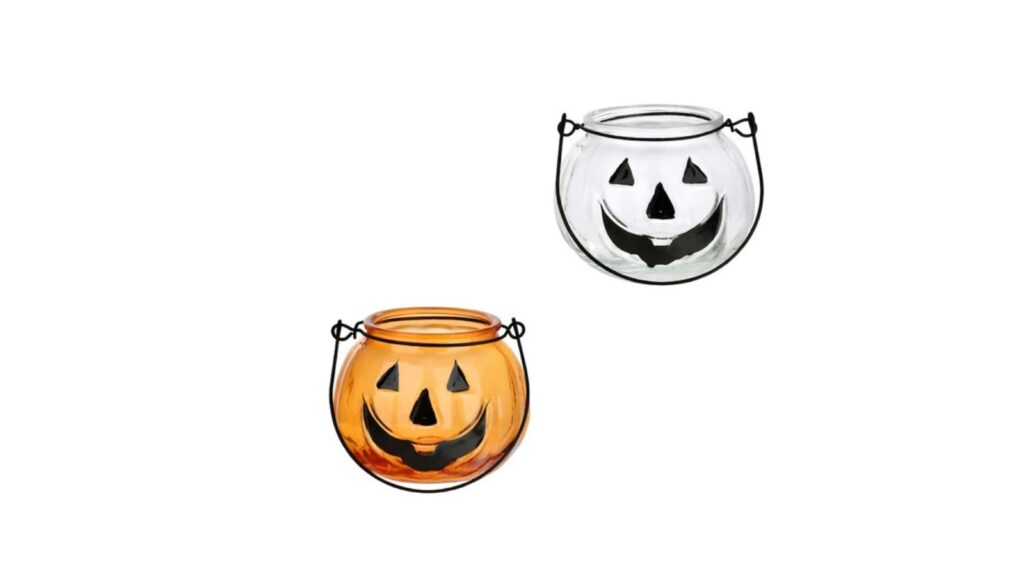
Pumpkin glass tealight holder

Pumpkin glass tealight holder
Image Credit: Dollar Tree

A four-inch glass pumpkin tealight holder for $1.50 has a little more staying power than disposable Halloween decorations. Set one on a dining table, windowsill, bathroom counter, or mantel and it can work through much of fall, not just October 31.

That longer season is what makes this a better buy. You do not have to pack it away the morning after Halloween, and it can hold a battery-operated tealight if you would rather skip an open flame. At this price, two matching holders can create a simple centerpiece without turning into a $30 seasonal-decor project.

Holographic Halloween window stickers

Halloween window stickers
Image Credit: Dollar Tree

Window decorations are useful when you want Halloween to show from outside but do not have a porch or yard. Dollar Tree’s holographic Halloween window sticker set is $1.50, giving apartments and smaller homes an inexpensive way to decorate visible glass.

They are also easier to deal with than large hanging signs if you are short on storage. Kids can help arrange them, which turns part of the decorating into an activity instead of another thing you have to buy. The value drops if you treat them as disposable every year, so save the backing if the particular set can be stored and reused.

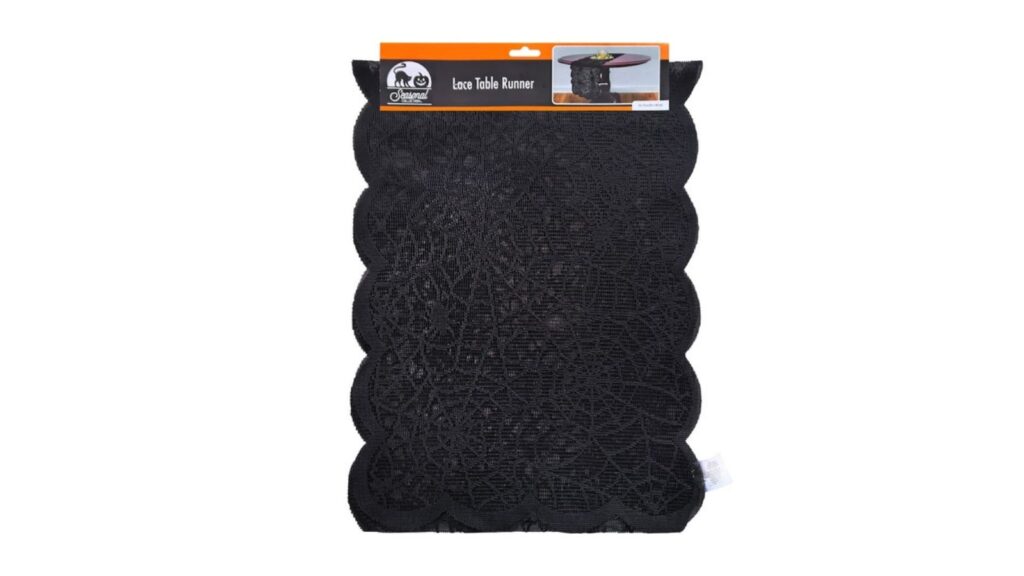
Black Halloween lace table runner

black lace table runner
Image Credit: Dollar Tree

A black lace table runner can make an ordinary dining table look Halloween-ready without buying themed dishes, placemats, and a centerpiece to match. Dollar Tree’s version is $1.50, which keeps the cost low enough for a one-night party setup.

It is also flexible. Layer it over a plain tablecloth you already own, run it down a buffet, or use it across a dresser or mantel. One piece that works in several places is usually a better seasonal purchase than decor designed for one very specific spot. Fold it flat afterward and it barely takes up room.

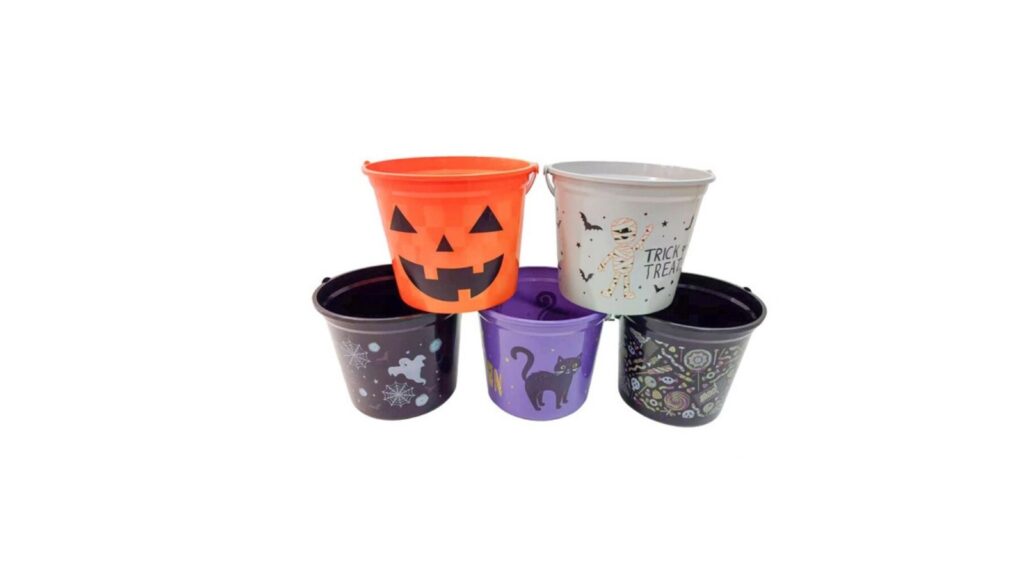
Printed Halloween pail

Halloween pail
Image Credit: Dollar Tree

A trick-or-treat container does not need to become a $15 accessory. Dollar Tree’s printed Halloween pail is about 9.45 inches and currently costs $1.50. It handles the basic job and comes already decorated for the night.

This is especially practical for younger kids who do not need a giant bucket they will struggle to carry once it gets heavy. The pail can also do double duty as a party-game container, candy bowl, or small Halloween gift basket before trick-or-treating starts. If last year’s bucket is still perfectly good, reuse it. If you actually need one, $1.50 is hard to argue with.

Halloween glass poison beaker

Halloween glass poison beaker
Image Credit: Dollar Tree

This 16-ounce Halloween glass poison beaker is $1.50. It is more useful than many tabletop decorations because it can become part of the party setup rather than simply sitting there looking spooky.

Use it for a themed drink if appropriate, or work it into a snack-table display with other Halloween pieces. Buying one unusual glass and using your normal serveware around it is a cheaper way to build a theme than replacing every cup and bowl with seasonal versions. Since it is glass, store it carefully if you want that $1.50 purchase to make another appearance next year.

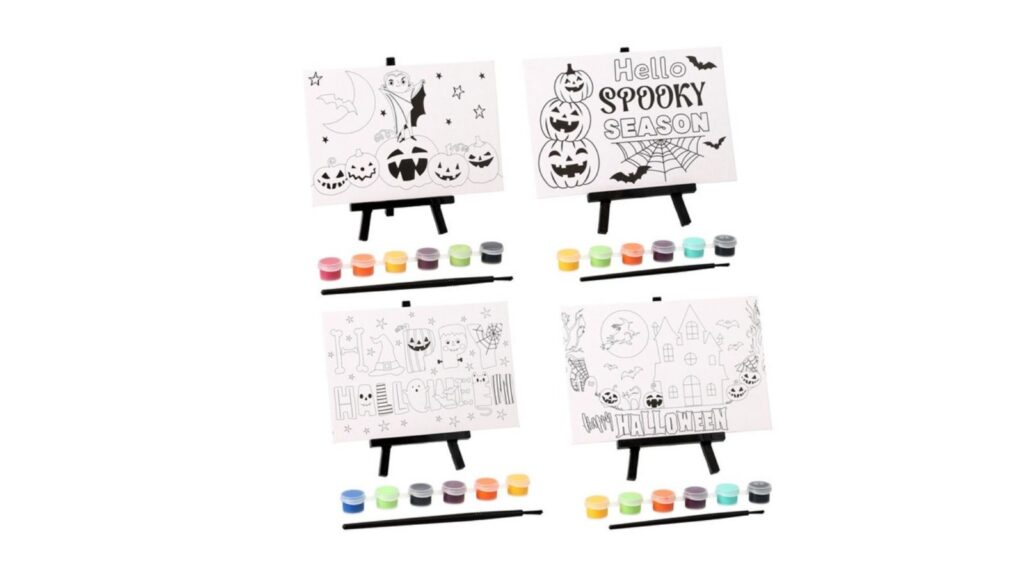
Halloween paperboard paint set

Halloween paperboard paint set
Image Credit: Dollar Tree

For $1.50, this Halloween paperboard paint set gives kids a seasonal activity without requiring you to assemble paint, brushes, and a separate craft project from scratch. The set includes four pieces, making it useful for a quiet afternoon or small Halloween get-together.

Craft kits earn their keep when the activity itself is the entertainment. Spending a couple of dollars on something kids can sit down and make can be cheaper than another outing or a bigger toy. It is also small enough to keep on hand for a rainy October weekend when everyone has run out of ideas.

Carvable foam pumpkin

Halloween Carvable Pumpkin
Image Credit: Dollar Tree

Real pumpkins look great, but buying several just to carve and throw away a week later can add up. Dollar Tree’s carvable foam pumpkin costs $1.50 and gives you a small blank pumpkin you can personalize without dealing with seeds, pulp, or a rotting porch decoration.

The stronger money angle is reuse. If you paint or decorate it in a way you still like next year, it can come straight back out of the Halloween bin. It is also a manageable craft for small spaces where a stack of full-size pumpkins is not practical. One or two can fill a shelf without swallowing the whole decorating budget.

Flocked spider decoration

flocked spider decoration
Image Credit: Dollar Tree

A flocked spider is simple, but that is part of the appeal. For $1.50, you can add one to a porch display, table, shelf, artificial web, or candy station without buying a whole coordinated collection.

This works best as an inexpensive add-on to decorations you already own. A spider tucked into an old wreath or placed beside your existing pumpkins can make the setup feel different without replacing anything. Small pieces like this are easy to store, too. The smarter move is using a few strategically instead of buying enough tiny decorations to cover every surface in the house.

Spider web treat basket

spider web treat basket
Image Credit: Dollar Tree

Dollar Tree’s Halloween spider web treat basket is $1.50. It gives you a themed container for wrapped candy without paying for a decorative bowl that spends eleven months of the year taking up cabinet space.

You can also use it for a Halloween party, trunk-or-treat setup, or to hold small favors by the door. Once the night is over, a lightweight basket is easier to nest with other seasonal supplies than bulky ceramic serveware. If you already have a plain bowl that works, use it. This one makes sense when you actually need another container.

Halloween tinsel web with spider

Halloween Tinsel Web With Spider Decorations
Image Credit: Dollar Tree

This 16-inch tinsel web already includes the spider detail, so you get a complete little wall or door decoration for $1.50. That is useful when you want one finished piece rather than buying webbing, spiders, and hanging supplies separately.

The smaller size works well for apartment doors, office spaces, kids’ rooms, or a party backdrop where full-size yard decor would be overkill. It should also store flat enough to save rather than replace next year. That matters with low-cost seasonal items. Cheap is only a bargain if you do not keep rebuying the same thing.

Mini Halloween decorative tree

Mini Halloween decorative tree
Image Credit: Dollar Tree

Dollar Tree’s Halloween-themed mini decorative tree is $1.50. A small tree can anchor a shelf, desk, or entry table without needing enough ornaments and decorations to fill a full mantel.

This is one of the more niche picks, so it makes sense mainly if you already like decorating small spaces for Halloween. The low price helps, but buying five tiny pieces you do not need still costs more than using one good decoration you already own. For a desk or apartment where larger pieces do not fit, though, the scale is useful.

Halloween drawstring bag

Halloween drawstring bag
Image Credit: Dollar Tree

A drawstring candy bag gives kids something lighter and easier to carry than a rigid bucket, and Dollar Tree’s seasonal version is $1.50. It can work for trick-or-treating, a classroom party, or as the container for a small Halloween gift.

The big advantage is what happens afterward. A fabric-style drawstring bag can be folded instead of taking up the space of another plastic bucket. It may also be reused for toys or next year’s candy run. If you have multiple kids and limited storage, that simple difference makes the bag a more practical buy than another bulky seasonal container.

Pumpkin bowl

pumpkin bowl
Image Credit: Dollar Tree

This six-inch pumpkin bowl is $1.50, making it an inexpensive way to serve a small amount of candy, pretzels, dips, or other party snacks. The size is better suited to a table with several foods than to handing out candy to a huge stream of trick-or-treaters.

Small serving pieces are useful because you can spread snacks across a table without buying one oversized specialty bowl. It also works as a holder for wrapped treats or Halloween favors. If you host every year, store it with the rest of your seasonal tableware and the cost per use gets very small.

Halloween icon pillow

Halloween icon pillow
Image Credit: Dollar Tree

At $5, the Halloween icon pillow is one of the pricier finds here, but a seasonal throw pillow at that price can still make sense if you want one noticeable change to a couch, chair, or bed.

The key is treating it as the accent rather than buying an entire set. One Halloween pillow mixed with your regular cushions can change the room without spending much or leaving you with a closet full of seasonal textiles. It is best for someone who knows they will reuse it, since even a $5 pillow is wasted money if it gets donated after one October.

Skeleton hand goblet

Skeleton hand goblet
Image Credit: Dollar Tree

The Halloween skeleton hand plastic goblet costs $1.50. It is the kind of themed piece that can make an otherwise ordinary party table look planned without requiring matching Halloween drinkware for every guest.

Use one or two as display pieces, candy holders, or part of a drink station, depending on how you plan to set up the party. That is more budget-friendly than buying a full set simply because it matches. For families with kids, the plastic construction also means you are not putting your regular glassware in the busiest part of the Halloween chaos.

Plastic Halloween skull ornament

Halloween skull ornament
Image Credit: Dollar Tree

A plastic Halloween skull ornament for $1.50 is a flexible decorating piece because it is not tied to one exact setup. Hang it, tuck it into a wreath, add it to a shelf, or work it into a homemade centerpiece.

That flexibility is what makes a basic piece like this worth considering over a highly specific decoration. You can move it around from year to year instead of recreating the same display. It is also a useful starting point for people who prefer DIY Halloween decor but do not want to spend craft-store prices just to get the base pieces.

Halloween pencils

Halloween pencils
Image Credit: Dollar Tree

Dollar Tree’s Halloween-themed pencil pack contains 16 pencils for $1.50, which works out to about 9 cents each. That makes them one of the stronger values for classroom giveaways, party bags, or non-candy trick-or-treat extras.

They are practical enough that they are less likely to become instant trash than a tiny plastic favor. A single pack covers quite a few kids, and two packs still cost just $3. If you’re putting together school treats for an entire class, mixing inexpensive pencils with a small piece of candy can keep the per-child cost under control without sending everyone home with another pile of plastic.