Your company buys an AI tool, announces a big productivity push, and then discovers it needs someone who can make the thing work without leaking customer records or inventing answers. The salesperson has already collected their commission. Now the real work starts.
AI is creating jobs as well as changing and eliminating work. About 2 million new AI-related jobs have emerged worldwide, and U.S. entry-level AI engineer hiring grew 68% year over year in the third quarter of 2026. Employers are also inventing more specialized titles as they figure out what they actually need. A study of 1,501 employers found stronger hiring signals for agent engineering, AI deployment, and applied AI than for the once-fashionable standalone prompt engineer.
Some of these titles are new. Others have grown out of established careers in engineering, auditing, design, and employee training. An AI agent engineer builds software that can carry out tasks, while an evaluator looks for the mistakes that only show up when people start using it. Those are two very different jobs, and companies need both.
AI agent engineer
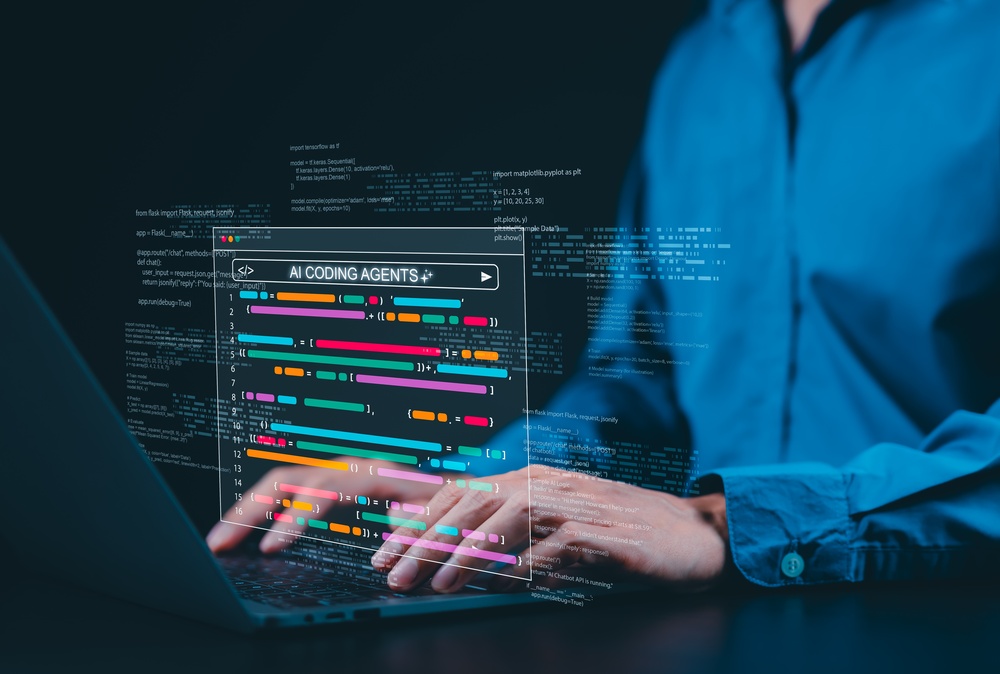
A medical practice might want software that can check whether an insurance form is complete, follow up on missing details, and update the correct patient record. A chatbot that answers questions is not enough. The newer AI agent engineer role builds systems that can carry out a sequence of tasks, use approved tools, and know when a person has to step in.
These engineers connect large language models to databases, APIs, scheduling systems, and business rules. They test whether an agent loses track of what it’s doing or performs an action it shouldn’t. It is hands-on software development, generally requiring Python or another programming language plus experience working with live systems. Hiring is moving toward this specialty: companies advertising agent engineers increased substantially between late 2025 and October 2026. Unlike writing a one-off prompt, building an agent people can trust creates continuing work in testing, security, and maintenance.
Forward-deployed AI engineer

Buying a powerful model doesn’t magically connect it to a bank’s existing software or a manufacturer’s warehouse system. Forward-deployed AI engineers work directly with customers or internal departments to build something useful around the technology. They may spend weeks inside a client’s operation, learning where records live and why a process keeps breaking before writing a line of production code.
This is a distinct customer-facing engineering role that has expanded with the push to put AI into real business processes. It blends software development, troubleshooting, integration, and the ability to ask good questions. Some assignments require travel or being in the office with the people using the system, and senior vacancies can ask for many years of experience. For an established software engineer who enjoys solving messy business problems, it offers a direction that goes beyond producing code somebody else has specified.
AI deployment specialist
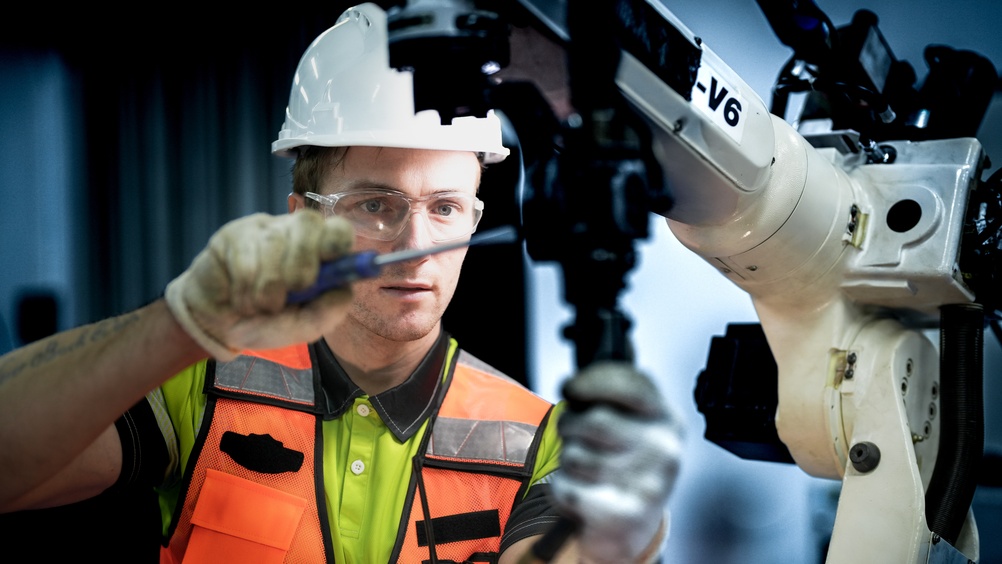
The AI finance assistant works nicely in a demonstration. The accounting team tries it with real company records, and suddenly it cannot locate half the data, handle approvals, or explain where its answers came from. The deployment specialist gets a new system through that awkward stage. They map the customer’s processes, connect the right information, coordinate testing, and oversee the move into everyday use.
You can see this specialty in AI deployment jobs focused on corporate finance, where the person needs business knowledge as well as enough technical understanding to work with engineers. Unlike a forward-deployed engineer, the emphasis may be on implementation, customer workflows, and results rather than personally building every software component. Accountants, financial systems specialists, and experienced implementation consultants can have useful transferable skills. The job doesn’t end once the tool is switched on. Someone must check whether staff actually use it and whether its answers remain reliable.
AI evaluation engineer
An AI assistant correctly answers 95 questions in a test and gets five wrong. That’s not particularly reassuring if those five involve a patient’s medication, a legal deadline, or a payment sent to the wrong person. AI evaluation engineers design the tests that expose these failures before customers find them. They create representative questions, agree on what a correct answer looks like, and measure what changes when the model or underlying data changes.
There are dedicated AI evaluation engineering posts for people who maintain trusted test datasets and challenge whether a model is genuinely improving. The work calls for experimental thinking, data skills, and often programming. It is not the same as sitting online rating random AI answers for a few dollars. Proper evaluation means understanding which errors matter, checking the quality of the benchmark itself, and catching regressions before a software update damages a working service. Those responsibilities should remain useful as models improve.
Model behavior engineer
Sometimes an AI assistant has all the correct information but handles a conversation terribly. It asks the same question three times, confidently states something unsupported, or takes action when the customer only wanted advice. Model behavior engineers study those failures and change how the product responds. They work with prompts, context, evaluation results, logs, and user complaints, not simply the underlying model’s raw computing power.
A model behavior engineering role can sit between product design, technical testing, and operations, making it one of the more unusual careers to emerge from the AI boom. Strong candidates understand how to investigate a problem and test whether a proposed fix actually works. Some positions don’t require spending the entire day coding. But they do require real familiarity with AI products, data, and experiments. It is also a more defensible career direction than selling yourself as someone who knows the magic words to type into a chatbot.
AI red-team engineer

Security testers have tried to break conventional software for decades. AI has introduced a new set of tricks. An attacker might hide instructions inside a document the assistant is supposed to summarize or persuade an automated agent to reveal a record it shouldn’t see. AI red-team engineers deliberately attempt these attacks in controlled conditions so the developers can fix what they find.
One AI red-team engineering job involves creating reproducible attacks, writing scripts, and producing evidence that can be used to improve defenses. The important qualification is not an ability to trick a chatbot into saying something silly. It is understanding security, model behavior, and how an AI system connects to other tools and data. Much of the repetitive testing can be automated, and the best testers will automate it themselves. Their value is in inventing new ways the system can fail and identifying whether a supposed fix really closes the weakness.
Multimodal AI safety engineer

A text chatbot can produce a false claim. A system that generates images, edits photographs, or creates audio introduces other problems, including deceptive media, unsafe transformations, and privacy violations. Multimodal safety engineers develop protections that recognize dangerous requests and outputs across more than one type of content.
A multimodal safety position combines software or machine learning engineering with safety testing, dataset development, and policy decisions. It is possible to block too much and ruin a legitimate product, or too little and allow harm. The work therefore involves measuring errors on both sides, improving classifiers and safeguards, and checking whether protections still work after new models launch. This is a particularly technical field, commonly asking for programming and machine learning experience. It is distinct from content moderation because the engineer is developing the systems that help enforce the rules at scale.
AI security engineer

What happens when an AI assistant is given permission to read emails, search customer databases, and issue refunds? A compromised instruction or poorly secured connection can make it far more dangerous than an ordinary chatbot. AI security engineers design the controls around those permissions, including logins for automated systems, access limits, data protection, and records of what the AI did.
Businesses are advertising security jobs specifically responsible for AI agents and integrations. This work calls for experience in application or cloud security, not just a short AI course. The engineer must understand how prompt injection and leaked data interact with ordinary cybersecurity weaknesses. They also need to know when to block an action, when to require human approval, and how to investigate something that goes wrong. Automated scanners help find problems, but cannot take responsibility for security decisions across a complicated business.
AI governance specialist

A company might have employees feeding confidential documents into tools nobody has approved, while another department is rolling out an AI hiring system without testing whether it treats applicants fairly. AI governance specialists set and check the rules for what an organization can use, how the systems must be tested, and who is accountable for their decisions.
This is already a dedicated technical governance specialty in companies that need controls covering privacy, fairness, security, documentation, and human oversight. Someone with a background in audit, compliance, privacy, or risk management may have a credible route into it, but they still need to understand how AI products actually behave. A policy copied from a template isn’t enough. The work includes reviewing real uses of AI, identifying missing protections, and making sure the rules are followed when a new product or vendor arrives. It can be demanding without requiring someone to manage a team.
Generative AI model validator

Banks and investment firms have long used complex mathematical models, so they already understand that a bad model can cause an expensive decision. Generative AI adds new questions. Can the model reproduce a result reliably? Was it tested with the right data? What happens when its supplier changes the software? Model validators examine those weaknesses independently of the team that built the system.
The newer AI model validation specialty requires statistical judgment, technical analysis, careful documentation, and the confidence to challenge a model that looks impressive in a presentation. A finance or traditional model-risk background is useful, and some positions require advanced degrees and substantial experience. This is separate from general AI governance: governance sets an organization’s requirements, while the validator checks the evidence that a particular model meets them. Faster automated testing doesn’t eliminate the need to interpret unexpected findings and decide whether a model should be trusted.
AI product manager

A software company can build a very clever AI feature that nobody needs. AI product managers work out what customers are trying to accomplish, what an AI system should be allowed to do, and how to tell whether it is actually good enough to release. That requires more than writing a wish list and sending it to an engineering team.
A specialist AI product management role may own the tools used to evaluate models, collect human feedback, or inspect failures in AI agents. It blends customer research, technical judgment, product design, and an understanding of cost and reliability. This isn’t necessarily a staff-supervision job, although it often means coordinating developers and designers. Experienced product managers can move into the specialty by learning model evaluation, AI limitations, and realistic deployment requirements. The risk is jumping in with only a surface understanding of AI, because an impressive demo can hide terrible performance on real work.
AI platform engineer

A business can have dozens of teams experimenting with AI, each using different accounts, models, permissions, and payment arrangements. Eventually somebody has to build a shared system that keeps it all organized. AI platform engineers make approved AI tools available to developers, manage access and infrastructure, and establish the controls needed to operate them safely at scale.
A platform engineering role devoted to AI enablement and governance illustrates the work: support other engineers, put common protections in place, and keep the environment dependable. A background in cloud computing, DevOps, infrastructure automation, or software engineering is a useful starting point. AI may write configuration files, but somebody still has to decide how systems fit together, investigate outages, and prevent one team’s experiment from exposing another team’s information. This is specialist infrastructure work rather than a beginner role for someone who has only used consumer AI apps.
AI inference engineer

Every time someone asks a large AI model a question, the system has to run the model and deliver the answer. Doing that for millions of users without spending a fortune on computing is a serious engineering problem. Inference engineers optimize the software that serves trained models, reducing delays, handling simultaneous requests, and making expensive processors work efficiently.
There are AI inference engineering roles focused on graphics processors, model serving, low-level programming, and performance testing. The technical bar is high. Experience with distributed systems, GPU programming, and languages such as Rust or Python is often expected. The attraction for specialists is that a small improvement in speed or compute usage can save a business substantial operating costs. AI-assisted coding may help make improvements, but it does not remove the need to measure real hardware performance and diagnose failures under load.
AI observability engineer

An AI agent might make the wrong decision only once in 500 attempts. Finding that failure is difficult if nobody can see what the agent was asked, which tools it used, or where it made the wrong turn. AI observability engineers build the logging, monitoring, and diagnostic tools that make an automated system inspectable after it has gone live.
Software companies now advertise engineering positions dedicated to agent observability. This isn’t ordinary website analytics with a new label. AI behavior can change depending on context, connected tools, model versions, and data, so teams need to trace decisions and catch slow or expensive failures. Engineers typically bring software infrastructure, telemetry, or reliability experience. Better AI systems will still need monitoring, much as reliable payment services still need engineers who can explain an outage. The work is most valuable when it ties unusual AI behavior back to something a developer can reproduce and fix.
Synthetic data research engineer

Some training examples are too expensive, sensitive, or rare to gather from the real world. An AI developer might need thousands of examples of a difficult financial calculation, a software bug, or an unusual customer request. Synthetic data engineers create artificial training tasks designed to teach models how to handle those situations, then test whether the examples are realistic and genuinely useful.
A synthetic data research engineering role involves building generation pipelines, developing quality checks, and measuring whether the new data improves the model instead of simply producing more of the same mistakes. This is not the same as generic data labeling. It combines programming, experiments, and knowledge of the problem the model is supposed to solve. The biggest risk is creating artificial examples that look convincing but teach the wrong lesson. Human review and careful evaluation are part of the work, even though much of the generation itself is automated.
Robotic foundation-model engineer
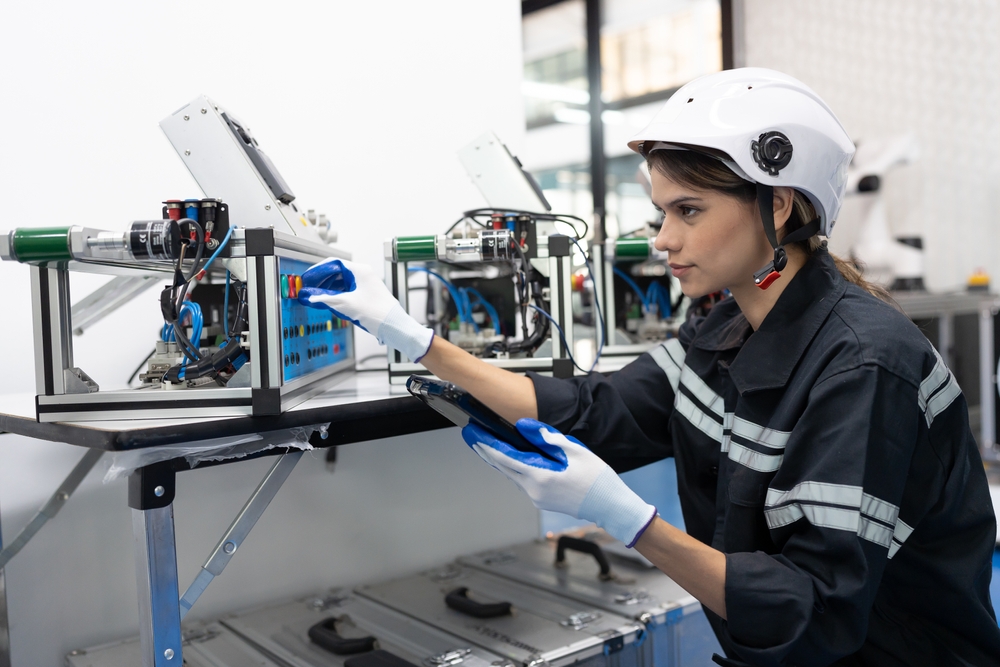
A robot programmed to repeat the same factory movement is old news. The newer challenge is training robots to understand instructions and perform different tasks in unfamiliar places. Robotic foundation-model engineers develop and test AI systems that connect what a robot sees with the actions it takes. A model that works in a simulation may still knock something over when it meets a real table, tool, or person.
Companies are hiring for robotic foundation-model training positions involving simulation, reinforcement learning, model evaluation, and testing on physical machines. This is a demanding route for people with robotics, computer science, or machine learning backgrounds. The growth of AI creates more work in collecting useful physical-world data and improving how models transfer from virtual tests to real equipment. You cannot simply ask a chatbot whether a robot’s grip is safe. Someone has to test it with actual hardware and understand why the outcome differed from the plan.
AI conversation designer

A customer asks an automated assistant to change a booking. The system needs to know when to ask a follow-up question, how to explain an unavailable option, and what to say if the customer is angry. AI conversation designers plan those interactions so the software behaves sensibly instead of producing a wall of cheerful nonsense.
There are AI conversation design jobs focused on how an assistant communicates, asks for clarification, and handles mistakes. Strong writing and user-experience skills help, but the work also involves testing actual conversations, studying failure patterns, and collaborating with engineers. This is one of the more accessible paths for someone coming from UX writing, customer experience, or service design rather than machine learning research. It is still changing quickly. The safer career proposition is being able to design and evaluate a whole customer interaction, rather than charging people to write individual chatbot prompts.
Go-to-market engineer

Sales teams spend hours updating customer databases, researching prospective clients, routing leads, and chasing follow-ups. AI has created demand for people who can turn those repetitive tasks into connected, measurable workflows. Go-to-market engineers, sometimes shortened to GTM engineers, build the automations and data systems used by sales, marketing, and customer success teams.
An AI-focused go-to-market engineering position may involve connecting CRM records to other systems, building agents that research companies, and checking whether the workflow actually produces useful sales opportunities. The role isn’t the same as selling software, and it doesn’t automatically involve staff management. People with revenue operations, systems administration, analytics, or automation experience may have a head start. The important part is understanding real sales processes and data quality. A workflow that sends hundreds of inaccurate emails faster is not a success, however impressive the automation looks on a screen.
GPU and AI compute infrastructure engineer

Behind the polished AI app are racks of expensive processors, networking equipment, storage, and cooling systems. Someone has to get the machines running, check that they perform correctly, and diagnose why a cluster is slower or less reliable than expected. GPU and compute infrastructure engineers handle the physical and software systems that let large models train and run.
An AI-focused GPU infrastructure position can involve Linux, hardware testing, drivers, networking, diagnostics, and automating how servers are brought online. This is not simply a renamed office IT support job. AI workloads put unusual pressure on compute clusters, making the need for careful hardware validation and performance troubleshooting more immediate. Experienced systems engineers and data center specialists may be well placed to move into it. It can also mean being on call when machines fail, so the pay and excitement of working around AI come with very ordinary infrastructure responsibilities.
AI interpretability research engineer

Even the people who build advanced AI models cannot always explain why a model chooses a particular answer. Interpretability researchers try to look inside the system and identify the patterns driving its behavior. The engineering side of that work involves building tools to inspect enormous amounts of model activity, run controlled experiments, and test whether a theory about the model is actually supported.
There are research engineering roles dedicated to understanding model internals rather than making customer-facing chatbots. This is specialized work for people with strong programming and machine learning backgrounds, usually with experience in large-scale systems or research. The goal is not to produce a reassuring explanation after the fact. It is to understand which parts of a model are involved in particular behavior and whether that understanding can help with safety testing. As models become more powerful, knowing how to investigate their inner workings is a distinct research challenge.
AI enablement specialist
Buying an AI subscription for 500 employees isn’t the same thing as getting 500 people to use it properly. Somebody has to assess which tasks make sense for AI, train people to use the approved tools, explain the rules around sensitive information, and help staff when a workflow fails. AI enablement specialists do that practical work inside organizations.
A business-operations and AI enablement role can involve running training sessions, identifying useful automations, coordinating with IT and legal teams, and measuring whether the promised improvements have happened. It offers a more plausible route for someone from training, operations, project coordination, or workplace technology than a frontier-model research job would. Employers look for experience with staff training, business processes, and workplace systems. The work includes checking whether staff are getting accurate results and correcting workflows that waste time or expose sensitive information.
The AI boom is also changing which skills employers value. Routine data labeling and standalone prompt writing have weaker hiring signals, while building reliable agents, testing their behavior, and putting AI to work inside real businesses are attracting attention. That is a useful distinction for anyone thinking about retraining or changing direction.