
You check your account balance on a random Tuesday and it’s $340 lower than you expected, again. Nothing dramatic happened. No big purchase, no emergency, just the usual mix of coffee, a couple of Amazon orders, and a lunch you didn’t feel like packing that morning. That’s how most people actually lose money. Not in one big hit, but in a hundred small ones that never show up on a receipt worth remembering.
The fix works the same way, in reverse. You don’t need to overhaul your whole life to find an extra couple hundred dollars a month. You need a handful of small changes that don’t ask much of you and quietly add up by December.
Start with the money you already have, sitting in an account that’s barely paying you anything for the privilege.
Table of contents
- Open a high-yield savings account for your idle cash
- Automate a payday transfer before you can spend it
- Audit your subscriptions and cancel what you don’t use
- Swap name-brand groceries for store brands
- Make your coffee at home
- Pack lunch a few days a week
- Shop your car insurance every year
- Turn the thermostat back a few degrees
- Ditch the bank that charges you fees
- Ask your pharmacist about the generic
- Switch to a lower-cost cell carrier
- Borrow instead of buy at the library
- Let a cash-back app work while you shop
- Sell what’s been sitting in a closet or garage
- Buy the generic version of your medicine cabinet basics
Open a high-yield savings account for your idle cash

Most people keep their savings in whatever account their bank defaulted them into, which usually means it’s earning next to nothing. The average savings account nationwide currently pays 0.38% APY, while online banks are offering 4% or higher on the same money, with no extra risk and no lockup period.
On $5,000 in savings, that’s the difference between earning about nineteen dollars a year and earning well over two hundred, just for choosing where you park cash you already have. Moving an emergency fund or a slush fund into a high-yield account takes about ten minutes online. Most don’t require a minimum balance, and the money stays FDIC insured and just as easy to access as it was before.
This isn’t a habit you have to keep building. It’s a decision you make once, and the interest keeps stacking up in the background without you doing anything else.
Automate a payday transfer before you can spend it

Most savings plans assume you’ll move whatever’s left over into savings at the end of the month. Almost nobody actually does this, because by the end of the month there usually isn’t anything left over. The version that works runs backwards: money moves the day it lands, before you’ve had a chance to spend it.
Set up an automatic transfer from checking to savings for the same day your paycheck hits, even if you start with fifty dollars a check. That’s $1,300 a year. Bump it to a hundred dollars and you’re at $2,600. You won’t miss money you never see sitting in checking, and you’re not relying on willpower at nine at night when you’re tired and scrolling.
Pair this with a high-yield account and the two habits do the work for each other. Money moves on its own, and it earns real interest the moment it lands instead of sitting idle for weeks.
Audit your subscriptions and cancel what you don’t use

The average American now spends $111 a month on subscriptions, with about $252 of that a year going toward services nobody’s actually using. Streaming apps stack up fast, and a free trial for a meal kit or a fitness app quietly converts to a paid plan long after you forgot you signed up.
Pull up your bank or card statement and list every recurring charge you see, not just the obvious ones. Cancel anything you haven’t opened or used in the last month. For the ones you’re not ready to give up, check whether an annual plan is cheaper than paying monthly. Plenty of streaming and software services knock off a month or two of cost if you pay for the year up front.
Do this every few months, not just once. New subscriptions creep back in faster than people expect, especially ones that renewed automatically after a trial.
Swap name-brand groceries for store brands

Store-brand groceries typically cost 25% to 30% less than the name-brand version of the same product, and in blind taste tests, most shoppers can’t tell the difference. This isn’t about overhauling your whole cart in one trip. Start with pantry basics: pasta, canned tomatoes, flour, sugar, spices, and frozen vegetables, where the recipe barely changes between brands.
Cereal, condiments, and dairy are usually safe swaps too, and most people can’t tell the difference once it’s poured into a bowl or mixed into a recipe. Baking is one place brand loyalty sometimes still pays off, since the exact ratio of ingredients can change texture in a cake or cookie, along with anything your household is particular about, like a specific coffee or peanut butter.
Do the swap gradually, a few items a trip, so you actually notice which substitutions your family accepts without complaint and which ones aren’t worth the savings. A full cart switch on a family of four’s weekly shop can realistically shave $30 to $50 a week off the total, depending on how much of that cart was name-brand to start with.
Make your coffee at home

Buying a basic drip coffee from a drive-through every weekday adds up to roughly $766 a year, which is a strange amount of money for something that doesn’t feel expensive in the moment. Order a flavored latte instead of plain drip and that number climbs considerably higher.
You don’t have to give up coffee, just where you buy it. A basic drip machine, a French press, or even good instant coffee gets you the same caffeine for a fraction of the price, and you can still treat yourself to the coffee shop version once a week instead of every day. Even a $150 espresso machine pays for itself within a couple of months compared to buying espresso drinks out daily.
If you’re buying for two people in the household, double every number above. A habit that looks small at $5 a day changes shape once you multiply it by a family, and it changes again once you add in the pastry or breakfast sandwich that often rides along with the coffee order.
Pack lunch a few days a week

Workers who buy lunch out spend an average of $34.82 a week doing it, which works out to somewhere around $1,800 a year for food you could usually make at home for a fraction of that. You don’t need to pack lunch every single day to see the difference. Even bringing lunch three days a week and buying it the other two cuts the total meaningfully.
Leftovers from dinner are the easiest version of this. Cook a little extra the night before and lunch is already handled, no extra prep required. Sandwiches, grain bowls, and soups also hold up well overnight and travel easily to work, and none of them require anything fancier than containers you probably already own.
The savings show up fastest for people who currently buy lunch out most days. If that’s you, even swapping two of those five workdays for something packed from home puts a real dent in a weekly total that’s easy to lose track of when it’s five separate five-to-fifteen-dollar charges instead of one number on a statement.
Shop your car insurance every year

Drivers who never compare rates could be overpaying by an average of $4,914 a year compared to what they’d pay by shopping around. Insurers price you differently depending partly on when you last got a new quote, not just your driving record, which is why staying loyal to one company rarely pays off the way people assume.
Get quotes from at least three insurers once a year, even if you’re happy with your current company. If your current insurer’s renewal price comes in higher than a competitor’s quote, call and ask them to match it before you switch. Many will, since keeping an existing customer usually costs an insurer less than acquiring a new one.
Life changes are also a good trigger to re-shop: a move, a paid-off car, a teen driver aging into their own policy, or simply a birthday that bumps you into a new age bracket for pricing. Bundling home or renters insurance with your auto policy at the same company is worth asking about too, since insurers frequently discount both policies for keeping them together.
Turn the thermostat back a few degrees
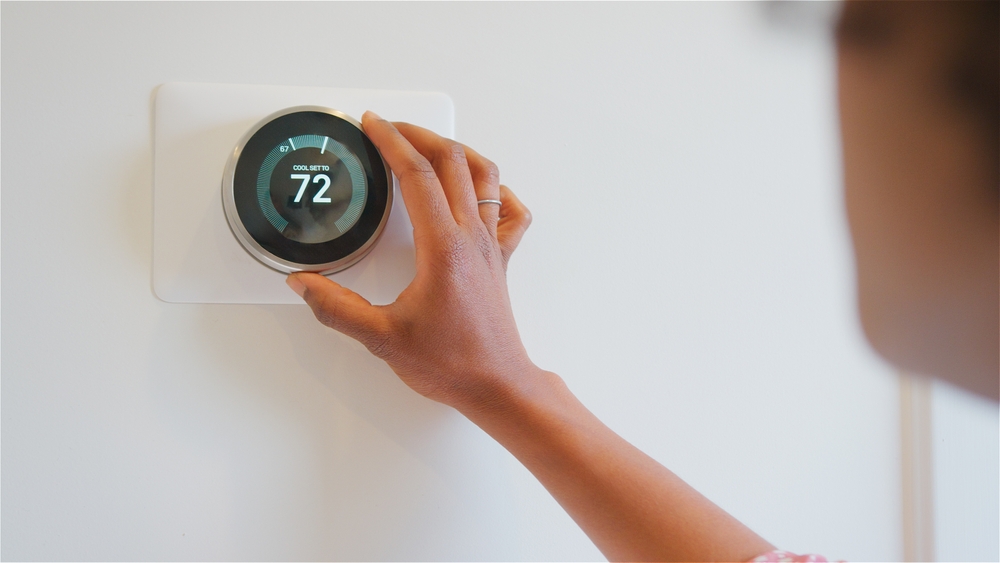
You can cut up to 10% off your annual heating and cooling costs just by setting your thermostat back seven to ten degrees for eight hours a day, whether that’s while you’re asleep or out of the house at work. The house doesn’t have to work harder to warm back up afterward. It actually loses heat more slowly the colder it gets relative to outside.
A programmable or smart thermostat automates this so you’re not manually adjusting it twice a day, but you don’t need to buy anything new to start. Set it back manually before bed and before you leave for work, and set it back to normal about half an hour before you’re due home or awake so the house is comfortable by the time you need it to be.
The same idea works in reverse for summer cooling: keep the house a little warmer than usual while nobody’s home, and cool it to a comfortable temperature only when someone’s actually there to feel it. This one costs nothing and takes effect the same day you start doing it, which makes it one of the fastest habits on this list to see reflected on an actual bill.
Ditch the bank that charges you fees

A monthly maintenance fee of $10 to $15 doesn’t feel like much in the moment, but that’s up to $180 a year for the privilege of keeping your own money in an account. Add an overdraft charge or two and an out-of-network ATM withdrawal, and the yearly total climbs past $300 without a single dramatic charge ever showing up.
Most banks waive the monthly fee if you set up direct deposit or keep a minimum balance, and plenty of people qualify without realizing it because nobody ever pointed it out to them. If yours doesn’t offer an easy waiver, online banks and credit unions routinely offer checking accounts with no monthly fee and no minimum balance at all, often with a better savings rate attached too.
Switching banks sounds like a hassle, but most of it is one afternoon: open the new account, move your direct deposit, update any autopay links, and close the old one once everything’s cleared and any pending transactions have settled. Set a calendar reminder for two weeks out to double check nothing bounced during the switch.
Ask your pharmacist about the generic

Generic prescription drugs are typically 80% to 85% cheaper than their brand-name equivalents, and they’re held to the same FDA safety and effectiveness standards, not a watered-down substitute. Most pharmacies will fill the generic automatically unless your doctor specifically writes the prescription as dispense-as-written.
If your doctor prescribes something new, it’s worth asking directly whether a generic version exists yet. Some newer medications don’t have one, but plenty of common prescriptions for blood pressure, cholesterol, allergies, and reflux do, and the price difference at the counter can be dramatic, sometimes the difference between a co-pay and a bill that runs well into three figures.
Check your insurance plan’s formulary too, since many plans put generics in the lowest-cost tier specifically to encourage this. This is one of the rare places where the cheaper option isn’t a compromise. It’s the same drug, made to the same standard, with a different label and a smaller price tag.
Switch to a lower-cost cell carrier

People who switch from one of the big three carriers to a smaller provider like Consumer Cellular or Mint Mobile have reported saving close to $500 a year, while keeping the same phone number and largely the same coverage, since most smaller carriers run on towers owned by the major networks anyway.
Before switching, check how much data you actually use most months. If you’re rarely far from Wi-Fi and don’t stream much video on the go, a lower-data plan from a smaller carrier probably covers you fine. Porting your number over usually takes less than an hour and doesn’t require a new phone, and you can often keep your current phone as long as it’s unlocked.
There’s a real trade-off worth knowing about: smaller carriers can get deprioritized on the network during high-traffic times, so data speeds occasionally slow down in crowded areas even though you’re using the same towers. For most people’s daily use, that trade-off is worth several hundred dollars a year. Multiply the savings by however many lines are on your family plan, since this is one habit that scales with household size.
Borrow instead of buy at the library

A household that regularly checks out books, movies, and museum passes instead of buying or renting them can save around $2,300 a year, using an online calculator built specifically to price out library use against retail cost. Most libraries also lend audiobooks and ebooks digitally, so you don’t even need to visit in person to use the card.
Plenty of library systems have expanded well past books. Some lend out power tools, sewing machines, board games, telescopes, and even museum or state park passes for free, items that would otherwise sit in a closet after one project or one visit. Many also offer free access to streaming services, magazine apps, and online courses that would otherwise cost a separate subscription.
If it’s been years since you used your card, it’s worth checking what your specific library system actually offers now rather than assuming it’s still just a room of books. The catalog has usually grown a lot since the last time you looked, and most of it can be browsed and reserved from your phone before you ever set foot inside the building.
Let a cash-back app work while you shop
Roughly 160 million Americans now use cash-back apps like Rakuten and Ibotta, with typical users earning $250 to $300 a year back on purchases they’d have made anyway. The apps work by checking offers before you shop online or scanning a receipt after an in-store purchase, and the cash back deposits straight to your bank account or PayPal.
This only pays off if you’re buying things you already needed. A coupon or cash-back offer on something you weren’t going to buy isn’t a discount, it’s a new expense with a rebate attached, and it’s the one way this habit can quietly work against you instead of for you.
Used on routine purchases, groceries, household basics, gas, it’s free money for spending you were doing anyway. Most apps let you stack their cash-back offer on top of a store’s own sale price or a coupon, which is where the real savings tend to show up rather than on any single offer alone.
Sell what’s been sitting in a closet or garage

Most households have things they paid real money for and haven’t touched in over a year: clothes that don’t fit anymore, electronics replaced by a newer model, kids’ gear outgrown, tools bought for one project. Facebook Marketplace, eBay, and local consignment or buy-sell-trade groups make it easier than it used to be to turn that stuff back into cash instead of storage clutter.
Start with anything actually worth real money rather than trying to sell everything at once. Name-brand clothing, working electronics, furniture in decent shape, and specialty tools tend to sell fastest and for the most money. Items with almost no resale value, like fast-fashion basics or outdated electronics, are usually better donated than listed, since the time spent photographing and messaging back and forth isn’t worth it for a five-dollar sale.
This is a one-time cash boost rather than a recurring monthly habit, but it’s real money that’s currently doing nothing but taking up space. Put the proceeds straight into the savings account or debt payment you’re working toward instead of letting it blend back into everyday spending, or the whole exercise ends up being a wash.
Buy the generic version of your medicine cabinet basics

The same logic that applies to store-brand groceries applies to the basics in your bathroom cabinet: pain relievers, allergy medicine, antacids, and cold remedies. Store brands are required to match the active ingredient and dosage of the name-brand version to make the same claims on the label, which is why the two usually work identically despite the price difference.
Check the “compare to” or “active ingredient” line on the store-brand box against the name-brand version you’d normally buy. In the vast majority of cases, they match exactly, down to the milligram.
This is a small swap on its own, but it’s one more place where brand loyalty is costing you money for no real benefit.
None of these eighteen habits require a dramatic life overhaul, and you don’t need to adopt all of them at once to notice the difference. Pick three or four that fit your actual life, start there, and add more once the first few feel automatic.











