Nobody expects the lawn to look worse after a feeding, yet it happens all the time. The bag promised green. What you got was tan stripes, a pale and tired yard, or both. Often the cause is fertilizer burn. Other times it’s iron, the wrong product, or just bad timing. Each one has its own fix, and the wrong fix can make things worse. So before you do anything, figure out which problem you actually have.
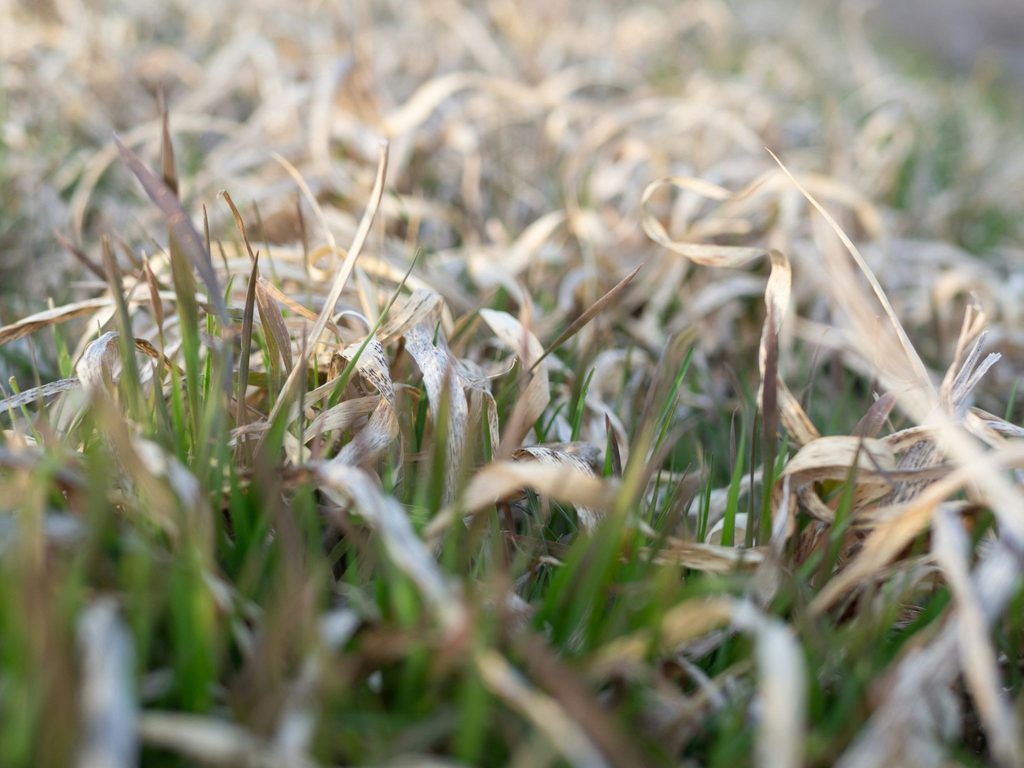
Table of contents
Stripes and scorched patches point to burn, not hunger
Seasonal lawn fertilization is supposed to give you a greener yard, so it stings when the grass turns yellow a week later. Before you buy more, look at where the yellow patches actually are.
Fertilizer should be thought of as condensed salt. When too much lands in one spot, the grass loses water to it rather than gaining nutrients, and that’s fertilizer burn. It’s usually a spreader problem. Maybe you overlapped the passes, or the setting was too high, or some product spilled. A hungry lawn just looks washed out across the board, so patchy, uneven damage points to burn instead. Here’s what to look for:
- Yellow or tan stripes that follow your spreader’s path
- Crispy patches where you turned, stopped, or spilled
- Scorched blades with straw-colored tips
- A sharp line between damaged and healthy grass
- Symptoms that appear within days, not weeks
Does this sound like your yard? Then grab the hose and give the area a long, deep soak. That helps wash the extra product down past the roots. Hold off on any more fertilizer for now. Check the bag, too, since many granular products are meant to be watered in anyway. The scorched blades are done for, but the lawn isn’t. New growth will cover them as it comes in.
In Collin County Clay, yellow often means iron is locked out
Not every yellow lawn is a burn. If the whole yard turns pale with no stripes, iron may be the real issue. Much of the clay around here tends to be alkaline, and that’s where iron gets tricky.
Iron is usually in the soil. The grass just can’t get to it. Iron chlorosis shows up most in high-pH, calcareous soils. Your feeding habits can add to it. The same paper says too much phosphorus from heavy fertilizing blocks iron uptake, and soggy, compacted soil does the same. Wet spells can also cause a short-term shortage, which usually clears up once the ground drains. Roots need air to pull in iron, so extra watering rarely helps.
That’s where a lawn iron treatment comes in. It can green the lawn quickly without adding the nitrogen that burns grass. It’s a quick fix, though, and the soil’s alkalinity doesn’t change, so the yellow can come back. Extra fertilizer won’t cure an iron problem, and iron won’t heal a burn. Match the fix to the cause.
A fast green flush can fade just as fast
Sometimes the lawn greens up beautifully for a week or two, then slides back to pale. That’s often the product, not you. Fast-release fertilizers push a burst of nitrogen into the grass all at once. The blades shoot up and use it up quickly, and then there’s nothing left.
Slow-release fertilizer is a more laid-back approach. This fertilizer works in small amounts over a number of weeks, meaning that the results will be long-lasting and the chances of burning will be greatly reduced. Either way, go sparingly and evenly. Two thin passes are better than one heavy one.
Then there’s timing. Don’t feed a lawn that’s still dormant, and don’t do it with a big storm on the way, because you’ll just waste the bag. A normal rain isn’t the problem, though. Water is what activates granular products, and CitiTurf says a regular rain usually helps, while a downpour right after treatment is the exception. Bermuda and St. Augustine do best once they’re growing on their own, not while they’re still waking up. Miss on any of this, or spread unevenly, and you can still end up with yellow grass after fertilizer.
Read the yellow before you treat it
Hold off on buying another bag. The table below lines up what you’re seeing with the most likely cause. If it’s iron, a lawn iron treatment will do more than extra fertilizer ever could. If it is burned, then time and water are the remedy. In either case, if you find yellow grass after fertilization, it’s important to look at where the yellowing is before taking any action.
| What you see | Likely cause | First move |
| Stripes or scorched patches | Too much product in one spot | Water deeply, skip feeding |
| Pale, irregular patches, worst in new growth | Iron lockout | Soil test, then iron |
| Green for a week, then pale | Fast-release nitrogen ran out | Switch to slow-release |
| Even pale color, slow growth | Low nitrogen | Light, scheduled feeding |
Just to be sure, a soil test is cheap and will clear things up for you. Take a photograph immediately you notice the yellows, because the pattern will disappear as the grass changes.
In conclusion
A yellow lawn after feeding isn’t a lost cause. Read the pattern, treat the right problem, and give the grass a little time. Fixing it usually takes more patience than product, and most burned yards recover once new growth fills in.