
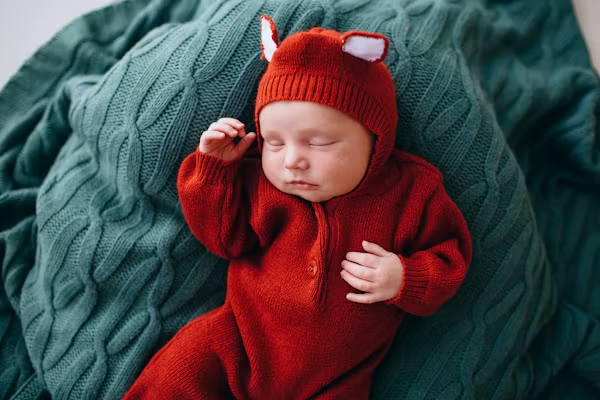
Selecting clothes for an infant turns out to be more difficult than expected. The item may appear adorable hanging on a rack, but that does not mean the clothing will suit an active baby, the unexpected changes in the nappy, or a busy crawling period. This is exactly why baby rompers turned out to be so handy for daily use.
As a top-and-bottom garment, a romper may simplify dressing the child and help ensure they feel comfortable throughout the day. However, not every romper will provide the required level of comfort and convenience.
Fabric, fit, buttons, design, and seasonality need to be considered when selecting this type of babywear. It is necessary to consider how easy the romper will be to wash and whether it will provide enough freedom of movement for your child.
Considering the wide variety of patterns, fabrics, colors, and sleeve types, it may seem quite confusing at first glance. Fortunately, by paying attention to certain factors, you can greatly facilitate the process. Read on!
Table of contents
1. Start with soft, baby-friendly fabrics
The product’s material will need to be considered among the very first factors. Since a baby romper will come into contact with an infant’s skin, its comfort and softness are essential. In terms of material, soft, smooth fabrics can be chosen to avoid irritating a baby’s skin.
Natural fabrics like cotton are often used in everyday baby clothing for their comfort and breathability. If organic clothes are preferred, choose baby rompers made of organic cotton that are GOTS-certified. However, not only the material needs to be taken into consideration when buying rompers.
Weather can also play an important role in this matter. Light fabric will be necessary on hotter days, and heavier, longer-sleeved material will be appropriate when the weather is cooler. Therefore, the material and the climate must be considered together when choosing a baby romper for everyday wear.
2. Pay close attention to the fit
A good baby romper should provide enough room for movement without being excessively loose. Babies spend much of their day stretching, kicking, rolling, crawling, and eventually walking, so restrictive clothing can quickly become uncomfortable.
At the same time, choosing an oversized garment to allow room for growth is not necessarily practical. Excess fabric can interfere with movement, bunch around the body, or make the outfit less comfortable. Instead, parents should consult the garment’s specific size guide and consider measurements such as height and weight rather than relying solely on age.
Additionally, look at the shape of the romper. A comfortable design should allow room around the torso and legs while sitting naturally against the body. As babies grow at different rates, checking measurements before purchasing can be more reliable than assuming a particular age corresponds perfectly with a particular size.
3. Look for convenient fastenings
When choosing baby clothing, convenience matters almost as much as appearance. Babies require frequent nappy changes, and changing clothes can become challenging when a garment has complicated closures.
Therefore, look for rompers with practical fastening systems that make access straightforward. Snaps, for example, can make lower-body access easier, while well-designed zippers can allow parents to open a larger section of the garment quickly. Envelope-style openings can also make dressing easier by providing additional room around the neckline.
Furthermore, closures should be securely attached and designed without unnecessary small decorative components. Small parts that become detached can pose a choking hazard, while long cords or drawstrings around the neck can pose safety concerns.
4. Consider freedom of movement
The romper is more than just a garment that would cover a baby sitting still. During the day, the little one may move around by kicking, rolling over, crawling, standing, and exploring his environment. Therefore, ease of movement becomes a significant aspect when choosing a romper.
There are rompers with spacious armholes, legs of appropriate length, and sufficient space for the hips and the trunk area of the baby. The stretchable material may also facilitate the dress’s natural movement.
In particular, this aspect becomes critical as babies grow up and become more active. While a romper might fit a stationary newborn, it would not suit a crawling or walking baby of the same age. Hence, the development stage of the little one and the purpose of wearing such clothing should also be taken into account.
The fact is that one-piece outfits are the simplest option, as the need to combine tops and bottoms vanishes and the baby is free to move. In general, rompers are suitable for all developmental stages, from newborns to two-year-olds.
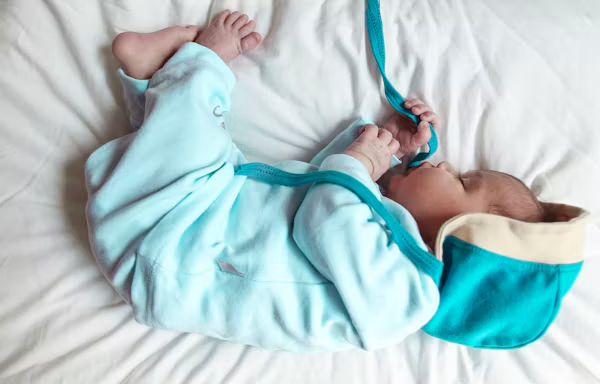
5. Choose a style that works for the season
Temperature should also influence your decision. A short-sleeved romper may be ideal for warmer days, while a long-sleeved version can provide additional coverage during cooler weather.
However, versatility is particularly valuable because temperatures can change throughout the day. A lightweight romper can be paired with another suitable layer when necessary, allowing parents to adapt the outfit without completely changing the baby’s clothes.
Similarly, consider where the romper will be worn. A simple, everyday design may be ideal for playtime, daycare, or casual outings, whereas a colorful, printed style might be suitable for family gatherings and photographs. The available range of baby rompers includes short- and long-sleeved designs, as well as different colors and prints, providing flexibility for different situations.
Most importantly, remember that ordinary daywear and sleepwear are not automatically interchangeable. Parents should follow applicable safe-sleep guidance and use clothing specifically appropriate for sleeping when necessary.
Conclusion
Selecting a baby romper need not be difficult. By focusing on more than just aesthetics and paying attention to material, fit, closures, ease of movement, seasonality, and care needs, parents will end up with an item that truly deserves a spot in their baby’s wardrobe.
In addition, the proper romper will make dressing easy while allowing babies to move around freely. A well-designed romper makes life easier for both parents and babies, whether worn at home, on a family outing, or while playing.










