
You know the color even if you don’t know the name. That milky green mixing bowl in your grandmother’s cabinet, the diner mug with the thick walls that never seemed to chip, the little cup and saucer set that turned up in a box of oatmeal decades ago. That’s Fire-King, the Anchor Hocking glass line that ran from 1942 to the mid-1970s, and it is one of the most actively collected kitchen glass categories in the country.
Jade-ite, the milky jade green shade, gets most of the attention, but Fire-King made dozens of patterns in ivory, turquoise blue, peach lustre, and the rare, pale Sapphire Blue that predates the Fire-King name itself. Some of it is genuinely rare. Most of it is not, and that is good news if you are digging through a thrift store bin rather than bidding at a specialty glass auction.
What separates a five-dollar plate from a five-hundred-dollar mug usually comes down to the pattern, the specific piece, and whether it is marked or not. A lot of Fire-King left the factory unmarked, which means condition and pattern knowledge matter more than a stamp on the bottom. Here are 12 pieces worth knowing, from the everyday to the genuinely hard to find.
Table of contents
- Fire-King jadeite D-handle restaurant mug
- Fire-King Jane Ray jadeite dinner plate and cup and saucer
- Fire-King jadeite double egg cups
- Fire-King Turquoise Blue “Hostess Delight” snack set
- Fire-King Charm turquoise blue square dinner plate
- Fire-King Alice pattern jadeite cup and saucer
- Fire-King jadeite range set with tulip lids
- Fire-King Wheat pattern covered casserole
- Fire-King Anniversary Rose creamer and sugar set
- Fire-King Game Birds tumblers and mugs
- Fire-King Peach Lustre Laurel Leaf dinner plate
- Fire-King jadeite ball jug
Fire-King jadeite D-handle restaurant mug
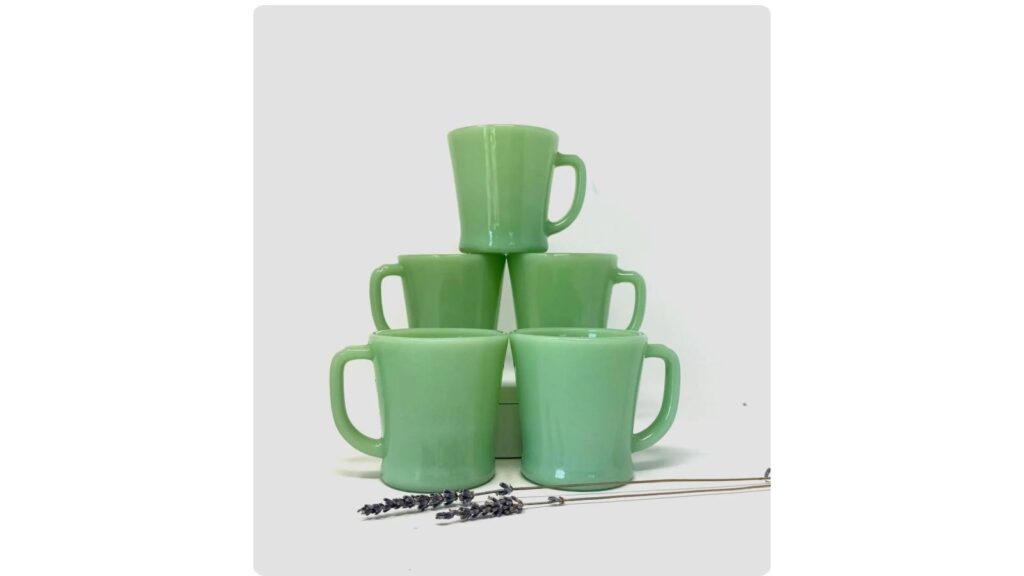
Anchor Hocking made these thick, straight-sided mugs for diners, hospitals, and cafeterias from the late 1940s through the 1960s, and they are still the single most common piece of jadeite you will run into at an estate sale. A clean, chip-free mug with no cracks around the handle typically brings $10 to $25 on its own. Matched sets sell for noticeably more than the same mugs bought separately, since collectors building a full diner set will pay a premium for uniformity.
The handle shape is worth knowing. D-handle mugs have a flat-backed handle, while C-handle mugs curve into a full loop, and both turn up regularly. Neither shape moves the price much on its own, but condition does. Check the base of the handle for hairline cracks, which are common on a mug that size after decades of stacking and washing.
Watch out for decorated versions. Some sellers apply modern decals to plain jadeite mugs to make them look like vintage advertising pieces from old diners or gas stations, then price them as if they were original. If the graphics look too crisp for the age of the glass, ask for more photos before buying.
Fire-King Jane Ray jadeite dinner plate and cup and saucer
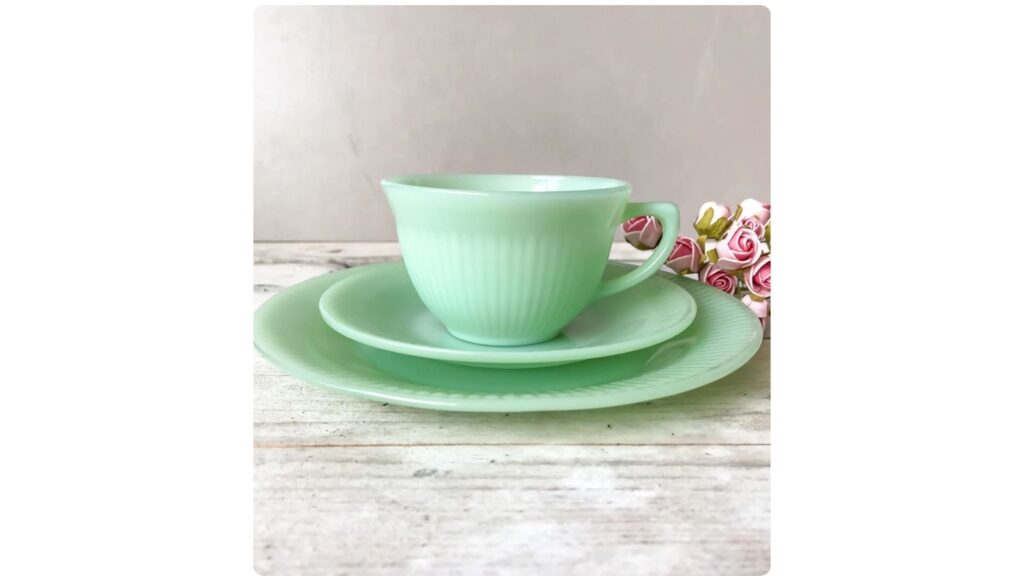
Jane Ray is the pattern most new collectors start with, and for good reason. It was given away for years with bags of flour and boxes of oatmeal, which means it is everywhere. The rayed border and plain center make it easy to spot on a shelf. A dinner plate in good condition typically brings $10 to $20, and a cup and saucer set runs about the same.
The rare pieces are what make this pattern worth a second look. The demitasse cup and its matching saucer barely turn up for sale. The 6 ¼ inch bread and butter plate is genuinely scarce, and the flat-rimmed 9 inch soup bowl is the piece serious Jane Ray collectors chase hardest. A complete boxed starter set, sold originally as a “Jadeite Fire-King Heat Proof Starter Set,” is a nice find if the box has survived along with the glass.
Since Jane Ray was made for close to two decades, the mark on the bottom changes depending on when a piece was produced. Some pieces say nothing at all. Don’t assume an unmarked plate is fake just because it has no stamp; check the pattern and the color instead.
Fire-King jadeite double egg cups
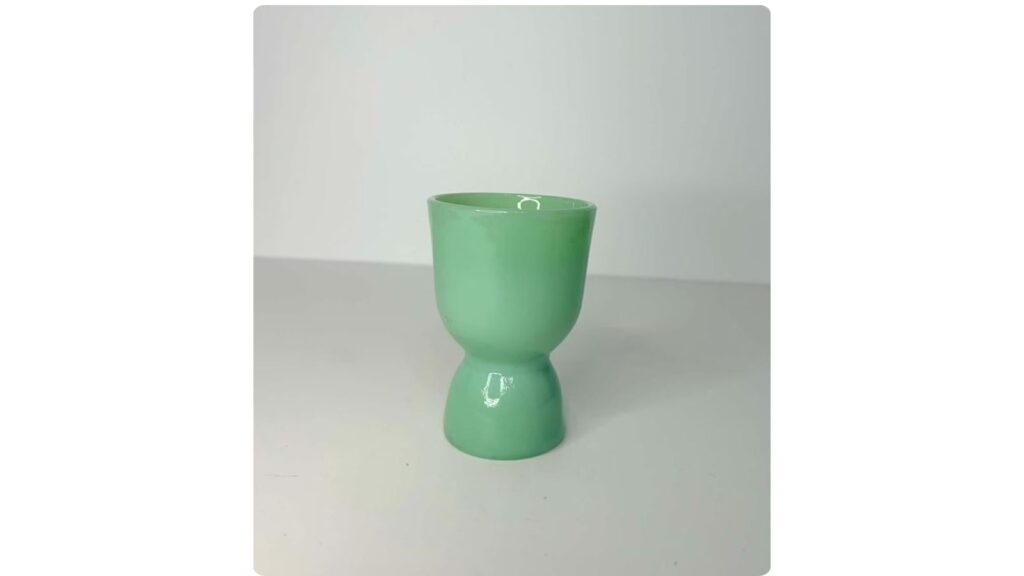
These small double-sided cups, wide at both ends so you can crack an egg into either side, are one of the more overlooked pieces of jadeite kitchenware. They rarely show up in general “vintage glass” bins because most people don’t recognize what they are, which works in your favor if you know to look. A single cup in good condition typically brings $10 to $20, and matched pairs or small lots sell for meaningfully more per piece than a solo cup.
Condition matters more here than on most jadeite because the cups are small and thin-walled at the rim, which is where chips tend to happen. Run a finger carefully around both openings before buying.
The main authentication trick with any jadeite is the blacklight test. Genuine Fire-King jadeite does not glow under UV light. If a green glass egg cup fluoresces bright, it is likely older uranium-era glass from McKee or Jeannette rather than Fire-King, which is a different collectible in its own right but not what you are paying jadeite prices for. When color alone is ambiguous, the glow test settles it in seconds.
Fire-King Turquoise Blue “Hostess Delight” snack set
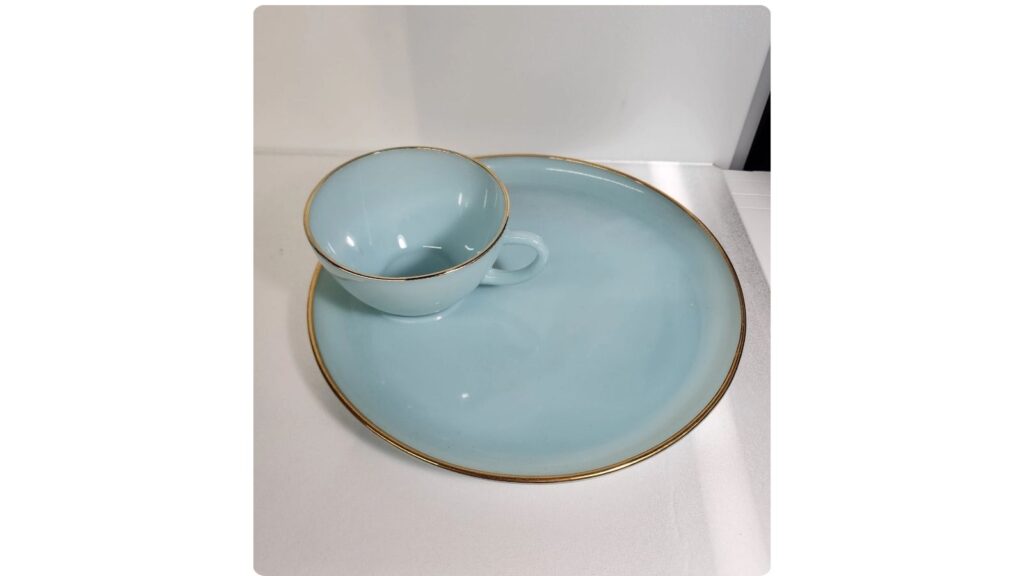
Not every Fire-King line is green. Turquoise Blue, an opaque teal color, was Fire-King’s answer to the 1950s party circuit: a small snack plate with a matching teacup, usually finished with a gold rim, meant for balancing on your knee at a bridge game or a cocktail hour. A single cup and plate set in clean condition typically brings $10 to $20, gold rim intact and no cloudiness in the color.
Complete boxed sets of eight, marketed originally as “Hostess Delight,” are harder to find intact and change hands for meaningfully more than the same number of pieces bought individually, especially with the original box.
The biggest risk with turquoise Fire-King is confusing it with lookalikes. McKee, Federal Glass, and Hazel Atlas all made similar teal-colored glass in the same era, and none of it carries Fire-King prices. Check the base for “Fire-King” or “Fire King Oven Ware” in raised letters. Gold rim wear is normal and expected; heavy wear that has gone silver or worn through to bare glass brings the price down noticeably.
Fire-King Charm turquoise blue square dinner plate
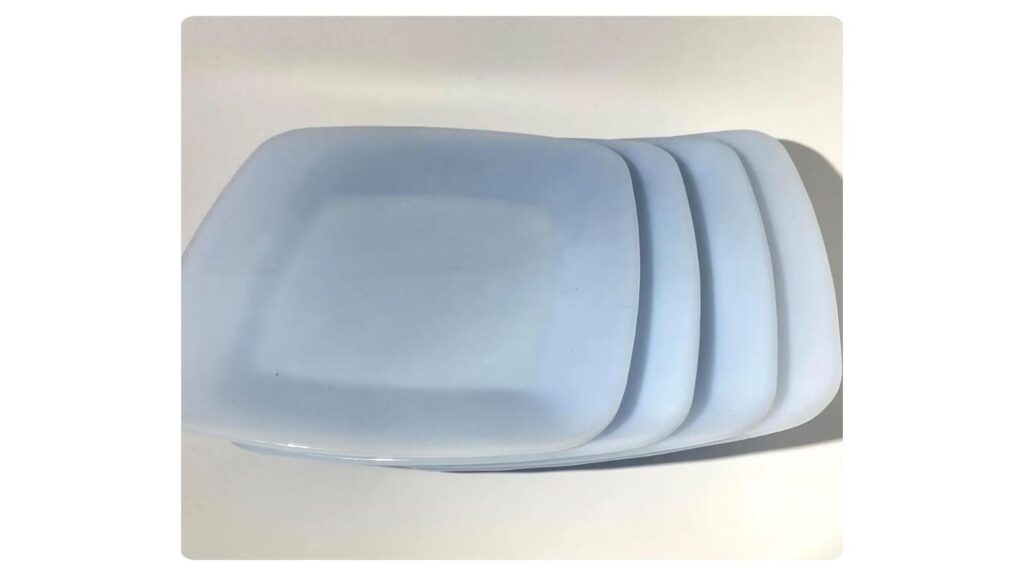
Charm is the only square-shaped pattern Fire-King ever made, and it stands out instantly next to the round plates in a Jane Ray or Swirl set. It came in jadeite and in turquoise blue, and it was only produced for a handful of years in the late 1940s and early 1950s, which keeps supply tighter than most other patterns. A turquoise Charm dinner plate in clean condition typically brings $15 to $30.
The salad bowl had to be bought separately from the original luncheon set, which means it shows up less often today than the plates and cups. The rarest piece by a wide margin is the 11 by 8 inch platter; it barely surfaces for sale, and when it does, collectors notice.
Most Charm pieces left the factory unmarked, so don’t rule out an unstamped square plate just because the bottom is blank. Check the shape and the rayed pattern on the underside instead. A plate with even color, no cloudy patches, and a corner free of chips is what you want; corners on square pieces take the brunt of chip damage that rounded plates avoid.
Fire-King Alice pattern jadeite cup and saucer
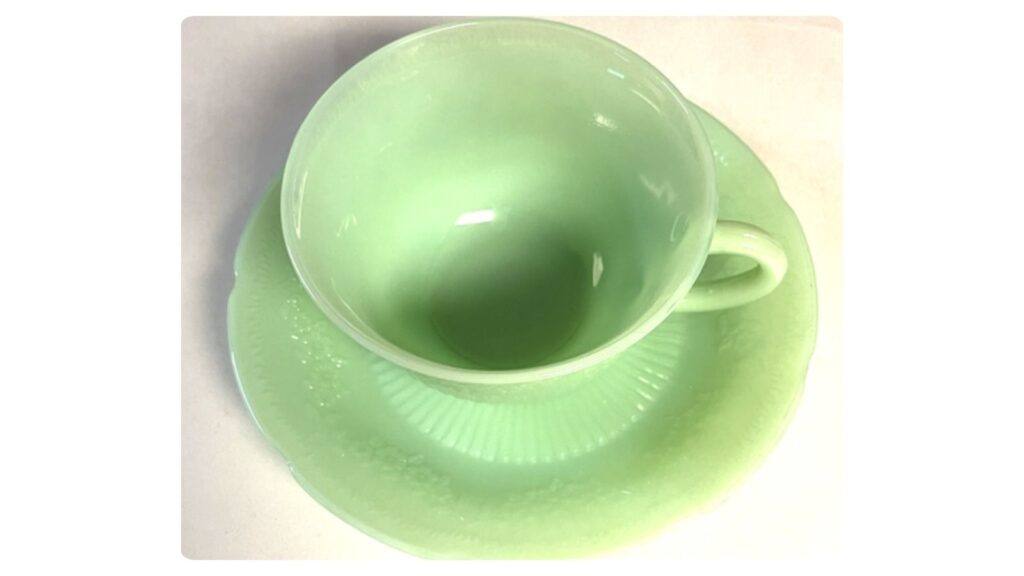
Alice has one of the better stories in the Fire-King catalog. Quaker Oats packed the cup and saucer into oatmeal boxes as a free premium in 1945, which is why the small floral pattern turns up so often paired with a cheerful memory of somebody’s grandmother’s cupboard. A clean cup and saucer set typically brings $15 to $25.
Because the cups and saucers were free, they survived in bigger numbers than the rest of the Alice line. The dinner plate is a different story. Since it had to be bought on its own to round out a full place setting, far fewer left the factory, and it commands a real premium over the giveaway pieces. A complete matching creamer and sugar set is similarly hard to track down and worth chasing if the price is fair.
Alice pieces are often unmarked, so identification comes down to the pattern itself: a delicate ring of small flowers and leaves around the rim of the cup, saucer, and plate. If you see that floral border on jadeite, you have found Alice regardless of what the bottom says.
Fire-King jadeite range set with tulip lids
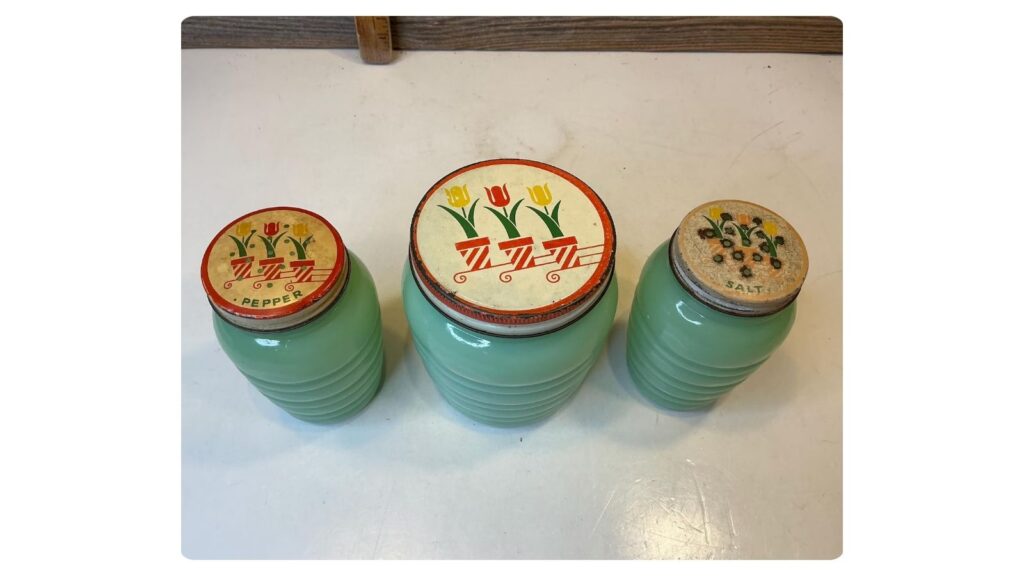
This is the grease jar and matching salt and pepper shaker set that used to sit on the back of the stove in a lot of American kitchens, and it is one of the more surprising values in the whole Fire-King lineup. A complete three-piece set with the tulip-shaped lids intact and no chips typically brings $150 to $275, which catches a lot of first-time sellers off guard.
The lids are the weak point. They are thinner than the jars themselves and were handled daily, so a set with all three lids present and undamaged is worth substantially more than one missing even a single lid. Rust staining on the metal-free glass lids is not typical; check for actual glass chips along the rim where the lid meets the jar.
Reproduction risk is real here. Fakers have been known to take genuine blank vintage shakers from other manufacturers and add lettering or graphics to mimic an original range set. If the printing looks unusually crisp or the jar shape doesn’t match reference photos exactly, get a second opinion before paying full price.
Fire-King Wheat pattern covered casserole
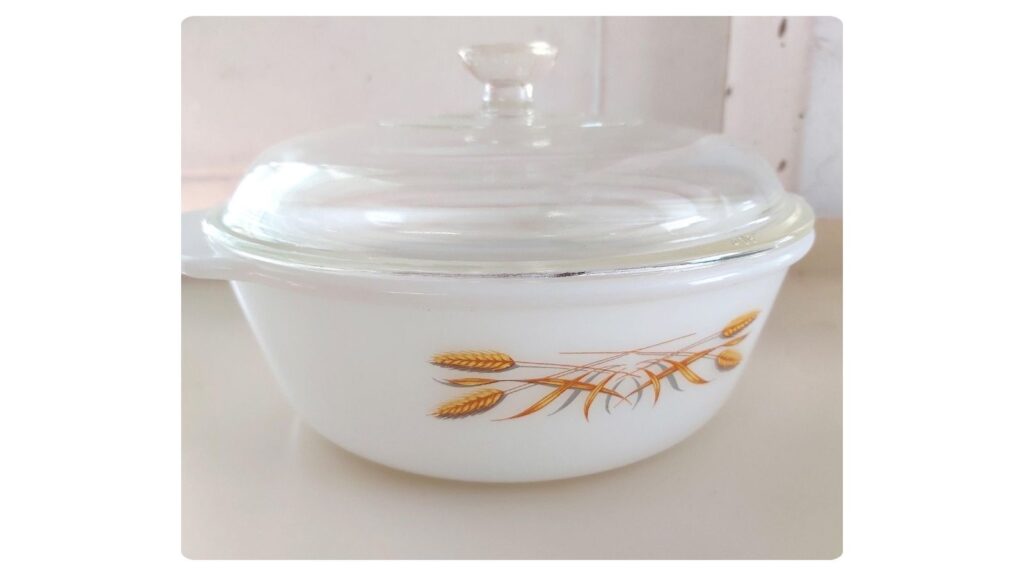
The Wheat pattern, sometimes called Golden Wheat, dresses up plain white milk glass with a stalk of wheat rendered in gold. It was a wedding registry staple through the 1960s, and it survives in large enough numbers that you can still build a full set without much trouble. Small loaf pans and one-quart casseroles bring $10 to $20 in good condition, while larger covered casseroles with the lid still intact reach $25 to $35.
The gold decoration is the part to inspect closely. It was applied on top of the glass rather than fired underneath it in most cases, which means decades of dishwasher cycles can wear it down to a ghost of the original pattern. A dish with crisp, unworn gold is worth meaningfully more than one where the wheat has faded to a faint outline.
Completeness matters more here than on open bakeware. A casserole missing its lid is worth a fraction of a matched pair, so check that the lid’s shape and rim actually match the base before assuming they belong together.
Fire-King Anniversary Rose creamer and sugar set
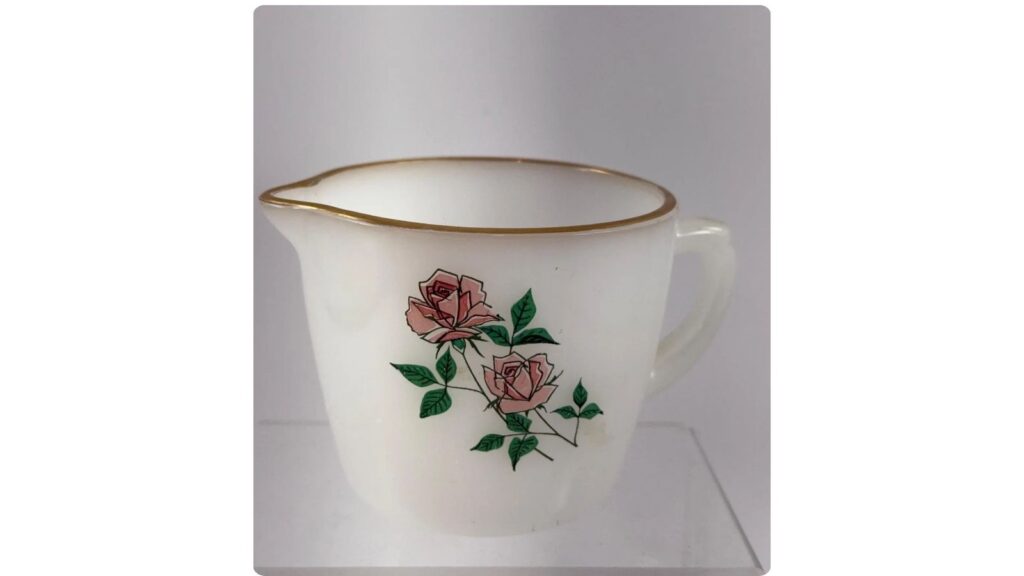
Anniversary Rose dresses up Fire-King’s Swirl-shaped milk glass with a soft pink floral print and a band of gold trim, and it has the kind of old-fashioned, feminine look that photographs beautifully on a shelf. A matching creamer and open sugar bowl in good condition typically brings $15 to $40, depending on how much of the gold trim has survived intact.
Complete dinnerware sets in this pattern, plates, bowls, cups, and saucers together, are less common than the smaller serving pieces, since sugar and creamer sets tend to survive daily use better than a full stack of plates. If you find a larger lot with the gold trim consistent across every piece, it is likely a set that stayed together its whole life rather than one assembled later from mismatched pieces.
Check the gold trim before anything else. Hand washing kept it intact; a dishwasher will strip it to bare glass within a few dozen cycles, and heavily worn trim cuts the value close to in half compared to a crisp example.
Fire-King Game Birds tumblers and mugs
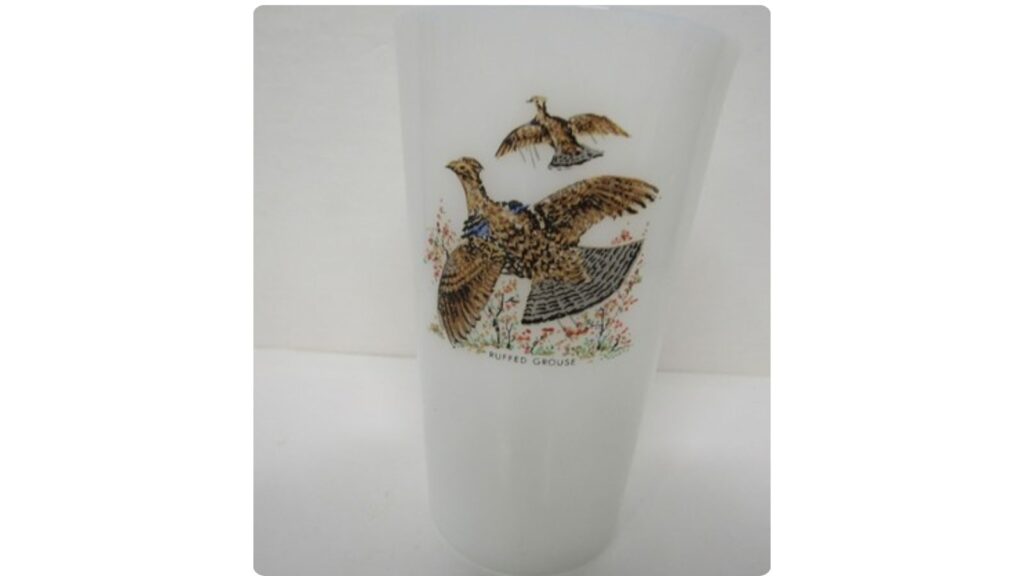
Not every Fire-King piece is dinnerware. The Game Birds line put hand-painted ducks, pheasants, geese, and grouse on plain white milk glass tumblers and mugs, aimed squarely at the hunting cabin and lodge crowd of the 1950s and 60s. A single tumbler or mug in decent condition typically brings $8 to $15, but a set of four with four different birds is worth more than four times a single piece, since collectors specifically want the full run of species.
The paint is fired on rather than a sticker, which is good news for durability, but decades of dishwasher use still fade the finer feather detail over time. Look for crisp black outlines and full color saturation rather than a washed-out silhouette.
This pattern gets confused with several other hunting-themed glass lines from the same era, including pieces by Hazel Atlas and Federal Glass. Check the base for a Fire-King mark to confirm what you actually have before pricing it as part of this specific set.
Fire-King Peach Lustre Laurel Leaf dinner plate
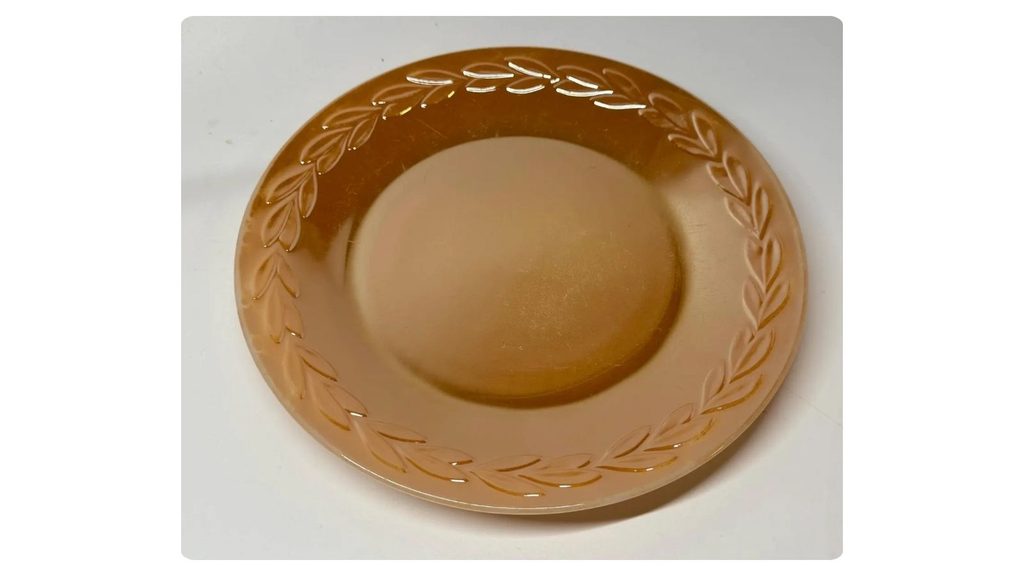
Peach Lustre is the warm, amber-pink iridescent finish Fire-King applied over crystal glass starting in the early 1950s, and the Laurel Leaf pattern, with its ring of molded leaves around the rim, is the most common form you will find it in. A dinner plate in clean condition typically brings $10 to $18, a modest step below what the same shape brings in jadeite.
Because Peach Lustre is less hunted than jadeite, it is a genuinely good category for someone who wants real vintage Fire-King without competing against a crowded collector market. Full sets with matching cups, saucers, and serving pieces do turn up at estate sales fairly often, and they tend to be underpriced relative to how complete they are.
The iridescent finish is the fragile part. It can dull or develop a cloudy film after years in a dishwasher, and once that shine is gone it does not come back. Hold a piece up to the light and look for an even, warm glow across the whole surface rather than patchy dullness before deciding it is in top condition.
Fire-King jadeite ball jug
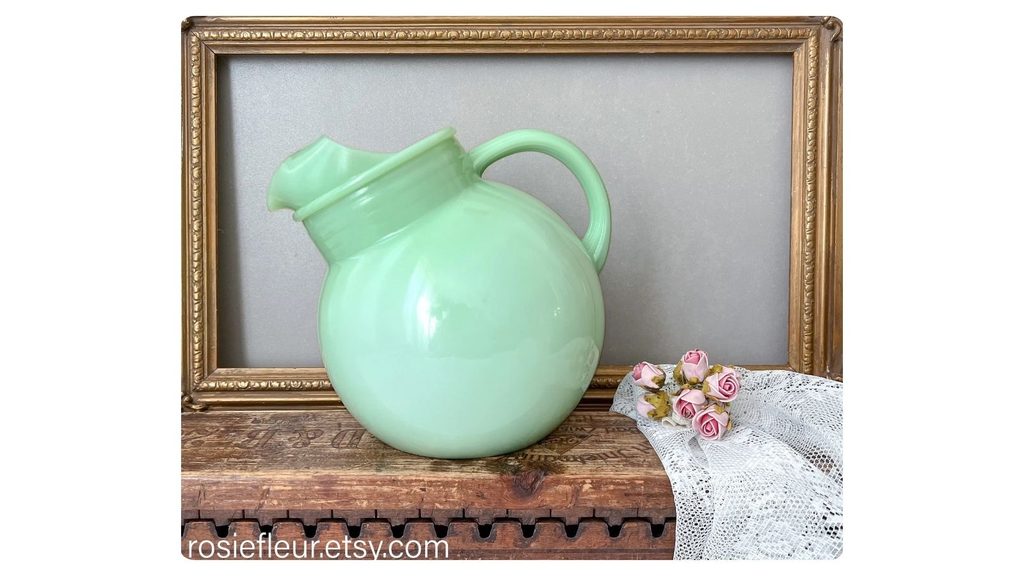
The ball jug is the piece serious Fire-King collectors mention first when the conversation turns to rarity. It is a round, tilting pitcher with a distinctive spherical body, made in small numbers as part of the original Restaurant Ware line, and genuine examples in decent condition regularly bring $300 to $600, with worn or lower-condition examples still selling for meaningful money.
This is also one of the most heavily reproduced pieces in the entire Fire-King catalog. A company called Gibson has made a very close copy for years, and because both the original and the reproduction are typically unmarked on the bottom, a Gibson barcode sticker on the base is often the only visible clue. Even the reproduction sells for a fair amount on its own, so a seller isn’t necessarily lying to you, but you should know which one you’re paying for.
If you come across one at an estate sale with no sticker and no obvious signs of recent manufacture, weight and glass quality are your best clues; genuine vintage jadeite tends to feel heavier and less uniformly colored than the newer copies.











