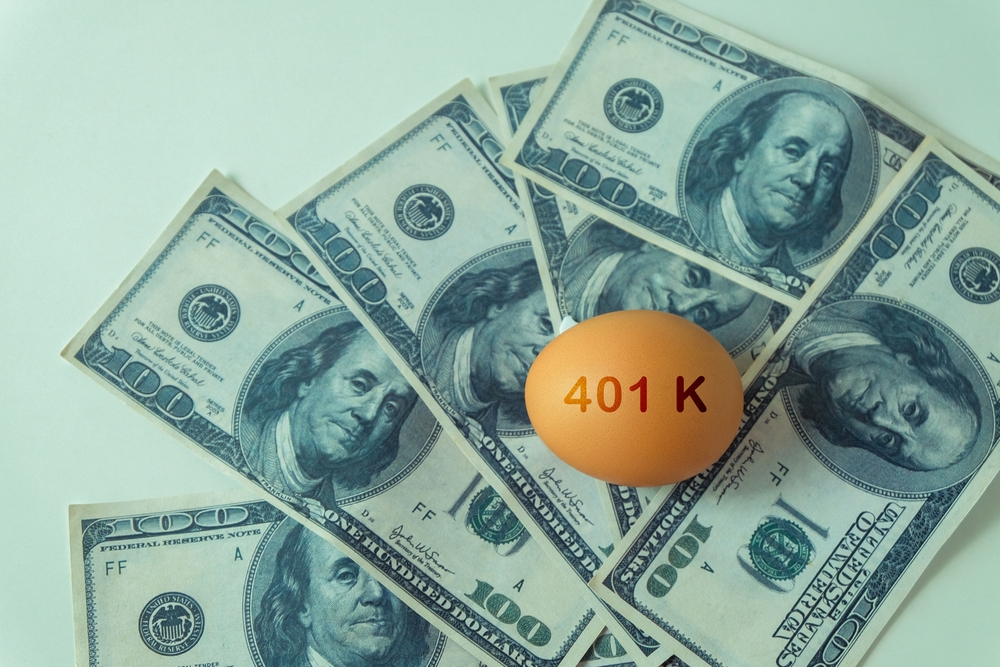
You open your 401(k) statement and see $80,000. After working for a couple of decades, that might feel disappointing, especially when you keep hearing about people with half a million dollars saved before retirement. But $80,000 is close to the middle of the latest available group of retirement-plan participants around your age.
Among Vanguard retirement-plan participants aged 45 to 54, the median balance was $78,730 at the end of 2025. The average was $214,991, almost three times as high. Both are from the 2026 How America Saves report and reflect the defined contribution plans Vanguard administers, including 401(k)-type accounts.
These aren’t figures for every American around 50. Nor do they represent each person’s total retirement savings. Someone with $50,000 in a current 401(k) and $250,000 in an old IRA has far more put away than the current-plan balance suggests.
What the $78,730 median actually measures
Vanguard groups participants aged 45 through 54 together. At the end of 2025, half of the people in that group had an account balance below $78,730, and the other half had more. The average, $214,991, is calculated by adding the participants’ account balances and dividing by the number of participants. High earners with substantial accumulated savings can raise that average well above the middle account.
Vanguard’s sample consists of employer-sponsored defined contribution plans it keeps records for. It isn’t a random survey of all U.S. households. Workers who never had a workplace plan, those who didn’t enroll and people saving only through IRAs aren’t represented in these account figures. An employee with a rollover IRA or a retirement plan held with another company may have savings that aren’t included here either.
The median for participants aged 35 to 44 was $46,919, compared with $107,269 for those aged 55 to 64. Those numbers show what three different age groups held in 2025. They aren’t a promise that any one participant will have $107,269 in the next decade. A changing salary, investment returns and the amount being contributed will influence where the balance ends up.
Why the median is more useful than the average

Take five people with 401(k) balances of $20,000, $45,000, $80,000, $110,000 and $750,000. The person in the middle has $80,000. The average is $201,000 because one large account pulls it higher. Four of the five have balances below that average.
The same effect shows up across Vanguard participants of all ages. Their overall median was $44,115 in 2025, compared with a $167,970 average. Comparing yourself with the average alone can make a solid amount of retirement savings look much smaller than the balance held by the middle participant.
But the median isn’t a retirement target either. A household with $90,000 in a current plan, a paid-off home and a pension will have a different future from someone with $200,000 in a 401(k), high rent and no other savings. A 50-year-old hoping to retire at 60 will need to draw on savings earlier than someone planning to work until 68. A national balance ranking can’t account for those differences.
Job changes and rollovers can make the account look small
An employee who spent 20 years at the same company may have far more in that company’s plan than someone who started a new job six months ago. Vanguard’s median balance for participants with 0 to 1 year of job tenure was $3,327 in 2025, compared with $186,335 for those with 10 or more years. These figures cover participants of all ages, not only people nearing 50.
The person with the new job may have moved savings from previous employers into an IRA. The new 401(k) might show $4,000 while the IRA holds $180,000. A former employer’s 401(k) might also still be sitting with another provider. A figure on one statement isn’t a complete retirement inventory.
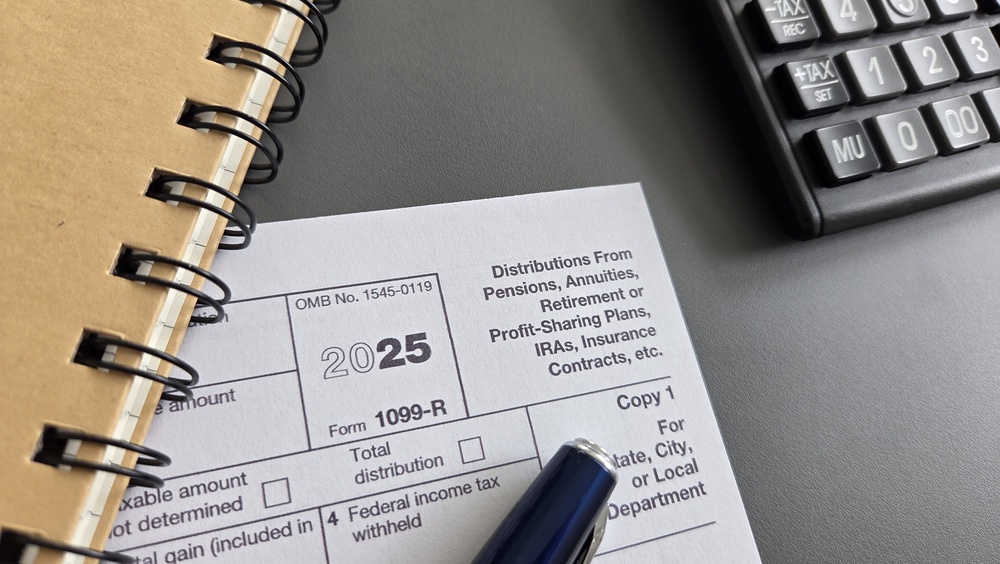
If you’re unsure where old accounts ended up, go through previous employers and financial statements before estimating your total savings. An eligible direct rollover to another workplace plan or IRA can generally move retirement money without the mandatory tax withholding that applies when a taxable distribution is paid directly to you. Compare fees, investment choices and available plan protections before moving anything. There’s no benefit in consolidating accounts simply to make the current 401(k) statement show a larger number.
Contributions and employer matches change the trajectory

The money going into your 401(k) has two possible sources: your contributions and any money your employer adds. One company might match a worker’s contributions dollar for dollar up to a percentage of salary. Another might match only half, require a period of service before matching contributions become fully vested, or offer no match at all.
Suppose you earn $80,000, contribute 6% of your pay and get an employer contribution equal to 3%. That’s $4,800 from you plus $2,400 from your employer, or $7,200 a year before investment changes. Raise your contribution to 8%, and the total increases to $8,800 if the employer contribution remains 3%. You would put another $1,600 into retirement savings annually.
Across all Vanguard participants, the average total employee-plus-employer contribution rate was 12.1% of pay in 2025. That is a description of participation in the plans surveyed, not the rate you personally must reach. Find out how much you need to contribute to receive your full match, and check whether your payroll contribution is a fixed percentage that stays flat even as your salary increases.
Investment returns and withdrawals leave lasting effects

A 401(k) holds investments, so the balance changes as markets rise and fall. Two people who put in identical amounts for 15 years can end up in different positions if one held mostly diversified stocks and bonds and another kept most of the account in conservative cash-like investments. Fees also reduce returns, and differences accumulate over time.
In 2025, 94% of Vanguard participants with balances at both year-end 2024 and year-end 2025 saw a positive account-balance change. That reflects contributions as well as investment results. A statement that grew by $12,000 doesn’t mean the investments earned $12,000. Part of the increase may be your own paycheck deposits and the employer match.
Past withdrawals can leave an equally significant mark. Someone who withdrew $20,000 from a 401(k) for an emergency at 38 no longer has that money earning potential returns at 50. Unrepaid loans can create additional tax consequences, and early taxable distributions can be costly. Keep enough accessible cash for likely emergencies so that the retirement account isn’t the first place you turn when a car breaks down or an unexpected bill arrives.
The catch-up contribution opportunity starts at 50

A worker who reaches age 50 by December 31 can generally make catch-up contributions for that calendar year if the plan permits them. The standard employee 401(k) contribution limit is $24,500 in 2026, and the age-50 catch-up allowance is another $8,000. That makes a combined potential employee contribution of $32,500 for an eligible 50-year-old in 2026. Employer contributions are subject to separate overall plan limits.
The IRS has also announced the 2027 employee limit of $25,500 and an age-50 catch-up limit of $8,500. Workers aged 50 to 59 can therefore contribute up to $34,000 in a typical eligible plan in 2027, assuming they have sufficient compensation and plan access. Many people can’t afford the maximum, but adding $100 to each of 26 paychecks still contributes another $2,600 over a full year.
There is also a tax rule for higher-paid employees. In 2026, workers whose prior-year wages with their plan sponsor exceeded $150,000 generally have to make catch-up contributions on a Roth basis when the rule applies. The wage threshold for 2027 increases to $155,000 of prior-year wages. Check the specific plan terms and payroll treatment rather than assuming ordinary pretax catch-ups remain available to every high earner.
Seventeen more working years can add substantial savings

At 50, someone hoping to work until 67 has another 17 years before the planned retirement date. The money you add during those years can earn returns along with what’s already invested. Delaying extra contributions until the final few years means both fewer deposits and less time for those deposits to grow.
An extra $200 a month amounts to $40,800 in deposits over 17 years. If those deposits earn an illustrative 5% annual return, compounded monthly, they would grow to about $64,000 before fees and taxes. Markets won’t deliver an identical return every year, and the result could be lower. Even without investment gains, the $40,800 in deposits would still add materially to the retirement balance.
Consider raising your 401(k) contribution rate when a pay increase arrives or a recurring debt payment ends. Review the investment allocation, too. A target-date fund, for example, gradually adjusts its investment mix as its target retirement year approaches. That can be convenient, but read the underlying fees and asset mix. At 50, your money may need to support retirement spending for decades, so simply moving everything to cash to avoid market declines can introduce inflation risk.
A 401(k) is not your complete retirement portfolio
There may be traditional or Roth IRAs, a former employer’s 403(b), a government Thrift Savings Plan account, a taxable brokerage account intended for retirement or future pension benefits in the picture. A spouse or partner may have separate savings. None of those is automatically included when you look at the balance in your present workplace plan.
Imagine someone with a $50,000 current 401(k), $160,000 in a rollover IRA and $20,000 in a Roth IRA. Those three retirement accounts contain $230,000, even though the 401(k) alone falls below the Vanguard median. A second person with a $180,000 401(k) and nothing elsewhere has $50,000 less in those types of retirement accounts.
A traditional pension needs different treatment because it promises future income rather than necessarily providing an account balance you can add. Money in a taxable investment account may be available for retirement even if it isn’t labeled retirement savings. And someone who never had a workplace plan should not be described as having failed a 401(k) comparison. They may have accumulated wealth in other ways, or their employment may simply never have offered that benefit.
Retirement spending is a better test than the average balance

A frequently used planning benchmark suggests six times your annual salary saved by age 50 across retirement savings, not just in a single 401(k). That would be $360,000 for a worker earning $60,000. The benchmark assumes a particular saving pattern and retirement date, so a person with a generous pension or modest expenses may need a different amount from someone aiming to retire in their late 50s.
Estimate your retirement spending first. A household expecting $5,000 a month in expenses would need about $60,000 a year in today’s dollars before adjusting for future inflation and taxes. Then estimate Social Security and pension income. The personalized Social Security estimator uses your earnings record and allows you to compare different claiming ages. Under current law, full retirement age is 67 for people born in 1960 or later.
If Social Security and a pension are expected to cover $3,500 of that $5,000 monthly budget, the household would need another $1,500 a month from investments or other sources, before allowing for taxes and changing costs. A household whose reliable income covers only $2,000 of the budget would need to finance an additional $3,000 each month. A larger or smaller retirement portfolio may be appropriate depending on which gap it must cover.
Check what your savings can actually support

Collect every account balance, add up the contributions you’re currently making and note how much the employer contributes. Decide when you might retire and what housing, insurance, food, transportation, taxes and healthcare are likely to cost. Compare that with your expected Social Security benefits, pensions and other reliable income.
Run the numbers at more than one retirement age. Try a version where you contribute a little more, another with lower investment returns, and another where you work two additional years. A plan that works only with unusually strong markets and no surprise expenses needs more room for error. If your expected income falls short, you can calculate how much extra monthly saving or working time could narrow the gap.
The $78,730 median tells you how your current workplace-plan balance compares with the middle Vanguard participant aged 45 to 54. Your retirement budget needs your complete portfolio, the money still going in, the income you expect later and the expenses you’ll have to meet.