A set of turquoise-and-white Pyrex bowls still in its original box can bring $625. Five Franciscan Starburst dinner plates have brought $150, and a Holt-Howard Pixieware relish jar without its original serving spoon has sold for $70. These were everyday kitchen pieces, handled and washed for years, and many of the survivors have scratches, chips, or missing accessories.
Some collectors want a complete dinner service. Others are trying to replace the one lid, bowl, or accessory their family lost years ago. With 1950s kitchenware, the precise pattern and shape are often more useful than the word ‘vintage’ on a price tag.
Butterprint and Pink Daisy have different histories within the Pyrex line. Holt-Howard made condiment jars with whimsical ceramic spoon handles, while Fire-King produced milk-glass grease jars printed with tulips. The small identifying details often settle exactly which piece you’re looking at.
Pyrex Butterprint Cinderella mixing bowls
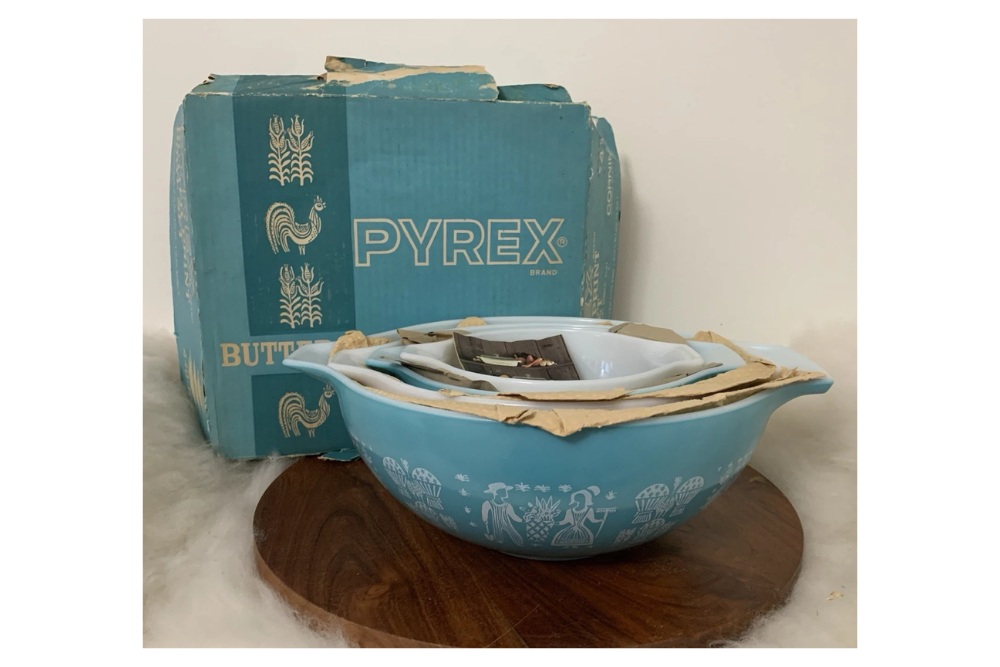
Turquoise Butterprint Pyrex is recognizable from the little Amish figures, roosters, and farm scenes printed across the glass. A complete four-bowl Cinderella set in its original box sold for $625. The four graduated bowls have distinctive handles and pouring spouts; Corning introduced the Butterprint design in 1957, when patterned kitchen glass was becoming as decorative as it was practical.
The boxes are a particularly appealing part of early sets because they show the original product name and how the bowls were intended to fit together. A set should contain the 441, 442, 443, and 444 sizes. Wear often appears on the colored exterior, with dull patches or missing print left by years of scouring and dishwashers. Corning used different color combinations over the pattern’s production life, so a pale blue bowl paired with the wrong sizes doesn’t necessarily recreate the original set.
Holt-Howard Pixieware relish jars
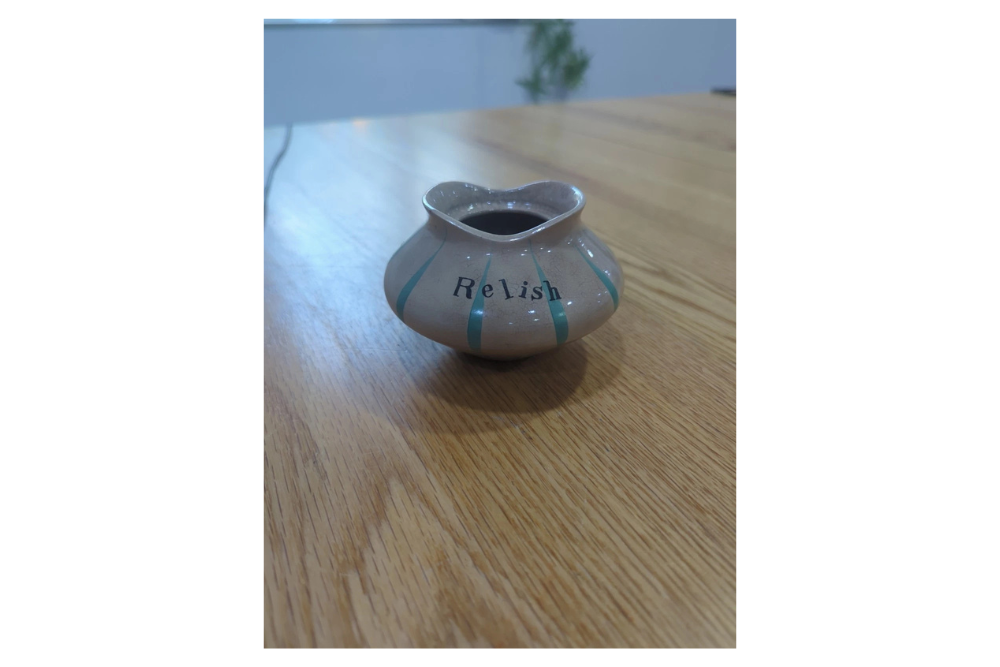
A little striped ceramic jar labeled ‘Relish’ is part of Holt-Howard’s wonderfully odd Pixieware line. An example of the 1958 design sold for $70 even though the sale was for the jar rather than the full character-topped serving set. The original Pixieware pieces made ordinary condiments look as though they belonged in a cartoon kitchen.
Each jar was decorated for its particular contents, while many of the complete sets included a spoon with a large, expressive ceramic pixie head. The company had begun producing Pixieware in 1958, and the line expanded into a remarkable collection of mustard, jam, ketchup, relish, and other serving pieces. On surviving jars, the original paper labels, stripes, and printed words are useful clues. The spoon is a separate piece that could easily end up in a cutlery drawer or disappear altogether; replacing it with another character’s spoon can spoil the intended combination.
Sunbeam Mixmaster Model 12 stand mixers
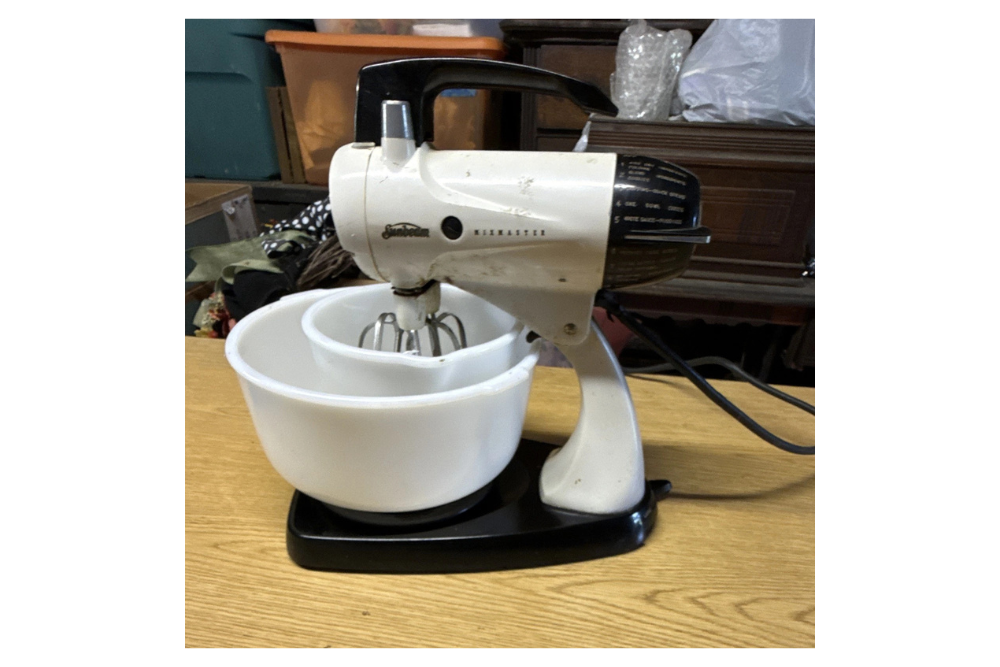
Those heavy white Sunbeam mixers with twin beaters and a swiveling bowl seem to have lived in every other American kitchen. A working 1950s Model 12 sold for $45. The Model 12 arrived in 1957 and was made for years afterward, so its shape alone doesn’t prove a particular mixer was purchased before 1960.
The head can be lifted or tilted, depending on the version, and the beaters drive the mixture while the bowl turns on the stand. Sunbeam also offered matching bowls and useful attachments, including a juicer. The speed control and bowl arrangement are both characteristic of the period’s effort to make baking more convenient. A complete set of original beaters, bowls, turntable, and stand makes the mixer easier to display or restore. Frayed cords, noisy motors, and worn electrical insulation deserve professional attention; a machine that still starts isn’t automatically safe for kitchen use.
Franciscan Starburst dinner plates
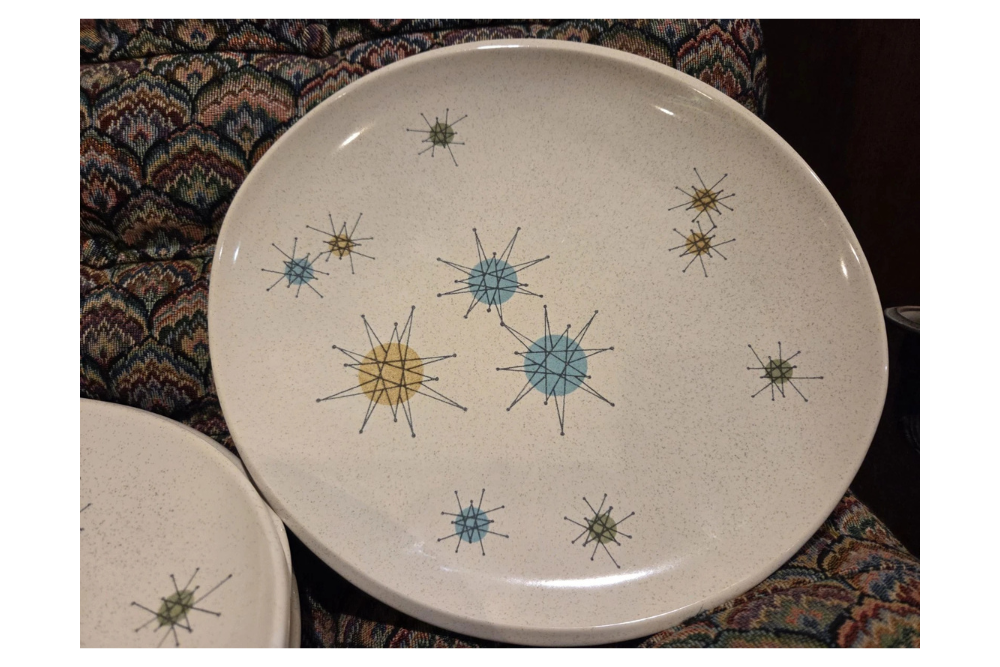
Franciscan’s Starburst dinnerware looks as if it belongs on the table of an atomic-age dream kitchen. Five unused 11-inch dinner plates sold together for $150. First introduced in 1954, the pattern sets little black and blue star shapes against pale surfaces, with scattered yellow and green accents giving the design its unmistakable midcentury look.
The pattern extended far beyond dinner plates to cups, bowls, platters, and specialty serving pieces. People who own a partial service may be looking for an exact number of plates with the same shape and decoration, particularly when they want to use the whole set for a family gathering. Inspect the rims for small chips and the glossy surface for scratches from stacked storage. The printing and glaze should be consistent across a matched group. Several newer reproductions and similar atomic patterns exist, so the shape and Franciscan markings on the underside help confirm the original line.
McCoy blushing apple cookie jars
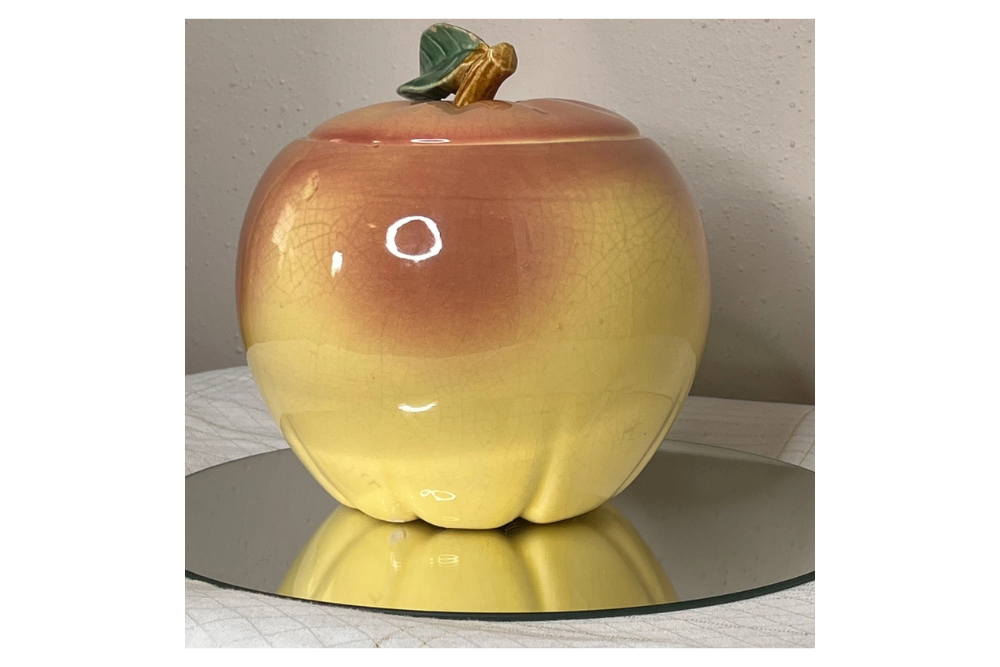
McCoy’s blushing apple cookie jar is a rather cheerful piece of pottery: a big yellow fruit with red coloring on its cheeks and a separate lid. A 1950s yellow example brought $55. The apple design belongs to the firm’s long-running fruit-shaped cookie jar line, which was produced in several colors and continued into the 1960s.
The whole jar is shaped like an oversized piece of fruit, giving it a strong presence on a counter without needing any printed decoration. A matched lid is important because the top follows the apple’s contours; an unrelated replacement is rarely convincing once it’s in place. Look underneath for the pottery mark and inside for the telltale crazing that older glazes can develop. Chips at the rim and along the lid are especially easy to overlook when the jar is displayed with the top in place. The yellow and red coloring may vary between genuine examples.
Fire-King Tulip grease jars and shakers
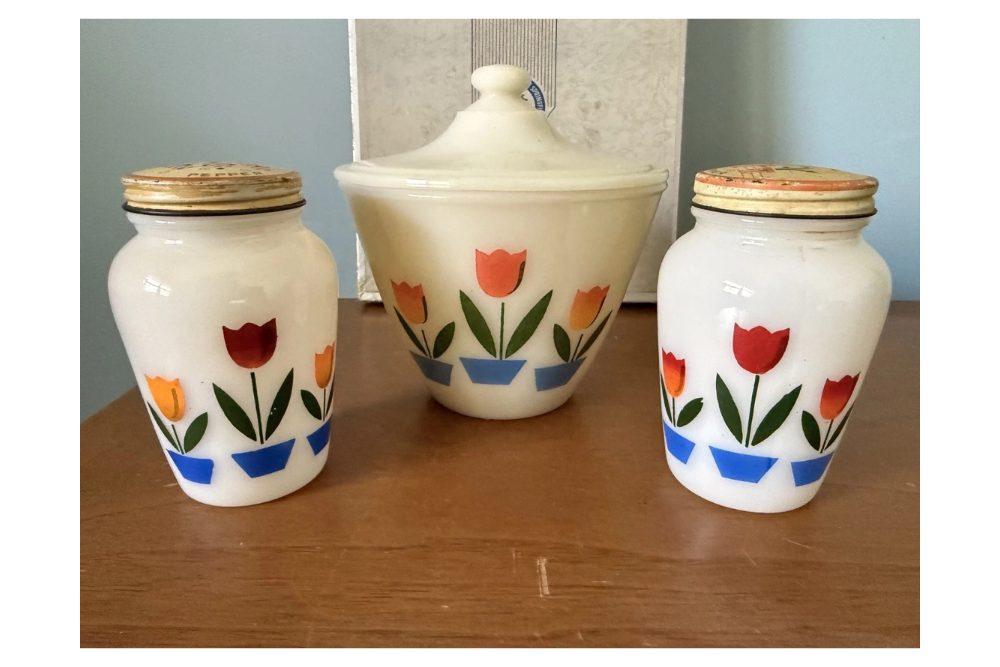
Before cooking oil came in convenient squeeze bottles, many kitchens kept a grease jar near the stove. Fire-King made a charming ivory-colored version decorated with red and yellow tulips, and a grease jar with matching shakers sold as a set for $128.15. The bold flowers are printed directly onto the glass and give the group a cheerful, distinctly midcentury appearance.
Anchor Hocking produced several tulip-decorated kitchen pieces, and an original matching set can include the lidded grease container and small range shakers. The lid, shaker tops, and the printed blossoms are the parts that tell you how complete the group is. White milk glass shows dark marks and staining clearly, while the red and yellow design can become scratched or faded from hard washing. Turn the pieces over for Fire-King identification, but match the floral decoration carefully; tulip motifs from different companies were common in postwar kitchens.
Pyrex Pink Daisy oval casseroles
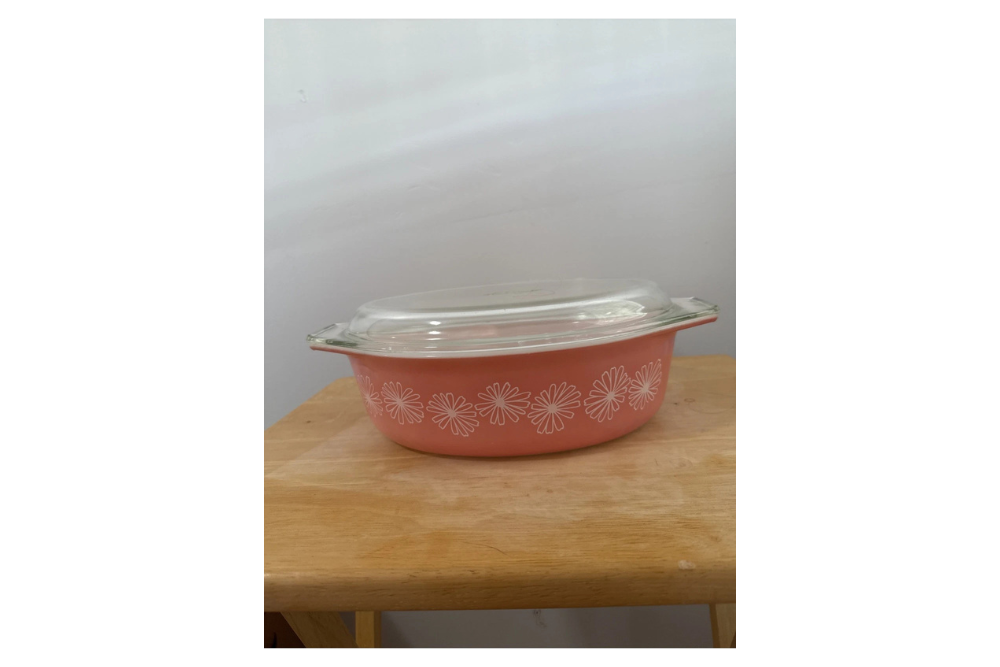
Pyrex’s Pink Daisy pattern appeared in 1956 and turned a plain casserole dish into something you could carry straight to the dinner table. One 2½-quart oval 045 dish with its clear glass lid sold for $125. The pink exterior carries large white flower motifs, with the generous oval shape designed for family-sized baked dishes.
Pink Daisy was made in several baking and serving forms. The oval casserole, divided dish, and rectangular Space Saver are easy to muddle when browsing loose lids and mismatched pieces. The 045 number identifies the larger oval dish, and the correct lid should sit securely rather than simply cover the opening. Examine the base for chipped edges and the pink paint for dull patches or thin areas. People often used these dishes for years, so even a piece that looks spotless from above may have wear hidden underneath.
Russel Wright American Modern granite-gray pitchers
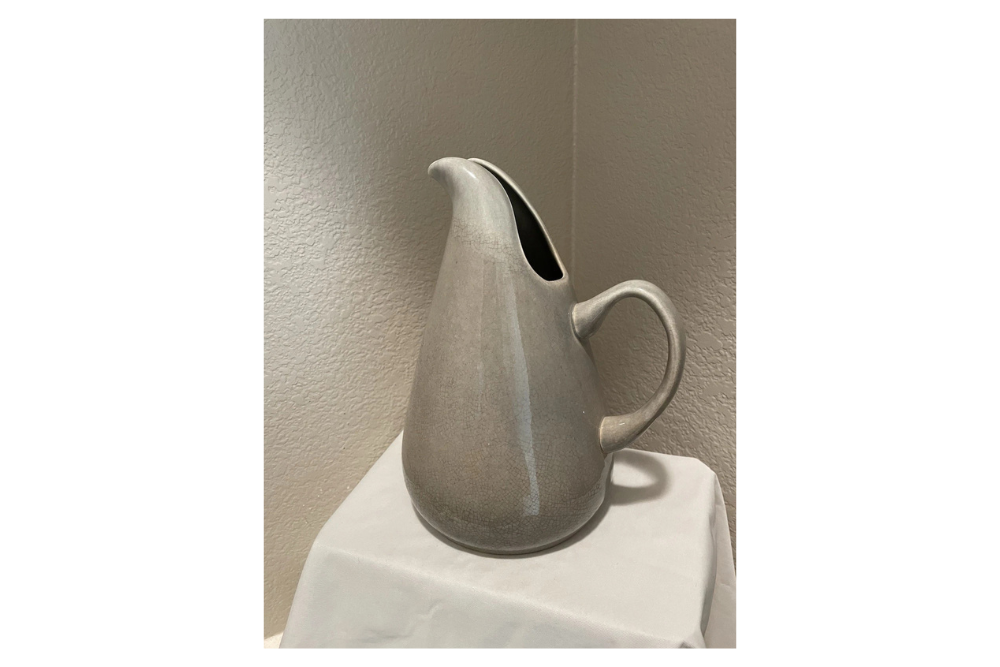
Russel Wright designed the American Modern dinnerware line with soft, flowing shapes that seemed radical beside conventional china. His granite-gray pitcher has a long curving handle and an unusually sculptural silhouette. A Steubenville example sold for $45. Although the range began in 1939, it remained in production throughout the 1950s and became one of the best-known examples of affordable American modern design.
Steubenville made the ceramic line in several muted colors intended to work together, so a gray pitcher might once have sat among coral plates and chartreuse bowls. The underside usually carries an impressed Russel Wright and manufacturer mark. The spout is quite delicate, and the glaze can show crazing, chips, or darkened patches inside. Wright also made other household products, including plastic and glass tableware; the distinctive earthenware shape and manufacturer identify this particular design.
Hazel-Atlas Crinoline Ripple dishes
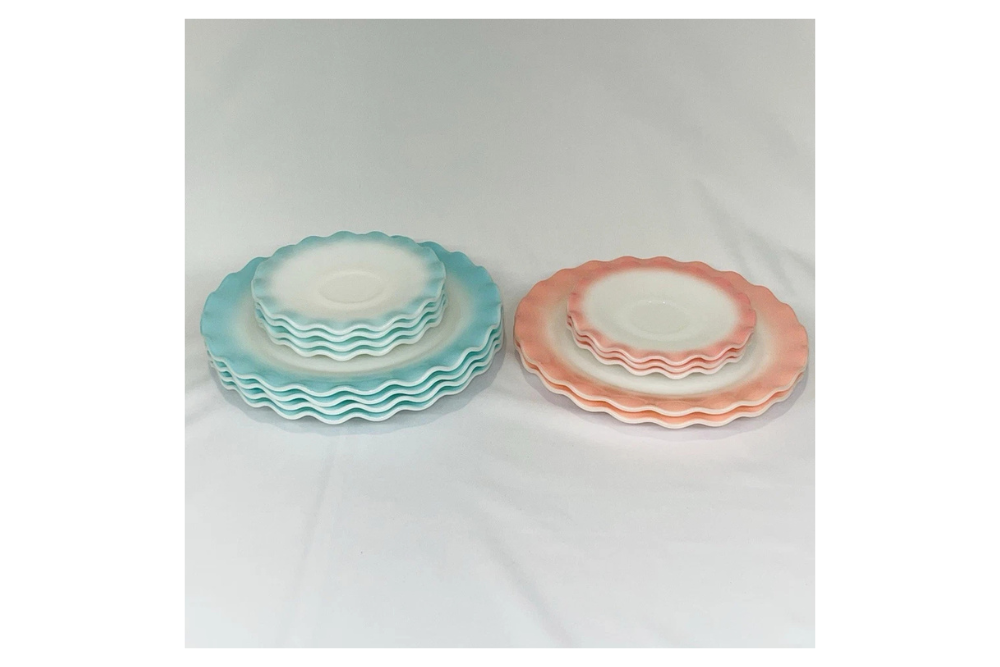
The ruffled edges of Hazel-Atlas Crinoline glassware look almost like fabric gathered into a skirt. A 13-piece group of pink and blue Ripple plates brought $69.99. These dishes are typically made from white opaque glass with soft color concentrated at the edges, creating a very 1950s look without the heavy decoration of many patterned dinner services.
Crinoline came in several colors and sizes, including smaller saucers and larger plates. On a group taken from a family cabinet, you may find pink, blue, and uncolored pieces mixed together. The rippled rims are lovely but vulnerable to tiny chips, which can hide where one wave meets another. The colored paint or fired finish can also show wear. Good matching pieces are useful when a collector wants to complete a table setting in one of the less frequently encountered color combinations.
Kromex chrome-and-glass cake carriers
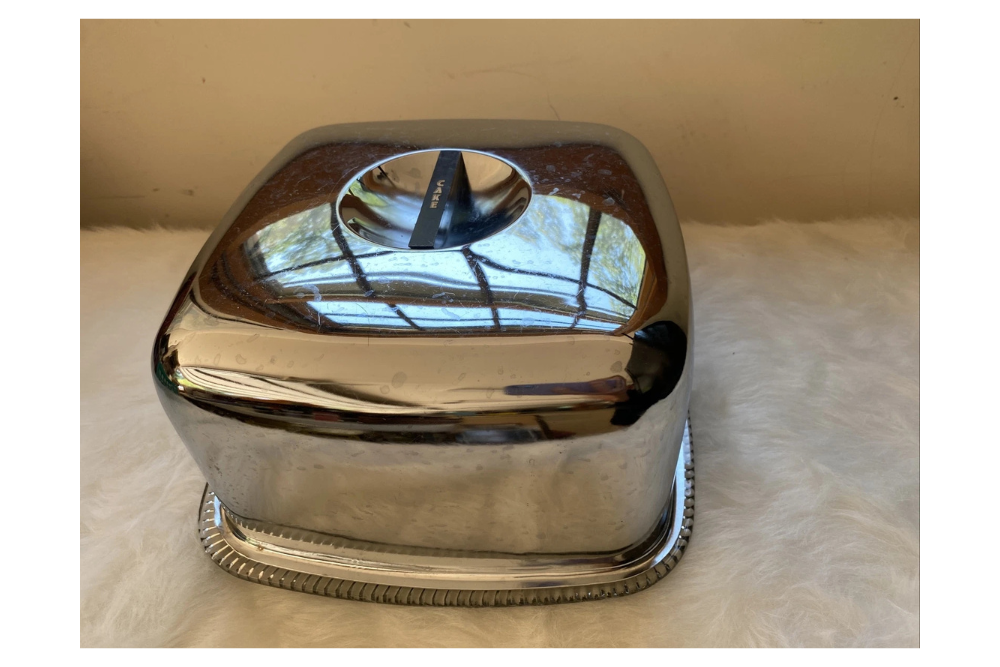
A square midcentury cake carrier from Kromex with its chrome-toned metal frame and glass serving tray brought $79.99. In the 1950s, a cake was often something you carried to a church supper or a neighbor’s house, and purpose-built servers were designed to protect it without giving up the elegant presentation.
The Kromex design brings together reflective metal and glass, with a raised carrier section that makes it more useful than an ordinary platter. Examine the rim carefully because small glass chips are easy to miss against the metal fittings. The handle, base, and glass insert should belong together; a replaced tray may fit but will change the original appearance. Kromex made a wide range of aluminum kitchen and entertaining accessories, so the size, construction, and complete components are more reliable identifying clues than a generic ‘chrome server’ label.
Pyrex Pink Gooseberry lidded casseroles
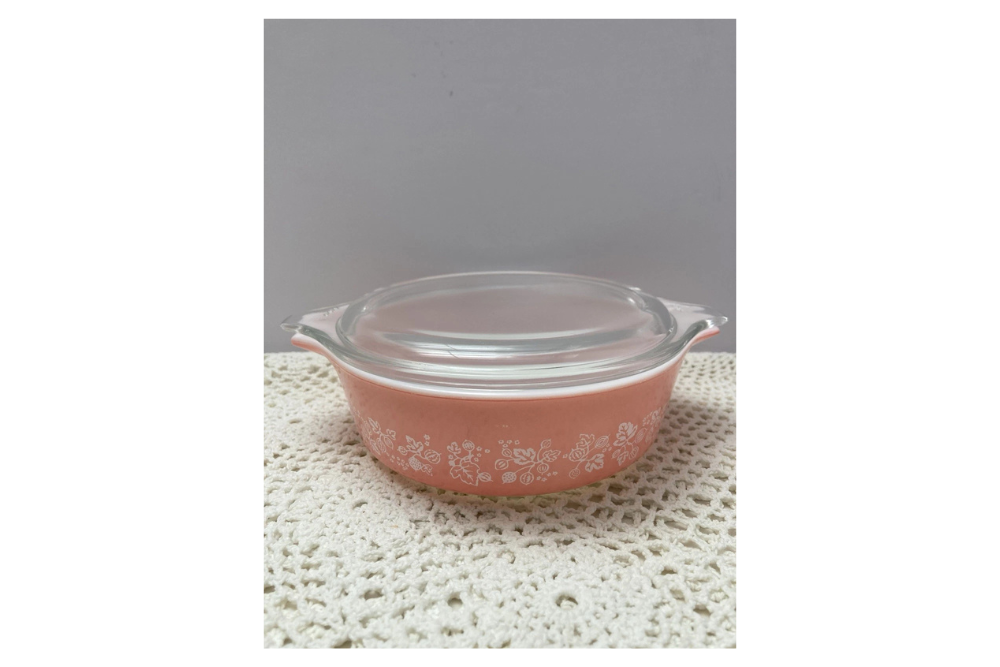
Little pink berries and leaves decorate the outside of Pyrex Gooseberry cookware, a pattern introduced in 1957. A one-pint #471 Pink Gooseberry casserole with its original lid sold for $63. The print may be pink on white glass or white on a pink background, and the delicate pattern is quite unlike the solid-color bowls that dominated earlier postwar kitchens.
Corning used Gooseberry on Cinderella mixing bowls, refrigerator dishes, and casseroles. The #471 is a relatively small covered baking dish, with little side handles and a clear lid. Its pattern and size are important because loose lids from another piece can look close without fitting correctly. Inspect the exterior decoration for wear and the rim for small chips; the pale surface can make a hairline crack hard to see. The model number molded into the bottom helps distinguish it from the larger dishes in the series.
West Virginia Blendo pitcher-and-glass sets
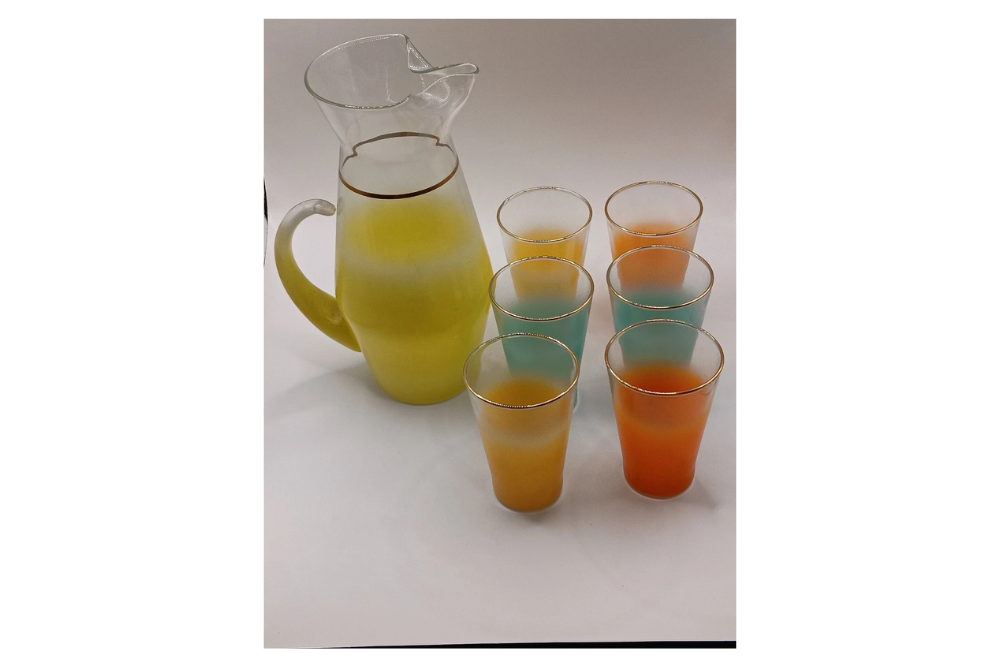
Blendo glassware has one of the most recognizable finishes of the 1950s: a misty band of sprayed color that fades down into clear glass, often with a thin gold rim. A West Virginia Glass pitcher with six coordinating tumblers brought $38.50. The soft shading could be turquoise, pink, orange, yellow, or green, and a whole set turns an ordinary lemonade pitcher into a cheerful piece of atomic-age tableware.
These glasses were intended for entertaining, which is why they often survive in partial sets. The gold trim is easily rubbed away, and harsh washing can damage the applied color. One clear pitcher with six mismatched glasses isn’t the same as a coordinated original set, so compare the finish and the proportions. The tall pitcher, short tumblers, and hand-applied-looking paint are the visual clues collectors look for when trying to complete a group in one color.
GE Pot Belly electric coffee percolators
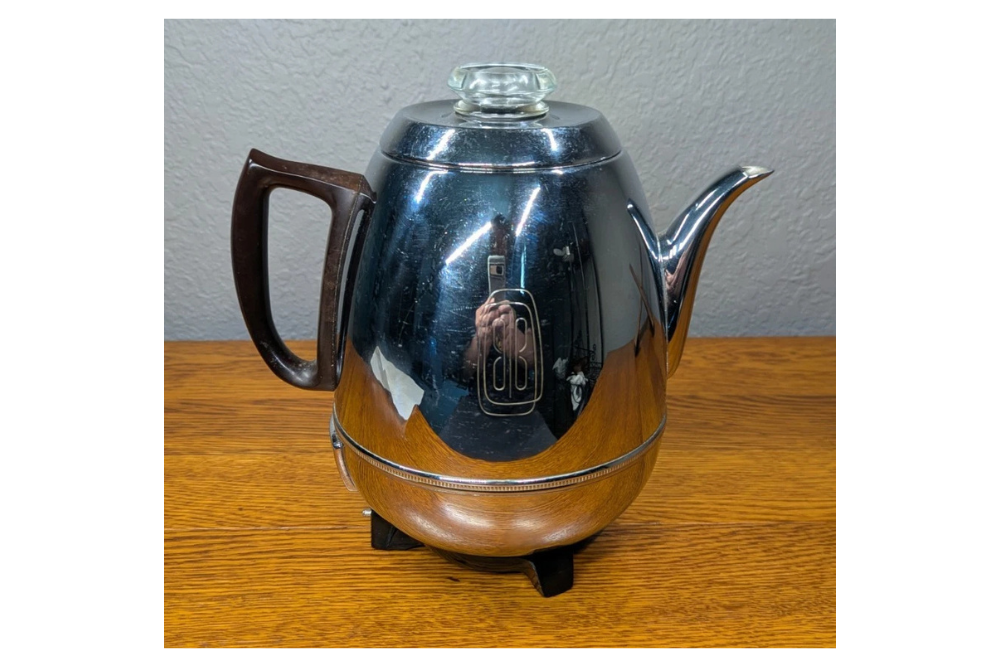
General Electric’s bulbous chrome Pot Belly percolator looks as much like a piece of diner equipment as a domestic coffee pot. A working P40 example sold for $79. The rounded body, prominent handle, and lid with its little viewing knob belong to a style of electric coffee-making that kept freshly brewed coffee on the table long before countertop drip machines became standard.
The original P40 family was made in several capacities and versions, so the model designation on the base is useful. The internal coffee basket, percolator stem, lid, and detachable power cord can be separated over the years, and a pot without those parts is difficult to use as intended. Look for dents around the body and lid, which reflect light strongly. Old wiring, seals, and heating parts should be inspected by someone qualified before the machine is used again; the chrome exterior can look spotless while the electrics have aged badly.
Fire-King Jadeite Jane Ray fruit bowls
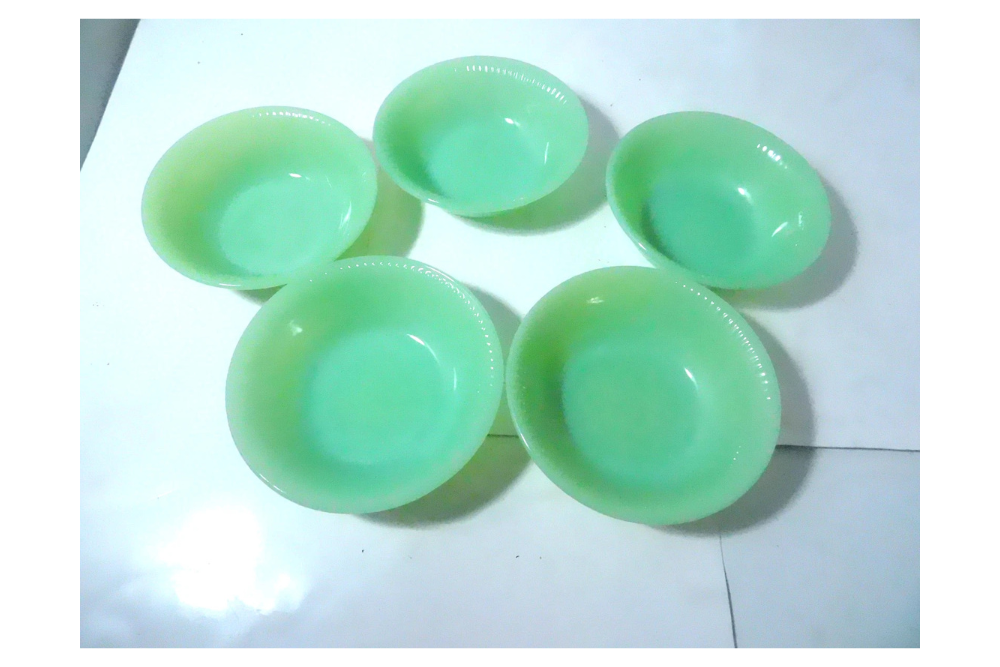
A group of seven Fire-King Jane Ray fruit or dessert bowls in the company’s pale green Jadeite glass brought $71.25. The small bowls have gently ribbed sides and a thick, glossy finish, and they belong to a popular postwar dinnerware line that turned everyday soup bowls, cups, and plates into matching green table settings.
Jane Ray’s ribbing is a useful distinguishing feature when you come across loose green glass in a thrift store. Fire-King made other Jadeite shapes with smooth, paneled, or scalloped surfaces, and some modern pieces deliberately recall the earlier style. The little fruit bowls often survive with utensil scratches, tiny rim flakes, and uneven color caused by the glass itself. A complete group is appealing because the size is convenient for serving and can match a collector’s existing dinner plates. Look under the bowls for maker markings, while checking the shape as carefully as the stamp.
Original Fiesta forest-green disk pitchers
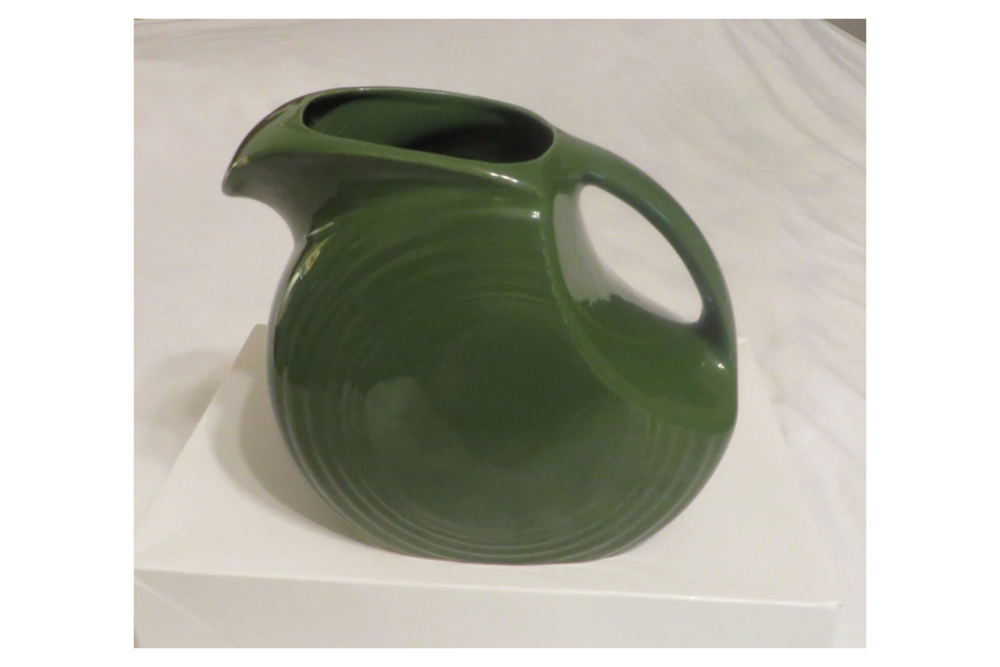
Fiesta’s deep forest-green glaze appeared in 1951, and the color remained in the original line through 1959. A vintage disk-shaped water pitcher in that rich green sold for $66.95. Its flattened circular body, broad pouring lip, and curved handle make it one of the more striking ways to recognize the midcentury pottery line.
The forest-green shade is deeper than the brighter greens used in some other Fiesta periods, and it contrasts beautifully with the company’s rose, gray, and chartreuse colors from the same decade. Homer Laughlin made disk pitchers in several colors, so the specific glaze is a useful clue when trying to date a piece. Look carefully around the spout and handle for glaze flakes or repairs. Fiesta has been produced again in modern colors, but the older shapes and correct period glazes distinguish an original midcentury example.
Pyrex Primary Colors nesting mixing bowls
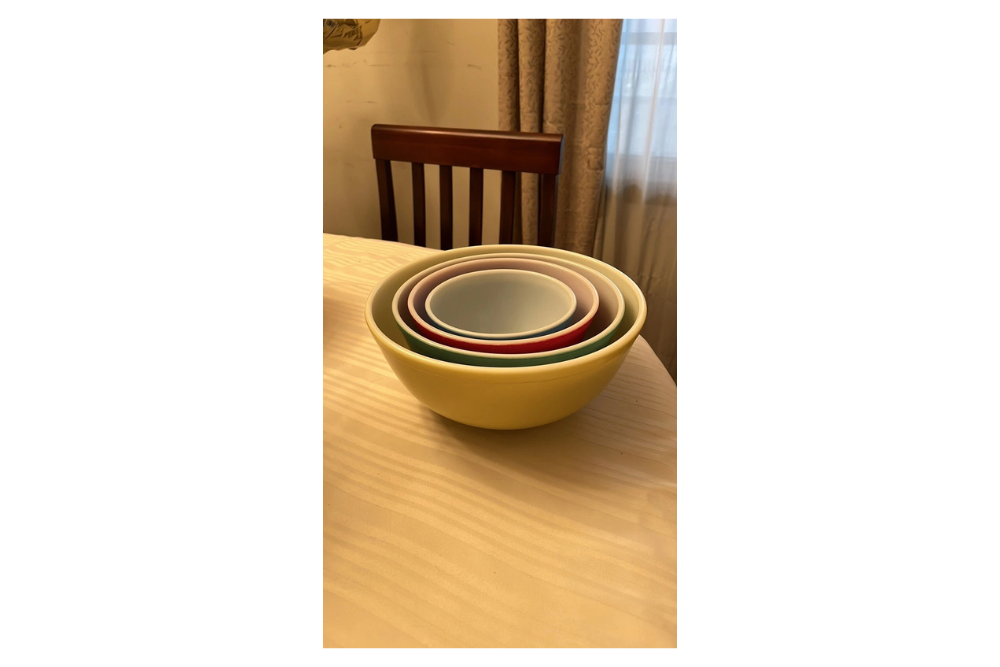
The yellow, green, red, and blue Pyrex mixing bowls that nested neatly inside one another are a classic postwar kitchen sight. A complete four-piece set of #401 through #404 bowls brought $120. Corning introduced the primary-color opalware range after World War II, and it remained popular well into the 1950s.
The full set gives you a small blue bowl, a red one, a larger green one, and the big yellow mixing bowl, with white interiors and solid-colored exteriors. People often bought or replaced individual pieces, so a stack that looks complete may actually contain two bowls of the same size or a later color substitution. The numbers molded into the bottoms make that easier to spot. A glossy finish is especially attractive on these simple bowls because there’s no print or decorative pattern to distract from scratched, faded, or dishwasher-dulled paint.
Kromex wall-mounted foil and paper dispensers
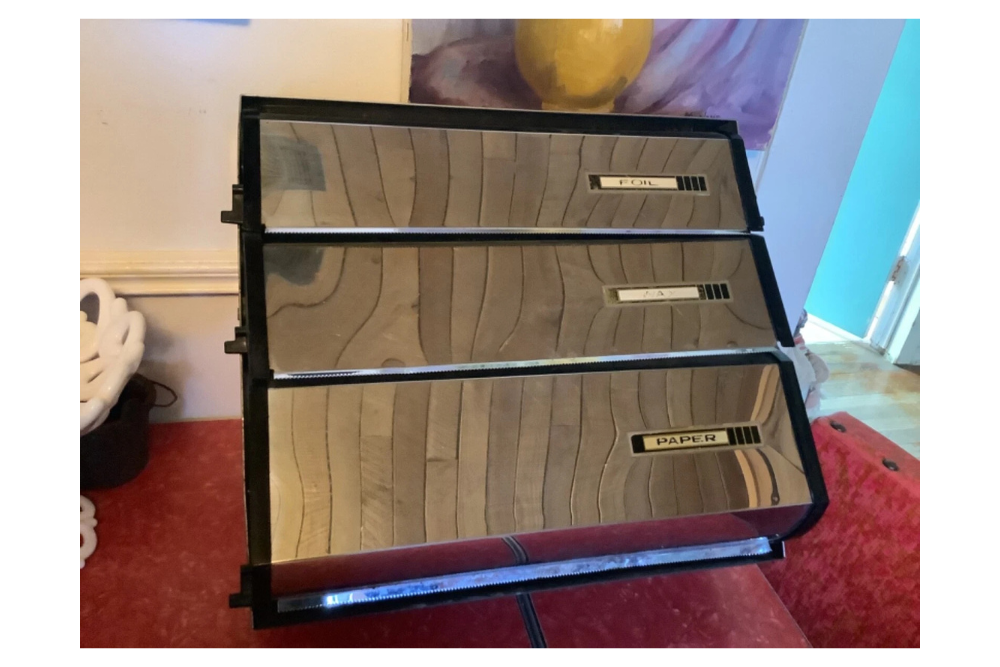
Some 1950s kitchens had an ingenious metal dispenser screwed to the wall with separate storage for aluminum foil, wax paper, and paper towels. A Kromex example sold for $39.99. The compact metal construction was practical at a time when counter space was precious and wrapping materials came in paper boxes that cluttered the kitchen.
These dispensers usually have three long openings or holders, with cutters or tear bars positioned so paper can be pulled from the front. Kromex made polished and two-tone versions that worked with the chrome trim and pastel colors popular in the decade. Look closely for missing cutters, bent metal edges, and corrosion hidden on the back where the piece once touched a damp wall. Original mounting holes and fittings are helpful if somebody wants to reinstall one, although modern rolls may need a little adjustment to fit.
Mirro aluminum cookie presses
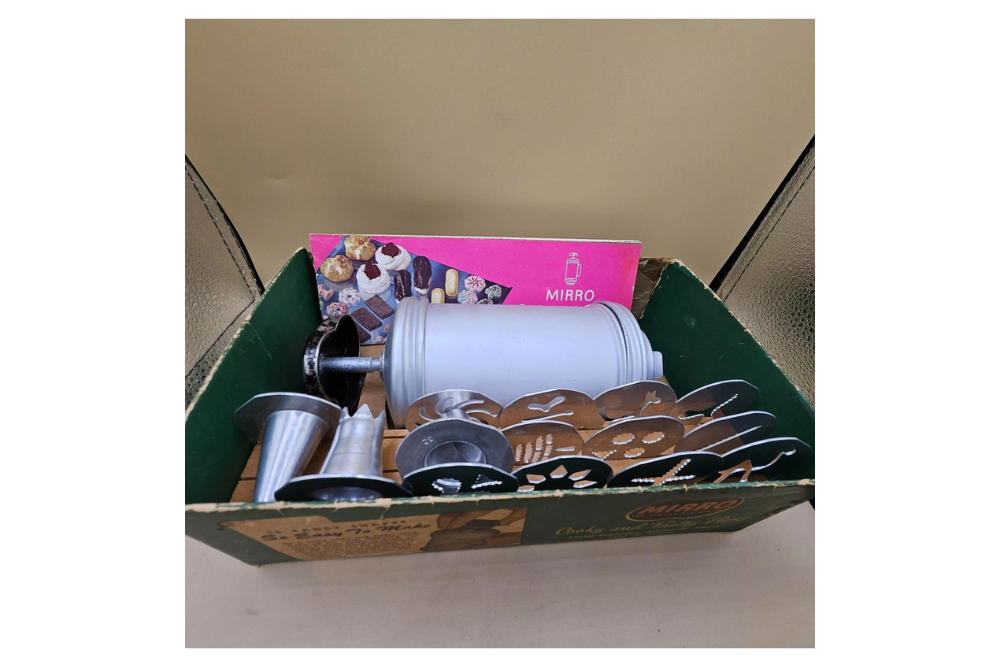
The old Mirro ‘Cooky’ and pastry press could turn a batch of plain dough into flowers, stars, and patterned cookies with a quick push of the handle. A 1950s model 358-AM with 11 shaping discs and three pastry tips sold for $19. That isn’t a spectacular amount, but it’s more than many people would expect for a used baking gadget that may have been sitting in a drawer for decades.
Mirro’s aluminum press has a cylindrical body, a plunger, a handle, and a collection of metal discs that screw or clip into place to shape the dough. The discs are small enough to become separated from the press, so the original fitted carton or a bag containing the accessories is especially useful. Examine the threads and the end of the plunger for wear. Rust or corrosion on parts that contact food is a reason to treat an old example as a collectible rather than assume it can safely go straight back into baking duty.
Pyrex Turquoise Diamonds promotional bowls
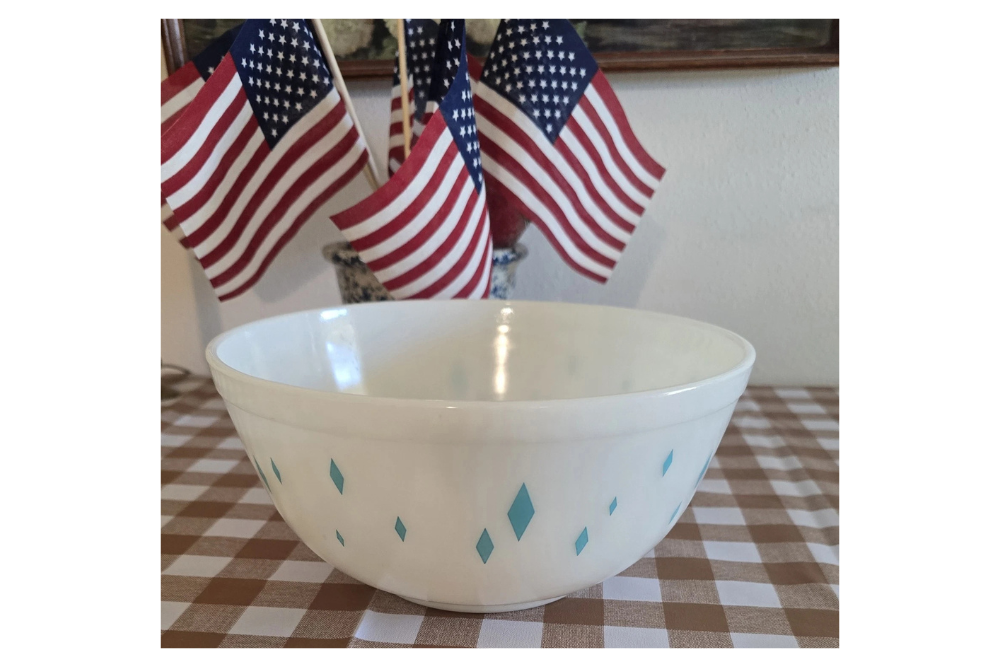
The Turquoise Diamonds or Dainty Maid Pyrex design has a bold geometric look that feels completely different from the floral patterns people usually associate with the brand. A turquoise-blue promotional bowl with its white diamond decoration sold for $290. The pattern is associated with the 1950s enthusiasm for graphic, futuristic tableware.
Look for the diamond shapes on the turquoise exterior, along with the form and size of the bowl itself. Promotional Pyrex was sometimes offered for a relatively short period, and collectors care about the precise form as much as the decoration. A plain turquoise bowl is a different item; a photographed diamond pattern is the first identifying clue. Wear to the white motifs can be difficult to disguise, and the exterior may have the dull, chalky look that develops when decorated opal glass is washed harshly. The original design should be clearly visible around the bowl.
Libbey Granada Atomic Starburst glasses
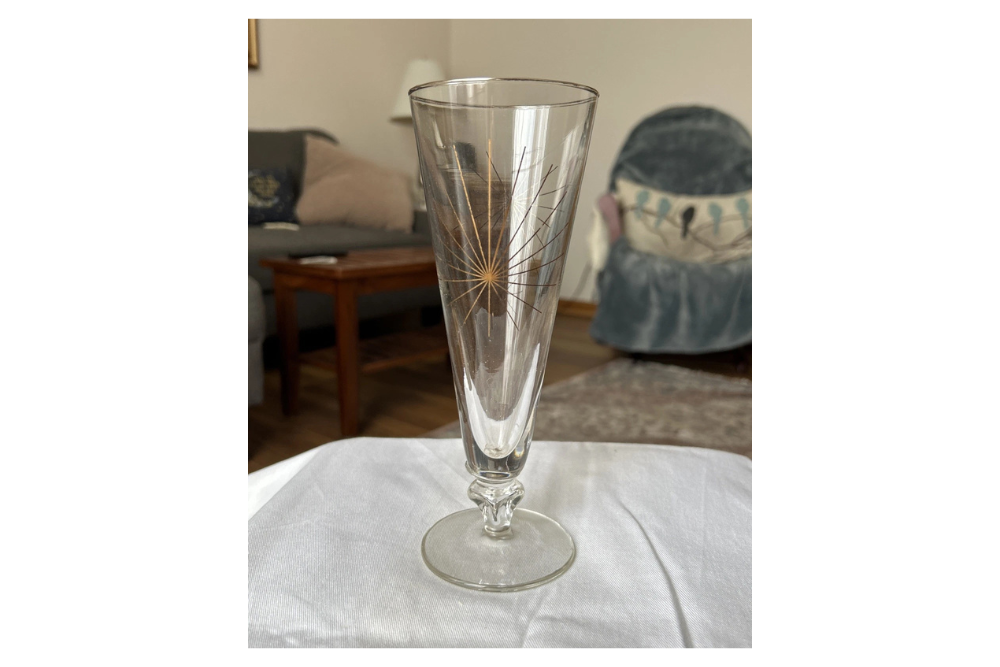
Libbey’s Granada drinking glasses have tiny metallic starburst designs scattered across clear glass, giving a perfectly ordinary drink a very space-age presentation. Eight matching footed pilsner glasses sold for $40. They belong to the 1950s fashion for atomic motifs on everything from curtains and dinner plates to cocktail glasses.
The footed shape is a useful way to distinguish the Granada pilsners from straight tumblers and other Libbey designs. The little gold and silver starbursts can rub off through handling, and the metal decoration often wears fastest where people hold the glass. Sets can become mixed when one or two glasses break and someone replaces them with a similar starry design. Compare height, base, and print placement before calling a group matched. The original metallic decoration is what gives the clear glass its character.
McCoy’s split-lid Cookie House jars
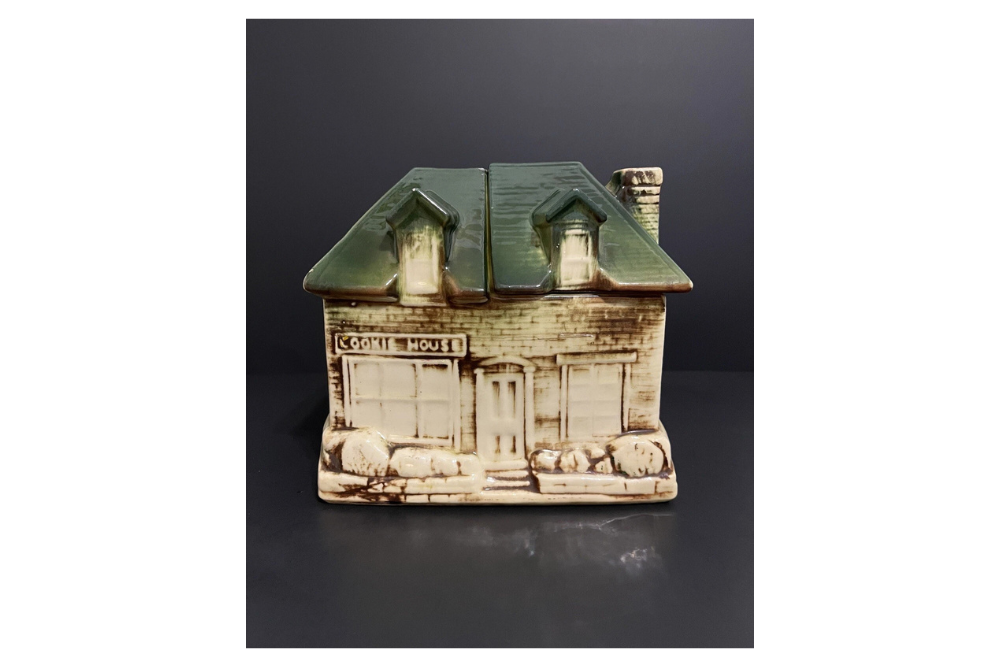
McCoy made a cookie jar shaped like a little house, with a roof that opens in sections to reveal the contents. A late-1950s Cookie House with its divided lid sold for $57. Its painted house details and unusual roof are miles away from the plain cylindrical cookie tins that shared kitchen counters at the time.
The separate roof pieces are the detail to examine first. Years of lifting them off can leave chips along the edges, and a missing half makes the jar difficult to use as intended. Look at the painted windows and doors, the glaze inside the jar, and any mark underneath that helps establish the maker. McCoy produced many house, animal, and fruit-shaped cookie jars, so the roof construction is particularly useful when identifying this one. The jar is also heavy enough that a slip on a hard countertop can break a corner.