
That row of little ceramic houses above the stove may be more valuable than the spices they once contained. An original Lenox Spice Village set with 24 jars and its display rack sold for $1,000 in August 2026. The roofs lift off, the doors and windows are hand-painted, and each cottage is labeled for a different herb. They’re kitchen storage and miniature architecture in one.
The 1990s produced an enormous amount of kitchenware with its own unmistakable personality: cranberry glass pans, short-lived Fiesta colors, garden-themed casseroles, and cookie jars shaped like cartoon characters. Some pieces have become harder to assemble in complete sets, while others fill gaps in dinnerware collections people have kept for decades.
A maker’s stamp, model number, dated copyright, or original lid can help pin down the exact piece. Those details are much more interesting than an indistinct box of “old kitchen stuff.”
Lenox Spice Village spice jars
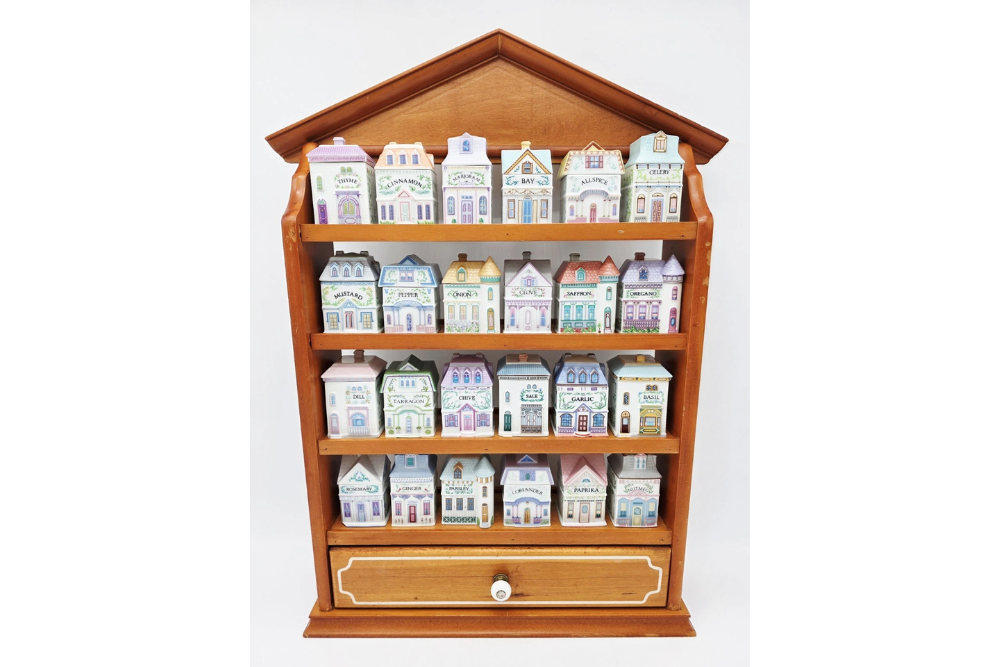
An original Lenox Spice Village collection with 24 miniature porcelain houses and its wooden rack brought $1,000 in August 2026. Each little house stores a different spice beneath a removable painted roof. Lenox introduced the collection in 1989, and the decorative cottages became familiar sights in early-1990s kitchens. Together, they make a miniature village out of something as practical as a spice rack.
The rack arranges the houses in rows, and the small details are the pleasure of looking at them: windows, painted vines, tiny doorways, and roof tiles. The underside markings distinguish the original collection from the line Lenox brought back in 2024. Inside the jars, the plastic seals can shrink or perish with age. Original roofs are shaped for their individual cottages, so a mixed assortment may contain mismatched pieces. The original wall rack is equally recognizable, with narrow shelves sized to hold the little houses neatly.
Corning Visions Cranberry Versa-Pot cookware
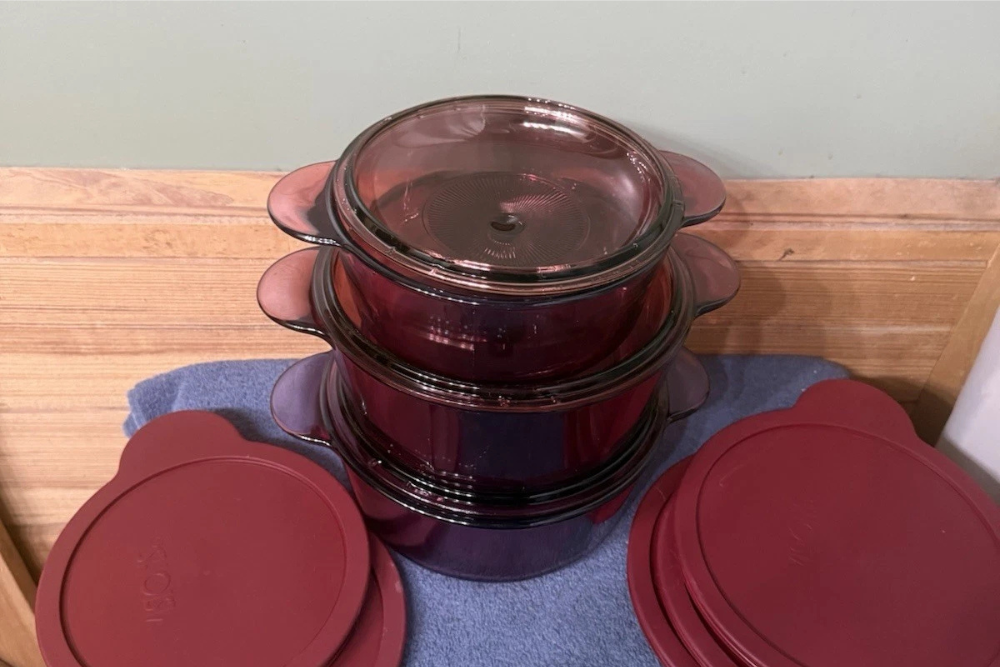
A six-piece set of cranberry Visions Versa-Pots, complete with three capacities and matching lids, brought $269.99 in August 2026. The translucent pink-purple pots looked almost futuristic on a 1990s stovetop. Corning introduced the Cranberry color to Visions in 1992, and the Healthy Basics range carried it into a kitchen full of coordinating glass cookware.
The special feature of Visions is being able to see food cooking through the sides of the pot. The cranberry version adds a pink-purple tint that shifts under the kitchen light, with sturdy glass handles and round matching lids. The three pots can be nested for storage, although the glass rims need protection against impacts. Original packaging is helpful here because it lists the pot sizes and demonstrates how the set was sold. Look for cracks at the handle attachments and chips around the lid rims. Damage to a piece of glass cookware is an especially important safety concern if it’s going to be used for cooking.
Fiesta Lilac covered coffee servers
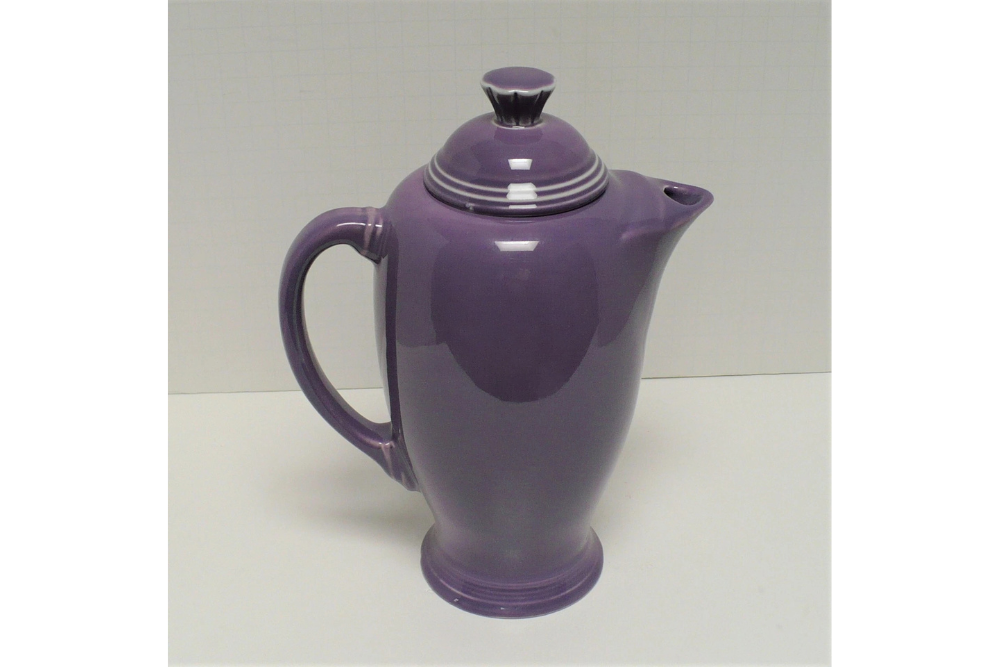
Fiesta’s Lilac glaze has a soft purple color that is instantly associated with the early 1990s. It was produced from 1993 to 1995, a brief run that included mugs, serving pieces, and distinctive accessories. A 36-ounce Lilac coffee server with its matching lid sold for $249.99 in August 2026.
The coffee server has a rounded body, a molded side handle, a short spout, and a tight-fitting lid. Its shape makes it an interesting piece of Fiesta history, while the pale lavender glaze is particularly attractive against a white or cream background. On the underside, the Fiesta maker’s mark helps identify the pottery. The correct lid is a significant detail because the opening and spout are designed as one coordinated shape. The pale glaze shows fine marks and tiny edge chips quite readily in strong light. Finding one on its own is pleasant; finding it complete with the proper top is better still.
Fiesta Chartreuse pottery wall clocks
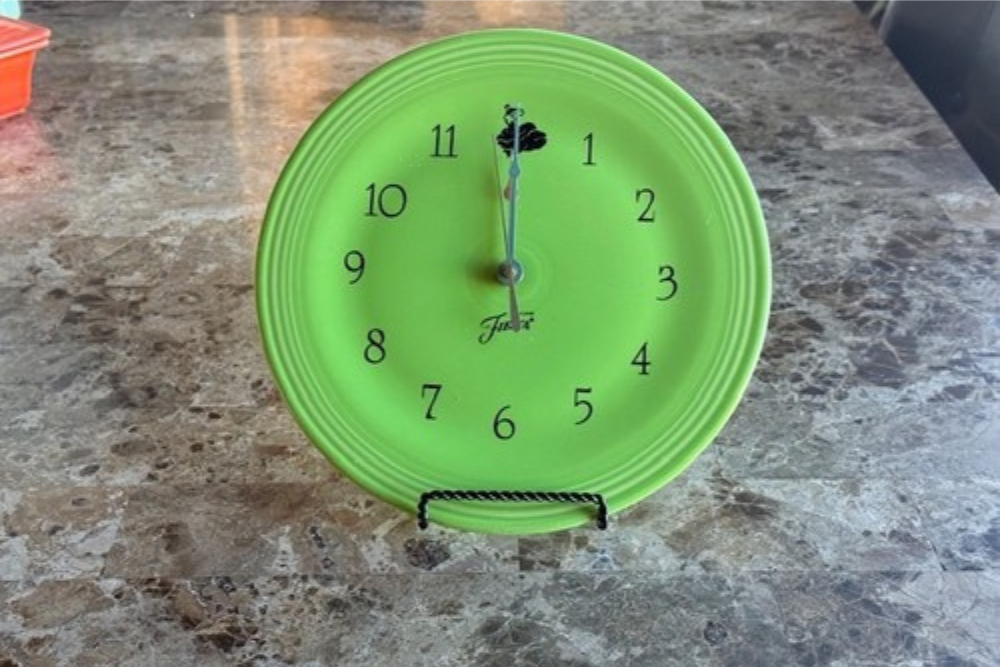
There was nothing shy about Fiesta Chartreuse. The lively yellow-green color was part of the line in the late 1990s and appeared on accessories as well as dinnerware. One Chartreuse pottery wall clock sold for $139.95 in July 2026. It’s exactly the sort of kitchen wall decoration that might be mistaken for a bright ceramic plate when the clock hands are missing.
The face has the heft and rich glossy glaze of Fiesta pottery. A clock movement fits behind the ceramic body, with hands mounted through the center and a fixing point on the back. The bright shade can look more yellow or more green depending on the light, so the actual maker’s mark is useful for identification. Check the movement for corrosion from an old battery and ensure the hands clear the face without catching. If the ceramic body is intact, it has decorative appeal even while the clock is silent. Few 1990s kitchen accessories capture the decade’s love of vivid color quite so neatly.
Fiesta Sapphire anniversary pitcher and tumblers
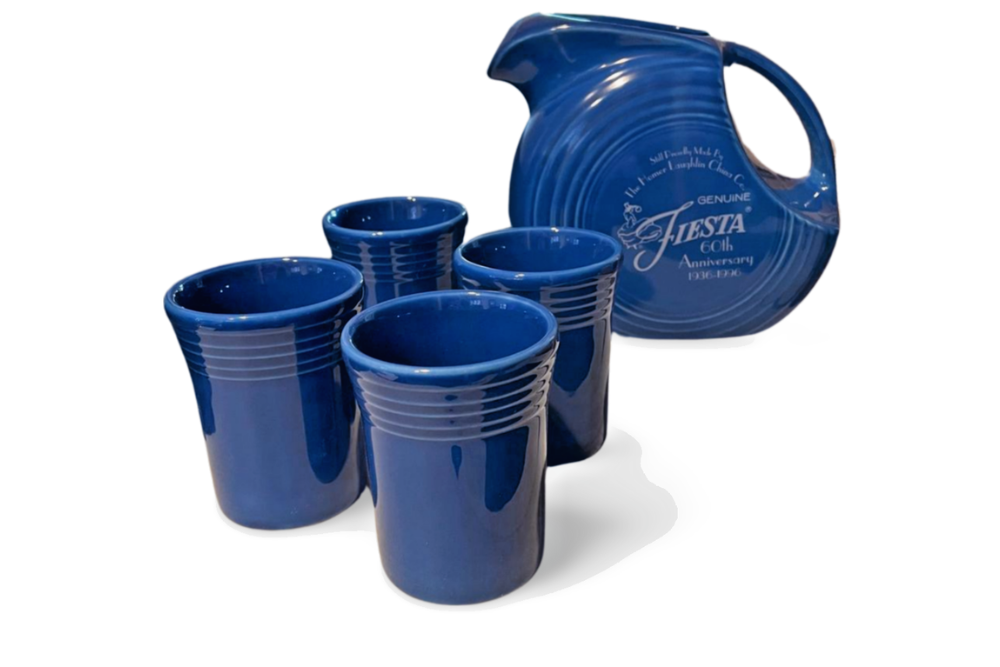
Fiesta turned sixty in 1996, and the company marked the anniversary with a deep Sapphire blue glaze. The limited color ran from 1996 to 1997. A boxed anniversary beverage set containing a disk pitcher and four matching tumblers sold for $99.98 in September 2023.
The disk pitcher is almost circular in profile, with bands molded into the body and a small side handle. The tumblers repeat the same strong glaze, so the five pieces make an attractive group when they’re lined up on a tray. Original boxes may carry the 60th-anniversary wording and the 1936–1996 dates. The dark blue surface can conceal small scratches until the light catches it at an angle, and the tumbler rims deserve the same inspection as the spout on the pitcher. The set has a clear connection to a specific production year, which makes the original packaging worth retaining.
CorningWare Garden Harvest five-liter casseroles
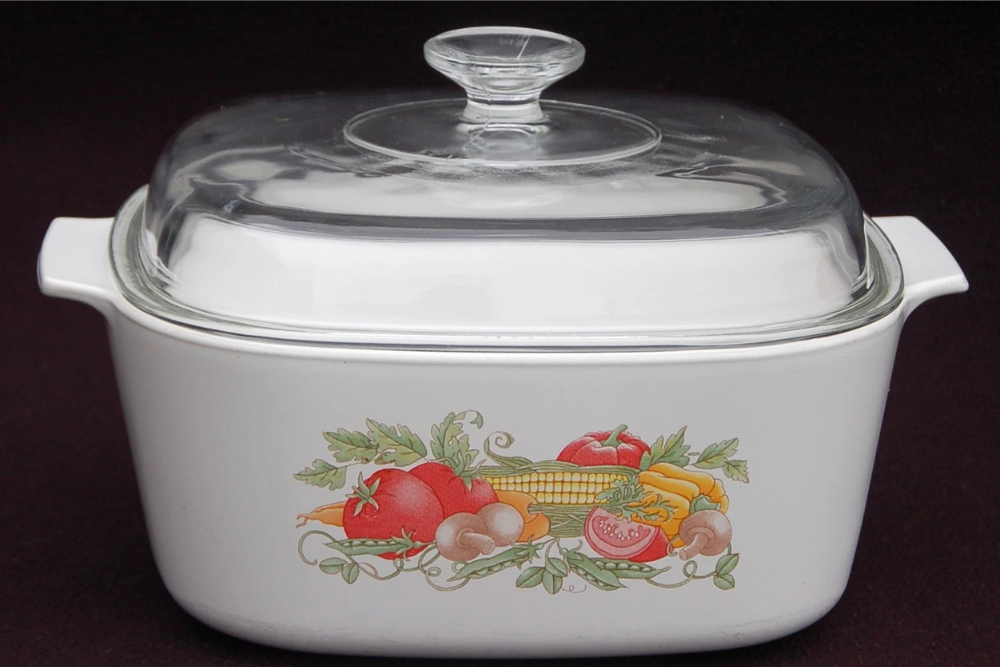
Corn and colorful garden vegetables made Garden Harvest a perfect match for the country kitchens of the mid-1990s. The pattern was made from 1994 to 1996. A substantial five-liter A-5-B casserole, complete with an A-12-C glass lid, sold for $44 in August 2026.
The square white glass-ceramic body has broad built-in handles and a relatively small decoration on its side. The pot is large enough for family meals, with a flat-topped clear lid and central knob. On the underside, the A-5-B number and five-liter capacity identify the size, useful when a group of CorningWare dishes is stacked together. The vegetables can fade after abrasive cleaning, and gray utensil marks may appear inside. Look especially closely at the corners and the glass lid’s knob for hidden chips. Garden Harvest is so cheerful that a clean one looks equally at home on an open shelf or a dining table.
CorningWare Blue Dusk covered dishes
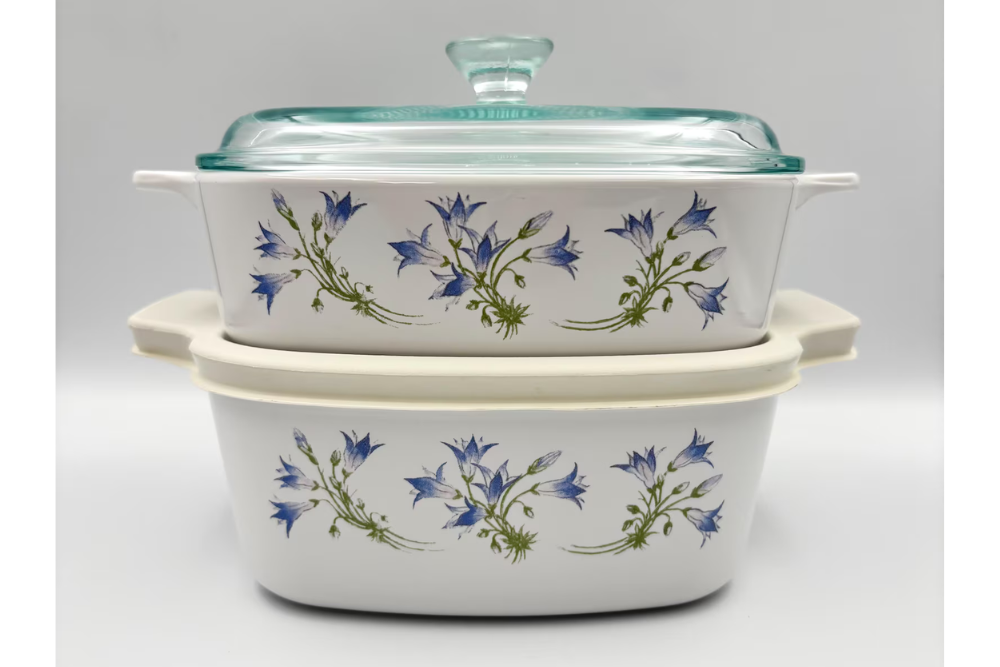
A one-liter Blue Dusk casserole with its original lid went for $18.50 in July 2026. The little square dish wears a few blue-gray flowers against white CorningWare, with lots of space around the motif. Blue Dusk appeared in the mid-1990s and has a calm, delicate look that stands apart from the busier fruit and garden prints of the period.
The A-1-B mark on the underside identifies the body and its capacity. The molded handles are short, and the transparent lid sits over a square opening with a small lip. Blue Dusk has a slightly misty shade of blue, making the decoration easy to distinguish from brighter blue Corning patterns once you compare them side by side. A lid can be useful when serving hot vegetables or keeping a side dish warm at the table. The bottom corners show signs of hard use before the main body does, and an intact lid has no cracks radiating from its glass knob.
CorningWare Callaway ivy casseroles
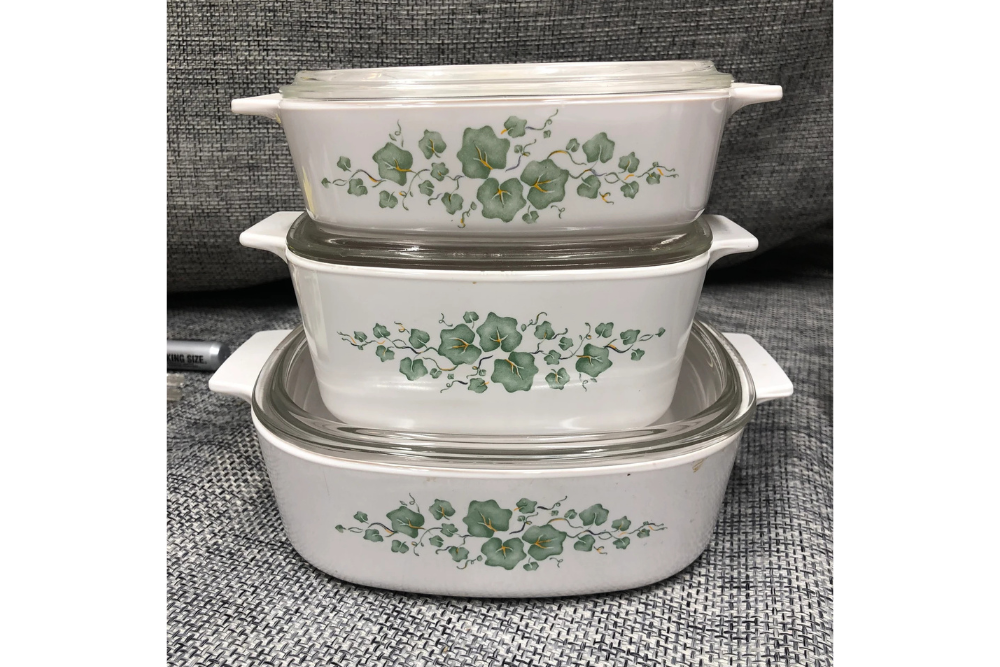
Little trailing green leaves give Callaway its unmistakable late-1990s look. The pattern appeared on square CorningWare casseroles toward the end of the decade. A 1.5-liter A-1.5-B casserole with lid sold for $19.99 in September 2026. Its fresh green design worked beautifully with the ivy-patterned wallpaper and herb pots that were popular at the time.
The ivy twines across a white glass-ceramic body, leaving the molded handles plain. This is one of those patterns that benefits from clear daylight because the green leaves show different tones depending on how worn the print is. A-1.5-B is the model number for the square 1.5-liter dish, and the matching lid sits flat over the rim. Small chips often hide on the corners where the lid touches the pot. The simple green decoration makes Callaway a natural companion to plain white serving dishes, which may help explain why these little casseroles still appear in working kitchens.
CorningWare Abundance three-liter casseroles
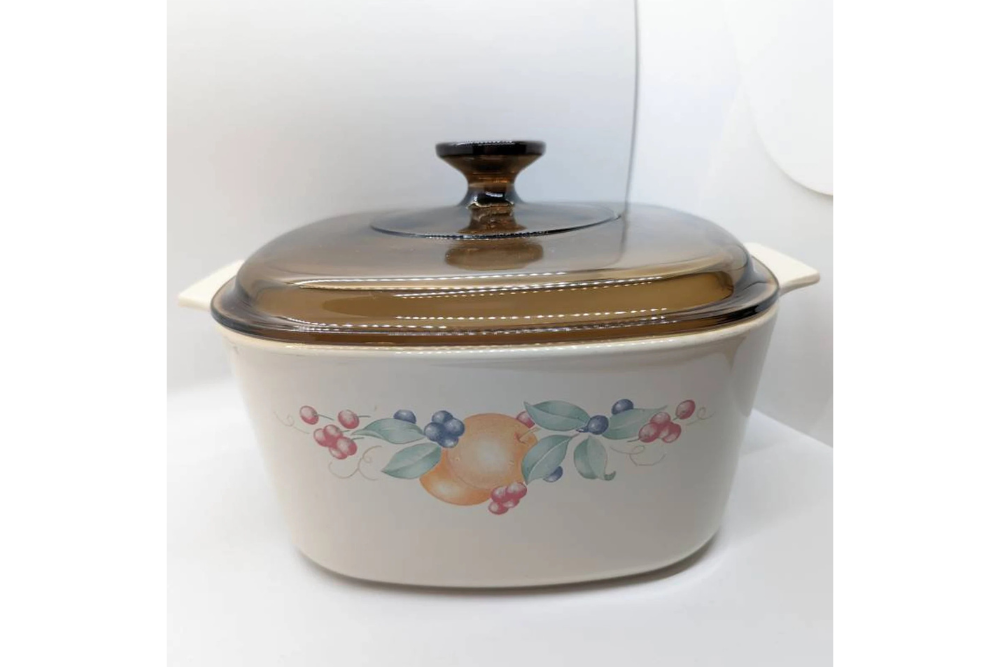
Abundance brought miniature apples and berries to CorningWare in 1992–1996. The fruit motif is small and colorful, with yellow, red, and green details against the white body. One three-liter A-3-B casserole with an amber-tinted glass lid sold for $24 in August 2026.
The pot has deep square sides and integrated handles, giving it a familiar shape that works well with the warm fruit decoration. The amber lid is an especially attractive companion, making the piece look at home with all those wooden cabinets and fruit-patterned kitchen curtains of the decade. The A-3-B designation is molded beneath the casserole, so the size can be checked without measuring. Because lids are often mixed between cookware pieces, examine the top and body independently for markings and damage. The fruit illustration should have clean lines and recognizable color, particularly around the little leaves and stems.
CorningWare Rosemarie pink-tulip casseroles
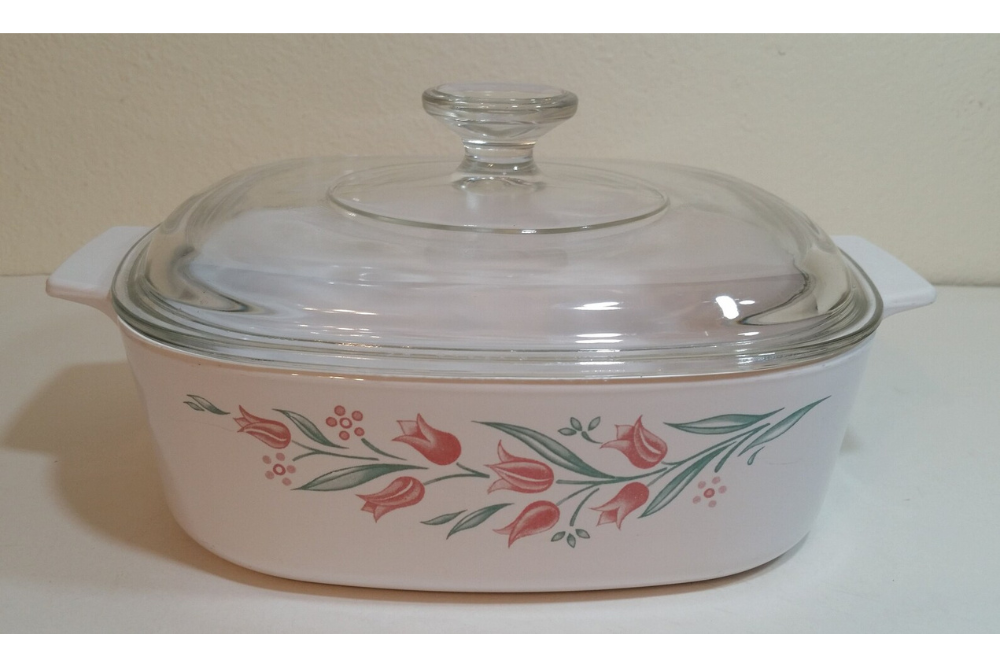
The Rosemarie pattern dresses up a white casserole with a small bouquet of pink tulips. Its production falls between 1995 and 1997, when pastel florals were still everywhere in the kitchen. A two-liter A-2-B casserole with a clear lid sold for $24.95 in August 2026.
Each cluster of blossoms has thin green stems and delicate petals, giving the dish a softer appearance than the bold geometric kitchenware of the same period. The square two-liter body is quite deep, with a pair of molded handles and a glass lid with a central knob. Underneath, the A-2-B stamp provides the model number. The flowers sit on the outer side of the dish, where years of scrubbing can gradually wear away the paint. Rosemarie looks particularly pretty with cream or pink table linens. The combination of useful size and gentle decoration explains why people keep these dishes long after the rest of their country kitchen has changed.
Pfaltzgraff Naturewood flour canisters
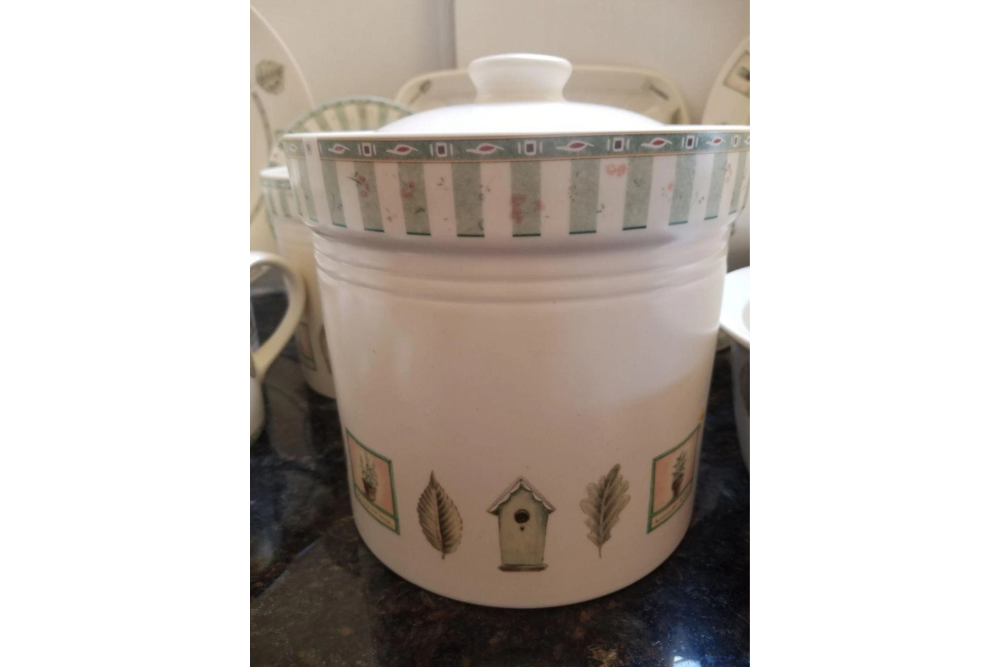
A garden theme runs right through Pfaltzgraff Naturewood, from leaves and herb pots to birdhouses and watering cans. The pattern began in 1997 and covered a wide range of kitchen accessories. A large flour canister, number 501, with its lid sold for $25.50 in August 2026.
Naturewood’s muted greens, browns, and creams were practically made for an oak-cabinet kitchen. The lidded canister has a generous opening and a decorative motif around its sides, making it useful for storing flour or other pantry staples. The lid meets a thick ceramic rim, which is worth examining for nicks after years of use. The pattern spread to serving dishes, jars, and other countertop accessories, so an isolated canister can still help complete a matching set. The stamped Pfaltzgraff name and Naturewood design make the piece easy to identify once it has been emptied and turned over.
Longaberger Woven Traditions ivory nesting bowls
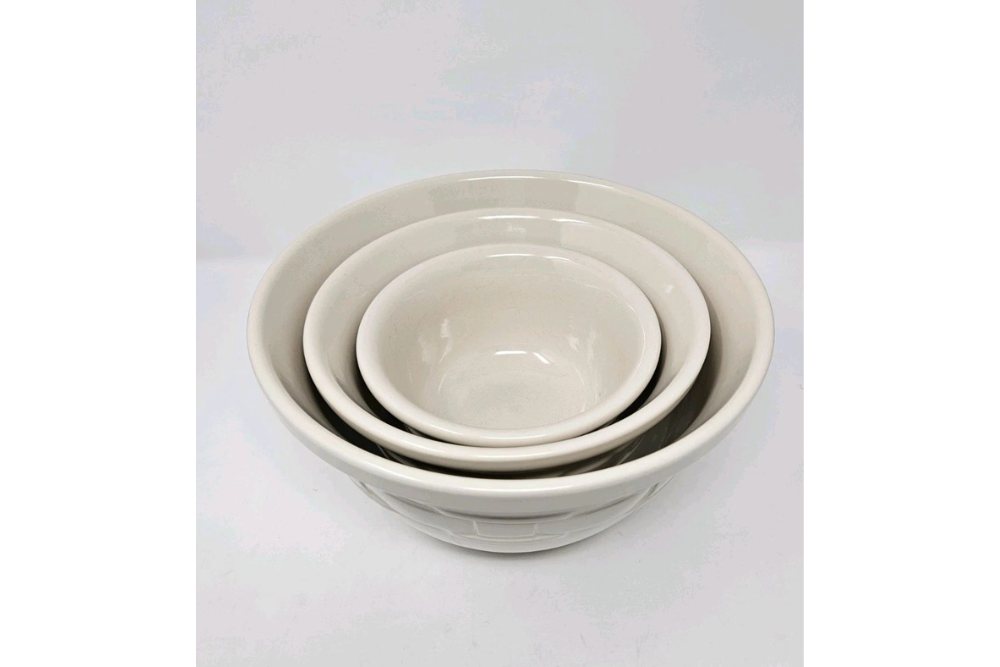
Three ivory Longaberger mixing bowls nested together brought $75 in August 2026. Their textured finish and graduated sizes make them particularly satisfying as a set. Longaberger’s Woven Traditions pottery was a natural partner to the company’s famous baskets, and the kitchen bowls, plates, and other serving pieces became part of the same coordinated homeware look.
The bowls nest in graduated sizes and have a sturdy feel in the hand, making them useful for mixing bread or cake batter. A subtle woven-looking surface ties them to the wider Longaberger collection. Mixing bowls endure a harder life than display plates, so the top rims and undersides can show chips or utensil wear. The ivory glaze can also develop stains where batter has sat in small scratches. When the bowls are arranged together, the consistent tone of the glaze is pleasing, and the differing sizes create a natural display without needing separate stands or a special rack.
Corelle Forever Yours dinnerware sets
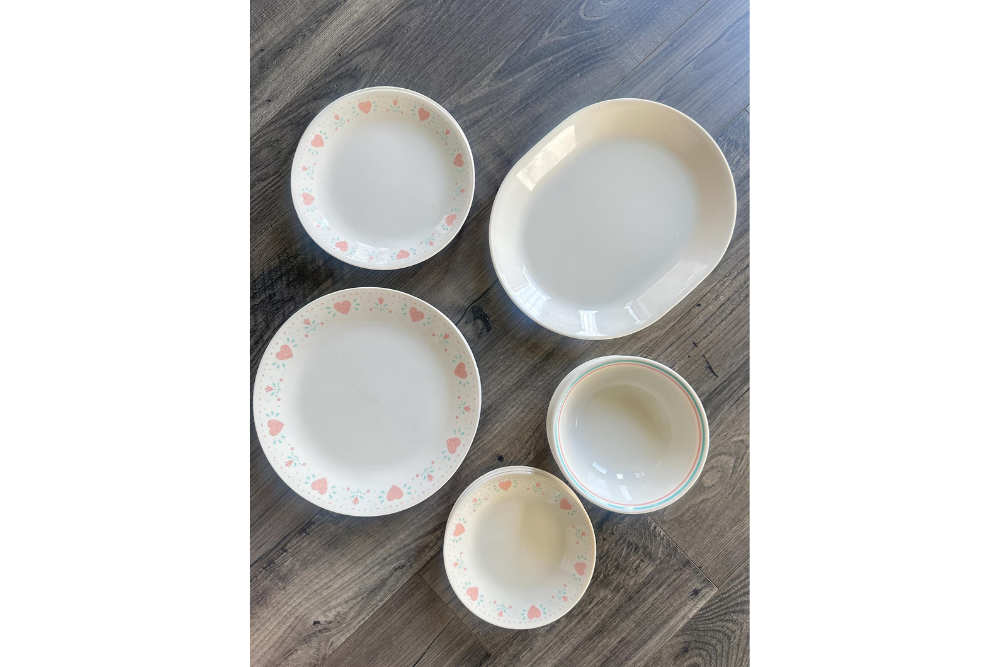
Corelle Forever Yours puts small pink hearts on a warm beige background, with turquoise details appearing on some coordinating pieces. The design was produced from around 1988 through 1994, making it a fixture of early-1990s dining rooms. A group of nineteen original Forever Yours pieces sold for $99.99 in July 2026.
The lightweight plates use the familiar thin Corelle material and carry the heart decoration close to the rim. Bowls and side plates continue the pattern, while some matching mugs and tumblers introduce solid turquoise into the table setting. With a mixed inherited collection, the easiest way to identify Forever Yours is the pink-heart motif against its warm, almost cream-colored base. Check the fine rims for tiny chips and look for gray utensil marks across the pale centers. A large coordinated service can be kept in daily use without taking up the cupboard space demanded by heavier traditional stoneware.
Disney character Tupperware canisters
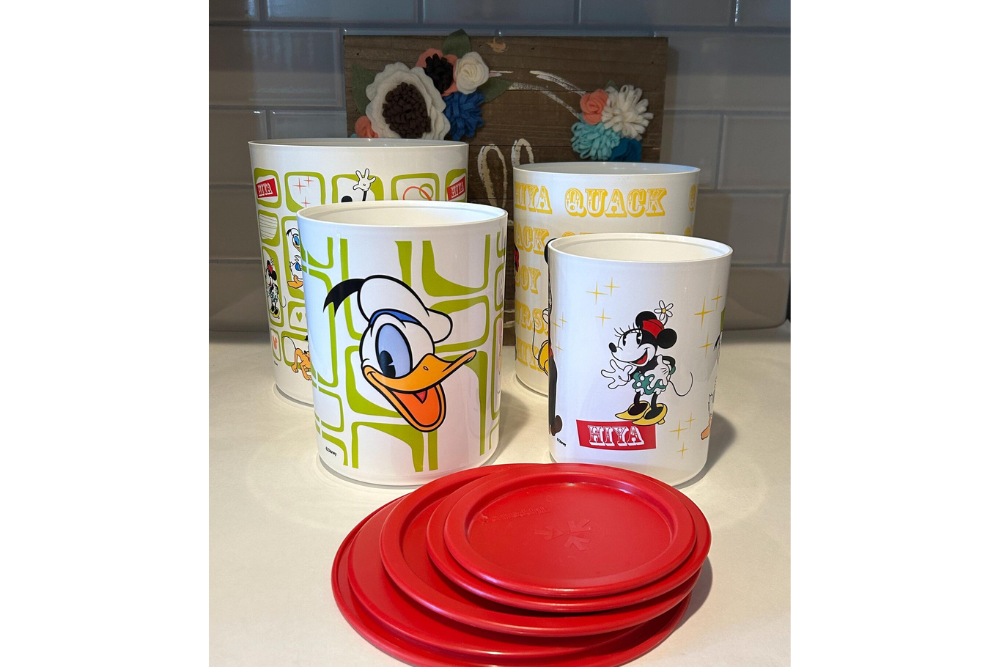
Four Disney Tupperware canisters decorated with Mickey, Minnie, Donald, and Goofy changed hands for $31.46 in August 2026, even though only one lid survived. The white plastic bodies have bright character scenes surrounded by colorful geometric shapes. They’re a little time capsule of 1990s family kitchens, when licensed cartoons turned up on almost everything that could hold a snack.
The characters are the main attraction, and each one has its own illustration, making the set fun to arrange on a shelf. The plastic bodies have the familiar molded Tupperware information beneath them, useful for identifying the original containers. Decades of washing can leave the artwork scratched or rubbed away, particularly where children carried the jars by their sides. Matching lids are often separated when families reorganize storage, so the color and fit of any surviving lid are worth examining. These canisters reflect a period when popular cartoon characters appeared on almost every practical object in the house.
Wilton’s 1998 Minnie Mouse cake pan
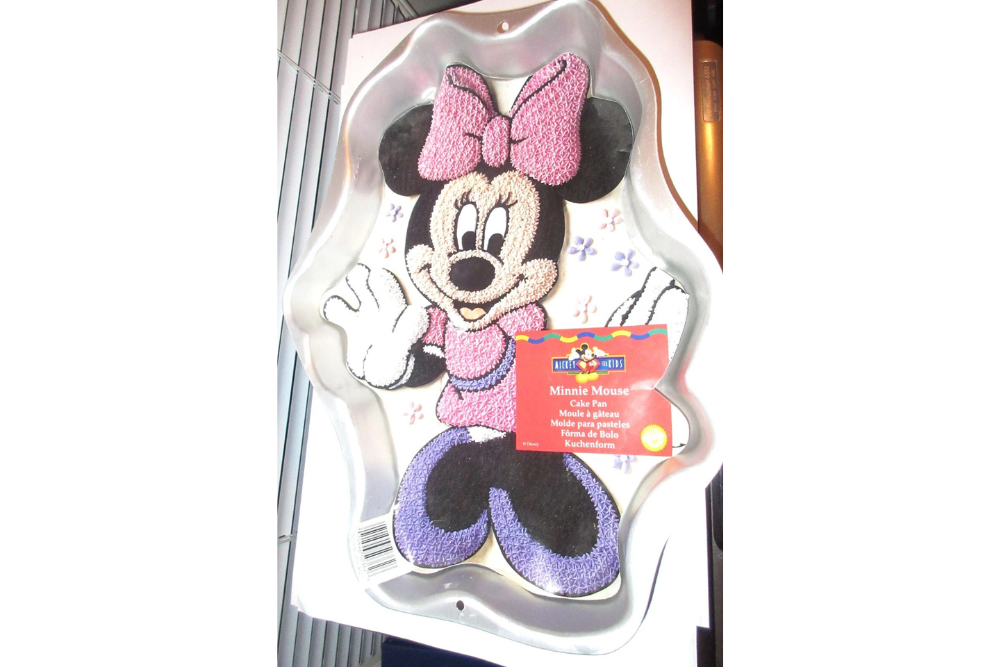
Wilton’s character-shaped aluminum pans made a spectacular birthday cake possible long before edible printed images were common. This 1998 Minnie Mouse full-body mold has ears, face, bow, and body features pressed into the metal. A pan with its original illustrated packaging sold for $38.
The model number is 2105-3602, and the pan itself carries a Disney copyright date of 1998. The printed insert shows how the finished cake was supposed to look after colored frosting brought the face and outfit to life. Those instructions are particularly charming because they show the decorating style of the time, with carefully piped stars and outlined shapes. Inside the mold, the recesses around the bow and nose are places where baked-on residue can linger. Dents in the aluminum can also blur the details of the finished cake. The original model number is the best way to match the mold to its correct paper decoration sheet.
Westland Giftware’s 1996 Garfield cookie jar
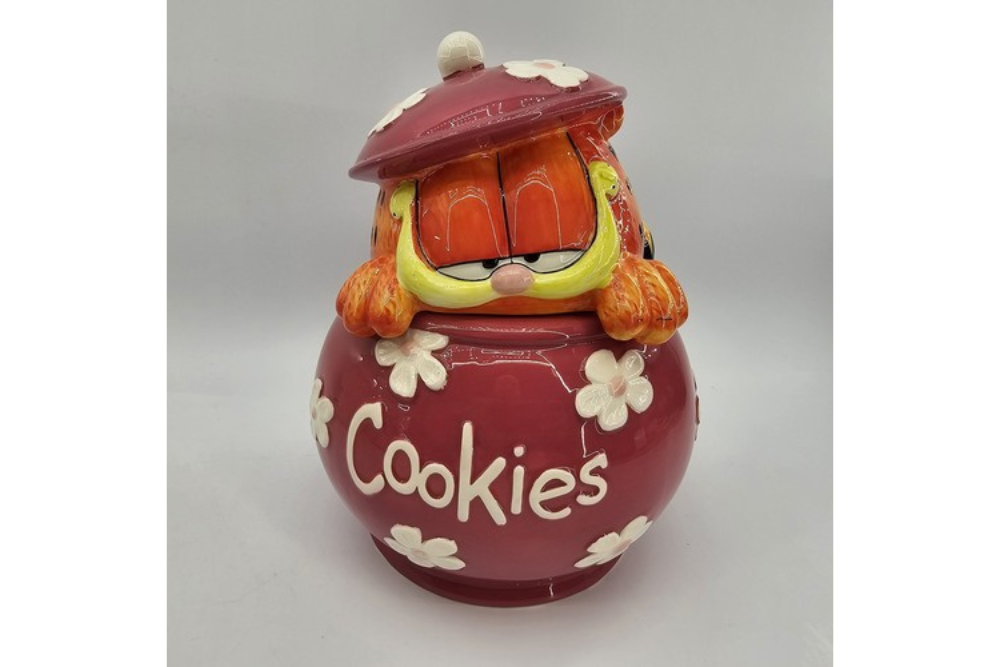
Garfield has the sort of smug expression that makes perfect sense on a jar full of cookies. Westland Giftware’s 1996 version shows the orange cartoon cat in a sculpted ceramic design with “Cookies” lettering. A model 15297 jar sold for $90 in July 2026.
The jar is large enough to make a statement on the countertop, with painted details around the face, paws, and lettering. Its removable lid fits into the body, while the copyright and maker’s marks help establish the licensed 1996 design. The large cartoon features can be awkward to clean because crumbs and grease settle around raised details. Look along the lid’s edge and the cat’s ears for small chips, especially if the jar spent years stored among other ceramics. The design has appeal to Garfield fans as well as kitchenware collectors, and it brings a distinctly 1990s sense of humor to the room.
1996 Red Wing collectors’ cookie jar
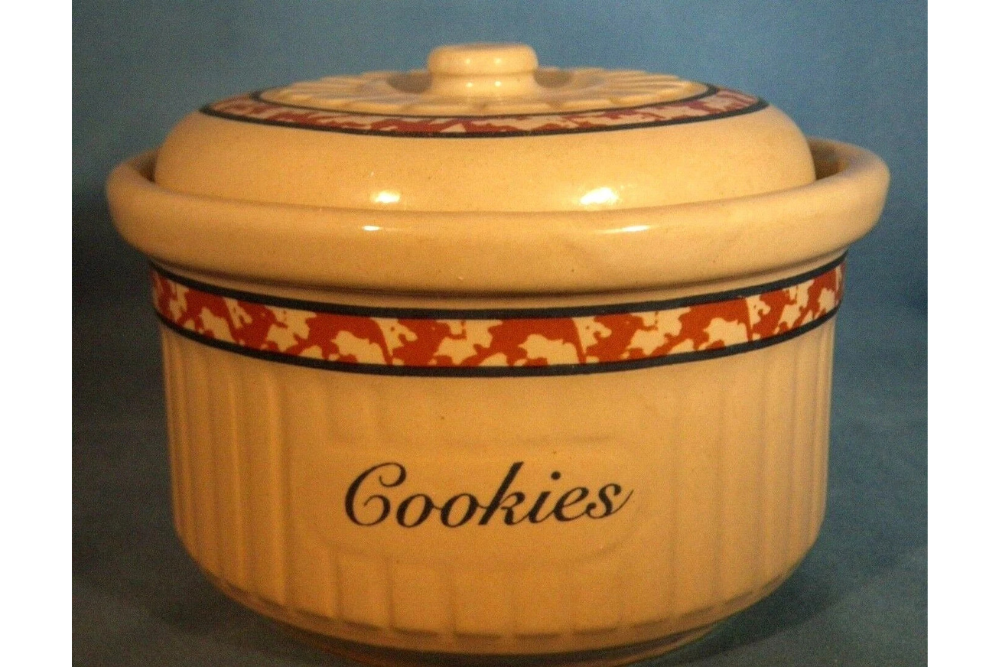
A small tan jar with the word “Cookies” might look like ordinary pottery until you read its markings. It was produced for the 1996 Red Wing Pottery Collectors Society convention, tying an everyday kitchen shape to a particular collecting event. One commemorative jar sold for $45 in July 2026.
At roughly three and a half inches tall, the little jar is a display-size piece, with a fitted lid and a traditional pottery finish. Its convention connection is documented on the item and often on its original box. That wording is important because the piece echoes older pottery forms but belongs firmly to 1996. The tan glaze gives the jar a quiet, old-fashioned character, especially beside more brightly colored 1990s ceramics. Small commemoratives can survive in cupboards with their original packaging tucked underneath; checking the box can reveal the exact event and date even when the jar’s stamp is difficult to read.
Alessi 9094/3 stainless-steel coffee press
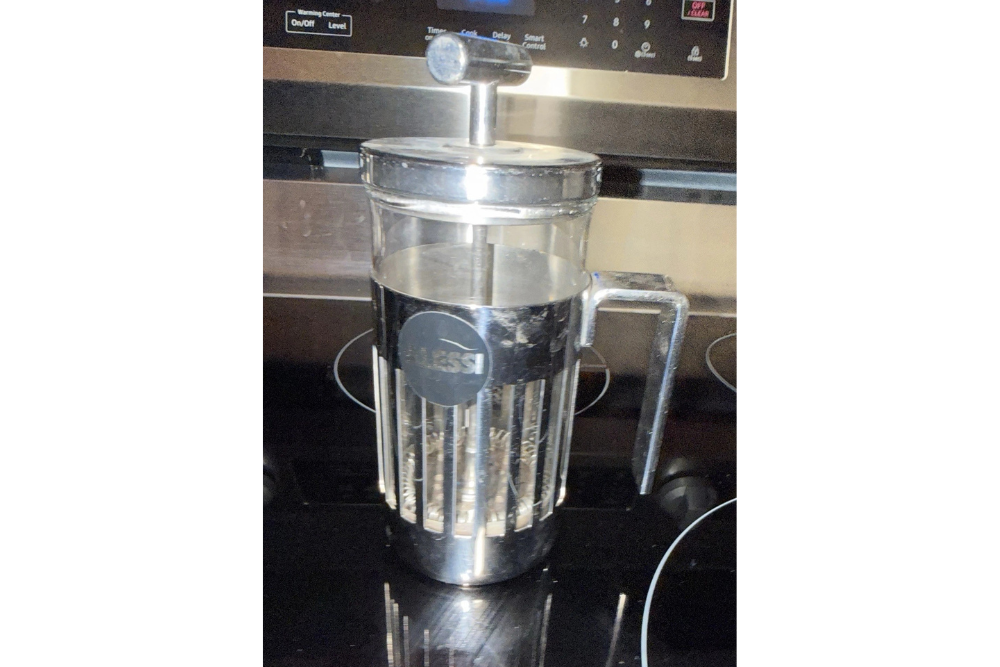
The Alessi 9094/3 three-cup coffee press brought $59 in September 2026, and its clean-lined stainless-steel design still looks perfectly current. Associated with Italian designer Aldo Rossi, the compact press was a stylish counterpoint to the bright plastic colors that filled many 1990s kitchens. Its polished cylindrical body and little metal handle give it a simple, distinctive profile.
The press has an elegant, compact profile, designed to sit comfortably on a counter without dominating it. Its metal body may be marked “ALESSI INOX 18/10 ITALY,” while the 9094/3 designation identifies the three-cup size. Inside, the plunger and filter assembly are the parts that make it a working coffee press. A dented mesh disc or missing internal piece can stop it working properly, even when the polished exterior looks fine. Fingerprints and fine scratches show quickly on stainless steel, but the design’s straightforward geometry is still striking. This is a kitchen object that sits comfortably alongside collectible industrial design and everyday coffee equipment.
Pfaltzgraff Winterberry cookie jars
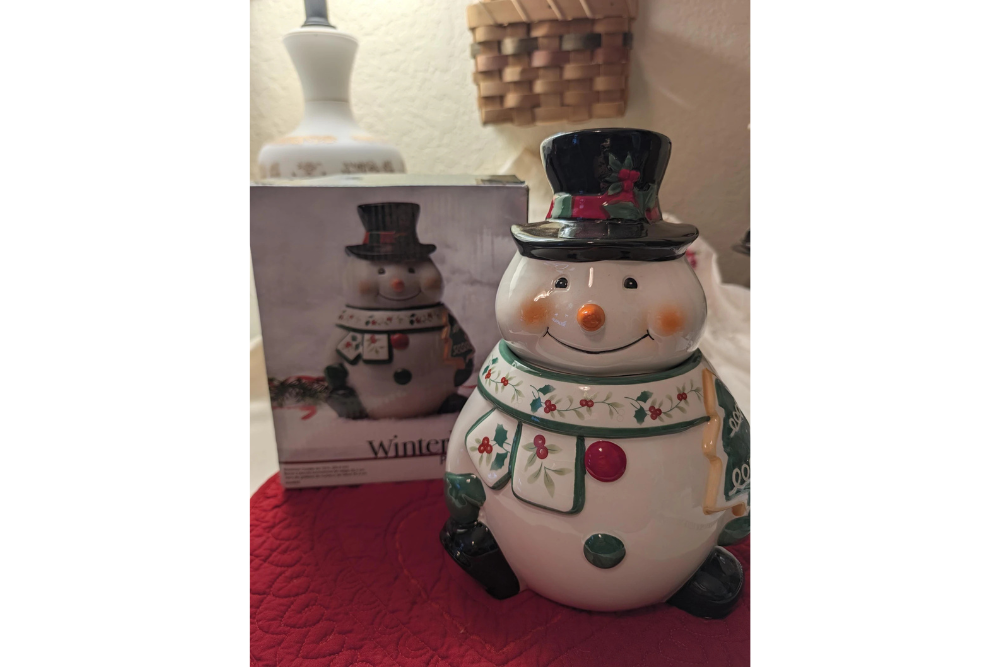
Winterberry’s green holly leaves and red berries turned ordinary kitchen storage into something festive. The Pfaltzgraff pattern began in 1991, and its success led to a broad range of coordinating pieces. A sculpted Winterberry cookie jar sold for $30 in September 2026.
The lidded ceramic jar echoes the familiar holly design on the plates, cups, and serving bowls, making it a natural part of a Christmas dinnerware collection. There are several Winterberry jar shapes, so the body and lid are best identified together. A large jar may be kept on display all December even if it isn’t used to hold food. The berries create little raised or painted details, depending on the specific form, and these can suffer chips around the lid’s edge. Matching the decoration to other Winterberry pieces is part of the fun of collecting a pattern that has been appearing on holiday tables since the early 1990s.
Treasure Craft’s 1994 Bart Simpson cookie jar
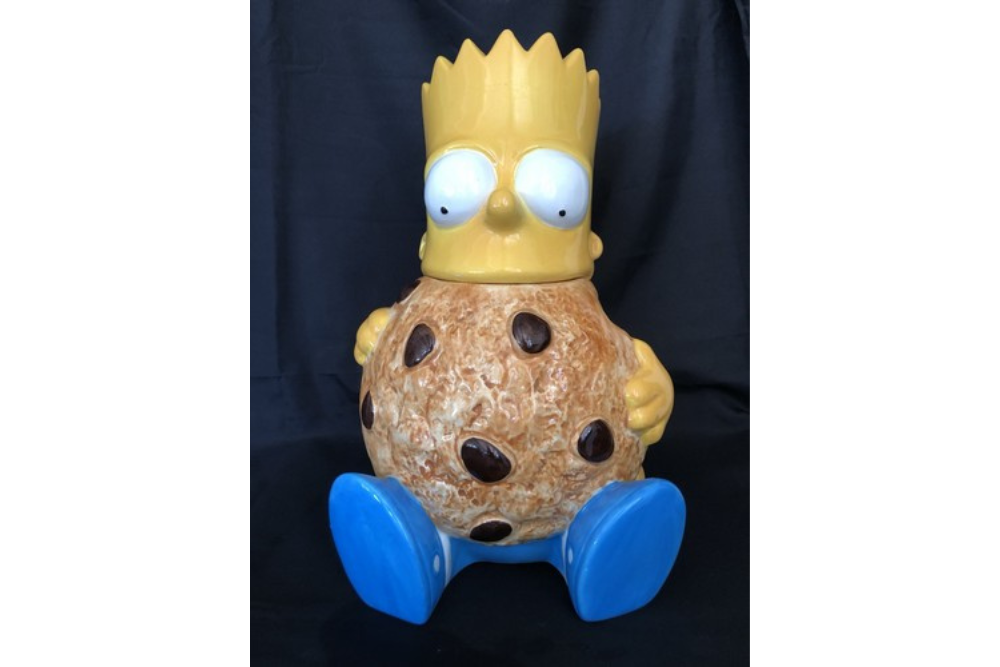
A ceramic Bart Simpson cookie jar from 1994 went for $55 in August 2026, complete with two small chips noted in its condition. Treasure Craft made this large sculpted version, using Bart’s yellow face and mischievous expression to turn a storage jar into something of a centerpiece. It’s a wonderfully silly bit of kitchenware from the years when Simpsons merchandise seemed to be everywhere.
The jar is approximately fourteen inches tall, so it makes a conspicuous display piece. Its lid forms part of the sculpted character, and its bright yellow glaze gives it instant recognition. The underside and licensed markings distinguish this Treasure Craft version from other Simpsons merchandise made during the decade. Protruding details are vulnerable to knocks, particularly around Bart’s hair and the opening. Even with a small chip, the jar’s cartoon personality survives. It’s a delightful reminder of how thoroughly The Simpsons took over ordinary households, from school lunch boxes to the jars where the cookies disappeared.
1995 Twelve Days of Christmas salad plates
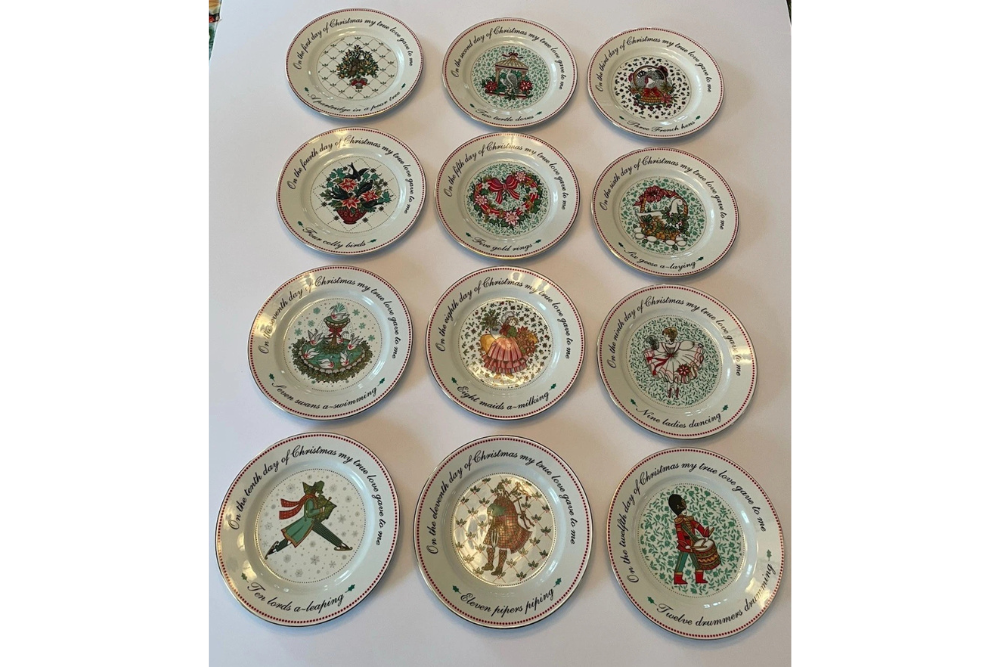
A full set of twelve illustrated Domestications salad plates brought $85.31 in September 2026. Made in 1995, the set gives each verse of “The Twelve Days of Christmas” its own plate, so the whole carol can be laid out around the table. The idea fits the era’s enthusiasm for seasonal dinnerware, and the pictures are charming enough to display outside a holiday meal.
Each ceramic plate is roughly eight inches across, a useful size for salad or dessert. The appeal is in having all twelve illustrations together so the numbered sequence can be displayed or brought out over a holiday meal. Backstamps and the pictures themselves help identify the set, especially when the plates have become separated from their original packaging. Look at the edges for tiny chips and check whether all twelve verses are represented. The pieces are easy to stack for storage, although a soft layer between them can protect the printed designs. They capture the era’s enthusiasm for collectible Christmas tableware without requiring an entire matching dinner service.











