
The seller wants five dollars for a milk crate of rusty tools, and most of it looks like scrap. Under a coil of rope there is a cast iron plane with a flaking black finish, and next to it a wooden folding ruler with brass hinges. Both are easy to walk past.
Old American hand tools were built to last generations, which is why so many survived and why a handful of them still bring real money. Stanley planes, Disston saws, Starrett squares and a few oddities from the early 1900s all have steady buyers, and clean, complete examples can bring $50 to $400 or more.
Condition decides almost everything. A cracked handle, a pitted sole, a kinked saw plate or a missing part can cut the price by two thirds, and plenty of rusty, heavily used tools are worth a few dollars at best. Read the markings first, check for damage second, and only then decide what the tool is worth to you.
1. Stanley No. 4-1/2 extra-wide smooth plane
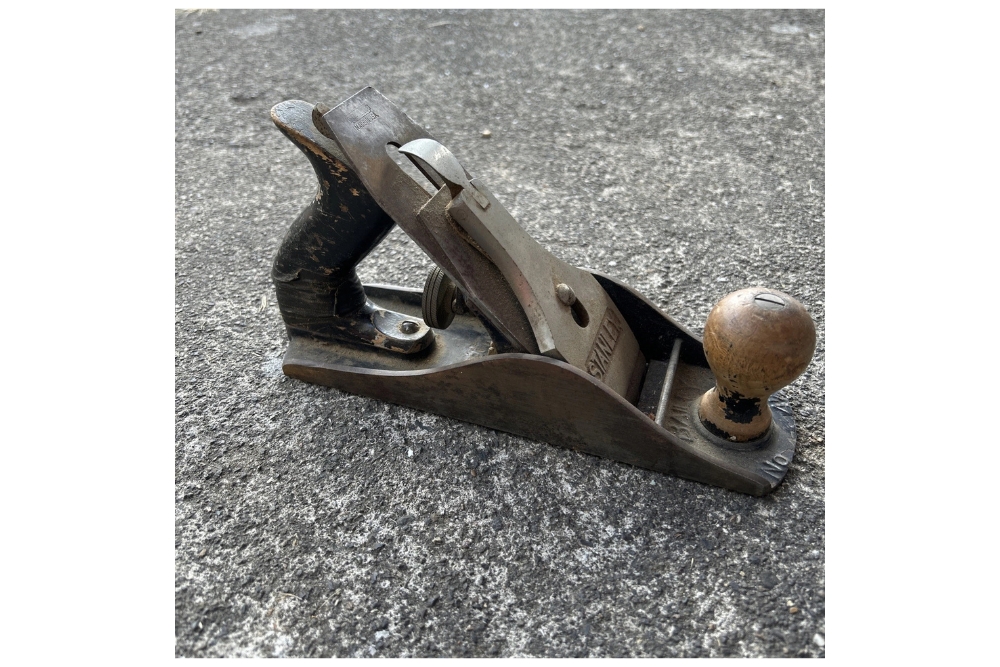
The Stanley No. 4-1/2 is the wide cousin of the common No. 4 smoothing plane. It was made from 1884 to 1961, measures 10 inches long, and carries a 2-3/8 inch cutter where a standard No. 4 has a 2 inch one. That extra width is what collectors want, and clean users with a decent cutter typically bring $125 to $175.
Versions with a corrugated sole, a bottom cut with shallow grooves to reduce friction, are marked C and sell in the same range. Early planes built before the lateral adjustment lever was added can reach the top of it.
Check the tote (the rear handle) and the casting for cracks, because a plane with a hairline crack in the body is worth very little. Look for a pitted sole, a replaced iron, a bent frog and heavy rust. Everything should match: lever cap, chip breaker, knob and tote. A plane with a mismatched or missing part drops toward the low end fast, and a worn, ground-down cutter hurts the price too.
2. Stanley No. 78 duplex rabbet and filletster plane
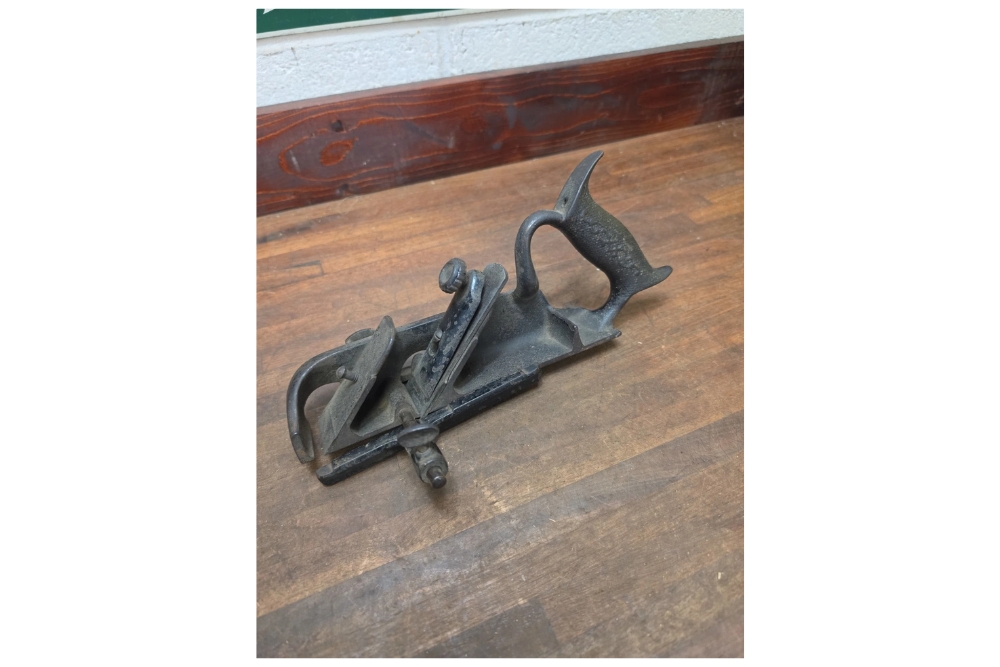
This small cast iron plane is 8-1/2 inches long, was made from 1884 to 1984, and can be set up two ways: with the blade at the front for cutting into a corner or in the middle for ordinary work. It also has an adjustable fence and a depth stop, and those two parts decide the price.
A complete one with its fence, rod and depth stop typically brings $75 to $125. Early examples from the 1880s and 1890s run about $90 to $95, and a near-mint plane in its original box from the 1920s or 1930s reaches the top. Aluminum versions and the weatherstrip variant are a different tier, at $245 to $295.
Most of the ones that turn up are missing the fence or the depth stop, and without them the plane is worth a fraction of those numbers. Check the body for cracks and old welds, then check that the blade, lever cap and rod are all there. Other makers built similar planes, so look for the Stanley name cast into the body before you pay a Stanley price.
3. Stanley No. 10-1/2 carriage maker’s rabbet plane
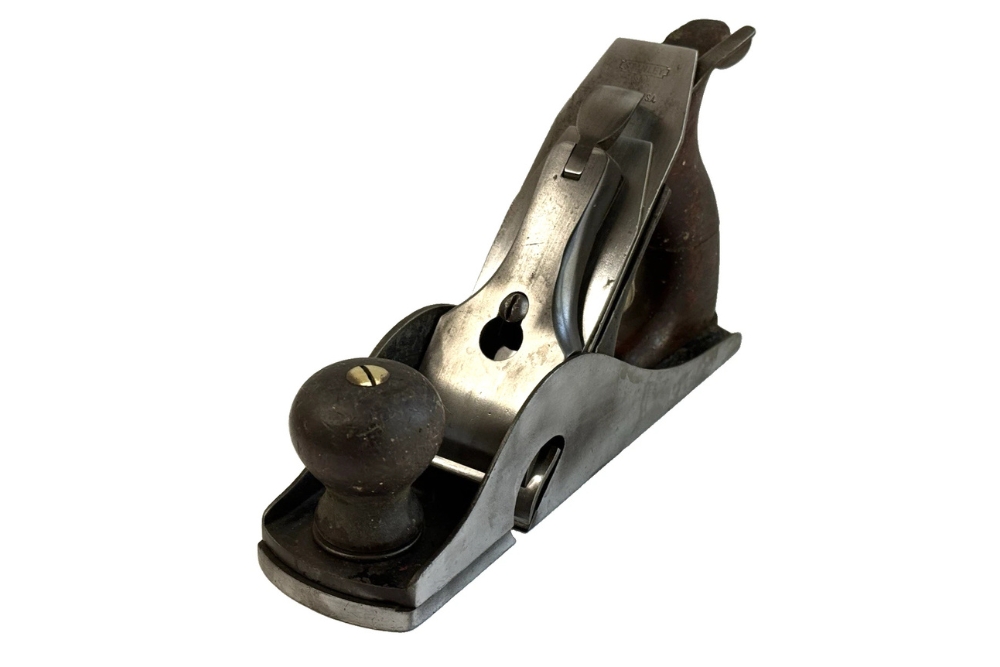
The No. 10-1/2 is a wide, heavy rabbet plane, often called the carriage maker’s rabbet. The cutter runs the full width of the sole, so the plane can cut right into the corner of a groove or step.
Plain smooth-bottom examples from the 1910s through World War II typically bring $125 to $175. Versions with a corrugated sole, marked 10-1/2C, run closer to $250 to $300, and early planes with the adjustable throat can reach $375 to $395, especially in an original box.
Watch for cracks near the mouth and the cheeks. A badly pitted sole, a glued or replaced tote and a short, worn-down cutter all pull the price toward the bottom of the range. Older planes have the cutter logo and casting marks that tell you roughly when they were made, but you do not need the exact type to see whether a plane is complete and clean. A tool that is rusted solid is worth much less than the same plane with a light patina and a working adjuster.
4. Stanley No. 140 skew rabbeting block plane
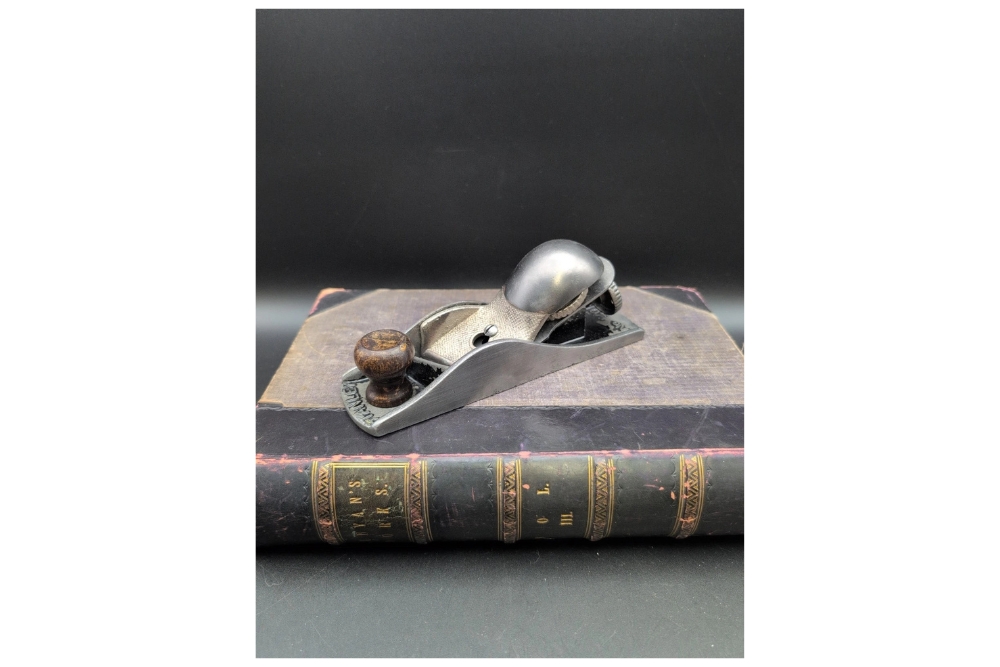
The No. 140 is a block plane with a skewed cutter that cuts rabbets and trims end grain. The sole is narrow and the iron sits at an angle, which gives a cleaner cut across the grain than a straight blade. Clean examples with a skew cutter typically bring $95 to $125, and an early, unused one with a cast adjuster can bring closer to $195. A plane with a replacement screw or a worn finish lands toward the bottom.
Check the throat and the sole edges, where chips and cracks hide under the japanned finish. The japanning is the black enamel finish, and light wear is normal but flaking paint down to bare, rusted iron lowers the value. Make sure the cutter still has life left, since one that has been sharpened down to a stub is a problem you cannot fix with a new blade from a modern catalog.
The 140 is easy to confuse with ordinary block planes at a glance, so read the model number cast into the body. A standard block plane, even in good shape, brings a fraction of what the 140 does.
5. Stanley No. 9-1/2 block plane
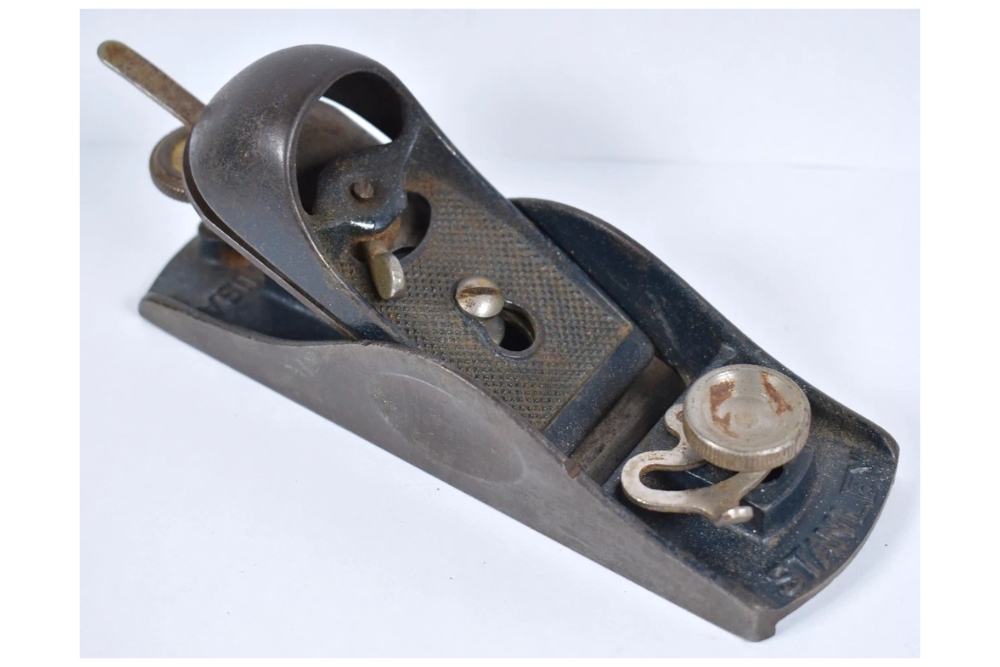
The Stanley No. 9-1/2 has one of the widest price ranges of any plane in the toolbox. It was made from 1872 to 1981, measures 6 inches long with a 1-5/8 inch blade, and has an adjustable throat.
Most used examples bring $40 to $75. World War II era planes with a plain finish sit near $40, while a plane in its original box with nearly all of its black finish intact can reach $125 to $145. The boxed ones and the earlier planes from the 1880s and 1890s are where the money is.
Look at the sole first. A flat, clean sole with no deep pitting matters more than a shiny top. Then check the throat adjustment, the cap and the screw that holds the blade down, because replacement parts are common. A plane with a cracked body, a bent adjuster or a rusted cutter is worth a few dollars. Low-angle versions like the No. 60-1/2 bring $40 to $70, so a tired No. 9-1/2 is just a decent plane, not a big payday.
6. Stanley No. 1 Odd Jobs layout tool
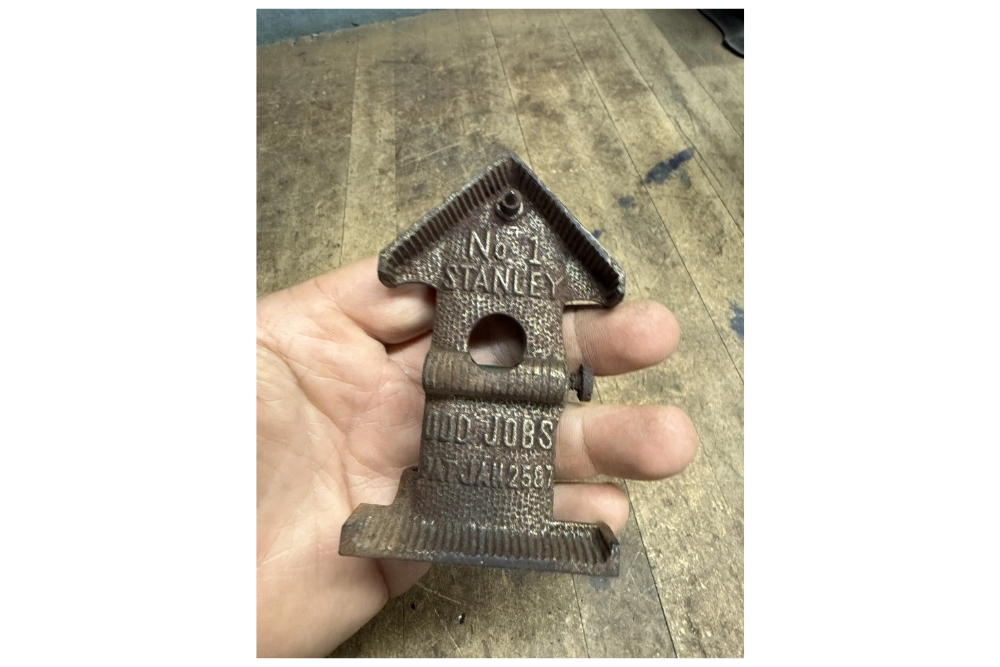
The Odd Jobs is one of the strangest tools Stanley ever made. It was made from about 1887 until 1935 and packs a try square, mitre square, marking gauge, depth gauge, level and plumb into one cast iron body that holds a standard folding rule. Early examples carry the patent marking PATJAN2587.
Clean examples typically bring $95 to $175. A bare body with no rule sits near $95, one mounted on a boxwood rule runs about $125, and a complete tool with the rule, scribe and pencil holder reaches the top.
The scribe and the rule are the parts most often missing, and the nickel plating flakes badly with age, so a clean, bright one costs more. Check that the level vial is intact and the thumbscrews turn. Reproductions exist. Garrett Wade has made the tool since 1996 and Woodpeckers made it in two limited runs, the last retired in 2018. A newer tool that looks too perfect, with no wear in the plating and no old patent marks, is probably one of those.
7. Stanley No. 77 rosewood marking and mortise gauge
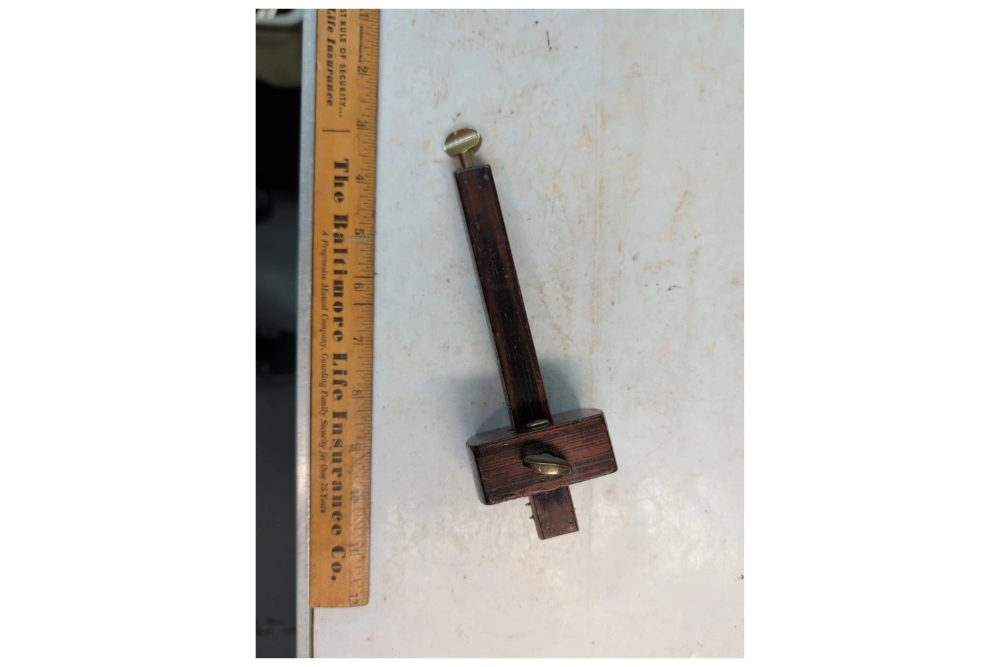
A marking gauge scribes a line parallel to the edge of a board, and the Stanley No. 77 does it with a rosewood stem, brass fittings and a thumbscrew. It also carries two pins for laying out mortises, which is why it was a favorite in woodworking shops.
Used examples typically bring $40 to $70. Planes and gauges from the 1920s and early 1930s, the period with the heart-shaped logo, tend to sit at the higher end. A larger Stanley No. 85 rosewood panel gauge, which reaches across wide boards, can bring $80 or more in good condition.
The parts that matter are small. Check that both pins are present, that the stems slide freely and lock, and that the thumbscrews are the original brass. Cracks in the rosewood, chips around the fence and a stem that has been repaired with glue all take the price down. A gauge missing a stem or its fence is a parts piece and worth only a few dollars. Plenty of unmarked wood gauges turn up in the same boxes, and those are worth far less than the Stanley name.
8. Stanley Everlasting and No. 720 chisels
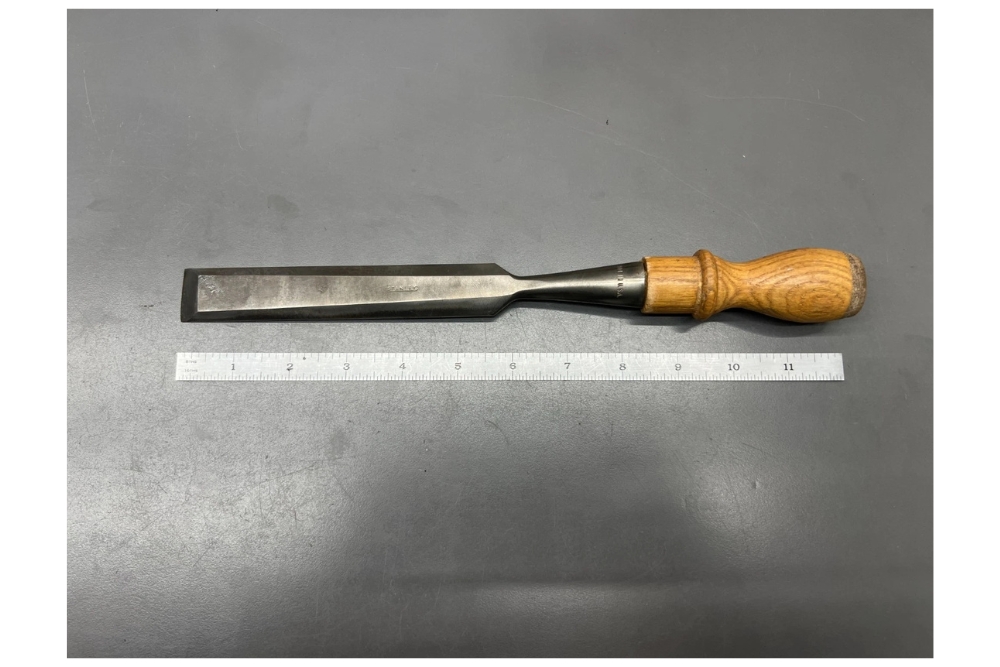
Stanley chisels marked Everlasting, or numbered 720 and 750, are worth checking when the blades are long and the handles are sound. Single chisels typically bring $25 to $60, depending on size, with a half-inch or one-inch chisel in good shape usually landing at $40 to $55.
Sets matter more. A matched set of eight No. 720 firmer chisels, with sizes from a quarter inch to two inches, can bring $395, and a nine-piece Everlasting set has reached $495. Sets still wrapped in the original paper bring a premium, and a three-piece set in its box runs about $225.
Look at the blade length, because many chisels have been sharpened for decades and worn down to short stubs, and those are worth much less. Check the handles for cracks or heavy refinishing, and look down the back of each blade for pitting that would make the chisel hard to sharpen. A mushroomed or split striking end on a handle is a deal breaker. Loose sets with mixed sizes and makers are worth less than a matched Stanley group.
9. Stanley No. 151 adjustable spokeshave
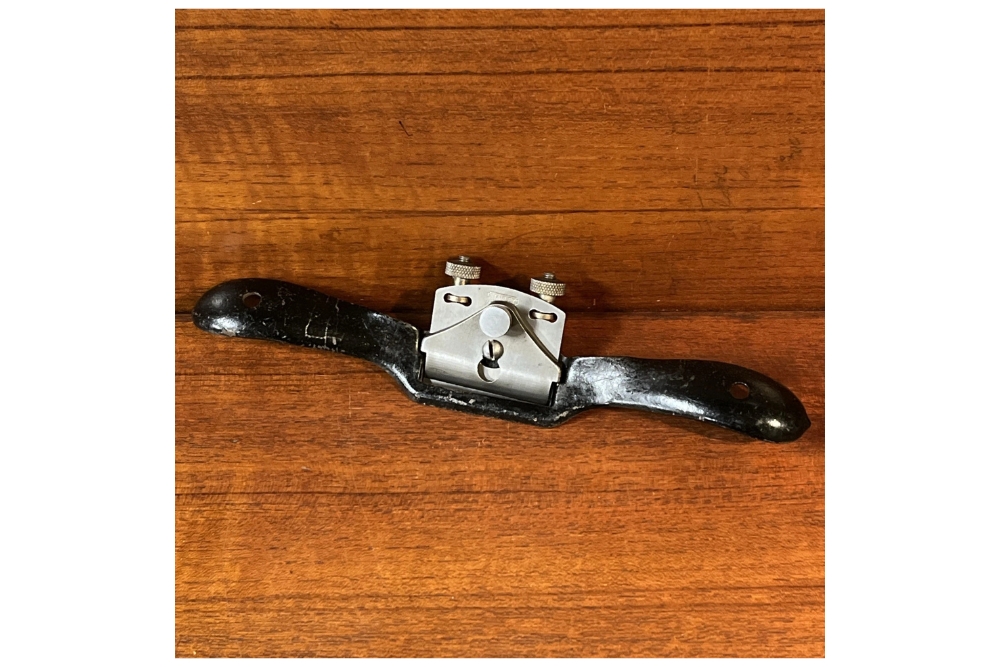
A spokeshave is a short two-handled blade used to shape curved wood, and the Stanley No. 151 is the flat-bottom model with a screw adjustment. It is a tool that woodworkers still use, which keeps the price steady. Clean examples typically bring $60 to $75, with the 1920s and 1930s versions at the higher end. The hollow-face No. 55 and the convex-sole models bring about $35 to $50, and the larger Stanley cooper’s shaves reach $90 to $150.
Check the cutter first. A shave with a short, worn cutter, one that has been sharpened until almost nothing is left, is a project and not a user. Look for cracks in the casting around the handles and mouth, a bent or damaged adjusting screw and rust pits on the sole. The parts should be original: cutter, cap, screw and the thumbwheel.
English-made versions turn up too and sit at the lower end of the range, close to $60. Modern spokeshaves are common and look similar, so look for the old Stanley markings and the aged japanning before you assume age.
10. Stanley No. 62 boxwood folding rule
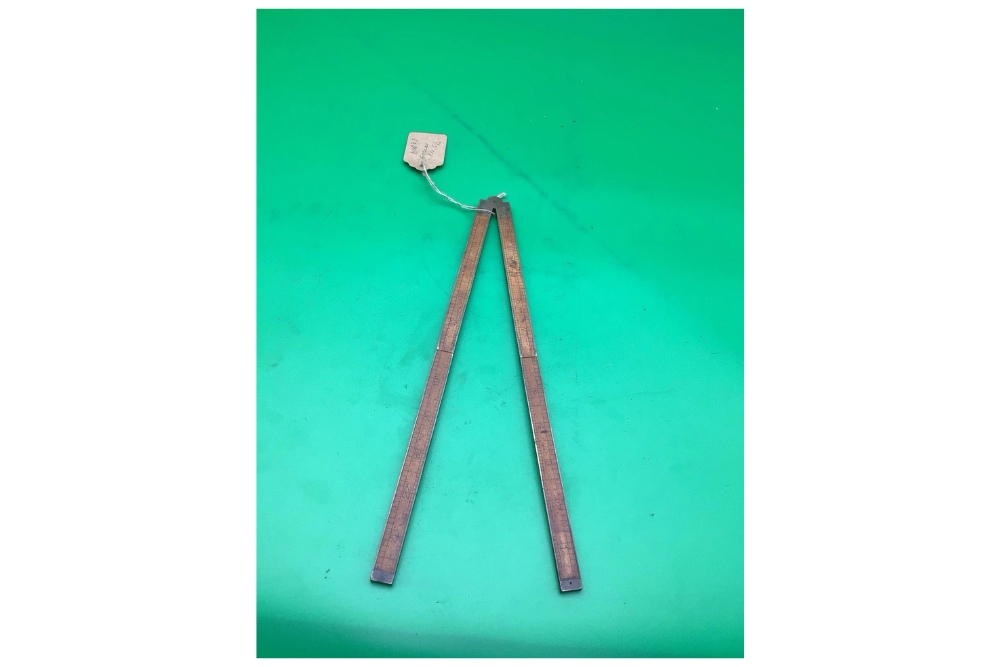
A good boxwood rule feels like a piece of furniture. The Stanley No. 62 is a 24-inch, four-fold carpenter’s rule made of boxwood with brass joints and banding. Stanley introduced it in 1855 and discontinued it in 1942, when brass went to the war effort.
Typical examples bring $40 to $65, and the No. 62-1/2 version with a brass bound edge from the 1920s and 1930s reaches $65. The one-foot caliper rules, Nos. 32 and 32-1/2, bring $40 to $55.
Condition is easy to read. The wood should be pale and sound, the markings sharp, the hinges snug and the brass free of dents. Cracked or shrunken boxwood, a loose center joint or numbers worn into a blur cut the price in half. A rule that does not fully fold or lock flat is a problem. Plain folding rules with advertising printed on them are worth far less. The Stanley name, the brass bound edges and clean boxwood are what put a rule in this range.
11. Chapin-Stephens No. 036 architect’s rule
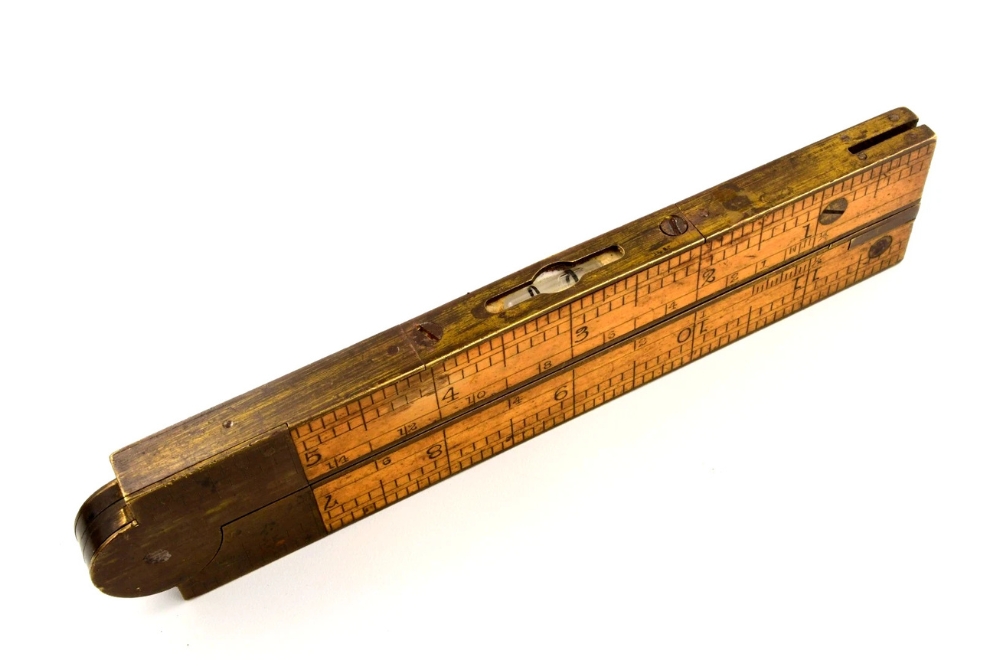
The Chapin-Stephens No. 036 is a boxwood folding rule that carries a bevel and a built-in level, which made it handy for architects, carpenters and surveyors. It folds out and has a small bubble vial set into the wood, along with an inclinometer scale. Clean examples typically bring $80 to $125, which is more than a plain Stanley rule. Other Chapin-Stephens rules, like the No. 78-1/2 four-fold boxwood rule and the No. 7 “Nearsite” with red inch markings, run about $95.
Check the level first. The glass vial should be intact, with the bubble still moving, and the brass fittings that hold it should not be bent or missing. The wood should be sound without splits near the hinges. A rule with a cracked vial or a missing bevel arm loses most of its value.
Stephens and Chapin-Stephens names appear in several versions, including the Riverton, Connecticut marking, so look carefully at the stamp. Rules from other makers can look similar, and a plain boxwood rule with no level or bevel is worth the lower Stanley numbers, not these.
12. Starrett combination squares
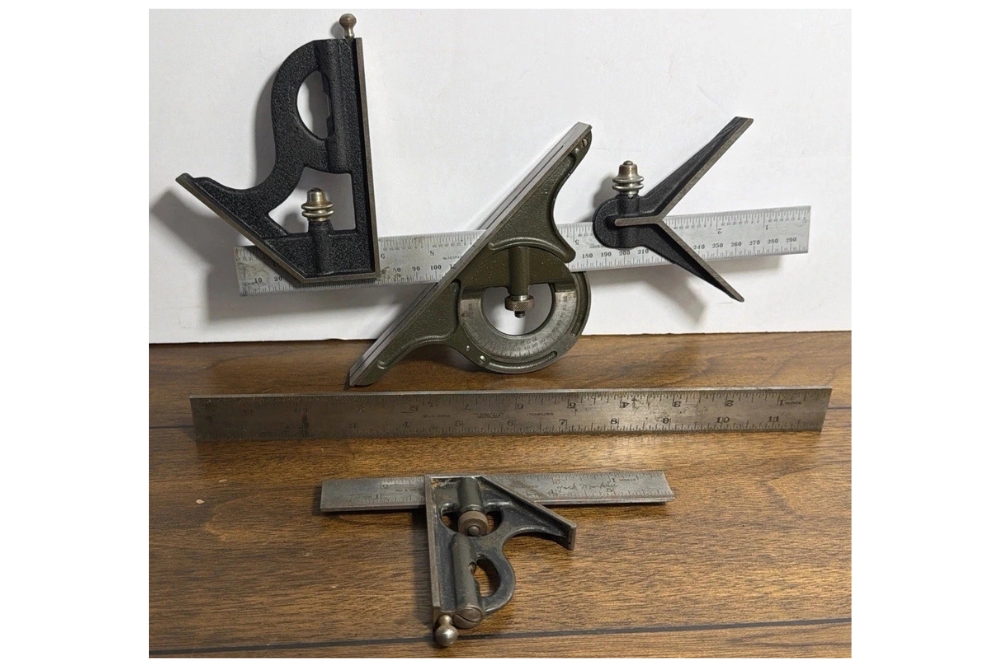
Laroy Starrett patented the first combination square in 1878 and started his company two years later, and the name still carries weight with machinists. A combination square has a steel rule and a sliding head, and the older Starrett sets turn up in garages and toolboxes.
A plain 6-inch Starrett combination square typically brings $40. A 12-inch set with a protractor head and angle divider can bring $150 to $160. Similar squares from Lufkin and Millers Falls usually sit around $45 to $50.
The set matters as much as the square. A complete set has the rule, the square head, and often a protractor head and center head, all in one case. Missing heads, a bent rule, a loose lock nut or worn markings reduce the price quickly. Lay the head against a flat edge and check that it sits square, then look at the rule for bends or rust pits that make the markings hard to read. Starrett tools that are rusted, dropped or heavily worn are worth much less. The machined steel should be clean, the markings sharp and the sliding parts smooth.
13. Wilton Bullet bench vise
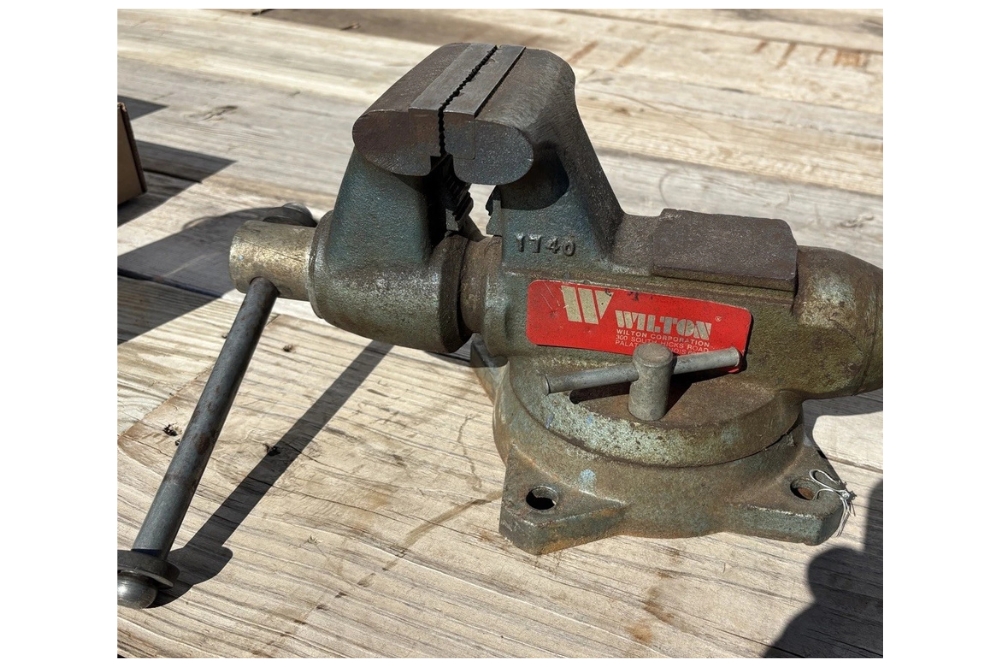
A Wilton Bullet is the round-bodied bench vise found in workshops across the country. Wilton was founded in 1941 in Chicago and introduced the bullet design the same year as the 40S, then moved to Schiller Park, Illinois, in 1957. Vises marked Schiller Park came after the move.
Clean 4-inch Bullet vises typically bring $250 to $450, and examples with a swivel base sit at the upper end. Smaller 3-inch and 3-1/2 inch models run $250 to $350, and a 4-1/2 inch pipe and bench combination can reach $425.
The vise has to work. Check that the jaws line up, the screw turns smoothly through its whole travel and the handle is straight. Cracked or welded jaws, bent handles, missing jaw plates and a broken swivel mount cut the price sharply. A Wilton drill press vise, which is a different tool, brought about $24, so make sure of the model. Heavy and awkward to carry, a vise like this is an easy one to skip at a sale. The brand name and clean working order are what separate a good one from a worn one.
14. Disston D-8 handsaw
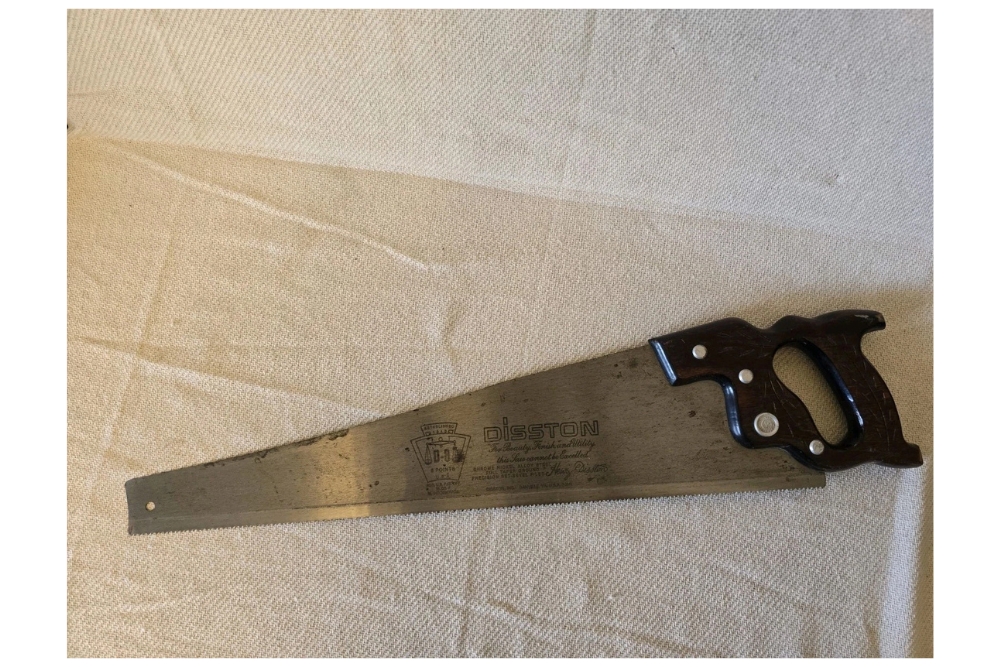
Most Disston saws are worth very little, but the D-8 is the one to look for. The name appears in the 1879 catalog, the handle was applewood until about 1945, and 26-inch saws have five brass screws. Rip saws in the 26-inch size often have a thumbhole in the handle.
A straight, sharp 26-inch D-8 with a readable etch typically brings $50 to $85. Saws with a weak etch or stains drop to $35 to $60, and a longer 28-inch saw or a flawless smaller panel saw can reach $95 or more.
Look down the plate from the toe end to check for kinks and bends. A kinked blade is nearly worthless, and so is one that has been filed so many times that the plate is narrow. Deep rust pitting, a cracked or chipped handle and replaced screws all lower the price. The medallion and the etch on the blade should be readable, since they confirm the model. Many saws that look like a D-8 are not. Check the markings before you pay, because plenty of lesser Disston models and other makers fill the same boxes.
15. Keen Kutter K-series bench planes
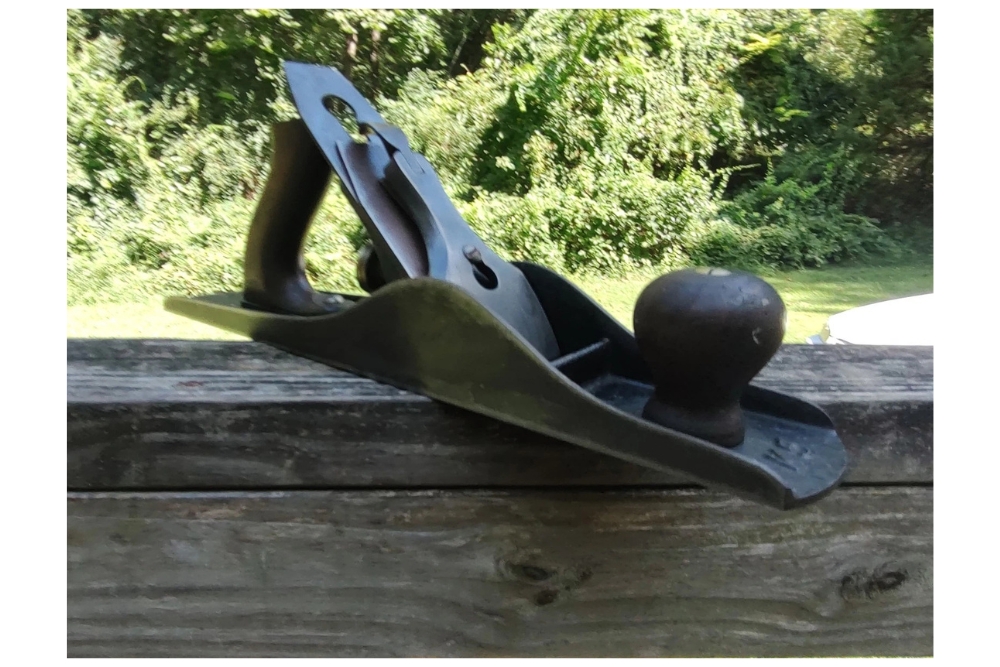
Keen Kutter was the house brand of E.C. Simmons Hardware, and the saw-tooth-through-wood logo appeared around 1900. Shapleigh Hardware bought the company in 1940 and dropped the Simmons name, and ended the mark in 1960. Planes marked with E.C. Simmons are the older ones.
The K-series bench planes typically bring $60 to $150. A K5 jack plane runs $60 to $125, a K3 smooth plane $85 to $150, and the corrugated K4-1/2 C has brought $250. Block planes and later Keen Kutter models can run higher, but the bench planes are the ones most likely to be in a garage.
Check for cracks in the body, a pitted sole, a cracked tote and a replaced iron. A plane with its original blade, tote and knob, and with the logo still clear on the lever cap and cutter, is worth much more than a stripped one. Modern Keen Kutter knives exist under license, but they are knives, not planes. The old planes show their age in the cast iron and the hand-finished wood, and a bright new plane with the name on it deserves a closer look.
16. Winchester-marked bench planes
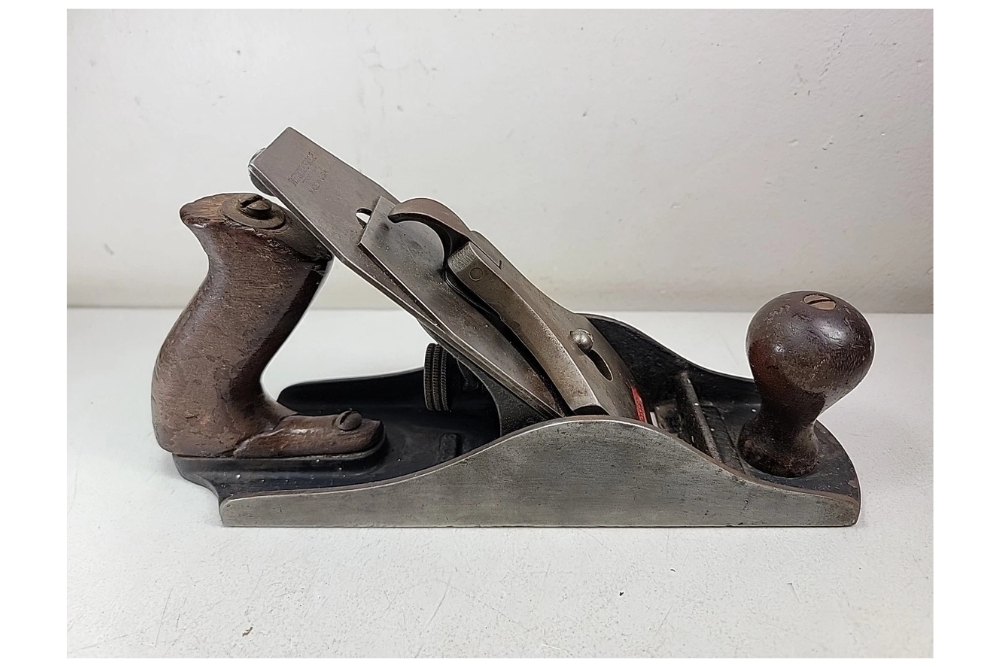
Winchester made guns, and in the early 20th century its name also went onto hardware, including planes. That name keeps the prices higher than the same plane without it.
Smooth planes and jack planes marked Winchester typically bring $85 to $125. A No. 3004 smooth plane runs $85 to $125, a No. 3011 jack plane about $125, and a Winchester jointer around $100. Block planes bring only $25 to $45, and a Stanley-made W5 jack plane about $60.
The name is the whole value, so check that it is there and legible on the plane. A plane that has lost its markings to rust, sanding or heavy cleaning is worth the price of a plain bench plane. Then check the usual damage: cracks in the body, a pitted sole, a cracked tote and a replacement iron. Because the price depends on the name, plenty of unmarked planes in the same style are worth far less. Look closely at the casting and the cutter and make sure everything matches before you pay a Winchester price.
17. Stanley plumb bobs
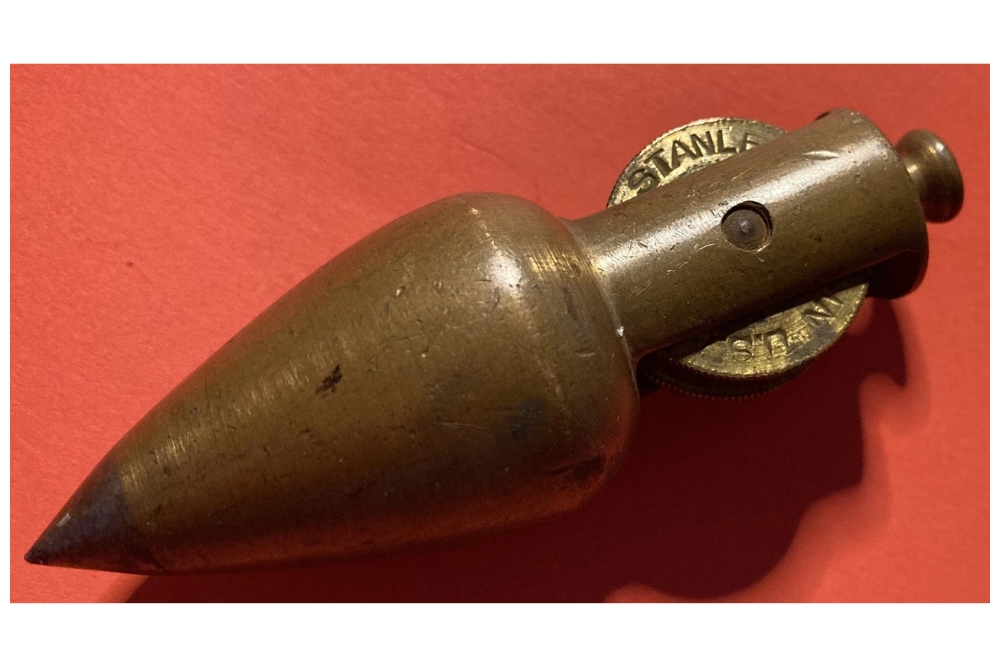
A plumb bob is a weighted point on a string, used to find a true vertical line, and the old Stanley ones are made of solid brass or nickel-plated cast iron. They are small, heavy and easy to overlook in a drawer of old hardware.
Stanley’s No. 5 nickel-plated cast iron bob typically brings $75, and a brass No. 2 bob with its reel from around 1900 has brought $100. The reel is the part that makes the difference, since it holds the line and fits into the bob.
Check the point first. A bent or chipped tip makes the bob inaccurate and cuts the price. Look for dents, deep pitting and cracked plating on the nickel-plated models, and check that a reel, if present, turns freely and the lid or cap threads on cleanly. A bob that has lost its plating or its reel is worth noticeably less. Modern brass plumb bobs are worth only a few dollars. Look for the Stanley name and the weight number stamped into the body, and for the heavy, solid feel of old brass rather than a light plated shell.
18. Cast iron cutout implement wrenches
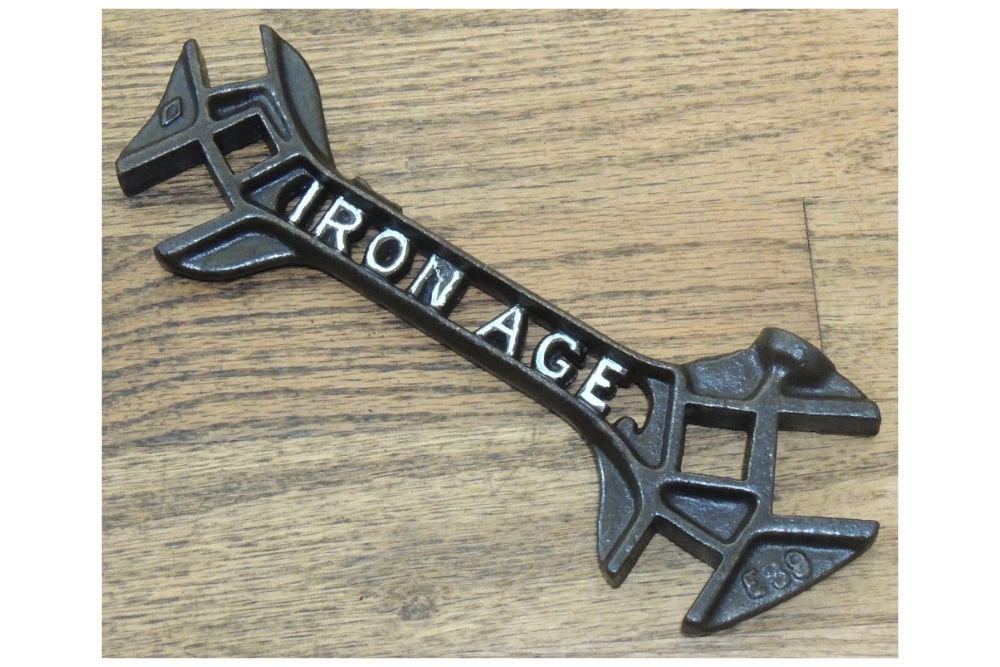
Farm wrenches are shaped for a single job. A cutout implement wrench has openings cut to fit the nuts and bolts on a specific plow, cultivator or planter, and the maker’s name is cast right into the iron.
Most turn up in the $25 to $80 range. A Planet Jr cutout wrench brings $35 to $80, and wrenches from Granite State and Universal bring about $35 to $45. A few makers’ names carry a big premium: an International Harvester cutout wrench in good condition can bring $375, and a Bradley’s Wonder in excellent condition $695, but those are outliers and not what an average find is worth.
Read the markings before anything else. A wrench with a clear maker’s name or implement number is worth more than an unmarked one. Check for cracks in the jaws and arms, bends from use as a pry bar and cutouts worn so wide that they no longer fit. Heavy rust is normal, and pitting that has eaten into the lettering is not. Plain open-end wrenches from the same boxes are worth a few dollars. The odd shapes and the cast names are what make these valuable.
Sort the pile by name and condition, and leave the cracked, pitted or incomplete tools for the next shopper.











