
Most jars of old marbles are worth a few dollars. Maybe it’s a coffee can from your grandparents’ basement, a bag from an estate sale, or a box in the garage nobody has opened since the nineties. Go through one carefully, though, and the odd marble can be worth $50, $100, or a good deal more.
Where a marble was made matters most. American machine-made glass from West Virginia, Ohio, and Illinois factories in the 1920s through the 1950s is common, with a handful of types that bring real money. German handmade glass from the late 1800s and early 1900s is scarcer and usually worth more, especially the larger ones with swirls, bands, or a tiny figure trapped inside.
Condition and size do the rest. Chips, cracks, and flea bites (tiny chips on the surface) can cut a price in half or more, and a marble closer to an inch across outsells a standard 5/8-inch one by a wide margin. Start by measuring and checking each marble for damage under a bright light.
1. Akro Agate corkscrew marbles
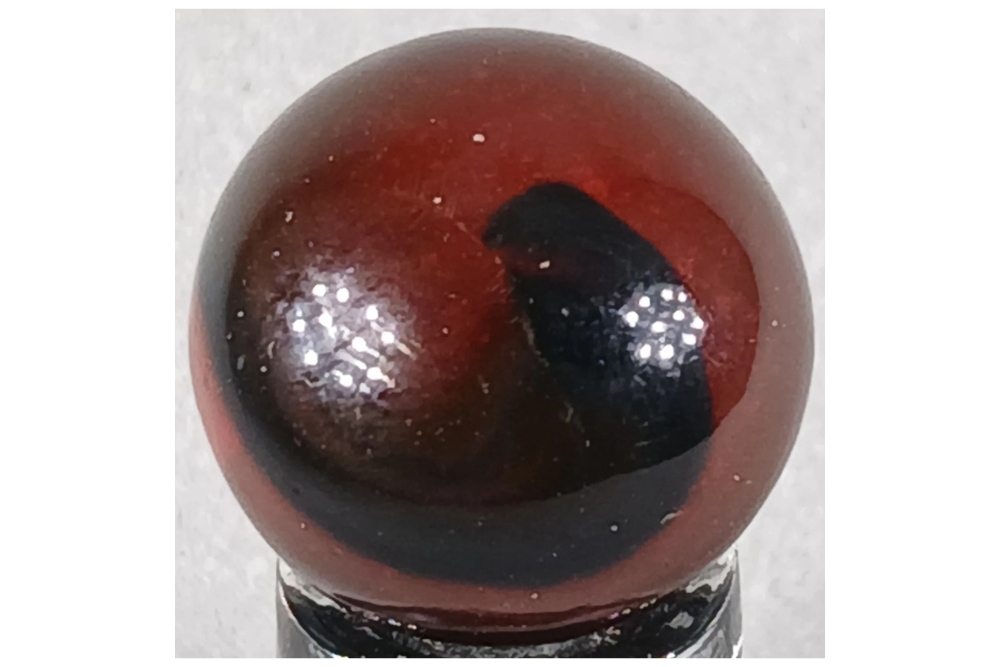
Akro Agate made these in the 1920s and 1930s, and the spiral of color running through the glass is easy to spot. The company produced them by the millions, so they aren’t rare, but a mint example in the standard 5/8-inch size still brings $10 to $25. A chipped one is closer to $3 or $4, which is why it pays to hold each marble up to the light before you get excited.
Size is where the money is. A corkscrew shooter (a larger marble) close to an inch across can reach around $80, and anything over an inch is extremely rare. Color matters too. Akro’s pale “ade” shades glow under a black light, which is a quick way to separate the better ones from lookalikes.
Newer marbles copy the corkscrew look, so a spiral alone doesn’t prove age. Old ones usually show a little wear from play, and that’s fine. Chips and cracks are what cost you.
2. Akro Agate Popeye corkscrews
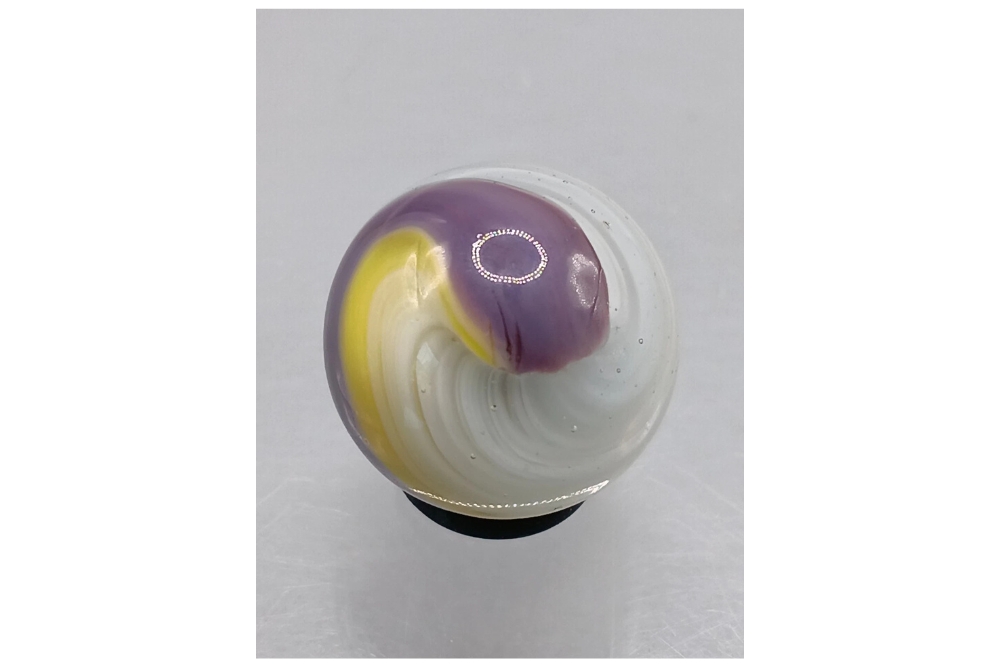
The Popeye is the pricier cousin of the standard Akro corkscrew, and plenty of people toss them in the same pile without noticing. Typical examples sell for $25 to $40, which is already several times what an ordinary corkscrew brings. A near mint blue and yellow one about 3/4 of an inch across can reach around $45.
Color combination drives the top end. A mint red and blue Popeye, even in the small 5/8-inch size, can bring $150. Hybrid versions that mix features of other Akro patterns are rare and sit above that.
Don’t assume every spiral with a solid base color is a Popeye. It isn’t, and the plain version is worth far less. Check the surface for chips, and remember that a dull, scratched finish drops the price even when the color is right. Single marbles sell fine without any packaging, so there’s no box to hunt for here.
3. Akro Agate oxblood marbles
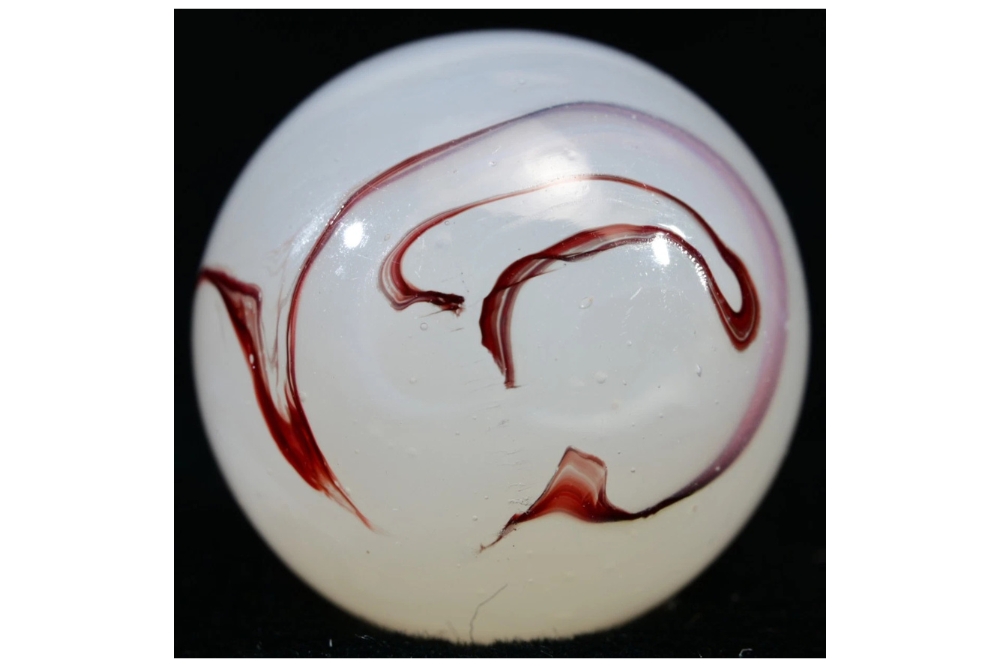
Oxblood is the color to look for: an opaque, deep rust red with fine black threads running through it. It was one of Akro’s most sought-after looks, and it still turns heads in a mixed jar. Swirl and patch versions run $3 to $25 depending on size and shine, and collectors believe those styles were made later than the classics.
The carnelian oxblood is the one worth finding. A clean example can bring around $70, and the number climbs with size and a glossy, undamaged surface. Akro’s oxblood came in several distinct styles, so a marble that looks close but not quite right may still be a different type worth checking.
Tilt each one in direct light and look for tiny chips on the surface. Heavily played examples with rough, cloudy patches are worth only a few dollars. Plenty of newer red marbles imitate the look as well, so a dark red marble with no black threads is probably something else.
4. Peltier Rainbo marbles
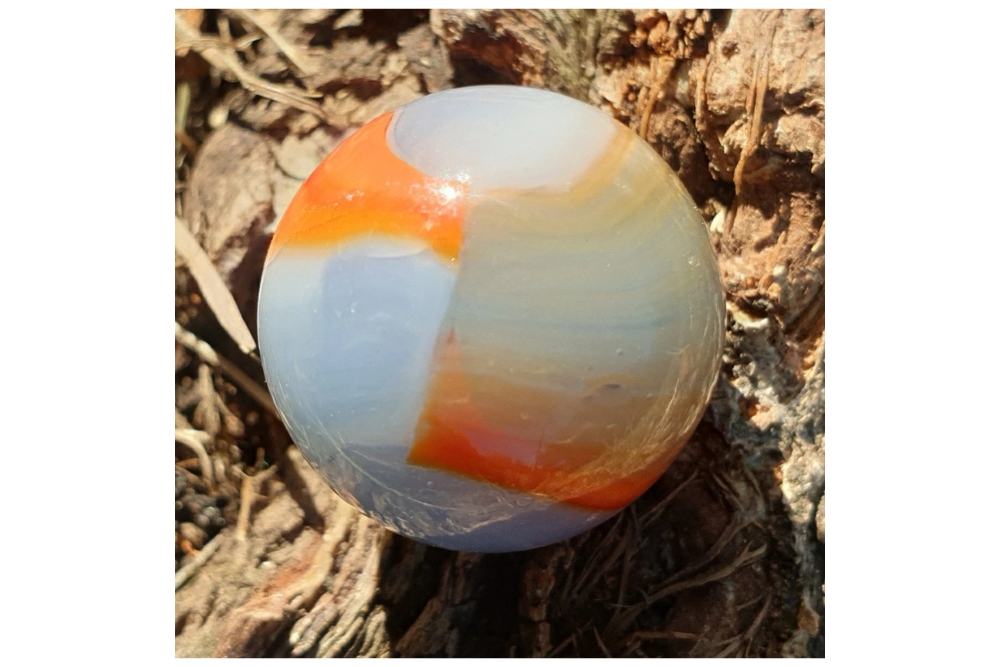
Peltier Glass of Ottawa, Illinois, made the Rainbo, a bright, colorful marble that turns up in old jars more often than most people expect. Common colors bring $5 to $19, so they’re worth keeping separate from the plain glass. Check the surface for chips before you decide what you have.
The version collectors want most is the National Line Rainbo, or NLR, which is the most collectible of the Rainbos. It sells for noticeably more, though condition decides how much.
The real prize is Peltier’s comic marbles, sometimes called picture marbles. They carry cartoon characters such as Moon, Kayo, and Betty, and they’re among the most collectible American marbles of the era. If you spot a marble with a face or figure printed on it, stop sorting and look closer, and keep it away from the rest of the jar so it doesn’t get knocked around. Clean ones with sharp, unfaded images are what matter, and a worn or faded figure cuts the price sharply.
5. Master Marble Sunburst marbles
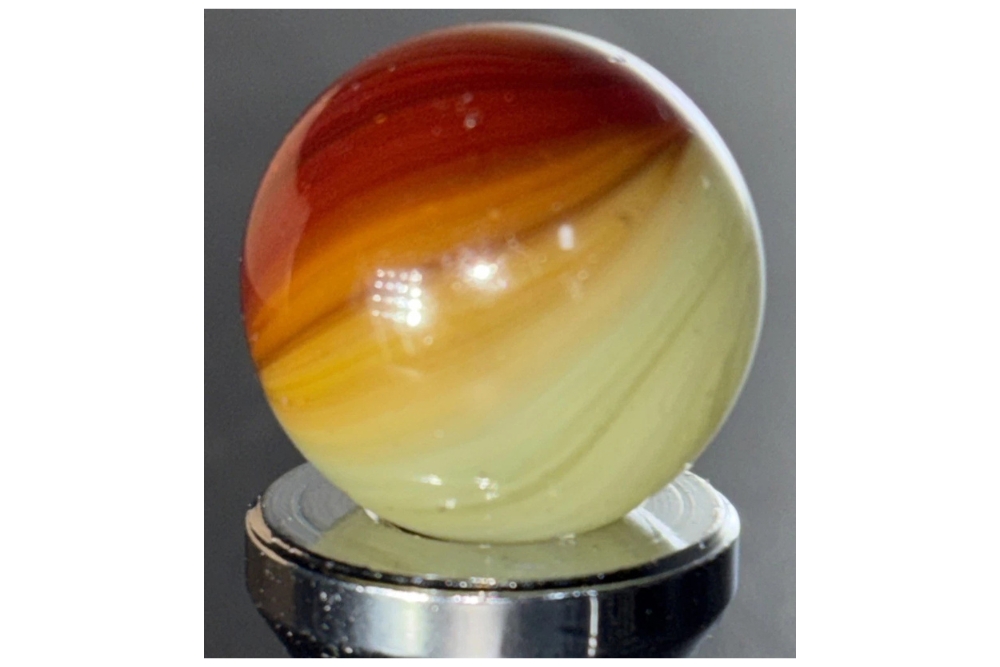
The Sunburst is a vivid swirl of several colors, and the good ones look like a tiny fireworks display. Master Marble Company made them in West Virginia, and typical examples bring $6 to $19. That’s not life-changing money, but a handful in a jar adds up, and bigger ones push the price higher.
Look for a small V-shaped mark at each end, a sign of how Master’s machines cut the glass. A similar marble called the Sparkler is easy to confuse with it, so count the colors and compare the pattern before you decide what you have. Master Marble closed in 1941, and Master Glass carried on until 1973.
Age varies a lot across what you’ll find, and the plainest colors are the easiest to overlook. A marble with a bruised or clouded surface sells for the low end of the range or less. A matched pair of the same color combination is easier to sell than two odd singles.
6. Vitro Agate Tiger Eye marbles
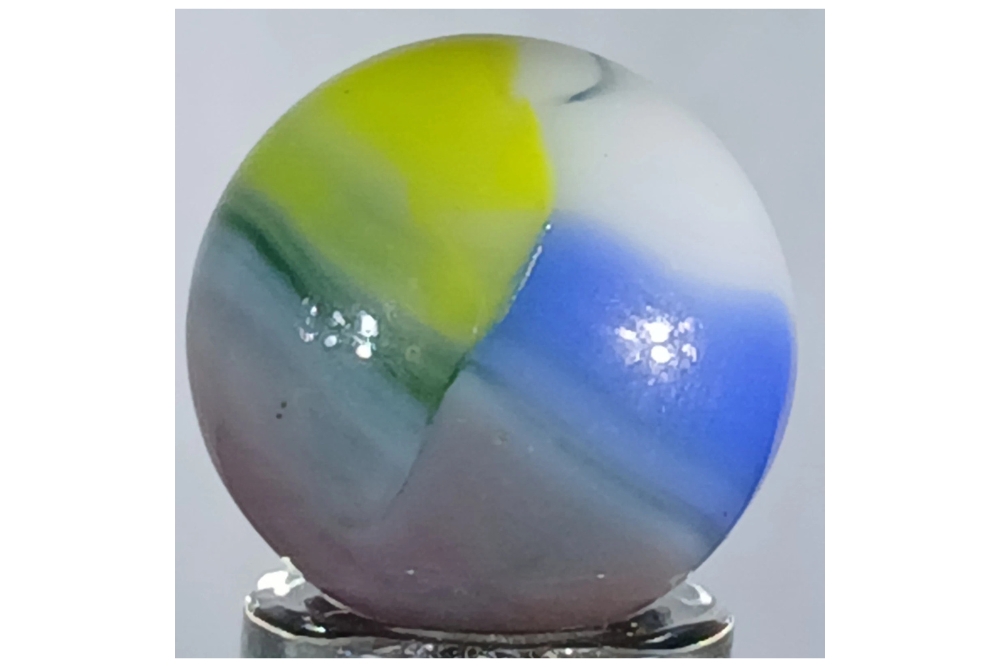
Vitro Agate in West Virginia made some of the most photogenic marbles of the 1930s, and the value spread inside the line is huge. The common All Reds sell for around $3, so don’t get your hopes up if that’s what you have. The Tiger Eye is a different story, and a type 2 example brings around $30.
Better still is the Superior with pink in it, which can reach around $40 in clean condition. The Parrot, with a white base and four patches of color, is another one to watch for, and it’s scarcer than most of the range. Vitro also made hybrid cat’s eyes, which share features with other makers and are worth separating out and checking.
Check the surface carefully in strong light. A marble that’s been tumbled around in a drawer for decades usually has dull patches and sells at the bottom of the range. A clean, even gloss is what earns the higher numbers.
7. Marble King St. Mary’s cat’s eye marbles
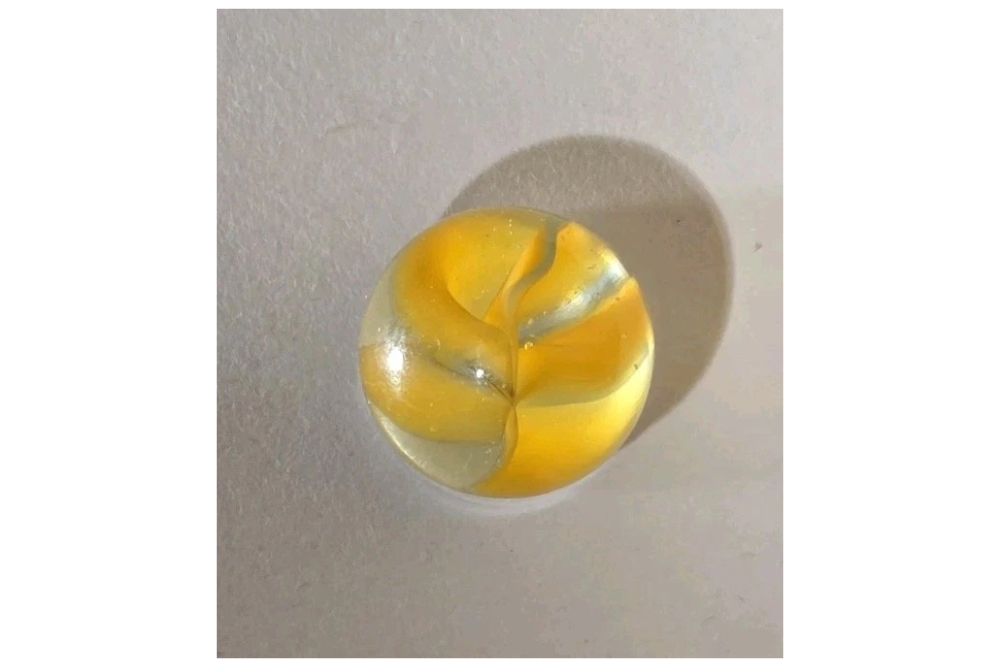
Cat’s eyes have a colored vane suspended in clear glass, and Marble King’s St. Mary’s versions are some of the most common you’ll meet. Most sell for about $2 each when you have a group of them, so a bag of ordinary ones isn’t a payday. A three-color hybrid, which blends features of more than one pattern, can reach about $13.
The St. Marys name comes from the West Virginia plant where the company started in 1949. After a fire it moved to Paden City in 1958, and cat’s eyes made there carry little added value compared with the earlier ones. Marble King is still in business, which means newer marbles in the same style can sit in the jar next to the old ones.
Check the vane for cracks and the clear glass for chips, since damage shows plainly against a clear background. A cat’s eye with cloudy glass or a broken vane sells for pocket change. Bulk is where these make sense. Sorting them by color and selling a clean group usually beats selling them one at a time.
8. Marble King Rainbow and Bumblebee marbles
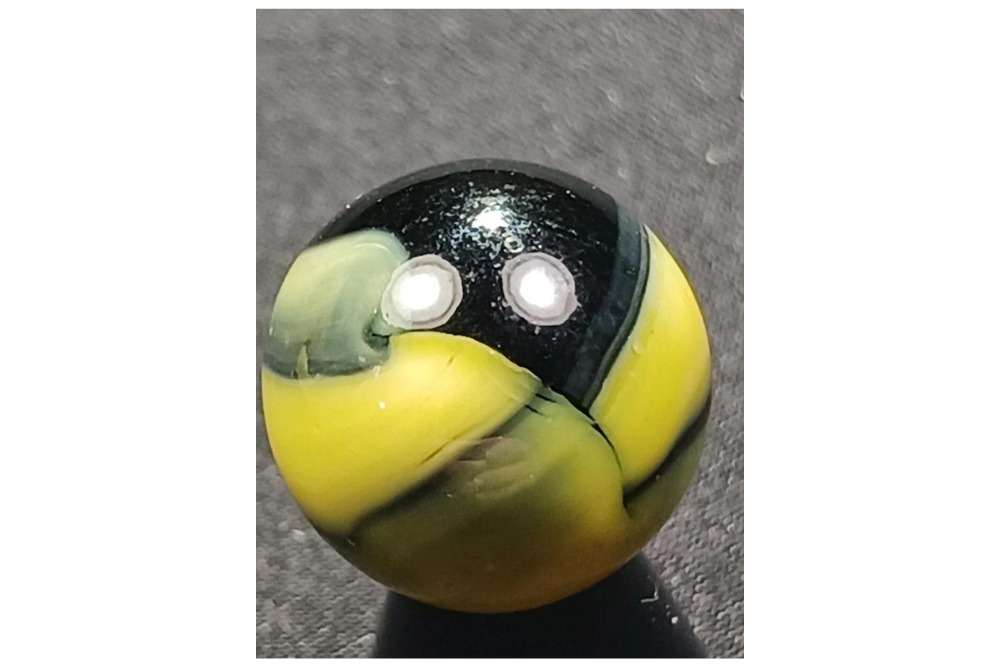
Marble King’s Rainbow and Bumblebee marbles are a step up from the cat’s eyes, and a decent specimen sells for $5 to $17. The Bumblebee, with its yellow and black blending, is the more recognizable of the two. A 1-inch blended Bumblebee can reach around $40, because size matters so much with shooters.
The unusual hybrids are where the real money sits. A 9/16-inch blended hybrid with aventurine, the sparkly flecks that look like glitter in the glass, can bring around $115. Marble King bought machinery from Alley, which is why some of its marbles resemble older Alley patterns and cause identification headaches.
That same overlap works against you. Newer Marble King pieces can look old, so a fresh, glossy marble with no wear at all isn’t necessarily from the 1950s. Look for chips, check that the color bands are crisp rather than muddy, and be realistic with the plain ones. A common Rainbow in rough shape is worth very little.
9. Alley Agate swirls
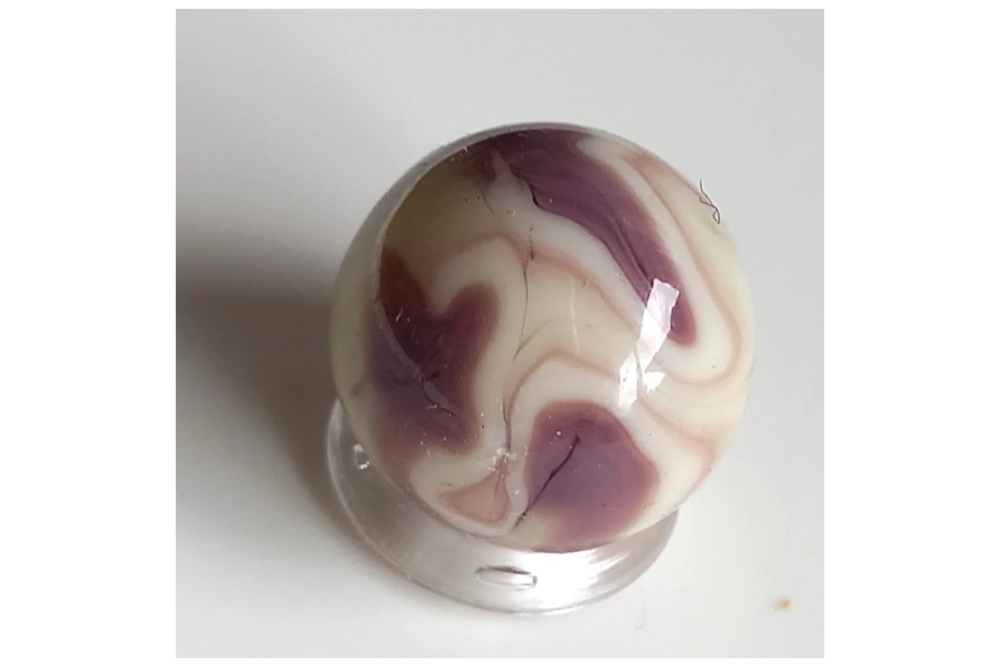
Lawrence Alley started making marbles in 1932, and his swirls are among the better finds in a mixed American jar. Standard examples bring $7 to $30, with size, color, and a clean surface making the difference. Bigger marbles and bolder color combinations sit at the top of that spread.
The one to look for is the Pink Lady. It reacts to ultraviolet light, so a cheap black light is a handy tool, and a good one can bring around $70. Alley sold the business to Berry Pink in 1949, which is useful for dating what you’ve got. Swirls made before that sale are the earlier Alley production.
The trouble is that Alley swirls get mixed up with swirls from Christensen and Ravenswood, so a confident guess can turn out wrong. When in doubt, group by overall look and condition rather than by maker. Chips and cracks cost the same here as everywhere, and a swirl with a rough, dull surface drops toward the bottom of the range.
10. Ravenswood and Heaton Agate swirls
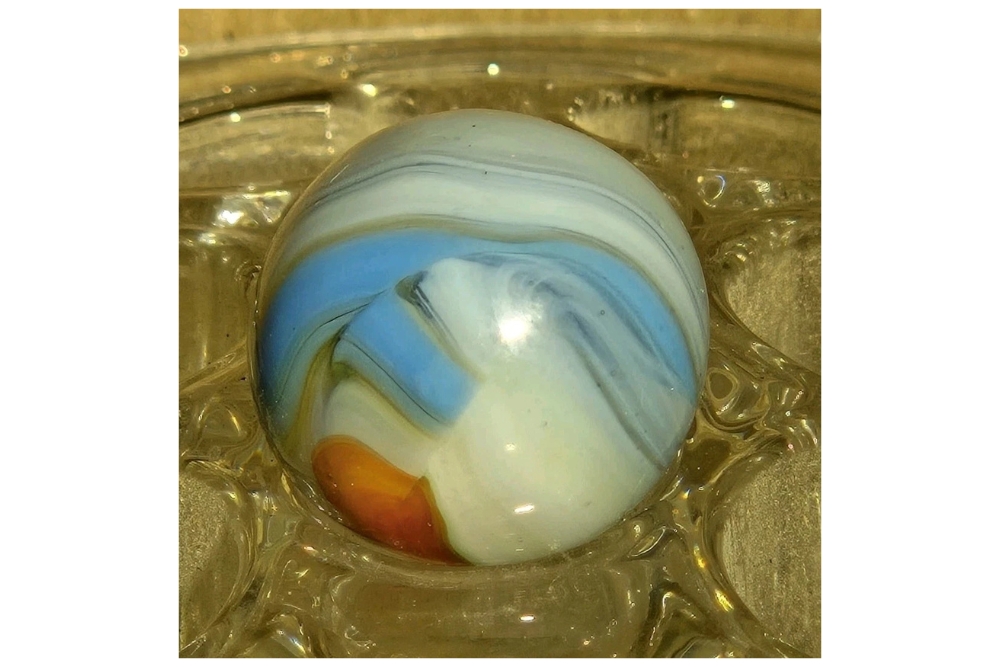
These two West Virginia makers turn up in the same jars as Alley swirls, and the price gap between a common one and a good one is wide. A standard Ravenswood swirl brings around $8, which is right where you’d expect for a machine-made marble from the era. A Heaton Honey Biscuit, with its warm tan and brown tones, can reach around $45.
Within Heaton’s line, a brown base is the rarest. Champion Agate, which started in Pennsboro in 1938, is another maker to know, and its marbles are hard to tell apart from other West Virginia makers by eye. Treat any attribution you can’t confirm as a maybe, and price on condition and size instead.
Honey Biscuit and similar earth-tone swirls look good when they’re clean and dull fast when they’re not. Check for flea bites along the edges and for cracks that run through the body. A cracked marble can look fine from one angle and fall apart from another, so turn it slowly under a bright lamp. Common swirls with damage are worth a dollar or two.
11. Christensen Agate slags and swirls
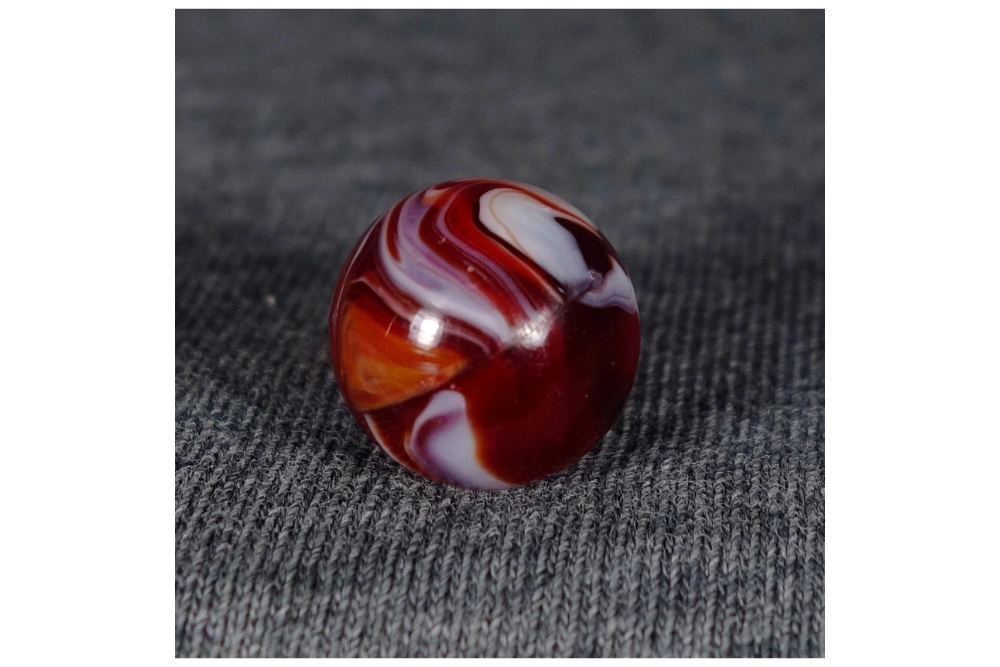
Christensen Agate was an early American machine maker, and its marbles are some of the best-looking you’ll pull from a jar. Slags and common swirls bring $10 to $30. Slags are the streaky, opaque marbles, and they’re one of the more affordable ways into Christensen.
Color pushes the price up quickly. An American Agate swirl can reach around $100, and a purple one around $150. Electric, vivid colors command the most.
The jackpot is the Guinea, made around 1925 to 1930. A mint one brings well over $1,000, and even a near mint example with one tiny chip can bring several hundred dollars. Those numbers only apply to genuine, clean examples, so don’t price a whole jar on the back of one. Look closely for chips, and if you think you have an unusual color or an early Christensen piece, get a second opinion before you sell it. Measure each one too, because a larger marble in the same pattern is worth noticeably more than a standard-size one.
12. German latticinio core swirls
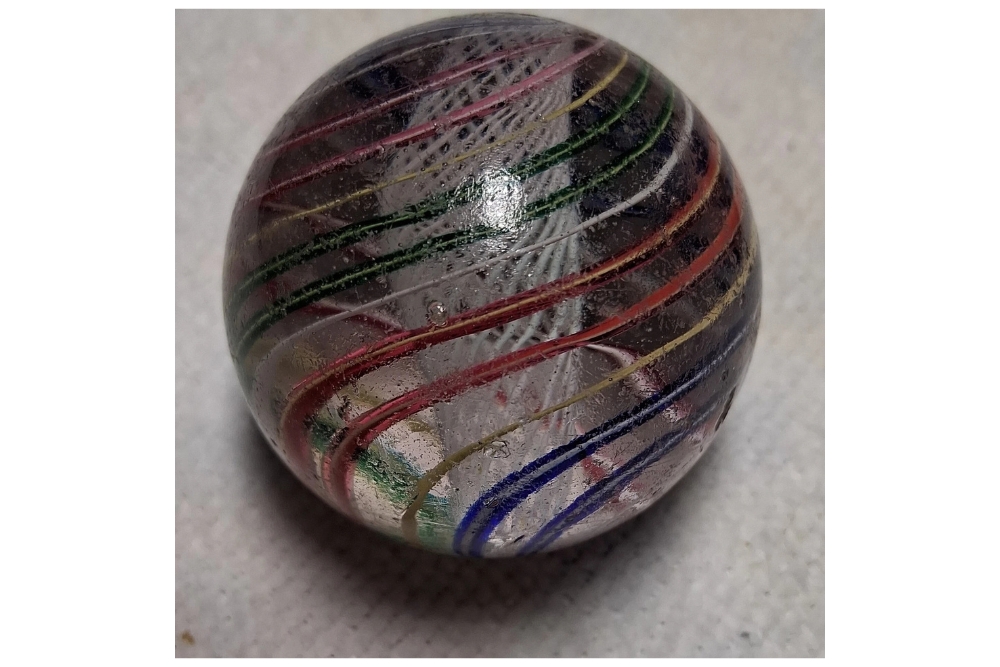
These handmade German marbles have a swirl of fine strands wrapped around a central core, usually white, and they’re the entry point to the more valuable end of the hobby. A typical one brings $10 to $45, and a big 2-inch marble with a white core can reach about $60.
Core color tells you a lot. Roughly 80 percent of these have a white core, about 10 percent yellow, and only about 2 percent orange or green. A red or blue core is very rare, and a marble that shows one deserves to be looked at by someone who knows the field.
The way to tell a handmade marble from a machine-made one is the ends. Handmade marbles were cut from a rod of glass, so you’ll see a rough, scarred spot called a pontil where it was snipped off. A swirl marble with smooth, perfectly finished ends is probably machine-made and won’t bring these numbers. Cracks inside the glass and chips near the pontil are the usual damage, and both pull the price down hard.
13. German solid core and divided core swirls
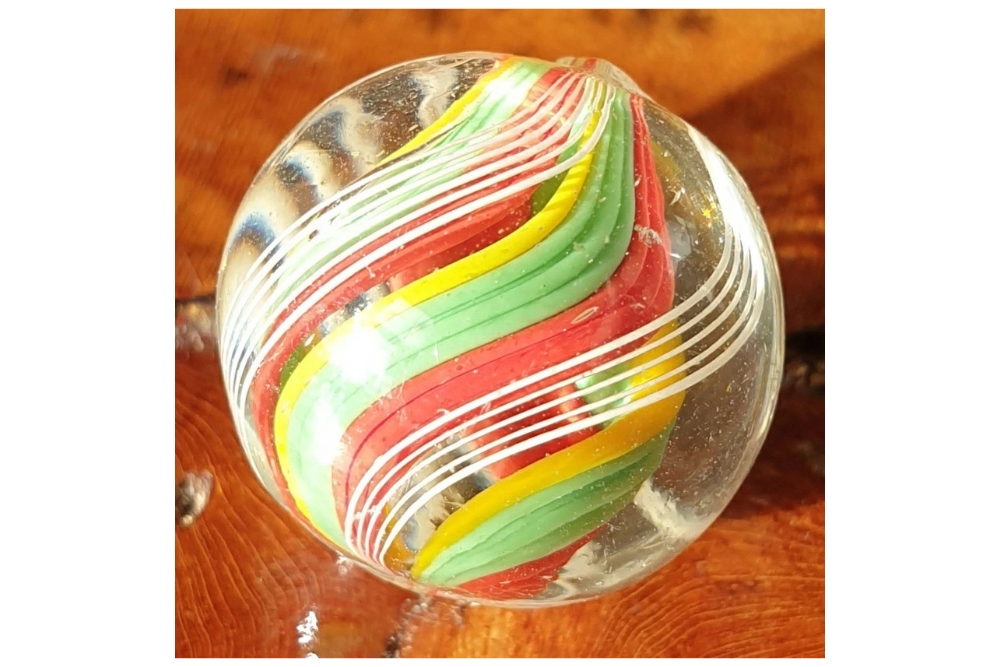
Same idea as the latticinio marbles, but with a thicker central core that’s either one solid color or split into sections. A divided core brings around $23, and a three-color solid core is about $22. Those are fair prices for the most common versions.
More colors and bigger sizes change the picture. A 13/16-inch marble with a four-color solid core can reach $75, and a 1.49-inch marble with three stages of color can bring around $105. Cores with five or six bands are rare and worth well beyond those figures.
Check both ends for a pontil, since that’s your proof it was handmade. Then look through the glass for cracks, and for surface wear from play. Light scratches are normal on a century-old marble and don’t ruin it. A deep chip, a crack that runs through the core, or a plain core on a small marble will all take a real bite out of the price.
14. German onionskin and lutz marbles
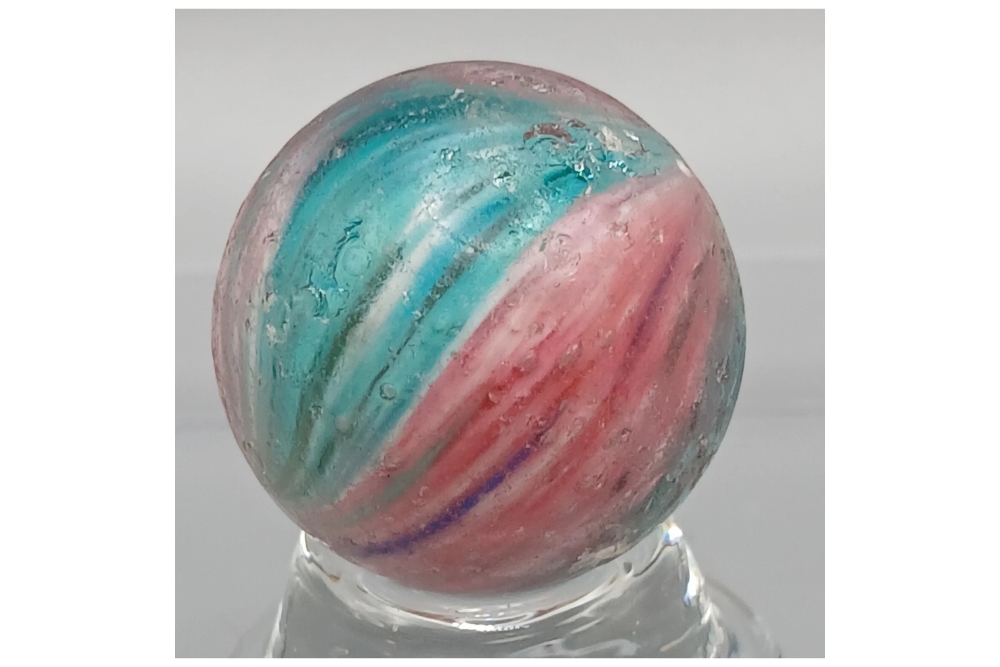
Onionskins have layers of color that look peeled back like an onion, and they’re one of the classic German types. A plain 11/16-inch one brings $50 to $60, and a 13/16-inch marble with mica, the shiny flecks that catch the light, can reach about $200. Size and sparkle carry the price, and a 1.48-inch onionskin with visible wear still sells for around $225, which tells you how much collectors will forgive on a big, handmade piece.
Lutz marbles are the cousins to look out for. They contain thin bands of glittering copper-colored glass, and a ribbon lutz can reach around $245. Modern lutz marbles are also being made today, so a pristine one with no wear or pontil damage deserves a second look. Genuine lutz marbles have a distinct glitter, so compare yours against a clear photo before you assume age.
Cracks and big chips are the biggest price killers on these. Small flea bites are more forgivable on a larger piece.
15. German sulphide marbles
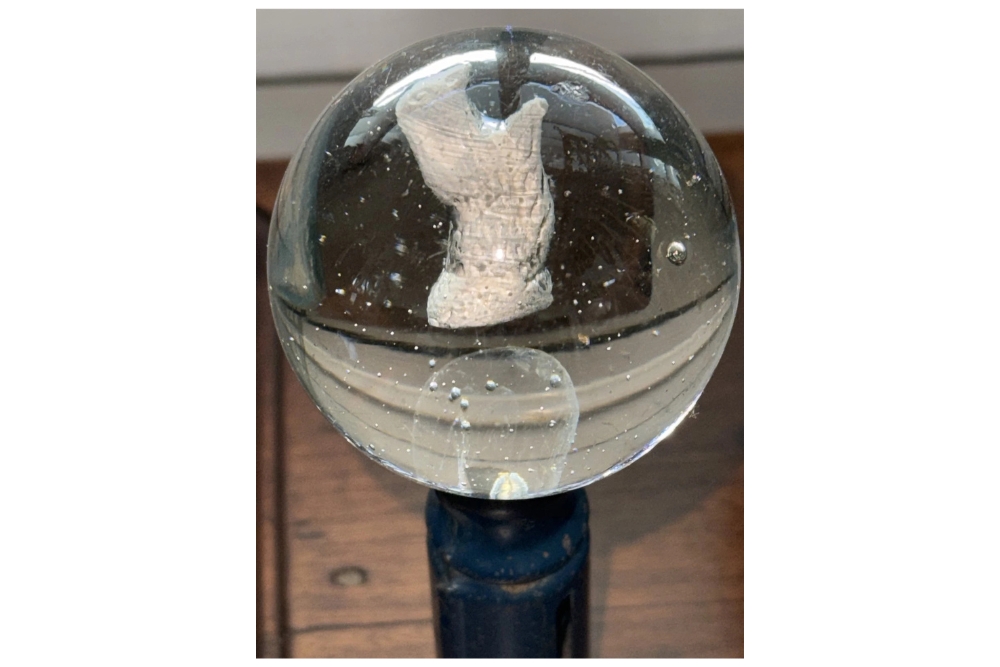
A sulphide has a tiny white figure, often an animal, sealed inside clear glass. They’re charming, and the ones with clean, centered figures sell better than almost anything else in this price band. A 1-inch marble with an elephant brings about $100, and a 2-inch marble with a retriever dog can reach about $130.
Flaws change the price more here than almost anywhere. Collectors typically knock off around 50 percent or more when the figure sits off center, about 50 percent for a cracked figure, around 60 percent for trapped air, and about 40 percent when the pontil blocks your view of the figure. Hold the marble to the light and turn it slowly.
Reproductions are everywhere. California sulphides from 1993 usually don’t fluoresce under a black light the way older ones do, and a series made in China in the 1960s and 70s used painted birds instead of true sulphide figures. If the figure looks painted rather than sealed inside the glass, it’s likely a reproduction and worth very little.
16. German banded agate marbles
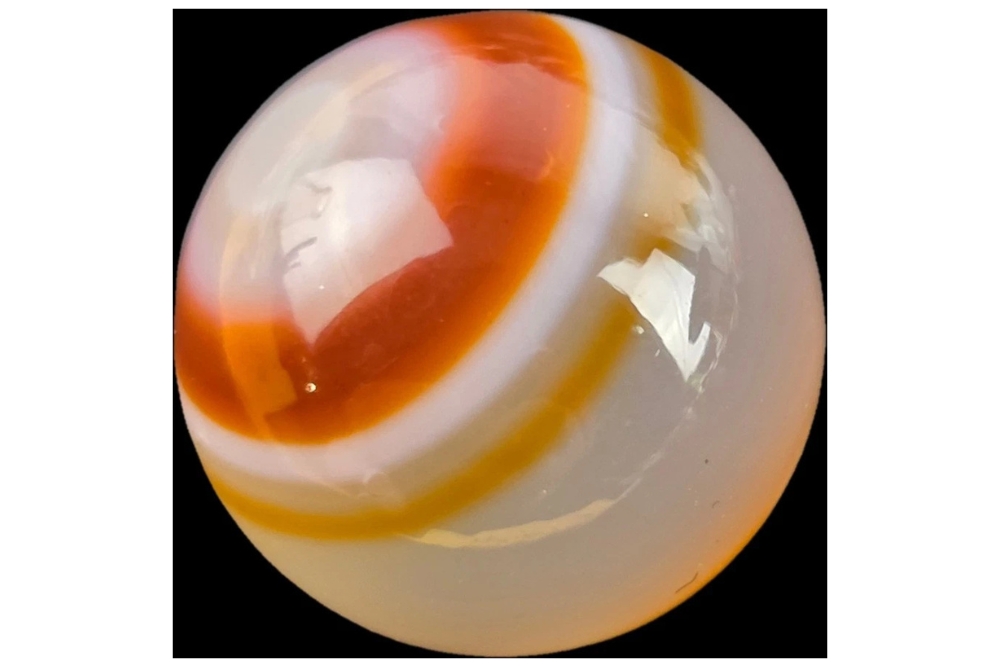
These are real stone, not glass, ground into a sphere and cut from banded agate, usually in earthy browns, whites, and grays. Banded agate is worth about double the price of a carnelian, the plain orange-red stone, and a near mint pair with bullseye markings brings around $65.
Handmade ones are the good ones. Old German agates were cut by hand, so under strong light you’ll see tiny facets, and the light seems to dance across the surface. Machine-ground agates are modern and worth much less, as are dyed agates, which carry unnaturally bright colors that no natural stone produces.
Moons, which are crescent-shaped cracks just under the surface, lower the price noticeably. Look for bullseye patterns, matching pairs, and larger sizes, which all earn a premium. A single small, chipped, plain agate with no pattern is a couple of dollars at best, and one with obvious dyed color is closer to nothing.
17. Hand-painted china marbles
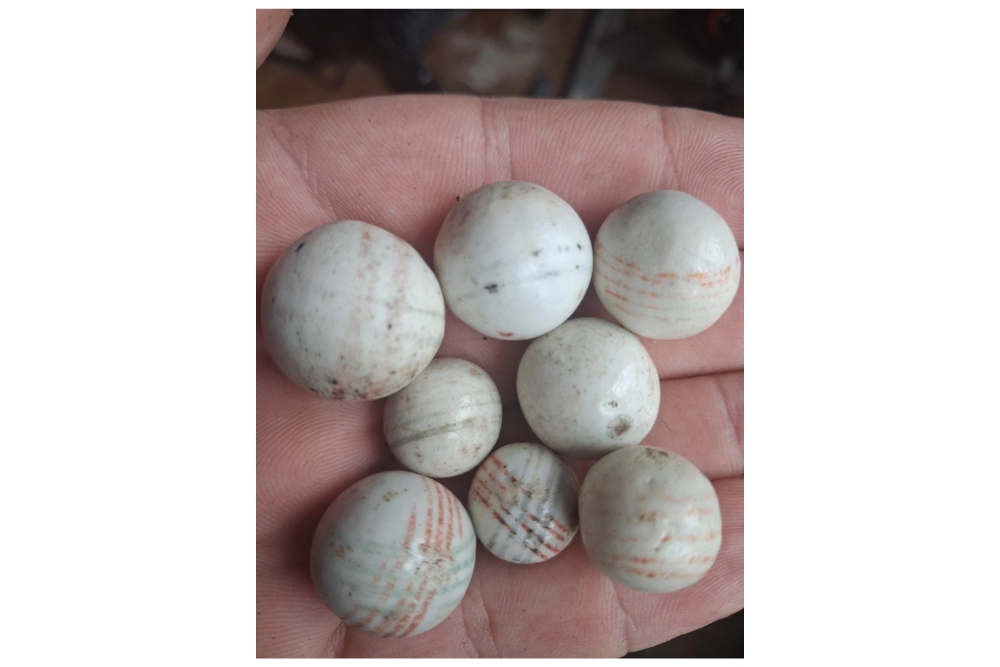
China marbles are made of glazed porcelain, not glass, and they were popular in the late 1800s. A basic one about 3/4 inch across brings around $14. That’s the starting point for the plainest versions, which have a few simple lines or bands.
The rarity ladder runs from lines to scenic designs. Simple bands are common, flowers and swirls cost more, and full scenic decoration sits at the top. Gold bullseyes are rare and worth noticing if one shows up.
These are heavier than clay marbles, so pick up an unglazed one and a china one to feel the difference. The glaze can crackle and flake over time, and chips show up as bare, pale patches. A china marble with a lot of missing glaze is worth only a few dollars, even if the pattern is nice. Not every one is valuable, and plain banded ones in rough shape sell for very little.
18. Chinese checkers marble sets in the original box
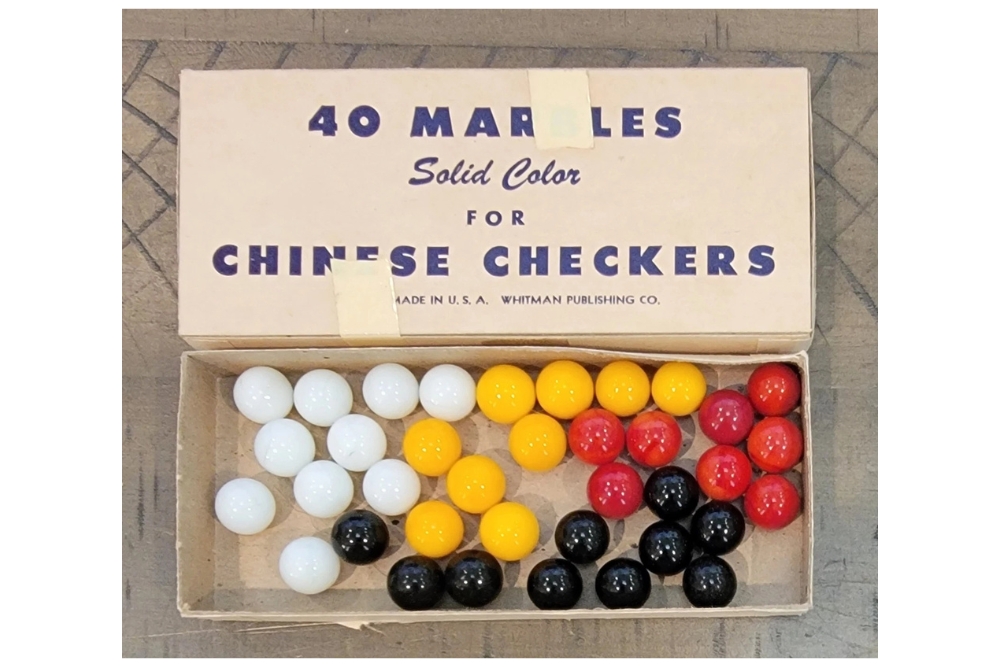
Sometimes the box matters as much as the marbles. A complete Akro Agate Chinese checkers set with 118 marbles brings around $35, and a Marble King 40-count blister pack sells for about $28. Those aren’t big numbers, but a sealed or complete set is easier to sell than a loose handful.
Look at the box before the marbles. Crushed corners, water stains, and missing lids all pull the price down, and a set with a few marbles gone isn’t worth the same as a full one. Check that the marbles inside match the maker named on the box.
Reproduction “Akro-style” boxed sets exist, so look closely at the printing and the box material before you pay a premium. The packaging itself can help date a set.
Sort the jar by maker and type before you sell any of it. A handful that looks like a $5 jar can hold a single marble worth $100 or more, and it’s easy to miss when everything is lumped together.











