
The cabinet above the refrigerator in a lot of family homes holds the same quiet mess: a mismatched pile of bowls, a few chipped mugs, a percolator nobody has plugged in for decades. Somewhere in that pile there may be a piece of 1960s kitchen history that people now pay real money for.
Most of what came out of 1960s kitchens is still cheap, and plenty of it is just old. But a smaller group of patterns, appliances and cookware has built a following, and a clean example of the right one can bring anywhere from $30 to a few hundred dollars. The trick is knowing which piece you are holding.
Condition decides almost everything. Worn-off patterns, chips, missing lids and cracked parts turn a $200 find into a $20 one, and later reissues of several of these designs are easy to confuse with the real thing. Start with the bottom of each piece, because that is where the maker’s mark and the clues to its age usually are.
1. Pyrex Butterprint turquoise nesting bowls
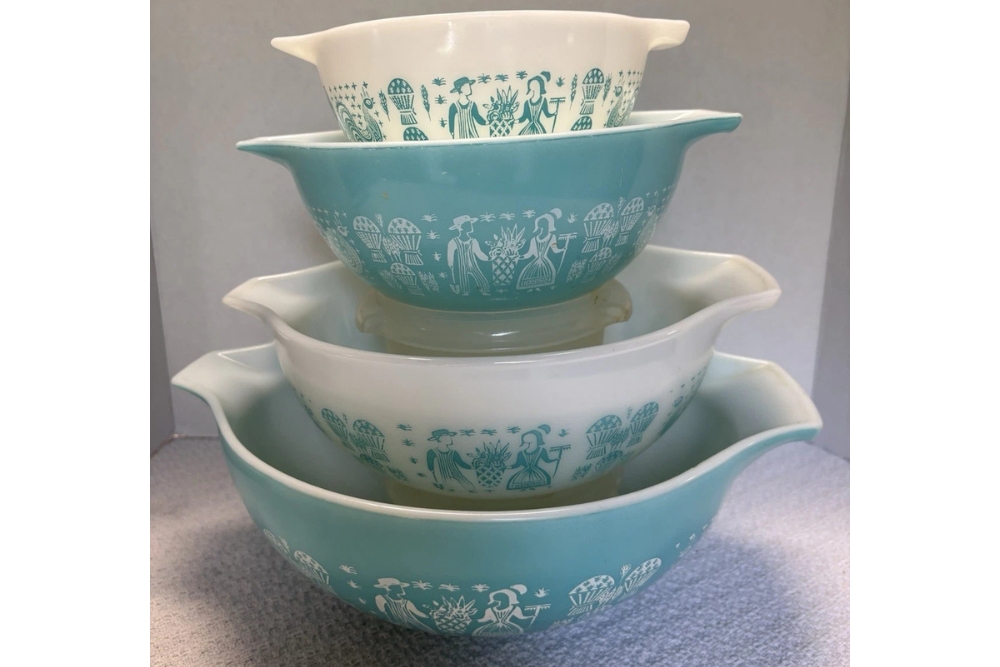
If your mom or grandmother baked in the 1960s, one of these may have lived on her counter: a stack of nesting bowls with a turquoise pattern on white glass. Pyrex made Butterprint from 1957 to 1968, and a complete four-bowl set in clean condition typically runs $175 to $275. A never-used three-bowl set can reach about $280.
The print is where the money is. Years of dishwasher cycles leave it gray, faded and scratched, and a set in that shape is worth a fraction of those numbers. Chips on the rims and on the pouring spouts of the Cinderella-style bowls cut the price too. A short set is the most common problem, because one bowl usually got broken or given away decades ago. Set the bowls side by side and make sure the turquoise matches.
Flip each bowl over and look for PYREX in all capital letters, the mark on older production. Newer Pyrex with a lowercase logo is a different product, and a single heavily used bowl with a worn print is worth much less than a matched set.
2. Fiesta medium green dinnerware
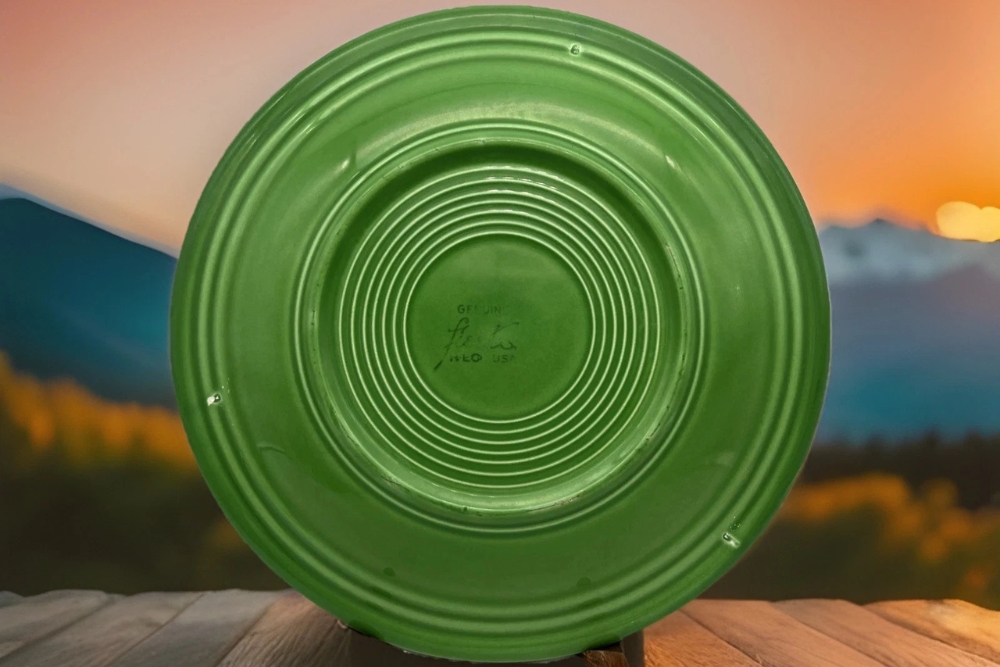
Homer Laughlin’s original Fiesta ran for decades, and the green that came near the end of that run is the one collectors chase hardest. Medium green was made in reduced amounts, which makes it the most prized color of the vintage line. Plates in the shade go for $55 to $100, a pair of salt and pepper shakers with their corks runs about $72, and a ring-handle mug lands near $40. A clean teapot can climb to $475, and cream soup bowls in this green are some of the most wanted pieces of all.
Check the bottom for the Fiesta mark, then look hard at the glaze. Chips on rims and footrings, fine cracks called crazing, and gray utensil marks across the middle of plates all pull the price down. Homer Laughlin relaunched Fiesta in 1986, and the newer pieces come in a different range of colors, so a green plate with a modern look is not the same thing.
Plain cups and saucers in this color bring much less than plates and serving pieces, so a full place setting is worth more than the sum of odd leftovers.
3. Revere Ware copper-bottom pots from before 1968
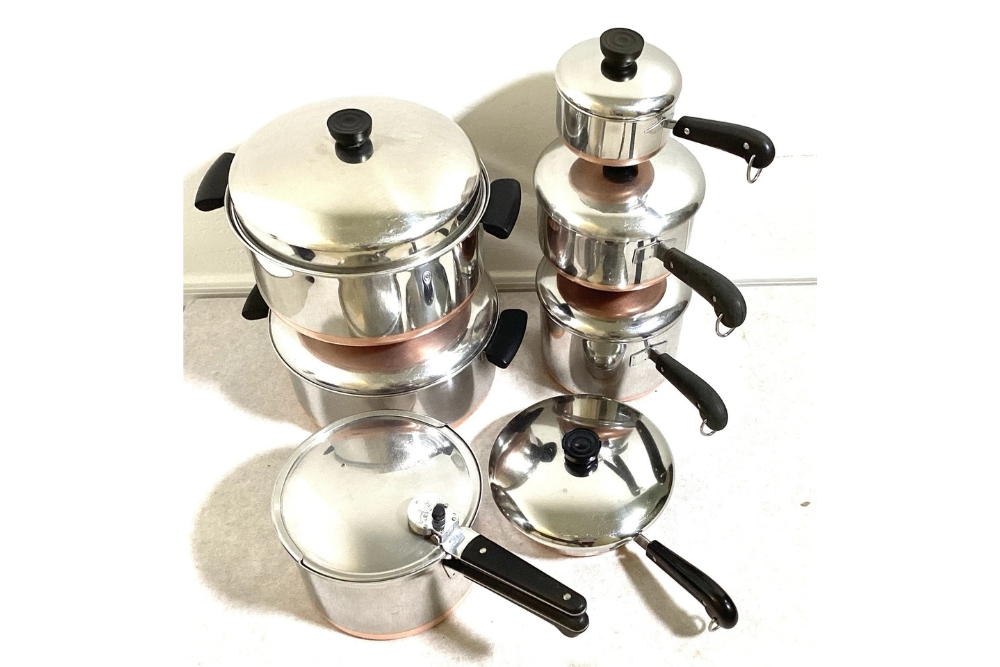
That mismatched set of pots in the back of the cabinet may be worth more than the nonstick pan beside it. Revere Ware made before 1968 has a left-facing Revere silhouette inside a two-line circle stamped on the bottom, a mark that was dropped after that year. Single pieces like a skillet or small stock pot run $30 to $50, and a big 12 to 16 quart stock pot goes for $110 to $120.
Matched sets are where the numbers get better. A 14-piece set runs about $190 to $200, a 16-piece set around $325, and a 20-piece set climbs to roughly $390.
Check the stamp on every pot and lid, because sets labeled vintage often mix older pieces with later ones, and later pieces made overseas are worth much less. Copper bottoms can look dull or stained and still sell fine. Dents, wobbly handles, warped bases and lids that do not belong to the pot are what pull the price down, and a lone pot with a worn stamp is a $30 item at best.
4. McCoy Coalby black cat cookie jar
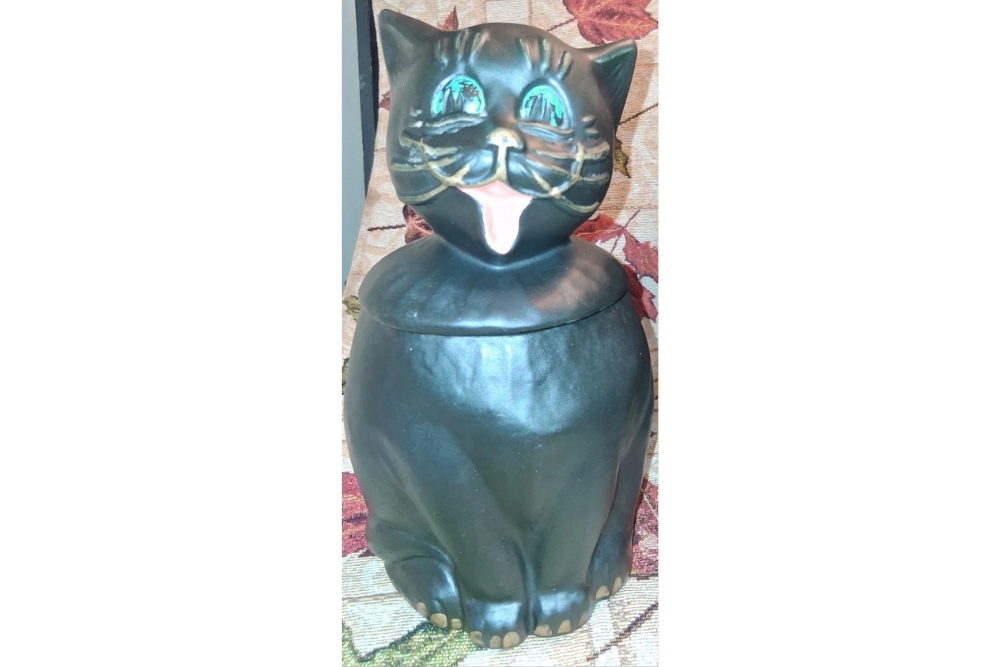
The Coalby cookie jar had a short run. McCoy made it in 1967 and 1968, and that brief production is a big part of why it holds its price. A jar in good shape typically goes for $100 to $280, with worn or chipped examples at the bottom and clean ones at the top.
The marks are easy to check. Turn it over and look for USA and the mold number 207 pressed into the bottom. The jar stands about 11 inches tall, feels weighted, and has a muted, non-shiny glaze with sharp raised whiskers and eyebrows. An unglazed ring of clay on the base is normal for the original.
McCoy pottery has been copied, and reproductions run at least six percent smaller and lighter than the real thing, so bring a tape measure if you are paying real money. The lid should fit well with no repairs. Chips on the ears, a cracked lid rim or a jar with a worn glaze sell for far less than a clean one.
5. Heath Ceramics Coupe dinner plates
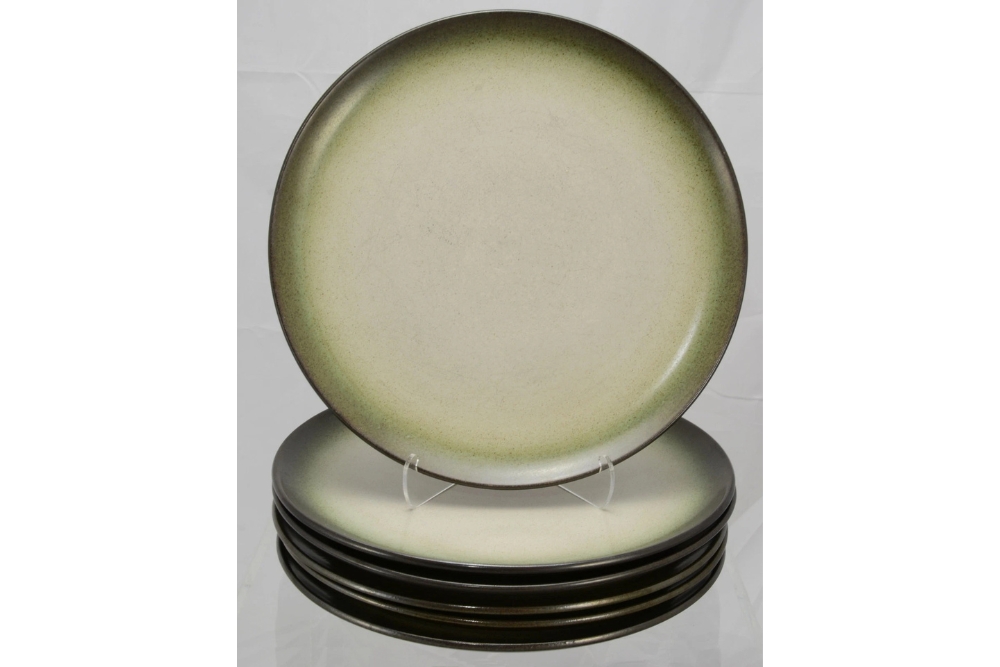
Edith Heath’s California pottery has kept the Coupe line in constant production since the late 1940s, which means a Heath plate in your cabinet could date from any decade since. The soft, matte glazes in colors like sand and sea are the ones people look for. Sets of the older plates run about $30 to $40 a plate: six Sea and Sand dinner plates bring $240 and a set of four runs $160. Four brown stacking bowls with rims go for about $145.
Heath still makes Coupe today, so a new plate can look nearly the same as an old one. Look for the Heath name stamped on the bottom, then check for the wear that only time leaves, like faint scratches on the foot ring.
Chips on the rim, deep knife marks and glaze that has crazed all lower the price. Matching colors matter, and a single plate is worth less than its share of a full set.
6. Pyrex Pink Gooseberry bowls and casseroles
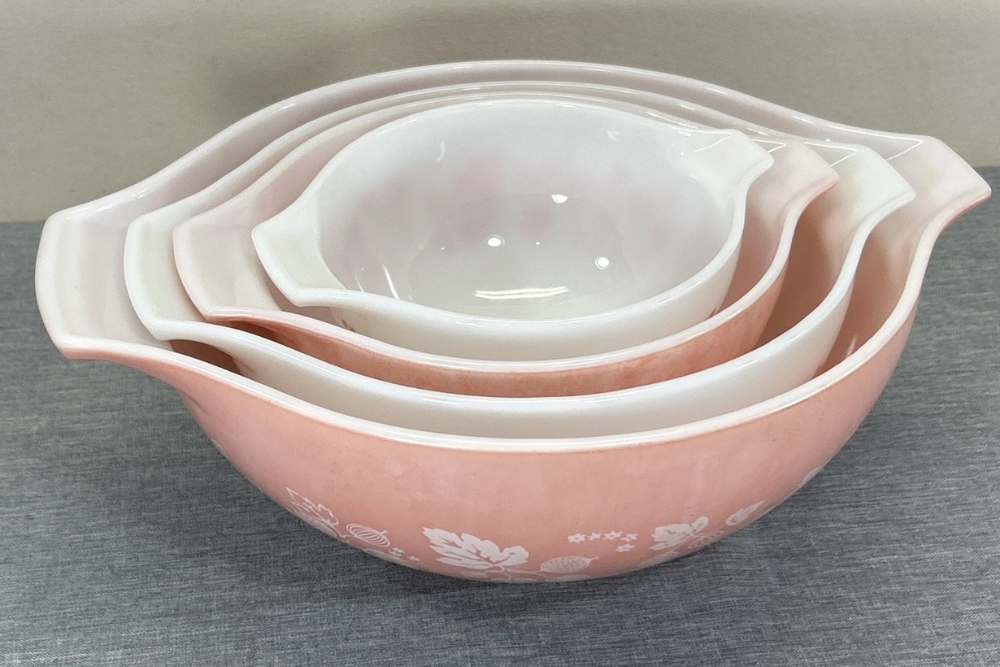
Pink Gooseberry is one of the Pyrex patterns people spot across a room. Pyrex made it from 1957 to 1966, and the pink print appeared on only a handful of pieces: the Cinderella-style mixing bowls, the casserole sets and the refrigerator dishes. Single pink bowls run $65 to $80, a casserole pair with both lids is worth around $120, and a refrigerator set with its lids goes for about $150.
Condition decides where a piece lands in those ranges, or whether it makes the cut at all. Pink fades in the dishwasher, so hold each piece up to a bright light and look for even color rather than a washed-out or blotchy print. Chips along the handles and spouts are common. A casserole missing its lid drops to about $54.
A boxed, never-used set of four bowls is in a different league and can run well past $1,000, but a worn, mismatched set will not come close. Check the bottom for PYREX in all capital letters, since newer glass with a lowercase logo is not the same product.
7. CorningWare Blue Cornflower percolator
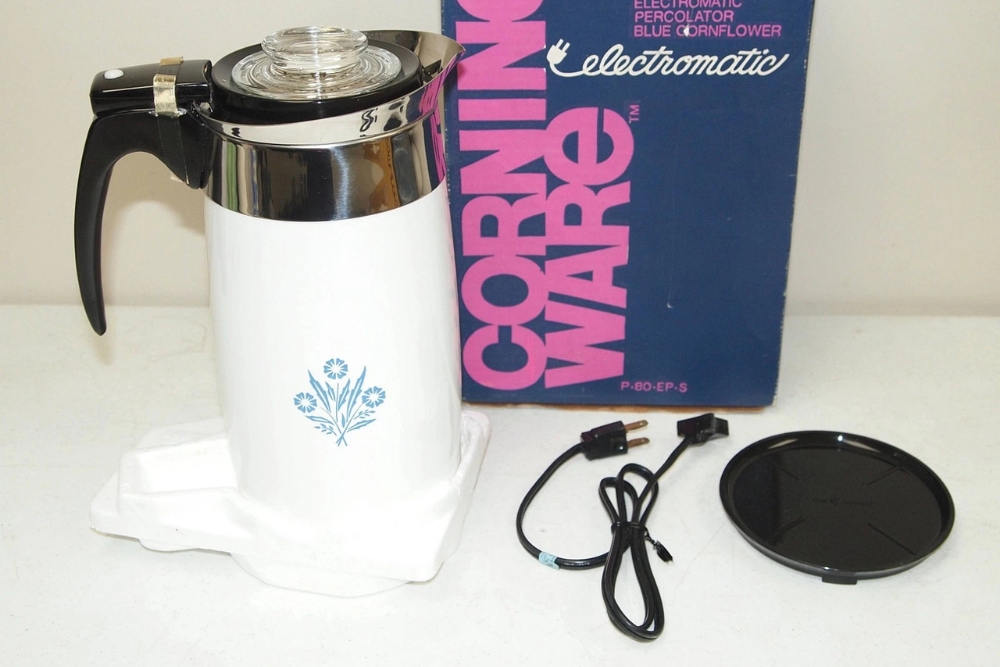
CorningWare’s blue cornflower pattern launched in 1958 and stayed in production until 1988, so it sat in a lot of kitchens during the 1960s. Casserole dishes are everywhere and do not bring much. The percolators are the better find. A complete 6-cup P-166 electric percolator goes for $165 to $190, a 10-cup Electromatic runs about $125, and a 6-cup stovetop percolator lands between $45 and $100.
Completeness is the whole game with a percolator. It needs its stem, basket, lid and, on the electric models, an intact cord, and a missing part cuts the price. Test the cord and plug on any electric model before you price it, and do not plug in one with frayed wiring. Check the glass-ceramic for chips around the spout and rim, and look at the blue flowers for scratches that have worn through the print.
Originals are marked Corning Ware as two words or carry the word Pyroceram on the bottom. The 2018 anniversary pieces were made from stoneware, not Pyroceram, so they are worth far less than the originals.
8. Fire-King Jane Ray jadeite dishes
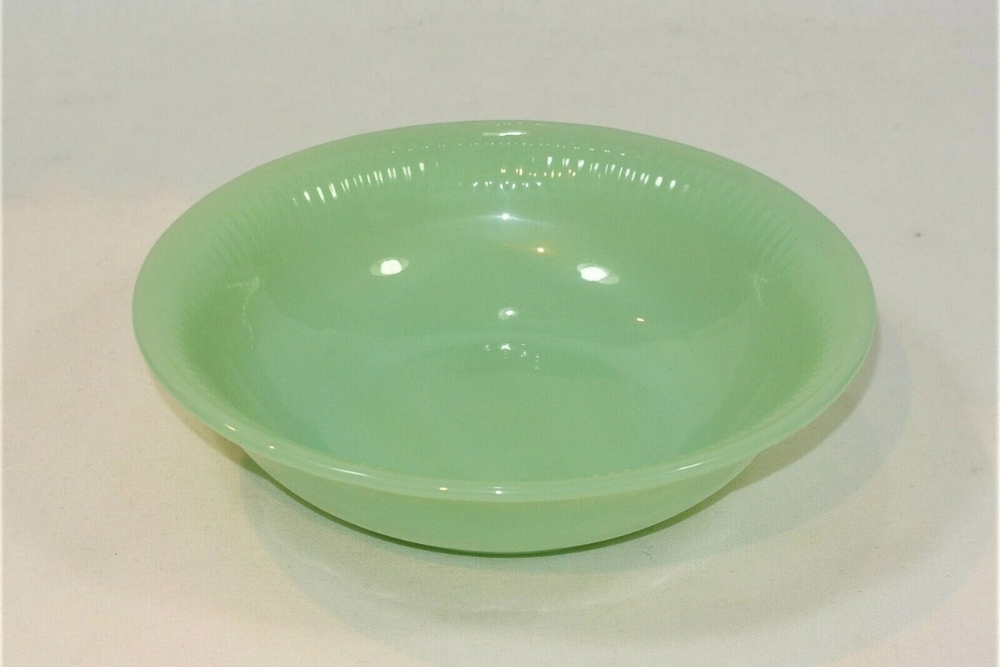
Anchor Hocking made the ribbed, pale green Jane Ray pattern from about 1945 to 1963, and plenty of it ended up in family cabinets. A set of four fruit bowls runs about $72, five soup bowls land near $55, and a creamer and lidded sugar bowl go for about $42. A set of ten dinner plates reaches $120 or more.
Most single pieces are worth $10 to $20, so the money is in matched sets. Look for chips on the rims, because jadeite chips easily, and for gray scratches from metal utensils that will not wash off. A cup without its saucer, or one plate from a broken set, is worth a fraction of a complete place setting.
Glass in a similar green has been made since the original run ended, so check the bottom for the Fire-King mark and feel the weight. Pieces from the original run carry that mark. If a set looks heavily used, with dull rims and a web of knife scratches, price it as everyday dishes, not as a collection.
9. Dansk Kobenstyle enamel cookware
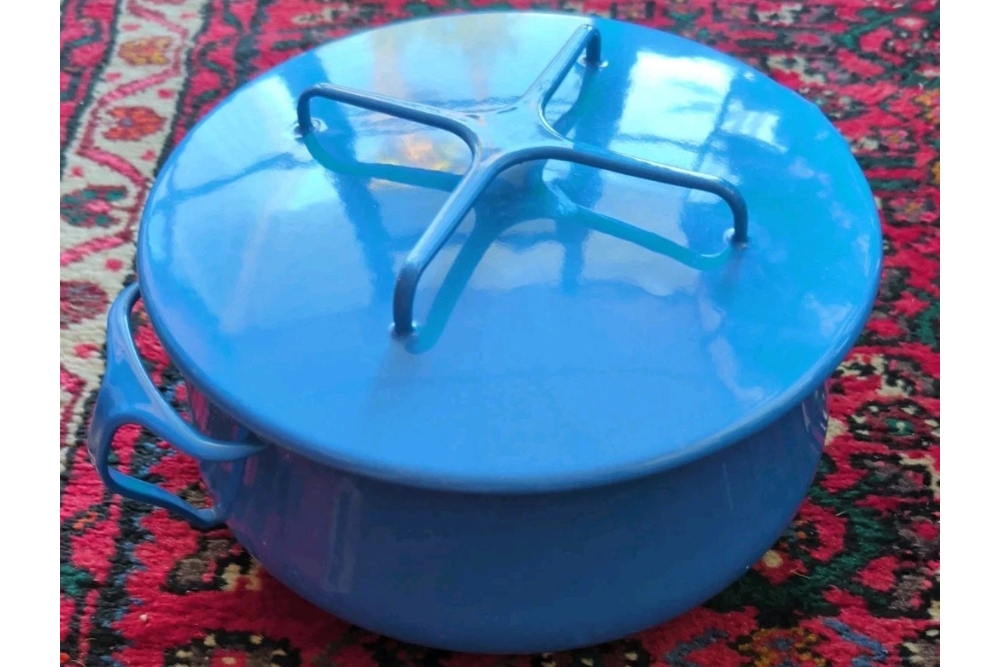
Jens Quistgaard designed Kobenstyle for Dansk in the mid-1950s, and the bright enamel pots and pans stayed in kitchens for years afterward. A large 6-quart casserole in blue that was never used can reach $180.
The stamp on the bottom tells you a lot. Originals are marked Dansk Designs Denmark, sometimes with the initials IHQ for Quistgaard, and a Dansk International stamp points to after 1965. A piece marked Thailand is modern and worth much less.
Chips are the main condition problem. A chip on the cooking surface or a rim rusting through the enamel can cut the price in half, and pieces missing their lids or matching parts bring far less than complete ones. Bright colors in clean enamel are the ones buyers pay for. Check the handles and the lid too, because a pot with a cracked handle or a mismatched lid is a harder sell.
10. Kit-Cat Klock jeweled model
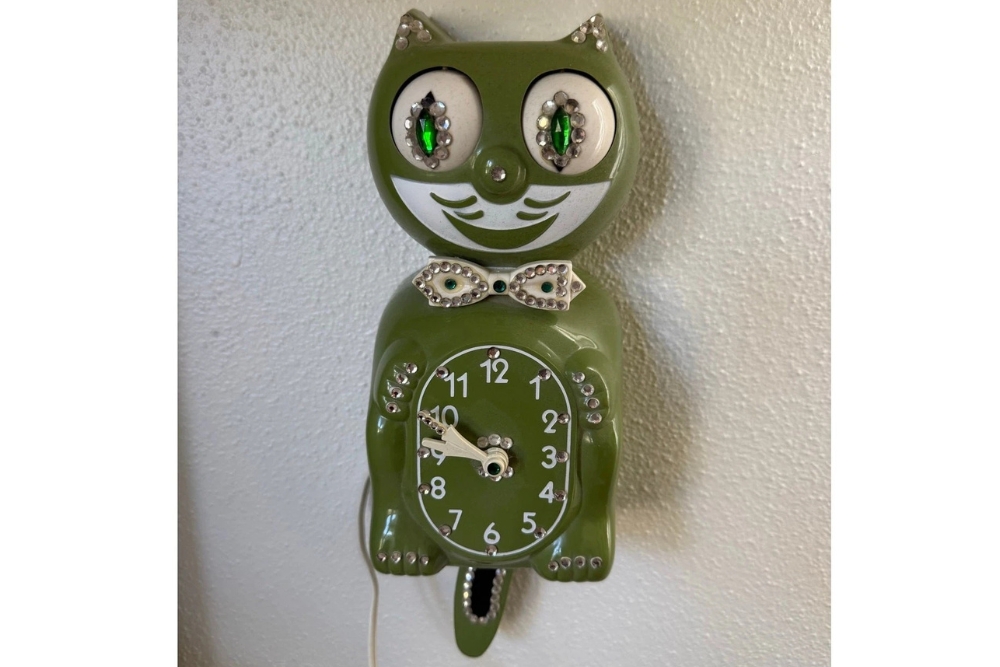
The black cat with the swinging tail and rolling eyes has hung on kitchen walls since the 1930s, and the version to look for from the 1960s is the one with sparkly crystals. The company added genuine crystals to some clocks in the 1960s. Working jeweled models in the D8 style typically run $75 to $125, and one still in its original box lands near $92.
Plug it in before you price it. The 1960s clocks are electric, and the eyes and tail should both move smoothly. Frayed cords, missing crystals, a replaced motor and a repaired or missing tail all lower the price. The paint on the body should be even, not touched up.
The company redesigned the clock for battery power in the late 1980s, so a battery-run cat is newer and worth less. The original models ran on household current.
11. Pyrex Pink Daisy oval casseroles
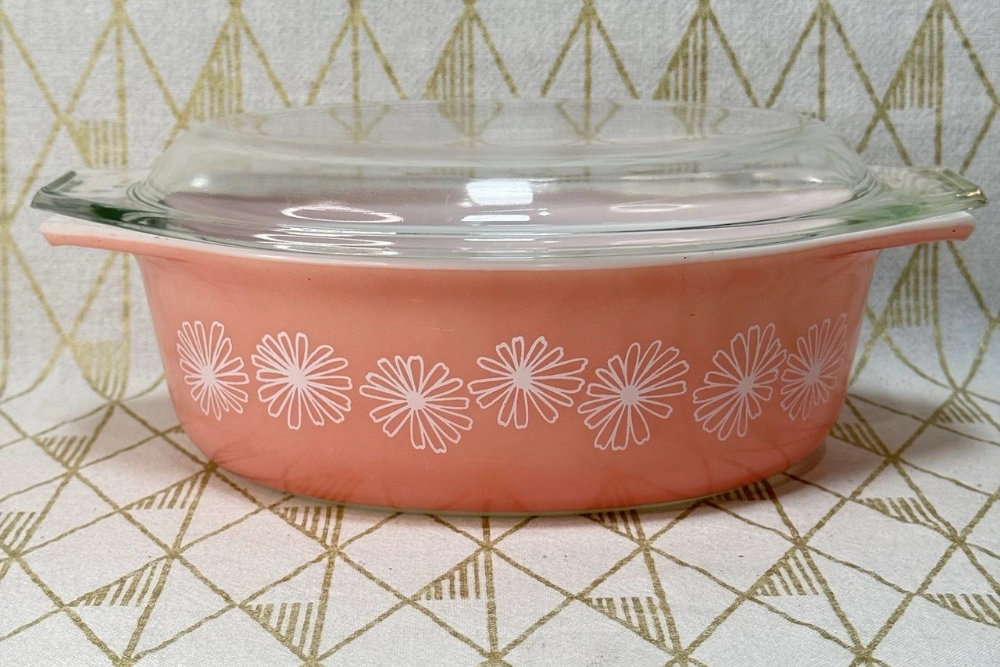
Pyrex made Pink Daisy from 1956 to 1963, mostly on oval casseroles, divided dishes and open bakers. The common 1.5-quart oval casserole with its lid typically runs $55 to $75. A divided casserole with a lid goes for about $110, and the 2-quart size reaches around $175.
The lid matters more than most people expect. A casserole with its original glass lid is worth noticeably more than the dish alone, and a mismatched lid from another pattern does not count. Run a finger around the rim and handles to check for chips, and look for gray scratches inside the dish from years of knife use.
Pink prints rub off in the dishwasher, so hold the dish up to the light and look for an even pattern with no bare spots. Check the bottom for PYREX in all capital letters, because lowercase marks belong to newer glass. A dish with a faded print or a missing lid belongs at the bottom of the range.
12. Fire-King jadeite restaurant ware mugs
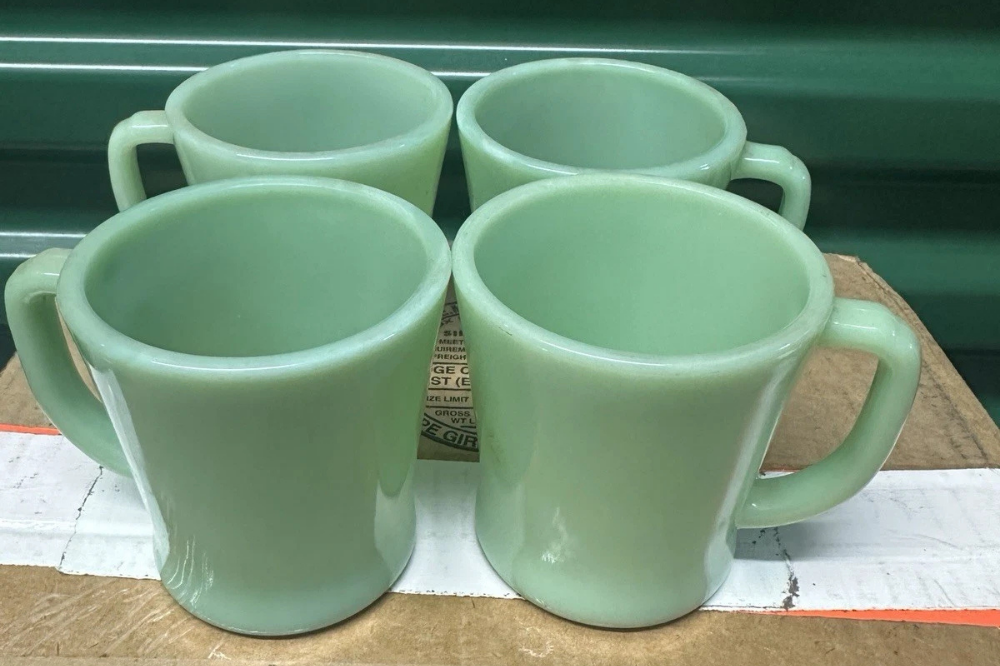
The thick green mugs that diners used for coffee are a lasting favorite. Anchor Hocking made jadeite restaurant ware from about 1948 to 1967, so many of them came out of 1960s kitchens and diners. Single mugs in either the C-handle or D-handle shape run $25 to $42.
Matching shapes help the price. A set of mugs that share the same handle style and shade of green is worth more than a mixed bunch. Check the rims and handles for chips, and look inside for the gray marks that spoons leave behind.
Jadeite-colored glass has been reproduced, so look at the weight and the mark on the bottom. Old restaurant ware is heavy and thick, so compare any mug you are unsure about with one you know is original. A mug with a chip on the rim or a crack at the handle is worth much less than a clean one.
13. Copco enameled cast iron by Michael Lax
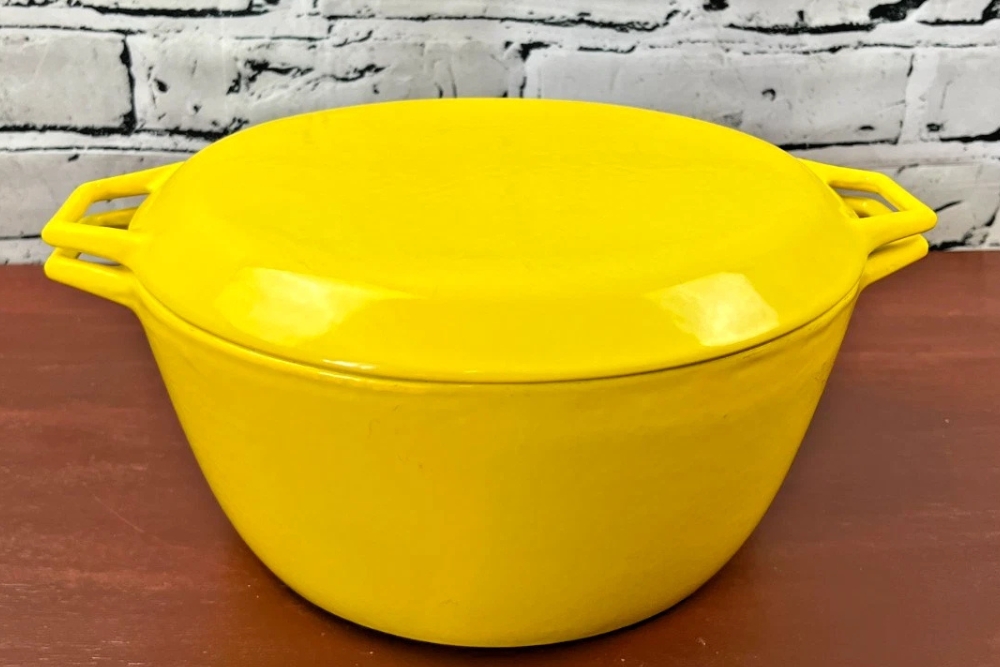
Designer Michael Lax began creating Copco enameled cast iron in 1960, and the colorful pans with their wooden handles are easy to spot at estate sales. A Dutch oven in a bright color can reach $100, while smaller pieces like a skillet, a fondue saucepan or an au gratin dish run $38 to $50. A burnt orange Dutch oven goes for closer to $37.
Size and color explain the difference. Larger pots in yellow or blue bring more than small dishes in common colors. Look for the Copco name and the word Denmark on the bottom, along with Michael Lax.
Enamel chips are the main problem, especially on the inside of the pot where food touches. Handles that are cracked, loose or dried out hurt the price too, and a pot with a missing lid is hard to sell. Rust at the rim and heavy staining inside leave a pan worth a fraction of a clean one.
14. Pyrex Verde nesting bowls
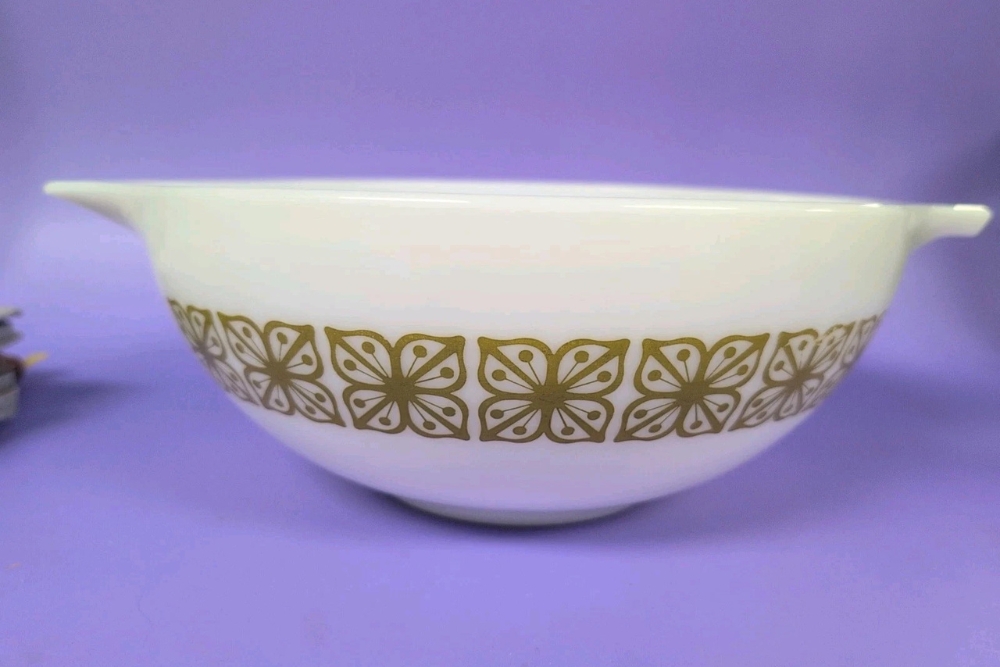
Pyrex made Verde from 1967 to 1972, with a green floral print on white glass. A full set of four nesting bowls can reach $180, and the 2-quart round casserole from the stamp program runs about $124. Partial sets are a different story, with two or three bowls going for $30 to $50.
The word complete matters here. Sellers often pair mismatched bowls from different patterns or colors, so check that the green and the print match across the set. Fading from the dishwasher turns the print pale, and chips around the rims are easy to miss until you run a finger over them.
Look for PYREX in all capital letters on the bottom. Common worn bowls with faded prints bring far less, and a bowl that has been used and washed for fifty years is rarely worth more than a few dollars on its own. If you find a single Verde bowl at a thrift store, check the shelves nearby for the other sizes, because sets are often split up and priced piece by piece.
15. Fire-King turquoise blue D-handle mugs
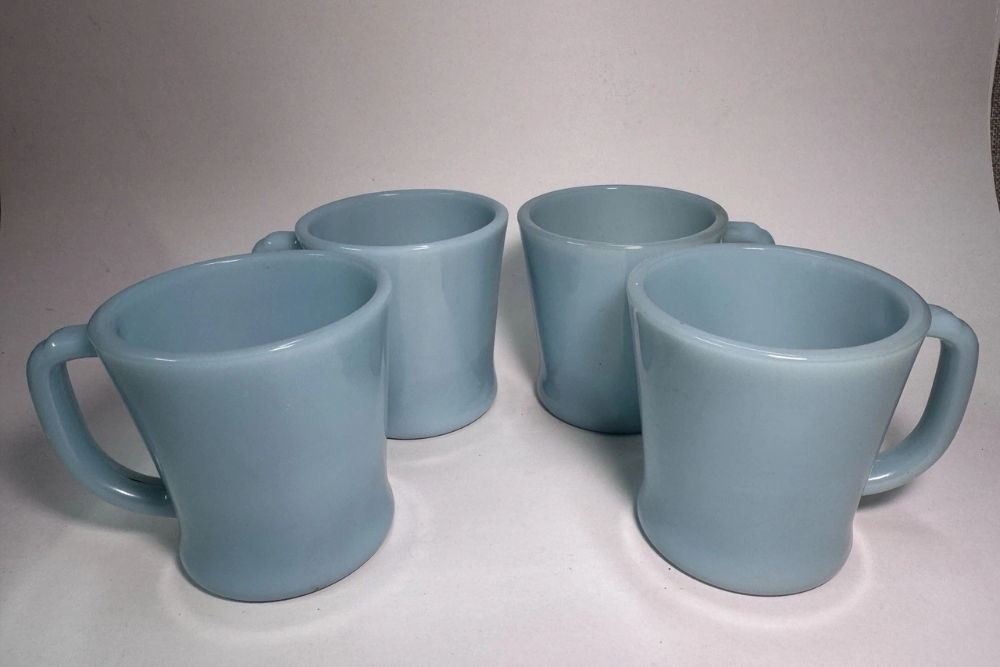
Anchor Hocking’s turquoise blue Fire-King was made from about 1956 to 1962, and the D-handle mugs are the pieces most likely to turn up in a cabinet. A single mug runs about $30 and a set of four goes for $125 to $130.
The color should be even and bright. Faded glass, chips on the rim, cracks near the handle and a cloudy look from years of washing all push the price toward the bottom.
Matching sets are worth the most. Buyers want mugs that match in shade and in handle shape, and a mixed bunch brings less than a set offered together. Look for the Fire-King or Anchor Hocking mark on the bottom, and keep in mind that look-alike blue glass from other makers is not the same thing. Check the base of each mug too, where years of stacking and shelf wear leave rings and scratches.
16. Fire-King milk glass canisters
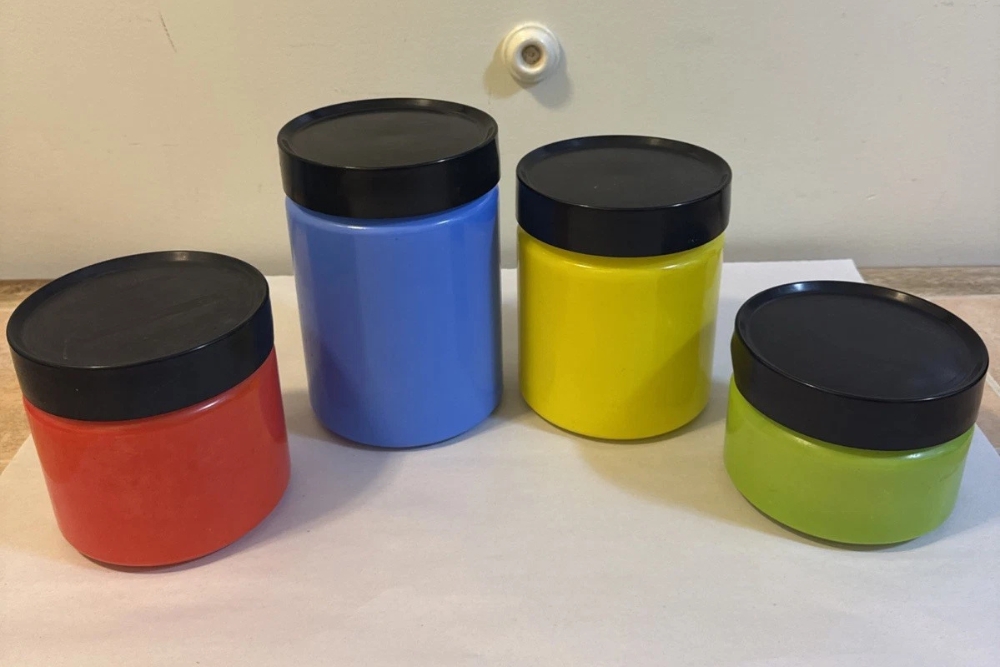
Anchor Hocking’s Fire-King canisters were a colorful fixture of 1960s and 1970s kitchens, with a milk glass interior and a bright outer color in solid and ombre shades of blue, yellow, orange and green. A single canister typically runs $20 to $45, and a full set can reach nearly $300.
The set is the thing. The original canisters came with black plastic lids, and those lids go missing, crack and warp. A canister without its lid is worth much less, and a full matching set in good color is the only version that gets near the top of the range. Test the lid for a snug fit.
Look on the bottom for the anchor over the letter H, which can be hard to see after years of wear. Chips on the rim, worn color and cloudiness inside lower the price. Other Fire-King canisters, like the all-white Harvest Grape, are different patterns with their own prices.
17. Pyrex Butterprint refrigerator dishes
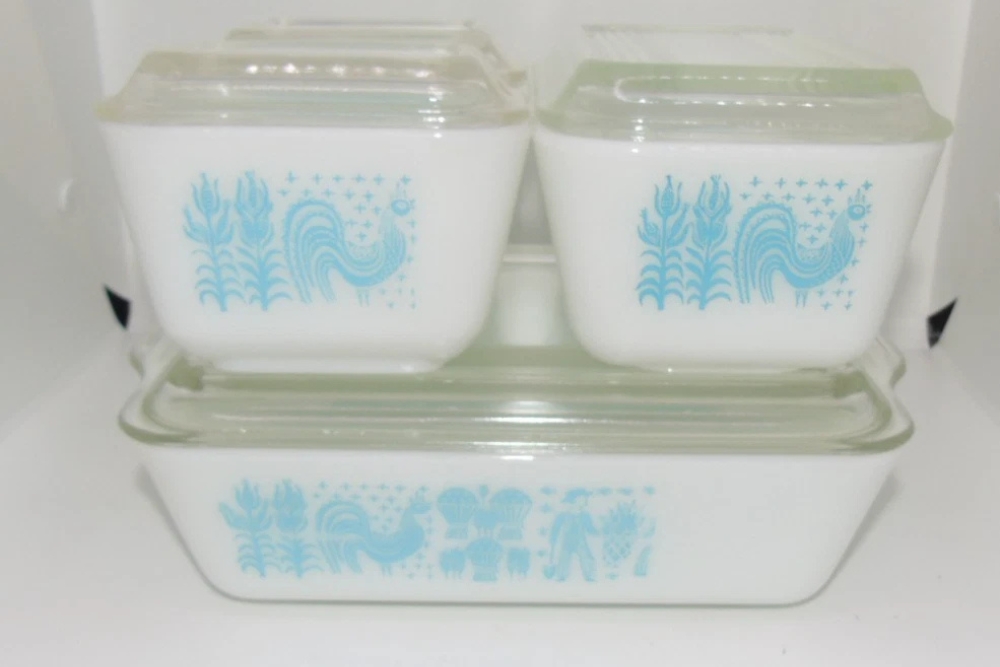
Everyone remembers the bowls, but the same Butterprint pattern turns up on stacking refrigerator dishes that people tend to overlook. They were made in the same 1957 to 1968 window, and a set of three with every lid typically goes for $90 to $150. A set of two with lids runs closer to $60.
The lids are the whole story. They crack, chip and disappear, and a dish without its lid is worth well under half of a complete one. The dishes come in 501, 502 and 503 sizes, and a set that includes all three nests together neatly.
Check inside for knife scratches and stains, and run a finger around each rim for chips. Dishwasher fade appears quickly on the turquoise, so look for an even print. Check each dish for PYREX in all capital letters. Dishes with a worn print, a missing lid or a mismatched color are worth much less than a bright, complete set.
18. Fire-King Peach Lustre dinnerware
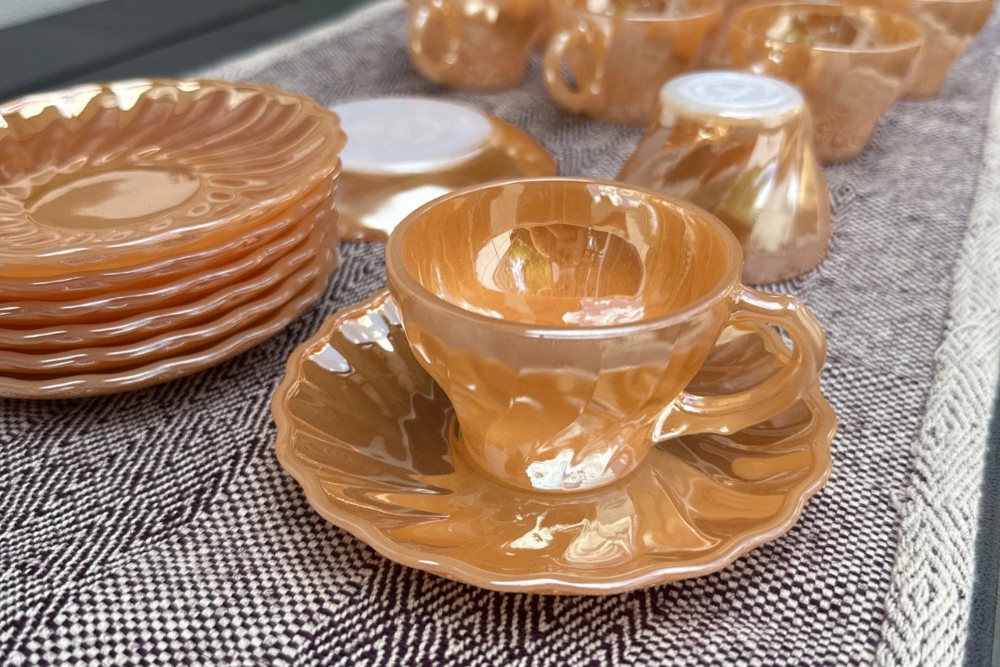
The soft, shimmery pink-orange finish of Peach Lustre was made from about 1952 to 1963, so plenty of it was on 1960s tables. A set of eight swirl cups and saucers runs about $79, and three nesting swirl bowls land near $80.
That makes it one of the lower-priced finds, but sets add up. The lustre finish is the whole look, and it wears. Dishwashers leave it dull and scratched, so tilt each piece under a light and look for an even shimmer. Chips on the rims and cracks around the cup handles knock the price down.
Look for the Fire-King or Anchor Hocking mark on the bottom, because other makers’ peach-tinted glass is worth less. Single plates and odd cups from broken sets bring much less than a matched service, so keep complete sets together. Buyers tend to look for matching cups, saucers and plates, and a full box of it is easier to price than a few loose pieces.
19. Pyrex Golden Acorn casserole
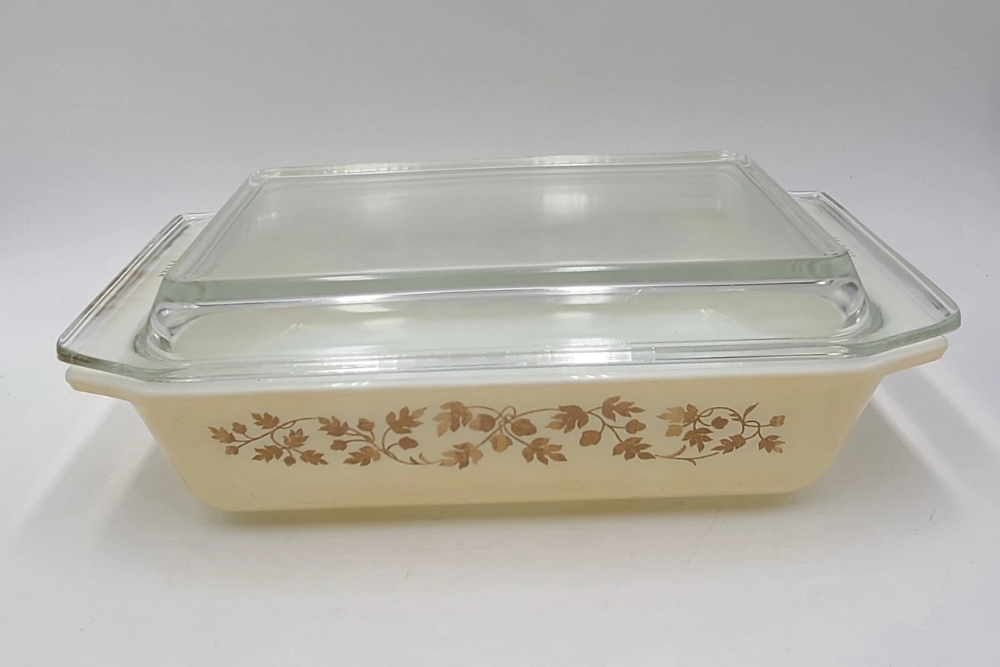
Pyrex made Golden Acorn from 1960 to 1964, a short run that puts it squarely in the early 1960s. The 2-quart casserole server with its lid runs about $48 to $70, a loaf dish with a lid lands near $69, and the smaller space saver casseroles go for $31 to $50.
The acorn and leaf print is the part to protect. It is easy to scrub off, and a dish with bare patches or a dull, brownish print is worth far less. Check the lid carefully, since a casserole with its original lid is worth noticeably more than the dish alone. Run a finger around the rims and handles for chips.
Check the bottom for PYREX in all capital letters, and look for the number 575 or 578 on the base, which are among the common sizes. Dishes with a faded print or no lid bring much less, so this is a smaller find than the bowls, but a clean one still beats the donation pile.
20. Fire-King Azur-ite swirl plates
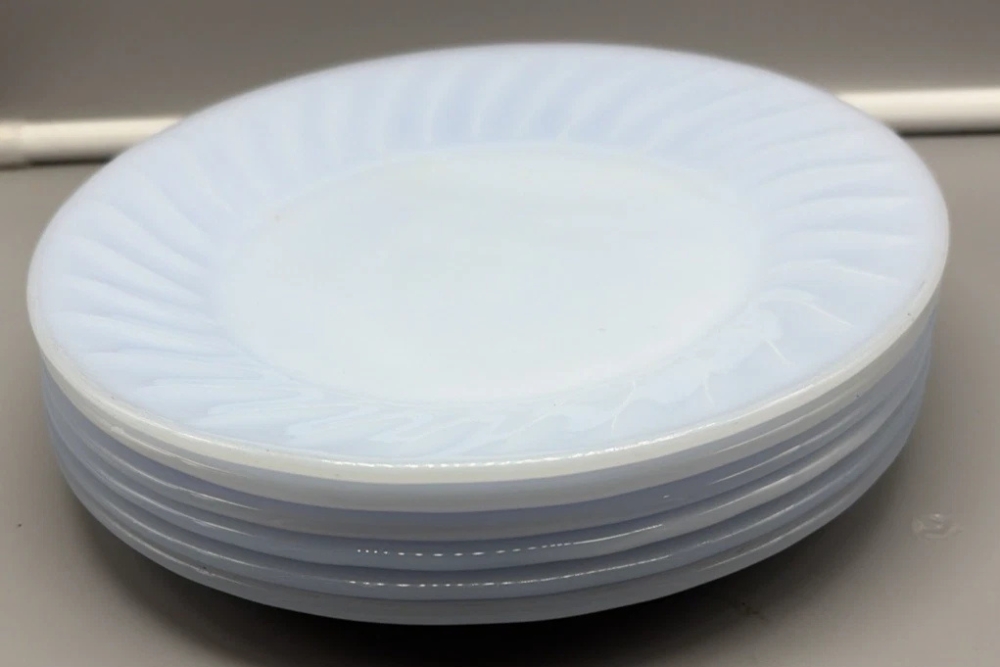
Azur-ite was made primarily in the 1960s, a pale blue Fire-King glass. A set of six swirl salad plates runs about $30, four Charm dinner plates go for around $70, and a partial service with cups, large plates and small plates reaches $72. Two large platters can bring $99.
Platters and larger pieces are worth more than plates and bowls, and sets are worth more than singles. Look for the soft blue tint to be even. Faded glass, scratches from metal utensils, chips on the rims and cloudy patches from years in the dishwasher all lower the price.
Shape names can be confusing here, since Swirl and Charm both appear in the color. Check the bottom for the Fire-King or Anchor Hocking mark. A lone saucer or a plate with a chipped edge brings only a few dollars, so the pieces that pay off are the matched stacks and the big serving platters. Keep any set you find together, because buyers look for matching cups, saucers and plates.
21. Tupperware Millionaire line atomic shakers
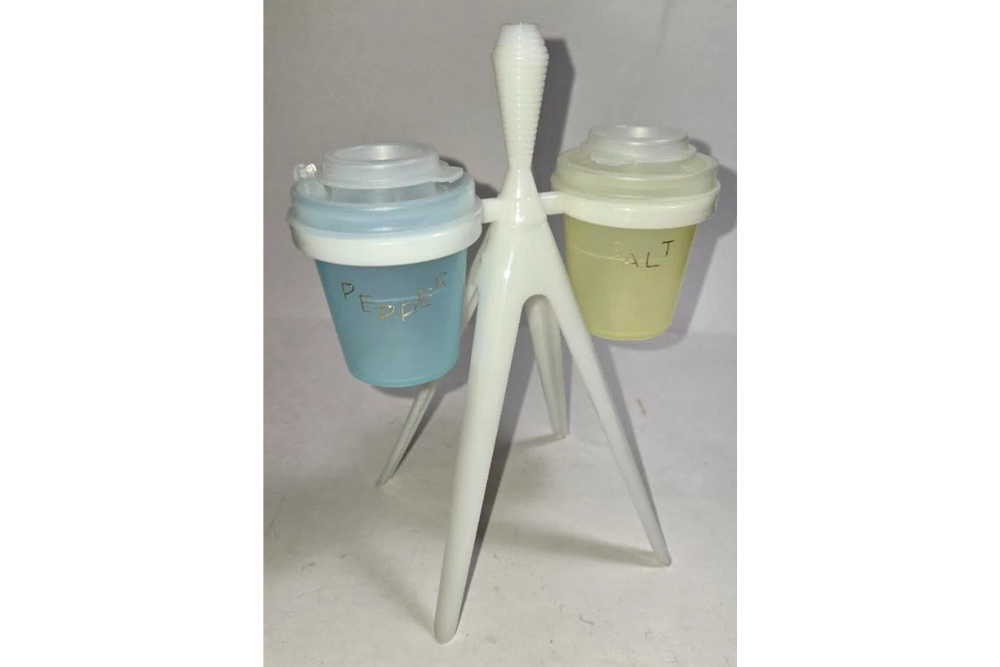
Tupperware’s Millionaire line was carried in department stores rather than through home parties, and the atomic-style salt and pepper shakers on a tripod caddy are a fixture of the 1950s and 1960s. A set typically runs $30 to $50, and the large round cake carrier goes for around $35.
These are the smallest finds here, but they are fun to spot. The pastel colors should be bright, and the printed lettering should still be readable. Fading, cracked plastic, a missing toothpick holder on top of the caddy and warped lids all push the price down. A complete set with every piece matching sells for more than a pair of loose shakers.
Treat them as display pieces. Plastic from this era may not be safe for food, so most buyers want them for a shelf or a retro kitchen. Later Tupperware in similar shapes is worth far less, so check that the pieces have the pastel colors and the atomic shapes of the original line.
Before anything from the kitchen goes into a donation bag, turn it over and read the bottom. A maker’s mark and a pattern name are usually enough to tell a $5 dish from one worth a few hundred.











