
Somewhere in a parent’s basement there’s a box nobody has opened in thirty years. A dented toy truck. A stack of comics with soft corners. A rubber-banded bundle of baseball cards. You’d put the whole thing at about ten dollars, and for most of it, you’d be right.
But the 1960s were a strange decade for collectors. Kids played hard with cheap, mass-produced stuff, and almost nobody saved it in good shape. That’s why the survivors, a boxed truck, a clean card, a first edition with its jacket still on, bring real money now.
Most of these only reach $500 in good condition, and the exact version matters more than the item itself. A beat-up copy, a reissue, or a piece that lost its box can be worth a tenth as much.
1. Hess tanker truck (1964, in the original box)
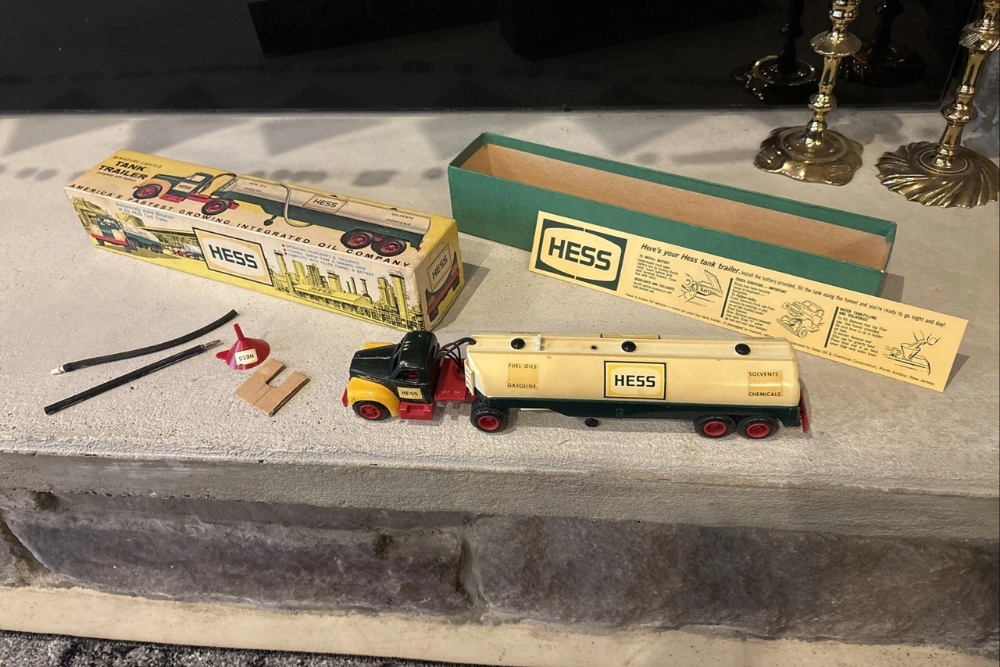
Hess sold its first toy truck at its gas stations in 1964 for $1.39, just in time for the holidays. Roughly 150,000 of the tankers were made, and a mint one in the original box is worth $1,800 or more. The headlights are meant to light up, which is the first thing a collector will test.
The box is where most of the value lives. Without it, a clean truck brings a few hundred dollars, and one with worn decals or a repaired bumper brings less. A complete box has the refinery and service station artwork on the two-piece box, plus the packing tissue, the funnel and the battery card. Reproduction boxes exist, so look closely at the printing and the aging before paying extra for one.
There are three versions of the 1964 truck, including a rare Hess-over-Billups variant, and the same truck came out again in 1965. Check the details before assuming yours is the common one.
2. Amazing Spider-Man #14 (1964)
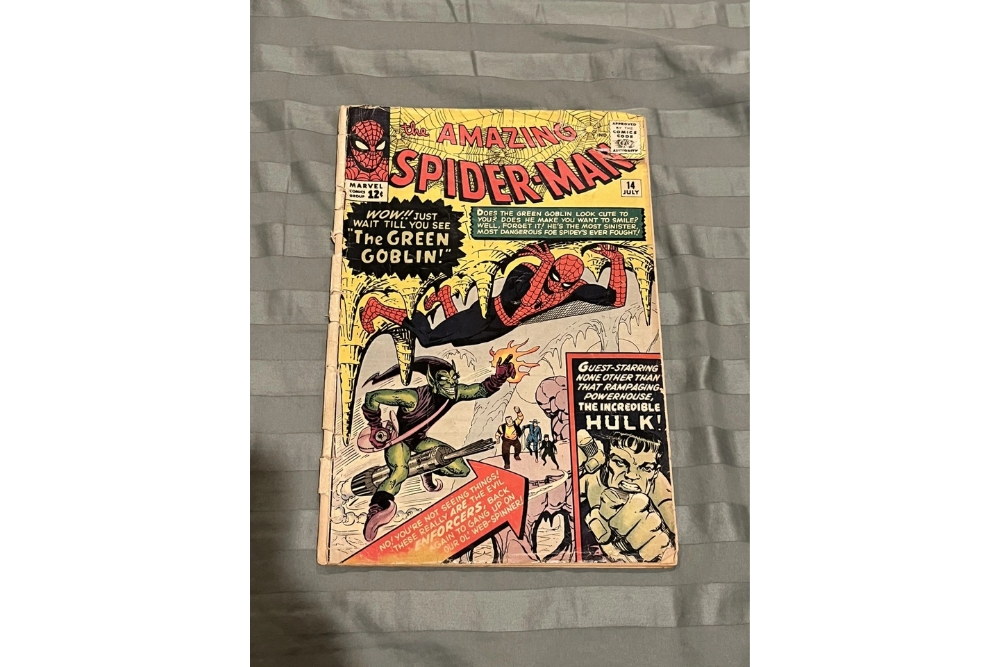
Comic books are one of the few places where a worn, creased copy still carries a real price tag. Issue 14 is the first appearance of the Green Goblin, and that keeps demand steady. A complete copy in rough shape, graded around 2.0, brings about $1,000. A very good copy runs closer to $1,600, and a fine one reaches $2,800 or more.
Condition problems cost real money. A missing corner, a cut-out coupon, a cover that has come loose, or tape along the spine pulls an issue to the bottom of the range or below it. The cover should read July 1964 and carry a 12-cent price. A facsimile edition came out for the book’s 60th anniversary, so the publisher code and serial number on the back are worth checking.
Other early issues are in the same neighborhood. Issue 4, the Sandman story, brings around $900 in rough shape, and the price climbs fast with every grade.
3. Evergleam aluminum Christmas tree (1960s)

The shiny silver tree in your grandparents’ front window was probably an Evergleam. Aluminum Specialty Company of Manitowoc, Wisconsin, started selling aluminum trees in 1959 and branded them Evergleam the next year, and most were silver, with the rest in green, gold and pink. More than a million aluminum trees were made over the decade, usually lit by a rotating four-color wheel instead of bulbs. A complete six-foot tree with plenty of branches typically brings $500 or more, and one with its color wheel goes higher.
Completeness decides everything. A full-size tree with missing branches, no stand or no paper sleeves slides well under $500, and small tabletop trees bring far less. A working color wheel adds real value. Pink is the color collectors chase, and pink examples have reached $1,800.
Quality reproductions are on the market, so a tree that looks suspiciously perfect deserves a second look before you pay or price it.
4. 1968 Topps Nolan Ryan and Jerry Koosman rookie card (#177)
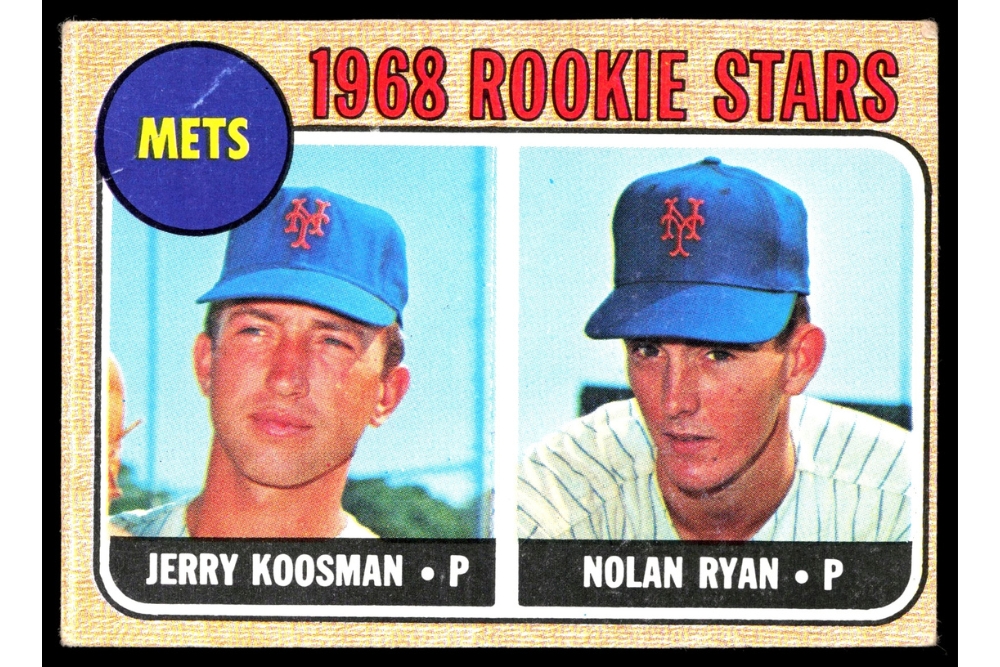
Nolan Ryan’s rookie card is the rare 1960s baseball card that doesn’t need to be pristine to matter. Even a copy graded PSA 1, the lowest rung, brings around $500. A PSA 2 runs about $700, a PSA 3 about $850, and a raw card with no grade at all usually brings a bit under $600, depending on how rough it looks. Centering and corner wear decide where a raw card lands in that range, and a crease through the middle puts it at the bottom.
It’s also one of the easier cards to run into, which is why so many sit in old shoeboxes. The card is number 177 in the Topps set, and it has nearly identical versions from Milton Bradley, O-Pee-Chee and a Venezuelan issue. Those look the same at a glance but are different cards, and they’re often worth less.
A card that has been trimmed, cut or altered is worth a fraction of an honest worn one. Don’t clean it, flatten it or trim the edges, whatever it looks like.
5. Sears Silvertone 1448 guitar with the amp in the case (1962 to 1967)
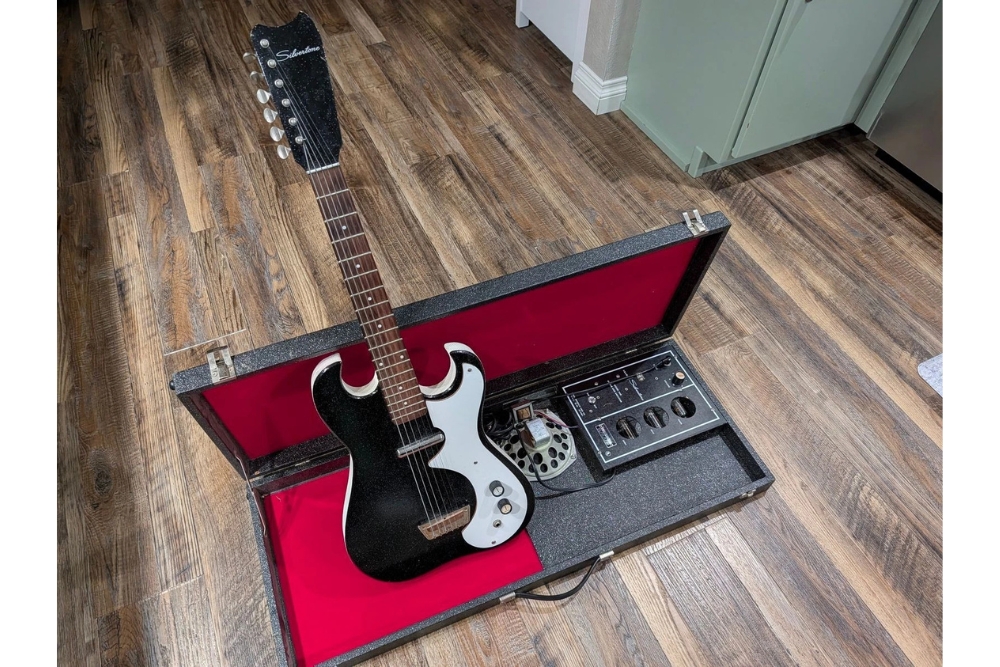
If anyone in the family started on guitar in 1965, it may have been on one of these. Sears sold the Silvertone 1448 from 1962 to 1967, and the trick was the case: the lid held a small tube amplifier with a speaker. Danelectro built them, and the hard part today is finding one where everything still works. Complete sets usually bring $280 to $440, and a clean one with a working amp can top $600.
Only the cleanest sets pass $500. A set with a weak amp or a rough case can fall to $200 or so, and the case is the weak spot, since it’s closer to cardboard than hardwood. Check the latches, the hinges, the speaker grille cloth and the knobs.
The 1448 was the first model in the line. Later versions came with a 5-watt amp and tremolo, and sets in excellent condition with a fully working amp are valued at $600 to $800. Reissue guitars exist without the amp-in-case design, so make sure the amp is built into the lid.
6. Pyrex Pink Gooseberry Cinderella bowl set (1957 to 1966)
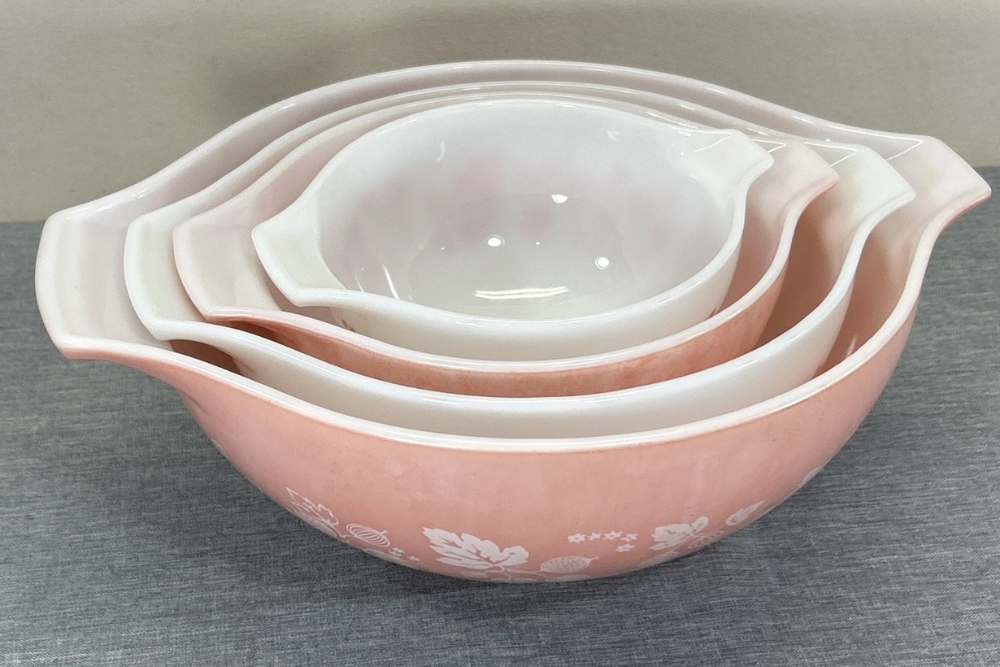
The nesting bowls your mother mixed cake batter in, pink flowers and berries on white, are the kind of kitchen item that’s quietly worth hundreds. Corning introduced the Gooseberry pattern in 1957 and dropped it in 1966. The pink-on-white and white-on-pink Cinderella set, numbers 441 to 444, is the one collectors want, and a complete four-bowl set in bright, unworn condition brings $800 to $900. The matching casserole set, numbers 471 to 475, has brought around $650.
Single bowls don’t get there. A typical single piece brings $60 to $200, and a set missing one bowl is a different thing entirely. The Cinderella bowls have small spouts at the handles, and chips collect there, so run a finger around each one. The pattern also came in other colors, so check that yours is the pink.
Dishwashers are the real enemy. Faded, scratched pink is worth a fraction of bright pink, and the original box pushes the price up. Genuine vintage pieces are stamped PYREX in all capital letters, which helps separate them from newer glass.
7. Hot Wheels Redlines on the original card (1968)
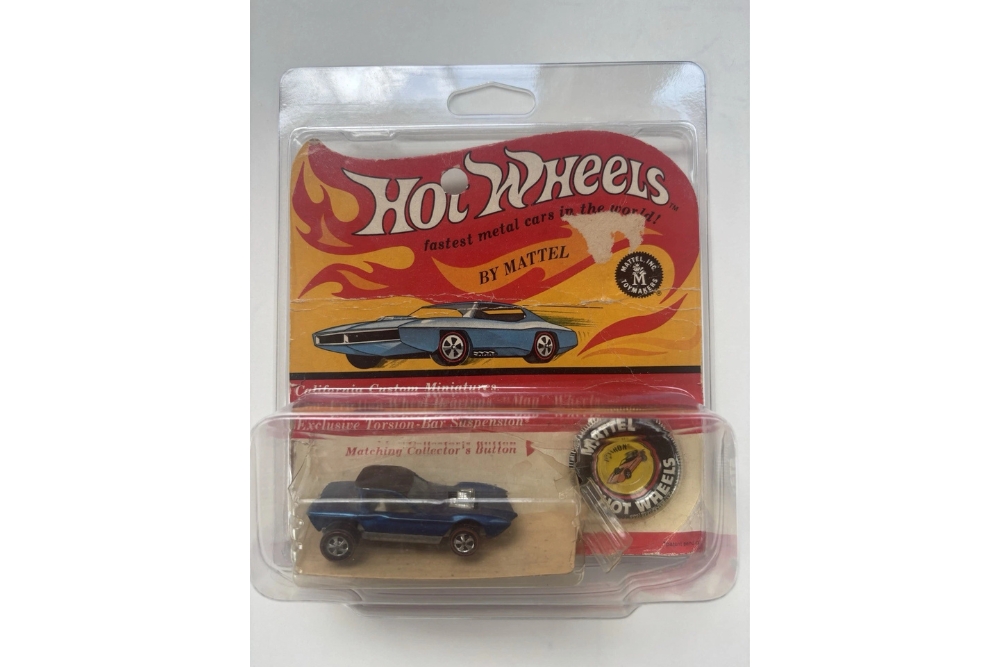
Loose Redlines from the toy box are common and usually modest. The same cars still on their blister cards are another matter. The first sixteen Hot Wheels came out in 1968 on red-and-orange cards, and a carded Custom Camaro typically brings $250 to $600, while the Deora runs $400 to $800. The Python, which started life as the Cheetah before a quick name change, is another one to look for.
The card matters nearly as much as the car. Look for a smooth-sided bubble that isn’t cracked or yellowed, a card with its hang hole intact, and paint that hasn’t been touched. A common casting like the 1969 Lotus Turbine on its card brings around $215, so the model counts too.
Loose cars with heavy wear bring a small fraction of that, though a stronger casting like the Custom Mustang can reach $350 or so even when it’s been played with. Later anniversary reissues copy many of these designs, so a base reading China or Malaysia means the car isn’t a 1968 original.
8. Levi’s 501 jeans with the Big E tab (1960s)
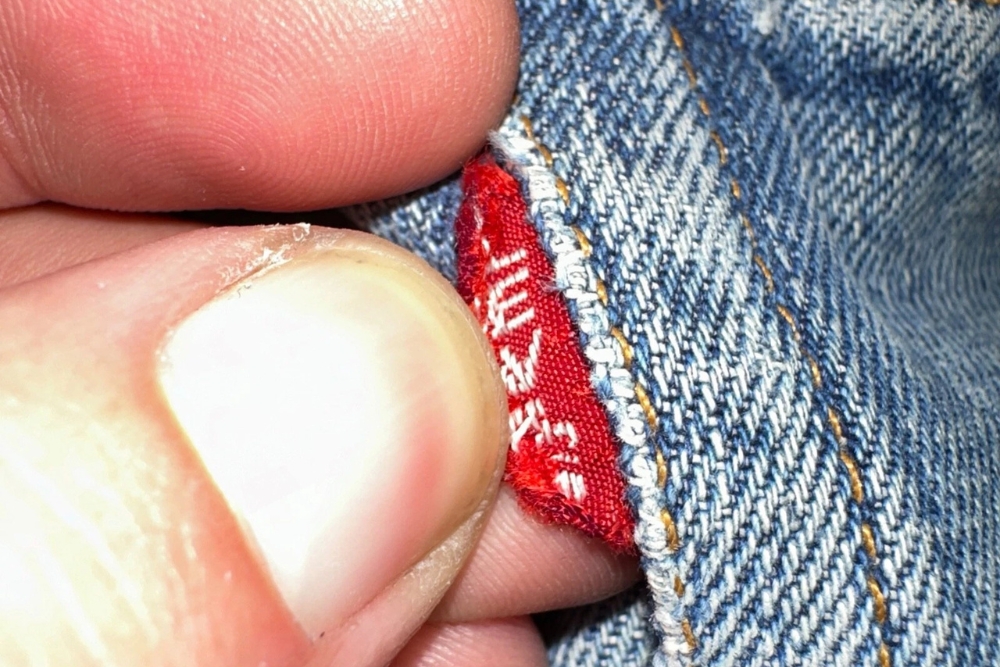
The jeans your dad wore to paint the garage might be the most valuable thing in the closet. Before 1971 the red tab on the back pocket read LEVI’S with a capital E, and those pairs are called Big E. The other 1960s tells are hidden rivets on the back pockets, which Levi’s replaced with bar tack stitching in 1966, and selvedge edges along the outseam.
Most Big E pairs bring somewhere between $35 and $400, with the typical wearable pair around $150. Getting past $500 usually takes a clean, dark pair in a common waist size, roughly 32 to 38 inches, with honest fading and no blown-out crotch. An excellent pair with its original tags can reach $2,000, but that’s the exception.
A Big E tab alone proves nothing. Levi’s own reproduction of the 1966 501 carries a Big E and is made in Japan, so check the stitching and the other details too.
9. Where the Wild Things Are, first printing with the first-issue jacket (1963)
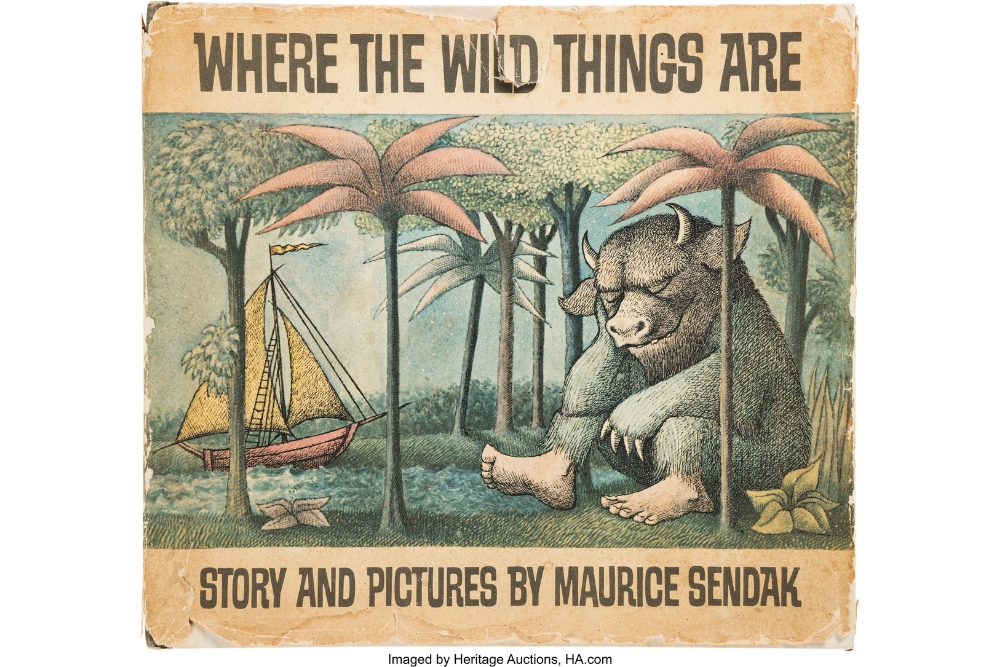
Almost every kid had a copy of Maurice Sendak’s book, which is exactly why a true first is easy to miss. A first printing in its original jacket runs into the thousands, while the common later printings bring anywhere from a few dollars to a few tens of dollars.
Three details identify a true first. The Library of Congress number 63-21253 appears on the title page, and the jacket carries a $3.50 price on the front flap with no mention of the Caldecott Medal. The medal and a $3.95 price came later. The code on the bottom of the front flap should read 40-80 and 1163.
The jacket is what collectors are really paying for. Without it, the book is worth far less. Chips, toning, clipped corners and pinholes in the jacket all cut the price. A 1974 library edition and other later reprints can look similar at a glance, so check the title page and the flap before getting excited.
10. 1960 and 1961 Topps Mickey Mantle cards (#350 and #300)
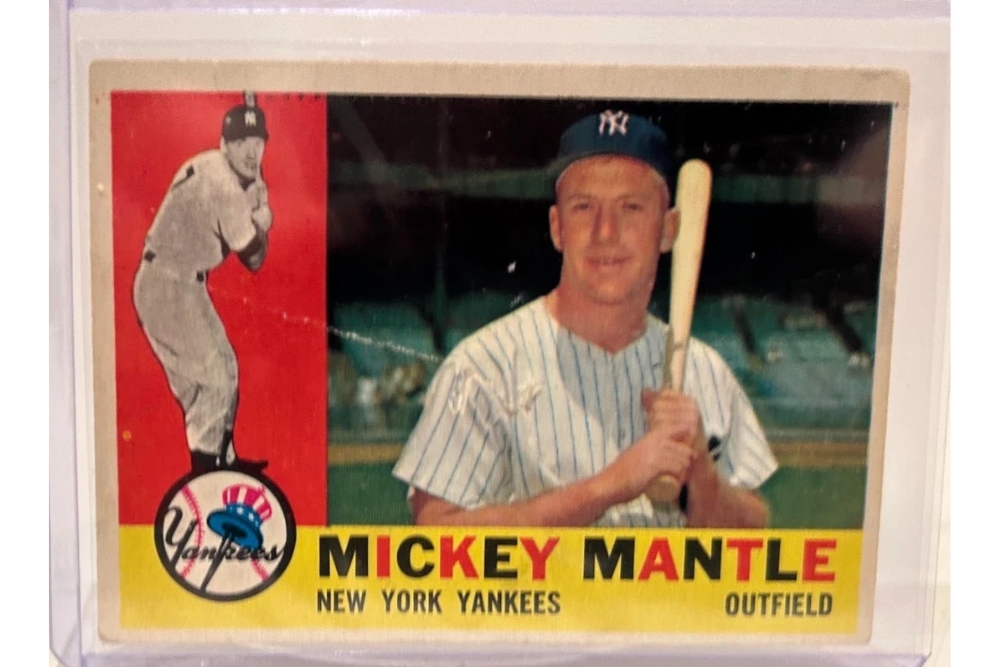
Mantle cards from the 1960s sit in more shoeboxes than you’d think, and the average one is worth less than people hope. A 1960 Topps card in clean, VG-EX condition with no major creases, graded PSA 4, brings $550 to $750, and the 1961 card runs a little lower, around $500 to $550. A PSA 3 drops to roughly $360 to $420, and raw, creased cards bring about $250 to $300.
The later cards pay less. A 1965 through 1968 Mantle at the same PSA 4 grade generally brings only $150 to $300, so the year matters as much as the player. The 1969 card is the exception, at about $500 for the yellow-letter version and $1,000 or more for the white-letter one.
Check the corners, the back for stains, and the centering. Rounded corners, paper loss and water damage cut the price quickly. Anything that looks suspiciously sharp for its age should go to a grading service before it goes to a buyer.
11. Aurora Universal Monsters model kits (1961 to 1964), unbuilt in the box
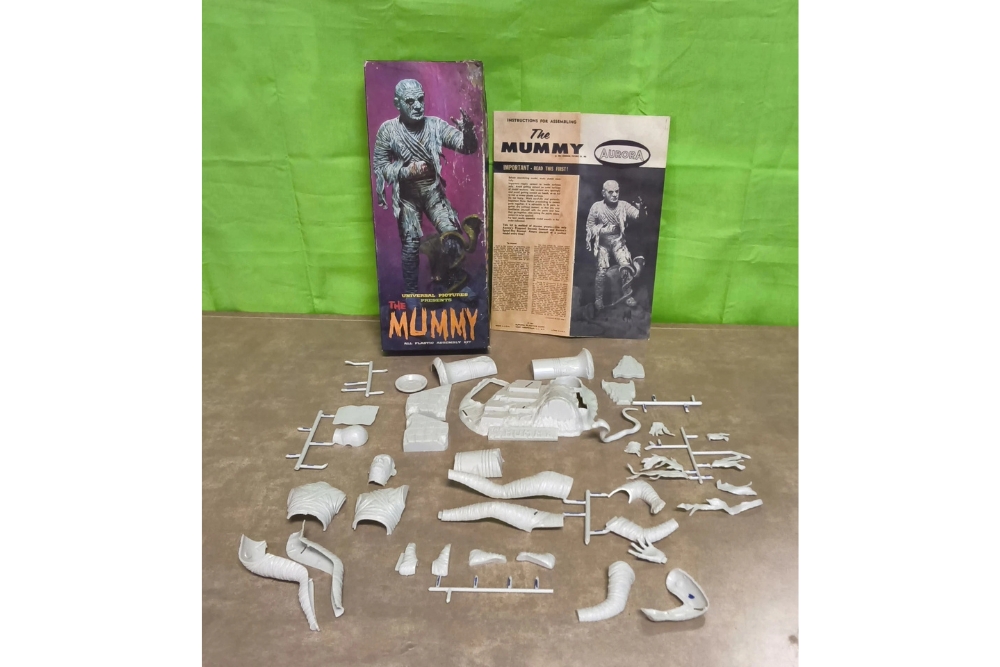
A kid built these, glued a few fingers to the table, and set them on the dresser. Aurora sold almost 7.5 million monster kits by 1964, so built kits are everywhere and bring very little. An unbuilt kit in the original long box is a different animal. Aurora’s Frankenstein arrived in 1961, the Wolf Man followed in 1962 and the Mummy in 1963, and an untouched box is estimated at $300 to $1,000 or more.
The oversized 1964 Gigantic Frankenstein, complete and unused, can bring $1,000 to $1,500. Completeness is everything. A kit missing its base and with a broken hand brings only about $144, even with the box.
The 1970s glow-in-the-dark reissues are easy to mix up with the originals. They have parts molded in glow-in-the-dark plastic and sell for far less than the 1960s originals. The early 1960s long-box kits don’t carry the glow logos. Look for the instruction sheet and intact parts bags too, because a box that has been opened and picked over is worth far less than one that is still sealed.
12. Star Trek and other 1960s TV lunch boxes with the thermos
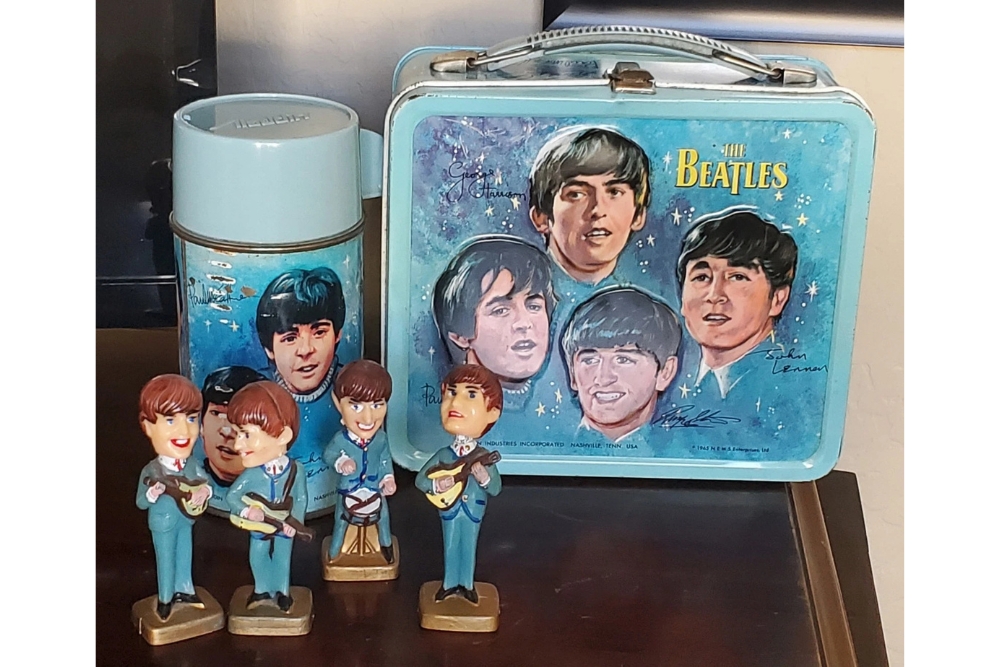
A lunch box was the most carried piece of gear a kid owned, and the 1960s TV boxes are where the money is. The 1968 Star Trek box was made by Aladdin in Nashville and typically runs several hundred dollars. Boxes tied to hit shows and bands, like Star Trek and the Beatles, bring the most.
The thermos matters. A box with its matching, undented thermos is worth considerably more than the box alone, and rust, dents and scratched artwork cut the price fast. A box in excellent shape can bring two to three times the price of one in good or fair condition. A rusty Yellow Submarine box with no thermos brings about $200, while a 1965 Beatles box with its thermos in excellent shape lands right around $500.
Most of the boxes sitting in basements are worn. Open the lid and check the inside for rust, and look along the edges of the artwork, where paint chips first. Even a lightly scratched box is worth keeping, but a rusted one with a dented thermos won’t reach the top of the range. A clean one is the one to hold onto.
13. 1965 Topps Joe Namath rookie card (#122)
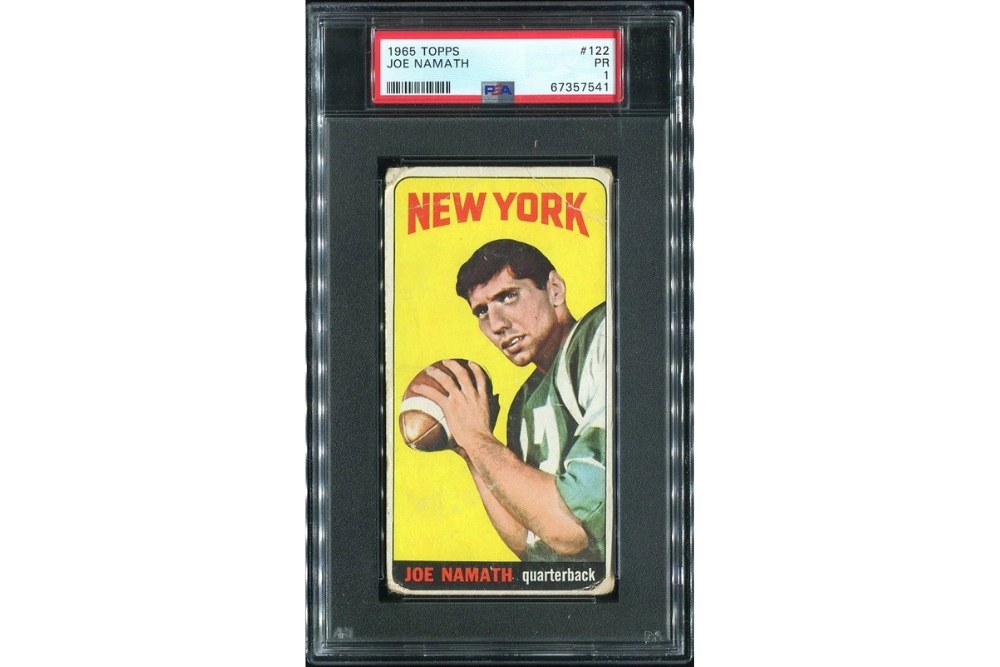
This is the football card that doesn’t fit in the binder. Topps printed its 1965 football set in an unusual tall-boy size, 2 1/2 by 4 11/16 inches, the only football issue it ever made that way, and Namath’s rookie card is the one everyone wants. Even a copy graded PSA 1 brings around $1,200, and raw copies in rough shape land close to $1,000. A PSA 2 through PSA 4 climbs to roughly $1,800 to $2,900.
The size is your first test. A 2012 mini reprint of the card exists and is worth next to nothing, so measure anything that looks too small. Creases, rounded corners and soft edges cost money, but this card holds its value better than most.
A butterfly print variation turns up now and then, but it hasn’t earned a proven premium. The condition of the card matters far more than which print run it came from.
14. Lane Acclaim coffee table (1958 onward)
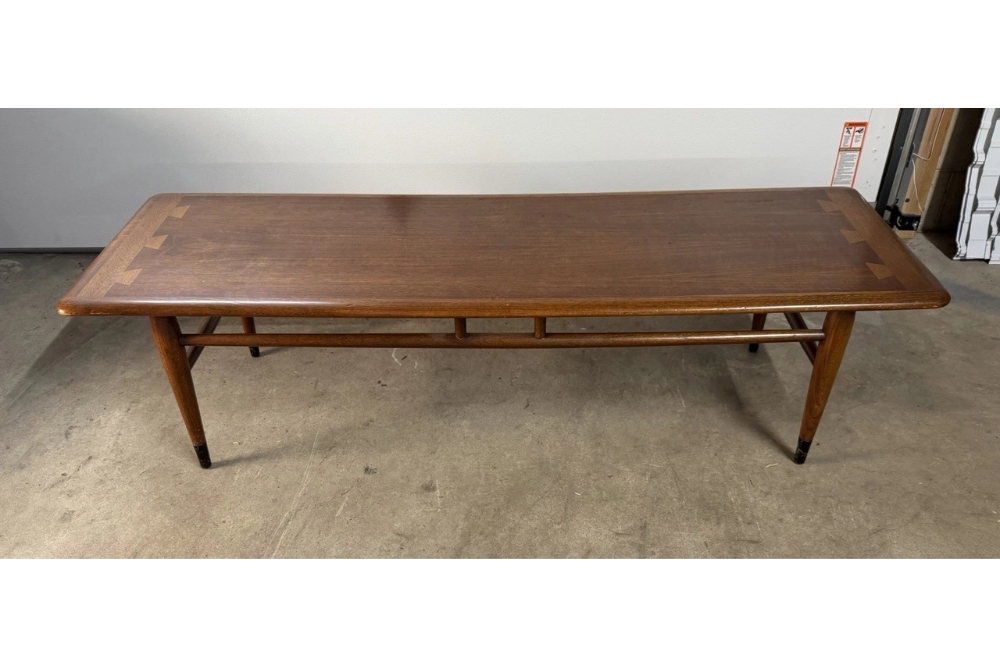
Plenty of living rooms had one: a low wood table with a dovetailed inlay running around the top. Lane launched the Acclaim line in 1958 from the work of Dutch designer Andre Bus, and a 50- or 56-inch coffee table sells for around $500 on average, though sellers ask much more. Early pieces were elm with walnut veneer, and later ones switched to ash.
Flip it over. Look for a metal tag reading Lane and a date code that gives the week and year it was made. Dovetailed drawers on matching pieces are another good sign, and a period piece shouldn’t have particle board anywhere. Authentic pieces carry those markers while look-alikes don’t.
The look-alikes are close. A Virginia Maid table with corner bowtie inlays looks similar but is worth less, and the later Acclaim II line uses laminate and sells for less. Water rings, lifted veneer and replaced hardware knock a lot off the price of any of them.
15. Green Eggs and Ham, first edition (1960)
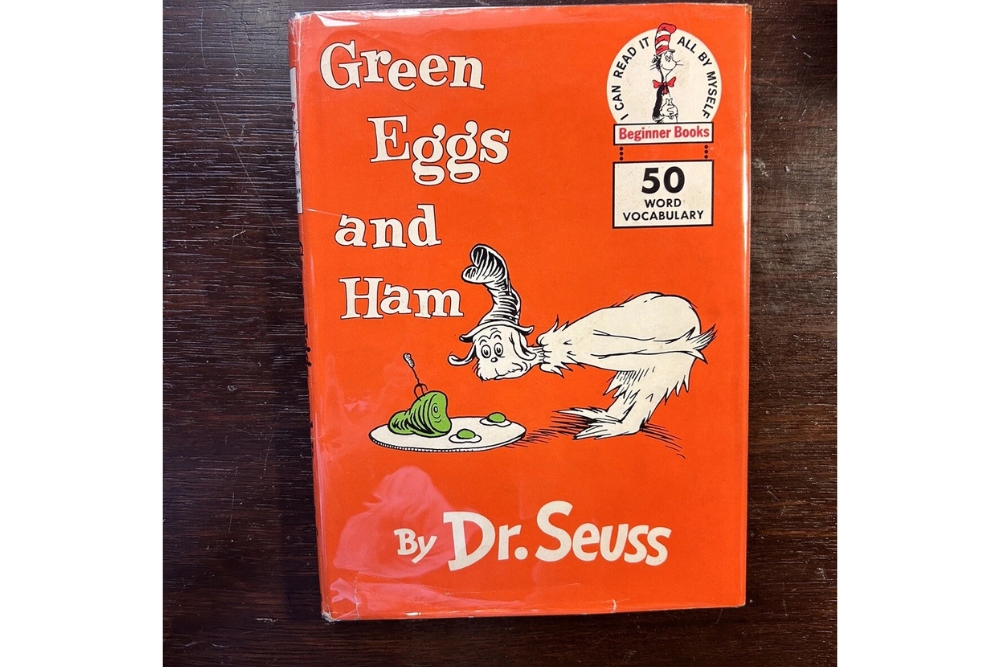
Dr. Seuss wrote Green Eggs and Ham with just 50 different words, and the first edition with its original jacket is the 1960s Seuss that reliably clears four figures. Copies with a pasted-on or missing 50 Word Vocabulary sticker bring around $1,500, and cleaner ones run several thousand.
Check the title page for Distributed by Random House, the spine for B-16, and the front of the jacket for a 50 Word Vocabulary sticker below the Beginner Books logo. The back of the first-issue jacket shows 18 titles. Second printings lack the sticker, and a jacket that has lost it, been price-clipped or been chipped along the spine is worth noticeably less. A clean, unclipped jacket matters nearly as much as the book inside.
Later Seuss titles from the decade generally bring less than this one, so the 1960 book is the one to look for. Book club editions and later printings look close to a first at a glance, but they lack these marks, so check each one before you price it.
16. Hasselblad 500C camera kit (1957 to 1970)
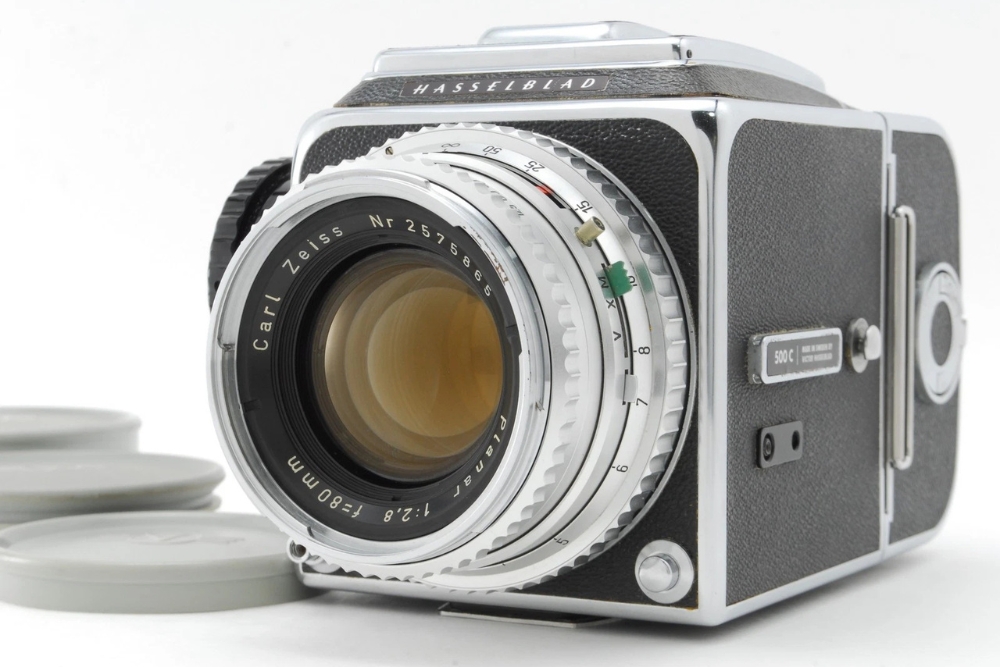
If a relative was a serious amateur photographer in the 1960s, there might be a leather bag in the closet with a square camera in it. Hasselblad made about 76,700 500C bodies between 1957 and 1970, and a complete kit with the body, film back and 80mm Planar lens often brings $900 to $1,200 when it works but shows its age.
The lens and the film back are what you’re paying for. A bare body is worth far less, and extra film backs or a prism finder in the bag add to the total. Test the leaf shutter and the film back, look for haze or fungus inside the lens, and check for crumbling light seals on the back.
The 500C/M that followed in 1970 is a later model and tends to be worth more, so read the name on the body before pricing anything. Many finds are bodies missing a lens or a back, and those bring far less than a complete kit.
17. Tudor Oyster Prince steel wristwatch (1960s)
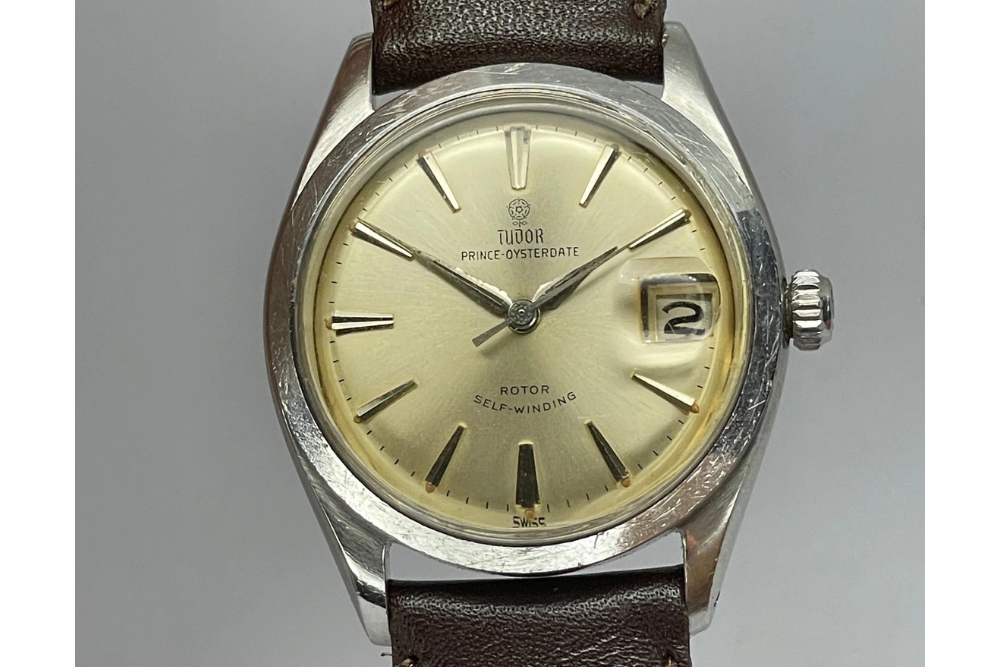
If your dad wore a steel watch with a small crown and a date window to work every day, check the dial before the watch goes back in the drawer. Tudor was Rolex’s sister brand, and its Oyster Prince and Oysterdate Prince watches from the 1960s were built on Rolex Oyster cases with a Twinlock crown and a self-winding movement signed Tudor. Clean, running steel examples typically bring $500 to $1,200, and ones with a crisp original dial and the right bracelet can climb past $1,500.
The reference number is stamped on the case back, with names like 7965, 7966 and 7909, and the serial number between the lugs helps date the watch. The dial, case, crown and movement should all be signed Tudor. Repainted dials are the biggest risk, since a replacement or redone dial can pull a watch below $500.
Most watches that turn up in drawers have a scratched crystal, a dented or over-polished case, a stretched bracelet, or a movement that no longer runs. Those last ones need an overhaul, and the repair eats into the price. Gold versions of the same model bring more, but gold-colored plating on a steel-looking case is not the same thing, so check the case back before you get excited.
18. 1969 Topps Lew Alcindor rookie card (#25)
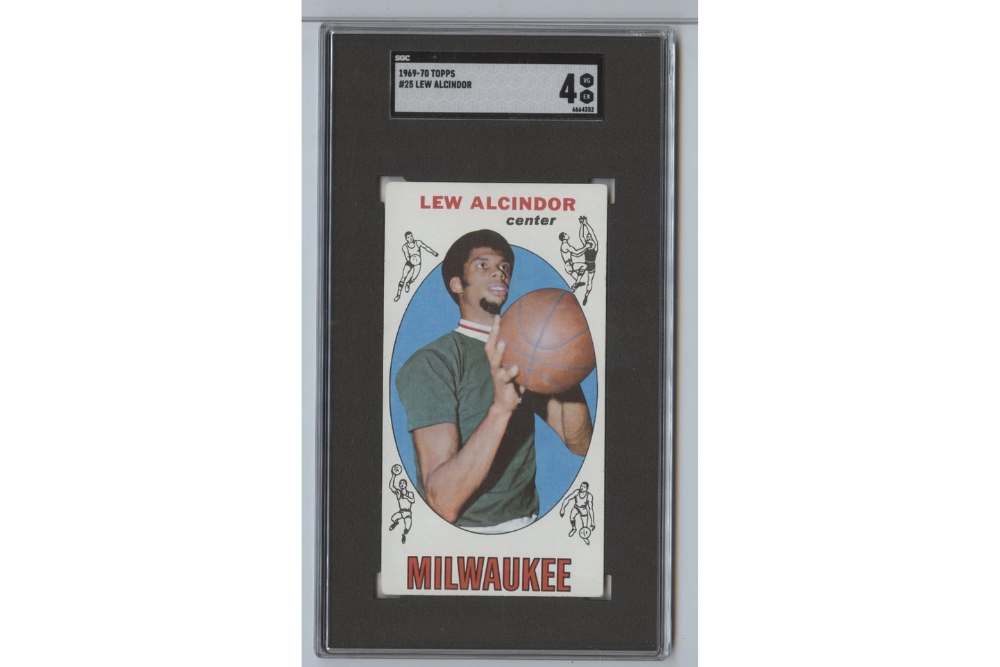
Lew Alcindor later became Kareem Abdul-Jabbar, but this is the card from before the name change. Like the Namath, it’s a tall-boy card, which makes it easy to spot in a box. In decent shape, around PSA 3 to 4, it brings $500 to $750, and a card graded 5 can reach $1,100.
Raw cards with real wear land lower, usually around $380, so this is a card where the edges and corners decide whether it gets past $500. Tall-boy cards are harder to find in sharp condition, which keeps the better copies pricey. Look closely at the corners and the surface before deciding what you have. Check the back for stains, look for creases running across the face, and never try to flatten or trim the card.
Autographed reprint versions of Alcindor cards exist and sell for way less. The original is the 1969 Topps card, number 25, in the tall-boy size.
19. The Graduate one-sheet movie poster (1968)
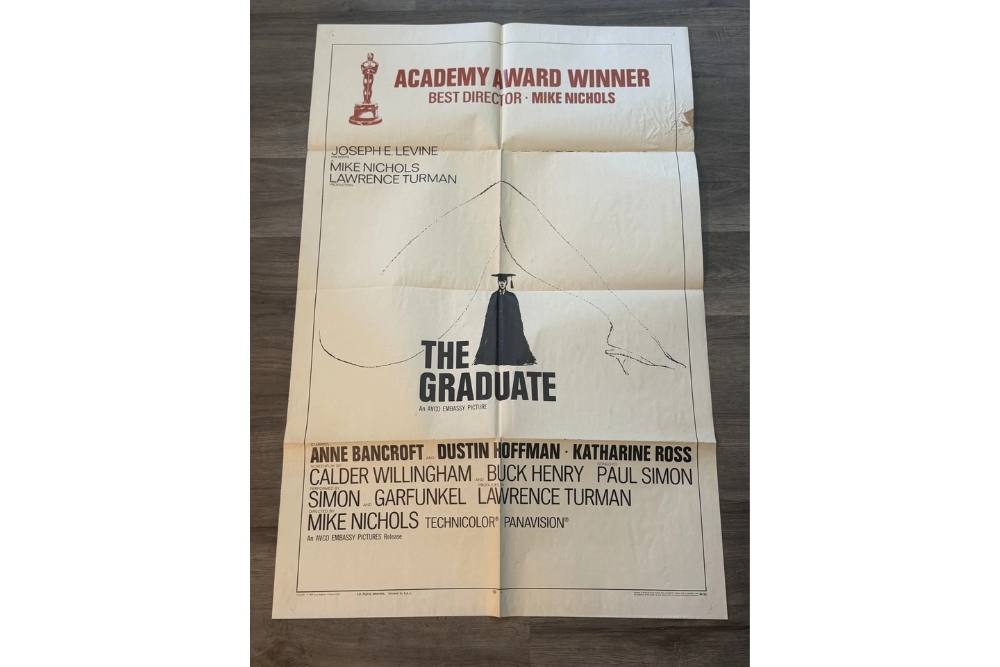
A lot of families kept the posters from movies they saw in 1968, folded in a drawer. The Graduate’s one-sheet, the standard 27 by 41 inch size, brings around $500 or a little more in very fine, folded condition. Pinholes in the corners and fold wear are normal for these. The problem is everything that isn’t an original.
Reissues carry an R and a two-digit year in the bottom right corner, and they’re worth much less than a first-release poster. The 24 by 36 inch posters made by Portal Publications and Celestial Arts in the 1960s and 70s are reproductions that studios never produced for theaters, and they’re nearly worthless.
Original studio posters have a National Screen Service code printed at the bottom. Check the condition for tears, tape and restoration, all of which cut the price sharply. Staple holes and tape marks from theaters are normal and buyers accept them, but big tears, missing paper at the folds and heavy staining are not.
20. 1967 Topps Tom Seaver rookie card (#581)
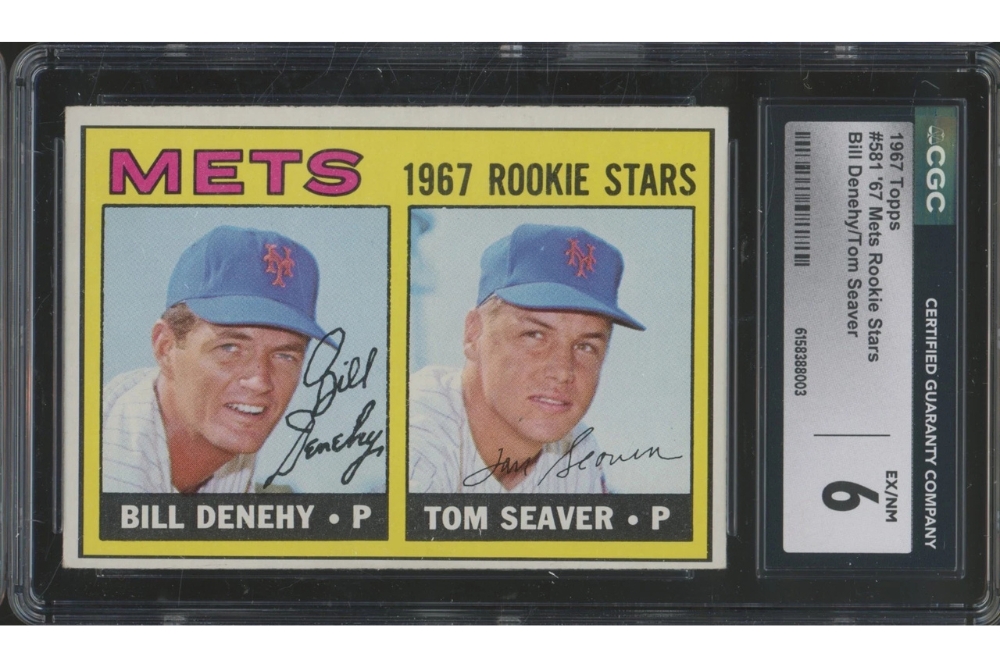
Seaver’s rookie card shares a card with Bill Denehy, and it came from the short-printed seventh series of the 1967 set, which means fewer survived in kids’ shoeboxes. In a box with the rest of the set, it’s the card to pull first, because it’s among the last in the numbering. That scarcity shows up in the price. A raw, rough copy brings $600 to $900, and a PSA 2 brings about $700. A PSA 3 is around $1,000, and a PSA 4 runs about $1,200.
Centering problems are common on this card, and the green-bordered back chips easily, so check the edges before getting your hopes up. The very worst copies, graded PSA 1, land around $600.
A card that has been cleaned, trimmed or repaired loses most of that value. If it’s clean and untouched, a grade is worth the fee. Make sure the card is number 581 and shows both players, since other Seaver cards from the decade are different and often cheaper.
21. Omega Seamaster date automatic (steel, 1965 to 1969)
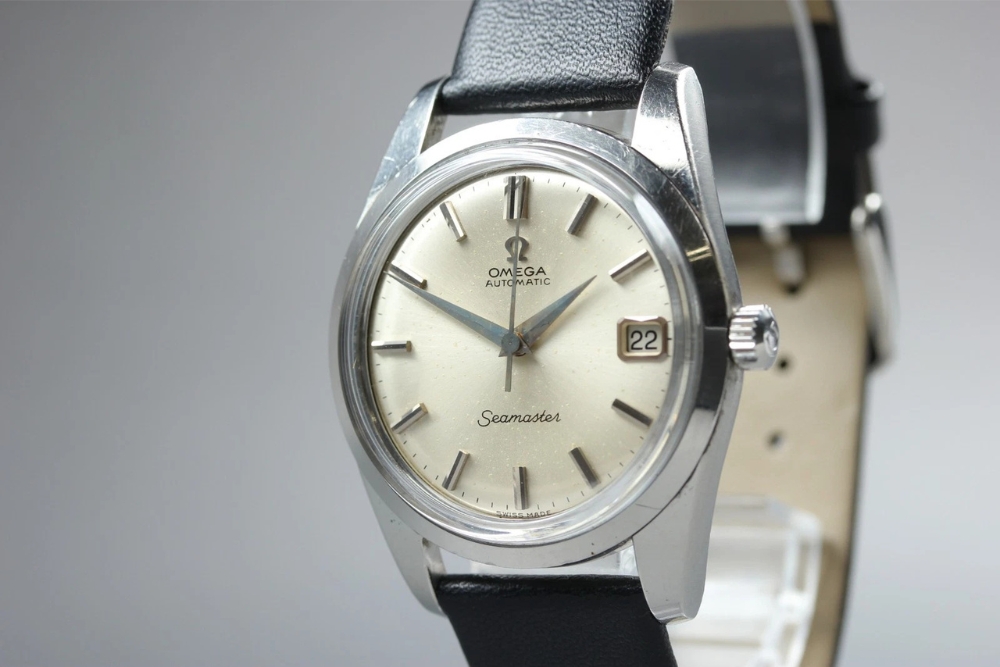
Another watch that tends to hide in a jewelry box or a desk drawer. The Seamaster with a date window, reference 166.010 or 166.003, runs on the 562 or 565 automatic movement and comes in a steel case around 35 to 37 millimeters. A clean, running example with its original dial usually brings $700 to $1,300, and a good one with a crisp dial can go higher.
The details matter. Look for a sharp seahorse emblem on the case back, a reference stamped inside the case back that matches the model, and a dial that looks its age. A dial that looks suspiciously fresh may have been repainted, which cuts the price. Versions in gold plate or gold cap are worth far less, and a gold-plated 166.003 sells for a few hundred dollars at best.
The dressier Seamaster De Ville from the same years is a different story, because plain ones often land well under $700. A watch that doesn’t run, or is sold as spares or repair, is worth a few hundred dollars at most. Scratched cases, spotted dials and replacement straps are what most found watches look like, so be realistic before you pay for a service.
Whatever turns up, leave it uncleaned and unrepaired until someone who knows it has taken a look. A well-meant polish has erased more value than any basement ever did.











