A raise feels like a fresh start for your budget, and for a few weeks it usually is. Then the grocery order gets a little bigger, the lease comes up for renewal at a higher rate, and a couple of new subscriptions appear, and by the next review the extra money has been absorbed into everyday spending without you ever deciding where it should go. This gradual rise in spending as income grows is known as lifestyle creep, and it shows up at almost every income level.
National figures show how thin the margin has become for many households. Americans saved just 3.8% of their disposable income in September 2026, according to the Bureau of Economic Analysis. Goldman Sachs Asset Management’s 2026 retirement survey found that 36.6% of households earning more than $500,000 said they primarily live paycheck to paycheck, compared with 22.2% of households earning $100,000 to $200,000, according to Fortune’s report on the findings.
The survey defined living paycheck to paycheck as finding it tough to make progress on long-term financial goals, so those households aren’t necessarily struggling to pay their bills. The finding still shows that earning more doesn’t automatically leave you with more to save. The 18 ideas below are practical ways to keep more of what you earn, whether you’ve just had a raise or you’re trying to work out where the last one went.
Table of contents
- 1. Find out what you were spending before your raise
- 2. Decide how to split every raise before it arrives
- 3. Automate the savings on payday
- 4. Wait 30 days before any upgrade that comes with a monthly bill
- 5. Audit your subscriptions every quarter
- 6. Rotate streaming services instead of stacking them
- 7. Keep your car payment close to what it was
- 8. Hold off on moving to a more expensive home
- 9. Set a monthly number for takeout and delivery
- 10. Check whether your convenience memberships still pay off
- 11. Put part of every raise toward high-interest debt
- 12. Fill your emergency fund before you upgrade
- 13. Ask whether you’d buy it at your old salary
- 14. Watch the small upgrades in everyday buying
- 15. Spend on experiences and other people
- 16. Choose who you compare yourself to
- 17. Give yourself a fun money allowance
- 18. Review your budget every time your income changes
- Final thoughts
1. Find out what you were spending before your raise

Spotting creep starts with a baseline. Pull your bank and credit card statements for the three months before your raise, or for a typical recent stretch if the raise was a while ago, and sort the spending into housing, transportation, food, subscriptions, debt payments and everything else. Do the same for the most recent three months and compare the categories side by side. The categories that grew the most show where your raise has been going, and seeing the exact dollar difference is usually more convincing than a vague feeling that you’re spending more. A basic spreadsheet does the job, and so does the budgeting app you already use.
2. Decide how to split every raise before it arrives

Morningstar’s research on raises suggests saving at least a third of the extra take-home pay, and it offers a second rule of thumb of saving your age as a percentage of the raise, so a 40-year-old would save 40%. Writer Nick Maggiulli worked out that someone who saves 10% of their income now would need to save about 36% of each raise to retire on the same timetable, and that share rises to 48% for someone who already saves 20%. A simple option is half and half, which leaves real money to enjoy. On a raise worth $5,000 a year after tax, that puts $2,500 toward savings and leaves $2,500 to spend. If you share finances with a partner, agree on the split together before the first bigger paycheck arrives.
3. Automate the savings on payday
Whatever split you choose, move the saving part automatically so it never sits in checking long enough to get spent. Schedule a transfer to savings or a brokerage account for the day after each paycheck lands, and raise your 401(k) contribution before the first bigger paycheck arrives. Raising your contribution by half the percentage of your raise is one easy method, so a 4% raise would mean adding 2 percentage points, and since traditional contributions come out before income tax, your take-home pay still goes up a little. The IRS set the 2026 employee contribution limit for 401(k) plans at $24,500, which leaves room to increase contributions for anyone who isn’t close to that figure yet.
4. Wait 30 days before any upgrade that comes with a monthly bill
A one-time splurge is easy to absorb, but an upgrade with a recurring cost, such as a higher-tier phone plan, a pricier gym or a bigger apartment, keeps charging you every month after the novelty has worn off. Psychologists call this tendency to get used to improvements hedonic adaptation, and it explains why a new upgrade soon becomes your normal. A 30-day wait gives the initial excitement time to settle, so if you still want the upgrade after a month you’ll be choosing it with a clearer head. It also helps to write the cost as a yearly figure, since $85 a month adds up to $1,020 a year, and the larger number is harder to wave away.
5. Audit your subscriptions every quarter

The average American now spends $111 a month on subscriptions, which comes to $1,332 a year and is up 23% from last year, according to CNET’s annual subscription survey. The same survey found that people waste about $252 a year on subscriptions they don’t use. Set a reminder every three months to go through your bank and card statements line by line, cancel anything you haven’t touched recently, and put the end date of any free trial on your calendar so it can’t convert to a paid plan without you noticing.
6. Rotate streaming services instead of stacking them
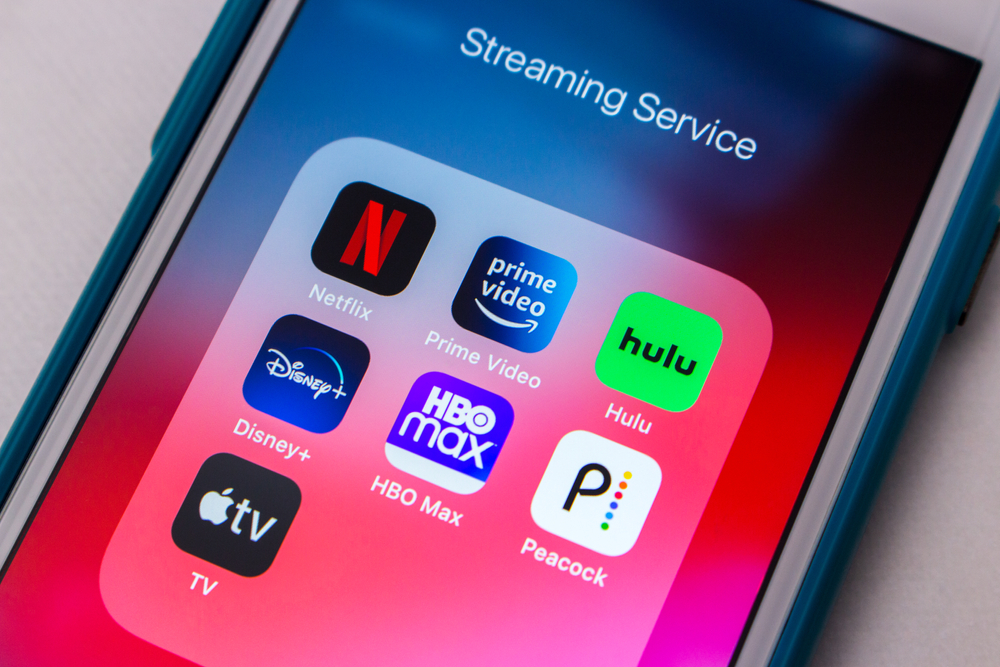
Prices keep creeping up on their own, which makes stacking services costly. CNET reports that eight video and music streaming platforms have raised their prices since the start of 2026, including $2 a month increases for standard Netflix and YouTube Premium. Digital Content Next’s second-quarter tracking report found that average monthly household spending on digital subscriptions rose 10.6% to $169.70, driven mostly by higher prices rather than more services. CNET’s consumer insights editor, Dashia Milden, recommends a rotate and pause approach, which means waiting until a full season of a show is out, watching it over a few days and canceling before the next billing cycle. Free services such as Pluto and Tubi can fill some of the gaps.
7. Keep your car payment close to what it was

New-car payments have reached levels that can absorb most of a raise. Edmunds data shows the average monthly payment on a financed new vehicle hit a record $787 in the third quarter of 2026, and the average amount financed reached a record $44,664 on loans that run about 70 months. If your current car runs well, the least expensive upgrade is often to keep it. When you do need a replacement, set the new payment at or below the old one and consider a late-model used car, since Edmunds put the average used-car payment at $582 a month in the same quarter, which is $205 less than the average for a new vehicle.
8. Hold off on moving to a more expensive home

Housing is usually the biggest item in a budget, and a pricier place is one of the hardest upgrades to undo because of leases, moving costs and, for buyers, closing costs. If you do want to move, set a ceiling on housing as a share of your take-home pay before you start looking, and keep to it even when a nicer place is only slightly over. A $300 increase in monthly rent adds up to $3,600 a year, which is more than the pre-tax value of a 3% raise on a $100,000 salary. Staying where you are for a year after a raise also lets you build a larger deposit or cushion before taking on the higher monthly cost.
9. Set a monthly number for takeout and delivery

A FinanceBuzz survey of 2,000 American adults, conducted with Bank of America in August 2026, found that 97% had used at least one convenience service in the last month, such as food delivery, takeout or grocery delivery, and 52% said their convenience spending had gone up compared with five years ago. Because these costs arrive in small orders, they’re easy to underestimate. Choose a monthly amount for restaurant, takeout and delivery spending, keep it on a separate debit card or in its own account, and watch the balance through the month. Once it’s gone, cooking at home covers the rest of the month, and the full amount resets on the first.
10. Check whether your convenience memberships still pay off

The same survey found that 85% of respondents pay for at least one convenience membership, averaging $22 a month, or $264 a year. A delivery pass only saves money when you order often enough to offset its price. If a $10 monthly membership waives $4 in delivery fees on each order, you need at least three orders a month just to break even. Look back at your last three months of orders, count how many qualified for the benefit and cancel the membership if the total savings came to less than what you paid for it.
11. Put part of every raise toward high-interest debt
Interest charges take a share of every raise for as long as a card balance stays on the books. Bankrate’s weekly figures put the average credit card interest rate at 19.67% in mid-October, and a $5,000 balance at 20% APR with only minimum payments would take about 23 years to clear and cost around $7,723 in interest, according to Bankrate’s calculator. Sending part of each raise to the card with the highest rate works out to a guaranteed return equal to the interest you stop paying, which is hard to match with a savings account. Once a card is paid off, redirect the old payment into savings so that the money keeps working for you instead of drifting back into spending.
12. Fill your emergency fund before you upgrade

A cushion is what keeps a surprise bill from landing on a credit card. A Bankrate survey conducted in December 2025 found that 29% of Americans had more credit card debt than emergency savings and that 58% said their emergency savings had not grown over the past year. The Federal Reserve’s 2025 household survey, published in May 2026, found that 63% of adults could cover a $400 emergency expense using cash or its equivalent. Bankrate analyst Stephen Kates noted that rising income is the biggest factor in building emergency savings over time, which makes a raise a natural moment to build one. Put the savings half of your next raise into a separate high-yield account until it holds at least a few months of essential expenses.
13. Ask whether you’d buy it at your old salary

Before you commit to a new regular expense, ask whether you would sign up for it if you were still earning what you earned two years ago. If the answer is yes, the expense probably has real value to you, and if the answer is no, you may be buying it mainly because the money is there. Something you wouldn’t have chosen at your old salary can still be a reasonable purchase, provided it fits within the portion of your raise that you’ve set aside for spending and doesn’t take anything from the savings portion.
14. Watch the small upgrades in everyday buying

Big purchases get attention, but small upgrades add up quietly. Examples include the name-brand version of everything in the grocery cart, a daily coffee shop order, a premium tier of an app that costs a couple of dollars more and a nicer brand of toiletries. Instead of trying to hold every category at its old level, choose two or three where better quality makes a noticeable difference to you, such as a good mattress or running shoes that suit your feet, and keep the rest at the level you were buying before the raise.
15. Spend on experiences and other people

Psychologists Elizabeth Dunn, Daniel Gilbert and Timothy Wilson reviewed research on how people get the most happiness from their money, and their findings point to three habits that tend to pay off, which are buying experiences rather than objects, spending on other people and choosing frequent small pleasures over one large purchase. Putting a share of your fun spending toward a weekend away, a class, dinner with a friend or a gift for someone else tends to hold its value longer than a gadget you’ll stop noticing within a few months.
16. Choose who you compare yourself to

Satisfaction with income is substantially relative, which means that when your pay rises, the people you compare yourself with often shift upward as well, and what felt like plenty can start to feel ordinary. Social media can make this worse by showing other people’s best purchases every day. Muting accounts that make you want to buy things, and spending more time around people whose spending fits their goals, takes some of the pressure off. It can also help to notice the moment a purchase feels urgent and ask whether you wanted the item before you saw someone else with it.
17. Give yourself a fun money allowance

A budget without room for enjoyment is hard to keep, so set aside a fixed amount each month for spending on whatever you like with no guilt attached. Funding it from the spending half of your raise keeps it tied to the split you chose in idea two, and keeping it in a separate account means you can see exactly how much is left. Once the balance reaches zero, spending in that category stops until the next deposit, and anything unspent can roll over toward a larger goal such as a trip.
18. Review your budget every time your income changes

Raises, bonuses, job changes and changes in a partner’s income each alter what you can afford, so put a budget review on your calendar for each one and add an annual check on the same date every year. Work out your savings rate by subtracting monthly expenses from monthly income and dividing the result by monthly income, then compare it with the rate you had before your last raise. If it has dropped, the category comparison from the first idea will show where the extra spending went, and you can adjust before the pattern settles in.
Final thoughts

Most of the damage from lifestyle creep comes from many reasonable-seeming decisions added together, so the fixes that last are the ones set up in advance. Deciding on a split for your next raise, automating the savings portion and checking your statements every quarter will do more than relying on willpower in the moment. Pick two or three ideas from this list that fit your situation and put them in place before your next paycheck, then come back for more once those feel routine.