
Every few weeks another company blames a round of layoffs on artificial intelligence, and the panic spreads through group chats and LinkedIn in about a day. People start searching for which jobs are actually safe, not safe in some vague, reassuring way, safe because a chatbot cannot physically do the work.
Federal, state and local governments together employ more than 20 million people, and a strange number of those jobs never came up in a single one of those AI panic threads. Nobody is training a model to climb a utility pole in an ice storm, talk a jet down through fog, or crawl into a flooded trench to find a cracked pipe. Some of these jobs pay badly and some pay extremely well, but nearly all of them still come with something private industry mostly phased out years ago: a real pension, cheap health insurance, and in a lot of cases a union contract.
Start with the one that pays the most, because the number alone is worth knowing before anything else.
Air traffic controller

Air traffic controllers took home a median $148,080 a year as of May 2025, which puts the job near the very top of the federal pay scale. Getting there means a stretch at the FAA Academy in Oklahoma City followed by more than two years of additional training at a complex facility before a controller works a busy room alone. The washout rate is high and the screening is brutal: medical exams, background checks, a skills test most people have never heard of.
The retirement rules are the real draw. Controllers can retire at 50 with 20 years of service, or at any age with 25 years in, under provisions written specifically for this job because the stress of the work does not age well. The flip side is a hard ceiling: the FAA requires every controller to retire by 56, no exceptions, no quiet extension. Almost no other federal job lets someone walk out with a full pension in their early fifties while still young enough to start a second career, and that trade is exactly why burned-out controllers rarely look back.
Wildland firefighter

Wildland firefighting used to be one of the worst-paid jobs in the federal government, with entry-level crew members sometimes earning less than a fast food shift lead. That changed when Congress built permanent raises into law instead of the temporary bonuses firefighters had been living on for years. The Department of the Interior announced permanent pay increases for federal and tribal wildland firefighters, replacing the stopgap supplements crews had been strung along with since 2021, and the same law created incident response premium pay for anyone deployed to a major fire for an extended stretch.
The pay keeps climbing from there. A 25 percent hazard pay bump for hours worked on prescribed, planned burns was proposed in 2026, stacking on top of the hazard pay firefighters already collect for unplanned wildfires. It is still dangerous, seasonal, physical work that pulls people away from home for weeks at a stretch, and nobody is pretending otherwise. But between the base pay fix and the new premium pay structure, a crew member who sticks out a full season now walks away with real money instead of a stipend that barely covered gas.
Water treatment plant operator

Nobody grows up wanting to run a water treatment plant, which is exactly why there is a standing shortage of people qualified to do it. Operators monitor the equipment that turns river water into something safe to drink and turns sewage back into something safe to release, and the median worker in the field earns $60,020 a year as of May 2025. Entry usually requires nothing more than a high school diploma and a state license earned on the job, which makes this one of the few government careers with real pay and almost no upfront schooling cost.
Most operators work for local government, which employs roughly three out of every four people in the field, meaning this is usually a city or county job with a pension attached, not a private contractor gig. The occupation is expected to shrink slightly as plants automate more of their monitoring, but openings are still projected to average about 10,000 a year over the next decade, almost all of them created by retirements rather than growth. Someone has to be on call when a plant alarm goes off at 3 a.m., and that someone gets paid accordingly.
Correctional officer

Correctional officer pay varies wildly by state, but the national median sits at $57,950 a year, and federal officers working for the Bureau of Prisons routinely earn more once locality pay kicks in. The work is hard to romanticize: officers supervise incarcerated people inside prisons and jails, break up fights, and work rotating shifts most people would not choose voluntarily. Employment is projected to decline 7 percent over the next decade, but turnover is so high the field still needs roughly 30,000 new hires every year just to stay staffed.
What keeps people in the job long enough to collect a pension is the benefits package, not the base pay. North Carolina’s state prison system, a fairly typical example, offers health insurance starting at fifty dollars a month and a pension where the state contributes nearly 23 percent of salary against a 6 percent employee share. Stack overtime and shift differential pay on top of that, and a correctional officer who sticks around for a full career retires with something most private-sector jobs stopped offering a generation ago.
Electric utility lineworker
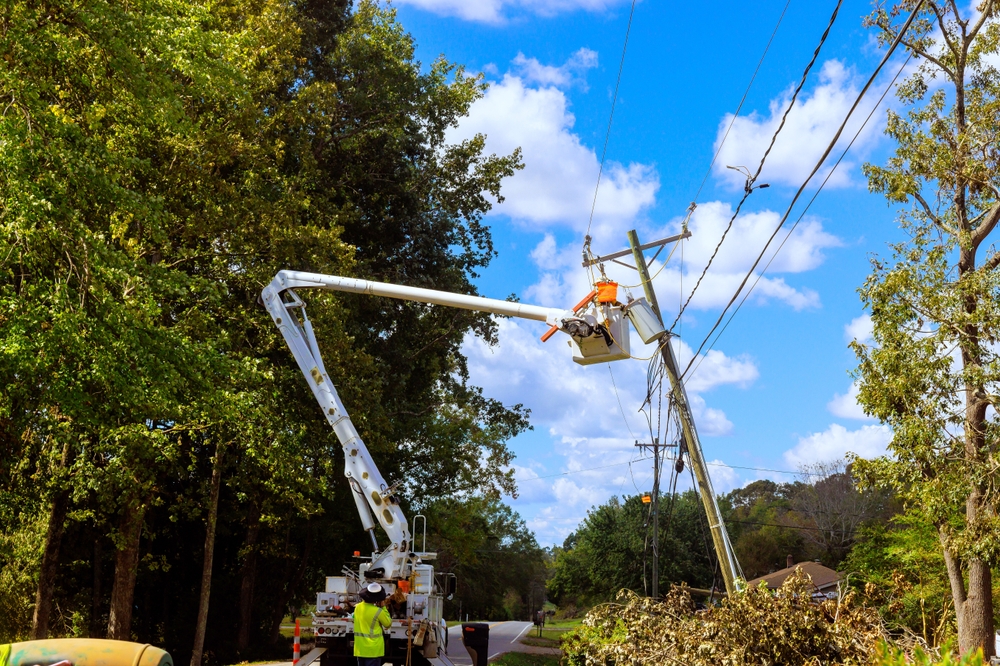
Linemen and linewomen build and repair the power grid, which means climbing utility poles in whatever weather just knocked the power out, not waiting for a nicer day. The median lineworker earned $95,320 a year as of May 2025, and the federal government specifically pays even better, with federally employed lineworkers earning a median of $111,900. Getting there usually means a paid apprenticeship of up to three years combining classroom instruction with supervised fieldwork, not a four-year degree and a pile of student debt.
This is also one of the rare blue collar fields expected to boom rather than shrink. Employment is projected to grow 10 percent over the next decade, much faster than average, driven partly by the data centers and AI infrastructure straining the power grid they run on. There is a dark irony in a job protected by the same technology boom wiping out other careers, but a lineworker on a public utility crew does not have to care about the irony. They have a union, a pension, and storm pay, and none of that changes because a server farm two towns over needs more electricity.
TSA security officer

For the first two decades of its existence, the Transportation Security Administration was infamous for paying screeners less than a part-time retail job while asking them to do actually stressful, safety-critical work. That changed with the agency’s first full collective bargaining agreement, negotiated with the American Federation of Government Employees, which brought a 30 percent pay increase to Transportation Security Officers, finally putting them in line with other federal workers after years of being excluded from the standard federal pay scale.
That contract also gave officers collective bargaining rights other federal employees had taken for granted for decades, plus access to the Federal Employees Retirement System, which combines a modest pension with Social Security and a 401k-style savings plan. Screening bags and patting down travelers is not glamorous work, and most people walking through security do not think twice about the person on the other side of the belt. But the pay fix plus a real federal retirement plan turned what used to be one of the worst jobs in government into something stable, and the agency’s chronic turnover problem has eased because of it.
National cemetery caretaker

The National Cemetery Administration maintains 155 national cemeteries that serve as the final resting place for veterans and their families, and someone has to keep the grounds right. Cemetery caretakers mow, dig graves, plant trees, and in many roles help coordinate burial services with grieving families, all under the federal wage grade system, which typically runs from WG-5 through WG-9 depending on experience and location. It is physical, outdoor work in every kind of weather, and the agency has a standing rule that a cemetery cannot stay closed for more than two consecutive days, so the job rarely slows down.
What makes it worth a second look is the same federal benefits package every other civil servant gets: the Federal Employees Retirement System pension, access to the Thrift Savings Plan, and federal health insurance that costs a fraction of a private-sector plan. It is not a career most people think to search for, and that is exactly the point of this list. A caretaker who stays twenty or thirty years retires with a pension most private landscaping companies have never heard of, let alone offered.
Currency production worker

The Bureau of Engraving and Printing, part of the Treasury Department, physically prints American paper money, and it employs thousands of people to run the presses, cut the sheets, and ship the finished currency to the Federal Reserve. New hires go through an extensive background check before they are allowed anywhere near a press, for obvious reasons, but the production jobs themselves require no college degree, just the ability to run industrial printing equipment safely and accurately.
The bureau is direct about why people stay: every eligible worker gets the standard Federal Employees Health Benefits program and a Thrift Savings Plan retirement account, the same government 401k equivalent offered everywhere else in federal service. There is also something to be said for a job where you can say, honestly, that you print the country’s money for a living. Few government jobs come with a better icebreaker at a dinner party, and the benefits underneath the novelty hold up just as well.
Transit and bus mechanic

City buses, school buses and garbage trucks all run on diesel engines that need someone qualified to keep them on the road, and that someone earns a median $61,770 a year as of May 2025. Local government pays the best of any employer in the field, with public sector mechanics earning a median of $71,460, well above what a private repair shop typically offers for the same skill set.
Demand is not going anywhere, with roughly 24,400 openings projected every year over the next decade, mostly from older technicians retiring out of a trade that still runs almost entirely on hands, tools and diagnostic software rather than anything that can be done remotely. Most transit authorities train apprentices on the job and pay for certifications along the way, so the path in does not require taking on debt first. A mechanic who keeps a city’s entire bus fleet running through a Midwest winter is doing work that affects thousands of commuters every single morning, and the public sector has started paying like it understands that.
Emergency dispatcher

Answering 911 calls is first-responder work even though most people do not think of dispatchers that way, and the median public safety telecommunicator earned $53,040 a year as of May 2025. State government positions pay noticeably better, with a median of $60,840, which is worth knowing if a county job and a state job both show up in the same search.
The job itself is intense: staying calm while a caller describes a car accident or a house fire, coordinating police, fire and ambulance crews in real time, and doing it on rotating shifts because emergencies do not stop at 5 p.m. Openings are expected to grow 4 percent over the next decade, about average, with roughly 9,000 positions opening every year as the current workforce ages out. Nothing is going to talk someone through CPR while police are still three minutes out, which is exactly why this job has stayed firmly human and firmly government.
Child protective services caseworker

Child protective services caseworkers investigate reports of abuse and neglect, and the job is as emotionally heavy as it sounds, but it is also one of the more overlooked paths into a stable government career with real loan relief attached. New York City, for example, starts Child Protective Specialists at $58,984, with an automatic raise to $64,059 after just six months on the job, a faster pay bump than most entry-level government roles offer.
Most states require only a bachelor’s degree, not a master’s, to start in the field, and the position almost always qualifies for Public Service Loan Forgiveness, which erases remaining federal student debt after ten years of qualifying payments. New York’s caseworkers are also part of DC 37, the city’s largest public employee union, which brings grievance protection and bargaining power a private sector case manager job rarely offers. It is draining work, and nobody should take it on without eyes open about that. But between the loan forgiveness, the union protection and the fact that this work cannot be handed to software, it is a more financially sound entry point into social work than most people realize.
Fish and game warden

Game wardens patrol forests, lakes and hunting grounds enforcing wildlife and boating law, which sounds like a nature walk until you remember they are also sworn law enforcement officers who carry a badge and make arrests. The median conservation officer earned $74,060 a year as of May 2025, putting the job well ahead of most entry-level law enforcement positions, state trooper included in a lot of states.
Most states require a bachelor’s degree, often in wildlife biology, natural resources or criminal justice, followed by a law enforcement academy similar to the one municipal police attend. State wildlife agencies employ the overwhelming majority of wardens and typically offer a defined-benefit pension through the state retirement system, plus a take-home patrol vehicle in many agencies, which quietly saves an officer thousands of dollars a year. It is a strange hybrid of outdoor biology work and armed law enforcement, and that combination is part of why the field stays competitive even in states that do not pay especially well.
Lock and dam operator
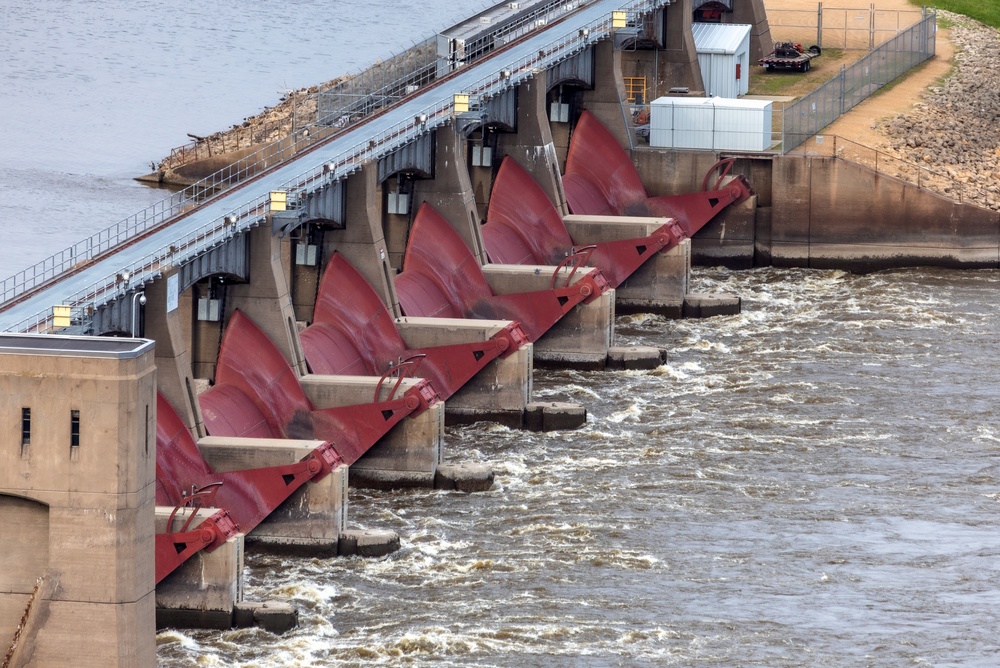
Barges carrying grain, coal and fuel move up and down America’s rivers through a system of locks that raise and lower water levels so boats can pass, and someone has to run the gates and valves by hand every time. Lock and dam operators working for the Army Corps of Engineers earned an average of $68,513 as of a March 2025 federal workforce snapshot, and the Corps employs the overwhelming majority of people in this exact occupation, so there is really only one agency to apply to.
The job runs on shift work because river traffic does not stop at night, and operators have to think several moves ahead, judging currents, lining up tow boats, and knowing exactly when a gate problem turns from an inconvenience into a real hazard. Training happens entirely on the job under a formal lock and dam operator certification program, so nobody needs a college degree or a trade school bill to get in. It is one of the more physically demanding, least advertised jobs in the entire federal government, and almost nobody outside the river towns where these facilities sit has ever heard of it.
Navy shipyard tradesperson
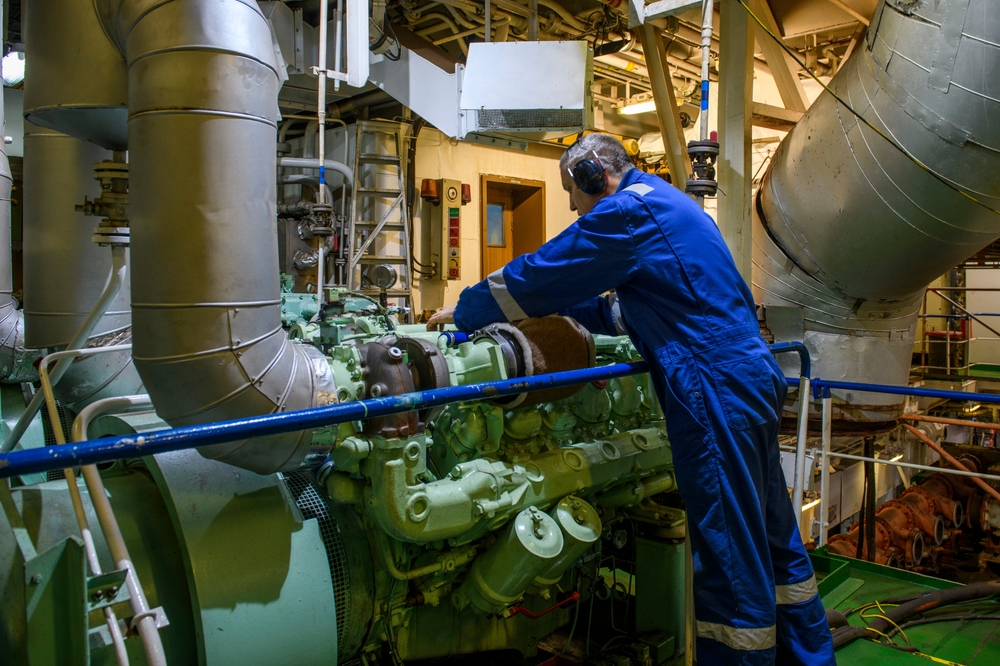
The Navy runs four public shipyards, in Virginia, Maine, Washington state and Hawaii, that maintain and overhaul the fleet, and all four run paid apprenticeship programs that train civilians as electricians, welders, pipefitters and machinists. The programs combine classroom instruction at a partner community college with real, supervised work on active Navy vessels, and apprentices earn a wage the entire time instead of taking on tuition debt to learn the trade, a setup built specifically to solve recruitment and retention problems in these hard-to-fill trades.
Graduates come out the other side as fully certified journeymen with a federal trade job waiting for them, backed by the same pension and health benefits every other federal civil servant gets. Pearl Harbor’s shipyard alone employs about six thousand civilian workers alongside its military staff, which gives a sense of how much of this work is done by people who never wore a uniform. Welding on a submarine hull is not a job anyone does from a laptop, and the Navy has built an entire pipeline around training people to do exactly that without charging them for the privilege.
Elevator and building inspector
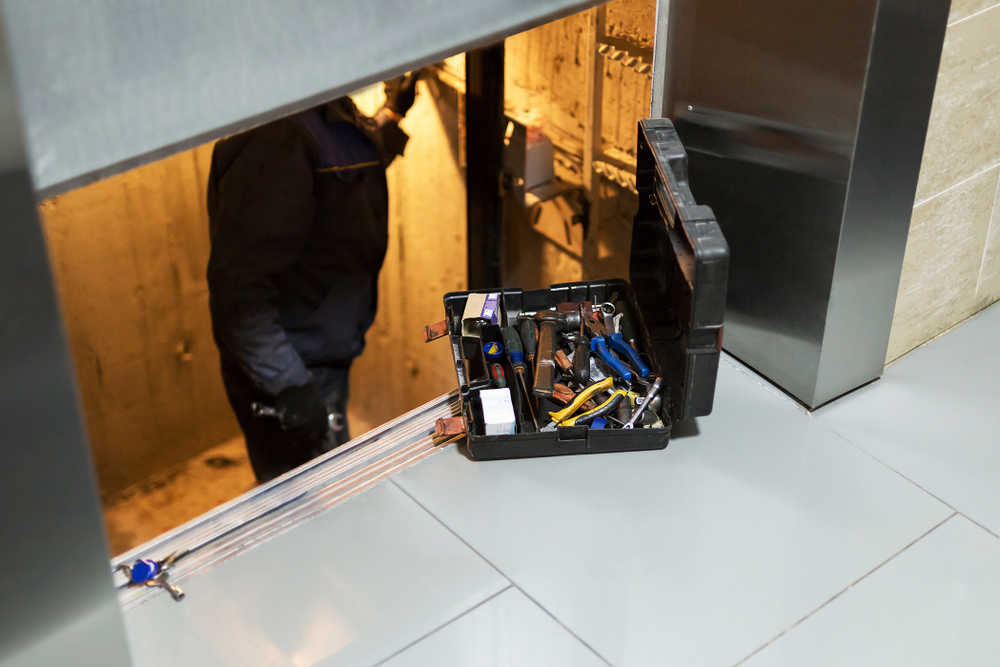
Construction and building inspectors check that new buildings, bridges and sewer systems meet code before anyone is allowed to use them, and the median inspector earned $74,690 a year as of May 2025. One specialty inside the field, elevator inspection, covers elevators, escalators, ski lifts and amusement rides, checking both the mechanical and electrical systems that keep them from failing while people are inside them, which is about as high-stakes an inspection job as government offers.
Local government employs more inspectors than any other sector, at roughly 36 percent of the field, and most people get in after years of hands-on experience as an electrician, plumber or carpenter rather than through a specific inspection degree. Growth is flat, with the job outlook showing little or no change over the next decade, but nearly 15,000 openings a year are still expected as the current, aging workforce retires. It is a second career more than a first one, and that is exactly why so few twenty-two year olds ever think to look at it.
USDA food inspector

Every piece of meat, poultry and egg product sold across state lines in the United States has been checked by a federal food safety inspector, and the Department of Agriculture is constantly hiring for the role because the work is unglamorous and the turnover is steady. Consumer safety inspectors average $73,986 a year as of a 2026 federal pay snapshot, and the agency hiring the overwhelming majority of them is the Food Safety and Inspection Service.
Entry-level inspectors can start with nothing more than a bachelor’s degree in a science field and no prior work experience, which is unusual for a federal law enforcement-adjacent role, and some postings carry a five thousand dollar signing bonus on top of standard federal benefits. The job is eligible for Public Service Loan Forgiveness, and inspectors get full federal retirement and health coverage from day one. Walking a cold, loud slaughterhouse floor all day is not for everyone, but the job protects public health in a very literal, very daily way, and nothing about checking a carcass for contamination is going anywhere near an algorithm.
Psychiatric technician

Psychiatric technicians work directly with patients in state hospitals and residential treatment facilities, monitoring behavior, administering medication under a nurse’s direction, and stepping in when a patient becomes a danger to themselves or others. The median technician earned $45,130 a year as of May 2025, which sounds modest until you look at where the job is actually growing.
Employment in the field is projected to grow 18 percent over the next decade, much faster than almost any other occupation tracked, driven by rising demand for mental health and substance abuse treatment. State-run psychiatric hospitals pay some of the best wages in the field, with aides in that setting earning a median of $48,480, and most states only require a postsecondary certificate rather than a full nursing degree to get started. It is physically and emotionally demanding work, with one of the highest injury rates of any occupation the government tracks, and that is precisely why the pay keeps climbing while plenty of less demanding desk jobs stay flat.
School bus driver

Driving a school bus pays a median of $47,920 a year as of May 2025, which is not a huge number on its own, but the job is part time by design, built around the school calendar rather than a 40 hour week, and most drivers pick up additional district work during school hours to round out their pay. A commercial driver’s license with passenger and school bus endorsements is the only real barrier to entry, and plenty of districts now pay for that training outright because the driver shortage has gotten bad enough to justify it.
The benefit that keeps drivers around long enough to matter is the pension. Districts that employ drivers directly, rather than through a private contractor, often enroll them in the same state retirement system as teachers and other school staff, the way one Michigan district now offers vested drivers a pension through the state retirement system as part of its push to fix a chronic staffing shortage. It is seasonal, part time, and nobody is getting rich. But a pension and health coverage for driving a route most people could learn in a few months is a trade a lot of people would take.
None of these jobs will make anyone famous, and a few of them involve sewage, dead bodies, or both. But they are still hiring, they still pay into a pension, and no amount of AI investment is going to change that anytime soon.











