
That brown stoneware casserole dish sitting in the back of your cabinet, the one with the little floral border you’ve never quite loved, might be worth more than you think. The same goes for the chipped rooster plate holding your junk mail, the tea set that’s been in the family since a 70s wedding registry, and the mushroom-print mug you keep meaning to donate. American potteries turned out an enormous amount of ceramic tableware, planters, and figurines during the 1970s, and a handful of imported lines sold so heavily in the US during the same decade that they’re just as likely to turn up in an American cabinet. A lot of it is now genuinely collectible.
None of the pieces below are rare in the sense of being hard to find. They were mass produced, sold through department stores and mail order catalogs, and given away as tea premiums. What makes them worth money now is that most people used them until they chipped, then threw them out. Clean, complete examples have gotten harder to come by, and a small but committed collector base has pushed prices up steadily for years.
Condition decides almost everything here. Chips, cracks, crazing, and faded glaze all cut value fast, and completeness (a lid, a matching saucer, an original box) often matters more than rarity of design.
1. Stangl Pottery “Fruit” pattern
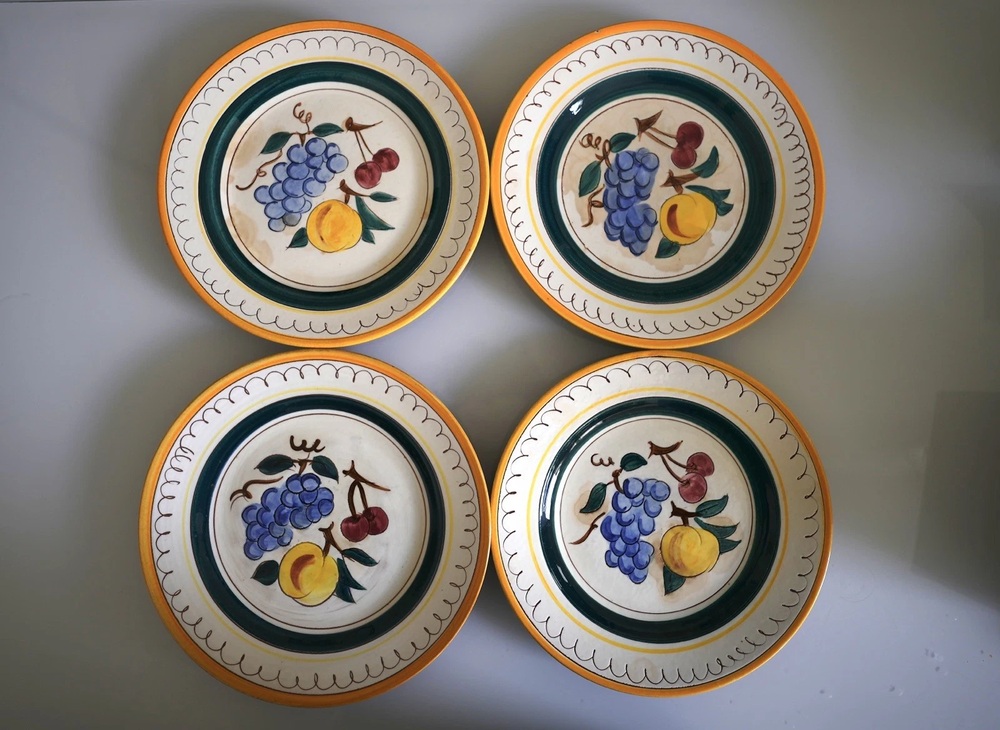
Stangl Pottery ran its hand-painted “Fruit” dinnerware pattern out of Trenton, New Jersey for decades, right up until the company closed its doors in 1978. The pattern shows cherries, grapes, and pears rendered in Stangl’s loose, folk-art brushwork over a soft cream-colored earthenware body, and it was a genuine fixture of American kitchens through the 1960s and 70s.
Individual pieces sell modestly on their own: dinner plates typically bring around $35 to $40, with salad and dessert plates closer to $14 to $15 and cups with saucers around $18 to $20 apiece. A full or nearly full place setting adds up quickly from there, and Stangl’s hand-painted bird figurines and artware from the same factory draw even stronger collector interest than the dinnerware itself.
Check the base for the “Stangl” mark along with the pattern name, usually stamped or printed directly beneath it. Because the earthenware body is fairly soft, chips to rims and bases are common, and factory seconds, marked with a scratched X or S through the backstamp, sell for roughly half of first-quality pieces. Knife marks on well-used dinner plates are typical of the era and only mildly affect value.
2. Portmeirion “Botanic Garden” dinnerware
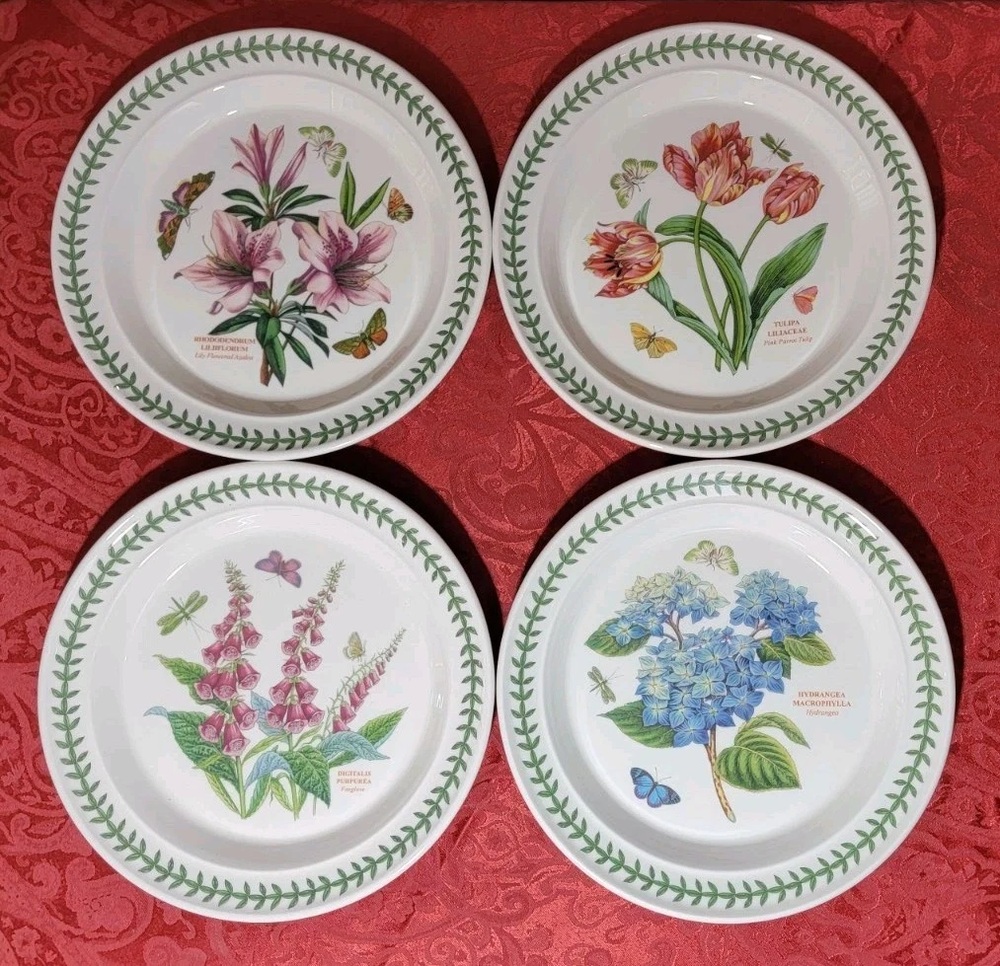
Susan Williams-Ellis designed Botanic Garden in 1972 after finding a book of antique botanical illustrations, and the mix-and-match floral plates became one of the best-selling British tableware patterns of the decade. Because it stayed in production for so long, dating a piece matters: the earliest 1970s pieces have hand-painted, slightly imperfect botanical detail, while later mass production looks crisper and more uniform.
Common individual pieces (dinner plates, mugs, small bowls) generally sell in the teens to low thirties depending on the flower motif and condition. Early 1970s serving pieces, storage jars, and anything marked with a butterfly motif tend to sell for more than plain floral plates, since collectors specifically hunt those variations. A large, complete vintage set with matching serving pieces can bring several hundred dollars.
The main thing to check is chip damage on the footed rims of bowls and platters, which is where Botanic Garden pieces take the most wear. Also look for the backstamp: early pieces read “Portmeirion” with “Made in England” and often a pattern name, while later reissues use a more modern logo. A piece with no backstamp at all is worth investigating before you assume it’s genuine.
3. Frankoma Pottery “Wagon Wheel” pattern
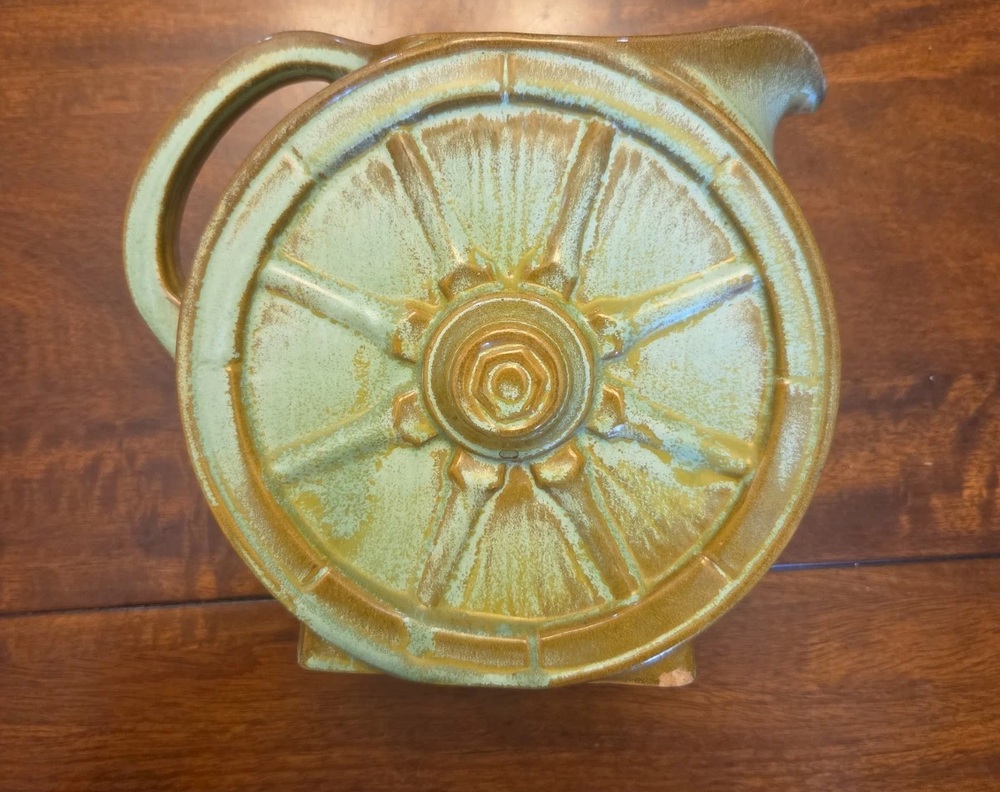
Frankoma Pottery, working out of Sapulpa, Oklahoma since the 1930s, made its Wagon Wheel dinnerware in a sage-green Prairie Green glaze that became one of the defining Southwestern-inspired kitchen looks of the 1960s and 70s. Founder John Frank died in 1973, and his daughter Joniece ran the pottery through the rest of the decade, continuing the same signature glazes and shapes.
Everyday pieces like plates, mugs, and casseroles in Wagon Wheel or the related Lazybones pattern generally sell for modest sums, and the well-known Wagon Wheel pitcher typically brings $40 to $65 in good condition. Rarer glaze combinations, especially the short-lived Flame glaze on Frankoma’s earlier cream-colored Ada clay, push considerably higher, and animal figures designed by John Frank himself (pumas, horses, and the like) are the most actively collected part of the line.
Check the base for the “Frankoma” mark along with the clay color: pieces made after 1956 use a reddish Sapulpa clay, while the earlier, scarcer Ada clay fires to a light cream color. Chips along the rim of pitchers and plates are the most common issue, and glaze crazing, while common on older Prairie Green pieces, is generally tolerated by collectors rather than treated as a serious flaw.
4. Metlox Poppytrail “California Provincial” pattern
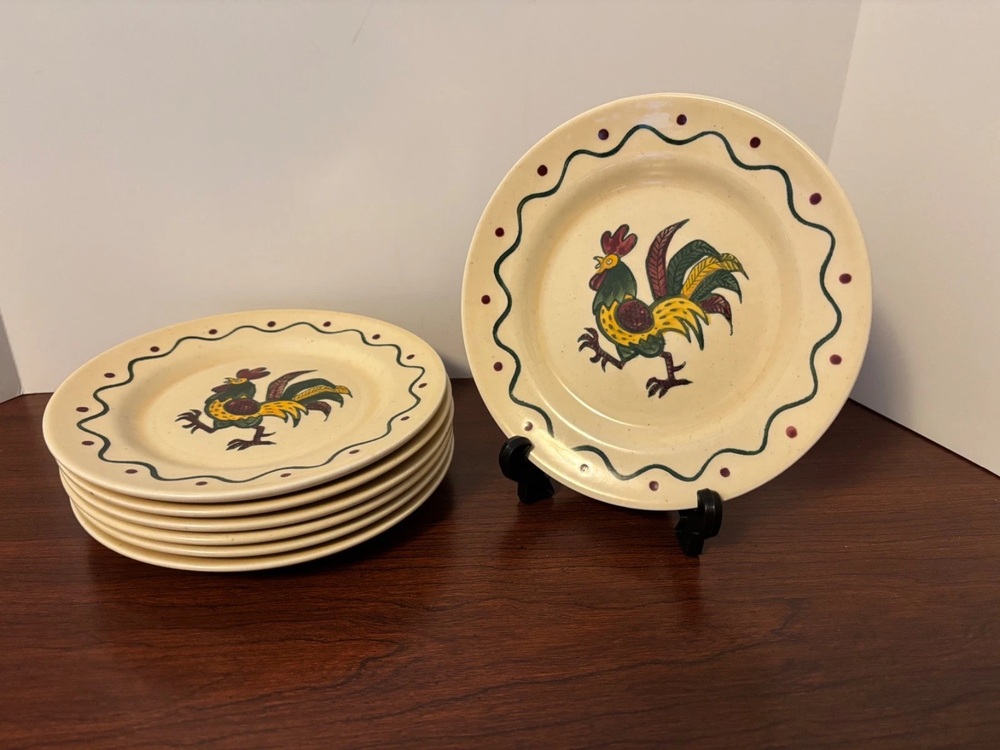
Metlox’s California Provincial pattern, better known to collectors as the Green Rooster, ran from 1956 through 1982 and was a fixture of American kitchens for a generation. The pattern shows a red, yellow, and green rooster ringed by a simple dotted border, and it was made in such enormous quantities that finding individual plates and bowls today is easy.
That volume keeps prices modest. Most individual pieces sell for well under $50, with common dinner plates and bowls often changing hands for $10 to $25. Serving pieces (the large chop plate, covered casseroles, and the rooster-shaped items) bring more, and Metlox’s California Provincial cookie jars in good condition are the most actively collected part of the line, regularly outselling the tableware.
Look at the back stamp before assuming a piece is genuine Metlox. Poppytrail marks changed over the decades, and pieces without a clear Poppytrail or Metlox stamp have much less collector interest even if the pattern looks right. Chipped rooster detail on the well-worn dinner plates (a common spot for wear, since it sits where a fork would scrape) is the main condition issue to check for.
5. Pfaltzgraff “Yorktowne” pattern
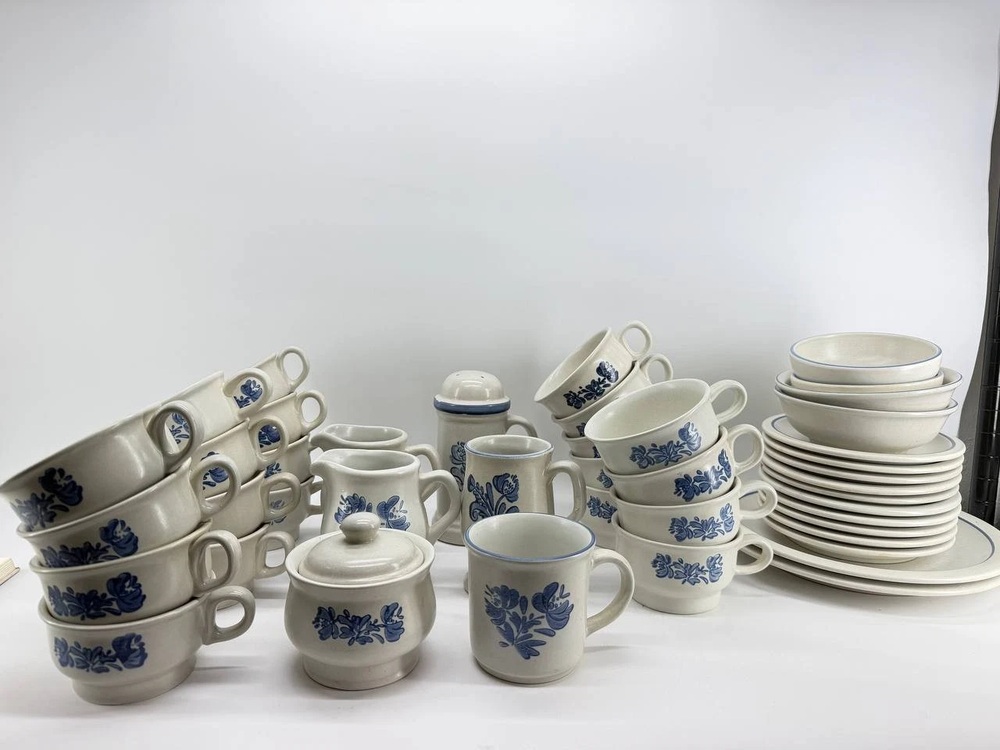
Pfaltzgraff introduced Yorktowne in 1967, a smooth gray stoneware with a hand-applied cobalt blue floral motif inspired by early American salt-glaze pottery, and it stayed in continuous production until 2007. Because it ran for four decades, Yorktowne turns up constantly at estate sales, and 1970s pieces are identified by their earlier backstamp rather than any change in the pattern itself.
Individual pieces are inexpensive on their own, often just a few dollars for a mug or bread plate. Full or nearly full sets are where the value shows up: an 8 to 12 place setting Yorktowne dinnerware set in clean condition typically brings $200 to $300. Rare Yorktowne pieces, especially the teddy bear spoon rest and other novelty shapes made only briefly, sell for considerably more than standard plates and bowls.
The base should carry the Pfaltzgraff family castle stamp, along with “Pfaltzgraff USA” or “Pfaltzgraff York, PA.” Since the company revived the Yorktowne blue floral motif on new stoneware after 2007, it’s worth comparing weight and glaze texture: original 1970s stoneware is noticeably heavier and has a slightly rougher, more matte glaze than the modern reissue.
6. Marcrest Stoneware “Daisy Dot” pattern
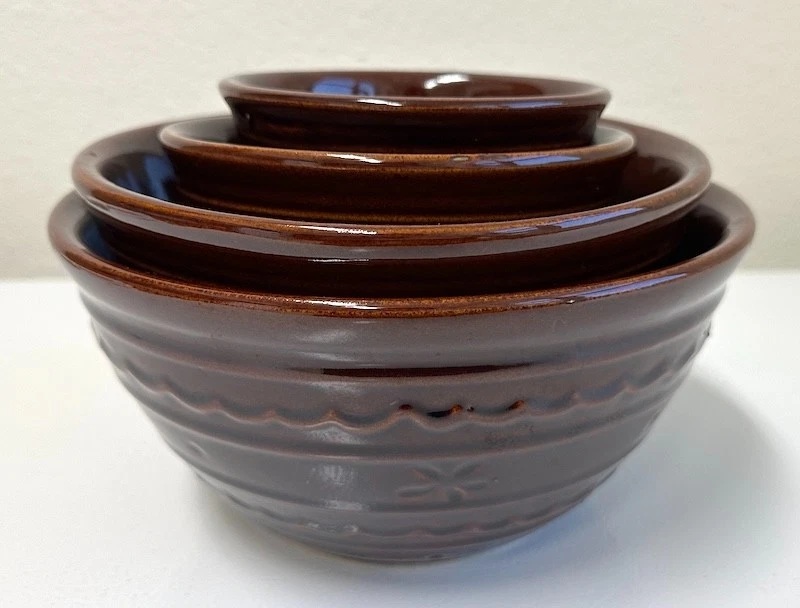
Marcrest’s Daisy Dot pattern, a warm brown glaze stamped with a simple daisy motif, was made by Western Stoneware in Monmouth, Illinois and sold widely through the 1950s, 60s, and into the 1970s under the Marcrest name. It’s an unglamorous, everyday pattern, which is exactly why it’s a realistic thing to actually find rather than chase.
Nesting mixing bowl sets are the most commonly found pieces, and complete four-bowl sets in good condition typically sell in the $40 to $70 range, with individual bowls, mugs, and pitchers usually bringing $10 to $25 each depending on size. Larger casserole dishes and cookie jars in the pattern bring more, since they show up less often than bowls and mugs.
Check the base stamp: earlier pieces read “Mar-Crest Ovenproof Stoneware USA,” while later production sometimes carries only “USA.” Chips on the pouring lips of pitchers and the rims of bowls are the most common damage, and any glaze pop (a small blister or crater in the surface) reduces value even when it doesn’t affect usability. Marcrest stoneware is heavy and thick, which makes it fairly resistant to hairline cracks compared to thinner ceramics of the same era.
7. Hull Pottery “Mirror Brown” ovenware
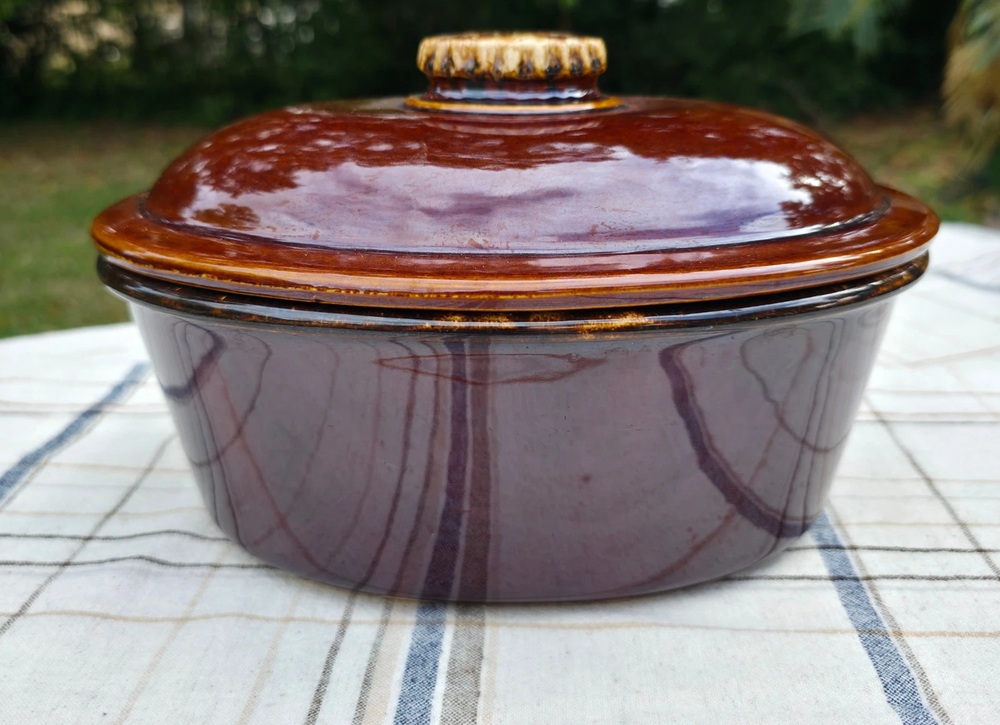
Hull Pottery’s Mirror Brown line, a glossy brown drip-glaze ovenware sold under the “House ‘n Garden” name, was one of the company’s biggest sellers through the 1960s and 1970s after Hull rebuilt following a devastating 1950 factory flood. It’s a workhorse pattern rather than a decorative one: mixing bowls, bean pots, casseroles, and gravy boats built for daily cooking rather than display.
Because Hull made Mirror Brown in such volume, most individual pieces sell for $5 to $25, with complete sets, less common shapes like the gingerbread man cookie jar, and pieces with intact lids bringing $30 to $75. A full matched set of mixing bowls or a complete chip-and-dip set commands more than the same pieces sold individually, since collectors specifically look to fill in whole services.
The base mark is the key identifier: genuine Mirror Brown ovenware reads “Hull Oven Proof U.S.A.” with a mold number, sometimes just “Hull” in cursive script within an oval. Check the interior glaze for staining and hairline crazing, both common after decades of oven use, and inspect lids carefully since a mismatched or missing lid noticeably lowers what a piece is worth.
8. Royal Haeger ceramic gazelle planter
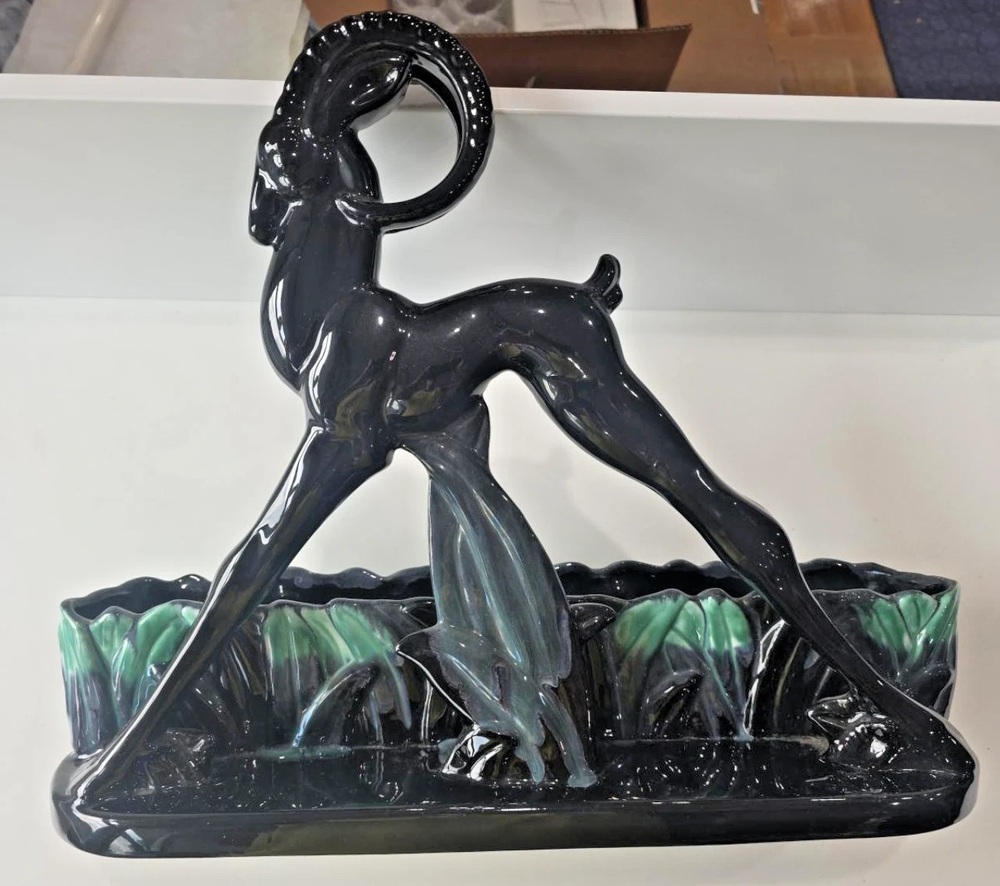
Haeger Potteries turned out an enormous range of ceramic planters, vases, and TV lamps under the Royal Haeger name, and the leaping gazelle design, produced through the 1950s into the 1970s in glazes ranging from warm gold to matte black, is one of the most recognizable shapes the company made. It doubled as a TV lamp in many American living rooms, with a small bulb built into the base.
Because so many were made, prices stay modest: most gazelle planters and lamps in good condition sell in the $10 to $75 range, with working lamps and unusual glaze colors (a mottled or crackle finish rather than a plain solid color) toward the higher end. Haeger’s more sculptural Modernist pieces from the 1970s, designed under later art directors, draw more collector interest than the standard gazelle shape.
Check the base for an embossed “Royal Haeger” or “Haeger USA” mark with a model number, since unmarked pieces are harder to authenticate and worth less even when the shape is right. If it’s wired as a lamp, test the switch and check the cord condition before assuming full value; a lamp with a cracked or replaced shade sells for noticeably less than one with its original shade intact.
9. Pigeon Forge Pottery animal figurine
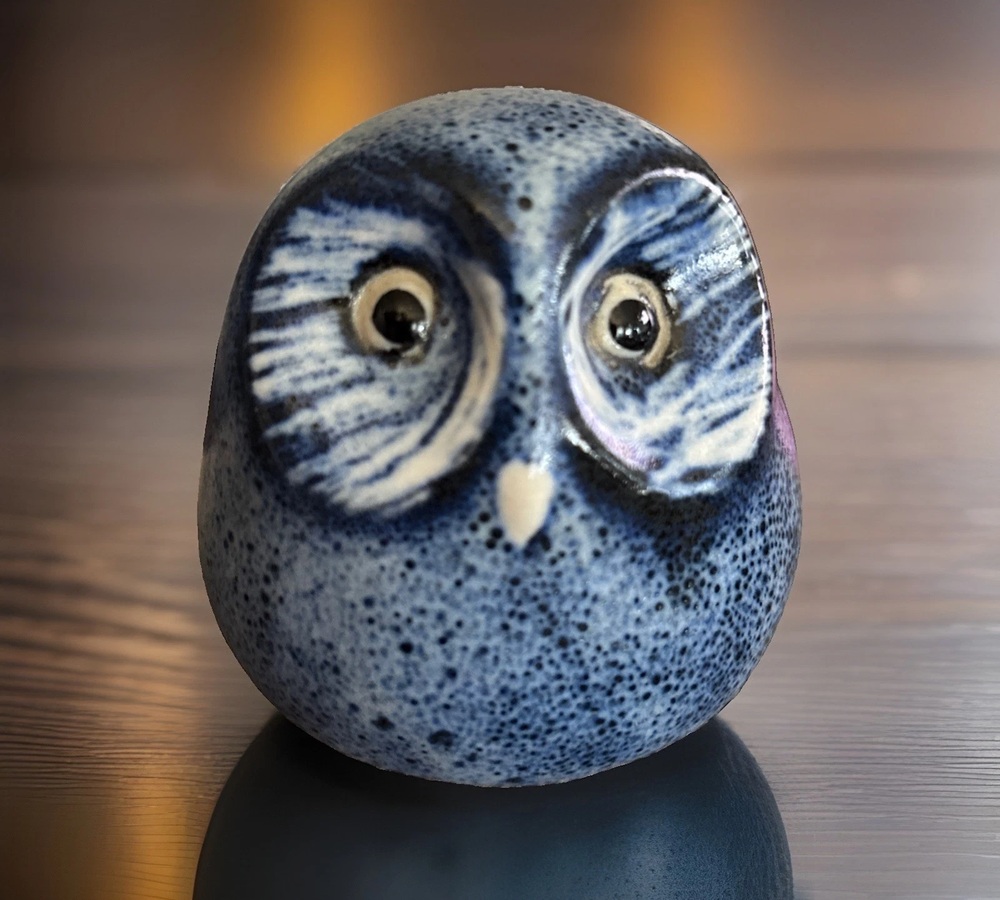
Douglas Ferguson opened Pigeon Forge Pottery in the Tennessee foothills of the Great Smoky Mountains in 1946, and it became one of the region’s defining tourist stops for the rest of the century, with visitors watching pieces get thrown on the wheel before picking out an owl, a bear, or a chipmunk to bring home. Production continued until Ferguson’s death in 2000, so pieces bought by families on 1970s road trips through Tennessee are still turning up in attics and yard sales today.
Animal figurines are the most popular and most commonly found shape, and signed examples in good condition typically sell for $30 to $75, with larger sculptural pieces and hand-thrown rather than molded work bringing more. Pieces created and signed by Douglas Ferguson himself carry the strongest collector premium within the line.
The base usually carries a stamped or incised signature, either the potter’s full name or simply “Pigeon Forge” with “Tenn.” Minor glaze skips and small firing flaws are considered part of the handcrafted character rather than defects, but chips to ears, tails, and other extending details on the animal figures reduce value the same way they would on any ceramic figurine.
10. Treasure Craft Hawaii tiki mug
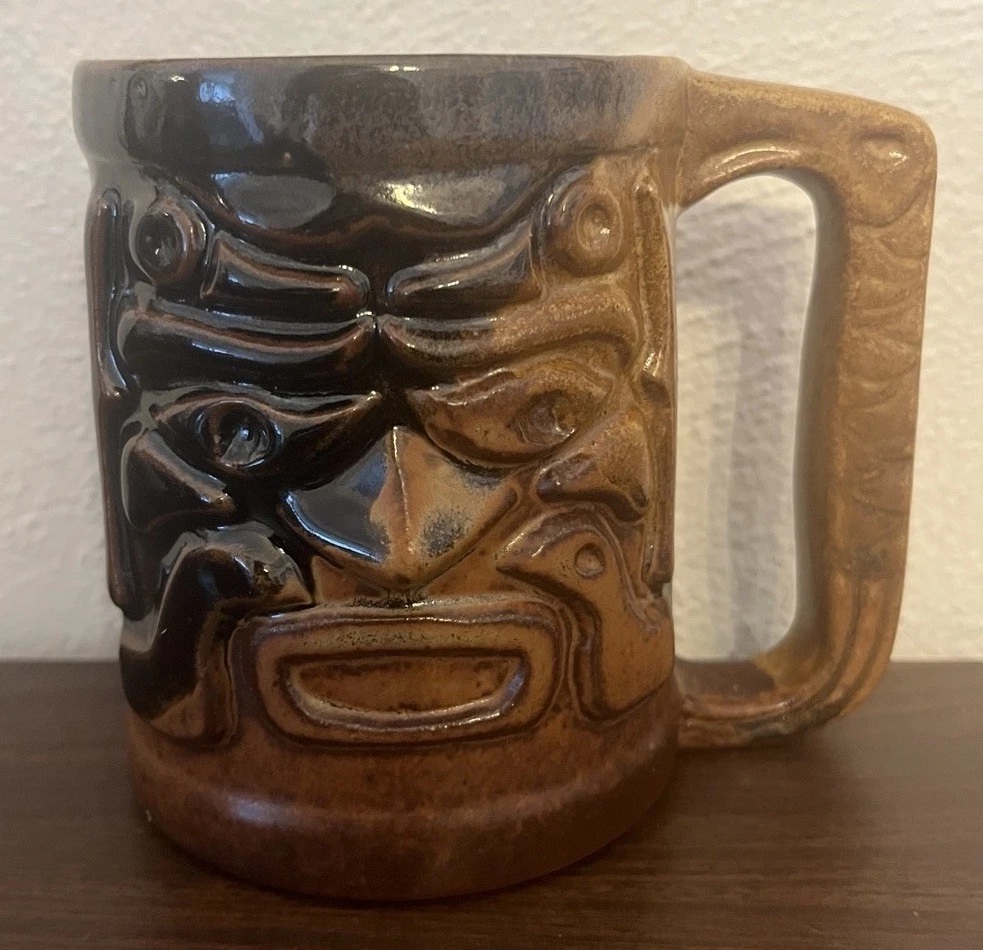
Treasure Craft of Hawaii made ceramic tiki mugs, ashtrays, and other tropical-themed drinkware from the 1950s through the 1970s, riding the wave of mainland tourism that sent visitors home with suitcases full of Polynesian-style souvenirs. The mugs, often carved with exaggerated tiki faces or tropical scrolls, were sold in gift shops and used behind the bar at Polynesian-themed restaurants across the country.
Most common Treasure Craft tiki mugs from this era, in good condition with clear detail and no chips to the carved features, sell in the $25 to $75 range, with figural mugs (full tiki heads rather than simple cylindrical shapes) toward the higher end. The rarest tiki mugs from the 1950s and 60s, made in tiny limited runs for specific bars, can bring thousands, but those are a different category from the mass-produced Treasure Craft mugs most people are likely to find.
Check the base for the Treasure Craft stamp along with “Hawaii” or “Made in Hawaii USA,” since reproductions and mugs from other makers get mislabeled as Treasure Craft often. Chips to the carved facial features hurt value more than chips to the plain handle, since the face is the whole point of the design.
11. Otagiri Mercantile Japan mushroom mug
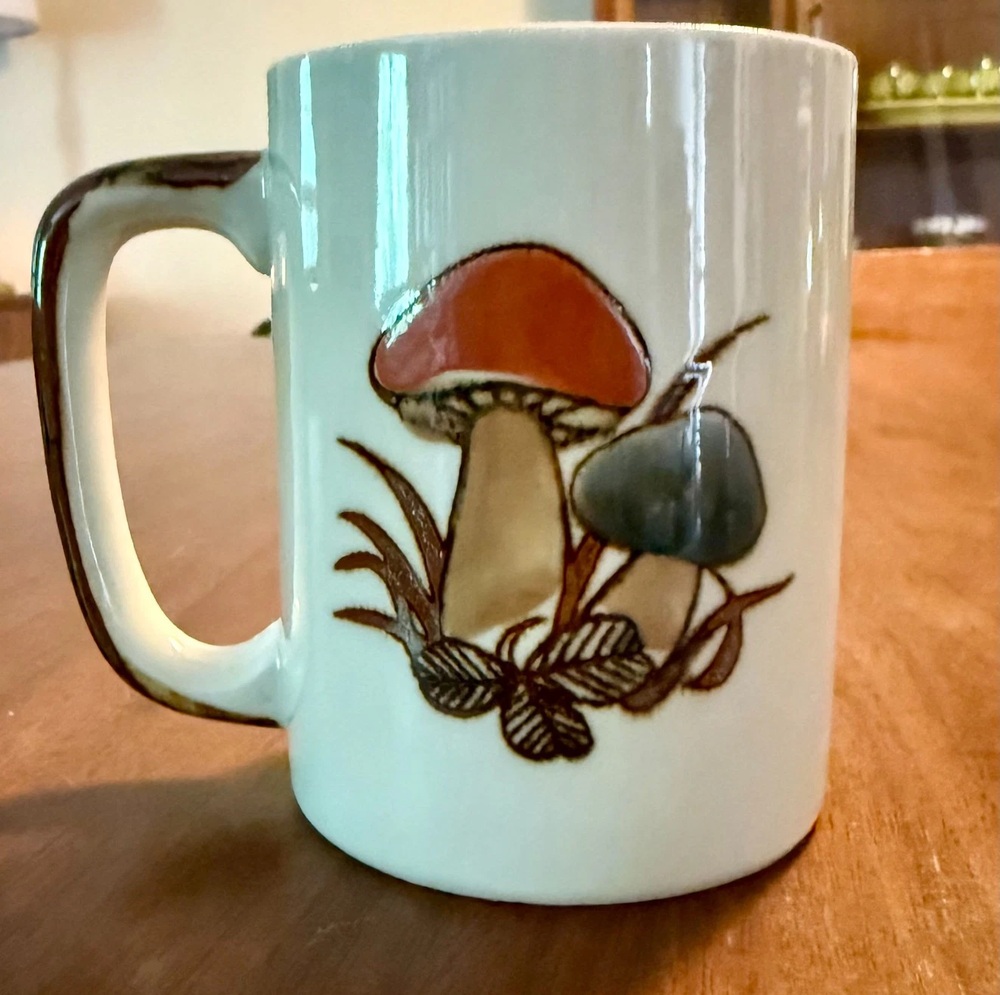
The Otagiri Mercantile Company imported hand-painted Japanese stoneware into the United States from the 1950s through the mid-1990s, and its speckled mushroom-motif mugs became one of the defining kitchen accessories of the 1970s. The mugs came in a huge range of designs beyond mushrooms too, including owls, ducks, and tropical scenes, all sharing a distinctive earthy, hand-painted look.
Most Otagiri mugs sell for between $10 and $40 depending on the design and condition, with mushroom and other nature motifs from the 1970s generally commanding more than later floral or abstract patterns. Complete or unusually large sets bring considerably more than single mugs, and one exceptionally rare complete Otagiri dinnerware set has reportedly sold for close to $3,000, though that’s far from typical.
Look for an impressed or stamped “Otagiri” mark, sometimes alongside “OMC” or “Japan,” on the base. Because Otagiri mugs were hand-painted individually, slight variation between pieces is normal and not a defect. Chips to the rim and handle are the most common damage, and crazing in the glaze, while it doesn’t always affect price much, is worth noting when buying or selling a set.
12. Goebel Hummel figurine
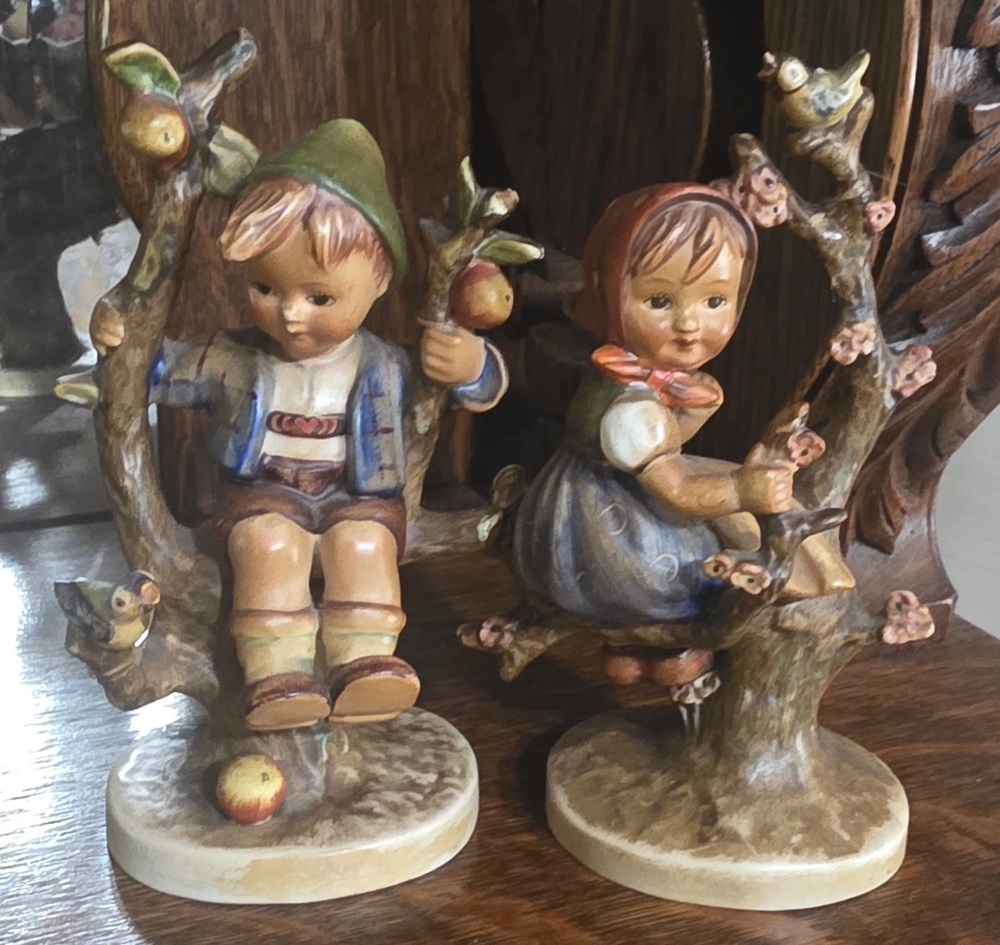
Goebel began producing M.I. Hummel figurines in 1935, based on the drawings of a German Franciscan nun, and the line became a fixture in American homes after returning servicemen brought them back from postwar Germany. Figures like Apple Tree Boy and Apple Tree Girl, showing children perched in blossoming trees, were among the most popular and widely produced designs through the 1960s and 70s.
Most common Hummel figurines from this era, in good condition with no chips to fingers, ears, or other delicate details, sell for $25 to $75, while larger or scarcer molds in excellent condition can bring several hundred dollars. The trademark stamped on the base tells you roughly when a piece was made, and earlier trademarks generally carry more collector interest than later ones, even for the same figure.
Check for hairline cracks around the base and any chipping to raised details like fingers, flower petals, or animal ears, since these are the first places to show damage and the hardest to repair invisibly. A repaired break, even a well-done one, brings the value down significantly compared to an untouched original.
13. Lladro porcelain figurine
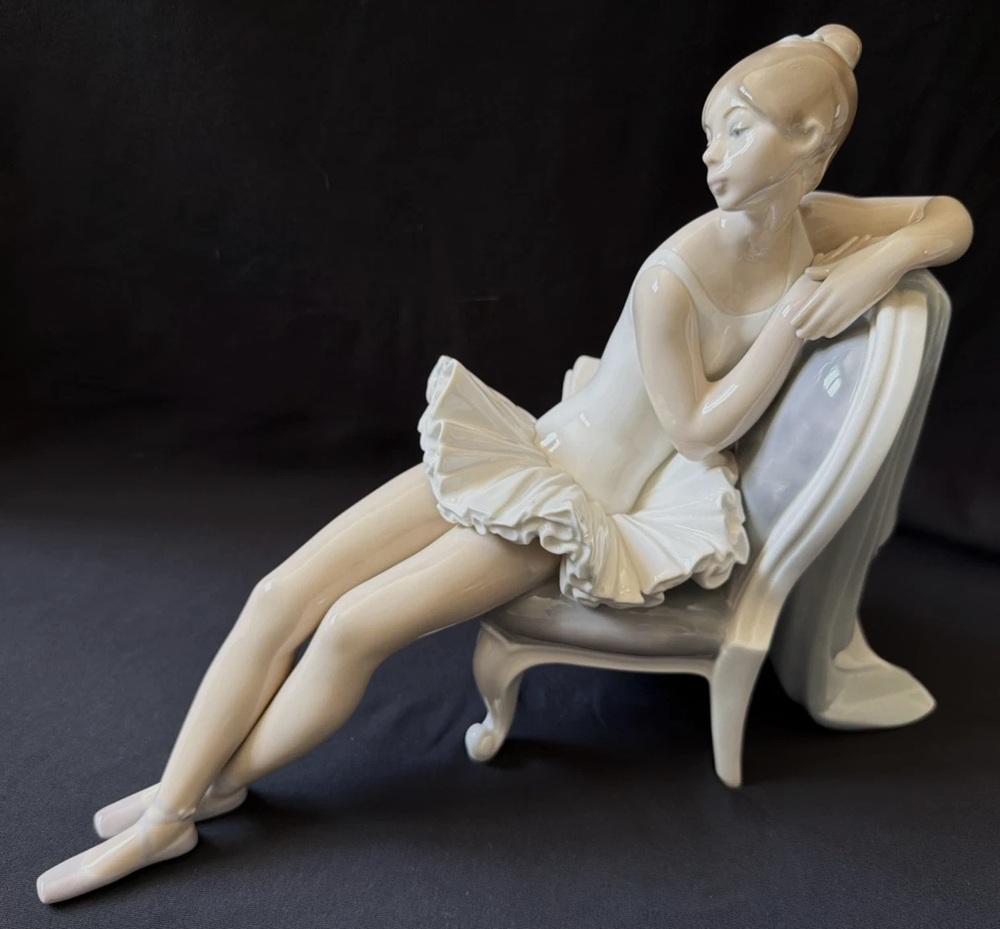
Three brothers began hand-crafting porcelain figurines in Valencia, Spain in the early 1950s, and by the 1970s Lladro had become an internationally recognized name known for tall, elegant figures in soft, muted pastel glazes. The decade also saw the introduction of the matte-finished Gres line, fired at higher temperatures with more subdued coloring than Lladro’s classic glossy pieces.
Vintage Lladro figurines from the 1970s and 1980s typically sell for $50 to $500, with common current-production pieces worth considerably less and rare limited editions or large Gres pieces bringing well beyond that range. Figural groups (multiple figures on one base) generally sell for more than single figures of comparable size and detail.
The backstamp on the base is the main way to date a piece: older 1970s figurines often carry a script-style logo, while later production uses the more familiar blue tulip mark. Because Lladro’s porcelain is delicate, check carefully for repaired fingers, flowers, or other thin extending details, since restoration is common and significantly lowers value even when it’s hard to spot at a glance.
14. Wade Whimsies miniature figurine
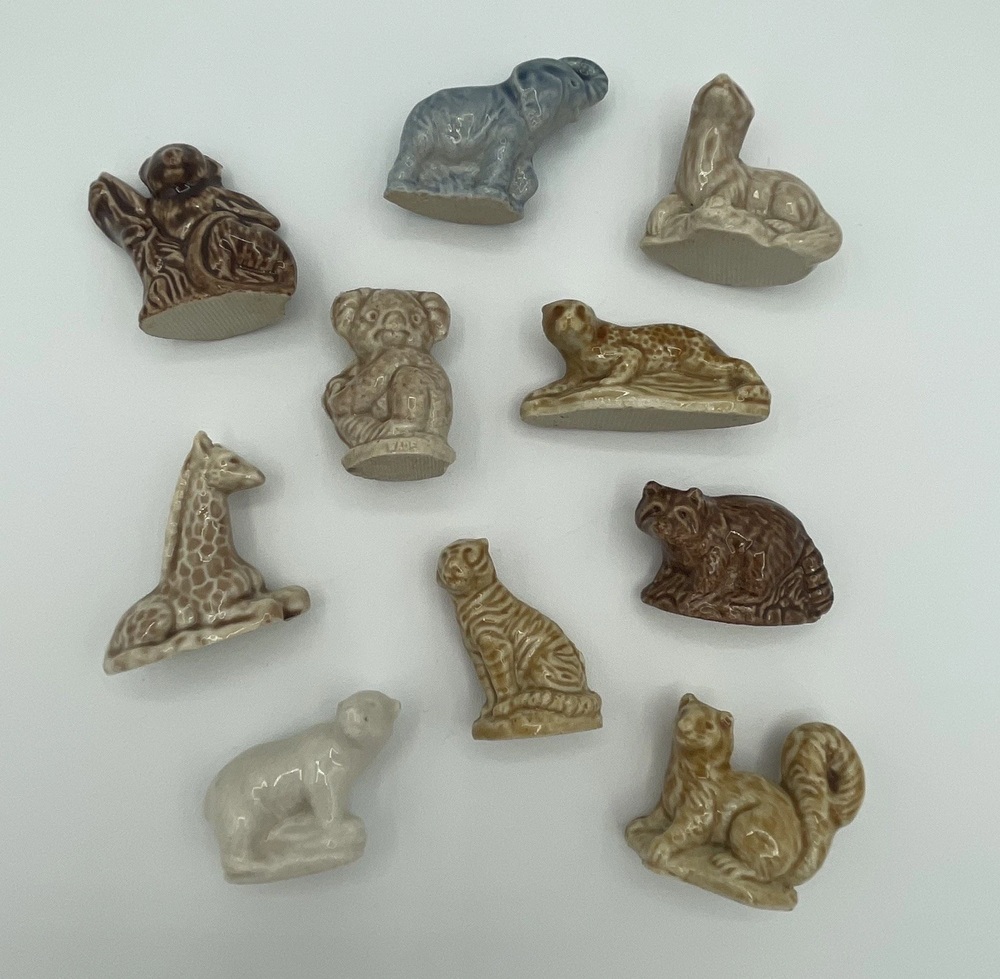
Wade Ceramics of England began making its tiny Wade Whimsies figurines in the 1950s, and the partnership with Red Rose Tea, which put a free miniature figurine in every box starting in the 1960s and continuing in the US from 1983, turned them into one of the most widely distributed collectibles ever made. More than 300 million have been given away in America alone, mostly in sets built around themes like circus animals, endangered species, and nursery rhyme characters.
Most individual Whimsies are worth only a dollar or two, since they were literally free giveaways, but complete themed sets change the math considerably. A complete Animal Series set can bring around $150, and specific rare figures or sets made for a single country’s market sell for $100 to $700 or more. Condition matters intensely at this small scale, since even a tiny chip to an ear or paw is highly visible.
Look at the base for a molded “Wade England” mark, and note that later reissues sometimes lack the fine detail of earlier runs. Because they’re inexpensive individually, building a complete set is where the real collecting (and the real value) lies, so a jumbled box of mixed, incomplete series is worth much less than the same figures sorted and matched.
15. Holly Hobbie collector plate
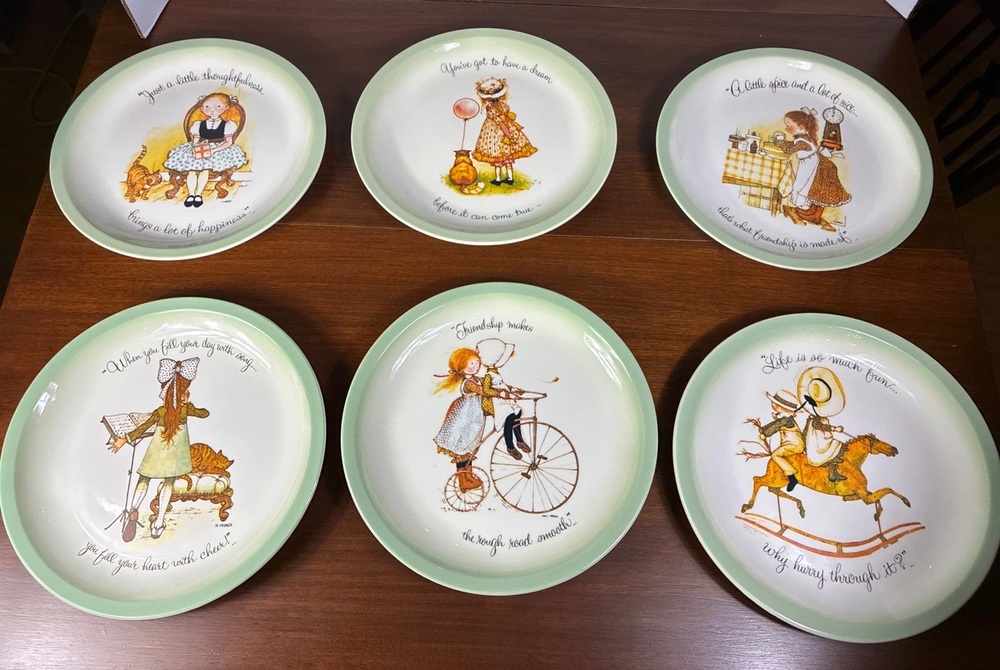
Artist Denise Holly Hobbie sold her folksy illustrations of a bonneted girl to American Greetings in the 1960s, and by the early 1970s the character was a full-blown licensing phenomenon, showing up on everything from lunchboxes to bedding. The ceramic collector plates built around the character are a genuinely American-made piece of that story: American Greetings had the Homer Laughlin China Company, the same Ohio pottery behind Fiestaware, produce a run of Holly Hobbie plates starting in the early 1970s.
Individual plates from this era generally sell for around $25 to $35 in excellent condition, with the earlier green-rimmed plates from around 1970 bringing more than the blue-rimmed plates that followed in the 1980s. Because so many were bought and kept in their original box as a “collector’s item” rather than actually used, mint boxed examples are common enough that box and condition don’t create huge price swings on their own.
Look for the Homer Laughlin backstamp on the genuinely American-made plates, since a lot of other Holly Hobbie giftware (figurines, trinket boxes, mugs) was manufactured overseas and marked only “American Greetings” without a pottery name attached. A plate with a hairline crack or a noticeable rim chip is worth only a fraction of a clean example, since these were inexpensive collectibles to begin with.
16. Robinson Ransbottom stoneware crock
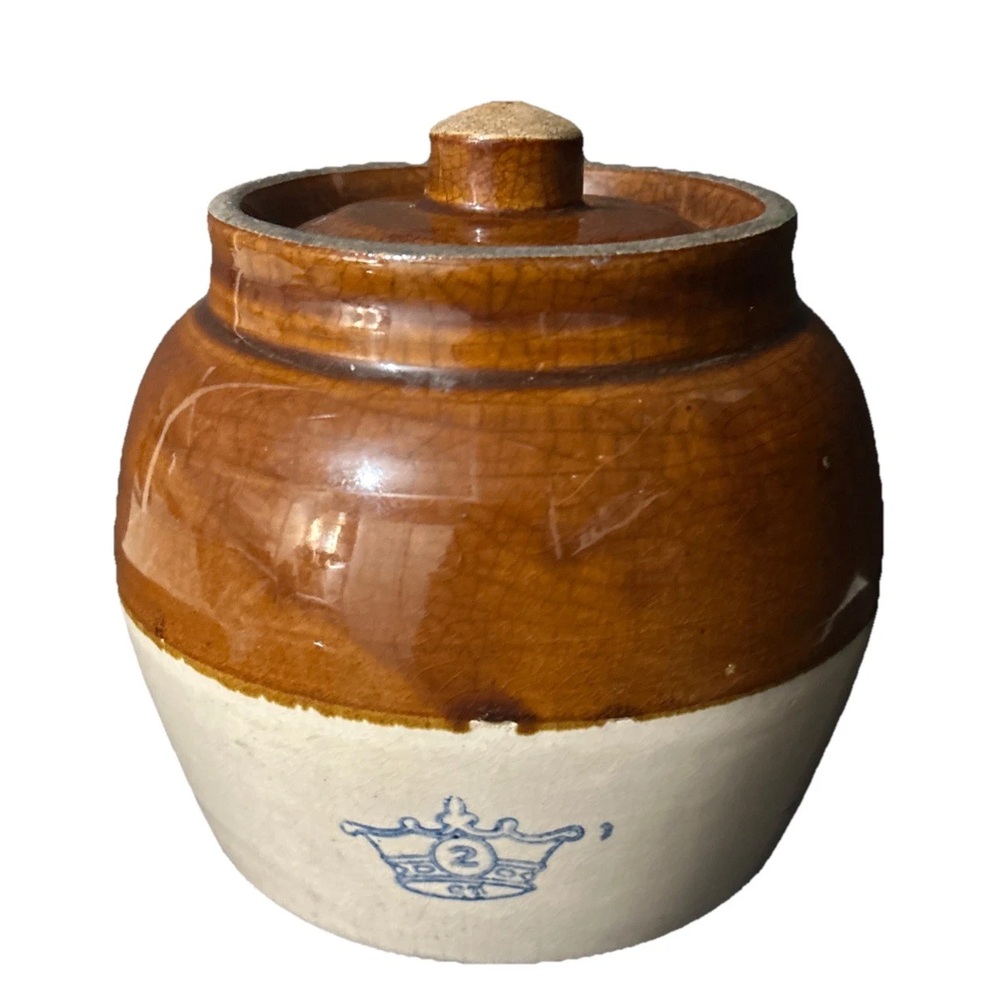
Robinson Ransbottom Pottery of Roseville, Ohio traces back to 1900, and for a time it was the largest stoneware producer in the country, turning out utilitarian crocks, bean pots, jugs, and mixing bowls stamped with the company’s blue crown mark. The company kept making traditional stoneware well into the 1970s, long after most American potteries had shifted toward lighter, more decorative lines.
A single-handled bean pot or crock in excellent condition, with no cracks and only light surface wear, typically appraises in the $115 to $150 range, with retail asking prices closer to $175 for the cleanest examples. Blue spongeware decoration adds to desirability, and a complete set of nested mixing bowls brings more than the same bowls sold off individually.
Check the base for the “R.R.P. Co.” mark along with “Roseville, Ohio.” That “Roseville” wording on the stamp leads some sellers to mistakenly price these pieces as though they were made by the far more valuable Roseville Pottery Company, an entirely different Ohio maker. Hairline splits near the rim and handles are common on heavily used stoneware, so run a finger along both before assuming a piece is undamaged.
17. California Originals ceramic TV lamp
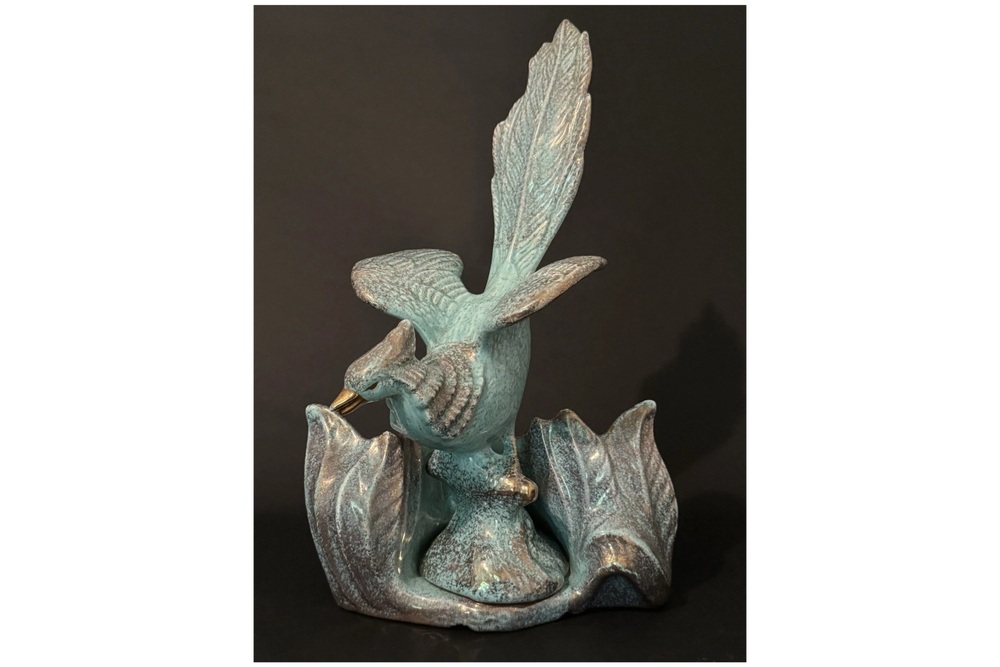
California Originals made ceramic planters, cookie jars, and figural TV lamps out of Southern California from the 1950s through the 1970s, riding the same wave of postwar American ceramics production that also produced better-known names like Haeger and McCoy. Its TV lamps, which doubled as a soft nightlight-style planter meant to sit on top of a television set to cut down on eye strain in a dark room, are a distinctly midcentury American object that younger shoppers often don’t recognize on sight.
Most examples with the ceramic body free of chips and cracks sell in the $30 to $75 range, with larger or more sculptural figural lamps, like ships, animals, and Polynesian-inspired designs, toward the higher end. A lamp that’s been safely rewired still holds most of its value, but a replaced or missing shade brings the price down.
Check the underside for a molded “California Originals” mark along with a model number. Crazing in the glaze is common and generally tolerated by collectors, and small factory glaze skips or pops are considered part of the piece’s handmade character rather than damage. Test the light switch before buying if the wiring looks original, since old cords can be a real safety concern even on an otherwise clean piece.
18. Van Briggle Pottery vase or figurine
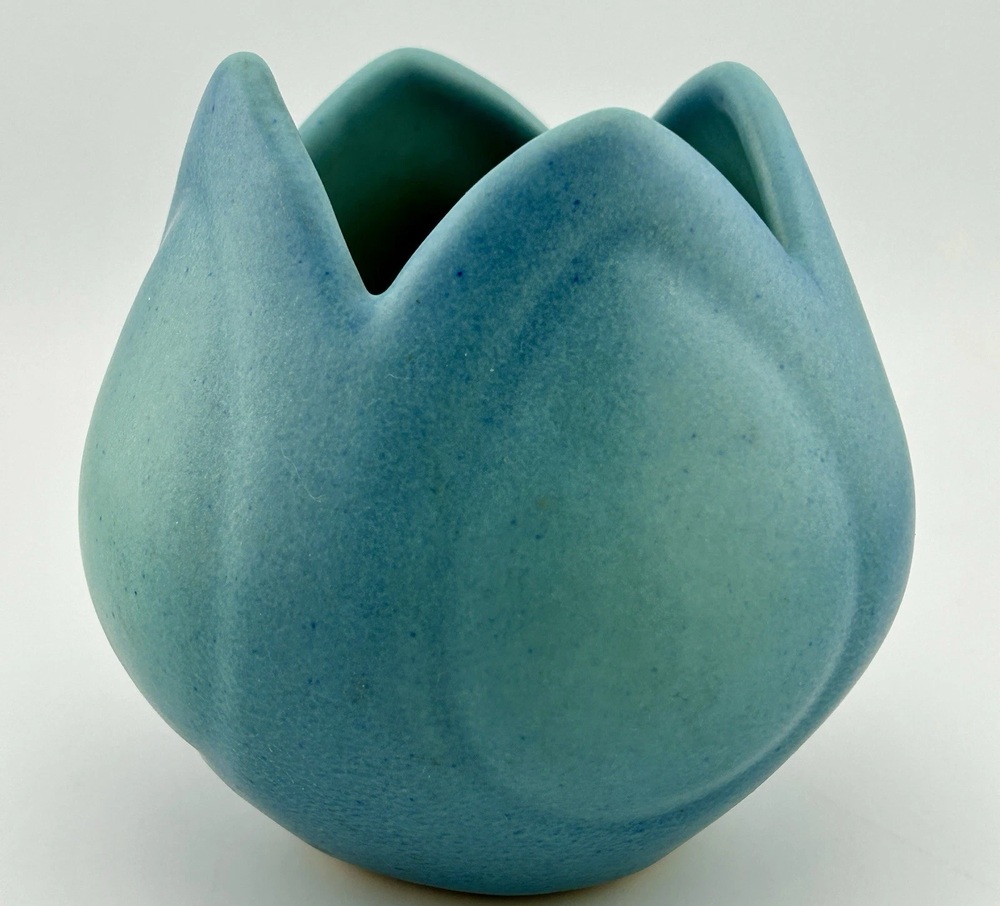
Van Briggle Pottery in Colorado Springs kept making its signature matte-glazed art pottery straight through the 1970s, more than seventy years after founders Artus and Anne Van Briggle opened the studio. The same Art Nouveau-inspired forms, flowing florals, Native American-influenced shapes, and a smooth satin glaze in colors like turquoise and mulberry, stayed in the line for generations, which makes knowing your piece’s era matter more than most buyers expect.
The earliest pieces, hand-finished before 1920, sit in a completely different market and can reach into the thousands. A typical 1970s piece is a far more modest find: most later production sells for a few hundred dollars or well under it, and a single vase in a common shape and glaze often brings $30 to $100 in good condition.
The double “AA” mark, for Artus and Anne, appears on nearly every piece, sometimes alongside “Colo. Spgs.,” but the mark alone doesn’t establish the era. Look at the glaze and the crispness of the molded detail instead: sharper, more individually finished work points to earlier production, while a slightly softer, more uniform mold line is typical of later 20th-century pieces. Since the glaze is delicate and matte, avoid abrasive cleaning, which can dull the finish and lower value.











